- Product Description Description
- Table of Contents TOC
- List of Table & Figure LOT
- Get Free Sample PDF Sample PDF
Market Size, 2025
$1.7 BnMarket Estimate, 2026
$1.8 BnMarket Forecast, 2034
$2.78 BnCAGR, 2026–2034
5.6%Global Branched-Chain Amino Acids Market Report Summary
The global branched-chain amino acids (BCAA) market was valued at USD 1.7 billion in 2025 and is projected to grow from USD 1.80 billion in 2026 to USD 2.78 billion by 2034, registering a CAGR of 5.6% from 2026 to 2034. Market growth is driven by increasing consumer focus on sports nutrition, muscle recovery, and overall fitness and wellness. Branched-chain amino acids, including leucine, isoleucine, and valine, are widely used in dietary supplements, sports beverages, and clinical nutrition products to support muscle protein synthesis and energy metabolism. Rising health consciousness, growing gym memberships, and expanding demand for functional nutrition products are further supporting global market expansion.
Key Market Trends
- Rising demand for sports nutrition and performance-enhancing supplements.
- Increasing consumer preference for high-protein and fitness-oriented dietary products.
- Growing adoption of BCAA supplements for muscle recovery and endurance support.
- Expansion of functional beverages and clinical nutrition applications.
- Continuous innovation in plant-based and clean-label amino acid formulations.
Segmental Insights
- Based on type, the L-Leucine segment dominated the global branched-chain amino acids market in 2025 by accounting for 41.6% market share, driven by its critical role in muscle protein synthesis and athletic performance enhancement.
- Based on application, the sports nutrition and fitness segment led the market by capturing 48.3% share in 2025, supported by increasing participation in fitness activities, bodybuilding, and endurance sports.
Regional Insights
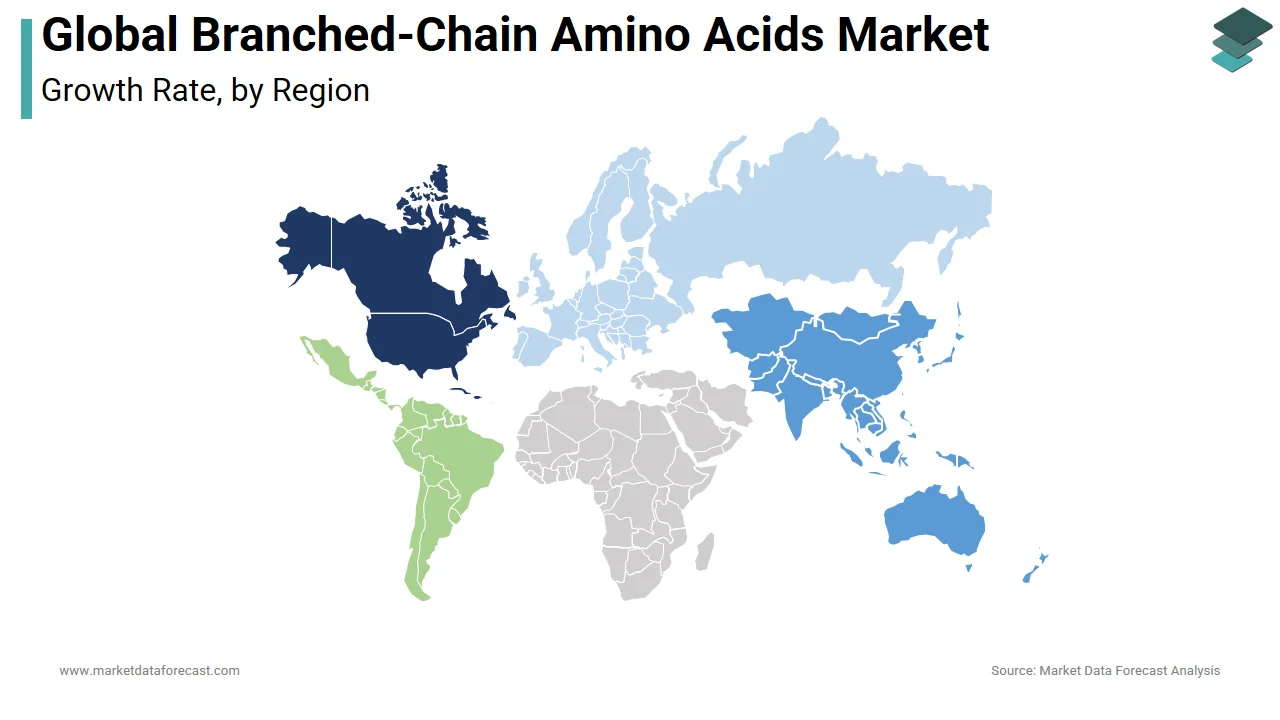
The global branched-chain amino acids market is witnessing steady growth across major regions, supported by increasing health awareness, rising demand for nutritional supplements, and expanding fitness industries.
- North America dominated the global market in 2025 with 35.8% share, driven by strong consumer spending on sports nutrition products, widespread fitness culture, and high adoption of dietary supplements.
- Europe held the second-largest position with 15.4% share in 2025, supported by increasing health consciousness and growing demand for functional nutrition products.
- Asia-Pacific is projected to register the fastest CAGR during the forecast period, driven by rising disposable incomes, rapid urbanization, expanding fitness awareness, and increasing consumption of nutritional supplements across major economies.
Competitive Landscape
The global branched-chain amino acids market is characterized by strong competition among amino acid manufacturers, biotechnology companies, and nutritional supplement providers focusing on product quality, innovation, and large-scale production capabilities. Market participants are emphasizing the development of clean-label formulations, the expansion of sports nutrition product portfolios, and investment in advanced fermentation technologies to strengthen market positioning. Strategic partnerships, acquisitions, and expansion into emerging markets are shaping competitive dynamics across the market.
Prominent companies operating in the global branched-chain amino acids market include Ajinomoto Co., Inc., Amino GmbH, Anhui Huaheng Biotechnology Co., Ltd., CJ Bio America, Daesang Corporation, Evonik Corporation, Fufeng Group Company Limited, Fuyang Dongchen Biological Engineering Co., Ltd., Henan Julong Bio-Engineering Co., Ltd., Iris Biotech GmbH, Kyowa Hakko Bio Co., Ltd., and Meihua Holdings Group Co., Ltd.
Global Branched-Chain Amino Acids Market Size
The global branched-chain amino acids market was worth US$ 1.7 billion in 2025 and is anticipated to reach a valuation of US$ 2.78 billion by 2034 from US$ 1.80 billion in 2026, and it is predicted to register a CAGR of 5.6% during the forecast period 2026 to 2034.

Branched-chain amino acids are a specific group of essential nutrients comprising leucine, isoleucine, and valine, which the human body cannot synthesize independently. These molecules are for muscle protein synthesis, energy production, and metabolic regulation. The compounds have evolved from a niche sports nutrition segment into a broad spectrum application area encompassing clinical nutrition, pharmaceuticals, and functional foods. The physiological significance of these amino acids lies in their unique metabolic pathway, where they are primarily catabolized in skeletal muscle rather than the liver. This distinct characteristic makes them highly bioavailable and effective for rapid recovery and metabolic support. As per the World Health Organization, the global prevalence of sarcopenia is expected to affect over 50 million people by 2030, with the growing clinical relevance of these supplements. The integration of these amino acids into medical nutrition for patients suffering from liver diseases, such as hepatic encephalopathy, also demonstrates their therapeutic versatility. According to the European Liver Patients Association, nearly 29 million people in Europe suffer from some form of liver disease, creating a substantial patient pool requiring specialized nutritional interventions.
MARKET DRIVERS
Surging Global Prevalence of Sarcopenia and Age-Related Muscle Wasting
The escalating incidence of sarcopenia among the aging global population, due to the expanded adoption of branched chain amino acids, is surging the growth of the branched chain amino acids market. Sarcopenia is characterized by the progressive loss of skeletal muscle mass and function, which significantly impacts the quality of life and independence of elderly individuals. Leucine in particular acts as a potent stimulator of the mechanistic target of rapamycin pathway, which is crucial for initiating muscle protein synthesis. As per the United Nations Department of Economic and Social Affairs, the number of persons aged 65 years or older is projected to rise from 727 million in 2020 to 1.5 billion by 2050. This demographic shift creates an immense underlying demand for nutritional interventions that can mitigate age-related muscle degradation. Clinical studies cited by the European Geriatric Medicine Society suggest that supplementation with branched-chain amino acids can improve muscle strength and physical performance in older adults by up to 15% when combined with resistance training. The economic burden of frailty and falls associated with muscle wasting further incentivizes healthcare systems to prioritize preventive nutritional strategies. In Japan, where the super-aged society phenomenon is most advanced, the government has integrated specific amino acid formulations into long-term care insurance guidelines. This regulatory endorsement validates the efficacy of these compounds and encourages broader acceptance in other markets facing similar demographic pressures. The direct correlation between population aging and the physiological need for muscle preservation ensures a sustained and growing consumer base for these essential nutrients.
Expansion of Clinical Applications in Hepatic Encephalopathy Management
The established therapeutic efficacy of branched chain amino acids in managing liver diseases, particularly hepatic encephalopathy, within the clinical nutrition sector is leveraging the growth of the branched chain amino acids market. Patients with chronic liver disease often exhibit altered amino acid metabolism characterized by low levels of branched-chain amino acids and elevated levels of aromatic amino acids. This imbalance contributes to the development of hepatic encephalopathy, a neuropsychiatric syndrome that impairs cognitive function and consciousness. Administration of branched-chain amino acids helps correct this imbalance and reduces the production of false neurotransmitters in the brain. According to the American Association for the Study of Liver Diseases, approximately 30 to 45% of patients with cirrhosis will develop hepatic encephalopathy within one year of diagnosis. The global prevalence of chronic liver disease affects roughly 2 million people annually, as stated by the World Gastroenterology Organisation. Clinical guidelines from the European Association for the Study of the Liver recommend oral branched-chain amino acid supplementation for patients who have experienced episodes of overt hepatic encephalopathy. This formal medical endorsement drives prescription-based demand and integrates these amino acids into standard hospital formularies. Additionally, the rising incidence of non-alcoholic fatty liver disease linked to obesity and diabetes further expands the potential patient pool. Data from the Global Burden of Disease Study indicate that liver cirrhosis deaths have increased by 40% globally since 1990.
MARKET RESTRAINTS
Regulatory Ambiguity and Varying Safety Standards Across Regions
The fragmented regulatory landscape governing dietary supplements and novel food ingredients across different geographical regions is hindering the growth of the branched-chain amino acids market. Unlike pharmaceutical drugs, which undergo rigorous and standardized clinical trials for approval, dietary supplements often face less stringent scrutiny. However, this lack of uniformity creates uncertainty for manufacturers and consumers alike. In the European Union, the classification of amino acids as either food supplements or novel foods can vary, leading to complex compliance requirements. Only specific health claims related to protein contribution to muscle growth are permitted, while claims regarding performance enhancement are often rejected due to insufficient scientific consensus. In the United States, the Food and Drug Administration operates under a post-market surveillance model, which means that products are not evaluated for safety or efficacy before they reach consumers. This disparity allows low-quality or contaminated products to enter the market, potentially causing adverse events that tarnish the reputation of the entire category. Manufacturers must navigate a complex web of local regulations, which increases operational costs and delays product launches.
High Production Costs and Supply Chain Volatility of Raw Materials
The high costs associated with fermentation-based production processes and the volatility of raw material supply chains are also impeding the growth of the branched-chain amino acids market. The industrial production of these amino acids primarily relies on microbial fermentation using strains of Corynebacterium glutamicum or Escherichia coli. This process requires significant inputs of carbon sources, such as glucose derived from corn or sugarcane, as well as nitrogen sources and specialized nutrients. Fluctuations in agricultural commodity prices directly impact production costs. As per the Food and Agriculture Organization of the United Nations, global food price indices can experience volatility of up to 20% within a single year due to weather events, geopolitical tensions or trade policies. These fluctuations squeeze profit margins for manufacturers who often operate in a competitive pricing environment. Additionally, the energy-intensive nature of downstream processing, including separation, purification, and crystallization, adds to the overall cost structure. Rising energy prices in key manufacturing hubs such as China and Europe further exacerbate these financial pressures. The concentration of production capacity in specific regions also introduces supply chain risks. Disruptions caused by pandemics or logistical bottlenecks can lead to shortages and price spikes. These economic pressures limit the ability of manufacturers to invest in research and development or expand production capacity.
MARKET OPPORTUNITIES
Integration into Personalized Nutrition and Precision Health Platforms
The integration into personalized nutrition platforms driven by advances in genomics and metabolomics is setting up new opportunities for the expansion of the branched amino acids market. Consumers are increasingly seeking tailored dietary solutions that align with their unique genetic makeup, metabolic profiles, and lifestyle goals. Branched-chain amino acids are ideal candidates for such personalized approaches due to their well-understood metabolic pathways and measurable physiological effects. Genetic variations in genes such as BCKDHA, which encodes a subunit of the branched-chain alpha-ketoacid dehydrogenase complex, can influence how individuals metabolize these amino acids. Companies leveraging artificial intelligence algorithms can analyze user data, including activity levels, sleep patterns, and dietary intake, to recommend precise amino acid formulations. The shift from commodity supplementation to precision health solutions enhances brand loyalty and justifies premium pricing. Furthermore, partnerships with digital health apps and wearable technology providers can create ecosystems where amino acid supplementation is seamlessly integrated into daily health monitoring routines.
Development of Plant-Based and Fermentation-Derived Sustainable Sources
The growing consumer preference for sustainable and plant-based products for innovation in the sourcing and production is another attribute to create new opportunities for the growth of the branched-chain amino acids market. Traditional sources of these amino acids have often been associated with animal-derived ingredients or resource-intensive agricultural practices. However, advancements in biotechnology enable the production of high-purity amino acids through precision fermentation using renewable feedstocks. This method aligns with the environmental values of modern consumers who are increasingly concerned about the carbon footprint of their dietary choices. Additionally, the use of circular economy principles, such as utilizing agricultural waste streams as fermentation substrates, can further reduce environmental impact and production costs. By transparently communicating sustainability credentials, manufacturers can appeal to environmentally conscious consumers and corporate buyers who prioritize ethical sourcing.
MARKET CHALLENGES
Consumer awareness regarding efficacy and scientific misinformation
The widespread consumer awareness regarding their actual efficacy, fueled by conflicting scientific literature and misinformation, is a major challenge for the growth of the branched amino acids market. While numerous studies support the benefits of these amino acids for muscle synthesis and liver health, other research suggests that whole protein sources may be equally or more effective for general populations. This ambiguity creates confusion among consumers who are bombarded with contradictory information from social media influencers, fitness blogs, and competing supplement brands. Furthermore, high-profile retractions of studies or negative meta-analyses can cause sudden drops in consumer confidence. The proliferation of low-quality products that fail to deliver promised results further exacerbates this issue. When consumers do not experience immediate or noticeable benefits, they are likely to discontinue use and share negative reviews. Overcoming this awareness requires significant investment in consumer education and third-party clinical validation. Manufacturers must engage in transparent communication about the specific conditions under which branched-chain amino acids are beneficial rather than making broad, unsubstantiated claims.
Intense Market Saturation and Price-Based Competition
The intense saturation and fierce price-based competition, which poses a significant challenge to profitability and brand differentiation, is likely to degrade the growth of the branched-chain amino acids market. The low barriers to entry for private-label supplements have led to a plethora of brands offering similar formulations at varying price points. This commoditization forces manufacturers to compete primarily on price rather than quality or innovation, eroding profit margins. Large multinational corporations often leverage economies of scale to offer lower prices, which smaller niche players struggle to match. Additionally, the prevalence of discounting and promotional activities further devalues the product category in the eyes of consumers. According to Deloitte, price sensitivity has become a dominant factor in purchasing decisions for health and wellness products due to economic inflation and cost-of-living pressures. Manufacturers face the dual challenge of maintaining high-quality standards while keeping prices competitive. The inability to differentiate products based on tangible benefits leads to a race to the bottom where only the lowest cost producers survive.
REPORT COVERAGE
| REPORT METRIC | DETAILS |
| Market Size Available | 2025 to 2034 |
| Base Year | 2025 |
| Forecast Period | 2026 to 2034 |
| Segments Covered | By Type, Application, and Region. |
| Various Analyses Covered | Global, Regional and Country-Level Analysis, Segment-Level Analysis, Drivers, Restraints, Opportunities, Challenges; PESTLE Analysis; Porter’s Five Forces Analysis, Competitive Landscape, Analyst Overview of Investment Opportunities |
| Regions Covered | North America, Europe, Asia Pacific, Latin America, the Middle East, and Africa |
| Market Leaders Profiled | Ajinomoto Co., Inc., Amino GmbH, Anhui Huaheng Biotechnology Co., Ltd, CJ Bio America, Daesang Corporation, Evonik Corporation, Fufeng Group Company Limited, Fuyang Dongchen Biological Engineering Co., Ltd., Henan Julong Bio-Engineering Co., Ltd, Iris Biotech GmbH, Kyowa Hakko Bio Co., Ltd. and Meihua Holdings Group Co., Ltd., and Others.
|
SEGMENTAL ANALYSIS
By Type Insights
The L Leucine segment was the largest by capturing 41.6% of the branched chain amino acids market share in 2025, owing to its unparalleled role as the primary activator of the mechanistic target of rapamycin complex 1 pathway, which governs muscle protein synthesis. Athletes and clinical practitioners prioritize L-Leucine because research from the International Society of Sports Nutrition confirms that doses of 2 to 3 grams can significantly elevate muscle protein synthesis rates by up to 50% following resistance exercise. The amino acid also demonstrates superior bioavailability compared to its counterparts, enabling rapid absorption and metabolic utilization. Pharmaceutical applications further bolster demand as L-Leucine is incorporated into medical nutrition products for patients with muscle-wasting conditions.

The L Valine segment is likely to grow at the fastest CAGR of 9.7% from 2026 to 2034, with its function as a limiting amino acid in animal feed formulations for poultry and swine nutrition. L Valine supplementation improves feed conversion ratios by up to 8% in monogastric animals, which translates to substantial economic benefits for livestock producers. Additionally, the rising prevalence of metabolic disorders has elevated L Valine's profile in clinical research. Studies published in the Journal of Clinical Endocrinology indicate that L Valine plays a key role in glucose homeostasis and insulin sensitivity regulation. The dual demand from agricultural intensification and emerging therapeutic applications positions L Valine for sustained high growth throughout the forecast period.
By Application Insights
The sports nutrition and fitness segment accounted in holding 48.3% of the branched chain amino acids market share in 2025, owing to the widespread adoption of BCAA supplementation among competitive athletes and recreational fitness enthusiasts seeking enhanced recovery and performance outcomes. The proliferation of digital fitness platforms and wearable technology has further amplified consumer awareness regarding post-workout nutrition protocols. Additionally, the expansion of e-commerce channels has improved product accessibility, enabling direct-to-consumer distribution models that bypass traditional retail constraints.
The animal feed application segment is anticipated to register the fastest CAGR of 8.2% during the forecast period, with the intensifying global demand for animal protein and the corresponding need for precision nutrition in livestock production. As per the United States Department of Agriculture, worldwide poultry production is expected to reach 105 million metric tons by 2030, requiring optimized feed formulations to support efficient growth. Branched-chain amino acids, particularly L Valine and L Isoleucine, serve as limiting nutrients that enhance feed conversion efficiency and reduce nitrogen excretion. Furthermore, regulatory pressures to minimize environmental impact from livestock operations are encouraging the adoption of amino acid-balanced diets that reduce waste. The integration of precision feeding technologies and data-driven nutrition management systems further amplifies the value proposition of BCAA fortified feeds for commercial producers.
REGIONAL ANALYSIS
North America Branched Chain Amino Acids Market Analysis
North America was the largest contributor in the branched-chain amino acids market by holding 35.8% of the share in 2025, with its mature sports nutrition industry, robust healthcare infrastructure, and high consumer awareness regarding functional ingredients. As per the Council for Responsible Nutrition, over 77% of American adults report using dietary supplements, with amino acid-based products representing a rapidly expanding category. The presence of major ingredient manufacturers and contract formulators enables rapid product innovation and commercialization cycles. Additionally, the region benefits from favorable regulatory frameworks through the Food and Drug Administration, which facilitates market entry for novel amino acid applications. Clinical research institutions in the United States and Canada continuously generate evidence supporting BCAA efficacy, which reinforces consumer confidence and physician recommendations.
Europe Branched Chain Amino Acids Market Analysis
Europe branched chain amino acids market was ranked second by holding 15.4% of the share in 2025, with the strong clinical research ecosystem, stringent quality standards, and growing integration of amino acids into medical nutrition protocols. The approved health claims related to protein and muscle maintenance have enhanced consumer trust in BCAA-containing products. The prevalence of aging populations across Western and Northern Europe has elevated demand for nutritional interventions targeting sarcopenia and frailty prevention. Data from the European Commission indicates that over 20% of the EU population will be aged 65 or older by 2030, intensifying focus on muscle health preservation. Additionally, the region's advanced pharmaceutical manufacturing base enables high-purity amino acid production that meets pharmacopeial standards for clinical applications. Collaborative research initiatives between academic institutions and industry partners further accelerate innovation in targeted amino acid therapies.
Asia Pacific Branched Chain Amino Acids Market Analysis
The Asia Pacific branched-chain amino acids market is projected to exhibit the fastest CAGR during the forecast period by rising disposable incomes, increasing health consciousness, and rapid urbanization across key economies, including China, India, and Japan. As per the World Health Organization, the Asia Pacific region accounts for over 60% of global population growth, which amplifies demand for nutritional supplements and functional foods. The proliferation of fitness centers and digital health platforms has accelerated consumer education regarding amino acid benefits, particularly among younger demographics. Additionally, the region's robust agricultural sector drives substantial demand for BCAA fortified animal feeds to support intensifying livestock production.
Latin America Branched Chain Amino Acids Market Analysis
Latin America's branched-chain amino acids market growth is fueled by the increasing urbanization, growing middle-class populations, and expanding retail infrastructure for health and wellness products. Brazil and Mexico are the largest contributors with strong fitness cultures and rising awareness of sports nutrition benefits. Additionally, the region's agricultural sector is adopting advanced feed technologies to enhance livestock productivity, which creates incremental demand for amino acid additives. Local manufacturing capabilities are expanding through partnerships with global ingredient suppliers, which improves product availability and cost competitiveness.
Middle East and Africa Branched Chain Amino Acids Market Analysis
The Middle East and Africa branched-chain amino acids market growth is likely to grow in the coming years, with the varying economic conditions, regulatory environments, and healthcare infrastructure. Gulf Cooperation Council countries demonstrate higher consumption levels driven by affluent populations and established retail channels for premium health products. Additionally, growing interest in sports and fitness among younger demographics in urban centers is stimulating demand for performance-oriented supplements. The agricultural sector in select African nations is gradually adopting advanced feed formulations, which creates incremental opportunities for amino acid-based additives.
COMPETITIVE LANDSCAPE
Competition in the branched-chain amino acids market is characterized by a blend of established multinational corporations and specialized regional manufacturers competing on technology quality and application expertise. Differentiation strategies emphasize purity standards, clinical validation, and sustainability credentials, which resonate with discerning customers in sports nutrition, pharmaceutical, and animal feed segments. Pricing dynamics reflect production scale, raw material costs, and value-added services, such as technical support and regulatory assistance. Emerging players focus on niche applications or regional markets, where they can leverage local knowledge and agile operations. Strategic acquisitions and partnerships enable companies to expand geographical reach and application portfolios while consolidating market position. Success increasingly depends on balancing innovation with operational efficiency, while maintaining rigorous quality standards across global supply chains.
KEY MARKET PLAYERS
Some of the notable companies in the global branched-chain amino acids market are
- Ajinomoto Co., Inc.
- Amino GmbH
- Anhui Huaheng Biotechnology Co., Ltd.
- CJ Bio America
- Daesang Corporation
- Evonik Corporation
- Fufeng Group Company Limited
- Fuyang Dongchen Biological Engineering Co., Ltd.
- Henan Julong Bio-Engineering Co., Ltd.
- Iris Biotech GmbH
- Kyowa Hakko Bio Co., Ltd.
- Meihua Holdings Group Co., Ltd.
TOP PLAYERS IN THE MARKET
- Ajinomoto Co., Inc. maintains a prominent position in the branched-chain amino acids market through its extensive fermentation technology expertise and global manufacturing footprint. The company leverages decades of amino acid research to deliver high-purity ingredients for sports nutrition, pharmaceutical, and food applications. Recent strategic initiatives include expanding production capacity in Asia and launching innovative BCAA formulations targeting clinical nutrition markets. Ajinomoto actively collaborates with academic institutions to generate clinical evidence supporting amino acid efficacy, which strengthens product differentiation. The company also invests in sustainable manufacturing practices, including renewable energy adoption and waste reduction programs. These efforts align with growing consumer preferences for environmentally responsible ingredients, while maintaining cost competitiveness across diverse market segments.
- Kyowa Hakko Bio Co Ltd contributes significantly to the branched-chain amino acids market through its advanced biotechnology platforms and specialized fermentation processes. The company focuses on producing pharmaceutical-grade amino acids that meet stringent regulatory requirements for medical applications. Recent developments include strategic partnerships with contract manufacturers to expand global distribution capabilities and investments in research for novel amino acid delivery systems. Kyowa Hakko Bio emphasizes quality control and traceability throughout its supply chain, which enhances trust among clinical and industrial customers. The company also explores applications in personalized nutrition, leveraging genomic insights to develop targeted amino acid solutions.
- Evonik Industries AG strengthens its market position through integrated production capabilities and application development expertise in specialty amino acids. The company utilizes proprietary fermentation and purification technologies to deliver consistent quality across diverse customer requirements. Recent strategic actions include expanding its amino acid production facility in Germany and launching tailored BCAA blends for animal nutrition applications. Evonik emphasizes sustainability through circular economy principles, including the utilization of renewable feedstocks and energy-efficient processes. The company also collaborates with formulators and brand owners to develop innovative product concepts that address emerging consumer trends.
TOP STRATEGIES USED BY KEY MARKET PARTICIPANTS
Key participants in the branched-chain amino acids market employ strategic approaches centered on technological innovation, vertical integration, and application diversification. Companies invest heavily in fermentation process optimization to enhance yield purity and cost efficiency. Strategic partnerships with research institutions generate clinical evidence that supports product claims and expands therapeutic applications. Vertical integration across raw material sourcing, production, and distribution strengthens supply chain resilience and margin control. Application development teams collaborate with end users to create tailored formulations for sports nutrition, clinical care, and animal feed segments. Sustainability initiatives, including renewable energy adoption and waste reduction programs, align with evolving consumer preferences and regulatory expectations. Digital marketing and e-commerce capabilities enhance direct consumer engagement and brand loyalty.
MARKET SEGMENTATION
This research report on the global branched-chain amino acids (BCAA) market has been segmented & sub-segmented into the following categories.
By Type
- L-Valine
- L-Leucine
- L-Isoleucine
By Application
- Animal Feed
- Food & Beverages
- Pharma & Healthcare
- Nutraceuticals
- Cosmetics & Personal Care
By Region
- North America
- Europe
- Asia Pacific
- Latin America
- The Middle East and Africa