- Product Description Description
- Table of Contents TOC
- List of Table & Figure LOT
- Get Free Sample PDF Sample PDF
Market Size, 2025
$24.80 BnMarket Estimate, 2026
$28.72 BnMarket Forecast, 2034
$92.86 BnCAGR, 2026–2034
15.80%Executive Summary: Global Cardiac Biomarkers Market
- Market Scope: Global diagnostics and medical technology market analysis covering product categories, therapeutic modalities, clinical applications, regional growth frameworks, and diagnostic innovations.
- Market Valuation: Valued at USD 24.80 billion (2025), estimated at USD 28.72 billion (2026), and projected to reach USD 92.86 billion by 2034, growing at a rapid CAGR of 15.80% (2026–2034).
- Primary Growth Drivers: High global cardiovascular disease burden (CVDs causing an estimated 17.9 million deaths globally in 2023, ~3.7 million in Europe, >4 million in China annually, and >30% of total deaths in Latin America and Asia-Pacific, alongside ~697,000 U.S. heart-disease deaths in 2022). Technological advancements are accelerating market adoption, with high-sensitivity assays reducing heart-attack diagnosis time from hours to under 15 minutes, point-of-care testing expanding >25% over five years, and AI-based multi-biomarker models achieving up to 90% accuracy in predicting acute myocardial infarction.
Key Market Segment Metrics (2026–2034)
| Category | Leading Segment (2025 Position) | Fastest-Growing Segment |
|---|---|---|
| By Product / Application | Monoclonal Antibodies (led product segment with 38.6% share); Metabolic Disorders (accounted for 32.1%) | Fusion Proteins (projected to expand at a 14.6% CAGR) / Genetic Disorders (forecasted to grow at a 15.8% CAGR) |
| By Therapeutic Modality | Protein Diagnostics (dominated therapeutic modalities with 40.2% share) | Protein Therapeutics (projected to register a 16.2% CAGR) |
| By Region | North America (led globally with 40.3% market share in 2025) | Asia-Pacific (identified as the fastest-growing region, with CVDs representing nearly 30% of deaths) |
Major Market Players & Market Structure
Market Structure: Highly competitive global diagnostics landscape featuring 21 profiled market leaders competing on high-sensitivity assay accuracy, multiplex testing platforms, rapid point-of-care diagnostic devices, AI-enabled interpretation tools, and novel biomarker discovery.
Key Companies: Abbott, Siemens, Roche, Beckman Coulter, Thermo Fisher Scientific, Bio-Rad Laboratories, Danaher, Randox Laboratories, Quidel, DiaSorin, PerkinElmer, and Becton Dickinson.
Global Cardiac Biomarkers Market Size
The global cardiac biomarkers market was valued at USD 24.80 billion in 2025, is estimated to reach USD 28.72 billion in 2026, and is projected to reach USD 92.86 billion by 2034, growing at a CAGR of 15.80% from 2026 to 2034.

Cardiac biomarkers are biochemical indicators used in the diagnosis, prognosis, and monitoring of cardiovascular diseases (CVDs), particularly acute coronary syndromes such as myocardial infarction. These biomarkers, including troponins, creatine kinase-MB (CK-MB), brain natriuretic peptide (BNP), and high-sensitivity C-reactive protein (hs-CRP), enable early detection and risk stratification of cardiac events, facilitating timely clinical intervention. The growing prevalence of heart-related ailments, coupled with advancements in diagnostic technologies, has significantly enhanced the role of cardiac biomarkers in modern healthcare. According to the Centers for Disease Control and Prevention (CDC), cardiovascular diseases account for approximately one out of every three deaths in the United States. As per the World Health Organization (WHO), CVDs were responsible for an estimated 17.9 million deaths globally in 2023, reinforcing the urgent need for efficient diagnostic tools.
MARKET DRIVERS
Rising Prevalence of Cardiovascular Diseases
One of the primary drivers fueling the growth of the global cardiac biomarkers market is the escalating incidence of cardiovascular diseases (CVDs). According to the World Health Organization (WHO), CVDs remain the leading cause of mortality worldwide, accounting for nearly 17.9 million deaths in 2023 alone. In the United States, the Centers for Disease Control and Prevention (CDC) reported that about 697,000 deaths occurred due to heart disease in 2022, representing roughly one in every five deaths. This alarming rise in cardiac conditions necessitates early and precise diagnostic interventions, making cardiac biomarkers indispensable in clinical settings. The American Heart Association also noted that more than 18.6 million adults in the U.S. suffer from coronary artery disease, a major contributor to heart attacks and strokes. Cardiac biomarkers such as troponin I and T offer high sensitivity and specificity for detecting myocardial injury, enabling timely therapeutic decisions. As per a study published in Circulation, the implementation of high-sensitivity cardiac troponin assays has improved early rule-in and rule-out strategies for acute myocardial infarction, reducing hospital stays and improving patient outcomes.
Technological Advancements in Diagnostic Platforms
Technological innovation in diagnostic platforms is another critical factor propelling the expansion of the cardiac biomarkers market. Modern diagnostic systems now offer faster turnaround times, higher accuracy, and greater automation, enhancing the efficiency of cardiac biomarker testing. According to the National Institutes of Health (NIH), the adoption of point-of-care (POC) testing devices has significantly increased in recent years, allowing for rapid biomarker analysis even in emergency settings. These portable systems provide immediate results, which are crucial for time-sensitive conditions like acute myocardial infarction. Moreover, the development of multiplex biomarker assays enables simultaneous detection of multiple cardiac markers from a single blood sample, improving diagnostic precision and reducing costs. The Food and Drug Administration (FDA) approved several next-generation immunoassays between 2022 and 2023, including high-sensitivity troponin tests with lower detection limits. A report by the American Association for Clinical Chemistry (AACC) indicated that these advanced assays have reduced the time required for diagnosing heart attacks from several hours to under 15 minutes.
MARKET RESTRAINTS
High Cost of Advanced Diagnostic Technologies
The high cost of advanced cardiac biomarker diagnostic technologies presents a significant restraint on the market expansion. Sophisticated immunoassay platforms, high-sensitivity troponin tests, and multiplex detection systems require substantial capital investment, limiting their accessibility in resource-constrained healthcare settings. According to the Healthcare Financial Management Association (HFMA), many community hospitals and rural clinics struggle to afford cutting-edge diagnostic equipment, thereby delaying the adoption of state-of-the-art cardiac biomarker testing.
Additionally, the operational expenses associated with maintaining and calibrating these systems add financial pressure on healthcare providers. Moreover, reimbursement policies in certain regions do not fully cover the cost of novel biomarker tests, discouraging physicians from prescribing them unless absolutely necessary. The World Health Organization (WHO) noted that in low- and middle-income countries, limited healthcare budgets and lack of trained personnel hinder widespread use of advanced biomarker diagnostics.
Regulatory Hurdles and Standardization Issues
Stringent regulatory requirements and the lack of standardized protocols for cardiac biomarker assays pose considerable challenges to market growth. Regulatory agencies such as the U.S. Food and Drug Administration (FDA) and the European Medicines Agency (EMA) impose rigorous approval processes for new biomarker-based diagnostic products, often resulting in prolonged timelines before commercial availability. According to the FDA’s Center for Devices and Radiological Health, the average clearance period for novel cardiac biomarker assays exceeds 12 months, delaying their integration into routine clinical practice. Furthermore, discrepancies in assay performance across different manufacturers create inconsistencies in diagnostic accuracy. A study published in Clinical Chemistry found that troponin test results varied by up to 40% between different brands, potentially leading to misdiagnosis or inappropriate treatment decisions. The International Federation of Clinical Chemistry (IFCC) has emphasized the need for harmonized reference ranges and assay methodologies to ensure consistency in cardiac biomarker interpretation.
MARKET OPPORTUNITIES
Integration of Artificial Intelligence in Biomarker Analysis
The integration of artificial intelligence (AI) into cardiac biomarker analysis represents a transformative opportunity for the market. AI-powered algorithms can enhance the accuracy of biomarker interpretation, identify subtle patterns in patient data, and predict cardiovascular events with greater precision than traditional methods. According to a report by the American Heart Association, machine learning models have demonstrated up to 90% accuracy in predicting acute myocardial infarction using multi-biomarker datasets, surpassing conventional risk assessment tools.
Moreover, AI-driven analytics facilitate real-time decision-making in emergency departments, where rapid triage and diagnosis are crucial. The National Institutes of Health (NIH) has funded multiple initiatives exploring AI-enhanced biomarker diagnostics, signaling strong institutional backing for this technological shift.
Expansion of Point-of-Care Testing Infrastructure
The growing deployment of point-of-care (POC) testing infrastructure presents a compelling opportunity for the cardiac biomarkers market. POC diagnostics allow for rapid, on-site analysis of biomarkers such as troponin, BNP, and myoglobin, enabling swift clinical decisions without reliance on centralized laboratories. According to the American Association for Clinical Chemistry (AACC), POC cardiac biomarker testing has expanded by over 25% in the past five years, which is driven by the need for immediate results in emergency and ambulatory care settings. This trend is further supported by technological advancements in handheld biosensors and microfluidic devices, which enhance portability and ease of use. The World Health Organization (WHO) has endorsed POC diagnostics as a critical tool for improving cardiovascular care in remote and underserved regions. Additionally, the U.S. Department of Health and Human Services (HHS) has encouraged the adoption of decentralized testing through policy reforms and funding incentives aimed at strengthening emergency response systems.
MARKET CHALLENGES
Variability in Biomarker Interpretation Across Laboratories
A significant challenge confronting the cardiac biomarkers market is the variability in biomarker interpretation across different laboratories and diagnostic platforms. Despite the existence of international guidelines, differences in assay calibration, reference ranges, and analytical methodologies result in inconsistent diagnostic outcomes. According to a study published in Clinical Chemistry, variations in high-sensitivity cardiac troponin measurements between different manufacturers exceeded 20%, potentially leading to misclassification of acute myocardial infarction.
The International Federation of Clinical Chemistry (IFCC) has emphasized the need for standardized reporting units and harmonized cutoff values to improve comparability across institutions. However, implementation remains uneven, particularly in regional and community-based laboratories where access to updated protocols and training may be limited. The American Association for Clinical Chemistry (AACC) reported that nearly 30% of hospital labs face challenges in aligning with evolving biomarker interpretation standards, contributing to diagnostic ambiguity. These inconsistencies not only affect clinical decision-making but also complicate large-scale research and epidemiological studies.
Shortage of Skilled Professionals in Diagnostic Labs
Another pressing issue affecting the cardiac biomarkers market is the shortage of skilled professionals in diagnostic laboratories, which hampers the efficient utilization of advanced biomarker assays. Complex immunoassays and high-sensitivity troponin tests require specialized expertise for accurate execution and interpretation. According to the American Society for Clinical Pathology (ASCP), there was a nationwide shortfall of over 10,000 medical laboratory professionals in the United States in 2023, with similar trends observed in other developed nations. This workforce deficit is attributed to factors such as aging professionals retiring, insufficient enrollment in laboratory science programs, and a lack of career incentives compared to clinical medicine. The Association of Public Health Laboratories (APHL) noted that understaffed labs often experience delays in processing cardiac biomarker tests, leading to prolonged patient wait times and compromised emergency care. Additionally, emerging technologies like AI-integrated diagnostics and molecular biomarker profiling demand continuous upskilling, further widening the gap between available talent and evolving technical requirements.
REPORT COVERAGE
| REPORT METRIC | DETAILS |
| Market Size Available | 2025 to 2034 |
| Base Year | 2025 |
| Forecast Period | 2026 to 2034 |
| Segments Covered | By Product, Application, Therapeutic Modalities, and Region. |
| Various Analyses Covered | Global, Regional and Country-Level Analysis, Segment-Level Analysis, Drivers, Restraints, Opportunities, Challenges; PESTLE Analysis; Porter’s Five Forces Analysis, Competitive Landscape, Analyst Overview of Investment Opportunities |
| Regions Covered | North America, Europe, APAC, Latin America, Middle East & Africa |
| Market Leaders Profiled | Abbott, Siemens AG, F. Hoffman-La Roche AG, Beckman Coulter, Inc., Thermo Fischer Scientific, Creative Diagnostics, Bio-Rad Laboratories, Inc., Danaher, Life Diagnostics, Randox Laboratories, Quidel Corporation, Luminex Corporation, Trinity Biotech, Biomerieux, Ortho Clinical Diagnostics, DiaSorin, Tosoh Corporation, LSI Medicine Corporation, PerkinElmer, Inc., Becton, Dickinson & Co., and Alere, Inc. |
SEGMENTAL ANALYSIS
By Product Insights
The monoclonal antibodies segment accounted in holding 38.6% of the Cardiac Biomarkers Market share in 2025. This dominance is primarily attributed to their extensive use in cardiac diagnostics and targeted therapies for conditions such as acute myocardial infarction and heart failure. According to the American Heart Association, over 700,000 cardiovascular-related deaths occurred in the U.S. alone in 2023, which reinforces the critical need for accurate diagnostic tools based on monoclonal antibody technology. Additionally, regulatory approvals from agencies like the U.S. Food and Drug Administration (FDA) have facilitated the integration of mAb-based tests into routine clinical protocols.

The fusion protein segment is likely to gain huge traction with an anticipated CAGR of 14.6% during the forecast period. This rapid growth stems from the increasing development of engineered fusion proteins that combine functional domains of two or more molecules, offering enhanced stability, specificity, and prolonged half-life. Moreover, academic and industry collaborations are accelerating innovation with 15 new fusion protein-based cardiac biomarker candidates in Phase II or III trials in 2023, as reported by the National Institutes of Health (NIH).
By Application Insights
The metabolic disorders segment held 32.1% of the cardiac biomarkers market of share in 2025 due to the strong correlation between metabolic dysfunctions such as diabetes, obesity, and dyslipidemia with increased risk of cardiovascular diseases. According to the Centers for Disease Control and Prevention (CDC), over 37 million Americans suffer from diabetes, which is a major contributor to heart disease and stroke. Cardiac biomarkers such as high-sensitivity troponin, BNP, and inflammatory markers like hs-CRP are increasingly used to assess cardiac damage in diabetic patients who often present with silent ischemia or atypical symptoms. Furthermore, the rise in metabolic syndrome prevalence, affecting over 85 million adults in the U.S., has led to increased demand for early diagnostic interventions using cardiac biomarkers.
The genetic disorders segment is expected to grow with a CAGR of 15.8% during the forecast period. According to the National Organization for Rare Disorders (NORD), over 25 million Americans suffer from rare genetic diseases, many of which manifest with significant cardiovascular involvement. Conditions such as hypertrophic cardiomyopathy, Marfan syndrome, and Fabry disease require early diagnosis and continuous cardiac monitoring, driving the demand for specialized biomarker profiling. The American College of Medical Genetics and Genomics reported that genetic testing utilization increased by over 40% between 2020 and 2023, which is facilitating earlier intervention and personalized treatment strategies. Moreover, advancements in next-generation sequencing and multi-omics integration have enabled the discovery of novel cardiac biomarkers linked to inherited heart conditions. As per the NIH, over 20 new genetic-cardiac biomarker panels were developed in 2023 alone, enhancing diagnostic precision.
By Therapeutic Modalities Insights
The protein diagnostics segment was the largest by capturing 40.2% of the Cardiac Biomarkers Market share in 2025. This modality encompasses immunoassays, ELISA kits, and rapid test strips used for detecting cardiac-specific proteins such as troponin I, CK-MB, and BNP. These diagnostic tools play a crucial role in emergency medicine, enabling the timely identification of acute myocardial infarction and guiding therapeutic decisions. The U.S. Food and Drug Administration (FDA) has approved numerous protein diagnostic platforms in recent years, including high-sensitivity troponin assays that can detect minute levels of cardiac injury within minutes.
The protein therapeutics segment is lucratively to grow lucratively with an estimated CAGR of 16.2% in the coming years. According to the American Heart Association, innovations in molecular imaging and ligand-targeted biomarkers are transforming the way clinicians monitor heart function and detect early-stage disease progression. The National Institutes of Health (NIH) reported that over 20 novel targeted protein probes were under clinical investigation in 2023, aimed at improving cardiac imaging and biomarker tracking. Additionally, the integration of nanotechnology and AI-driven biomarker analysis is enhancing the sensitivity and specificity of these therapeutics. A report by the Journal of Cardiovascular Translational Research indicated that targeted protein biomarkers demonstrated up to 85% accuracy in identifying subclinical myocardial damage compared to conventional assays.
REGIONAL ANALYSIS
North America Cardiac Biomarkers Market Insights
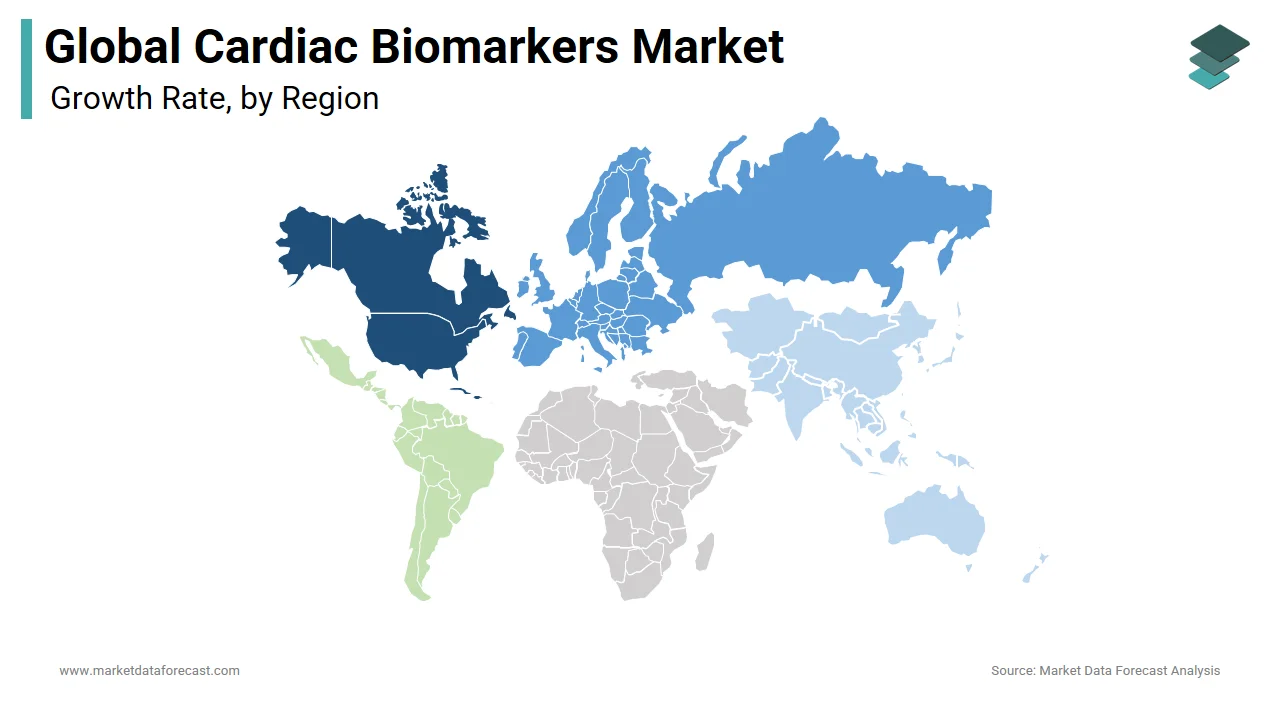
North America was the largest contributor with 40.3% of the Cardiac Biomarkers Market share in 2025. The United States drives this leadership due to its well-established healthcare infrastructure, high prevalence of cardiovascular diseases, and strong presence of key diagnostic companies. According to the Centers for Disease Control and Prevention (CDC), heart disease remains the leading cause of death in the U.S., responsible for over 697,000 fatalities in 2022. The region benefits from advanced diagnostic technologies, favorable reimbursement policies, and widespread adoption of high-sensitivity cardiac biomarker assays. The U.S. Food and Drug Administration (FDA) has been proactive in approving innovative biomarker-based diagnostics, fostering a conducive environment for market expansion. Additionally, increasing investments in genomic research and digital health solutions are further strengthening North America’s position as the global leader in cardiac biomarker development and deployment.
Europe Cardiac Biomarkers Market Insights
Europe Cardiac Biomarkers Market, driven by high healthcare expenditure, aging populations, and rising incidence of cardiovascular diseases. Countries such as Germany, France, and the United Kingdom serve as key contributors, supported by well-developed diagnostic networks and strong government funding for cardiovascular research. According to the European Society of Cardiology, CVDs remain the leading cause of mortality in Europe, responsible for over 3.7 million deaths annually. This has prompted increased emphasis on early diagnosis and risk stratification through cardiac biomarkers. The European Medicines Agency (EMA) has streamlined approval pathways for novel biomarker assays, encouraging innovation and faster market access. Additionally, the implementation of national cardiac screening programs and the growing adoption of point-of-care diagnostics have further fueled market expansion.
Asia Pacific Cardiac Biomarkers Market Insights
The Asia Pacific is the fastest-growing region with significant CAGR during the forecast period with the rising prevalence of lifestyle-related diseases, increasing healthcare spending, and growing awareness of early disease detection. According to the World Health Organization (WHO), cardiovascular diseases account for nearly 30% of all deaths in the Asia Pacific region, with China alone recording over 4 million annual CVD-related deaths. The Indian Council of Medical Research (ICMR) reported that diabetes and hypertension prevalence have surged by over 25% in the past five years, increasing the burden of secondary cardiovascular complications. As a result, there is a growing demand for cost-effective and accessible cardiac biomarker testing.
Latin America Cardiac Biomarkers Market Insights
Latin America cardiac biomarkers market is growing steadily in the coming years. According to the Pan American Health Organization (PAHO), cardiovascular diseases account for over 30% of all deaths in Latin America, with limited access to early diagnostic tools in rural areas posing a major challenge. However, recent reforms in public health policies have led to greater investment in cardiac screening programs.
In Brazil, the Ministry of Health launched a nationwide initiative in 2023 to integrate cardiac biomarker testing into primary care clinics, aiming to reduce preventable heart-related deaths. Similarly, the Mexican Institute of Social Security (IMSS) reported a 20% increase in cardiac diagnostics utilization between 2021 and 2023, indicating gradual market expansion.
Middle East and Africa Cardiac Biomarkers Market Insights
The Middle East and Africa cardiac biomarkers market growth is likely to grow with countries like Saudi Arabia, South Africa, and the UAE leading regional adoption. Cardiovascular disease burden is rising in this region, driven by increasing urbanization, sedentary lifestyles, and rising diabetes prevalence. According to the World Heart Federation, CVDs are responsible for over 1.5 million deaths annually in the Middle East and Africa. In response, governments are investing in healthcare modernization projects and expanding access to diagnostic services. South Africa’s National Department of Health emphasized the importance of integrating cardiac biomarker testing into public hospitals, particularly for high-risk populations.
KEY MARKET PLAYERS
Abbott, Siemens AG, F. Hoffman-La Roche AG, Beckman Coulter, Inc., Thermo Fischer Scientific, Creative Diagnostics, Bio-Rad Laboratories, Inc., Danaher, Life Diagnostics, Randox Laboratories, Quidel Corporation, Luminex Corporation, Trinity Biotech, Biomerieux, Ortho Clinical Diagnostics, DiaSorin, Tosoh Corporation, LSI Medicine Corporation, PerkinElmer, Inc., Becton, Dickinson & Co., and Alere, Inc.
TOP LEADING PLAYERS IN THE MARKET
Hoffmann-La Roche Ltd.
Roche is a global leader in diagnostics and pharmaceuticals, with a strong presence in the cardiac biomarkers space. The company offers a comprehensive portfolio of high-sensitivity cardiac troponin assays, BNP testing kits, and advanced diagnostic platforms used in emergency and critical care settings. Roche’s commitment to innovation has led to the development of rapid, accurate, and standardized biomarker tests that support early diagnosis of acute coronary syndromes. Its integration of digital pathology and data analytics into cardiovascular diagnostics further strengthens its leadership position.
Siemens Healthineers AG
Siemens Healthineers plays a pivotal role in advancing cardiac biomarker technologies through its cutting-edge laboratory diagnostics and point-of-care testing solutions. The company's immunoassay systems are widely adopted for measuring key cardiac biomarkers such as troponin, myoglobin, and CK-MB. Siemens focuses on automation, precision diagnostics, and AI-enabled interpretation tools to enhance clinical decision-making. Its strategic collaborations with healthcare institutions and investment in next-generation diagnostic platforms reinforce its influence in shaping the future of cardiac biomarker testing globally.
Abbott Laboratories
Abbott is a major contributor to the cardiac biomarkers market through its innovative diagnostic solutions and point-of-care devices. The company's ARCHITECT and Alinity platforms are extensively used for detecting cardiac-specific biomarkers with high accuracy and speed. Abbott continues to drive accessibility by developing compact, portable diagnostic tools suitable for emergency departments and ambulatory settings. Its focus on integrating biomarker testing with wearable health technology enhances patient monitoring and disease management capabilities, which is making Abbott a key player in transforming cardiac diagnostics worldwide.
TOP STRATEGIES USED BY KEY MARKET PARTICIPANTS
One major strategy employed by leading players in the cardiac biomarkers market is continuous innovation in diagnostic technologies. Companies are investing heavily in the development of high-sensitivity assays, multiplex testing platforms, and rapid point-of-care diagnostics to improve accuracy and reduce turnaround time in emergency settings. These advancements help in better risk stratification and timely intervention for patients with suspected cardiac events.
Another key approach is strategic partnerships and collaborations with academic and research institutions. Companies can accelerate the discovery of novel biomarkers and validate their clinical utility by aligning with universities, hospitals, and biotech firms. These alliances also facilitate access to real-world data, which supports regulatory approvals and broader adoption across healthcare systems.
Expanding global distribution networks and localized manufacturing facilities allows key players to strengthen their market presence. This strategy ensures reliable supply chains, faster product availability, and cost-effective delivery of diagnostic kits and reagents across diverse geographic regions, especially in emerging markets with rising demand for cardiac diagnostics.
COMPETITION OVERVIEW
The competition in the cardiac biomarkers market is intense, driven by continuous technological innovation, evolving clinical guidelines, and the increasing demand for early and accurate diagnosis of cardiovascular diseases. Major players compete not only on product performance but also on reliability, ease of use, and integration with digital health systems. With the rise of precision medicine and personalized diagnostics, companies are focusing on developing highly specific assays that enable clinicians to make informed decisions quickly. Emerging players are leveraging niche technologies and forming strategic alliances to gain a foothold, while established firms are strengthening their portfolios through acquisitions and R&D investments. The growing emphasis on point-of-care testing and decentralized diagnostics is reshaping competitive dynamics, pushing manufacturers to develop compact, user-friendly devices that cater to both hospital and outpatient settings. Regulatory harmonization remains a challenge, influencing market entry strategies and regional expansion plans.
RECENT MARKET DEVELOPMENTS
- In March 2024, Roche launched a next-generation high-sensitivity cardiac troponin T assay designed to improve early detection of myocardial injury and support faster rule-in or rule-out decisions in emergency departments.
- In June 2024, Siemens Healthineers partnered with a leading AI-driven diagnostics startup to integrate machine learning algorithms into cardiac biomarker interpretation by enhancing predictive capabilities and improving patient triage in critical care settings.
- In September 2024, Abbott introduced a new handheld cardiac biomarker testing device tailored for ambulatory and rural healthcare environments, which is expanding access to rapid diagnostics outside traditional hospital settings.
- In November 2024, Thermo Fisher Scientific acquired a biotech firm specializing in novel cardiac biomarker discovery by aiming to broaden its diagnostic offerings and accelerate the development of next-generation assays.
- In January 2025, Danaher Corporation expanded its diagnostics division by establishing a dedicated cardiac biomarker research center in Boston, which is focusing on biomarker validation, assay development, and companion diagnostics for targeted therapies.
MARKET SEGMENTATION
This research report on the global cardiac biomarkers market has been segmented and sub-segmented based on product, application, therapeutic modalities, and region.
By Product
-
Monoclonal Antibodies
-
Fusion Proteins
By Application
-
Metabolic Disorders
-
Genetic Disorders
By Therapeutic Modalities
-
Protein Diagnostics
-
Protein Therapeutics
By Region
- Asia Pacific
- Europe
- Middle East and Africa
- North America
- Latin America