- Product Description Description
- Table of Contents TOC
- List of Table & Figure LOT
- Get Free Sample PDF Sample PDF
Market Size, 2025
$66.57 BnMarket Estimate, 2026
$72.21 BnMarket Forecast, 2034
$138.38 BnCAGR, 2026–2034
8.47%Executive Summary: Global Catalytic Converter Market Analysis & Growth Forecast (2026-2034)
- Market Scope: Comprehensive industry analysis covering types, materials, substrates, catalysts, applications, technologies, end-users, regional dynamics across North America, Europe, APAC, Latin America, and Middle East & Africa, and primary growth catalysts.
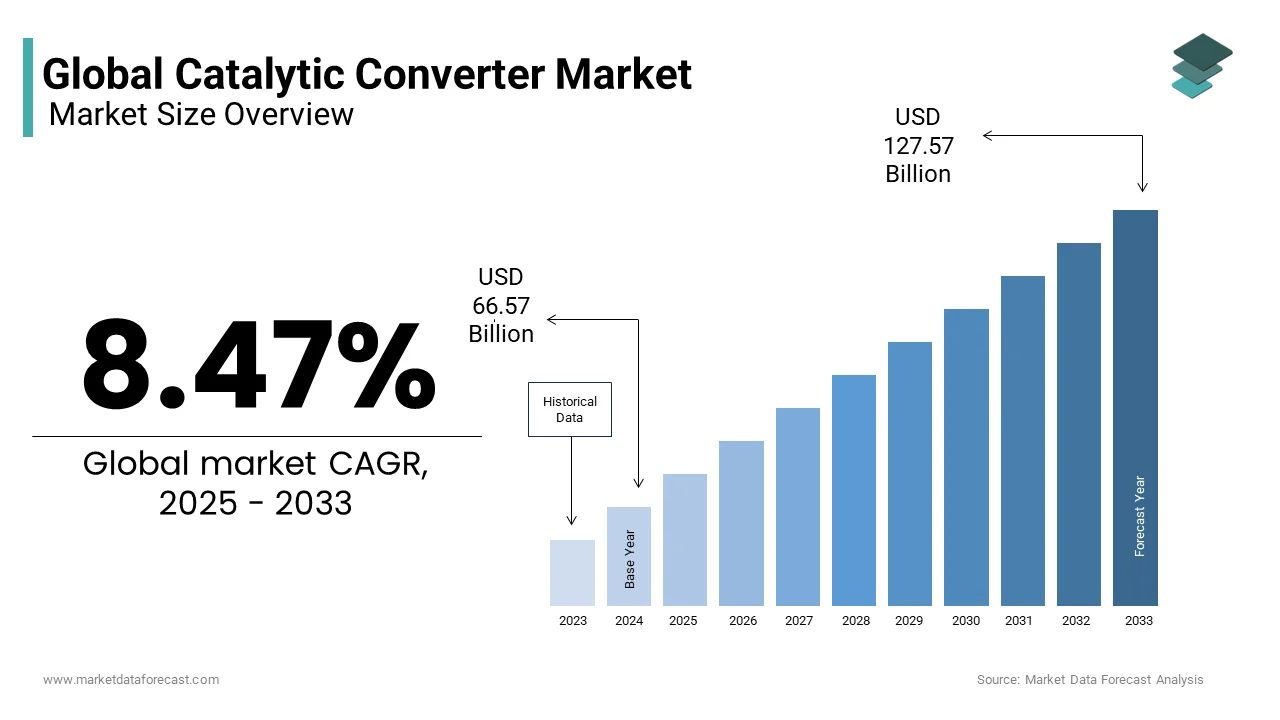
- Market Valuation: Valued at USD 66.57 billion in 2025, estimated at USD 72.21 billion in 2026, and projected to reach USD 138.38 billion by 2034, registering a compound annual growth rate (CAGR) of 8.47% from 2026 to 2034.
- Primary Growth Drivers: Implementation of stringent government emission regulations worldwide, rising automobile production and vehicle parc expansion, and heavy automotive R&D investments focused on curbing global warming and toxic vehicular pollutants.
Key Global Catalytic Converter Market Segment Metrics (2026-2034)
| Category | Leading Segment (Position) | Fastest-Growing / High-Impact Segment |
|---|---|---|
| By Catalyst Type | Rhodium & Palladium (essential precious metal catalysts dominating revenue share due to high efficiency in reducing nitrogen oxides and hydrocarbons) | Tri-Metal Catalysts (innovative formulations enabling partial palladium-to-platinum substitution to manage precious metal costs) |
| By Application | Passenger Cars & Commercial Vehicles (primary high-volume segments driven by strict global exhaust emission thresholds) | Two-wheelers & Off-road Vehicles (rapidly adopting compact small-motor catalytic systems to curb dense urban air pollution) |
| By End-User | OEM (Original Equipment Manufacturer) (dominates volume as standard factory equipment across all newly built combustion engine vehicles) | Aftermarket (high-demand segment driven by periodic replacements, regulatory inspections, and precious metal recycling) |
| By Region | Europe & North America (mature markets enforced by rigorous environmental standards like Euro norms and EPA guidelines) | Asia-Pacific (projected to witness substantial growth spurred by surging car ownership, rising disposable incomes, and stricter air quality policies in developing nations) |
Major Global Catalytic Converter Market Players & Industry Structure
Market Structure: Highly competitive global automotive component landscape featuring specialized emission control leaders, chemical firms, and exhaust system manufacturers competing through advanced substrate designs, electrically heated catalysts, and precious metal recycling initiatives.
Key Companies: Faurecia SA, BASF Catalysts LLC, Eberspaecher GmbH Holding & Co., Magneti Marelli S.P.A, Tenneco Inc., Benteler International AG, Calsonic Kansei Corporation, Standard Motor Products Europe Ltd., Clean Diesel Technologies Inc., BOSAL Group, Futaba Corporation, HJS Emission Technology GmbH & Co. KG, and Jetex Exhausts Ltd.
 Download Free Sample Report
Global Catalytic Converter Market Size
The global catalytic converter market size was valued at USD 66.57 billion in 2025 and is anticipated to reach a vauation of USD 72.21 billion in 2026, from USD 138.38 billion by 2034, growing at a CAGR of 8.47% from 2026 to 2034.
A catalytic converter is an emissions control device fitted into a car's exhaust system to transform toxic engine gases into less harmful substances before they escape through the tailpipe. This market is fundamentally driven by stringent global environmental regulations aimed at improving air quality and mitigating climate change impacts. According to the World Health Organisation, ambient air pollution causes an estimated 4.2 million premature deaths annually, which intensifies governmental pressure to enforce rigorous vehicle emission standards. As per the International Council on Clean Transportation, the transportation sector already accounts for approximately 25% of global anthropogenic CO2 emissions, whereas general energy-related data show that road travel specifically accounts for approximately 15% of total global CO2 emissions. These facts underscore the critical role of catalytic converters in reducing the environmental footprint of the automotive industry. As nations implement stricter norms such as Euro 7 and Bharat Stage VI, the demand for advanced three-way catalysts and diesel oxidation catalysts rises correspondingly. The transition toward cleaner mobility solutions relies heavily on the efficiency of these components to meet regulatory compliance. Consequently, the market evolves in tandem with legislative frameworks and technological advancements in precious metal loading and substrate design, ensuring sustained relevance despite the gradual shift toward electric mobility.
MARKET DRIVERS
Implementation of Stringent Emission Regulations
The implementation of stringent emission regulations propels the catalytic converter market. These regulations mandate the installation of high-efficiency after-treatment systems in all new internal combustion engine vehicles. According to sources, numerous countries globally have established vehicular emission regulations aligned with United Nations Economic Commission for Europe standards to mandate progressive reductions in nitrogen oxide and particulate emissions. This regulatory landscape forces automakers to integrate advanced catalytic technologies such as selective catalytic reduction and lean NOx traps to achieve compliance. As per studies, the regulatory transition to Euro 6 standards has enforced drastic percentage reductions in permissible tailpipe nitrogen oxide emission thresholds relative to previous regulatory stages. Such drastic reductions necessitate higher loadings of precious metals like platinum, palladium, and rhodium within the converter substrate. Manufacturers must continuously innovate to meet these tighter thresholds without compromising engine performance or fuel economy. Governments impose heavy penalties for non-compliant vehicles, which drives widespread adoption across both passenger and commercial segments. The harmonisation of global standards further accelerates market growth as multinational automakers standardise their emission control strategies. This regulatory push ensures that catalytic converters remain indispensable components in the automotive supply chain.
Rising Global Vehicle Production and Sales
Rising global vehicle production and sales boost the catalytic converter market. This growth increases the absolute number of units requiring emission control devices. According to the International Organisation of Motor Vehicle Manufacturers, global motor vehicle production reached 85 million units in 2022, representing an increase over the prior year. Each internal combustion engine vehicle produced requires at least one catalytic converter to meet legal requirements, creating a direct correlation between production volumes and market demand. As per studies, two-wheeler and passenger vehicle markets across developing economies are expanding steadily due to rapid urban development and increasing consumer purchasing power. This expansion in emerging markets where emission norms have recently been tightened creates a surge in demand for basic and advanced catalytic systems. Automakers ramp up production capacities to meet consumer demand, thereby increasing procurement of emission control components. The replacement market also contributes significantly as older vehicles undergo maintenance and converter replacements due to wear or damage. The sheer volume of vehicles on the road ensures a consistent baseline demand for catalytic converters regardless of technological shifts. This volumetric growth sustains market stability and encourages investment in manufacturing infrastructure.
MARKET RESTRAINTS
Accelerated Adoption of Electric Vehicles
The accelerated adoption of electric vehicles restricts the catalytic converter market, which eliminates the need for exhaust after-treatment systems in battery-powered automobiles. According to the International Energy Agency, electric car sales accounted for 18% of total global car sales in 2023, while rising to account for approximately one in four (25%) new cars sold globally by 2025. Since electric vehicles do not produce tailpipe emissions, they do not require catalytic converters, thereby reducing the total addressable market for these components. As per sources, the accelerating pace of global vehicle electrification is projected to cause a substantial long-term decline in the production volume and market demand for traditional internal combustion engine emission systems by 2035. This structural shift poses a long-term threat to manufacturers reliant solely on conventional automotive applications. Governments offering subsidies and tax incentives for electric vehicle purchases further accelerate this transition. Automakers are increasingly allocating research and development budgets toward electric powertrains rather than optimising internal combustion engines. The declining share of internal combustion engine vehicles in new sales forecasts creates uncertainty for future investments in catalytic technology. This restraint forces market participants to diversify their product portfolios or face obsolescence.
Volatility in Precious Metal Prices
Volatility in precious metal prices hampers the catalytic converter market. This instability creates unpredictable cost structures for manufacturers who rely on platinum group metals. According to studies, global prices for rare precious group metals used in automotive catalysts experience heavy volatility driven by regional supply chain constraints in primary producing nations like South Africa and Russia. These metals are essential for the chemical reactions within catalytic converters and constitute a significant portion of the total component cost. As per research, rapid price fluctuations in essential catalyst metals can sharply elevate the baseline manufacturing costs of automotive components and strain supplier profit margins. Automakers often hesitate to pass these costs onto consumers, leading to pressure on suppliers to absorb the financial burden. Supply chain disruptions and geopolitical tensions further exacerbate price instability, making long-term planning difficult. Manufacturers struggle to secure stable supply contracts at fixed prices, leaving them vulnerable to market shocks. This economic uncertainty discourages innovation and investment in new catalytic formulations. The high cost of raw materials also incentivises theft of catalytic converters from parked vehicles, disrupting the aftermarket supply chain.
MARKET OPPORTUNITIES
Development of Advanced Substrate Technologies
The development of advanced substrate technologies offers a significant opportunity for the catalytic converter market. This innovation enables higher efficiency and lower precious metal usage. As per the Society of Automotive Engineers new cellular ceramic substrates with improved geometric surface areas allow for better gas flow and increased catalyst contact. These innovations enable manufacturers to achieve stricter emission standards with reduced amounts of expensive platinum group metals, lowering overall production costs. As per research, advanced substrate architectures can enhance catalyst conversion efficiency and lower exhaust backpressure to improve vehicle fuel economy. This technological advancement appeals to automakers seeking to balance regulatory compliance with performance metrics. Manufacturers can license these advanced designs to differentiate their products in a competitive market. The opportunity extends to hybrid vehicles, which require specialised catalysts that function effectively during frequent start-stop cycles. Research into alternative materials such as perovskite-based catalysts offers potential for cost reduction and sustainability. Collaboration between material scientists and automotive engineers accelerates the commercialisation of these breakthroughs. This innovation cycle creates value-added opportunities beyond traditional commodity supply.
Growth in Hybrid Vehicle Segment
The growth in the hybrid vehicle segment unlocks potential for the catalytic converter market. This expansion creates demand for specialised emission control systems tailored to unique operating conditions. As per reports, consumer demand for hybrid electric vehicles has grown significantly across major automotive markets as drivers adopt electrified powertrains. Hybrid engines operate intermittently, which causes catalysts to cool down and lose efficiency, requiring advanced thermal management solutions. The Journal of Automotive Engineering notes that hybrid-specific catalytic converters incorporate electric heating elements to maintain optimal operating temperatures during idle periods. This specialisation allows manufacturers to command premium prices for technologically sophisticated components. The extended lifespan of hybrid engines also drives demand for durable and high-performance catalysts. Automakers are investing in optimised after-treatment systems for plug-in hybrids, which combine electric and combustion power. This niche segment provides a stable revenue stream as the transition to full electric mobility takes decades. Manufacturers who develop expertise in hybrid emission control can secure long-term partnerships with major automotive brands. This trend bridges the gap between conventional and electric technologies.
MARKET CHALLENGES
Theft and Illicit Trade of Catalytic Converters
Theft and illicit trade of these converters challenge the catalytic converter market. This illegal activity disrupts supply chains and increases insurance and replacement costs for consumers. According to the National Insurance Crime Bureau, catalytic converter thefts in the United States experienced a sharp decline, with 2024 insurance claims showing a 68% decrease compared to the previous year. This criminal activity removes functional components from the legitimate aftermarket, forcing owners to purchase replacements at inflated prices. As per reports, illicit criminal networks frequently target high-value automotive components for smuggling into international jurisdictions that lack strict environmental oversight and material tracking controls. This illicit trade undermines legitimate manufacturers who comply with strict labour and environmental standards. Insurance companies respond by raising premiums for vehicles prone to theft, which may discourage ownership of older models. Law enforcement agencies struggle to track and recover stolen parts due to the ease of removal and anonymity of scrap dealers. The prevalence of theft creates a negative perception of vehicle security, affecting brand reputation. Manufacturers face pressure to design tamper-proof housings, which adds complexity and cost to production. This challenge distorts market dynamics and reduces trust in the aftermarket ecosystem.
Recycling and Environmental Compliance Issues
Recycling and environmental compliance issues impede the growth of the catalytic converter market. This slowing effect occurs because compliance frameworks impose strict regulations on the disposal and processing of spent units. As per the Basel Convention, international treaties regulate the transboundary movement of hazardous waste, including used catalytic converters containing toxic residues. Manufacturers and recyclers must invest in advanced processing facilities to safely extract precious metals without releasing harmful byproducts into the environment. According to sources, poor waste management and improper processing of decommissioned industrial components can release toxic heavy metals into nearby ecosystems, exposing operations to regulatory fines and litigation. Small-scale recyclers often lack the capital to meet these stringent standards, leading to market consolidation and reduced competition. The complexity of separating different types of catalysts from various vehicle models increases operational costs. Regulatory bodies are increasingly scrutinising the entire lifecycle of catalytic converters from production to disposal. Companies must maintain detailed documentation and traceability to prove compliance with environmental laws. This administrative burden diverts resources from innovation and product development. The push for circular economy principles requires manufacturers to design converters that are easier to recycle, adding another layer of technical complexity.
REPORT COVERAGE
| REPORT METRIC | DETAILS |
| Market Size Available | 2025 to 2034 |
| Base Year | 2025 |
| Forecast Period | 2026 to 2034 |
| CAGR | 8.47% |
| Segments Covered | By Type, Material, Substrate, Catalyst, Application, Technology, and Region. |
| Various Analyses Covered | Global, Regional & Country Level Analysis, Segment-Level Analysis, DROC, PESTLE Analysis, Porter’s Five Forces Analysis, Competitive Landscape, Analyst Overview of Investment Opportunities |
| Regions Covered | North America, Europe, APAC, Latin America, Middle East & Africa |
| Market Leaders Profiled | Faurecia SA, BASF Catalysts LLC, Eberspaecher GmbH Holding & Co., Magneti Marelli S.P.A, Tenneco Inc., Benteler International AG, Calsonic Kansei Corporation, Standard Motor Products Europe Ltd., Clean Diesel Technologies Inc., BOSAL Group, Futaba Corporation, HJS Emission Technology GmbH & Co. KG, Jetex Exhausts Ltd., and Others. |
SEGMENTAL ANALYSIS
By Type Insights
Three-Way Catalytic Converter
In 2025, the three-way catalytic converter segment held the most prominent share in the catalytic converter market because of its universal application in gasoline-powered passenger vehicles, which constitute the largest volume of global automotive production. This supremacy was supported by regulatory mandates and the technical necessity of simultaneous pollutant reduction.
Strict emission regulations for gasoline engines propel the dominance of the three-way catalytic converter by requiring the simultaneous conversion of carbon monoxide, hydrocarbons and nitrogen oxides into harmless substances. Also, the regulatory framework necessitates the use of high-efficiency three-way catalysts that can operate effectively across varying air-fuel ratios. According to the International Council on Clean Transportation, over 70 countries have adopted similar stringent norms for spark-ignition engines, creating a global baseline demand for this technology. Manufacturers cannot substitute this component with simpler alternatives as it is the only system capable of addressing all three major pollutants simultaneously in stoichiometric engines. The widespread adoption of gasoline direct injection technologies further reinforces the need for advanced three-way catalysts that can handle higher exhaust temperatures and pressures. Compliance with these laws is mandatory for vehicle registration, making the three-way converter an indispensable component. This regulatory lock-in ensures sustained market leadership regardless of minor technological shifts in engine design.
The sheer volume of passenger car production boosts the Three-Way Catalytic Converter segment by creating massive baseline demand from original equipment manufacturers. Since the vast majority of these vehicles utilise gasoline or flexible fuel engines, they require three-way catalytic converters to meet legal requirements. As per studies, the specialised precious metal composition and core substrate structural build of a three-way catalytic converter represent a distinct percentage of a passenger vehicle's overall assembly and component manufacturing budget. The consistency in engine architecture across different brands allows for economies of scale in catalyst production, lowering unit costs while maintaining high quality. Emerging markets in Asia and Latin America are experiencing rapid growth in private car ownership, further amplifying this demand. The replacement cycle for these components also contributes to aftermarket volumes as converters degrade over time. This volumetric advantage ensures that the three-way converter remains the most produced and consumed type of emission control device. The standardisation of this technology across the industry simplifies manufacturing processes and supply chain logistics.
Selective Catalytic Reduction
The selective catalytic reduction segment is on the rise and is expected to be the fastest-growing segment in the market, witnessing a CAGR of 6.5% during the forecast period. This growth is propelled by stringent diesel emission norms and commercial vehicle expansion.
Stringent diesel emission norms accelerate the adoption of Selective Catalytic Reduction systems by mandating significant reductions in nitrogen oxide emissions from heavy-duty vehicles. As per the European Environment Agency, the Euro VI standards require diesel trucks to reduce nitrogen oxide emissions by 80% compared to Euro V limits, which is unachievable with diesel oxidation catalysts alone. This regulatory pressure forces manufacturers to integrate SCR systems that use urea-based reductants to convert nitrogen oxides into nitrogen and water. As per research, selective catalytic reduction architectures operate as the primary technological framework deployed to safely meet stringent regulatory exhaust limits during variable real-world driving environments. Governments in North America and Europe are increasingly enforcing these standards through roadside testing and remote sensing technologies, ensuring compliance. Non-compliant vehicles face heavy fines and operational restrictions, creating a strong incentive for fleet operators to adopt SCR-equipped vehicles. The technology is also becoming mandatory for off-road machinery and marine applications, expanding its addressable market. This regulatory push drives rapid innovation in catalyst formulation and dosing systems to improve efficiency and reduce reagent consumption. The inevitability of these regulations ensures sustained high growth for the SCR segment.
The expansion of the commercial vehicle fleet fuels the rapid growth of the Selective Catalytic Reduction segment by increasing the number of heavy-duty diesel engines requiring advanced aftertreatment. According to the American Trucking Associations, freight tonnage in the United States is projected to grow by 28% by 2031, heavily propelled by commercial expansions, logistics demand, and broad economic industrial activity. This growth necessitates a larger fleet of trucks and buses, which predominantly run on diesel engines subject to strict emission controls. As per reports, commercial vehicle sales and commercial truck deployments continue expanding across various international markets, with substantial volume gains captured by developing countries updating their legal vehicle operations. Each new commercial vehicle requires a robust SCR system to manage high nitrogen oxide loads generated during heavy load operations. Fleet operators are also retrofitting older vehicles with SCR kits to extend their operational life and comply with urban access restrictions. The durability requirements of commercial applications drive demand for high-performance catalysts that can withstand long service intervals. This structural growth in logistics and transportation creates a steady and expanding demand base for SCR technology. The shift toward cleaner freight transport supports long-term market viability.
By Material Insights
Ceramic
The ceramic segment was the largest in 2025 and occupied a commanding share of the catalytic converter market. This prominence was credited to its superior thermal stability and cost-effectiveness for mass market applications.
The exceptional thermal stability of ceramic substrates drives their market leadership by allowing them to withstand the high exhaust temperatures of modern engines without degrading. As per the Society of Automotive Engineers, ceramic honeycomb structures can endure temperatures exceeding 1000 degrees Celsius, which is common in high-performance gasoline and diesel engines. This resistance to thermal shock ensures long-term durability and consistent emission control performance over the vehicle lifespan. The Journal of Materials Science states that cordierite ceramics exhibit minimal expansion under heat, reducing the risk of cracking or failure during rapid temperature changes. This reliability is crucial for meeting warranty requirements and maintaining regulatory compliance throughout the vehicle life. Manufacturers prefer ceramic materials because they provide a stable platform for precious metal washcoats, ensuring optimal catalytic activity. The ability to maintain structural integrity under extreme conditions reduces the frequency of replacements and maintenance costs. This performance attribute makes ceramic the default choice for most passenger car applications where reliability is paramount. The proven track record of ceramic materials builds trust among automakers and consumers alike.
The cost-effectiveness of ceramic substrates propels their dominance by enabling affordable production of catalytic converters for high-volume vehicle segments. According to sources, ceramic honeycomb formulations remain structurally simpler to scale through automated thermal processing compared to core metallic substrates, yielding general cost efficiencies in raw material manufacturing. This price advantage is critical for automakers operating on thin margins in competitive markets. The large-scale production of ceramic honeycombs allows for significant economies of scale, further reducing unit costs. Manufacturers can produce millions of units annually with consistent quality, meeting the demands of global automotive supply chains. The lower material cost allows for the allocation of more budget toward precious metal loading, which is the primary driver of catalytic efficiency. Small and medium-sized vehicle manufacturers particularly benefit from the affordability of ceramic options, enabling them to comply with emission standards without prohibitive costs. The widespread availability of ceramic suppliers ensures competitive pricing and supply security. This economic efficiency sustains the leading position of ceramic materials in the global market.
Metallic
The metallic segment is likely to experience the fastest CAGR of 5.8% during the forecast period, owing to the demand for compact designs and rapid light-off performance.
The demand for compact and lightweight catalytic converters accelerates the growth of metallic substrates by offering design flexibility that ceramics cannot match. As per the Society of Automotive Engineers, metallic foils can be formed into complex shapes and tighter radii, allowing for installation in space-constrained engine bays of modern vehicles. This flexibility is essential for hybrid and downsized turbocharged engines where packaging space is limited. The Journal of Engineering for Gas Turbines and Power states that automotive catalytic substrates historically transitioned through commercial cell densities between 200 and 600 cells per square inch, while modern metallic configurations can exceed 1000 cells per square inch to enhance surface conversion area. Automakers are increasingly prioritising weight reduction to improve fuel economy and electric range, making lightweight metallic converters attractive. The ability to integrate the catalyst closer to the engine manifold facilitates faster heating and improved cold start emissions. This design advantage is particularly valuable in premium and performance vehicles where space and weight are critical factors. The trend toward modular exhaust systems further supports the adoption of metallic substrates. This engineering benefit drives rapid adoption in new vehicle platforms.
The superior thermal conductivity of metallic substrates fuels their rapid growth by enabling faster light-off times, which is crucial for meeting cold start emission standards. According to the United States Environmental Protection Agency, up to 80% of vehicle emissions occur during the first few minutes of operation before the catalyst reaches operating temperature. Metallic substrates heat up significantly faster than ceramic ones due to their lower thermal mass and higher conductivity. As per research, metallic substrates feature high thermal conductivity and low thermal mass relative to equivalent ceramic structures, allowing them to shorten the required duration to achieve full operational light-off during cold starts. This performance advantage is critical for complying with Real Driving Emissions tests, which include cold start cycles. Automakers use metallic substrates in close-coupled positions to maximise this benefit. The improved efficiency allows for reduced precious metal loading while maintaining compliance, lowering overall system costs. This technical superiority makes metallic substrates the preferred choice for advanced emission control strategies. The focus on real-world performance drives sustained growth for this segment.
By Application Insights
Passenger Cars
The passenger cars segment dominated the catalytic converter market and accounted for a substantial share in 2025. This dominance was driven by high global production volumes and stringent emission norms for personal vehicles.
The high volume of passenger car production drives the dominance of this segment by creating massive demand for emission control systems. According to the International Organisation of Motor Vehicle Manufacturers, global passenger car production reached 71.3 million units out of 96.4 million total motor vehicles produced globally in 2025. Each of these vehicles requires at least one catalytic converter to meet legal requirements, establishing a strong baseline demand. As per research, the structural service life and active fleet durability of passenger vehicles establish a multi-year cyclical replacement framework for new vehicle deliveries. Emerging economies in Asia and Latin America are experiencing rapid motorisation, further boosting production numbers. The diversity of engine types in passenger cars, including gasoline, diesel, and hybrid, ensures broad applicability for various catalyst technologies. Manufacturers benefit from standardised platforms that allow for efficient integration of catalytic converters. This volumetric scale ensures that the passenger car segment remains the primary revenue generator for catalyst suppliers. The consistent growth in global mobility needs sustains this leadership position.
Strict emission regulations for personal vehicles propel the passenger car segment by mandating advanced after-treatment systems for all new models. As per the European Commission, Euro 7 standards will impose even stricter limits on particle number and nitrogen oxide emissions for passenger cars, requiring more sophisticated catalyst designs. These regulations force automakers to invest in high-efficiency converters to avoid penalties and maintain market access. The International Council on Clean Transportation states that passenger cars contribute significantly to urban air pollution, making them a primary target for regulatory action. Governments are implementing real-world driving tests to ensure compliance beyond laboratory conditions. This regulatory pressure drives continuous innovation and upgrades in catalytic converter technology. Consumers are also becoming more aware of environmental impacts, influencing purchasing decisions toward cleaner vehicles. The combination of regulatory mandates and consumer preference ensures sustained demand for high-performance catalysts in this segment. This dual driver maintains the segment's market leadership.
Commercial Vehicles
The commercial vehicles segment is expected to exhibit a noteworthy CAGR of 6.2% between 2026 and 2034. This expansion is propelled by logistics expansion and heavy-duty emission norms.
The expansion of logistics and e-commerce activities accelerates the growth of the commercial vehicle segment by increasing demand for freight transportation. According to studies, global commercial shipping activities and international trade logistics maintain steady growth trajectories, necessitating expanded logistical fleets of transport assets. These commercial vehicles predominantly use diesel engines, which require robust catalytic converters to meet emission standards. The American Trucking Associations notes that the US trucking industry moves 72% of the nation's freight, highlighting the critical role of commercial transport. Each new truck requires advanced after-treatment systems, including selective catalytic reduction and diesel particulate filters. The rise of last-mile delivery services further boosts demand for medium-duty vehicles equipped with emission control devices. This structural growth in the supply chain creates a steady and expanding market for commercial vehicle catalysts. The shift toward cleaner freight transport supports long-term investment in this segment.
Stringent emission regulations for heavy-duty vehicles fuel rapid growth by mandating advanced after-treatment technologies for trucks and buses. As per the United States Environmental Protection Agency, the Clean Trucks Plan establishes separate heavy-duty engine standards to drastically reduce tailpipe nitrogen oxide (NOx) emissions starting in 2027, alongside distinct Phase 3 greenhouse gas standards regulating carbon dioxide (CO2). These norms force manufacturers to adopt complex systems like selective catalytic reduction, which are more expensive and technologically advanced. The International Transport Forum notes that many developing countries are adopting Euro VI equivalent standards for heavy-duty vehicles, creating new market opportunities. Compliance with these regulations is mandatory for operating licenses, ensuring widespread adoption. Fleet operators are incentivised to upgrade to newer, cleaner vehicles to avoid urban access restrictions. This regulatory push drives innovation in durable and efficient catalysts for heavy-duty applications. The high value of these systems contributes significantly to market growth. The focus on reducing industrial pollution ensures sustained demand.
By End User Insights
OEM
The original equipment manufacturer segment led the catalytic converter market and captured a significant share in 2025. This leading position was attributed to mandatory installation of emission control systems in all new vehicles.
Mandatory regulatory compliance propels the OEM segment by requiring every new vehicle to be equipped with a certified catalytic converter before sale. According to the United Nations Economic Commission for Europe, type-approval regulations under the 1958 Agreement establish uniform technical prescriptions that mandate emission limits for vehicles, which typically require manufacturer-installed, approved after-treatment systems for compliance. This legal requirement ensures that OEMs are the primary buyers of catalytic converters, creating a captive market. As per sources, non-compliant vehicles cannot receive type approval or registration for sale, but distribution occurs through multi-tier franchised dealership networks rather than an OEM direct-sales channel. Automakers integrate catalysts into the vehicle design process, ensuring optimal performance and durability. The volume of new vehicle sales directly translates to OEM demand, providing predictable revenue streams for suppliers. Long-term contracts between OEMs and catalyst manufacturers ensure supply stability. This regulatory lock-in makes the OEM segment the largest and most stable part of the market. The inability to bypass this requirement sustains its dominance.
The integration of catalytic converters with engine design boosts the OEM segment by making them an intrinsic part of the powertrain system. According to the Society of Automotive Engineers, modern internal combustion engines and engine management systems are co-designed and integrated with exhaust emission control components to meet regulatory limits while optimising fuel economy and performance. This close coupling requires OEMs to source catalysts that are specifically tailored to their engine characteristics. As per research, vehicle-specific original equipment catalyst formulations are calibrated directly to individual engine management calibrations and exhaust gas compositions. OEMs work closely with suppliers to develop proprietary formulations that meet specific brand requirements. This collaboration creates high barriers to entry for competitors and strengthens existing relationships. The complexity of integration ensures that OEMs remain the primary channel for advanced catalyst technologies. The focus on system-level optimisation drives demand for high-quality OEM components. This technical dependency sustains the segment's market leadership.
Aftermarket
The aftermarket segment is predicted to witness the highest CAGR of 5.5% over the forecast period. This surge is fuelled by vehicle ageing and replacement demand.
The ageing global vehicle population accelerates the growth of the aftermarket segment by increasing the need for replacement catalytic converters. According to studies, the average age of light vehicles in operation in the United States reached a record high of 12.5 years in 2023. Older catalysts lose efficiency over time due to thermal degradation and contamination, necessitating replacement to pass emission tests. As per research, catalytic converters are designed to last between 100,000 and 150,000 miles or about 10 years, though lifespan depends on proper engine maintenance and avoidance of contamination. This natural wear and tear creates a steady demand for replacement units independent of new car sales. Vehicle owners are motivated to replace faulty converters to avoid fines and ensure vehicle reliability. The large installed base of vehicles ensures a consistent and growing aftermarket. This demographic trend supports sustained growth for replacement parts suppliers.
Stricter inspection and maintenance programs fuel rapid growth in the aftermarket by enforcing emission compliance for existing vehicles. As per the California Bureau of Automotive Repair and the California Air Resources Board, biennial Smog Check inspections are required for most vehicles over eight model years old, mandating fully functional, compliant original equipment or CARB-approved catalytic converters to pass. Similar programs are being implemented in other regions to improve urban air quality. These inspections identify failing catalysts and mandate their replacement, creating immediate demand. As per reports, emissions testing programs use onboard diagnostics (OBD-II) and tailpipe analysis to flag emissions faults and non-functioning emissions equipment, prompting required maintenance. Vehicle owners cannot ignore these requirements if they wish to keep their cars on the road. This regulatory enforcement ensures a steady flow of business for aftermarket suppliers. The increasing stringency of tests drives demand for high-quality replacement units. This policy-driven demand supports rapid market expansion.
REGIONAL ANALYSIS
Asia Pacific Market Analysis
Asia Pacific was the top performer in the catalytic converter market and accounted for a substantial share in 2025. This dominance was driven by massive automotive production and tightening emission standards in China and India. According to the China Association of Automobile Manufacturers (CAAM), China produced a record 34.531 million vehicles and sold 34.40 million units in 2025, solidifying its position as the world's largest automotive market for the 17th consecutive year. This production volume creates immense demand for catalytic converters from both domestic and international manufacturers. The Indian Ministry of Road Transport and Highways implemented Bharat Stage VI norms, which are equivalent to Euro 6 standards, requiring advanced after-treatment systems for all new vehicles. This regulatory shift has transformed the Indian market from basic to advanced catalyst technologies. The region's growing middle class is driving increased vehicle ownership, further boosting demand. Local manufacturing hubs in Thailand and Indonesia support regional supply chains. Government incentives for cleaner vehicles encourage adoption of advanced emission control technologies. The presence of major global catalyst suppliers in the region ensures competitive pricing and technology transfer. These factors combine to make Asia Pacific the largest and fastest-growing regional market.
Europe Market Analysis
Europe was positioned second in the catalytic converters market in 2025. This position was supported by stringent emission standards and early adoption of advanced technologies. According to the European Commission, the initial Euro 7 standard regulatory proposals outlined impacts targeting a 35% reduction in tailpipe nitrogen oxide (NOx) emissions from cars and light vans, and a 56% reduction from heavy-duty buses and trucks by 2035 compared to Euro 6/VI limits. This aggressive regulatory framework drives continuous innovation in catalyst formulations and substrate designs. The European Automobile Manufacturers Association notes that diesel passenger car sales are declining, but commercial vehicle demand remains strong, requiring selective catalytic reduction systems. The region's strong focus on air quality in urban centres leads to strict enforcement of emission tests. High labour costs drive automation in catalyst manufacturing, improving efficiency. The push toward electrification is impacting the market, but hybrid vehicles still require sophisticated catalysts. Recycling initiatives for precious metals are well established, supporting sustainability goals. The region's technical expertise ensures leadership in high-end catalyst technologies. These dynamics maintain Europe's position as a key innovation hub.
North America Market Analysis
North America is a significant player in the catalytic converters market because of strict EPA regulations and a large existing vehicle fleet. The large average age of vehicles in the United States creates a robust aftermarket for replacement converters. According to data compiled from the Federal Highway Administration (FHWA) and published via the Bureau of Transportation Statistics, the total number of registered motor vehicles in the United States reached an all-time high, exceeding 284 million units in 2023 and 297 million units by 2024. Canada and Mexico are harmonising their standards with the US, facilitating cross-border trade and standardised production. The region's high disposable income supports premium vehicle sales, which often feature advanced emission control systems. Theft of catalytic converters is a notable challenge affecting the aftermarket dynamics. Strong enforcement of emission testing in states like California ensures compliance. The shift toward electric vehicles is gradual, allowing the internal combustion engine market to remain relevant. These factors sustain steady demand in the region.
Latin America Market Analysis
Latin America is an emerging player in the catalytic converter market due to the gradual adoption of stricter emission norms and increasing vehicle ownership. According to the Economic Commission for Latin America and the Caribbean, several countries, including Brazil and Mexico, have adopted Euro 5 or Euro 6 equivalent standards for new vehicles. This regulatory progression is driving the transition from basic to advanced catalytic technologies. The Inter-American Development Bank notes that the vehicle parc in the region is growing at 3% annually, driven by urbanisation and economic recovery. Brazil's Proconve program mandates strict emission limits for locally produced vehicles, boosting domestic catalyst production. Mexico's proximity to the United States facilitates access to advanced technologies and components. The region's high import tariffs encourage local manufacturing of emission control systems. Economic volatility can impact new car sales, but the ageing fleet supports aftermarket growth. Awareness of air quality issues is rising, leading to stronger enforcement of regulations. These trends create opportunities for market expansion and technology upgrades.
Middle East and Africa Market Analysis
The Middle East and Africa region is a growing player in the catalytic converter market, owing to urbanisation and initial regulatory frameworks. As per the Gulf Standardisation Organisation, GCC countries have implemented emission standards aligned with Euro 4 and Euro 5 norms, requiring catalytic converters for all new imports. South Africa has adopted Euro 2 standards for new vehicles, creating a baseline demand for emission control devices. The African Development Bank notes that vehicle imports in the region are increasing as infrastructure improves and incomes rise. The harsh climatic conditions in the Middle East require durable catalysts that can withstand high temperatures. The lack of comprehensive recycling infrastructure poses challenges for precious metal recovery. Informal markets for used vehicles often bypass emission controls, but formal sectors are growing. Government initiatives to improve air quality in major cities like Dubai and Johannesburg are driving regulatory improvements. The region's potential for growth is significant as standards tighten and vehicle ownership expands. These developments lay the foundation for future market expansion.
COMPETITIVE LANDSCAPE
The competition in the Catalytic Converter Market is characterized by a mix of specialized chemical giants and integrated automotive suppliers vying for dominance through technological innovation and supply chain control. Multinational corporations leverage their extensive research capabilities to offer high efficiency catalysts that meet stringent global emission standards. They focus on building strong technical support networks to assist manufacturers with complex formulation challenges. Local players compete by providing cost effective alternatives and leveraging deep understanding of regional regulatory requirements. The market sees intense rivalry in the precious metal sourcing segment as companies seek to minimize exposure to price volatility. Regulatory variations across countries create barriers to entry but also opportunities for specialized compliance services. Price sensitivity in mass market segments drives competition on manufacturing efficiency while premium sectors emphasize performance and durability. Collaborations between material suppliers and automakers facilitate joint development of next generation emission control systems. The presence of established recycling infrastructure adds another layer of competition based on sustainability credentials. Overall the competitive landscape demands continuous adaptation to changing regulatory requirements technological advancements and shifting consumer preferences to sustain growth and profitability in this critical automotive sector.
KEY MARKET PLAYERS
A few of the market players in the catalyst converter market include
- Faurecia SA
- BASF Catalysts LLC
- Eberspaecher GmbH Holding & Co.
- Johnson Matthey
- Magneti Marelli S.P.S.P.Aenneco Inc.
- Benteler International AG
- Umicore
- Calsonic Kansei Corporation
- Standard Motor Products Europe Ltd.
- Clean Diesel Technologies Inc.
- BOSAL Group
- Futaba Corporation
- HJS Emission Technology GmbH & Co. KG
- Jetex Exhausts Ltd.
Top Players In The Market
- BASF SE serves as a global leader in catalytic converter technologies with extensive expertise in precious metal formulation and substrate design. The company provides advanced three way catalysts and selective catalytic reduction systems to major automotive manufacturers worldwide. Recent actions include expanding its catalyst production facility in Shanghai to meet rising demand from Asian automakers. This expansion enables BASF to offer localized support and faster delivery times for regional clients. The corporation focuses on developing low platinum group metal formulations to reduce costs while maintaining high efficiency. BASF collaborates with research institutions to innovate new materials that withstand higher exhaust temperatures. Its commitment to sustainability drives investment in recycling programs for spent catalysts. These strategic initiatives strengthen its position as a preferred partner for emission control solutions. BASF continuous innovation ensures compliance with evolving global emission standards.
- Johnson Matthey contributes significantly to the Catalytic Converter Market through its specialized portfolio of platinum group metal technologies and emission control systems. The entity combines deep chemical expertise with engineering capabilities to deliver high performance catalysts for gasoline and diesel engines. Recent actions involve launching a new generation of close coupled catalysts designed for hybrid vehicles to improve cold start efficiency. This launch addresses the unique thermal challenges of intermittent engine operation in electrified powertrains. Johnson Matthey partners with OEMs to co develop customized solutions that optimize space and weight. The company emphasizes circular economy principles by recovering and refining precious metals from end of life converters. Its global technical centers provide rapid prototyping and testing services for clients. These efforts enhance product reliability and drive adoption of advanced after treatment technologies. Johnson Matthey dedication to clean air solutions supports long term market relevance.
- Umicore plays a key role in the market by integrating precious metal recycling with advanced catalyst manufacturing capabilities. The company utilizes its closed loop system to source sustainable raw materials for producing high quality catalytic converters. Recent actions include upgrading its recycling plant in Hoboken to increase recovery rates of rhodium and palladium from industrial waste. This upgrade ensures a stable supply of critical metals reducing dependency on primary mining sources. Umicore focuses on developing ultra thin wall substrates that improve gas flow and conversion efficiency. The corporation collaborates with regulatory bodies to establish standards for sustainable catalyst production. Its digital platforms offer customers transparency in material sourcing and environmental impact. These initiatives enhance brand value and appeal to eco conscious automotive brands. Umicore vertical integration provides cost advantages and supply chain resilience. This strategic positioning strengthens its competitive edge in the global market.
Top Strategies Used By Key Market Participants
Key players in the Catalytic Converter Market employ vertical integration strategies to secure stable supplies of precious metals and reduce cost volatility. Companies invest heavily in research and development to create low loading formulations that maintain high efficiency while minimizing material usage. Strategic partnerships with automotive OEMs facilitate co development of customized emission control systems tailored to specific engine architectures. Product diversification is a common approach with firms expanding into hybrid and heavy duty applications to mitigate risks from electric vehicle adoption. Manufacturers focus on sustainability by implementing closed loop recycling programs for spent catalysts. Digital tools enable real time monitoring of catalyst performance and predictive maintenance for fleet operators. Educational campaigns target regulators and consumers to highlight the environmental benefits of advanced catalytic technologies. Mergers and acquisitions allow companies to consolidate expertise and expand geographic reach efficiently. These combined approaches ensure sustained competitiveness and growth in a dynamic market environment.
MARKET SEGMENTATION
This research report on the global catalytic converter market has been segmented and sub-segmented based on thee, catalyst, and region.
By Type:
- Three-Way Catalytic Converter (TWC)
- Diesel Oxidation Catalyst (DOC)
- Selective Catalytic Reduction (SCR)
- Lean NOx Trap (LNT)
- Others
By Material:
- Ceramic
- Metallic
By Substrate:
- Cordierite
- Silicon Carbide
- Metal
By Catalyst:
- Platinum
- Palladium
- Rhodium
By Application:
- Passenger Cars
- Commercial Vehicles
- Two-wheelers
- Off-road Vehicles
- Others (Marine, Aviation)
By Technology:
- Gasoline Catalytic Converter
- Diesel Catalytic Converter
By End-user:
- OEM (Original Equipment Manufacturer)
- Aftermarket
By Region
- North America
- Europe
- Asia Pacific
- Latin America
- Middle East and Africa