- Product Description Description
- Table of Contents TOC
- List of Table & Figure LOT
- Get Free Sample PDF Sample PDF
Market Size, 2025
$4.17 BnMarket Estimate, 2026
$4.57 BnMarket Forecast, 2034
$9.44 BnCAGR, 2026–2034
9.5%Global Cellular Health Screening Market Size, Growth, Trends & Forecast (2026–2034)
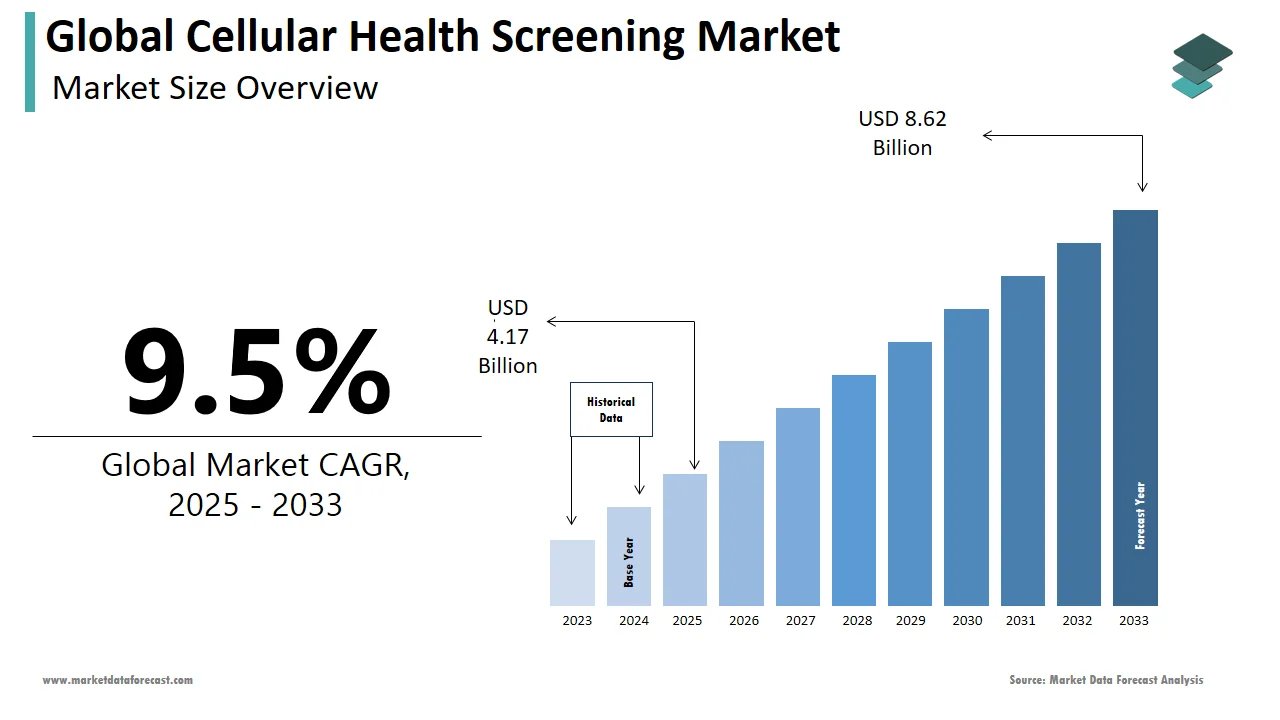
The global cellular health screening market size was valued at USD 4.17 billion in 2025, is estimated to be worth USD 4.57 billion in 2026, and is projected to scale up to USD 9.44 billion by 2034, registering a compound annual growth rate (CAGR) of 9.5% during the forecast period from 2026 to 2034. Driven by the rising adoption of personalized medicine, growing geriatric population, and increased focus on preventive healthcare, the global industry continues to expand steadily.
Key Executive Metrics (At-a-Glance)
- 2025 Base Valuation: USD 4.17 Billion
- 2026 Current Valuation: USD 4.57 Billion
- 2034 Forecast Valuation: USD 9.44 Billion
- Compound Annual Growth Rate (CAGR): 9.5% (2026–2034)
- Dominant Test Panel Segment: Single Test Panels (led by telomere tests due to high accuracy in assessing cellular aging and health status)
- Fastest-Growing Sample Collection Segment: At-Home Sample Collection (surging due to user-friendly self-sampling acceptance and remote diagnostics demand)
- Dominant Region: North America (holding the leading market share supported by advanced healthcare technology and early adoption of innovative devices)
- Fastest-Growing Region: Asia-Pacific (projected for rapid expansion driven by growing target populations and improving healthcare infrastructure)
Core Market Drivers
- Personalized Medicine & Telomere Programs: Increasing integration of cellular tests into precision medicine and widespread adoption of telomere-focused wellness plans.
- Aging Population & Chronic Diseases: Growing global geriatric demographics and escalating incidences of lifestyle-related chronic and genetic disorders.
- Direct-to-Consumer Diagnostics: Rising popularity of direct-to-consumer approaches and at-home testing kits providing convenient personal health monitoring.
Primary Market Restraints & Challenges
- High Costs and Economic Shifts: Expensive test kit pricing and volatile economic changes restricting broad commercial accessibility.
- Logistical Sample Risks: Complexities and strict temperature/timing controls required for safe biological sample transport from collection sites to laboratories.
Global Cellular Health Screening Market Segmentation Breakdown
| Segment Category | Leading Sub-Segment (2025 Base) | Fastest-Growing Sub-Segment (2026–2034) |
|---|---|---|
| By Test Panels Type | Single Test Panels / Telomere Tests (dominant share for precise cellular aging and risk assessment) | Single Test Panels (driven by targeted preventive healthcare and wellness programs) |
| By Sample Type | Blood Samples (retaining major market share due to comprehensive biomarker diagnostic reliability) | Blood Samples & Alternative Samples (expanding via novel non-invasive assay kits) |
| By Sample Collection Site | In-Office Sample Collection (traditional clinical settings managing high diagnostic volumes) | At-Home Sample Collection (fastest-growing segment accelerated by remote and self-sampling trends) |
Major Industry Players Profiled
Key enterprises shaping the competitive global cellular health screening market include Genova Diagnostics, Quest Diagnostics, Telomere Diagnostics, Life Length, Repeat Diagnostics, SpectraCell Laboratories, Zimetry LLC, Cell Science Systems, Titanovo, Inc., Segterra, Inc., LabCorp Holdings, BioReference Laboratories, Immundiagnostik AG, and Cleveland HeartLab, Inc.
Global Cellular Health Screening Market Size
The size of the global cellular health screening market was worth USD 4.17 billion in 2025. The global market is anticipated to grow at a CAGR of 9.5% from 2026 to 2034, reaching a value of USD 9.44 billion by 2034, up from USD 4.57 billion in 2026.
Individuals can use cellular health screening to gain a quick and simple understanding of their health on a cellular level. Professionals may use the technology to identify areas that require immediate attention and create an individualized plan to achieve effective outcomes. For example, fat mass, cellular toxicity, intracellular and extracellular fluid levels, cellular health and function, and muscle mass quality may all be determined with cellular health screening. In addition, people can use technology to keep track of their general health, particularly if they want to know whether they have any chronic conditions that might be deadly. Furthermore, governmental impositions and limitations on transportation, export, and import of products, raw materials, and other products disrupt the supply chain during the pandemic. As a result, demand has decreased, and many companies have shifted their product portfolios from cellular health testing to COVID-19 molecular testing.
Cellular health screening provides a cellular-level review of health, which helps doctors and practitioners understand how the body works and functions on a cellular level. Cellular health screening is essential in precision medicine since it allows easy monitoring and control of therapy methods. It also provides information on muscle tone and mass, and cellular activity, which has expanded its use in routine health screenings. Personal or suggested cellular health screenings are available. Within a tissue culture incubator, a live cell analysis system allows for real-time, quantitative live-cell tests. The system enables tests to be carried out and findings to be sent. There are other single-test cellular health screening kits on the market. The use of home-based diagnostics is growing rapidly across the world. Public awareness programs focused on recognizing the signs of chronic diseases and preventing them are crucial in limiting disease spread. Using these devices also eliminates the need to wait for test results to be decrypted and assist in optimizing timely treatment decisions, improving the efficacy of care provided and significantly lowering diagnosis costs, particularly in resource-constrained settings with inadequate laboratory infrastructure.
MARKET DRIVERS
The cellular health screening market is driven by increased cellular health screening applications in personalized medicine across the world and the rising adoption of telomere performance programs to lead a healthy life. Furthermore, the growing geriatric population worldwide and increasing research activities are more likely to accelerate the market's growth rate. In addition, the growing adoption of the direct-to-consumer approach for cellular health screening and the rising burden of chronic diseases are expected to augment the market growth.
Moreover, the increasing government's focus on healthcare and investments to improve healthcare infrastructure is anticipated to create a positive environment for the market to explore further. Furthermore, rising awareness among the people about cellular health screening and growing focus on preventive healthcare services worldwide with the government's support and the rising incidences of genetic disorders is further expected to fuel the global cellular health screening market. Furthermore, an increasing number of cancer patients due to changes in lifestyles, food habits and the growing geriatric population is fuelling the growth of the cellular health screening market.
MARKET RESTRAINTS
Rapid changes in economic strategies, the high cost of test kits, and difficulties in transporting samples from one place to another are the biggest challenges the global cellular health screening market faces. Risks involved with transporting samples are projected to restrain cellular health screenings' market growth. On the other hand, rapidly changing economic strategies and the high cost of kits required for screening impede market growth.
REPORT COVERAGE
| REPORT METRIC | DETAILS |
| Market Size Available | 2025 to 2034 |
| Base Year | 2025 |
| Forecast Period | 2026 to 2034 |
| Segments Covered | By Test Panels Type, Sample Type, Sample Collection Site, and Region. |
| Various Analyses Covered | Global, Regional and country Level Analysis, Segment-Level Analysis, Drivers, Restraints, Opportunities, Challenges; PESTLE Analysis; Porter’s Five Forces Analysis, Competitive Landscape, Analyst Overview of Investment Opportunities |
| Regions Covered | North America, Europe, Asia Pacific, Latin America, the Middle East, and Africa |
| Market Leaders Profiled | Genova Diagnostics (U.S.), Quest Diagnostics (U.S.), Telomere Diagnostics (U.S.), Life Length (Spain), Repeat Diagnostics (Canada), SpectraCell Laboratories (U.S.), Zimetry LLC (U.S.), Cell Science Systems (U.S.), Titanovo, Inc. (U.S.), Segterra, Inc. (U.S.), LabCorp Holdings (U.S.), BioReference Laboratories (U.S.), Immundiagnostik AG (Germany) and Cleveland HeartLab, Inc. (U.S.)., and Others. |
SEGMENT ANALYSIS
By Test Panels Type Insights
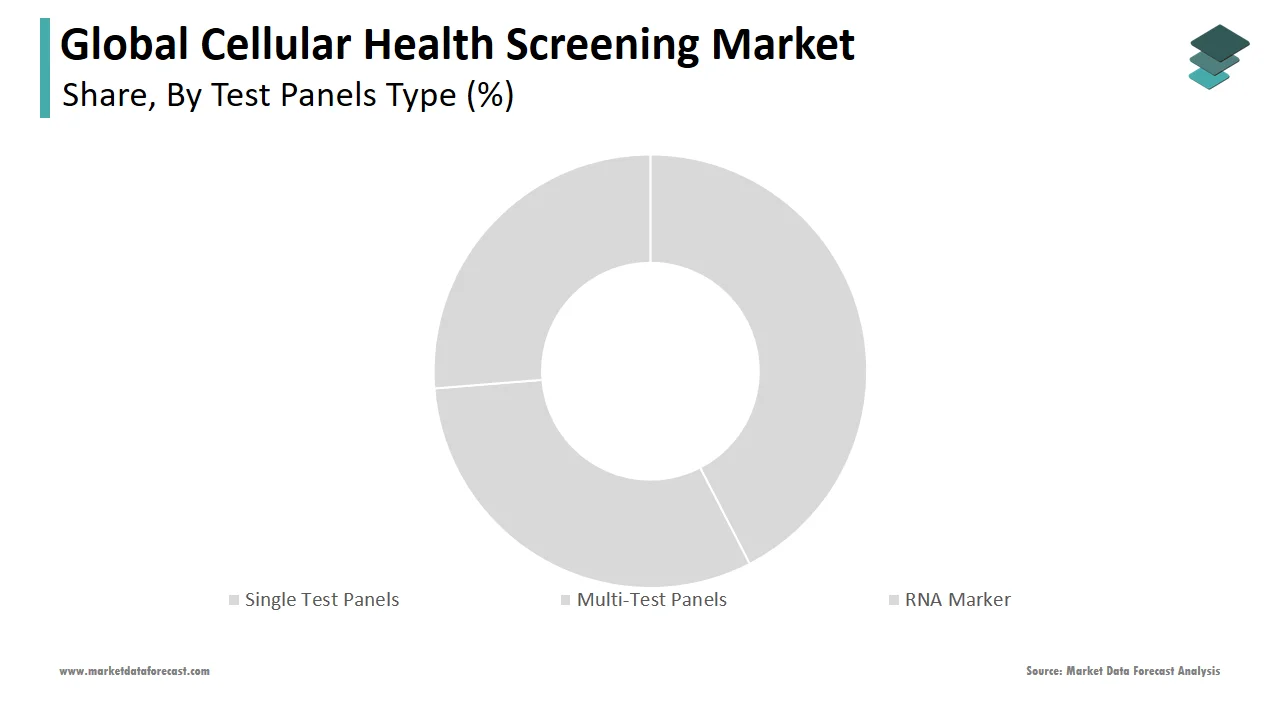
Based on Test panel type, because they are used to acquire more accurate information and aid in completing cellular health screening tests to assess telomere length, single test panels are projected to dominate the market. Therefore, the telomere testing sub-segment has the largest share of this market. In addition, these panels give reliable data and help assess screening tests' effective performance to assess telomere length, therefore avoiding illnesses. As a result, the market for preventive healthcare screening goods and services is expected to grow.
By Sample Type Insights
Based on the sample type, because clinicians most often use blood samples to evaluate organ functioning, diagnose illnesses and disorders, analyze risk factors, determine pharmaceutical efficacy, and test blood clotting, the Blood sample segment retained most of the market share. In addition, the launch of novel blood-based cellular health screening tests has aided the segment's expansion.
By Sample Collection Site Insights
Based on the Sample Collection Site, Due to the rising acceptance of self-sampling in major countries, which is user-friendly and does not require specialist lab infrastructure or expert training, the At Home Sample collection segment is expected to grow at the quickest CAGR during the forecast period. In addition, due to lockdowns and movement restrictions in key economies, the worldwide COVID-19 epidemic has bolstered the home sample collection market.
REGIONAL ANALYSIS
North America Cellular Health Screening Market Analysis
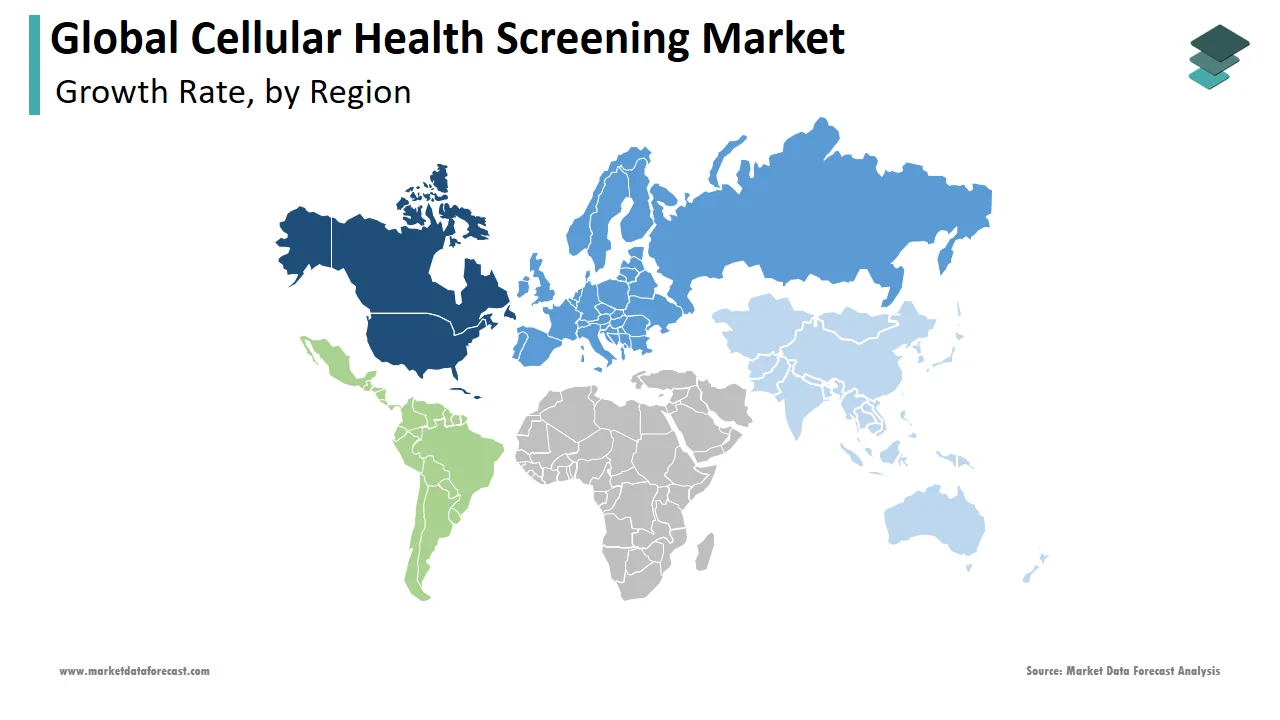
Geographically, North America has the leading market for cellular health screening globally, which Europe and the Asia Pacific regions follow. North America is dominating the highest shares of the market by quickly adopting the latest technologies and introducing innovative devices in favor of the end-users. Increasing focus to ensure patients' safety is outshining the market's growth rate. North America currently holds the largest revenue share in the global cellular health screening market, and this trend is anticipated to continue throughout the forecast period. This dominance can be ascribed to a rise in awareness of HALE, which has been declining throughout the region. The industry is expected to increase as chronic diseases become more common and the global geriatric population grows. Telomere testing has also become more popular as people's lifestyles have changed. Furthermore, increased research efforts and adopting the direct-to-consumer approach for kit availability are other drivers contributing to the market expansion. The United States has the largest proportion of the regional market. The existence of significant market players, simple availability of telomere and oxidative stress tests, high adoption of test-from-home, and rising awareness about uncommon diseases are all factors leading to its dominance.
Asia Pacific Cellular Health Screening Market Analysis
The Asia Pacific and Europe are following North America are leading the highest shares of the global cellular health screening market with the increasing scale of pharmaceutical companies. Due to the existence of the target population and improved healthcare infrastructure in developing nations, Asia Pacific is expected to be the fastest-growing regional market. Other factors boosting the regional market are emerging nations' increased acceptance and awareness of telomere performance programs.
Middle East and Africa Cellular Health Screening Market Analysis
The Middle East and Africa are anticipated to have inclined growth rates in the coming years with the rise in funds from private and public organizations on research institutes. Also, the rising demand for self-medication is gearing up the need for the cellular health screening market.
KEY MARKET PARTICIPANTS
Some of the major players in the global cellular health screening market profiled in this report are
- Genova Diagnostics (U.S.)
- Quest Diagnostics (U.S.)
- Telomere Diagnostics (U.S.)
- Life Length (Spain)
- Repeat Diagnostics (Canada)
- SpectraCell Laboratories (U.S.)
- Zimetry LLC (U.S.)
- Cell Science Systems (U.S.)
- Titanovo, Inc. (U.S.)
- Segterra, Inc. (U.S.)
- LabCorp Holdings (U.S.)
- BioReference Laboratories (U.S.)
- Immundiagnostik AG (Germany)
- Cleveland HeartLab, Inc. (U.S.)
GLOBAL CELLULAR HEALTH SCREENING MARKET NEWS
- In 2016, teloyears was launched by Telomere and its new telomere test.
- Teloyears evaluate an individual's telomeres and biomarkers that change with age. Teloyears are easy to use. Telomeres in white blood cells are assessed and summarized in a report to be sent back to the test taker. Teloyears Diagnostics developed the test, teloyears. Unlike other genetic tests, teloyears are based on biomarkers that change over time.
- In 2015, spectra cell expanded its specialized testing menu to include several new diagnostic panels for cardiometabolic biomarkers, prediabetic screening, thyroid, male and female hormone panels, and cardiovascular-related genetic tests.
- In 2015, a saliva-based telomere testing kit was launched by Titanovo. This kit permits the users to measure their telomeres' length; the kit users need only to use a cotton swab provided by the company. Titanovo provides clients with data correlating their telomere length to regional, genealogical, genetic, and environmental factors. In addition, researchers provided anonymous health information through the test, which is expected to lead to medical breakthroughs in the future.
- In 2016, a partnership was made between Life length and Eastern Biotech & Life sciences to launch telomere tests in GCC countries.
MARKET SEGMENTATION
This research report on the global cellular health screening market has been segmented and sub-segmented based on test panels type, sample type, sample collection site, and region.
By Test Panels Type
- Single Test Panels
- Telomere Tests
- Inflammation Tests
- Oxidative Stress Tests
- Heavy Metal Tests
- Multi-Test Panels
By Sample Type
- Blood Samples
- Other Samples
By Sample Collection Site
- In-Office Sample Collection
- At-Home Sample Collection
- Other Sample Collection
By Region
- North America
- Europe
- Asia Pacific
- Latin America
- Middle East & Africa