- Product Description Description
- Table of Contents TOC
- List of Table & Figure LOT
- Get Free Sample PDF Sample PDF
Market Size, 2025
$12.92 BnMarket Estimate, 2026
$13.98 BnMarket Forecast, 2034
$26.28 BnCAGR, 2026–2034
8.21%Executive Summary: Global Chitosan Market
- Market Scope: Comprehensive industry analysis covering the global chitosan biopolymer market segmented by source, application, and geographical region, alongside key competitive profiling and growth drivers.
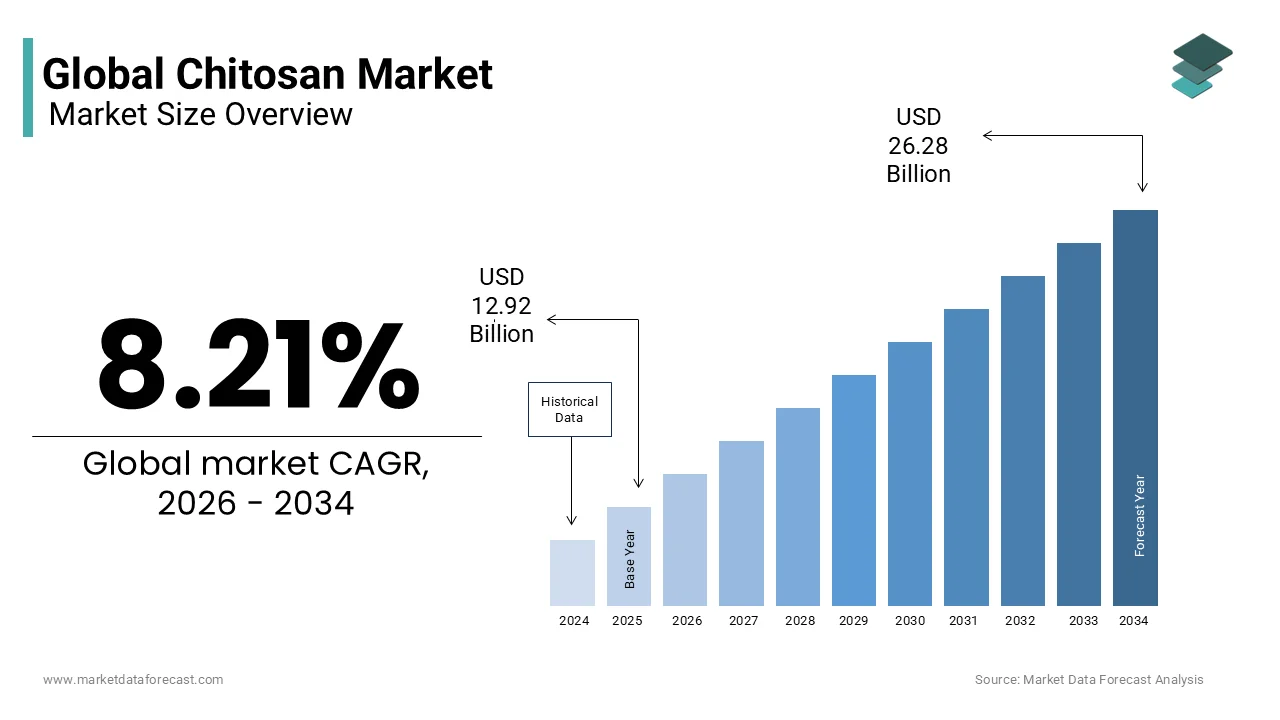
- Market Valuation: Valued at USD 12.92 billion (2025), estimated at USD 13.98 billion (2026), and projected to reach USD 26.28 billion by 2034, registering a strong CAGR of 8.21% across the forecast period.
- Primary Growth Drivers: Escalating global demand for eco-friendly water treatment solutions (where chitosan acts as an effective, cost-efficient natural flocculant), booming personal care and cosmetic sectors, expanding biomedical and pharmaceutical uses (tissue engineering and nanoparticle drug delivery), and abundance of crustacean waste from the seafood industry. Key challenges include high raw material processing and extraction costs, as well as product consistency issues.
Key Market Segment Metrics (2026–2034)
| Category | Leading Segment / Details | Strategic Overview |
|---|---|---|
| By Grade | Industrial, Food and Pharmaceutical | Industrial applications dominate due to rising demand for chitosan in water treatment, wastewater management, and industrial processing, supported by its biodegradable and functional properties. |
| By Application | Water Treatment, Agrochemicals, Cosmetics, Food & Beverage, Biomedicine and Pharmaceuticals | Water treatment anchors the high-volume demand via superior metal-ion adsorption and flocculation properties, while biomedicine and cosmetics drive high-value adoption. |
| Regional Analysis | Asia Pacific, North America, Europe, Latin America, Middle East & Africa | Asia Pacific leads the global market, powered by major shrimp-producing and processing economies (China, Thailand, India, and South Korea) and rapid expansion in domestic pharmaceutical and cosmetics industries. |
Major Market Players & Market Structure
Market Structure: Fragmented and highly specialized biopolymer landscape comprising key biochemical refiners, marine-derived ingredient manufacturers, and advanced pharmaceutical processors focusing on purity grades and sustainable extraction techniques.
Key Companies: Qingdao Yunzhou Biochemistry Co., Panvo Organics Pvt Ltd., Advanced Biopolymers AS, Meron Biopolymers, Biophrame Technologies Inc., United Chitotechnologies, Heppe Medical Chitosan GmbH, KITOZYME SA, Kraeber & Co. GmbH, Foodchem International Corporation, Chitosanlab, FMC Corporation, Golden-Shell Pharmaceutical Co. Ltd., Primex EHF, Nano3Bio, Koyo World (Hong Kong) Co. Ltd., Dainichiseika Color & Chemicals Mfg Co. Ltd., and KYTOSAN LLC.
 Download Free Sample Report
Global Chitosan Market Size
The global chitosan market size was valued at USD 12.92 billion in 2025 and is estimated to reach USD 26.28 billion by 2034 from USD 13.98 billion in 2026. The market's promising CAGR for the predicted period is 8.21%.
The chitosan is the centers on the linear polysaccharide derived from the deacetylation of chitin, which is primarily sourced from crustacean shells and fungal cell walls. Chitosan is registered as a safe substance for use in water treatment and agricultural applications due to its biodegradability and non-toxic profile. The sector is characterized by a shift toward sustainable biomaterials as industries seek alternatives to synthetic polymers that persist in the environment. Regulatory frameworks in major economies are increasingly favoring bio based solutions which accelerates the adoption of chitosan in industrial processes. Current dynamics show growing interest in high molecular weight variants for medical applications while low molecular weight forms dominate agricultural uses.
MARKET DRIVERS
Stringent Environmental Regulations on Wastewater Treatment
The increasing strict environmental laws governing industrial effluent discharge, as an eco-friendly flocculant in wastewater treatment plants is accelerating the growth of the chitosan market. According to the United States Environmental Protection Agency, municipal and industrial facilities must reduce total suspended solids and heavy metal concentrations to specific limits which traditional chemical coagulants often fail to achieve without producing toxic sludge. This efficiency makes it a preferred alternative to aluminum based coagulants which pose health risks and disposal challenges. Municipalities in Europe and North America are mandating the use of biodegradable agents to minimize secondary pollution leading to higher procurement of chitosan based solutions. Industries such as textile and mining face pressure to adopt green chemistry practices further boosting demand. The ability of chitosan to form stable flocs that are easily separated reduces operational costs associated with sludge handling.
Growing Demand for Bio Based Agricultural Inputs
The rising preference for organic farming and sustainable crop protection is also propelling the growth of the chitosan market. As per the research, chitosan application induces systemic acquired resistance in plants reducing fungal infections by up to 40% without harming beneficial soil microbes. This biological mechanism allows farmers to reduce reliance on synthetic fungicides which are facing increasing restrictions due to environmental toxicity. Chitosan also enhances seed germination and root development improving overall crop yield and quality. Regulatory bodies in the European Union have approved chitosan as a basic substance for plant protection facilitating its legal use in commercial agriculture. Distributors promote these benefits to growers seeking certification for organic labels which command premium prices in retail markets. Thus, the shift toward sustainable agriculture creates a robust demand channel for chitosan products driven by both regulatory support and economic incentives for farmers.
MARKET RESTRAINTS
Variability in Raw Material Quality and Supply
The inherent inconsistency in the quality of crustacean shell waste is limiting the growth of the chitosan market. The lack of standardization complicates formulation processes for end users who require consistent viscosity and solubility for specific applications. Manufacturers must invest in rigorous quality control and blending processes to mitigate these variations increasing operational costs. Dependence on the seafood industry also exposes chitosan producers to market shocks such as disease outbreaks in aquaculture which can drastically reduce raw material availability. The absence of a unified global standard for chitosan grading further exacerbates trust issues among buyers. Consequently supply chain instability acts as a persistent restraint on market growth and product reliability.
High Production Costs Compared to Synthetic Alternatives
The complex extraction and purification processes required to produce high purity chitosan result in significantly higher costs compared to synthetic polymers that is degrading the growth of the chitosan market. According to the Chemical Engineering Journal, the -step process involving demineralization deproteinization and deacetylation consumes substantial amounts of energy and chemicals driving up production expenses. This price disparity discourages cost sensitive industries such as municipal water treatment from switching to chitosan despite its environmental benefits. Small and medium sized enterprises often lack the capital to invest in advanced extraction technologies that could improve yield and reduce costs. Economic downturns further amplify price sensitivity leading buyers to revert to cheaper synthetic options. The limited number of large scale producers also restricts competition keeping prices elevated.
MARKET OPPORTUNITIES
Expansion in Medical and Pharmaceutical Applications
The emerging innovations in drug delivery and wound care due to its biocompatibility and hemostatic properties is to create new opportunties for the growth of the chitosan market. According to the World Health Organization, chronic wounds affect millions of patients globally creating a sustained demand for advanced dressings that promote healing and prevent infection. As per the Journal of Controlled Release, chitosan-based nanoparticles have shown enhanced permeability across biological barriers allowing for targeted drug delivery with reduced side effects in cancer therapies. This scientific validation encourages pharmaceutical companies to incorporate chitosan into novel formulations for oral and topical administration. The material’s ability to form films and hydrogels makes it ideal for tissue engineering scaffolds that support cell growth. Investment in clinical trials continues to uncover new therapeutic applications expanding the potential user base.
Development of Edible Packaging Solutions
The growing crisis of plastic pollution drives the development of chitosan based edible films and coatings for food preservation is additionally to fuel the growth of the chitosan market. According to the United Nations Environment Programme, single use plastics account for 40% of all plastic produced globally prompting urgent searches for biodegradable alternatives. This dual function of preservation and packaging appeals to retailers seeking to reduce food waste and plastic usage simultaneously. Consumers are increasingly willing to pay premiums for sustainable packaging solutions that align with their environmental values. Major food corporations are piloting chitosan based packaging for perishable goods creating new revenue streams for suppliers. Regulatory support for compostable materials further accelerates adoption in retail chains.
MARKET CHALLENGES
Solubility Issues in Neutral and Alkaline Conditions
The limited solubility of chitosan in neutral and alkaline pH environments is restricting the growth of the chitosan market. The chitosan only dissolves readily in acidic solutions below pH 6.5, which limits its use in physiological conditions and many industrial processes that operate at neutral pH. As per the study, researchers must employ chemical modifications such as carboxymethylation to enhance solubility which adds complexity and cost to the production process. These modifications can alter the natural properties of chitosan potentially reducing its efficacy or safety profile for certain applications. Formulators face difficulties in integrating unmodified chitosan into products like cosmetics or pharmaceuticals that require stability at skin or blood pH levels. The need for specialized solvents or derivatives creates additional regulatory hurdles and safety assessments.
Allergenic Potential and Consumer Safety Concerns
The derivation of chitosan from crustacean shells raises concerns about allergenic reactions among individuals with shellfish allergies is also to limit the growth of the chitosan market. As per the European Food Safety Authority, strict labeling requirements mandate clear identification of crustacean derived ingredients which can limit consumer acceptance. Although, fungal chitosan offers an alternative it is currently more expensive and less widely available than crustacean based versions. Manufacturers must implement rigorous purification protocols to ensure protein removal which increases production costs and complexity. Liability risks associated with allergic reactions discourage some brands from using chitosan in personal care and food applications. Public perception issues regarding allergens further complicate marketing efforts. Thus, safety concerns remain a critical challenge that necessitates transparent sourcing and advanced processing techniques.
REPORT COVERAGE
| REPORT METRIC | DETAILS |
| Market Size Available | 2025 to 2034 |
| Base Year | 2025 |
| Forecast Period | 2026 to 2034 |
| CAGR | 8.21% |
| Segments Covered | By Grade, Application, and Region |
|
Various Analyses Covered | Global, Regional & Country Level Analysis, Segment-Level Analysis, DROC, PESTLE Analysis, Porter’s Five Forces Analysis, Competitive Landscape, Analyst Overview on Investment Opportunities |
| Regions Covered | North America, Europe, Asia Pacific, Latin America, Middle East & Africa |
| Market Leaders Profiled | Qingdao Yunzhou Biochemistry Co., Panvo Organics Pvt Ltd., Advanced Biopolymers AS, Meron Biopolymers, Biophrame Technologies, Inc. United Chitotechnologies, Heppe Medical Chitosan GmbH, KITOZYME SA, Kraeber. & Co. GmbH, Foodchem International Corporation, Chitosanlab, FMC Corporation, Golden-Shell Pharmaceutical Co. Ltd. Primex EHF, Nano3Bio, Koyo World (Hong Kong) Co. Ltd., Dainichiseika Color & Chemicals Mfg Co., Ltd., KYTOSAN LLC |
SEGMENTAL ANALYSIS
By Grade Insights
The industrial grade chitosan segment was the largest by holding 44.3% of the chitosan market share in 2025 due to its extensive application in wastewater treatment and heavy metal removal where high volume and cost efficiency are prioritized over ultra-high purity. This grade is produced with less stringent purification processes allowing manufacturers to offer it at competitive prices suitable for municipal and industrial buyers. The abundance of raw materials from seafood processing waste supports the mass production required for this segment. Regulatory pressure to reduce chemical sludge further drives adoption as chitosan forms biodegradable flocs. Consequently, the sheer volume of water treatment applications ensures that industrial grade remains the backbone of global chitosan consumption.
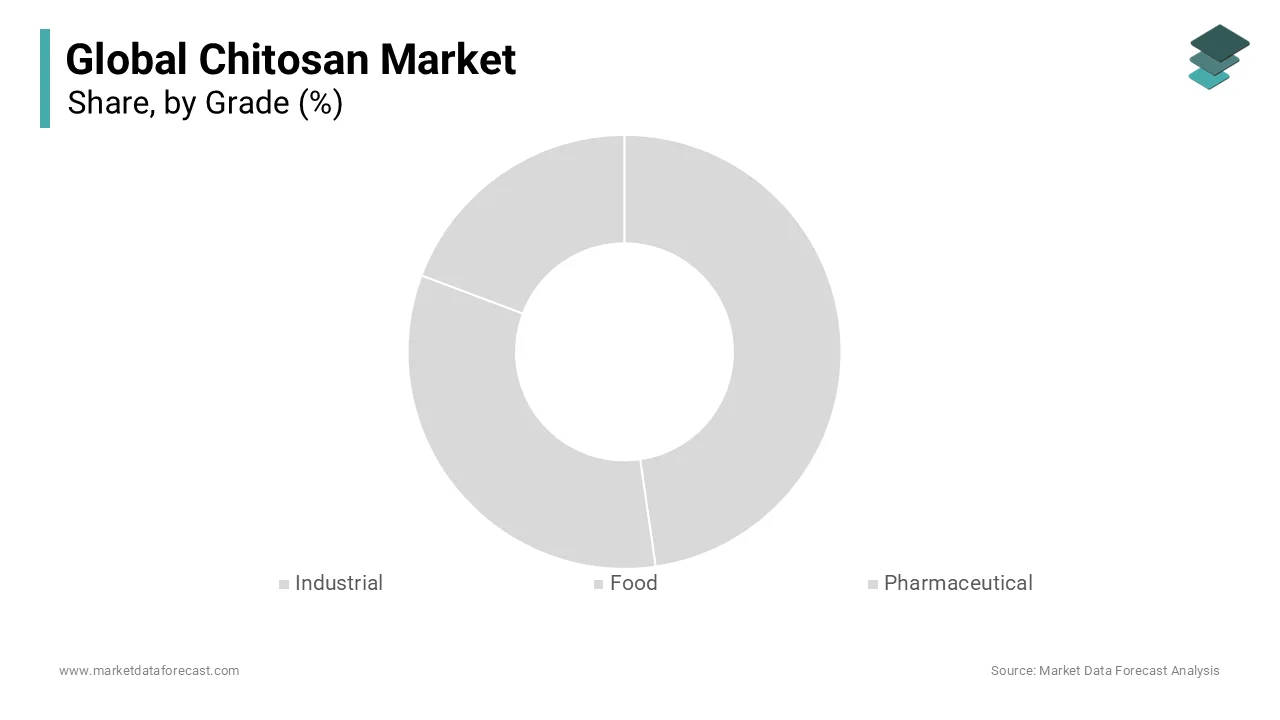
The pharmaceutical grade chitosan segment is likely to grow at a fastest CAGR of 11.5% during the forecast period with its role in advanced drug delivery systems and tissue engineering. According to the World Health Organization, the global burden of chronic diseases has increased necessitating innovative therapies that utilize biocompatible carriers for targeted drug release. This scientific validation encourages pharmaceutical companies to invest in chitosan based nanoparticles and hydrogels for cancer and diabetes treatments. Strict regulatory standards require high purity and consistent molecular weight, which this grade provides ensuring safety for human use. Increasing clinical trials and patent filings in regenerative medicine further accelerate demand.
By Application Insights
The water treatment segment was accounted in holding 33.2% of the chitosan market share in 2025 with the urgent global need for sustainable solutions to remove contaminants from industrial and municipal wastewater. According to the report, over 80% of wastewater generated globally flows back into the ecosystem without adequate treatment creating a massive opportunity for eco-friendly agents. Its cationic nature allows it to effectively bind with negatively charged pollutants such as dyes oils and heavy metals. Municipalities in Europe and North America are increasingly mandating green chemistry practices which favors biodegradable options like chitosan. The scalability of chitosan applications from small rural plants to large urban facilities ensures broad market penetration.
The medical and pharmaceuticals segment is likely to witness a fastest CAGR of 12.3% from 2026 to 2034 with the innovations in wound care and regenerative medicine. The chitosan based hemostatic agents can stop bleeding within minutes by activating platelets and forming stable clots making them essential in emergency trauma care. This life saving capability drives adoption in hospitals and military medical kits globally. The material’s antimicrobial properties reduce the risk of secondary infections reducing healthcare costs and patient recovery time. Regulatory approvals for new chitosan based medical devices are accelerating in key markets facilitating faster commercialization. Investment in research for organ printing and scaffold development further expands its utility.
REGIONAL ANALYSIS
Asia Pacific Chitosan Market Analysis
Asia Pacific was the top performer in the Chitosan Market by capturing 29.1% of the share in 2025 with the dominance in global seafood production which provides abundant raw material for extraction. As per the study, government initiatives promoting bio based materials have led to a 15% annual increase in domestic production capacity for industrial grade chitosan. This local availability reduces costs and supports a robust export industry serving global markets. Rapid industrialization in countries like India and Vietnam increases demand for wastewater treatment solutions further boosting consumption. The presence of low cost labor facilitates efficient processing operations enhancing competitiveness.
North America Chitosan Market Analysis
North America chitosan market was ranked second by holding 19.2% of the share in 2025 with the high demand for pharmaceutical and medical grade chitosan due to advanced healthcare infrastructure. As per the Environmental Protection Agency, strict regulations on industrial effluent discharge compel manufacturers to adopt sustainable alternatives like chitosan for water treatment. This regulatory framework ensures steady demand across both healthcare and industrial sectors. High consumer awareness regarding organic and natural products supports the use of chitosan in food preservation and cosmetics. Strong intellectual property protection encourages innovation and product development by leading research institutions.
Europe Chitosan Market Analysis
Europe chitosan market growth is expected to grow at a fastest CAGR during the forecast period with the stringent environmental policies and a strong focus on circular economy principles. According to the European Chemicals Agency, the registration of bio-based substances under REACH regulations has facilitated the approval of chitosan for various industrial and agricultural applications. As per the study, the region accounts for 30% of global patents related to chitosan applications reflecting strong research and development activity. Governments provide subsidies for green technologies encouraging industries to replace synthetic polymers with biodegradable alternatives. High consumer preference for organic food products drives demand for chitosan based edible coatings and preservatives. The well-established pharmaceutical industry utilizes high purity chitosan for advanced medical formulations.
Latin America Chitosan Market Analysis
Latin America chitosan market growth is likely to grow with the substantial seafood industry and increasing environmental awareness. Investments in sustainable agro industrial practices have increased annually, supporting the adoption of chitosan in agriculture and water management. As per the study, the country is a major producer of shrimp generating significant shell waste that is increasingly being valorized for chitosan extraction. Local manufacturers are developing capabilities to process this waste reducing dependency on imports. Rising urbanization creates demand for improved wastewater treatment infrastructure in major cities. Government programs promoting bio economy initiatives provide funding for research and pilot projects.
Middle East and Africa Chitosan Market Analysis
The Middle East and Africa chitosan market growth is likely to grow with the water desalination and agricultural applications. According to the United Nations Economic Commission for Africa, water scarcity affects over 400 million people in the region driving investment in advanced treatment technologies including chitosan-based filtration. As per the Gulf Cooperation Council Standardization Organization, there is increasing adoption of bio-based materials in construction and packaging to align with sustainability goals. Limited local production means reliance on imports but initiatives to develop local aquaculture industries may create future raw material sources. High temperatures and arid conditions increase the need for efficient water conservation methods where chitosan can play a role. Tourism and hospitality sectors drive demand for eco friendly products.
COMPETITIVE LANDSCAPE
The competitive landscape of the chitosan market features a mix of specialized biomedical suppliers and large-scale industrial producers vying for dominance through quality and cost efficiency. Multinational corporations leverage their extensive R&D capabilities and regulatory expertise to supply high purity grades for pharmaceutical and medical applications where margins are higher. Smaller regional players compete by offering cost effective industrial and food grade chitosan derived from local seafood waste streams. Intense rivalry drives continuous innovation in extraction technologies to improve yield and reduce environmental impact during processing. Brand reputation built on consistency and regulatory compliance plays a significant role in securing long term contracts with healthcare and food manufacturers.
KEY MARKET PLAYERS
Some of the key players in the chitosan market are
- Qingdao Yunzhou Biochemistry Co.
- Panvo Organics Pvt. Ltd.
- Advanced Biopolymers AS
- Meron Biopolymers
- BioPhrame Technologies, Inc.
- United Chitotechnologies
- Heppe Medical Chitosan GmbH
- KITOZYME SA
- Kraeber & Co. GmbH
- Foodchem International Corporation
- Chitosanlab
- FMC Corporation
- Golden-Shell Pharmaceutical Co. Ltd.
- Primex EHF
- Nano3Bio
- Koyo World (Hong Kong) Co. Ltd.
- Dainichiseika Color & Chemicals Mfg. Co., Ltd.
- KYTOSAN LLC
- PT Biotech Surindo
- BioThera
Top Players in the Market
- Heppe Medical Chitosan specializes in producing high purity chitosan derivatives for pharmaceutical and medical applications with a strong focus on regulatory compliance. The company leverages advanced deacetylation techniques to ensure consistent molecular weight and viscosity which are critical for drug delivery systems. Recent initiatives include expanding its production facility in Germany to meet increasing demand for medical grade materials in wound care and tissue engineering. Heppe actively collaborates with research institutions to validate the biocompatibility of its products for new therapeutic uses. These efforts help the brand maintain trust among healthcare providers and pharmaceutical manufacturers seeking reliable biomaterials.
- KitoZyme strengthens its market position by focusing on sustainable extraction methods and diverse product portfolios for industrial and agricultural applications. The company recently launched a new line of low molecular weight chitosan oligomers designed to enhance plant immunity and reduce fungal infections in organic farming. KitoZyme actively partners with seafood processors in Europe to secure a steady supply of raw materials while promoting circular economy principles. Strategic investments in research and development allow the firm to customize solutions for specific client needs in water treatment and cosmetics. The brand emphasizes transparency and traceability in its supply chain appealing to environmentally conscious buyers.
- Golden Shell Biochemical contributes significantly to the market by offering a wide range of chitosan grades from industrial to food grade at competitive prices. The company recently upgraded its manufacturing processes in China to improve yield efficiency and reduce environmental impact during production. Golden Shell actively expands its distribution network in Asia Pacific and North America to reach new customers in the food preservation and cosmetic industries. Collaborations with local distributors ensure timely delivery and technical support for international clients.
Top Strategies Used by Key Market Participants
Key players in the Chitosan Market primarily focus on vertical integration to secure stable raw material supplies from seafood processing waste and reduce dependency on volatile markets. Companies invest heavily in research and development to produce specialized derivatives with enhanced solubility and bioactivity for high value medical and pharmaceutical applications. Strategic partnerships with aquaculture industries ensure consistent access to crustacean shells while promoting sustainability credentials that appeal to eco conscious buyers. Manufacturers prioritize obtaining regulatory approvals in key markets like Europe and North America to facilitate entry into stringent healthcare and food sectors. Diversification into niche applications such as edible packaging and agricultural biostimulants helps mitigate risks associated with traditional industrial uses. Emphasis on quality certification and traceability builds trust among premium buyers who require consistent product performance.
MARKET SEGMENTATION
This research report on the global chitosan market has been segmented and sub-segmented based on grade, application, and region.
By Grade
- Industrial
- Food
- Pharmaceutical
By Application
- Agrochemicals
- Cosmetics
- Food and Beverage
- Biomedicine and Pharmaceuticals
- Water Treatment
By Region
- North America
- Europe
- Asia Pacific
- Latin America
- Middle East & Africa