- Product Description Description
- Table of Contents TOC
- List of Table & Figure LOT
- Get Free Sample PDF Sample PDF
Global Chlorine Market Size
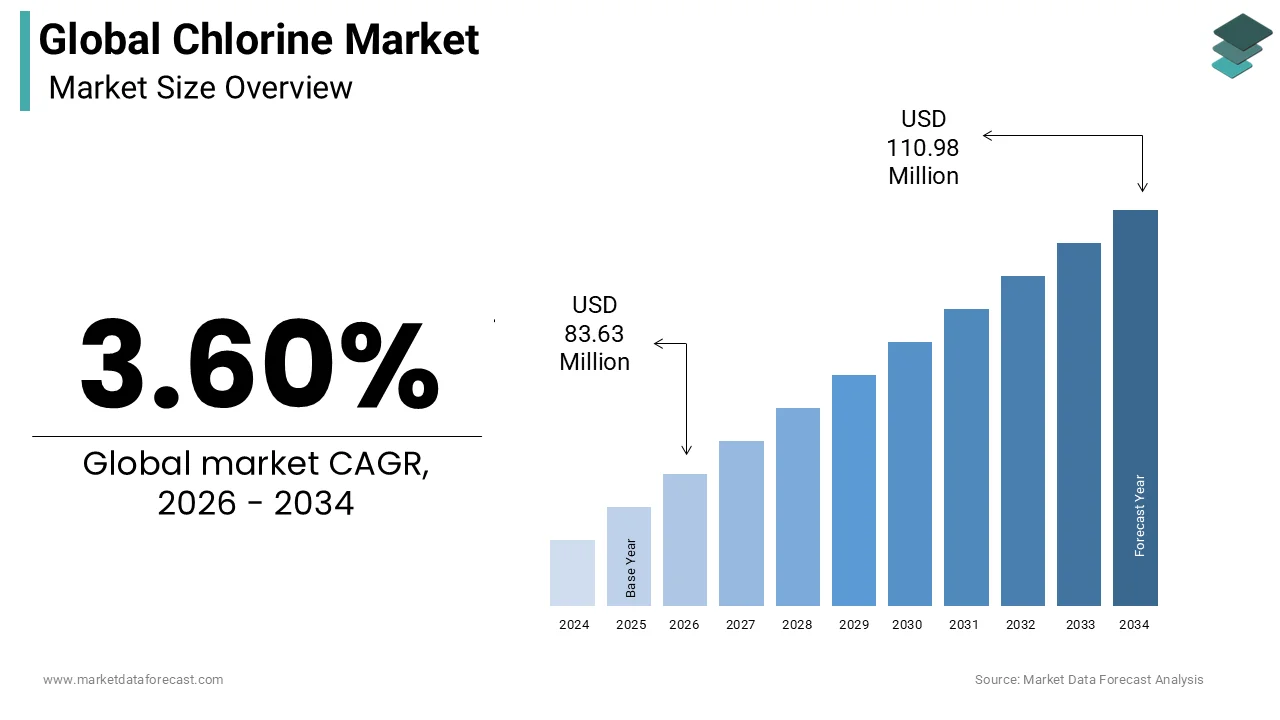
The global chlorine market size was calculated to be USD 80.72 million in 2025 and is anticipated to be worth USD 110.98 million by 2034, growing from USD 83.63 million in 2026 at a CAGR of 3.60% during the forecast period.
The chlorine is elemental chlorine and its derivatives, which serve as fundamental building blocks for the global chemical industry. Chlorine is primarily produced through the electrolysis of brine, a process that simultaneously yields caustic soda and hydrogen gas, making it integral to the chlor-alkali value chain. This element is indispensable for water purification, pharmaceuticals, plastics, and agricultural chemicals, ensuring its persistent relevance in modern infrastructure. According to the United States Geological Survey, global production of chlorine exceeded 90 million metric tons in 2023, reflecting its massive industrial scale. In Europe, the European Chemical Industry Council states that chlorine derivatives are present in approximately 85% of all pharmaceutical products, highlighting their critical role in healthcare. The World Health Organization emphasizes that chlorine-based disinfectants remain the most cost-effective method for preventing waterborne diseases, with over 2 billion people gaining access to safe drinking water through chlorination processes annually. The American Chemistry Council notes that polyvinyl chloride, which relies heavily on chlorine feedstock, accounts for nearly 30% of total chlorine consumption globally. As urbanization accelerates in developing nations, the demand for sanitized water and durable construction materials continues to drive production volumes. Regulatory frameworks such as the Registration, Evaluation, Authorization, and Restriction of Chemicals in the European Union strictly govern handling and emissions, pushing producers toward cleaner technologies. The market operates within a complex ecosystem where environmental safety, economic viability, and public health imperatives intersect, requiring continuous innovation in production efficiency and waste management.
MARKET DRIVERS
Surging Demand for Polyvinyl Chloride in Construction Infrastructure
The robust growth of the construction sector, particularly in emerging countries, due to the extensive use of polyvinyl chloride in building materials, is accelerating the growth of the chlorine market. Polyvinyl chloride is the largest single consumer of chlorine, accounting for approximately 35% of global chlorine demand, according to the International Council of Chemical Associations. This thermoplastic polymer is favored for pipe fittings, window profiles, and flooring due to its durability, corrosion resistance, and cost-effectiveness. Data from the Global Construction Perspectives indicates that global construction output is projected to reach 15000000 million dollars by 2030, driven by rapid urbanization in the Asia Pacific and Africa. In India, the Ministry of Housing and Urban Affairs reports that the government aims to construct 20 million affordable housing units by 2025, significantly boosting the demand for PVC pipes and fixtures. Similarly, China’s continued investment in infrastructure development maintains high consumption levels for chlorine-derived materials. The durability of PVC reduces maintenance costs and extends the lifespan of water distribution systems, which is critical for municipalities facing aging infrastructure challenges. The versatility of chlorine chemistry allows for the production of specialized PVC formulations that meet stringent fire safety and environmental standards. As governments worldwide prioritize sustainable and resilient infrastructure, the reliance on chlorine-based polymers remains steadfast.
Crucial Role in Water Treatment and Sanitation Systems
The imperative for clean drinking water and effective wastewater treatment and its compounds across municipal and industrial sectors, which is additionally promoting the growth of the chlorine market. According to the World Health Organization, approximately 2 billion people still lack access to safely managed drinking water services, necessitating widespread chlorination initiatives. Chlorine remains the most widely used disinfectant globally due to its proven efficacy against pathogens, including bacteria, viruses, and parasites. The United States Environmental Protection Agency mandates that public water systems maintain residual chlorine levels to ensure water safety throughout distribution networks. In developing regions, organizations such as UNICEF distribute millions of chlorine tablets annually to prevent cholera and typhoid fever during humanitarian crises. The industrial sector also relies heavily on chlorine for cooling tower treatment and process water purification to prevent biofouling and equipment corrosion. According to the National Association of Clean Water Agencies US wastewater treatment facilities consume over 1 million tons of chlorine equivalents each year to meet discharge standards. Growing populations and stricter environmental regulations regarding effluent quality further amplify this demand. The cost efficiency of chlorine compared to alternative disinfection methods like ultraviolet light or ozone makes it the preferred choice for large-scale applications.
MARKET RESTRAINTS
Stringent Environmental Regulations on Chlorinated Byproducts
The strict environmental regulations governing the release of chlorinated organic compounds and byproducts, particularly in developed regions, are hindering the growth of the chlorine market. The formation of disinfection byproducts, such as trihalomethanes, during water treatment has raised health concerns, leading to tighter limits on chlorine usage. Several member states have implemented advanced treatment protocols to minimize the formation of these harmful byproducts, increasing operational costs for utilities. Data from the United Nations Environment Programme indicates that compliance with these international treaties requires substantial investment in alternative technologies and waste management systems. In the United States, the Safe Drinking Water Act amendments have lowered the maximum contaminant level for total trihalomethanes, forcing many utilities to optimize chlorination doses or switch to secondary disinfectants. The chemical industry faces pressure to reduce emissions of volatile organic compounds containing chlorine from manufacturing facilities. According to the German Federal Environment Agency, industrial emissions of chlorinated hydrocarbons must be reduced by 50% by 2030 under new national climate targets. These regulatory burdens increase capital expenditure for pollution control equipment and monitoring systems. Smaller producers may struggle to meet these compliance costs, leading to market consolidation. The shift toward greener alternatives in consumer products also reduces demand for certain chlorinated solvents and intermediates.
High Energy Intensity of Chlor Alkali Production
The chlor-alkali process, which produces chlorine through the electrolysis of salt water, is extremely energy intensive, making it highly susceptible to electricity price volatility, which is also declining the growth of the chlorine market. The reliance on grid electricity means that producers have limited control over their primary input cost, unlike industries that can generate their own power. While some facilities have integrated renewable energy sources, the transition requires massive capital investment and time. Fluctuating energy markets create uncertainty in pricing and supply stability, affecting downstream customers in plastics and pharmaceuticals. Producers in regions with subsidized energy maintain a competitive advantage but face trade barriers in other markets. The push for decarbonization adds another layer of complexity as producers seek to replace fossil fuel-based electricity with green alternatives.
MARKET OPPORTUNITIES
Development of Membrane Cell Technology for Sustainability
The adoption of advanced membrane cell technology, by improving energy efficiency and reducing environmental impact, is solely to create new opportunities for the growth of the chlorine market. Traditional mercury and diaphragm cells are being phased out globally due to their toxic byproducts and higher energy consumption. Many European chlorine production plants now use membrane cell technology, which offers superior purity and lower energy usage. This technology reduces electricity consumption by up to 30% compared to older methods, aligning with global sustainability goals. Japanese producers have achieved near-complete conversion to membrane cells, enhancing their competitiveness in export markets. The high-purity caustic soda produced alongside chlorine in membrane cells commands a premium price in industries such as aluminum processing and pulp bleaching. Governments are providing incentives for retrofitting old plants with membrane technology to meet emission standards. The Chinese Ministry of Ecology and Environment has mandated the closure of all mercury-based chlor-alkali plants by 2025, creating a replacement market for modern equipment. Suppliers of electrolysis membranes and related components benefit from this technological shift. Additionally, membrane cells facilitate easier integration with renewable energy sources due to their flexible operation capabilities. As the industry moves toward carbon neutrality, the widespread adoption of membrane technology will drive efficiency gains and open new markets for high-quality chlorine derivatives.
Expansion in Pharmaceutical and Healthcare Applications
The growing pharmaceutical sector, due to the extensive use of chlorinated intermediates in drug synthesis, is another attribute to bolster the growth of the chlorine market. Chlorine is a key element in the production of antibiotics, antivirals, and anti-inflammatory drugs due to its ability to enhance molecular stability and bioavailability. Data from the US Food and Drug Administration shows that small-molecule drugs contain chlorine atoms in their final structure or involve chlorinated intermediates during synthesis. The rise in chronic diseases and aging populations in developed countries increases the consumption of prescription medications requiring chlorine-based active pharmaceutical ingredients. Emerging countries in Asia and Latin America are expanding their domestic pharmaceutical manufacturing capabilities, reducing reliance on imports. Innovations in drug delivery systems also utilize chlorinated polymers for controlled release mechanisms. The strict quality requirements in pharmaceuticals ensure steady demand for high-grade chlorine products, which command higher margins than bulk industrial grades. Collaboration between chemical suppliers and pharmaceutical companies fosters the development of customized chlorinated compounds.
MARKET CHALLENGES
Volatility in Raw Material and Energy Costs
The volatility of raw material costs, particularly salt and energy, which directly impact production economics, is a huge challenge for the growth of the chlorine market. Salt is the primary feedstock for chlorine production, and while it is abundant, logistical disruptions and quality variations can affect operations. Changes in mining regulations and environmental permits for salt extraction have led to supply constraints in certain regions. Energy costs remain the most critical variable, with natural gas and electricity prices fluctuating wildly due to geopolitical events and market dynamics. Data from the International Monetary Fund indicates that global energy price indices experienced a 40% variance in 2023, creating unpredictability for chlor alkali producers. This volatility makes long-term pricing contracts difficult to negotiate with downstream customers who demand stability. Producers often pass on cost increases, but this can reduce demand if substitutes become available. If caustic soda demand falls, producers may cut chlorine output even if chlorine demand is strong, leading to supply shortages. This coupled product dynamic complicates inventory management and strategic planning. Companies must employ sophisticated hedging strategies to mitigate financial risks, but these tools are not always accessible to smaller players. The inherent instability of input costs challenges profit margins and investment planning in the chlorine sector.
Logistical and Safety Constraints in Transportation
Transporting chlorine poses significant logistical and safety challenges due to its toxic and corrosive nature, restricting distribution networks and increasing operational costs. Logistical and safety constraints in transportation are likely to impede the growth of the chlorine market. Chlorine is typically transported as a liquefied gas under pressure in specialized rail cars, trucks, or ships requiring strict adherence to safety regulations. The incidents involving chlorine transport can result in severe public health risks, leading to stringent routing and handling protocols. Many jurisdictions prohibit the transport of large quantities of chlorine through densely populated areas, limiting access to certain markets. The need for specialized containment vessels and emergency response plans increases capital expenditure for logistics providers. Rail strikes, port congestion, and driver shortages further exacerbate supply chain vulnerabilities. Recent disruptions in global shipping have highlighted the fragility of just-in-time delivery models for hazardous chemicals. Producers are increasingly investing in onsite generation capabilities for large customers to bypass transportation risks, but this is not feasible for smaller users. The liability insurance costs for chlorine transport have risen significantly, reflecting the perceived risk. These logistical hurdles constrain market expansion into remote or regulated regions. Companies must balance the cost of decentralized production against the risks and expenses of long-distance transportation.
REPORT COVERAGE
| REPORT METRIC | DETAILS |
| Market Size Available | 2025 to 2034 |
| Base Year | 2025 |
| Forecast Period | 2026 to 2034 |
| CAGR | 3.6% |
| Segments Covered | By Application, End-Use, Region. |
|
Various Analyses Covered | Global, Regional & Country Level Analysis, Segment-Level Analysis, DROC, PESTLE Analysis, Porter’s Five Forces Analysis, Competitive Landscape, Analyst Overview of Investment Opportunities |
| Regions Covered | North America, Europe, Asia Pacific, Latin America, and the Middle East & Africa. |
|
Market Leaders Profiled | The DOW Chemical Company, OLIN Corporation, Occidental Petroleum Corporation (OXY), Ineos Group Limited, Tosoh Corporation, Formosa Plastics Corporation, PPV Industries, Hanwha Chemical Corporation, Tata Chemicals Limited, AkzoNobel NV |
SEGMENTAL ANALYSIS
By Application Insights
The ethylene dichloride and polyvinyl chloride segment held a dominant share of the chlorine market in 2025, with the global construction industry's reliance on durable and cost-effective plastic materials. According to the study, approximately 35% of all produced chlorine is converted into ethylene dichloride, which serves as the primary precursor for vinyl chloride monomer and subsequently polyvinyl chloride. This polymer is essential for manufacturing pipes, cables, window profiles, and flooring due to its resistance to corrosion and chemical degradation. The replacement of aging infrastructure in North America and Europe further sustains demand, with the American Water Works Association estimating that 240000 miles of water pipes need replacement in the United States alone. PVC’s versatility allows it to be used in both rigid and flexible forms, making it indispensable for diverse applications ranging from medical devices to automotive interiors. The economic advantage of PVC compared to alternative materials like copper or steel ensures its continued dominance. As governments invest in smart cities and sustainable housing, the volume of PVC required will remain robust, securing the position of EDC PVC as the largest consumer of chlorine globally.
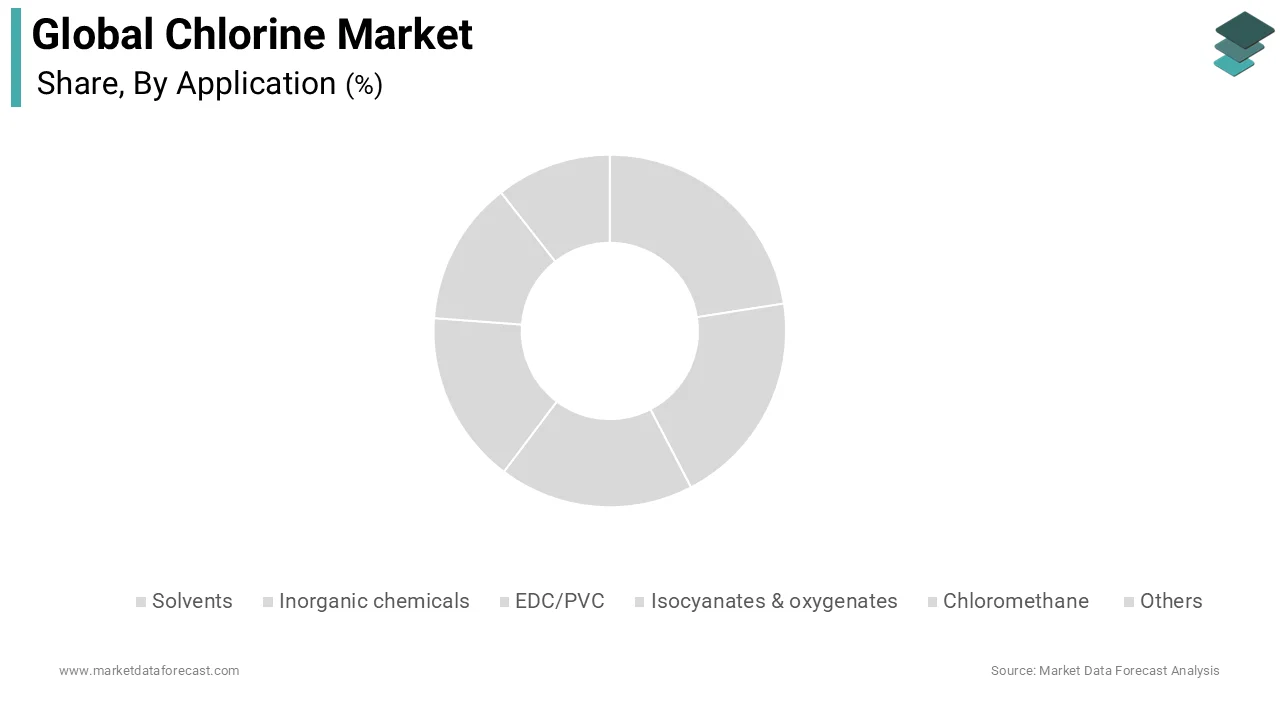
The isocyanates and oxygenates segment is expected to grow at the fastest CAGR of 12.6% during the forecast period, with the increasing demand for polyurethane foams used in thermal insulation. According to the International Energy Agency, improving building energy efficiency is critical for achieving net zero emissions, with insulation playing a pivotal role in reducing heating and cooling loads. Polyurethane foam derived from isocyanates such as methylene diphenyl diisocyanate offers superior thermal resistance compared to traditional insulation materials. Data from the Polyurethane Industry Association indicates that the global demand for polyurethane insulation is projected to grow at a compound annual growth rate of 5.8% through 2030. In Europe, the Energy Performance of Buildings Directive mandates stricter insulation standards for new and renovated structures, driving adoption of high-performance materials. Chlorine is a key feedstock in the production of propylene oxide and other intermediates required for synthesizing polyols, which react with isocyanates to form polyurethane. The lightweight nature of polyurethane foam also makes it ideal for transportation applications where weight reduction improves fuel efficiency. As climate change mitigation efforts intensify, the regulatory push for energy-efficient buildings will continue to accelerate the consumption of isocyanates and oxygenates.
By End Use Insights
The plastics end-use segment was the largest by holding 32.1% of the chlorine market share in 2025 due to the widespread application of polyvinyl chloride and other chlorinated polymers in consumer goods and packaging. The versatility of chlorine-based plastics allows them to be molded into various shapes and forms, making them suitable for everything from credit cards to shower curtains. Chlorine enhances the durability and flame retardancy of these plastics, ensuring they meet safety standards for household and industrial use. The low production cost of PVC compared to alternatives like glass or metal makes it an attractive option for manufacturers seeking to minimize expenses. In developing regions, the affordability of plastic products drives higher penetration rates in households. Furthermore, the ability to recycle certain chlorine-based plastics supports circular economy initiatives, reducing environmental impact.
The pharmaceuticals end-use segment is expected to register the fastest CAGR of 9.2% from 2026 to 2034, with the increasing prevalence of chronic diseases and an aging global population. According to the World Health Organization, chronic diseases, such as cancer, cardiovascular conditions, and diabetes, account for 74% of all deaths globally, necessitating extensive medical treatment. Chlorine is a critical element in the synthesis of many active pharmaceutical ingredients, including antibiotics, antivirals, and anti-inflammatory drugs. The aging population in developed countries increases the demand for prescription medications, many of which contain chlorine atoms to enhance stability and efficacy. This shift creates a steady and growing demand for chlorine-based pharmaceutical inputs. Additionally, the rise in healthcare infrastructure in emerging countries expands access to medicines, further boosting consumption.
REGIONAL ANALYSIS
North America Chlorine Market Analysis
North America's chlorine market was the largest contributor, capturing 36.4% of the share in 2025, with the advanced production technologies and stringent environmental regulations. The United States chlorine market is driven by the shale gas boom, which has significantly lowered energy costs, giving North American producers a competitive advantage in global markets. Canada contributes to the regional market with its robust pulp and paper industry, which consumes significant quantities of chlorine dioxide for bleaching. Canada's chlorine market growth is propelling with the expanding manufacturing base and proximity to the US. Regulatory frameworks, such as the Toxic Substances Control Act, ensure safe handling and disposal of chlorine byproducts. The region’s focus on sustainability drives investment in membrane cell technology and recycling initiatives. Strong infrastructure and integrated supply chains support consistent production and distribution.
Europe Chlorine Market Analysis
Europe's chlorine market growth is propelled by the high energy costs and strict environmental regulations. Germany, France, and Belgium are key production hubs hosting major chemical complexes that integrate chlorine production with downstream derivatives. However, the recent energy crisis has severely impacted operational viability, with many plants reducing output or temporarily shutting down. Data from the European Commission indicates that industrial energy prices in Europe doubled in 2022, forcing producers to seek long-term renewable energy contracts. The European Green Deal mandates a transition to carbon-neutral production methods, accelerating the adoption of electrolysis powered by renewable sources. The Registration, Evaluation, Authorization, and Restriction of Chemicals regulation imposes strict limits on hazardous substances, driving innovation in safer chlorine applications. The pulp and paper industry in Scandinavia remains a major consumer utilizing chlorine dioxide for eco-friendly bleaching processes. Despite challenges, Europe remains a leader in technological innovation and sustainability standards. Producers are investing in digitalization and energy efficiency to maintain competitiveness. The region’s focus on circular economy principles promotes recycling of chlorine-containing plastics. Strategic partnerships with renewable energy providers are becoming essential for long-term survival.
Asia Pacific Chlorine Market Analysis
Asia Pacific chlorine market is steadily growing with the rapid industrialization and urbanization in China, India, and Southeast Asia. China is the dominant player, producing more than 40 million metric tons of chlorine annually to support its massive manufacturing sector. The Chinese Ministry of Industry and Information Technology reports that the country’s PVC production capacity exceeds 25 million metric tons, reflecting strong demand from construction and infrastructure projects. India is experiencing robust growth, with its chlorine production increasing by 8% annually, driven by pharmaceuticals and water treatment needs. Southeast Asian nations, such as Vietnam and Thailand, are expanding their chemical industries, attracting foreign investment in chlor-alkali facilities. The Association of Southeast Asian Nations promotes regional trade cooperation, facilitating the flow of chlorine derivatives. Rapid urbanization drives demand for PVC pipes and fittings for water supply and sanitation. Government initiatives to improve public health infrastructure boost the consumption of chlorine for water disinfection.
Latin America Chlorine Market AnalysisThe
Latin America chlorine market is expected to grow, with the largest producer in the region leveraging its abundant salt reserves and hydroelectric power for cost-effective chlor-alkali production. The country’s extensive agriculture sector also drives demand for chlorine-based pesticides and intermediates. Argentina and Chile have smaller but specialized markets focusing on mining and pulp production. Economic volatility and currency fluctuations pose challenges to investment in new capacity. However, government efforts to improve water infrastructure create opportunities for chlorine suppliers. The region is gradually adopting membrane cell technology to replace older diaphragm plants. Environmental awareness is increasing, leading to better waste management practices. Local producers are forming partnerships with international firms to enhance technical capabilities.
Middle East and Africa Chlorine Market Analysis
The Middle East and Africa chlorine market growth with the infrastructure development and water scarcity challenges. Saudi Arabia and Egypt are the leading producers, leveraging their access to cheap energy and salt resources. The Saudi Arabian Basic Industries Corporation operates large-scale chlor-alkali facilities supplying domestic and export markets. The Kingdom’s Vision 2030 initiative promotes industrial diversification, including expansion of the chemical sector. Egypt is investing heavily in water treatment infrastructure to support its growing population. South Africa is the primary market in Sub-Saharan Africa with a well-established chemical industry serving mining and manufacturing sectors. The South African Chemical Institute notes that chlorine is critical for gold and platinum processing. Water scarcity in the region drives demand for desalination plants, which use chlorine for pre-treatment and disinfection. Political instability in some areas hinders investment, but stable countries are attracting foreign capital. The region is transitioning from mercury to membrane cells to meet environmental standards.
COMPETITION OVERVIEW
The competitive landscape of the chlorine market is characterized by a mix of large integrated chemical corporations and regional producers who compete on cost efficiency, reliability, and technological advancement. High capital requirements and strict environmental regulations create significant barriers to entry, limiting the number of major participants. Leading companies leverage economies of scale and vertical integration to maintain competitive pricing and secure raw material supplies. Innovation in energy-efficient production methods, such as membrane cell technology, serves as a key differentiator among competitors. Geographic proximity to end users reduces transportation costs and risks associated with handling hazardous materials. Companies compete on their ability to provide consistent product quality and reliable supply chains to downstream industries. Regulatory compliance and safety records are critical factors influencing customer selection and brand reputation. Price volatility driven by energy costs influences competitive dynamics and profit margins. Strategic partnerships with renewable energy providers help mitigate operational risks.
KEY MARKET PLAYERS
A few major players of the global chlorine market include
- The DOW Chemical Company
- OLIN Corporation
- Occidental Petroleum Corporation (OXY)
- Ineos Group Limited
- Tosoh Corporation
- Formosa Plastics Corporation
- PPV Industries
- Hanwha Chemical Corporation
- Tata Chemicals Limited
- AkzoNobel NV
Top Strategies Used by Key Market Participants
Key players in the chlorine market primarily focus on vertical integration to control costs and secure supply chains for downstream derivatives. Companies invest heavily in upgrading to membrane cell technology to improve energy efficiency and meet environmental regulations. Strategic acquisitions and joint ventures enable expansion into new geographic markets and product segments. Producers prioritize sustainability by integrating renewable energy sources and reducing carbon footprints in production processes. Developing high-value specialty chemicals helps diversify revenue streams beyond commodity grades. Enhancing operational safety and compliance with global standards builds trust with stakeholders and regulators. Collaborating with customers to create customized solutions strengthens long-term relationships and market loyalty. Continuous innovation in production techniques reduces waste and improves overall productivity. These strategies collectively enhance competitiveness and ensure resilience against market fluctuations and regulatory pressures.
Leading Players in the Global Chlorine Market
- Olin Corporation stands as a leading global manufacturer of chlorine and caustic soda, utilizing advanced membrane cell technology across its extensive network of production facilities. The company serves diverse industries, including water treatment, plastics, and pharmaceuticals, with high-purity chemical products. Olin recently completed strategic acquisitions to expand its geographic footprint and enhance supply chain resilience in key areas. Their commitment to sustainability is evident through significant investments in energy-efficient operations and renewable energy integration. The company actively collaborates with customers to develop customized solutions that meet stringent regulatory standards. Olin focuses on operational excellence to maintain consistent product quality and reliability. Their robust distribution infrastructure ensures timely delivery to clients worldwide.
- Westlake Chemical Corporation is a major integrated producer of chlorine derivatives with a strong focus on polyvinyl chloride and related building materials. The company leverages vertical integration to optimize costs and ensure a stable supply for downstream applications. Westlake recently expanded its manufacturing capacity in North America to meet growing demand from the construction sector. Their investment in modern production technologies enhances efficiency and reduces environmental impact. The company emphasizes innovation in product development to offer superior performance characteristics for customers. Westlake maintains rigorous safety standards across all operations, ensuring compliance with global regulations. Their strategic partnerships with raw material suppliers secure reliable feedstock availability. The company also engages in community initiatives to promote sustainable practices.
- Formosa Plastics Corporation operates as a significant global supplier of chlorine and vinyl products with extensive manufacturing capabilities in Asia and North America. The company integrates chlorine production with downstream polymerization processes to create value-added products for various industries. Formosa recently upgraded its facilities to improve energy efficiency and reduce carbon emissions, aligning with global sustainability goals. Their focus on research and development drives innovation in material science and application technologies. The company maintains strong relationships with customers in the construction, automotive, and electronics sectors. Formosa prioritizes operational safety and environmental protection in all its activities. Their global logistics network enables efficient distribution of products to international markets.
MARKET SEGMENTATION
This research report on the global chlorine market has been segmented and sub-segmented based on application, end use, and region.
By Application
- Solvents
- Inorganic chemicals
- EDC/PVC
- Isocyanates & oxygenates
- Chloromethane
- Others
By End Use
- Water Treatment
- Pulp & Paper
- Plastics
- Pharmaceuticals
- Pesticides
- Others
By Region
- North America
- Europe
- Asia Pacific
- Latin America
- Middle East & Africa