- Product Description Description
- Table of Contents TOC
- List of Table & Figure LOT
- Get Free Sample PDF Sample PDF
Market Size, 2025
$1.04 BnMarket Estimate, 2026
$1.12 BnMarket Forecast, 2034
$2.01 BnCAGR, 2026–2034
7.6%Global Cinnamon Market Size, Growth, Trends & Forecast (2026–2034)
The global cinnamon market size was valued at USD 1.04 billion in 2025, reached USD 1.12 billion in 2026, and is projected to scale up to USD 2.01 billion by 2034, registering a compound annual growth rate (CAGR) of 7.60% during the forecast period from 2026 to 2034. Driven by surging applications across functional foods, pharmaceutical supplements, cosmetics, and global bakery sectors, the market continues to expand robustly across international regions.
Key Executive Metrics (At-a-Glance)
- 2025 Base Valuation: USD 1.04 Billion
- 2026 Current Valuation: USD 1.12 Billion
- 2034 Forecast Valuation: USD 2.01 Billion
- Compound Annual Growth Rate (CAGR): 7.60% (2026–2034)
- Leading Region: Asia Pacific (Accounted for 45.4% of the global market share in 2025, supported by massive production hubs in Sri Lanka, Indonesia, and China)
- Prominent Region: North America (Positioned second with high per capita consumption and strong coffee and baking culture)
- Leading Type Segment: Cassia Cinnamon (Captured the largest share in 2025 due to low production costs, abundance, and high-volume industrial suitability)
- Fastest-Growing Type Segment: Ceylon Cinnamon (Projected CAGR of 8.5% driven by minimal coumarin content and health-conscious consumer shifts)
- Leading Application Segment: Food and Beverages (Dominated the market in 2025 due to universal culinary integration and seasonal bakery trends)
- Fastest-Growing Application Segment: Medicines (Estimated CAGR of 9.2% due to clinical recognition in managing type 2 diabetes and metabolic health)
- Leading Distribution Channel: Supermarkets and Hypermarkets (Held 55.4% share in 2025)
- Fastest-Growing Distribution Channel: Online Retailers (Projected CAGR of 11.5% from 2026 to 2034)
Core Market Drivers
- Functional Food & Health Awareness: Rising consumer interest in natural alternatives for managing blood sugar levels, insulin sensitivity, and oxidative stress.
- F&B Expansion & Seasonal Trends: Widespread integration in commercial baking, artisanal confectioneries, and seasonal beverage blends like pumpkin spice and spiced lattes.
Primary Market Restraints & Challenges
- Coumarin Regulatory Limits: Strict safety ceilings enforced by bodies like the EFSA on coumarin content in Cassia varieties, compelling shifts toward pricier Ceylon variants.
- Climate Instability & Adulteration: Extreme weather events impacting crop yields in vulnerable tropical regions, compounded by supply chain adulteration and quality consistency risks.
Global Cinnamon Market Segmentation Highlights
| Segment Category | Leading / Dominant Segment | Fastest-Growing / Prominent Segment |
|---|---|---|
| By Type | Cassia Cinnamon (Largest share in 2025) | Ceylon Cinnamon (CAGR of 8.5%) |
| By Application | Food & Beverages (Dominant share in 2025) | Medicines (CAGR of 9.2%) |
| By Distribution Channel | Supermarkets & Hypermarkets (55.4% share in 2025) | Online Retailers (CAGR of 11.5%) |
| By Region | Asia Pacific (45.4% share in 2025) | North America & Europe (High health-conscious and clean-label demand) |
Major Industry Players Profiled
Key global agribusiness corporations and regional suppliers shaping the market include Pure Ceylon Cinnamon, Adam Group, Bio Foods (Pvt) Ltd, HDDES Group, SDS SPICES (PVT) LTD, Ceylon Spice Company, Elite Spice, First Spice Mixing Company, C.F. Sauer Company, EHL Ingredients, Bart Ingredients, Olam Group Limited, McCormick and Company Incorporated, and Nestlé S.A.
Global Cinnamon Market Size
The global cinnamon market size was valued at USD 1.04 billion in 2025 and is expected to reach USD 2.01 billion by 2034 from USD 1.12 billion in 2026, growing at a promising CAGR 7.6% over the forecast period.
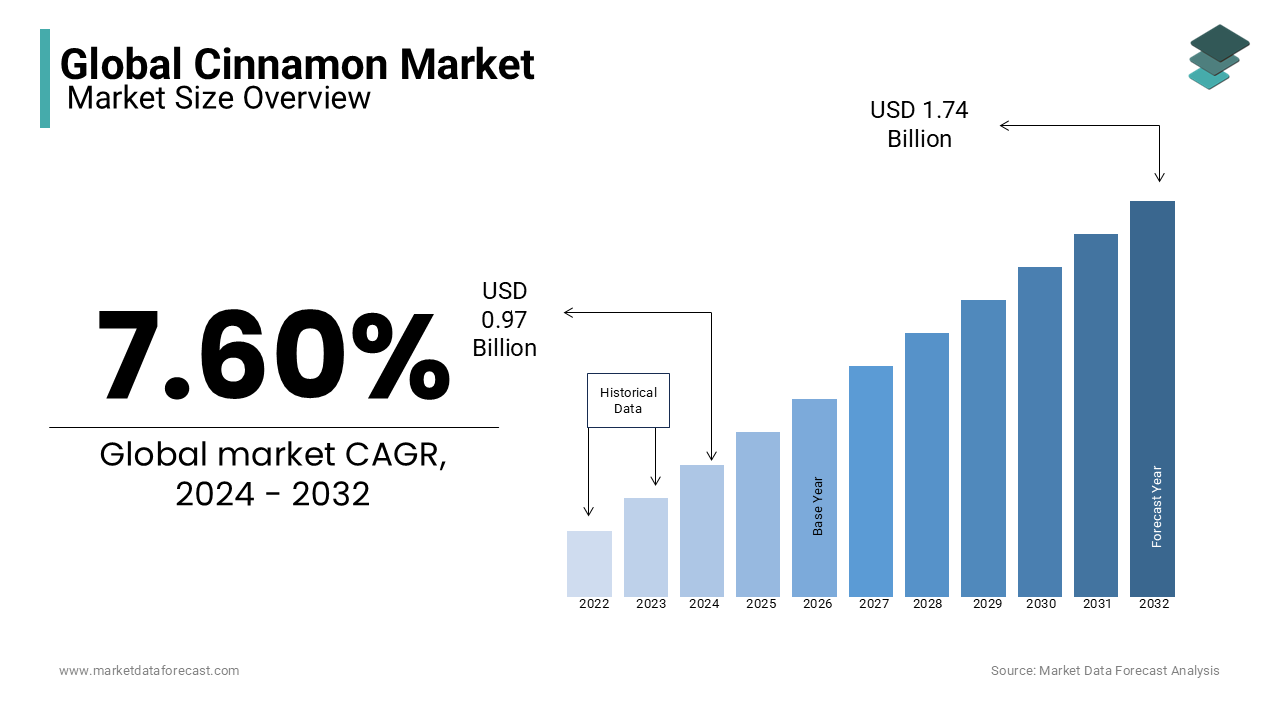
The cinnamon bark derived primarily from two distinct species namely Cinnamomum verum, known as Ceylon cinnamon and Cinnamomum cassia referred to as Cassia cinnamon. This aromatic spice is valued for its warm flavor profile and extensive applications in culinary pharmaceutical and cosmetic industries. Cinnamon has been utilized for centuries not only as a flavoring agent but also for its medicinal properties including anti-inflammatory and antioxidant effects. According to the Food and Agriculture Organization of the United Nations global production of spices and herbs has seen a steady increase with cinnamon being a significant contributor to this growth trajectory. In 2023 the international trade volume for cinnamon reached approximately 180000 metric tons reflecting robust demand across continents. Furthermore, as per the World Health Organization the recognition of traditional medicine has bolstered the acceptance of natural remedies thereby increasing the consumption of cinnamon in health supplements. The geographical concentration of production in countries like Sri Lanka Indonesia and China influences supply dynamics significantly. Consumer preferences are shifting towards organic and sustainably sourced variants driven by heightened health awareness.
MARKET DRIVERS
Growing Consumer Awareness of Health Benefits Drives Demand in Functional Foods and Supplements
The consumers are increasingly incorporating cinnamon into their diets due to its recognized health benefits in managing blood sugar levels and improving metabolic health. The growing consumer awareness of health benefits is ascribed in boosting the growth of cinnamon market. Scientific studies have highlighted the potential of cinnamon to enhance insulin sensitivity which appeals to individuals with type 2 diabetes or those at risk. According to the National Institutes of Health, cinnamon consumption can lower fasting blood glucose levels by up to 10% in certain populations. This evidence has spurred the inclusion of cinnamon in functional foods dietary supplements and wellness beverages. The trend towards preventive healthcare encourages consumers to seek natural alternatives to synthetic medications. Manufacturers are responding by launching cinnamon enriched products such as teas capsules and snack bars. The antioxidant properties of cinnamon also contribute to its appeal among health-conscious demographics seeking to combat oxidative stress. Social media platforms amplify this awareness through influencer endorsements and educational content. Retailers are expanding their health and wellness sections to accommodate these specialized products. The alignment with broader wellness trends ensures sustained demand.
Expansion of the Food and Beverage Industry Particularly in Bakery and Confectionery Segments
The widespread use of cinnamon in the food and beverage industry is amplifying the growth of cinnamon market. Its versatile flavor profile makes it a staple ingredient in baked goods confectionery items and seasonal beverages. According to the American Bakers Association, cinnamon is one of the top five spices used in commercial baking operations globally. The rising popularity of artisanal bakeries and specialty coffee shops has further amplified demand for high quality cinnamon. As per the study, cinnamon flavored beverages account for 15% of seasonal drink sales in major coffee chains. The convenience food sector also contributes significantly with ready to eat cereals and snacks often featuring cinnamon as a key flavor note. Consumer preference for comfort foods especially during colder months drives seasonal spikes in consumption. Manufacturers innovate by introducing new product lines such as cinnamon swirl breads and spiced desserts to capture market interest. The globalization of cuisines has introduced cinnamon to diverse culinary traditions beyond its traditional markets. Retailers leverage this demand by promoting cinnamon based products through targeted marketing campaigns. The consistent integration of cinnamon into mainstream food products ensures a stable and growing customer base.
MARKET RESTRAINTS
Strict Regulatory Limits on Coumarin Content Restrict Usage of Cassia Cinnamon in Certain Regions
The regulatory scrutiny surrounding coumarin a naturally occurring compound found in high concentrations in Cassia cinnamon is hindering the growth of cinnamon market. Coumarin has been linked to liver toxicity, when consumed in excessive amounts prompting health authorities to impose strict limits. According to the European Food Safety Authority, the tolerable daily intake for coumarin is set at 0.1 milligrams per kilogram of body weight. This regulation restricts the use of Cassia cinnamon in food products within the European Union and other stringent markets. Data from the German Federal Institute for Risk Assessment indicates that frequent consumers of Cassia cinnamon may exceed safe intake levels particularly children. Consequently, manufacturers must source Ceylon cinnamon which contains negligible amounts of coumarin but is significantly more expensive and less abundant. This requirement increases production costs and complicates supply chain management. The need for rigorous testing and certification adds to operational burdens for exporters. Consumer confusion regarding the differences between cinnamon types also hampers market clarity. Some retailers hesitate to stock Cassia varieties due to compliance risks.
Volatility in Raw Material Prices Due to Climate Change and Agricultural Instability
The price volatility driven by climate change and agricultural inconsistencies is additionally degrading the growth of cinnamon market. Cinnamon trees are sensitive to weather conditions requiring specific tropical climates for optimal growth. According to the Intergovernmental Panel on Climate Change changing rainfall patterns and increased frequency of extreme weather events threaten crop yields in major producing regions. Droughts and floods can devastate harvests leading to supply shortages and price spikes. These fluctuations create uncertainty for manufacturers and retailers who struggle to maintain stable pricing strategies. Smallholder farmers who dominate the supply chain are particularly vulnerable to these shocks lacking resources for mitigation. The reliance on manual labor for harvesting and processing further exacerbates cost pressures amidst rising wage rates. Geopolitical tensions and trade barriers can also disrupt export flows affecting global availability. Importers face difficulties in securing long term contracts at fixed prices. This instability discourages investment in value added products.
MARKET OPPORTUNITIES
Rising Demand for Organic and Sustainable Cinnamon Variants Presents Growth Potential
The increasing consumer preference for organic and sustainably sourced products is substantially creating new opportunities for the growth of cinnamon market. Shoppers are becoming more discerning about the origin and production methods of their spices seeking assurances of environmental stewardship and fair labor practices. Certified organic cinnamon commands a premium price appealing to eco conscious consumers. Manufacturers can capitalize on this trend by obtaining certifications such as USDA Organic or EU Organic which enhance brand credibility. Sustainable farming practices such as agroforestry not only improve soil health but also attract ethically minded buyers. Retailers are dedicating shelf space to organic lines reflecting this shift in demand. Collaborations with local farming communities ensure traceability and support rural economies. The transparency offered by blockchain technology further strengthens consumer trust in product claims. As awareness of pesticide residues in conventional farming grows the demand for clean label cinnamon will intensify. This segment offers higher margins and fosters brand loyalty. Companies that prioritize sustainability can differentiate themselves in a crowded market.
Innovation in Cinnamon Based Personal Care and Cosmetic Products Expands Application Scope
The expanding scale of personal care and cosmetics industry is gearing the need for the antimicrobial and anti-inflammatory properties, which is also to enhance the growth of cinnamon market. Cinnamon oil and extracts are increasingly incorporated into skincare haircare and oral hygiene products. According to the Personal Care Products Council, the natural and organic cosmetics sector is projected to grow at a compound annual growth rate of 9% through 2027. Cinnamon is valued for its ability to combat acne and stimulate circulation making it a popular ingredient in facial cleansers and masks. Manufacturers are developing innovative formulations such as cinnamon infused lip plumpers and scalp treatments. The aromatic qualities of cinnamon also enhance the sensory experience of personal care items. Partnerships between spice suppliers and cosmetic brands facilitate the development of specialized extracts. Regulatory approval for topical use is well established in many regions reducing entry barriers. The trend towards holistic wellness encourages the use of multi purpose ingredients. Retailers are expanding their natural beauty sections to include these niche products. Marketing campaigns emphasize the dual benefits of efficacy and natural origin. This diversification reduces reliance on traditional culinary markets.
MARKET CHALLENGES
Prevalence of Adulteration and Quality Consistency Issues Undermine Consumer Trust
The widespread issue of adulteration, which compromises product quality and safety is one of the challenges for the growth of cinnamon market. Unscrupulous suppliers often mix lower grade bark with pure cinnamon or add artificial flavors to enhance aroma. According to the Spice Trade Association incidents of adulteration account for nearly 20% of spice imports in some regions. This practice misleads consumers and poses health risks particularly for those with allergies. The lack of standardized quality controls in fragmented supply chains exacerbates this problem. Small scale processors may lack the resources for rigorous quality assurance. Consumer trust is eroded when products fail to meet expected potency or purity levels. Retailers face liability risks and reputational damage from selling compromised goods. The variability in flavor profiles between batches also challenges manufacturers aiming for consistency. Establishing robust traceability systems is costly and complex for many stakeholders. International standards exist but enforcement varies significantly across producing countries. The presence of counterfeit products in online marketplaces further complicates quality control.
Supply Chain Disruptions and Logistical Bottlenecks Impact Global Distribution Efficiency
The supply chain disruptions that hinder efficient global distribution is also to inhibit the growth of cinnamon market. Most cinnamon is produced in a few key countries creating a concentrated supply base vulnerable to regional disturbances. According to the World Bank, logistics performance indices in major producing nations often lag behind global averages affecting export efficiency. Port congestion and shipping delays have become commonplace leading to increased lead times and costs. These instabilities disrupt inventory management for importers and manufacturers. Labor shortages in harvesting and processing further constrain supply capacity. The perishable nature of certain cinnamon products requires careful handling and storage conditions. Any deviation can result in quality degradation and financial loss. Geopolitical tensions and trade policies add layers of complexity to cross border transactions. Customs clearance procedures can be lengthy and unpredictable causing further delays. Manufacturers struggle to maintain consistent production schedules amidst these uncertainties. The lack of diversified sourcing options limits flexibility in mitigating risks.
REPORT COVERAGE
| REPORT METRIC | DETAILS |
| Market Size Available | 2025 to 2034 |
| Base Year | 2025 |
| Forecast Period | 2026 to 2034 |
| CAGR | 7.60% |
| Segments Covered | By Type, Application, Distribution Channel and region. |
| Various Analyses Covered | Global, Regional and Country Level Analysis; Segment-Level Analysis; DROC; PESTLE Analysis; Porter’s Five Forces Analysis; Competitive Landscape; Analyst Overview of Investment Opportunities |
| Regions Covered | North America, Europe, APAC, Latin America, Middle East & Africa |
| Market Leaders Profiled | Pure Ceylon Cinnamon, Adam Group, Bio Foods (Pvt) Ltd, HDDES Group, SDS SPICES (PVT) LTD, Ceylon Spice Company, Elite Spice, First Spice Mixing Company, C.F. Sauer Company, EHL Ingredients, Bart Ingredients. |
SEGMENTAL ANALYSIS
By Type Insights
The cassia cinnamon segment was the largest by holding a significant share of the cinnamon market in 2025. The growth of the segment is driven by its lower production costs and widespread cultivation in countries such as China Indonesia and Vietnam. According to the Food and Agriculture Organization of the United Nations, Cassia varieties are significantly easier to harvest and process compared to Ceylon cinnamon which requires labor intensive peeling techniques. The robust yield per hectare ensures a steady and abundant supply that meets the high-volume demands of the food and beverage industry. The strong and pungent flavor profile of Cassia makes it ideal for mass produced baked goods and processed foods where a distinct spice note is required at a low cost. Manufacturers prefer Cassia due to its longer shelf life and resistance to moisture which reduces spoilage during transportation and storage. The established infrastructure for drying and grinding Cassia bark supports efficient large scale operations. Retailers stock Cassia cinnamon extensively because of its affordability and consumer familiarity. The price differential between Cassia and other varieties allows it to penetrate price sensitive markets effectively. Its versatility in both culinary and industrial applications ensures continued leadership.
The ceylon cinnamon segment is ascribed to witness a fastest CAGR of 8.5% during the forecast period with the increasing consumer awareness regarding the health risks associated with coumarin a compound found in high levels in Cassia cinnamon. According to the European Food Safety Authority Ceylon, cinnamon contains negligible amounts of coumarin making it a safer option for regular consumption. Health-conscious consumers are shifting towards Ceylon cinnamon to avoid potential liver damage associated with excessive coumarin intake. The perception of Ceylon cinnamon as a premium and healthier alternative appeals to wellness oriented demographics. Nutritionists and healthcare providers often recommend Ceylon cinnamon for managing blood sugar levels due to its superior medicinal properties. The rise of functional foods and dietary supplements incorporating Ceylon cinnamon further boosts demand. Retailers are expanding their organic and health food sections to include certified Ceylon products. Marketing campaigns emphasize the authentic origin and traditional harvesting methods of Ceylon cinnamon.
By Application Insights
The food and beverages segment was accounted in holding a dominant share of the Cinnamon Market in 2025 with the universal acceptance of cinnamon as a flavoring agent in a wide array of culinary applications. According to the International Food Information Council, cinnamon is one of the most popular spices used in households globally. Its integration into baked goods desserts breakfast cereals and savory dishes ensures consistent demand. Data from the National Coffee Association reveals that cinnamon flavored beverages account for a significant portion of seasonal coffee sales in the United States. The versatility of cinnamon allows it to complement both sweet and savory profiles making it indispensable in diverse cuisines. The rise of convenience foods has further boosted usage as manufacturers incorporate cinnamon into ready to eat snacks and meals. Retailers prioritize cinnamon stocked products due to their high turnover rates. The cultural significance of cinnamon in holiday traditions drives seasonal spikes in consumption. Food service establishments rely on cinnamon for signature menu items such as cinnamon rolls and spiced teas. The affordability and availability of cinnamon make it accessible to all consumer segments. Innovation in flavor combinations keeps consumer interest high. The widespread adoption in both home cooking and commercial food preparation solidifies its leading position.
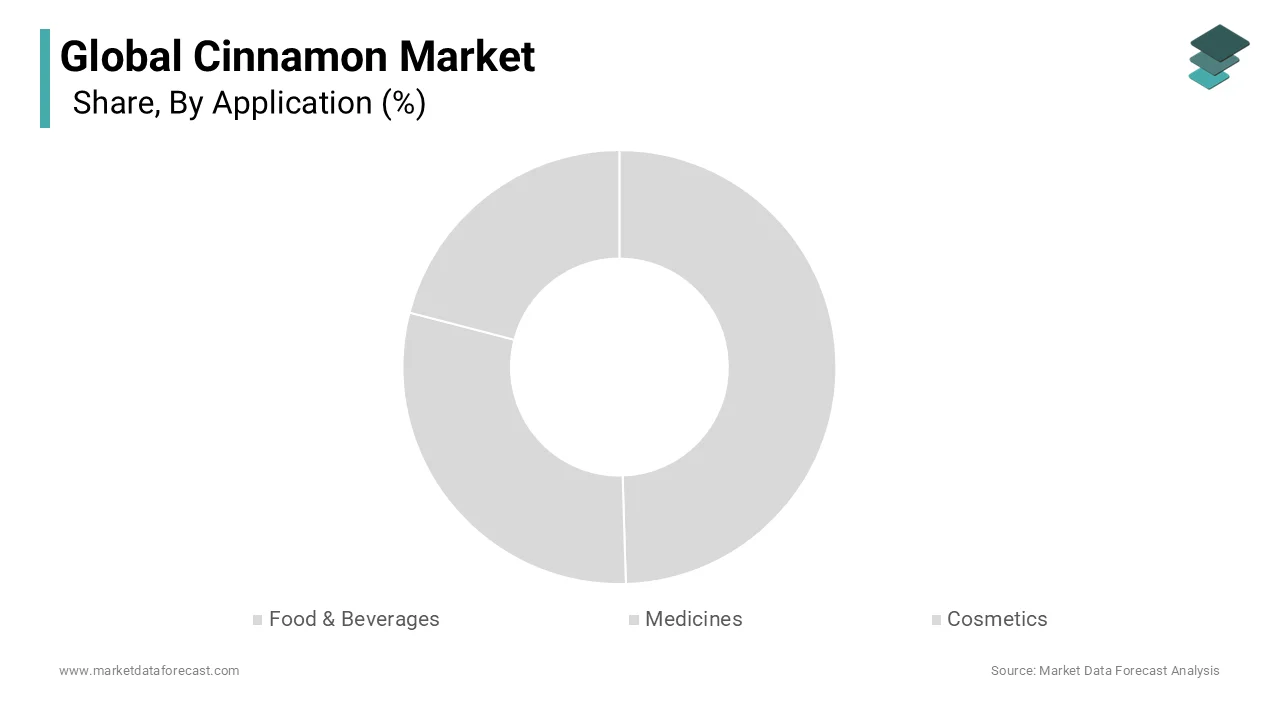
The leadership of the Food and Beverages segment is reinforced by continuous product innovation and the influence of seasonal trends. Manufacturers frequently launch new cinnamon infused products to capture consumer attention and drive sales. The popularity of pumpkin spice and similar seasonal blends creates recurring demand peaks during autumn and winter months. Data from Starbucks reports that the return of pumpkin spice latte generates hundreds of millions of dollars in annual revenue highlighting the economic impact of cinnamon flavored trends. Retailers leverage these seasons to promote cinnamon based items through targeted marketing campaigns. The expansion of plant based diets has also created opportunities for cinnamon to enhance the flavor of alternative milk and meat products. Cinnamon helps mask undesirable tastes in some plant based ingredients improving overall palatability. The trend towards natural flavors encourages the use of real cinnamon over artificial substitutes. Food bloggers and influencers play a crucial role in popularizing new cinnamon recipes. The ease of incorporating cinnamon into homemade meals supports its regular purchase.
The medicines segment is projected to register a fastest CAGR of 9.2% from 2026 to 2034 with the increasing recognition of cinnamon’s therapeutic properties particularly in managing type 2 diabetes. According to the reports, cinnamon can improve insulin sensitivity and lower fasting blood glucose levels. This evidence has led to the incorporation of cinnamon extracts into dietary supplements and herbal medicines. Consumers are seeking natural alternatives to pharmaceutical drugs for chronic condition management. The anti-inflammatory and antioxidant properties of cinnamon also contribute to its medicinal appeal. Healthcare practitioners are increasingly recommending cinnamon as a complementary therapy. Pharmaceutical companies are investing in research to develop standardized cinnamon formulations. Regulatory approvals for health claims related to cinnamon enhance consumer confidence. The aging population globally drives demand for preventive health solutions. Online pharmacies and health stores facilitate easy access to cinnamon based medicines. Marketing efforts emphasize clinical evidence and safety profiles. The shift towards holistic health practices supports this growth trajectory.
By Distribution Channel Insights
The supermarkets and hypermarkets segment was the largest by holding 55.4% of the Cinnamon Market share in 2025 owing to the widespread presence of these retail formats and the convenience they offer to consumers. According to the study, over 80% of household grocery shopping takes place in supermarkets and hypermarkets. The availability of cinnamon in various forms including sticks powder and extracts ensures broad consumer reach. The ability to compare prices and brands in a single location influences purchasing decisions. Promotional activities such as discounts and bundle offers drive volume sales. Private label cinnamon brands offered by retailers provide affordable options for budget conscious shoppers. The trusted environment of established retail chains enhances consumer confidence in product quality. Strategic placement near baking supplies and seasonal items boosts visibility. The extensive distribution networks of supermarket chains ensure consistent stock availability. Loyalty programs incentivize repeat purchases. The integration of online grocery services with physical stores further strengthens this channel.
The online retailers segment is deemed to register a fastest CAGR of 11.5% from 2026 to 2034 with the rapid expansion of e commerce platforms and the convenience of home delivery. Consumers appreciate the ability to access a wide variety of cinnamon types including rare and organic variants not available in local stores. Specialty spice brands benefit from online channels by reaching niche audiences directly. Subscription services offer regular deliveries of fresh cinnamon enhancing customer loyalty. The ability to read reviews and compare prices easily drives informed purchasing decisions. Social media marketing directs traffic to e commerce sites where influencers showcase products. Retailers are investing in faster delivery options to meet consumer expectations. The wide assortment available online surpasses physical store limitations. Consumers can access international brands and artisanal products that are not locally available.
REGIONAL ANALYSIS
Asia Pacific Cinnamon Market Analysis
Asia Pacific was the top performer of the global cinnamon market by accounting for 45.4% of share in 2025 owing to its role as the primary producer of cinnamon particularly in Sri Lanka Indonesia and China. According to the Food and Agriculture Organization of the United Nations, these countries collectively produce over 80% of the world's cinnamon supply. The deep cultural integration of cinnamon in Asian cuisines ensures robust domestic consumption. The rising middle class in countries like India and China is increasing demand for premium and organic varieties. Urbanization and changing lifestyles lead to greater consumption of processed foods containing cinnamon. The presence of traditional medicine systems such as Ayurveda and Traditional Chinese Medicine supports medicinal usage. Government initiatives to support spice farming enhance production capabilities. The region benefits from established trade routes and logistics infrastructure. Local manufacturers are innovating with value added products to capture higher margins. The growing tourism industry also boosts demand for authentic culinary experiences. As disposable incomes rise the appetite for diverse and high quality spices expands. Asia Pacific remains the central hub for cinnamon production and consumption globally.
North America Cinnamon Market Analysis
North America cinnamon market growth was positioned second by holding a significant share in 2025 with high per capita consumption and a strong preference for convenience foods. According to the US Department of Agriculture, cinnamon is one of the top five spices consumed in the United States. The popularity of baked goods coffee culture and seasonal traditions drives steady demand. Data from the National Coffee Association shows that cinnamon flavored beverages are a staple in coffee shops. The trend towards health and wellness has increased interest in Ceylon cinnamon for its medicinal properties. Retailers are expanding their organic and specialty spice sections to meet this demand. The presence of major food and beverage corporations facilitates large scale procurement. E commerce penetration is high enabling direct to consumer sales. Consumer awareness of food origins and sustainability influences purchasing decisions. The region leads in the adoption of clean label products.
Europe Cinnamon Market Analysis
Europe cinnamon market growth is steadily to have prominent growth opportunities in coming years with its strict regulatory standards and high demand for organic and sustainable products. According to the European Food Safety Authority regulations on coumarin content have shifted preference towards Ceylon cinnamon. Consumer awareness of health benefits drives demand for medicinal and wellness applications. The strong tradition of baking and confectionery in countries like Germany and France supports culinary usage. Retailers focus on transparency and ethical sourcing. The rise of private label brands offers competitive alternatives. Cross border trade within the EU facilitates market expansion. Manufacturers are investing in local processing to reduce carbon footprints. The emphasis on quality and tradition ensures long term loyalty.
Latin America Cinnamon Market Analysis
Latin America cinnamon market growth is likely to grow with the growing appreciation for international cuisines and baked goods. Brazil and Mexico are the largest contributors with the rising urbanization. Local production is limited leading to reliance on imports. Affordability is a key factor influencing purchasing decisions. The rise of modern retail formats enhances distribution. Health trends are emerging but price sensitivity remains high. Manufacturers are focusing on cost efficiency. The potential for growth lies in expanding reach to rural areas.
Middle East and Africa Cinnamon Market Analysis
The Middle East and Africa cinnamon market growth is driven by urbanization and the influence of global culinary trends. According to the survey, population is projected to reach 50% by 2030 in AfricA. This shift increases demand for packaged foods. The Gulf Cooperation Council countries are the primary markets due to higher income levels. Traditional uses in cuisine and medicine support demand. Local production is minimal. International brands are expanding their presence. Retail infrastructure is improving. E commerce is nascent but growing. Price sensitivity varies across the region. Supply chain challenges persist.
COMPETITIVE LANDSCAPE
The Cinnamon Market features a fragmented competitive landscape with a mix of large multinational agribusinesses and numerous regional suppliers. Major companies compete on quality consistency sustainability credentials and supply chain reliability. Price competition remains intense particularly for standard Cassia varieties where differentiation is limited. Premium segments such as organic Ceylon cinnamon offer higher margins but require strict adherence to certification standards. Innovation in product forms such as extracts and encapsulated powders provides competitive advantages. Companies differentiate themselves through transparent sourcing practices and direct relationships with farming communities. Regulatory compliance regarding food safety and labeling is a critical factor influencing market access. The rise of private label brands in retail channels poses a challenge to established names. Digital platforms enable smaller producers to reach global audiences increasing competition. Mergers and acquisitions are common strategies for expanding geographic reach and product portfolios. Sustainability has become a key differentiator as consumers prioritize ethical sourcing. The ability to manage supply chain disruptions and maintain consistent quality defines market leadership.
KEY MARKET PLAYERS
Key players in cinnamon market are
- Pure Ceylon Cinnamon
- Adam Group
- Bio Foods Pvt Ltd
- HDDES Group
- SDS SPICES Pvt Ltd
- Ceylon Spice Company
- Elite Spice
- First Spice Mixing Company
- C.F. Sauer Company
- EHL Ingredients
- Bart Ingredients
Top Players in the Market
- Olam Group Limited is a leading global agribusiness player with a significant presence in the spices sector including cinnamon. The company sources high quality cinnamon from key producing regions such as Sri Lanka and Indonesia ensuring consistent supply for international markets. Olam invests heavily in sustainable sourcing practices and farmer support programs to enhance crop quality and yield. Recent initiatives include expanding its processing facilities to offer value added products such as cinnamon extracts and oils. The corporation leverages advanced traceability technologies to provide transparency to customers regarding origin and quality standards.
- McCormick and Company Incorporated is a dominant force in the global flavor and seasoning market with a robust portfolio of cinnamon products. The company utilizes its extensive distribution network to deliver cinnamon in various forms to consumers and commercial clients worldwide. McCormick focuses on product innovation by introducing organic and non GMO cinnamon options to meet evolving consumer preferences. Recent actions include investing in digital platforms to enhance customer engagement and personalize shopping experiences. The corporation emphasizes rigorous quality control and safety standards to maintain brand trust. Strategic partnerships with local farmers ensure a steady supply of premium raw materials. McCormick continues to expand its footprint in emerging markets through targeted marketing and product localization.
- Nestlé S.A. incorporates cinnamon extensively across its diverse portfolio of food and beverage products including confectionery dairy and culinary items. The company leverages its global scale to source cinnamon sustainably while ensuring consistent quality for its brands. Nestlé focuses on integrating cinnamon into health oriented products aligning with consumer trends towards functional ingredients. Recent strategies include reformulating products to reduce sugar content while maintaining flavor profiles using natural spices like cinnamon. The corporation invests in research and development to explore new applications of cinnamon in plant based and alternative protein products. Nestlé emphasizes responsible sourcing through its Creating Shared Value initiative supporting farming communities.
Top Strategies Used by the Key Market Participants
Key players in the Cinnamon Market primarily focus on vertical integration to secure stable supply chains and ensure quality consistency. Companies invest in sustainable sourcing initiatives and direct partnerships with farmers to mitigate risks associated with climate change and price volatility. Product diversification through the development of organic and value added extracts helps capture premium market segments. Strategic expansions into emerging markets enable firms to tap into growing consumer bases with rising disposable incomes. Investment in advanced processing technologies improves efficiency and product purity. Digital transformation enhances supply chain transparency and customer engagement. Regulatory compliance and certification acquisitions build brand trust and facilitate entry into stringent markets. These strategies collectively strengthen competitive positions and drive sustainable growth in the global spice industry.
MARKET SEGMENTATION
This research report on the global Cinnamon market has been segmented and sub-segmented based on Type, Distribution Channel, Application & region.
By Type
- Ceylon Cinnamon
- Cassia Cinnamon
- Saigon Cinnamon
- Korintje
- Cinnamon
- Others
By Application
- Food & Beverages
- Medicines
- Cosmetics
By Distribution Channel
- Hypermarkets
- Supermarkets
- Online Retailers
- Convenience Stores
- Specialty Stores
By Region
- North America
- Europe
- Asia Pacific
- Latin America
- Middle East & Africa