- Product Description Description
- Table of Contents TOC
- List of Table & Figure LOT
- Get Free Sample PDF Sample PDF
Market Size, 2025
$81.48 BnMarket Estimate, 2026
$85.80 BnMarket Forecast, 2034
$129.69 BnCAGR, 2026–2034
5.30%Executive Summary: Circular Connectors Market
- Market Scope: Comprehensive global circular connectors market analysis covering connector types, application sectors, regional leadership frameworks, 5G infrastructure demands, and industrial automation drivers.
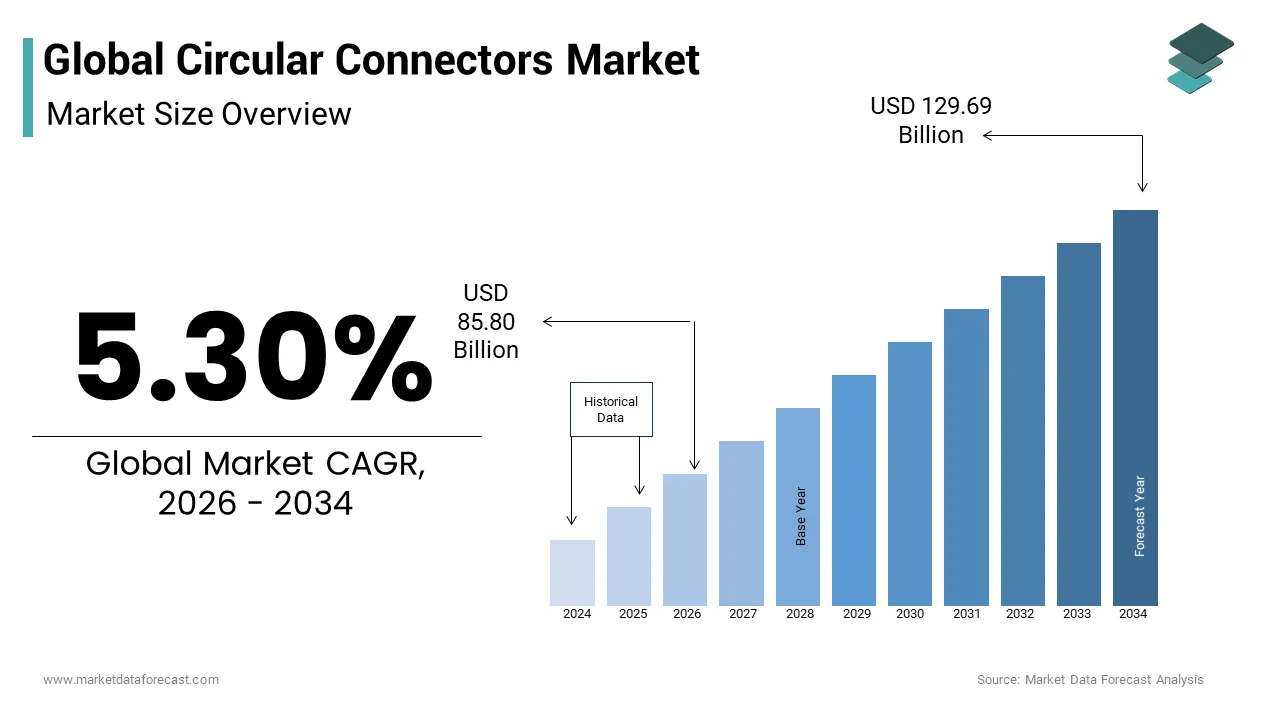
- Market Valuation: Valued at USD 81.48 billion (2025), estimated at USD 85.80 billion (2026), and projected to reach USD 129.69 billion by 2034, registering a steady CAGR of 5.30% (2026–2034).
- Primary Growth Drivers: Increasing demand for high-speed internet across automotive, medical, and consumer electronics, 5G service launches, industrial data transmission needs, and technological shifts toward digital systems.
Key Market Segment Metrics (2026–2034)
| Category | Leading Segment (2025 Position) | Fastest-Growing Segment |
|---|---|---|
| By Connector Type | Hybrid Connectors (led by type with prominent market shares due to medical benefits) | Data Connectors (expected to register the highest CAGR during the forecast period) |
| By Application / End-Use | Industrial Application (gains significant traction from secure data transmission needs) | Medical Segment (anticipated to reach the highest CAGR by end of 2027) |
| By Region | North America (holds dominant regional market share driven by defense investments) | Europe (projected to achieve the highest CAGR during the forecast period) |
Major Market Players & Market Structure
Market Structure: Highly competitive global interconnect and electronics landscape featuring major multinational hardware manufacturers and connectivity specialists competing on strategic acquisitions, sensor portfolios, and harsh-environment durability.
Key Companies: Amphenol, Molex, Sumitomo Wiring System, Delphi, Jonathon IT, Belden, Source, TE Connectivity, Franz Binder GmbH & Co, PHOENIX CONTACT, ITT Inc, Japan Aviation Electronics Industry Ltd, and Shenzhen Deren Electronics Co. LTD.
 Download Free Sample Report
Global Circular Connectors Market Size
The global circular connectors market size was valued at USD 81.48 billion in 2025 and is anticipated to reach a valuatioon of USD 85.80 billion in 2026 and USD 129.69 billion by 2034, growing at a CAGR of 5.3%, from 2026 to 2034.
Circular connectors comprise robust electromechanical interface devices designed to transmit power, signals, and data in harsh environmental conditions where reliability is paramount. These connectors feature a cylindrical coupling mechanism that ensures secure mating and high resistance to vibration, moisture, and dust, making them indispensable in aerospace, defense, industrial automation, and medical applications. According to the International Electrotechnical Commission, standard IEC 61076 defines the rigorous testing protocols these components must undergo to guarantee operational integrity under extreme stress. According to data from the International Air Transport Association, the global aerospace sector, which relies heavily on circular connectors for avionics and cabin systems, processed over 4 billion passengers in 2023. This massive volume of air travel necessitates millions of reliable connection points to ensure passenger safety and system functionality. In the industrial sector, the proliferation of Industry 4.0 technologies has increased the demand for sensors and actuators that require durable interconnects. According to the European Committee for Electrotechnical Standardization, over 60% of industrial machinery failures are attributed to connection issues, highlighting the critical role of high-quality circular connectors. Furthermore, the medical device industry, which requires sterilizable and biocompatible connectors, sees steady growth driven by an aging global population. According to the World Health Organization, the number of people aged 60 years and older is expected to double by 2050, driving demand for advanced diagnostic and therapeutic equipment. These macro trends underscore the essential nature of circular connectors in maintaining the backbone of modern technological infrastructure across diverse and demanding sectors.
MARKET DRIVERS
Industrial Automation and Industry 4.0 Adoption Accelerate Demand
The rapid expansion of industrial automation and the widespread adoption of Industry 4.0 principles are majorly driving the global circular connectors market growth. Modern smart factories rely on dense networks of sensors, actuators, and robotic arms that require reliable and durable electrical connections to function continuously in challenging environments. According to the International Federation of Robotics, the global stock of operational industrial robots reached 3.9 million units in 2022, reflecting a 10% annual growth rate. Each robotic unit utilizes numerous circular connectors to link motors, controllers, and feedback systems, ensuring precise movement and data transmission. The harsh conditions within manufacturing facilities, including exposure to oil, chemicals, and mechanical vibration, demand connectors with high ingress protection ratings such as IP67 or IP69K. According to the German Engineering Federation, unplanned downtime due to connection failures costs manufacturers an average of 5% of their annual revenue. Circular connectors mitigate this risk by providing secure locking mechanisms that prevent accidental disconnection. Furthermore, the integration of Internet of Things devices in production lines increases the number of connection points required per facility. According to the European Commission, smart factories utilize 30% more connectivity nodes than traditional plants. This surge in connected devices necessitates robust interconnect solutions that can withstand continuous operation without degradation. As manufacturers strive for higher efficiency and predictive maintenance capabilities, the demand for high-performance circular connectors continues to raise steadily across automotive, electronics, and heavy machinery sectors.
Aerospace and Defense Sector Expansion Drives High Reliability Requirements
The sustained growth and modernization of the aerospace and defense sectors significantly propel the demand for high-reliability circular connectors, which further aids the circular connectors market expansion. Aircraft and military vehicles operate in extreme conditions involving high-altitude pressure changes, temperature fluctuations, and intense vibration, requiring connectors that maintain uninterrupted signal and power transmission. According to the Aerospace Industries Association, global aerospace and defense revenues exceeded 900 billion dollars in 2023, driven by increased commercial air travel and geopolitical tensions. Each commercial aircraft contains thousands of circular connectors used in avionics, lighting, entertainment systems, and engine controls. The Federal Aviation Administration mandates strict certification standards for all electrical components, ensuring they meet rigorous safety and durability criteria. Circular connectors made from lightweight materials, such as aluminum and composite plastics, help reduce overall aircraft weight, thereby improving fuel efficiency. According to the International Air Transport Association, a 1% reduction in aircraft weight can save airlines approximately 2% in fuel costs annually. In the defense sector, the development of unmanned aerial vehicles and advanced radar systems requires miniaturized yet robust connectors capable of handling high-speed data transfer. According to the North Atlantic Treaty Organization, member countries increased defense spending by 10% in 2023, focusing on technological superiority. This investment drives the procurement of specialized circular connectors that offer electromagnetic interference shielding and secure locking features. The critical nature of these applications ensures that price sensitivity is low compared to the requirement for absolute reliability and longevity.
MARKET RESTRAINTS
High Manufacturing Costs and Raw Material Volatility Restrain Growth
The substantial manufacturing costs associated with producing high-precision circular connectors are a significant restraint on market growth, particularly for small and medium-sized enterprises. The production process involves complex machining, molding, and assembly steps requiring specialized equipment and skilled labor, which drives up the initial investment. According to the International Labour Organization, the shortage of skilled technicians in the manufacturing sector has increased labor costs by 15% in major industrial nations over the past three years. Additionally, the raw materials used in circular connectors, such as copper, gold, and specialized engineering plastics, are subject to significant price volatility. According to the London Metal Exchange, copper prices fluctuated by over 20% in 2023 due to supply chain disruptions and changing global demand. These fluctuations make it difficult for manufacturers to maintain stable pricing structures and profit margins. Small batch production runs, often required for customized aerospace or medical applications, further exacerbate the cost per unit. According to the Confederation of European Businesses, 45% of small manufacturers cite high material costs as a barrier to expanding their product lines. The need for rigorous testing and certification to meet international standards, such as MIL-STD or IEC specifications, adds another layer of expense. These financial pressures limit the ability of smaller players to compete with established giants who benefit from economies of scale. Consequently, many potential customers opt for lower-cost alternatives despite the risk of reduced reliability, slowing down the overall market penetration of premium circular connectors.
Complexity of Miniaturization and Design Constraints
The increasing demand for miniaturized electronic devices is further hampering the expansion of the global circular connectors market. As end-user applications in wearable technology, medical implants, and portable diagnostics become more compact, the space available for connectors shrinks significantly. According to the Institute of Electrical and Electronics Engineers, reducing the size of connectors while maintaining current-carrying capacity and signal integrity requires advanced material science and precision engineering. The physical limitations of metal contacts mean that smaller pins have higher resistance and are more prone to damage during mating cycles. According to the Semiconductor Industry Association, the average size of electronic components has decreased by 30% over the last five years, necessitating corresponding reductions in interconnect sizes. However, achieving reliable locking mechanisms in miniature circular connectors is technically difficult and often compromises ease of use. Manufacturers must balance the need for small footprints with the requirement for robustness against vibration and pull-out forces. According to the International Electrotechnical Commission, failure rates for micro-connectors are 25% higher than standard-sized counterparts due to handling errors and mechanical stress. Developing new designs that meet these conflicting requirements involves extensive research and development cycles, which delay time to market. Additionally, the lack of standardized interfaces for ultra-miniature connectors leads to compatibility issues between different manufacturers. This fragmentation forces original equipment manufacturers to design custom solutions, increasing development costs and complexity. Overcoming these design constraints remains a persistent hurdle for the industry as it attempts to serve the growing market for compact and portable electronic devices.
MARKET OPPORTUNITIES
Expansion into Renewable Energy Infrastructure Offers New Avenues
The global transition towards renewable energy sources is a substantial opportunity for the circular connectors market as wind, solar, and hydroelectric installations require durable and weather-resistant interconnects. Wind turbines located in offshore and remote onshore locations are exposed to harsh environmental conditions, including salt spray, high humidity, and extreme temperatures, necessitating connectors with high corrosion resistance and sealing capabilities. According to the International Energy Agency, global renewable capacity additions reached 510 gigawatts in 2023, marking a historic high driven by climate change mitigation efforts. Each wind turbine contains hundreds of circular connectors used in pitch control systems, generators, and monitoring sensors. According to the Global Wind Energy Council, the offshore wind sector is growing at an annual rate of 12%, creating a lucrative niche for high-performance connectors. Similarly, solar farms require robust connectors for panel interconnections and inverter links that can withstand prolonged exposure to ultraviolet radiation and thermal cycling. According to the SolarPower Europe association, the European solar market installed 41 gigawatts of new capacity in 2023 alone. These installations often operate in inaccessible locations where maintenance is costly and difficult, making reliability a critical factor. Circular connectors with IP68 ratings ensure long-term performance without frequent replacement. Furthermore, the development of smart grid technologies involves the deployment of numerous sensors and communication devices that rely on secure electrical connections. As governments worldwide invest billions in green energy infrastructure, the demand for specialized circular connectors capable of enduring harsh outdoor environments is poised for significant growth, offering manufacturers a promising avenue for expansion.
Growth in Medical Technology and Diagnostic Equipment
The advancing field of medical technology and the increasing prevalence of chronic diseases create a robust opportunity for the circular connectors market in the healthcare sector. Modern medical devices, such as MRI machines, CT scanners, patient monitors, and surgical robots, require high-precision connectors that ensure accurate signal transmission and patient safety. According to the World Health Organization, non-communicable diseases account for 74% of all deaths globally, driving the demand for advanced diagnostic and therapeutic equipment. These devices often operate in sterile environments and must withstand repeated cleaning and sterilization processes using harsh chemicals or high-temperature autoclaves. Circular connectors made from biocompatible materials, such as stainless steel and specialized polymers, meet these stringent hygiene requirements. According to the European Coordination Committee of the Radiological, Electromedical and Healthcare IT Industry, the medical imaging market in Europe grew by 8% in 2023. The trend towards minimally invasive surgery and portable diagnostic tools further accelerates the need for miniaturized and flexible circular connectors. According to the US Food and Drug Administration, over 100 new medical devices utilizing advanced connectivity solutions were approved in the past year alone. Additionally, the rise of telemedicine and home healthcare devices requires connectors that are easy for patients to use while maintaining clinical-grade reliability. Manufacturers who can provide connectors with unique keying options to prevent misconnection and enhanced shielding to protect sensitive biological signals are well positioned to capture this growing market segment. The aging population in developed nations ensures sustained demand for medical equipment, thereby supporting long-term growth for circular connector suppliers in the healthcare vertical.
MARKET CHALLENGES
Supply Chain Disruptions and Component Shortages
Persistent supply chain disruptions and shortages of critical components pose a significant challenge to the circular connectors market, affecting production schedules and delivery timelines. The global semiconductor crisis, which began in 2020, has had a cascading effect on the availability of integrated circuits and electronic components used in smart circular connectors. According to the European Semiconductor Industry Association, lead times for certain microcontrollers and passive components increased by up to 40 weeks during the peak of the shortage. This delay impacts the ability of connector manufacturers to produce intelligent connectors with embedded diagnostics and data processing capabilities. Additionally, the reliance on single-source suppliers for specialized raw materials, such as high-grade plastics and precious metal platings, exacerbates vulnerability. Geopolitical tensions and trade restrictions further complicate the procurement of these materials, leading to unpredictable availability. According to the International Chamber of Commerce, 65% of manufacturing firms experienced significant supply chain delays in 2023. These disruptions force companies to hold higher inventory levels, tying up capital and increasing storage costs. The volatility in shipping rates and logistical bottlenecks at major ports also contribute to increased lead times and costs. Manufacturers often struggle to pass these additional costs onto customers due to competitive pressures and long-term contracts. The lack of visibility into tier-two and tier-three suppliers makes it difficult to anticipate and mitigate risks effectively. As a result, companies face uncertainty in their production planning and customer commitments. The gradual recovery of global supply chains remains uneven, with some regions continuing to face logistical challenges. This environment requires connector manufacturers to diversify their supplier base and invest in resilient logistics networks, which involves significant time and resources.
Intense Price Competition and Market Fragmentation
The global circular connectors market is characterized by intense price competition and fragmentation, which poses a challenge for manufacturers striving to maintain profitability and brand differentiation. The presence of numerous local and regional players, particularly in Asia-Pacific, offers low-cost alternatives that undercut premium brands on price. According to the Asian Development Bank, the manufacturing sector in emerging economies benefits from lower labor and operational costs, allowing local producers to offer connectors at 20% to 30% lower prices than Western counterparts. This price pressure forces established global manufacturers to either reduce their margins or risk losing market share in cost-sensitive segments, such as consumer electronics and general industrial applications. The lack of significant product differentiation in standard circular connector models makes it difficult for companies to justify higher prices based solely on brand reputation. According to the European Commission, price is the deciding factor for 50% of procurement decisions in the general industrial sector. Furthermore, the fragmentation of the market means that no single player dominates the entire landscape, leading to a scattered competitive environment. Small manufacturers often engage in aggressive pricing strategies to gain entry into new markets or secure large contracts. This dynamic erodes profit margins across the industry and limits the funds available for research and development. Customers frequently switch suppliers to capitalize on lower prices, resulting in low loyalty and high churn rates. To combat this challenge, companies must invest in value-added services, such as custom design support, rapid prototyping, and comprehensive technical assistance. However, these initiatives require significant investment and may not always yield immediate returns, making it difficult to sustain competitiveness in a price-driven market.
REPORT COVERAGE
| REPORT METRIC | DETAILS |
| Market Size Available | 2025 to 2034 |
| Base Year | 2025 |
| Forecast Period | 2026 to 2034 |
| CAGR | 5.3% |
| Segments Covered | By Type, Application, And Region |
| Various Analyses Covered | Global, Regional, Country-Level Analysis; Segment-Level Analysis; DROC; PESTLE Analysis; Porter’s Five Forces Analysis; Competitive Landscape; Analyst Overview of Investment Opportunities |
| Regions Covered | North America, Europe, APAC, Latin America, Middle East & Africa |
| Market Leaders Profiled | Amphenol, Molex, Sumitomo Wiring System, Delphi, Jonathon, IT, Belden, Source, TE Connectivity, Molex, LLC, Franz Binder GmbH & Co, PHOENIX CONTACT, ITT Inc, Japan Aviation Electronics Industry, Ltd, Shenzhen Deren Electronics Co., LTD, and others |
SEGMENTAL ANALYSIS
By Type Insights
The power connectors segment dominated the market by capturing the 44.7% of the global market share in 2025. The dominance of power connectors segment in the global market is attributed to their critical role in transmitting high voltage and current in industrial, aerospace, and transportation applications. These connectors are engineered to handle substantial electrical loads while maintaining safety and reliability in harsh environments. The expansion of electric vehicle infrastructure globally has significantly boosted demand for robust power connectors capable of fast charging and high power delivery. According to the International Energy Agency, global electric car sales reached 14 million units in 2023, representing a 35% increase from the previous year. Each electric vehicle requires multiple high-power circular connectors for battery management, motor control, and charging interfaces. In the industrial sector, the shift towards automated machinery and robotics necessitates reliable power distribution systems that can withstand continuous operation. According to the German Engineering Federation, industrial automation investments grew by 8% in 2023, further driving the need for durable power interconnects. Additionally, the renewable energy sector, particularly wind and solar farms, relies heavily on power connectors to link generators, inverters, and grid infrastructure. The ability of power connectors to operate efficiently under extreme temperature variations and mechanical stress ensures their dominance. Manufacturers continue to innovate by developing lightweight materials and improved cooling mechanisms to enhance performance. This consistent demand across multiple high-growth industries solidifies the leadership of power connectors in the market.
On the other side, the hybrid connectors segment is emerging as the fastest-growing segment in the global circular connectors market with a projected CAGR of 9.2% over the forecast period owing to the industry trend towards miniaturization and weight reduction in aerospace, defense, and medical applications. Hybrid connectors combine power, signal, and data lines into a single interface, thereby reducing the number of connection points, cable weight, and installation complexity. According to the Aerospace Industries Association, the use of hybrid connectors can reduce overall wiring harness weight by up to 30%, which is crucial for improving fuel efficiency in aircraft. The Federal Aviation Administration emphasizes the importance of weight reduction in aviation, noting that every kilogram saved translates to significant cost savings over the lifespan of an aircraft. In the medical device sector, hybrid connectors enable the development of compact and portable diagnostic equipment, such as handheld ultrasound devices and patient monitors. According to the World Health Organization, the demand for portable medical devices has increased by 20% annually due to the rise in home healthcare services. The integration of multiple functions into one connector also simplifies assembly processes and reduces the risk of connection errors. As original equipment manufacturers strive to create more efficient and compact systems, the adoption of hybrid technology accelerates. Furthermore, advancements in contact technology allow hybrid connectors to handle higher power levels without compromising signal integrity. This versatility and efficiency make hybrid connectors the preferred choice for next-generation electronic systems, driving their exceptional growth rate.
By Application Insights
The industrial segment led the market with 36.4% of the global market share in 2025. The leading position of industrial segment in the global market is driven by the widespread adoption of automation and advanced manufacturing technologies. Factories worldwide are increasingly deploying robots, sensors, and control systems that require durable and reliable interconnects to function in demanding environments. According to the International Federation of Robotics, the global installation of industrial robots exceeded 500,000 units in 2023, marking a new record. Each robotic arm utilizes numerous circular connectors to transmit power and data between joints, motors, and controllers. The harsh conditions in industrial settings, including exposure to dust, oil, and vibration, necessitate connectors with high ingress protection ratings. According to the European Commission, the manufacturing sector in Europe invested over 100 billion euros in digital transformation initiatives in 2023. This investment drives the replacement of legacy wiring systems with modern circular connectors that offer better performance and easier maintenance. Additionally, the growth of smart factories relies on extensive sensor networks that monitor production parameters in real time. According to the German Engineering Federation, predictive maintenance systems, which depend on reliable data transmission, have reduced unplanned downtime by 25% in adopting facilities. Circular connectors provide the robust physical interface required for these critical data links. The expansion of heavy machinery, construction, and mining equipment also contributes to this segment's dominance. As industries prioritize efficiency and uptime, the demand for high-quality industrial circular connectors remains strong, ensuring its leading position in the market.
However, the medical segment is the fastest-growing in the global circular connectors market and is estimated to register a CAGR of 7.7% over the forecast period owing to the technological advancements in healthcare and the aging global population. Modern medical equipment, such as MRI machines, CT scanners, surgical robots, and patient monitoring systems, requires high-precision connectors that ensure accurate signal transmission and patient safety. According to the World Health Organization, the number of people aged 60 years and older is expected to reach 2.1 billion by 2050, creating a surge in demand for diagnostic and therapeutic devices. These devices often operate in sterile environments and must withstand repeated cleaning and sterilization processes. According to the European Coordination Committee of the Radiological, Electromedical and Healthcare IT Industry, the medical technology market in Europe grew by 8% in 2023. The trend towards minimally invasive surgery and portable diagnostic tools accelerates the need for miniaturized and flexible circular connectors. According to the US Food and Drug Administration, over 100 new medical devices utilizing advanced connectivity solutions were approved in the past year alone. Additionally, the rise of telemedicine and home healthcare requires connectors that are easy for patients to use while maintaining clinical-grade reliability. Manufacturers are developing biocompatible materials and unique keying options to prevent misconnection. The increasing focus on patient comfort and device portability further drives innovation in this segment. As healthcare systems globally expand their capacity and adopt newer technologies, the demand for specialized medical circular connectors continues to rise at an accelerated pace.
REGIONAL ANALYSIS
North America Market Analysis
North America held the dominant share of 31.3% of the global market share in 2025 and is likely to maintain a steady and resilient growth trajectory for the next few years, backed by continuous advancements in defense tech and healthcare infrastructure. The United States is the primary contributor to this regional dominance with substantial investments in military modernization and aerospace programs. According to the Stockholm International Peace Research Institute, the United States spent 877 billion dollars on defense in 2023, which supports the procurement of high-reliability circular connectors for avionics, vehicles, and communication systems. The presence of major aerospace companies, such as Boeing and Lockheed Martin, further stimulates demand for specialized connectors that meet stringent military standards. In the healthcare sector, the adoption of advanced medical imaging and robotic surgery systems drives the need for precise and durable interconnects. According to the Centers for Medicare & Medicaid Services, national health expenditure in the US reached 4.5 trillion dollars in 2022, reflecting the scale of the medical device market. Additionally, the industrial automation sector in North America is expanding as manufacturers seek to improve productivity through Industry 4.0 initiatives. According to the National Association of Manufacturers, US manufacturing output grew by 3% in 2023, supporting the demand for industrial circular connectors. The region's focus on innovation and quality ensures a steady demand for premium connector solutions. Regulatory frameworks, such as those enforced by the Federal Aviation Administration and the Food and Drug Administration mandate high standards for component reliability, further reinforcing the market position of established players in North America.
Asia Pacific Market Analysis
Asia-Pacific is projected to experience rapid, double-digit expansion over the next few years, driven by widespread industrial automation and booming electronics production. China, India, and Japan are the key drivers of this growth, with China serving as the global hub for consumer electronics and industrial equipment production. According to the National Bureau of Statistics of China, the country's industrial value-added increased by 5% in 2023, supporting the demand for automation components, including circular connectors. The government's Made in China 2025 initiative aims to upgrade manufacturing capabilities, which involves the widespread adoption of smart factory technologies. India is also experiencing significant growth in its manufacturing sector with the Production Linked Incentive scheme attracting foreign investment in electronics and automotive industries. According to the Ministry of Electronics and Information Technology, India's electronics production reached 100 billion dollars in 2023. The rising disposable income in the region drives demand for consumer appliances and automobiles, which utilize numerous circular connectors. Additionally, the aerospace sector in Asia-Pacific is expanding, with countries like India and South Korea developing indigenous aircraft programs. According to the Asian Development Bank, infrastructure investment in the region grew by 6% annually, creating opportunities for industrial connectivity solutions. The presence of low-cost manufacturing facilities attracts global connector manufacturers who establish local production units to serve the market. This combination of economic growth, policy support and industrial expansion positions Asia-Pacific as a key growth engine for the global circular connectors market.
COMPETITIVE LANDSCAPE
The competition in the Circular Connectors Market is characterized by intense rivalry among established global giants and specialized regional manufacturers who strive to differentiate through technological innovation and service excellence. Major players compete on the basis of product reliability customization capabilities and compliance with stringent industry standards such as MIL STD and IP ratings. The market sees frequent launches of advanced connectors featuring hybrid functionalities and enhanced shielding that appeal to manufacturers adopting Industry 4.0 principles. Price competition remains significant particularly in standard industrial segments where cost sensitivity is high prompting companies to optimize production efficiency. However leading firms mitigate this by offering bundled solutions that include engineering support and logistics services creating higher switching costs for customers. Regional competitors in Asia Pacific are gaining traction by providing cost effective alternatives forcing global firms to localize production and adjust pricing strategies. Intellectual property protection plays a vital role as companies patent unique locking mechanisms and contact designs to secure their market position. The absence of dominant monopolies ensures a fragmented landscape where innovation and customer support are key determinants of success. Continuous adaptation to technological shifts and supply chain resilience further intensifies the competitive dynamics requiring agile responses from all market participants to sustain long term growth and profitability.
KEY MARKET PLAYERS
Major Key Players in the Global Circular Connectors Market are
- Amphenol
- Molex
- Sumitomo Wiring System
- Delphi
- Jonathon
- IT
- Belden
- Source
- TE Connectivity
- Molex LLC
- Franz Binder GmbH & Co
- PHOENIX CONTACT
- ITT Inc
- Japan Aviation Electronics Industry, Ltd,
- Shenzhen Deren Electronics co., LTD
Top Players In The Market
- TE Connectivity Ltd stands as a global leader in the Circular Connectors Market by providing innovative connectivity solutions for aerospace defense industrial and medical applications. The company leverages its extensive engineering expertise to develop high performance connectors that withstand extreme environmental conditions. Recent actions include the expansion of its manufacturing capabilities in Asia Pacific to meet growing demand from local electronics and automotive sectors. TE Connectivity actively invests in research and development to create miniaturized hybrid connectors that combine power and data transmission in compact forms. Their commitment to sustainability is evident in the introduction of eco friendly materials and processes that reduce environmental impact. By collaborating with original equipment manufacturers TE Connectivity ensures its products are integrated into next generation technologies such as electric vehicles and smart factories. The company also focuses on digital transformation by offering online configuration tools that simplify product selection and customization for customers. These strategic initiatives strengthen its position as a trusted partner for critical connectivity needs across diverse industries worldwide.
- Amphenol Corporation plays a pivotal role in the Circular Connectors Market through its broad portfolio of robust interconnect solutions tailored for harsh environments. The company serves key sectors including military aerospace telecommunications and industrial automation with highly reliable circular connector systems. Recent efforts focus on acquiring specialized technology firms to enhance its product offerings in high speed data and power transmission. Amphenol Corporation has launched new series of connectors with improved shielding capabilities to address electromagnetic interference challenges in complex electronic systems. The company emphasizes rapid prototyping and custom design services to meet unique customer requirements efficiently. By expanding its global distribution network Amphenol ensures timely delivery and technical support to clients in emerging markets. Their investment in advanced testing facilities guarantees that all products meet stringent international standards for quality and durability. Amphenol Corporation continues to drive innovation by integrating smart features into connectors enabling real time monitoring and predictive maintenance. This customer centric approach and technological leadership solidify its reputation as a premier provider in the global connectivity landscape.
- Molex LLC contributes significantly to the Circular Connectors Market by delivering precise and durable connection solutions for industrial medical and transportation applications. The company is known for its ability to engineer custom connectors that solve specific design challenges for original equipment manufacturers. Recent actions include the development of ultra miniature circular connectors designed for wearable medical devices and portable diagnostic equipment. Molex LLC has strengthened its market position by partnering with leading robotics companies to provide connectors that support high speed data transfer and power delivery in automated systems. The company focuses on enhancing supply chain resilience by diversifying its manufacturing locations and sourcing strategies. Molex LLC also prioritizes sustainability by implementing green manufacturing practices and reducing waste in production processes. Their comprehensive technical support and design assistance help customers accelerate time to market for new products. By continuously innovating and adapting to changing industry needs Molex LLC maintains a strong competitive edge. The company's dedication to quality and reliability ensures that its circular connectors remain a preferred choice for demanding applications across various global sectors.
Top Strategies Used By Key Market Participants
Key players in the Circular Connectors Market primarily employ strategies centered on continuous innovation strategic acquisitions and geographic expansion to maintain competitive advantage. Companies heavily invest in research and development to create connectors with higher durability miniaturization and multifunctional capabilities suitable for harsh environments. Integrating smart technologies such as embedded sensors allows manufacturers to offer value added services like predictive maintenance which enhances customer retention. Strategic acquisitions of niche technology firms enable larger players to broaden their product portfolios and access specialized expertise in areas like high speed data transmission. Additionally firms focus on expanding their presence in emerging markets like Asia Pacific where rapid industrialization drives demand for automation components. Providing customized design support and rapid prototyping services strengthens customer relationships and facilitates smoother implementation of complex systems. These multifaceted approaches ensure that market participants can address evolving regulatory requirements and operational challenges while capturing new growth opportunities in the dynamic global connectivity sector.
MARKET SEGMENTATION
This research report on the global circular connectors market has been segmented and sub-segmented based on type, application, and region.
By Type
- Hybrid Connectors Signal Connectors
- Data Connectors
- Power Connectors
By Application
- Military
- Transportation
- Industrial
- Residential
- medical
By Region
- North America
- Europe
- Asia-Pacific
- Middle East & Africa
- Latin America