- Product Description Description
- Table of Contents TOC
- List of Table & Figure LOT
- Get Free Sample PDF Sample PDF
Global Citrus Pulp Fiber Market Size
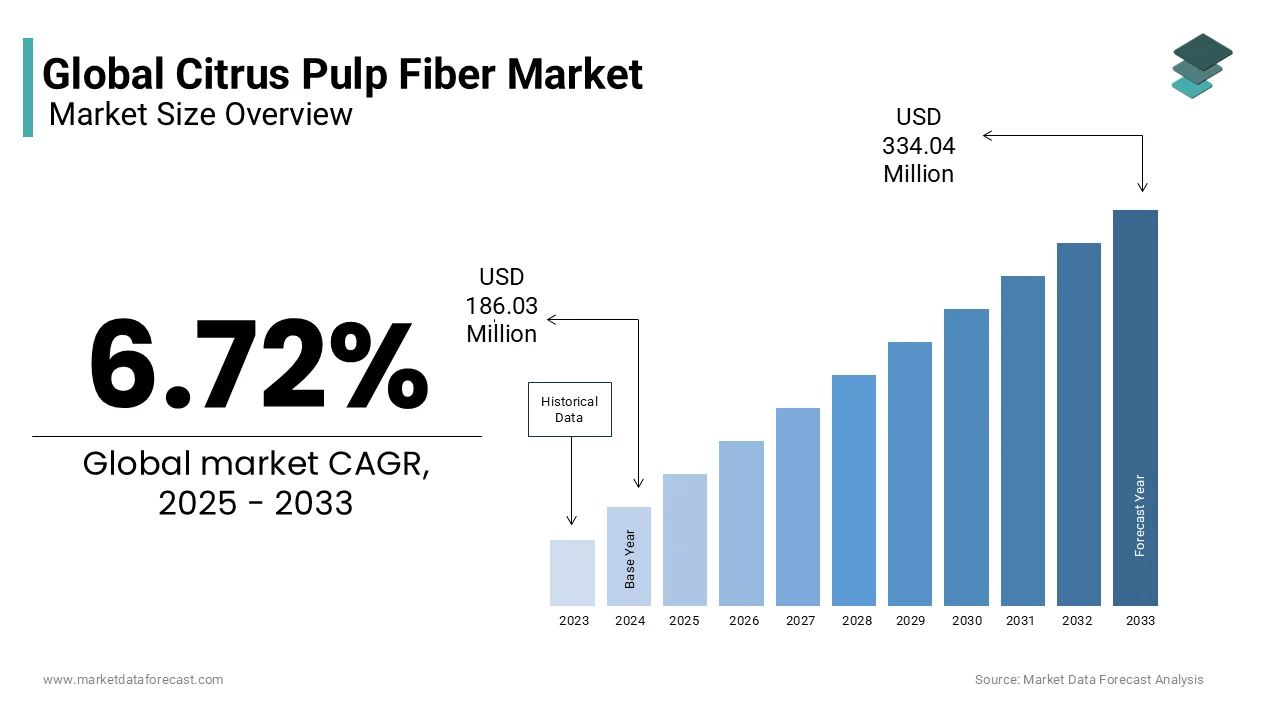
The global citrus pulp fiber market size was valued at USD 186.03 million in 2024, and the market size is expected to be worth USD 334.04 million by 2033 from USD 198.53 million by 2025. The market is growing at a CAGR of 6.72% during the forecast period.
The citrus pulp fiber is a natural dietary fiber extracted from the byproducts of citrus juice processing from oranges, lemons, grapefruits, and tangerines. As per the Food and Agriculture Organization of the United Nations, global citrus fruit production exceeded 160 million metric tons in the most recent recorded year, generating vast volumes of peel and pulp residues. Regulatory bodies such as the U.S. Food and Drug Administration have recognised citrus fiber as Generally Recognised As Safe, further legitimising its use across food, beverage, and nutraceutical sectors.
MARKET DRIVERS
Escalating Demand for Clean Label Functional Ingredients in Processed Foods
The consumer aversion to synthetic additives and preference for recognisable, plant-derived components is driving the growth of the citrus pulp fiber market. Citrus pulp fiber meets this demand by serving as a multifunctional clean-label solution that replaces gums, starches, and artificial stabilisers. Its ability to bind water and fat allows manufacturers to reduce added oils and sugars without sacrificing mouthfeel or shelf stability. Major multinational food companies, including Nestlé and General Mills, have publicly committed to ingredient simplification, with citrufibreer featured in reformulated products ranging from plant-based burgers to low sugar yoghurts.
Rising Prevalence of Lifestyle-Related Gastrointestinal Disorders and Fiber Deficiency
Public health data reveal a persistent global shortfall in dietary fibre intake, with adults in developed and emerging economies consuming less than half the recommended daily amount. According to the World Health Organisation, fewer than 10 % of adults in high-income countries meet the minimum 25-gram-per-day fiber intake guideline, which is contributing to a surge in digestive ailments, metabolic syndrome, and colorectal cancer incidence. Urbanisation and dietary westernisation have precipitated a 30 % increase in constipation-related hospital visits over the past decade, according to the Asia Pacific Association of Gastroenterology. Citrus fiber is being incorporated into beverages, snacks, and ready-to-eat meals targeting digestive wellness. Government nutrition initiatives in Japan and South Korea now explicitly endorse fiber fortification by creating regulatory tailwinds for citrus pulp fiber deployment.
MARKET RESTRAINTS
High Production Costs and Fragmented Supply Chain Infrastructure
The economic headwinds stemming from capital-intensive processing requirements and logistical inefficiencies are restraining the growth of the citrus pulp fiber market. Moreover, the seasonal nature of citrus harvests, concentrated in narrow windows across major producing regions such as Brazil, Spain, and Florida that creates supply volatility that complicates year-round production planning. These fragmented operations elevate the final cost per kilogram by 15 to 25 % compared to commodity fibers like wheat bran or inulin.
Regulatory Ambiguity and Varying Approval Standards Across Key Markets
The regulatory pathways remain inconsistent or underdeveloped in several high-potential growth regions across Asia and Latin America is escalating the growth of the citrus pulp fiber market. According to the Codex Alimentarius Commission, no unified global standard exists for citrus fiber as a food additive or dietary ingredient, compelling manufacturers to navigate disparate national frameworks. These delays not only increase compliance costs but also stifle innovation, as formulators hesitate to invest in product development without guaranteed market access.
MARKET OPPORTUNITIES
Integration into Plant-Based and Alternative Protein Formulations
The meteoric ascent of plant-based meat and dairy analogues, with their exceptional water and oil binding capabilities that mimic the textural properties of animal-derived products, is creating new opportunities for the growth of the citrus pulp fiber market. Citrus fiber addresses this by enhancing juiciness, reducing syneresis, and improving sliceability in plant-based burgers, sausages, and cheeses without requiring methylcellulose or carrageenan.
Expansion into Personalised Nutrition and Medical Food Applications
The integration of digital health platforms, microbiome science, and consumer demand for individualised wellness solutions is propelling the growth of the citrus pulp fiber market. Citrus fiber’s prebiotic index, validated in clinical trials at the University of California Davis, demonstrates superior bifidogenic effects compared to inulin at equivalent dosages. Startups like Viome and ZOE now offer microbiome testing kits that recommend customized fiber regimens, with citrus fiber emerging as a preferred option due to its low fermentative gas production and high tolerability. Sales of medical nutrition products incorporating botanical fibers grew by 14 % year over year as per IQVIA’s therapeutic category report.
MARKET CHALLENGES
Consumer Misconceptions and Low Awareness of Fiber Variability
The public understanding remains superficial, with most consumers unable to differentiate between fiber sources or comprehend their distinct physiological impacts, which is a challenge for the growth of the citrus pulp fiber market. Marketing campaigns by commodity fiber producers further entrench this misconception, promoting wheat bran or psyllium as universally adequate solutions.
Competition from Established and Emerging Fiber Alternatives
The new wave of upcycled and bioengineered fibers gaining traction in the functional ingredient space is also expected to slow the growth of the citrus pulp fibre market. These alternatives often arrive with venture capital backing and aggressive marketing narratives centred on sustainability or technological innovation, overshadowing citrus fiber’s established safety profile and multifunctionality. Meanwhile, resistant starch from green banana and cassava appeals to low glycemic index product developers, fragmenting the fiber enrichment landscape.
REPORT COVERAGE
| REPORT METRIC | DETAILS |
| Market Size Available | 2024 to 2033 |
| Base Year | 2024 |
| Forecast Period | 2025 to 2033 |
| CAGR | 6.72% |
| Segments Covered | By Function, Consumption, Application, and Region |
| Various Analyses Covered | Global, Regional & Country Level Analysis, Segment-Level Analysis, DROC, PESTLE Analysis, Porter’s Five Forces Analysis, Competitive Landscape, Analyst Overview on Investment Opportunities |
| Regions Covered | North America, Europe, APAC, Latin America, Middle East & Africa |
| Market Leaders Profiled | DuPont, Lucid Colloids Ltd, Fiberstar, Herbstreith & Fox, Compañía Española de Algas Marinas S.A. (CEAMSA), Naturex, Quadra Chemicals, Cargill, Inc., Florida Food Products, and Herbafood. |
SEGMENTAL ANALYSIS
By Function Insights
The water binder segment accounted in holding 38.2% of the citrus pulp fiber market share in 2024, with the ingredient’s unparalleled capacity to retain moisture across diverse food matrices, reducing syneresis, extending shelf life, and enhancing texture without chemical additives. In industrial baking, where moisture loss equates to direct revenue erosion, citrus fiber reduces staling rates by up to 40 % compared to conventional starches, as validated by peer-reviewed trials at Kansas State University’s Grain Science Department.
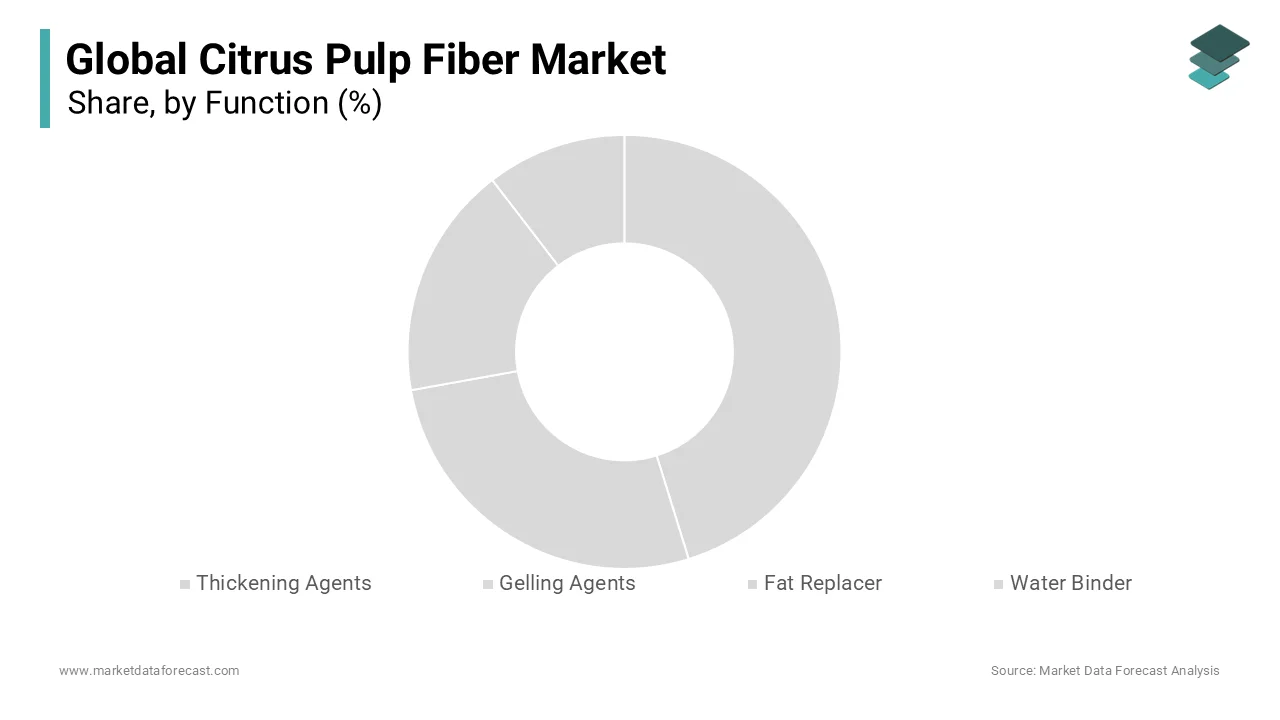
The fat replacer segment is projected to expand at a CAGR of 9.8 % throughout the forecast period by intensifying consumer demand for reduced-fat products that do not compromise on mouthfeel or satiety, coupled with regulatory mandates to lower saturated fat content in packaged foods.
By Grade Insights
The food-grade segment accounted in holding a significant share of the citrus pulp fiber market in 2024, with the ingredient’s widespread integration across bakery, dairy, meat, and beverage categories, where its functional versatility and regulatory compliance make it indispensable for mass market product development. Retailers, including Walmart and Tesco, have implemented clean label procurement policies, mandating the removal of artificial ingredients from private label lines, directly benefiting citrus fiber adoption.
The pharmacy grade segment is likely to grow with an expected CAGR of 11.2% during the forecast period, with the increasing clinical validation of citrus fibre’s therapeutic potential and rising investment in medical nutrition and nutraceuticals.
By Application Insights
The bakery segment was the largest by capturing 29.3% of the citrus pulp fiber market share in 2024, with the ingredient’s multifunctional performance in dough systems, where it enhances water absorption, improves crumb structure, and delays staling without altering flavour or colour. Additionally, the rise of gluten-free and high-protein bakery products, which suffer from textural deficiencies, has further entrenched citrus fiber’s role.
The egg replacement segment is likely to grow with an expected CAGR of 13.4 % throughout the forecast period. This explosive expansion is fueled by the convergence of vegan dietary trends, avian influenza-driven egg shortages, and cost volatility in global egg markets. Startups such as Eat Just and Nabati Foods have incorporated citrus fiber into their flagship products, citing its ability to deliver a consistent rise and crumb structure without allergenic or cholesterol concerns. Institutional buyers, including school districts and hospital chains, have begun reformulating menus with egg-free options, creating bulk procurement opportunities.
REGIONAL ANALYSIS
North America Market Analysis
North America was the top performer in the global citrus pulp fiber market by capturing 35.2% of share in 2024, with the mature food processing infrastructure, stringent clean label regulations, and high consumer awareness of functional ingredients. The United States was the largest contributor to the Regulatory clarity from the U.S. Food and Drug Administration, which classifies citrus fiber as Generally Recognised As Safe, eliminates market entry barriers and accelerates product development cycles. Investment in alternative proteins, which exceeded 3.2 billion United States dollars in 2023 as reported by the Plant Based Foods Association, further drives demand, with citrus fiber featured in reformulated plant-based cheeses and egg substitutes.
Europe Market Analysis
Europe was positioned second by holding 28.2% of the citrus pulp fiber market share in 2024, with the advanced regulatory frameworks, strong public health advocacy for fiber intake, and a deeply entrenched clean label culture. Consumer activism further reinforces market dynamics; a 2024 survey by Foodwatch revealed that 89 % of European shoppers would switch brands to avoid synthetic stabilisers.
Asia Pacific Market Analysis
Asia Pacific citrus pulp fiber market growth is likely to grow with the rapid urbanisation, expanding middle-class consumption, and escalating demand for convenience foods. China and India are majorly contributing to the growth of the citrus pulp fibre market with the modern retail expansion and rising health consciousness among urban populations.
Latin America Market Analysis
Latin America citrus pulp fiber market growth is likely to be propelled by the orange juice producer and a growing appetite for clean-label processed foods. Rising obesity rates, which affect 28 % of adults in Argentina and 36 % in Chile according to the Pan American Health Organisation, have prompted government-backed reformulation programs targeting fat and sugar reduction, indirectly boosting citrus fiber adoption. Retail chains such as Walmart Mexico and GPA Brazil have implemented clean-label shelf tags, increasing visibility for citrus fibre-containing products.
Middle East and Africa Market Analysis
The Middle East and Africa citrus pulp fiber market growth is likely to be driven by urbanisation, expatriate consumer influence, and government-led food security initiatives.
COMPETITIVE LANDSCAPE
KEY MARKET PLAYERS
Some of the key players dominating the global citrus pulp fiber market are
- DuPont
- Lucid Colloids Ltd
- Fiberstar
- Herbstreit & Fox
- Naturex
- Quadra Chemicals
- Cargill, Inc.
- Florida Food Product
- Herbafood
TOP STRATEGIES USED BY THE KEY MARKET PLAYERS
Vertical integration to secure consistent raw material access and mitigate cost fluctuations. Investment in application-specific innovation targeting plant-based, reduced-fat, and clean-label categories. Regulatory harmonisation initiatives to streamline approvals in fragmented emerging markets. Strategic collaborations with food manufacturers and retailers to co-develop compliant formulations. Clinical and sensory validation studies to substantiate health and functionality claims. Deployment of digital tools for real-time formulation simulation and supply chain transparency. Pursuit of sustainability certifications to align with ESG and circular economy mandates. Expansion of regional technical service teams to enable localised support and faster commercialisation. Acquisition of niche technology firms to enhance processing efficiency.
COMPETITION OVERVIEW
The competition in the citrus pulp fiber market is intensifying as global ingredient suppliers vie for leadership in clean-label and plant-based formulation solutions. Established players leverage decades of hydrocolloid expertise to position citrus fibre as a multifunctional replacement for synthetic additives. Innovation centres in North America, Europe, and Asia enable rapid prototyping and customer-specific adaptations. Regulatory navigation capabilities differentiate market leaders, particularly in regions with evolving novel food frameworks. Strategic acquisitions of niche fibre producers and technology startups enhance portfolio depth and processing efficiency.
TOP PLAYERS IN THE MARKET
- CP Kelco is a global innovator in nature-based hydrocolloids and fibers, with citrus pulp fiber as a core pillar of its clean label portfolio. The company sources citrus co-products directly from major juice processors, ensuring supply chain integrity and sustainability. It has introduced application-specific fiber variants for plant-based meats, bakery, and dairy systems.
- DuPont Nutrition and Biosciences integrates citrus pulp fiber into its broader strategy of replacing synthetic additives with plant-derived functional ingredients. The company focuses on enhancing fat binding and texture in alternative protein and reduced-calorie foods. It has expanded its application labs in Europe and North America to support rapid prototyping. DuPont partners with food retailers and startups to co-engineer next-generation products. It also engages in regulatory advocacy across Asia and the Middle East to facilitate approvals.
- Cargill Texturising Solutions leverages its global sourcing network to deliver traceable, sustainable citrus pulp fiber from key production regions, including Brazil and Florida. The company recently launched a low-temperature dried fiber variant to preserve pectin functionality for superior gelling in desserts and sauces. Cargill’s digital formulation tools allow manufacturers to simulate fiber performance in real time, reducing development cycles. Strategic alliances with North American and European retailers ensure alignment with evolving clean label standards.
MARKET SEGMENTATION
This research report on the global citrus pulp fiber market is segmented and sub-segmented into the following categories.
By Function
- Thickening Agents
- Gelling Agents
- Fat Replacer
- Water Binder
By Grade
- Pharmacy Grade
- Food Grade
- Others
By Application
- Personal Care
- Beverages
- Flavourings and Coatings
- Desserts and Ice-Creams
- Egg Replacement
- Meat
- Pharmaceuticals
- Snacks and Meals
- Sauces and Seasonings
- Bakery
- Others
By Region
- North America
- Europe
- Asia Pacific
- Latin America
- Middle East & Africa