- Product Description Description
- Table of Contents TOC
- List of Table & Figure LOT
- Get Free Sample PDF Sample PDF
Market Size, 2025
$2.95 BnMarket Estimate, 2026
$3.16 BnMarket Forecast, 2034
$5.47 BNCAGR, 2026–2034
7.1%Global Coconut Cream Market Size, Growth, Trends & Forecast (2026–2034)
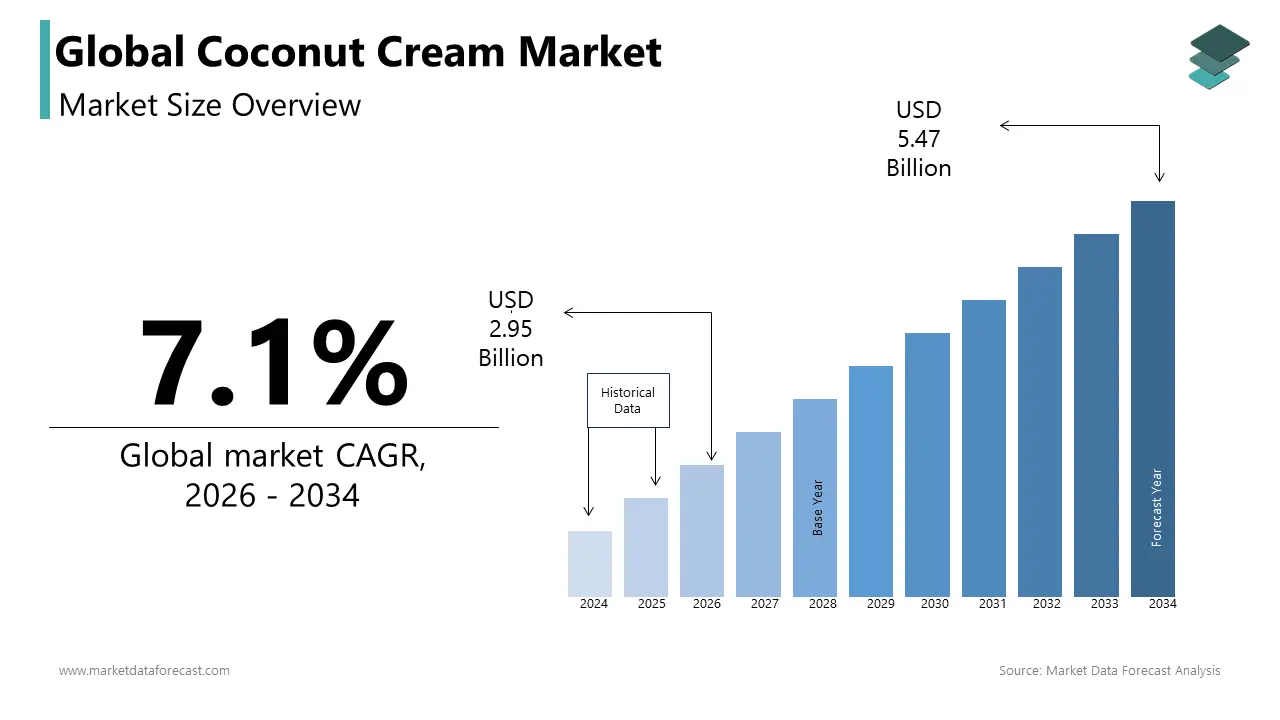
The global coconut cream market size was calculated to be USD 2.95 billion in 2025, is anticipated to reach USD 3.16 billion in 2026, and is projected to scale up to USD 5.47 billion by 2034, registering a compound annual growth rate (CAGR) of 7.10% during the forecast period from 2026 to 2034. Driven by the surging global shift toward vegan and plant-based diets, the rise in lactose-intolerant consumers seeking dairy-free alternatives, and expanding applications in the food, beverage, and cosmetics industries, the global coconut cream sector continues to experience steady expansion worldwide.
Key Executive Metrics (At-a-Glance)
- 2025 Base Valuation: USD 2.95 Billion
- 2026 Current Valuation: USD 3.16 Billion
- 2034 Forecast Valuation: USD 5.47 Billion
- Compound Annual Growth Rate (CAGR): 7.10% (2026–2034)
- Dominant Nature Segment: Conventional (dominates market share due to traditional farming accessibility and lower price points)
- Fastest-Growing Nature Segment: Organic (expected to grow at the fastest rate driven by consumer preference for chemical-free, natural, and sustainable foods)
- Dominant Application Segment: Food and Beverages (ruling market share through widespread culinary use in soups, curries, sauces, and desserts)
- Fastest-Growing Application Segment: Cosmetics & Personal Care (expected to grow at the fastest rate due to hydration benefits in lotions, hair masks, and shampoos)
- Dominant Distribution Channel Segment: Supermarkets/Hypermarkets (rules market share via convenient one-stop shopping options)
- Fastest-Growing Distribution Channel Segment: Online Channels (projected to record the fastest CAGR via doorstep delivery and digital retail convenience)
- Dominant Region: Asia Pacific (leading producer and consumer anchored by traditional dietary integration and high regional coconut harvest)
- Fastest-Growing Region: North America (growing at a healthy CAGR driven by rising vegan adoption and health consciousness)
Core Market Drivers
- Plant-Based & Vegan Lifestyle Boom: Increasing consumer preference for dairy-free, ethical, and environment-friendly food alternatives.
- Health & Nutritional Awareness: Presence of healthy fats (medium-chain triglycerides) supporting heart health and energy levels.
- Rising Lactose Intolerance: Surging demand for dairy alternatives to avoid digestive discomforts such as bloating and gas.
Primary Market Restraints & Challenges
- Competition from Other Plant-Based Alternatives: Availability of diverse plant milks and creams (almond, oat, soy) distracting consumer choices.
- Allergen Concerns: Potential health risks associated with coconut-sensitive individuals triggering allergic reactions.
Global Coconut Cream Market Segmentation Breakdown
| Segment Category | Largest Segment | Fastest-Growing Segment |
|---|---|---|
| By Nature | Conventional | Organic |
| By Application | Food & Beverages | Cosmetic & Personal Care |
| By Distribution Channel | Supermarkets/Hypermarkets | Online Channels |
| By Region | Asia Pacific | North America |
Major Industry Players Profiled
Key enterprises shaping the competitive global coconut cream market include Nestle SA, Edward & Sons Trading Co., Windmill Organics Limited, McCormick & Company, Greenfield Products, Thrive Market, Goya Foods, Grace Foods Canada, Sambu Group, and Thaitan Foods International.
Global Coconut Cream Market Size
The global coconut cream market size was calculated to be USD 2.95 billion in 2025 and is anticipated to be worth USD 5.47 bn billion by 2034 from USD 3.16 billion in 2026, growing at a CAGR of 7.10% during the forecast period.
Coconut cream is a thick creamy liquid that is extracted from grated coconut. When the grated coconut is blended with water, a mixture is formed, and then by straining it, a thick liquid is formed, and that is coconut cream. It is rich in saturated fats and calories, whereas it also contains small amounts of various carbs, proteins, and minerals. Therefore, coconut cream is used in savory and sweet dishes. It enhances the taste and texture of various food products like desserts; it adds a creamy texture to puddings, cakes, pastries, ice creams, etc. Also, it is added in vegan and low-carb recipes. Hence, it is one of the best dairy substitutes for people who are lactose intolerant and those who follow vegan diets.
MARKET DRIVERS
One of the major drivers of market growth is the growing consumer demand for plant-based food products.
Recently, more people become vegan, so they don't want food that directly comes from animals like dairy, meat, etc; instead, they prefer plant-based food products. Coconut cream is the best fit for this growing market trend of veganism as it is purely extracted from coconuts and contains lots of nutrition. Due to these nutritional properties, it is widely used in various food products, and it also helps to enhance the taste and texture of them. Hence, the coconut cream market demand is increasing among consumers who want pure plant-based food products.
Also, the rising awareness of the health benefits offered by coconut cream is significantly driving market growth. Coconut cream enhances the taste and texture of food products and provides health benefits. As it contains healthy fats like medium-chain triglycerides, these fats are crucial for maintaining a healthy heart and give extra energy to the overall body. It also contains small amounts of carbs, proteins, and minerals, which help boost the body's growth and functions. Due to these vast benefits, people who are health-conscious and constantly seeking a healthy lifestyle are largely consuming coconut cream in their daily diets to promote overall health and well-being. This attribute is majorly influencing the shares of the market globally.
The growing number of people with lactose intolerance is further boosting the coconut cream market demand. Lactose is a sugar found in milk, and many consumers are finding difficulty in digesting lactose which may lead to conditions like bloating, gas, or stomachache. To avoid these issues, these consumers are seeking alternatives to dairy products, as coconut cream is free from lactose and contains healthy facts and other essential nutrients, which makes it a dairy-free and healthy alternative solution for lactose-intolerant people. Hence, the increasing lactose intolerance cases are contributing to a boost in market demand.
MARKET RESTRAINTS
The major restraint for the market growth is growing competition from other plant-based alternatives.
As the trend of consuming plant-based food products is increasing, there are various such products available to satisfy consumer demand. And each of them has its own specialty and nutritional value. Hence people prefer plant-based food products according to their needs and health concerns. Hence, the presence of various other alternatives in the market can distract people from buying coconut cream; instead, they prefer other plant-based products. This factor is majorly restricting the market demand.
Another factor that is creating challenges for the coconut cream market expansion is the growing allergen concerns among consumers. As some consumers may have allergies to coconuts, consuming coconuts or coconut-based food products like coconut cream might cause allergic reactions for them, which could be dangerous for their health. Therefore, these coconut-sensitive people avoid direct consumption of coconut cream and also the food products made from it. This attribute is limiting the market sale and hence retraining the overall market growth.
MARKET OPPORTUNITIES
The significant opportunity for the coconut cream market growth is offered by the rising number of people adopting a vegan lifestyle.
Due to some ethical concerns, environmental effects, and a rise in health consciousness, there is a boost in adopting veganism among many consumers all over the world. These are the people who don't want animal-based products at all; they only prefer to consume pure plant-based food product alternatives. Coconut cream perfectly fits into this kind of diet, hence fulfilling the demand of vegan people. It also has various health benefits, which is further contributing to an increase in the demand for coconut cream. Hence, as this vegan population keeps on rising, there is a significant growth opportunity for the market to expand the market size.
The increasing use of coconut cream in the expanding food and beverage industry is further presenting significant growth opportunities for the global market. As coconut cream gives a unique flavor, taste, and texture to various foods and drinks, the use of it in this sector is boosting. Manufacturers of food and beverages add coconut creams to their recipes to enhance the taste and texture of various food products like soups, curries, sauces, desserts, etc. It is also widely used in ready-to-eat meals and convenience and functional foods. Hence, as the food and beverage industry keeps on introducing new and exciting food products with different tastes and flavors, there will be more demand for coconut cream in this sector, which will ultimately contribute to an increase in the market demand.
REPORT COVERAGE
| REPORT METRIC | DETAILS |
| Market Size Available | 2025 to 2034 |
| Base Year | 2025 |
| Forecast Period | 2026 to 2034 |
| CAGR | 7.1% |
| Segments Covered | By Nature, Application, Distribution Channel, and Region |
| Various Analyses Covered | Global, Regional & Country Level Analysis; Segment-Level Analysis, DROC, PESTLE Analysis, Porter’s Five Forces Analysis, Competitive Landscape, Analyst Overview of Investment Opportunities |
| Regions Covered | North America, Europe, APAC, Latin America, Middle East & Africa |
| Market Leaders Profiled | Nestle SA, Edward & Sons Trading Co, Windmill Organics Limited, McCormick & Company, Greenfield Products, Thrive Market, Goya Foods, Grace Foods Canada, Sambu Group, Thaitan Foods International and Others. |
SEGMENTAL ANALYSIS
Global Coconut Cream Market Analysis By Nature
By nature, the conventional segment is anticipated to dominate the market share during the projected period. Conventional coconut cream is produced by traditional farming techniques, which involve the use of chemicals and modern agri practices. As it is widely available and very affordable as compared to organic coconut cream, there is a boost in the demand for this segment. At the same time, the organic segment is expected to grow at the fastest rate during the forecasted period. As more people are seeking natural and sustainable food products with no chemicals, there is an increase in the demand for organic coconut cream among consumers.
Global Coconut Cream Market Analysis By Application
The food and beverage industry is ruling the market share during the forecasted period as coconut cream is widely used in various dishes and drinks to add flavors, creaminess, and texture to them. It is mainly used in sauces, desserts, soups, cakes, pancakes, puddings, etc., to enhance their flavor and texture. This wide use in numerous food products in this sector is boosting the market demand. However, the cosmetics and personal care segment is expected to grow at the fastest rate. Coconut cream is widely used in lotions, hair masks, creams, shampoos, and many other beauty products, as it hydrates and promotes healthy skin and hair. This attribute is significantly driving the market demand.
Global Coconut Cream Market Analysis By Distribution Channel
The supermarkets/ hypermarkets segment is ruling the coconut cream market share during the anticipated period. As these markets offer a variety of food product options like coconut cream and many others in one place and provide the convenience for consumers to buy products made from coconut cream or direct the coconut cream. This attribute influences the market demand. At the same time, the online channels segment is expected to grow at the fastest CAGR during the forecasted period. Because consumers can order coconut cream or related products online and have it delivered to their doorstep is very much convenient for them as it is done without going out. This factor is influencing the demand for these online shopping options.
REGIONAL ANALYSIS
Asia Pacific is ruling the coconut cream market share during the projected period. Because the Asia Pacific region is the largest producer and consumer of coconuts and coconut-based products. Coconut cream is essentially being used in some of the traditional Asian dishes and drinks. This attribute is influencing the market demand in this region. However, North America is expected to grow at a healthy CAGR during the forecasted period. Owing to the growing demand for plant-based food products and also the increasing health consciousness among consumers. Also, the increasing use of coconut cream in the production of cosmetics and personal care products in this region is further contributing to an increase in the market share.
KEY PLAYERS IN THE GLOBAL COCONUT CREAM MARKET
Major Key Players in the global coconut cream market are Nestle SA, Edward & Sons Trading Co, Windmill Organics Limited, McCormick & Company, Greenfield Products, Thrive Market, Goya Foods, Grace Foods Canada, Sambu Group, Thaitan Foods International and Others.
RECENT HAPPENINGS IN THE MARKET
- In May 2021, Axelum collaborated with another online retailer of coconut products as well as a local e-commerce business like Shopee or Lazada that offers products like coconut cream, coconut milk powder, and coconut cooking oil.
DETAILED SEGMENTATION OF THE GLOBAL COCONUT CREAM MARKET INCLUDED IN THIS REPORT
This research report on the global coconut cream market has been segmented and sub-segmented based on nature, application, distribution channel and region.
By Nature
- Organic
- Conventional
By Application
- Households
- Food services
- Cosmetic & Personal Care
- Food & Beverages
By Distribution Channel
- Supermarkets/Hypermarkets
- Convenience Stores
- Online Channels
- Others
By Region
- North America
- Europe
- The Asia Pacific
- Latin America
- The Middle East and Africa