- Product Description Description
- Table of Contents TOC
- List of Table & Figure LOT
- Get Free Sample PDF Sample PDF
Market Size, 2025
$5.89 BnMarket Estimate, 2026
$6.22 BnMarket Forecast, 2034
$9.62 BnCAGR, 2026–2034
5.6%Global Commercial Booster Pumps Market Size
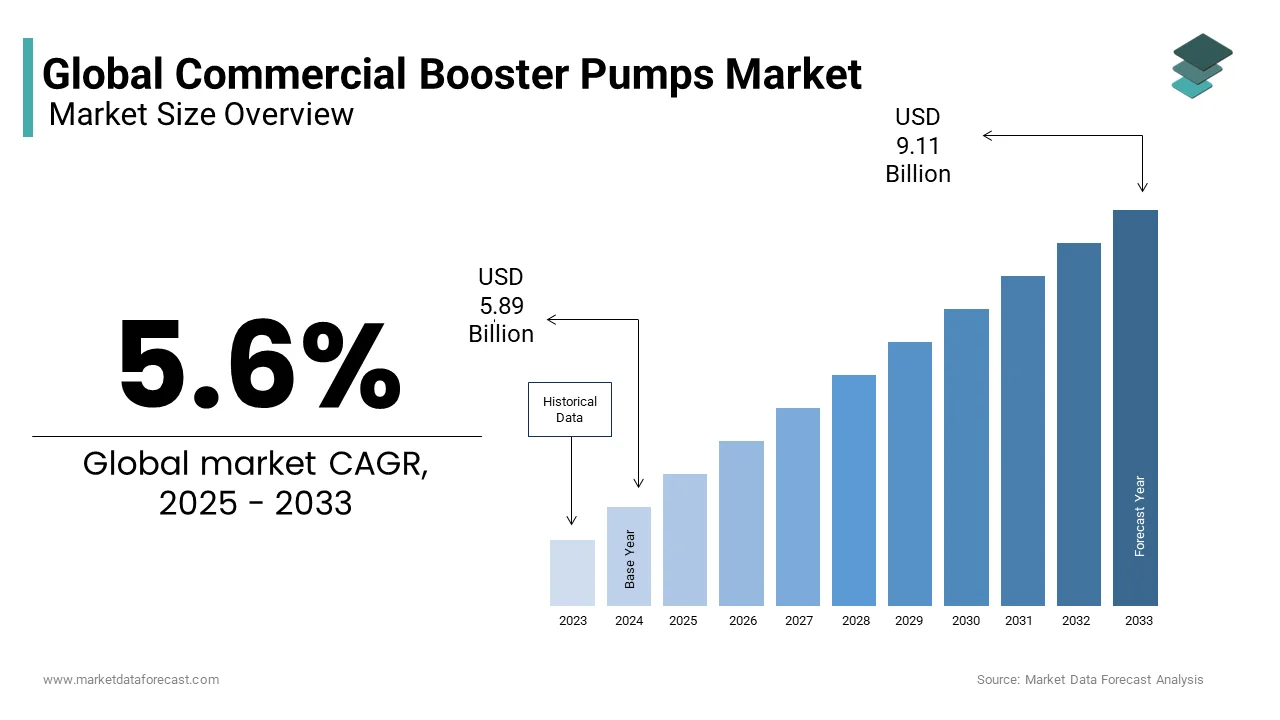
The size of the global commercial booster pumps market size was valued at USD 5.89 billion in 2025 and is anticipated to reach a valuation of USD 6.22 billion in 2026 and USD 9.62 billion by 2034, growing at a CAGR of 5.6% from 2026 to 2034.
Ductless Heating and Cooling Systems Market: Contemporary Definition and Built Environment Context
Ductless heating and cooling systems are often referred to as mini split or multi split systems, and deliver targeted thermal comfort through direct refrigerant-based heat exchange between an outdoor condenser and one or more indoor air handlers without the need for centralized duct networks. This architecture eliminates energy losses inherent in traditional forced air systems, where duct leakage can account for up to 30% of conditioned air.
MARKET DRIVERS
Urban Density and Indoor Air Quality as Catalysts for Adoption
The global shift toward high-density urban living has amplified demand for compact, scalable HVAC solutions compatible with apartment renovations and historic structures where duct installation is impractical. The urban density and indoor air quality are prompting the growth of the ductless heating and cooling systems market. As per the United Nations Environment Programme, over 70% of building stock in North America and Europe was constructed before 1990, lacking modern insulation or ventilation standards. Simultaneously, the annual premature deaths to household air pollution from inadequate ventilation and combustion sources are driving consumer and regulatory interest in ductless units equipped with multi-stage filtration, ionization, and humidity control. These systems now serve not only as thermal regulators but as integrated indoor environmental quality platforms, aligning climate control with public health and decarbonization objectives in both residential and light commercial applications.
Rising Global Temperatures and Increased Cooling Demand in Urban Areas
The escalating ambient temperatures due to climate change are significantly amplifying the need for efficient and adaptable cooling solutions, particularly in densely populated urban centers where heat island effects intensify thermal stress. This factor is also accelerating the growth of the ductless heating and cooling systems market. According to some sources, the decade 2011–2020 was the warmest on record, with global average temperatures 1.2 degrees Celsius above pre-industrial levels and extreme heat events becoming 50% more frequent. In cities like Phoen, Tokyo, and Delhi, summer temperatures now regularly exceed 40 degrees Celsius for prolonged periods, straining legacy HVAC infrastructure. The International Energy Agency projects that space cooling energy demand will triple globally by 20,50, with 70% of this growth concentrated in Asia and the Middle East. Ductless systems are uniquely suited to this challenge, offering rapid installation in high-rise apartments, retrofit compatibility in older buildings, inverter-driven compressors that modulate output to match real-time loads by reducing energy use by up to 40% compared to window units, as per some reports. Municipalities are also incentivizing their adoption, for example, Tokyo’s Metropolitan Government provides subsidies covering 30% of installation costs for energy-efficient mini-splits in residential buildings.
MARKET RESTRAINTS
High Initial Installation Costs and Skilled Labor Shortages
The upfront investment required for ductless heating and cooling systems remains a significant barrier to widespread adoption in price-sensitive residential areas. The high initial installation costs and skilled labor shortages are major factors hampering the growth of the ductless heating and cooling systems market. This cost premium, often two to three times higher than window units or basic central systems, deters homeowners despite long-term energy savings. Compounding this challenge is a critical shortage of qualified HVAC technicians capable of properly sizing refrigerant lines, performing vacuum tests, and commissioning inverter-driven compressors. In emerging economies, such as India and Brazil, the scarcity is more acute, with the International Labour Organization estimating that fewer technicians have received formal training on variable refrigerant flow technology. Improper installation leads to reduced efficiency, premature failure, and customer dissatisfaction, undermining brand reputation.
Aesthetic and Spatial Concerns in Architectural Integration
The ductless indoor units often face resistance due to perceived visual intrusion and spatial constraints in historic homes, high-end residences, nd minimalist commercial interiors. The aesthetic and spatial concerns in architectural integration is additionally to hinder the growth of the ductless heating and cooling systems market. The wall-mounted air handlers, typically measuring 30 to 40 inches in width and protruding 8 to 10 inches from the wall, are viewed by many architects and occupants as incompatible with clean design aesthetics. In Europe, the issue is amplified by stringent urban planning codes;s, for instance, Paris and Amsterdam require concealed HVAC solutions in protected buildings, limiting ductless adoption to ceiling cassette or floor console models, which carry 20 to 30% higher costs, as per some reports. Additionally, in small apartments common in cities like Tokyo and New York, the indoor unit competes for limited wall space, reducing furniture placement flexibility. While manufacturers have introduced slimmer profiles and customizable panels, these mitigations often add cost and do not fully resolve integration challenges.
MARKET OPPORTUNITIES
Retrofitting Aging Building Stock in Developed Economies
The modernization of obsolete building infrastructure across North America and Europe, where centralized ducted systems are either absent or inefficient, or are nearing the end of their life. The retrofitting of aging building stock in developed economies is creating new opportunities for the growth of the ductless heating and cooling systems market. According to the U.S. Energy Information Administration, single-family homes in the United States were built before 1980 and lack ductwork entirely, while over 60% of European residential buildings predate 1990. These structures often rely on baseboard electric heaters or window air conditioners that are costly to operate and offer no air filtration. Ductless mini splits provide a minimally invasive solution requiring only a three-inch conduit through an exterior wall, enabling rapid installation without major renovation. Similarly, the EU’s Social Climate Fund allocates 65 billion euros through 2032 to support low-income households in upgrading heating systems, with heat pumps prioritized.
Integration with Renewable Energy and Smart Grid Ecosystems
Ductless systems are increasingly positioned as responsive thermal assets within distributed energy networks, offering grid balancing and renewable integration capabilities. This factor is another attribute to greatly influences the growth of the ductless heating and cooling systems market. Modern inverter-driven mini splits can modulate power consumption in real time based on grid signals or on-site solar generation, making them ideal partners for residential photovoltaic systems. According to the International Renewable Energy Agency, many rooftop solar capacity was installed globally by 20,23, with households seeking efficient ways to utilize excess daytime generation for space conditioning. Furthermore, utilities in California and Germany are piloting demand response programs that incentivize customers to adjust HVAC set points during peak periods, with ductless systems offering faster response than ducted alternatives due to direct zone control.
MARKET CHALLENGES
Refrigerant Regulations and Environmental Compliance Pressures
The tightening global regulations targeting high global warming potential refrigerants commonly used in mini split systems are a major challenge for the growth of the ductless heating and cooling systems market. Many current models rely on R410A, which has a global warming potential of 20,88, over 2000 times that of carbon dioxide. Under the Kigali Amendment to the Montreal Protocol, 127 countries, including the United States and all European Union members, are mandated to phase down hydrofluorocarbon consumption by 85% by 2036. The U.S. Environmental Protection Agency finalized rules in 2023 prohibiting the use of R410A in new residential air conditioners and heat pumps starting January 2025. Similarly, the European Union’s F Gas Regulation requires a 79% reduction in HFC quotas by 2030, accelerating the shift to alternatives like R3, 2, which has a lower global warming potential of 675 but is mildly flammable, requiring redesigned safety protocols. Transitioning manufacturing lines to new refrigerants demands significant re-engineering of compressors, heat exchangers, and control systems.
Limited Consumer Awareness and Misconceptions About Performance
The widespread consumer misunderstanding regarding capabilities in cold climate performance and whole home coverage is another factor hampering the growth of the ductless heating and cooling systems market. Many homeowners erroneously believe mini splits are ineffective below freezing temperatures or are suitable only for supplemental heating. This knowledge gap leads to under-specification or rejection of ductless systems in favor of fossil fuel alternatives. Compounding the issue is inconsistent messaging from contractors who may lack training on inverter technology or promote higher-margin ducted systems.
REPORT COVERAGE
| REPORT METRIC | DETAILS |
| Market Size Available | 2025 to 2034 |
| Base Year | 2025 |
| Forecast Period | 2026 to 2034 |
| CAGR | 5.6% |
| Segments Covered | By Type, Pressure, End Users, and Region. |
| Various Analyses Covered | Global, Regional & Country Level Analysis, Segment-Level Analysis, DROC, PESTLE Analysis, Porter’s Five Forces Analysis, Competitive Landscape, Analyst Overview on Investment Opportunities |
| Regions Covered | North America, Europe, APAC, Latin America, Middle East & Africa |
| Market Leaders Profiled | Grundfos, Aquatec International, Inc., Dab Pumps S.p.A., Eddy Pump Corporation, Davey Water Products Pty. Ltd., Franklin Electric Co., Inc., Kärcher International, SyncroFlo Inc., Wilo SE, Zodiac Pool Solutions, Xylem, Pentai Inc.,.nc, and Others. |
SEGMENTAL ANALYSIS
By Type Insights
The split systems segment held a dominant share of the ductless heating and cooling systems market in 2025, from their superior energy efficiency, zoned comfort control, and architectural flexibility compared to window units. Unlike window air conditioners, which occupy an opening, block natural light, ht and offer single-room cooling with fixed output, split systems use inverter-driven compressors that modulate capacity in real time, reducing energy consumption by up to 40%. Their indoor units can be mounted on walls, ceilings, or floors with refrigerant lines discreetly routed through small conduits, making them ideal for apartments,s, historic buildings, nd room additions where ductwork is impractical. Additionally, split systems support multi-zone configurations, allowing independent temperature management across multiple rooms with a feature increasingly demanded in high-density urban housing.
The split systems segment is lucratively to register the fastest CAGR of 8.7% throughout the forecast period, due to its pivotal role in national decarbonization strategies and compatibility with renewable energy integration. As per the U.S. Environmental Protection Agency, over 60% of new residential construction in climate zones 1 through 4 now installs ductless split heat pumps as primary HVAC due to updated energy codes requiring high-efficiency electric solutions. Furthermore, technological advancements have expanded operational envelopes with cold climate models now delivering full heating capacity at minus 15 degrees Celsius and maintaining function down to minus 25 degrees Celsius. Utility incentive programs further amplify adoption with California’s Self Generation Incentive Program, offering up to 3000 USD per installation.
By Application Insights
The residential buildings segment was the largest by holding a significant share of the ductless heating and cooling systems market in 2025, with the structural characteristics of housing stock particularly in regions with high single-family and multi-unit occupancy, where centralized ductwork is absent or inefficient. In the United States, over 40% of homes lack duct systems entirely, making ductless mini-splits the most viable path to efficient climate control. Similarly, in Japan and South Korea, where compact urban apartments dominate over 75% of new residential constructions, they integrate multi-split systems as standard due to space constraints and energy performance mandates. Additionally, homeowner demand for zoned comfort by allowing individual room temperature control aligns perfectly with split system capabilities.
The commercial buildings segment is expected to witness the fastest CAGR of 9.4% from 2025 to 2033, with the proliferation of light commercial spaces such as boutique offices, medical clinics, retail stores anco-workingng hubs that prioritize flexible efficiency,t, and quiet climate solutions without the overhead of ducted infrastructure. In Europe, the Energy Performance of Buildings Directive mandates that all new non-residential structures achieve nearly zero energy status by 2026, driving adoption of inverter-driven heat pumps with heat recovery capabilities. Additionally, the rise of adaptive reuse, converting historic warehouses and schools into commercial spaces that creates ideal conditions for ductless retrofits where preserving architectural integrity is paramount.
REGIONAL ANALYSIS
Asia Pacific Market Analysis
Asia Pacific was the largest contributor of the global ductless heating and cooling systems market by holding 42.3% of the share in 2025, with a high urbanization rate, compact housing typologies, and early adoption of mini split technology in Japan, South Korea, and China. In Japan, over 90% of households use ductless systems as primary climate control due to space constraints and seismic building codes that discourage heavy ductwork. South Korea mandates high seasonal efficiency standards for all residential air conditioners, which is accelerating inverter technology uptake. Additionally, rising middle-class incomes and extreme summer heat in Shanghai recorded 50 days above 35°C in 2023, stimulating replacement and new installation cycles.
North America Market Analysis
North America's ductless heating and cooling systems market was positioned second by holding 26.3% of share in 2025. The United States dominates this region, with adoption historically concentrated in the Pacific Northwest and Southeast but now expanding nationwide due to policy and climate pressures. The Inflation Reduction Act’s 2000 USD tax credit for heat pump installation has significantly lowered consumer barriers, while updated building codes in California and New York require electric-ready HVAC in new homes. Extreme weather events, including prolonged heat waves in Texas and cold snaps in the Midwest, have heightened demand for resilient dual heating and cooling capability.
Europe Market Analysis
Europe's ductless heating and cooling systems market growth is propelled by aggressive decarbonization mandates, aging building stock, and the phase-out of gas boilers. The European Union’s REPowerEU plan targets 60 million heat pump installations by 2030, with ductless units favored in southern and central Europe for retrofit applications. In Italy and Spain, where over 70% of homes lack ducts, mini-splits are the default solution for cooling and increasingly for heating. France’s MaPrimeRénov scheme subsidized over 300000 heat pump installations in 2023, many of which were ductless due to ease of deployment in historic urban housing. Germany's ductless heating and cooling systems market growth is driven by the ban on new oil and gas heating systems from 2024.
Middle East And Africa Market Analysis
The Middle East ductless heating and cooling systems market growth is likely to be driven by the extreme summer temperatures regularly exceeding 45°C in cities like Riyadh, Dubai, and Kuwait City. Ductless systems dominate in residential high rises and commercial fit-outs due to their high efficiency, quiet operation, and compatibility with glass curtainwall architecture. There are no duct penetrations that are restricted.
Latin America Market Analysis
Latin America ductless heating and cooling systems market growth is likely to be driven by the prominent growth opportunities like urban middle class expansion, unreliable grid infrastructure, and rising temperatures. In São Paulo and Mexico City, where summer temperatures now regularly surpass 35°C and power outages are common, ductless systems offer energy-efficient cooling with lower startup power than window units for areas with voltage instability. Government incentives are emerging, where Mexico’s National Commission for Energy Efficiency launched a pilot rebate program in 2023 for high SEER-rated systems in low-income housing. Additionally, the growth of remote work has increased demand for quiet, zoned comfort in home offices.
COMPETITIVE LANDSCAPE
The ductless heating and cooling systems market features intense competition among established Japanese and Korean manufacturers and a growing number of regional players vying for dominance through efficiency, performance, and integration capabilities. Leading companies leverage decades of refrigerant and compressor expertise to deliver systems that operate reliably in extreme climates while meeting tightening global environmental standards. Competition is increasingly defined by software and services, including smart home compatibility, predictive maintenance, and utility demand response integration. In mature markets like Europe and North America, differentiation hinges on cold climate performance, installation ease, and compliance with building decarbonization mandates. In contrast, the Asia Pacific remains a volume-driven arena with strong domestic brands competing on cost and distribution. Barriers to entry include high R&D costs, refrigerant handling certification, and the need for skilled installer networks.
KEY MARKET PLAYERS
Companies playing a major role in the global commercial booster pumps market include
- Grundfos
- Aquatec International, Inc.
- Dab Pumps S.p.A
- Eddy Pump Corporation
- Davey Water Products Pty. Ltd.
- Franklin Electric Co., Inc.
- Kärcher International
- SyncroFlo Inc.
- Wilo SE
- Zodiac Pool Solutions
- Xylem
- Pentair Inc.
Top Players In The Market
- Mitsubishi Electric is a global pioneer in ductless heating and cooling technology, renowned for its advanced inverter-driven mini split and multi split systems. The company has consistently led innovation in cold climate performance, energy efficiency, and quiet operation across residential and light commercial applications. Mitsubishi Electric has expanded its global footprint through localized manufacturing and training academies for HVAC contractors to ensure proper installation. In recent years, it has introduced smart connectivity features enabling remote monitoring and integration with home energy management systems. The company also collaborates with utility providers on demand response programs, reinforcing its role in grid resilience and decarbonization initiatives worldwide.
- Daikin Industries is a dominant force in the HVAC sector with a comprehensive portfolio of ductless solutions under its VRV and Emura brands. The company leverages its expertise in refrigerant technology to deliver high-efficiency systems compatible with next-generation low global warming potential refrigerants. Daikin has invested heavily in R&D to enhance cold climate heating capacity and indoor air quality through advanced filtration and humidity control. It has strengthened its market position by establishing regional innovation centers in North America, Europe, and Asia to tailor products to local building codes and climate conditions. Additionally, Daikin actively participates in policy dialogues to shape building energy standards globally.
- LG Electronics is a key player offering a wide range of stylish and technologically advanced ductless systems with emphasis on design integration and smart home compatibility. The company’s Art Cool and Multi F lines cater to both residential and commercial segments with features like Wi Fi control, voice assistant compatibility, nd ultra-slim door units. LG has expanded its service network and launched digital tools for contractors to simplify system design and load calculations. It has also partnered with renewable energy providers to promote bundled solar plus heat pump solutions. Recent sustainability commitments include transitioning its entire ductless lineup to R32 refrigerant and achieving carbon-neutral manufacturing in key facilities.
Top Strategies Used By The Key Market Participants
Key players in the ductless heating and cooling systems market prioritize technological innovation through inverter compressors, cold climate enhancement, and connectivity to differentiate their offerings. They invest in localized manufacturing and dedicated training programs for HVAC contractors to ensure proper installation and build brand trust. Strategic partnerships with utility and new energy firms enable participation in incentive programs and grid integration initiatives. Companies are accelerating the transition to low global warming potential refrigerants such as R32 to comply with international environmental regulations. Additionally, they focus on aesthetic design and space-saving indoor units to address consumer concerns about visual impact in modern interiors while expanding service ecosystems through digital diagnostics and remote monitoring platforms.
MARKET SEGMENTATION
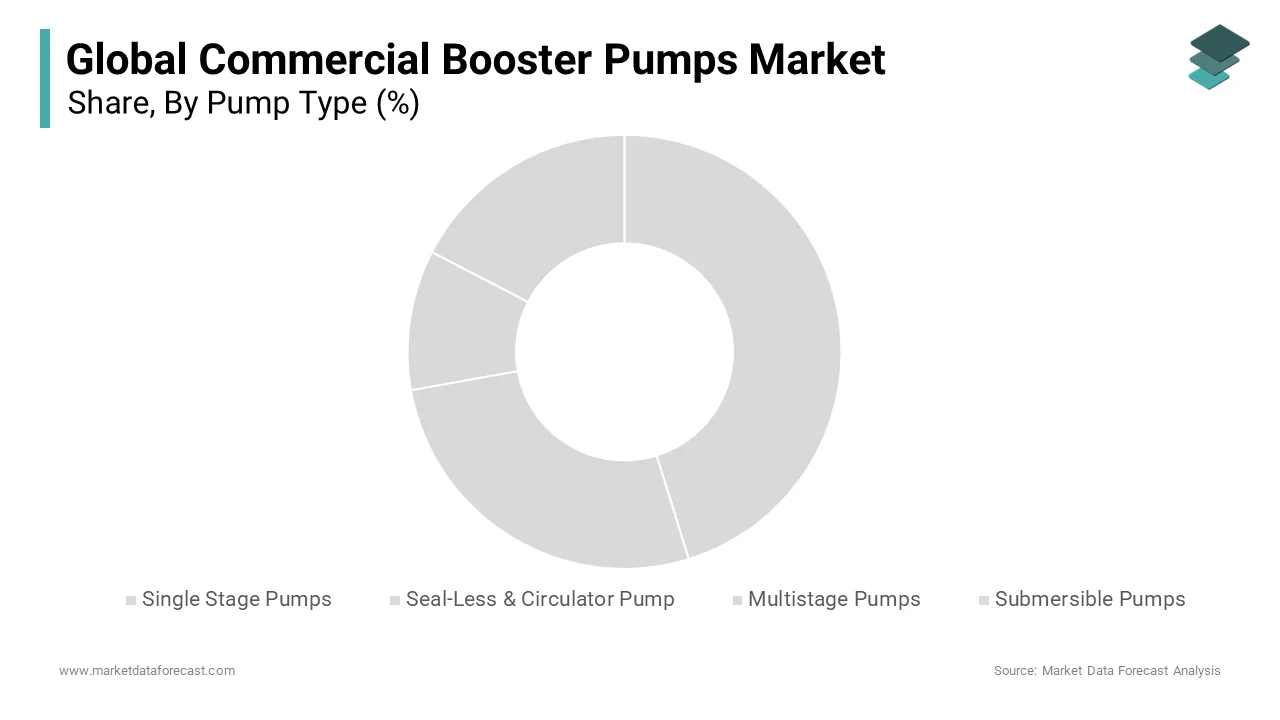
This research report on the global commercial booster pumps market has been segmented and sub-segmented based on the type, pressure, end-user and region.
By Type
-
Single Stage Pumps
- Seal-Less & Circulator Pump
- Multistage Pumps
- Submersible Pumps
By Pressure
- 0.5 – 1 Bar
- 1 – 5 Bar
- 5 – 10 Bar
- 10 – 20 Bar
- 20 – 25 Bar
- 25 – 50 Bar
- Above 50 Bar
By End Users
- Agriculture & Irrigation
- Oil & Gas
- Construction
- Water Treatment
- Mining Industry
- Energy & Power Generation
- Chemical Industry
By Region
- North America
- Europe
- The Asia Pacific
- Latin America
- The Middle East and Africa