- Product Description Description
- Table of Contents TOC
- List of Table & Figure LOT
- Get Free Sample PDF Sample PDF
Market Size, 2025
$1.04 BnMarket Estimate, 2026
$1.10 BnMarket Forecast, 2034
$1.75 BnCAGR, 2026–2034
5.98%Global Composite Cylinder Market Report Summary
The global composite cylinder market was valued at USD 1.04 billion in 2025 and is anticipated to reach USD 1.10 billion in 2026 from USD 1.75 billion by 2034, growing at a CAGR of 5.98% during the forecast period from 2026 to 2034. The growth of the global composite cylinder market is driven by stringent emission regulations, increasing adoption of natural gas and hydrogen-powered vehicles, and growing investments in clean energy infrastructure. Expanding demand for lightweight and high-strength pressure vessels across transportation, aerospace, and industrial applications is further accelerating market growth. Moreover, advancements in material science, increasing utilization of carbon fiber composites, and rising deployment of hydrogen storage systems are supporting the expansion of the global composite cylinder market.
Key Market Trends
-
Rising adoption of hydrogen fuel cell vehicles and related storage infrastructure.
-
Increasing demand for lightweight pressure vessels in transportation and aerospace applications.
-
Growing investments in hydrogen production, storage, and distribution networks.
-
Rising development of recyclable thermoplastic composite materials.
-
Increasing integration of IoT-enabled smart monitoring technologies in pressure vessels.
Segmental Insights
- Based on fiber type, the glass fiber composites segment dominated the global composite cylinder market and held the largest share in 2025. The dominance of the segment is attributed to its cost-effectiveness, high mechanical strength, widespread availability, and extensive adoption in compressed natural gas vehicle applications and industrial gas storage systems.
- The carbon fiber composites segment is projected to witness the fastest CAGR during the forecast period owing to the increasing demand for lightweight hydrogen storage systems, growing deployment of fuel cell vehicles, rising aerospace applications, and continuous advancements in automated composite manufacturing technologies.
- Based on tank type, the Type III cylinders segment accounted for the leading share of the global composite cylinder market in 2025. The growth of the segment is driven by its balanced combination of safety, durability, weight reduction, and cost efficiency, making it suitable for transportation and industrial applications.
- The Type IV cylinders segment is anticipated to register the fastest CAGR during the forecast period due to increasing adoption in hydrogen-powered mobility solutions, superior weight advantages, corrosion resistance, and growing investments in clean transportation infrastructure.
- Based on end-user, the transportation segment held the major share of the global composite cylinder market in 2025. The dominance of the segment is attributed to increasing adoption of compressed natural gas and hydrogen-powered vehicles, rising emission reduction targets, and growing demand for lightweight fuel storage solutions.
- The wind energy segment is expected to witness the fastest growth during the forecast period owing to increasing offshore wind installations, rising demand for corrosion-resistant components, growing utilization of composite pressure vessels in hydraulic systems, and expanding renewable energy investments globally.
Regional Insights
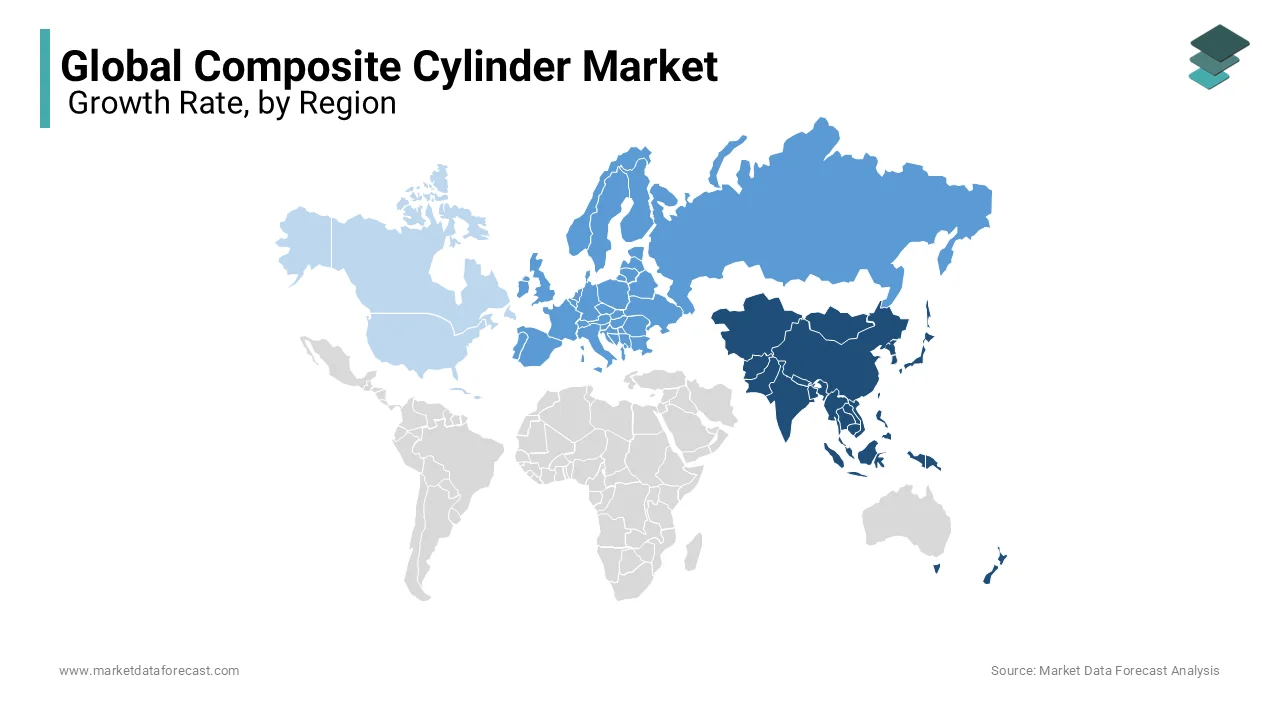
The Asia Pacific region dominated the global composite cylinder market in 2025 owing to rapid industrialization, strong adoption of natural gas vehicles, growing hydrogen infrastructure investments, and expanding manufacturing capabilities in China, Japan, South Korea, and India.
North America held a significant share of the market due to increasing investments in hydrogen hubs, rising adoption of alternative fuel vehicles, strong aerospace industry presence, and growing demand for advanced composite technologies.
Europe continues to witness substantial growth supported by ambitious carbon reduction targets, expanding hydrogen mobility initiatives, strong automotive manufacturing activities, and increasing investments in renewable energy projects.
Latin America is experiencing steady growth due to increasing natural gas vehicle adoption, expanding city gas distribution infrastructure, and supportive government initiatives promoting cleaner transportation solutions.
The Middle East and Africa region is expected to witness notable growth during the forecast period owing to rising hydrogen production investments, economic diversification strategies, increasing natural gas utilization, and growing focus on sustainable energy development.
Competitive Landscape
The global composite cylinder market is highly competitive and characterized by the presence of established material manufacturers, composite technology providers, and specialized pressure vessel manufacturers competing through product innovation, technological advancements, strategic collaborations, and capacity expansion initiatives. Leading companies are focusing on developing lightweight and high-performance storage solutions, expanding hydrogen storage capabilities, strengthening supply chain networks, and investing in recyclable composite technologies. Strategic partnerships with automotive manufacturers, energy companies, and aerospace organizations are further strengthening market positioning across the composite cylinder ecosystem.The key players operating in the global composite cylinder market include Owens Corning, Toray Industries, Inc., Teijin Limited, Mitsubishi Chemical Holdings Corporation, Hexcel Corporation, SGL Group, Nippon Electrical Glass Co. Ltd., Koninklijke Ten Cate BV., Huntsman International LLC., and Solvay.
 Download Free Sample Report
Global Composite Cylinder Market Size
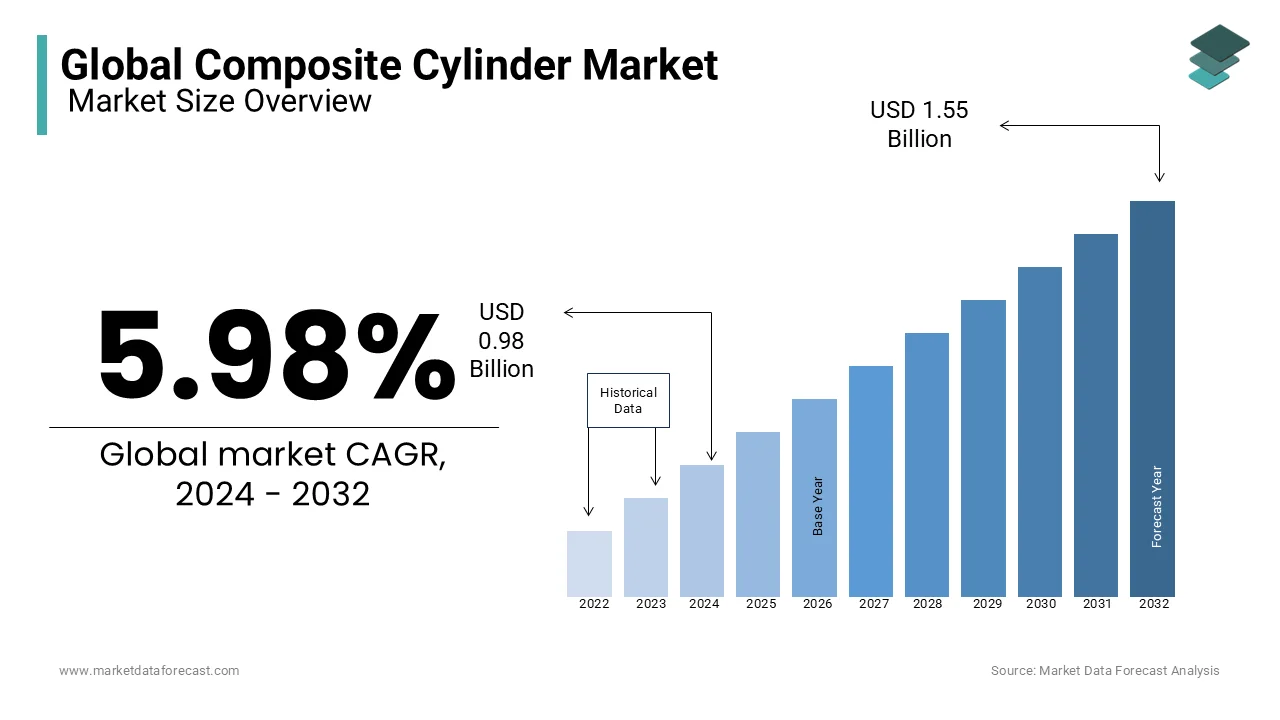
The Global composite cylinder market was valued at USD 1.04 billion in 2025 and is anticipated to reach USD 1.75 billion by 2034 from USD 1.10 billion in 2026 and grow with a CAGR of 5.98% during the forecast period 2026 to 2034.
Composite cylinders are a sophisticated class of pressure vessels engineered from high strength fibers such as carbon or glass embedded within a polymer matrix. These advanced containers offer superior weight to strength ratios compared to traditional steel alternatives, making them indispensable in applications where mass reduction is critical. The global transition toward cleaner energy sources has positioned these cylinders as vital components in hydrogen storage and natural gas vehicle infrastructure. According to global transport infrastructure metrics compiled by industry tracking associations, the global fleet of natural gas vehicles has surpassed 27 million operational units, driving significant automotive supply-chain demand for lightweight Type 3 and Type 4 composite overwrapped pressure vessels to optimize fuel storage and vehicle efficiency. Furthermore, the aerospace sector continues to rely on these vessels for onboard oxygen and hydraulic systems due to their durability under extreme conditions. The European Space Agency notes that modern satellite propulsion systems increasingly utilize composite overwrapped pressure vessels to maximize payload capacity. In the medical field, portable oxygen concentrators benefit from the reduced weight of composite designs, enhancing patient mobility. According to the World Health Organization, the global prevalence of chronic respiratory diseases affects hundreds of millions of individuals, driving the need for efficient personal medical devices. The material science behind these cylinders involves precise filament winding techniques that ensure structural integrity while minimizing material usage. This technological evolution supports diverse industrial applications ranging from firefighting equipment to underwater breathing apparatuses, reflecting a broad spectrum of utility beyond conventional energy storage.
MARKET DRIVERS
Stringent Emission Regulations Driving Adoption in Transportation
Governments across major economies are implementing rigorous emission standards that compel automotive manufacturers to adopt lighter and more efficient fuel storage systems, which drives the growth of the composite cylinder market. According to official European Commission legislative frameworks, the European Union has dramatically heightened its climate goals, mandating a 55% reduction in carbon dioxide emissions from new cars by 2030 compared to 2021 baselines, en route to a full 100% zero-emission vehicle target by 2035. This regulatory pressure accelerates the shift toward natural gas vehicles and hydrogen fuel cell electric vehicles, both of which require high pressure storage solutions. Composite cylinders provide the necessary weight savings to improve vehicle range and efficiency, directly addressing these compliance requirements. Guided by the State Council of China's New Energy Vehicle Industry Development Plan, the nation targeted a 20% NEV market share by 2025. While this target primarily accelerated battery-electric vehicle sales, parallel commercial heavy-duty transportation policies have catalyzed the growth of fuel cell networks, generating substantial demand for Type III and Type IV composite storage cylinders built to withstand pressures of 350 to 700 bar. Additionally, the United States Environmental Protection Agency has tightened greenhouse gas emission standards for medium and heavy duty engines, further incentivizing the use of lightweight storage technologies. Fleet operators seeking to reduce operational costs and meet corporate sustainability goals are increasingly replacing steel tanks with composite alternatives. The integration of these advanced materials into commercial transport networks supports broader decarbonization targets while maintaining performance standards required for long haul logistics and public transit systems.
Expansion of Hydrogen Infrastructure Supporting Energy Transition
The global commitment to achieving net zero emissions has caused significant investments in hydrogen production, distribution, and storage infrastructure, which further propels the expansion of the composite cylinder market. Energy transition outlooks published by the International Renewable Energy Agency (IRENA) note that globally coordinated net-zero scenarios could expand total clean hydrogen production to roughly 500 million tonnes annually by 2050, requiring a massive parallel scaling of industrial composite bulk storage matrices and distribution systems. This projected growth necessitates reliable and safe storage solutions capable of handling high pressure hydrogen gas. Composite cylinders are uniquely suited for this application due to their ability to withstand pressures up to 900 bar while remaining significantly lighter than metallic counterparts. Japan has been a pioneer in this domain, with the Ministry of Economy Trade and Industry outlining a basic hydrogen strategy that targets the deployment of 900 hydrogen stations by 2030. Each station requires numerous storage vessels, creating sustained demand for composite technology. Similarly, Germany has launched a national hydrogen strategy with an investment volume of 9 billion euros, as reported by the Federal Ministry for Economic Affairs and Climate Action. This funding supports the development of hydrogen valleys and industrial clusters that rely on modular storage systems. The aviation industry is also exploring hydrogen powered aircraft, with Airbus aiming to develop a zero emission commercial aircraft by 2035. Such initiatives require innovative storage architectures that leverage composite materials to optimize space and weight constraints. The scalability of filament wound composite cylinders allows manufacturers to meet the varying capacity needs of stationary storage units and mobile refueling trucks, facilitating the broader adoption of hydrogen as a clean energy carrier across multiple sectors.
MARKET RESTRAINTS
High Initial Manufacturing Costs Limiting Market Penetration
The production of these cylinders involves complex manufacturing processes that require specialized equipment and skilled labor, which results in significantly higher initial costs compared to traditional steel vessels, and thereby restricts the growth of the composite cylinder market. The raw materials used, particularly carbon fiber, remain expensive due to limited production capacity and energy intensive fabrication methods. The American Composites Manufacturers Association (ACMA) confirm that despite the structural advantages of composites, raw high-performance carbon fiber remains roughly 15 to 50 times more expensive than structural steel on a per-kilogram basis, presenting a significant initial capital barrier for high-volume automotive and industrial applications. This price disparity poses a substantial barrier for price sensitive markets and applications where budget constraints are paramount. Small and medium sized enterprises often struggle to justify the upfront investment required for automated filament winding machines and autoclave curing systems. The lack of economies of scale further exacerbates this issue, as production volumes have not yet reached levels that would drive down unit costs substantially. In developing regions, the affordability of steel cylinders continues to dominate market preferences despite the performance advantages of composites. The World Bank indicates that infrastructure investment gaps in low income countries limit the adoption of advanced technologies that require higher capital expenditure. Additionally, the recycling infrastructure for composite materials is underdeveloped, leading to concerns about end of life disposal costs. Manufacturers must absorb these environmental compliance expenses, which further inflate the total cost of ownership. High entry costs remain a significant restraint preventing the widespread replacement of metallic cylinders. This is especially true in cost-conscious segments like residential heating and small-scale industrial applications, until production techniques become more efficient and raw material prices decrease.
Limited Recycling Infrastructure Creating Sustainability Concerns
The end-of-life management of composite cylinders is a significant environmental hurdle for the composite cylinder market. This is due to the difficulty in separating fiber reinforcements from polymer matrices. Unlike steel, which can be melted down and recycled indefinitely with minimal quality loss, thermoset composites used in most high pressure vessels cannot be easily reprocessed. The European Environment Agency, less than 10% of composite waste is actively recycled into equivalent circular products within Europe, with the overwhelming majority directed to landfilling or energy-intensive incineration due to the complex chemical nature of thermoset resins. This low recycling rate raises concerns among environmentally conscious consumers and regulatory bodies focused on circular economy principles. The chemical bonding between fibers and resin makes mechanical recycling ineffective, often resulting in degraded material properties that limit secondary applications. Pyrolysis and solvolysis methods exist but are energy intensive and economically unviable at current scales. The United Nations Environment Programme highlights that the global generation of plastic waste, including composite materials, is expected to triple by 2060 if no action is taken. This projection intensifies pressure on manufacturers to develop recyclable alternatives or establish take back schemes. Some companies are exploring thermoplastic matrices that can be remelted, but these materials often lack the thermal stability required for high pressure gas storage. The absence of standardized recycling protocols across different jurisdictions complicates compliance for multinational manufacturers. Until viable recycling technologies become commercially scalable and cost-effective, the environmental footprint of composite cylinders will remain a contentious issue. Consequently, this could restrict their adoption in regions with stringent waste management regulations and strong consumer preferences for sustainable products.
MARKET OPPORTUNITIES
Emergence of Thermoplastic Composites Offering Recyclability
The development of thermoplastic composite materials offers a transformative opportunity for the composite cylinder market. This addresses end of life recyclability concerns while maintaining mechanical performance. Unlike traditional thermoset resins, thermoplastics can be melted and reshaped multiple times without significant degradation of properties. As per the Society of Plastics Engineers, the global market for thermoplastic composites is projected to grow at a compound annual growth rate of 7.5 percent through 2030, driven by automotive and aerospace demand. This material innovation enables manufacturers to produce cylinders that align with circular economy principles, appealing to environmentally regulated markets. Companies such as Toray Industries and Hexcel are investing heavily in research to optimize thermoplastic prepregs for high pressure applications. The ability to recycle these materials reduces waste disposal costs and enhances brand reputation among sustainability focused customers. In Europe, the Green Deal initiative encourages the adoption of recyclable materials, creating favorable policy conditions for thermoplastic composite adoption. The automotive sector is particularly interested in these materials due to their faster processing times and potential for automation. Injection molding and compression molding techniques allow for higher production rates compared to filament winding, potentially lowering manufacturing costs over time. Additionally, thermoplastic cylinders exhibit better impact resistance and damage tolerance, improving safety profiles in crash scenarios. The integration of sensors and smart monitoring systems is also more feasible with thermoplastic matrices, enabling real time health monitoring of pressure vessels. This technological advancement opens new avenues in critical applications such as aerospace and medical devices where reliability and sustainability are paramount, positioning thermoplastic composites as a key growth driver for the next generation of composite cylinders.
Integration of Smart Monitoring Systems Enhancing Safety and Efficiency
The incorporation of Internet of Things sensors and smart monitoring technologies into composite cylinders sets the stage for improving safety, maintenance scheduling, and operational efficiency, which is expected to drive the expansion of the composite cylinder market. Smart cylinders equipped with pressure, temperature, and strain sensors can transmit real time data to central monitoring systems, enabling predictive maintenance and preventing catastrophic failures. This capability is particularly valuable in hazardous environments such as chemical plants and offshore platforms where manual inspection is difficult and risky. The oil and gas industry is increasingly adopting digital twin technology to simulate cylinder performance under various operating conditions, optimizing usage patterns and extending service life. According to sources, predictive maintenance can reduce maintenance costs by up to 30 percent and eliminate breakdowns by 70 percent. In the healthcare sector, smart oxygen cylinders can alert patients and providers when supplies are running low, ensuring uninterrupted therapy. The aviation industry benefits from continuous structural health monitoring, reducing the frequency of mandatory inspections and minimizing aircraft downtime. Regulatory bodies are beginning to recognize the value of digital monitoring, with some jurisdictions considering relaxed inspection intervals for certified smart vessels. This technological integration creates new revenue streams for manufacturers through data analytics services and subscription based monitoring platforms. The convergence of material science and digital technology positions smart composite cylinders as premium products that offer enhanced value propositions beyond simple gas storage, driving adoption in high value industrial and commercial segments.
MARKET CHALLENGES
Regulatory Fragmentation Across Geographies Complicating Compliance
The lack of harmonized international standards and regulations governing design, testing, and certification is a major challenge to the composite cylinder market. Different regions adhere to distinct regulatory frameworks, requiring manufacturers to navigate complex compliance landscapes when exporting products globally. As per the United Nations Economic Commission for Europe, while Regulation No 110 provides guidelines for compressed natural gas systems, individual countries often impose additional national requirements that vary considerably. While North American high-pressure storage relies on rigorous testing protocols under Title 49 of the US Code of Federal Regulations (49 CFR), European jurisdictions split vehicle compliance and transit logistics across specialized mechanisms like the Transportable Pressure Equipment Directive (TPED) and localized European vehicle type-approval regulations. This regulatory fragmentation increases development costs and time to market, as manufacturers must customize products and documentation for each target region. The International Organization for Standardization has attempted to create unified standards such as ISO 11439 for natural gas vehicle cylinders, but adoption remains inconsistent. According to the World Trade Organization, non tariff barriers including divergent technical regulations constitute a significant obstacle to international trade in manufactured goods. Small and medium sized manufacturers often lack the resources to manage multiple certification processes, limiting their global competitiveness. Additionally, emerging markets may have underdeveloped regulatory frameworks, creating uncertainty regarding product acceptance and liability. The absence of mutual recognition agreements between major economic blocs forces redundant testing and certification, inflating costs without adding safety value. Harmonization efforts continue but progress is slow due to differing national priorities and historical precedents. Manufacturers will continue to face elevated compliance burdens until greater regulatory alignment is achieved. Therefore, these added hurdles will hinder market expansion and increase operational complexity across international supply chains.
Supply Chain Vulnerabilities for Critical Raw Materials
Heavy reliance on specialized raw materials, such as carbon fiber and high-performance resins, impedes the expansion of the composite cylinder market. The supply chains for these essential materials are concentrated in a limited number of geographic regions. Research indicate that China controls approximately 45% to 50% of the world's carbon fiber production capacity, creating significant, centralized supply chain dependency risks for international aerospace and alternative-fuel automotive cylinder manufacturers. Geopolitical tensions, trade disputes, and export restrictions can disrupt supply availability and cause price volatility. The COVID 19 pandemic exposed the fragility of global supply chains, with many manufacturers experiencing delays and shortages of critical inputs. According to the Institute for Supply Management, supply chain disruptions resulted in increased lead times and higher procurement costs for industrial manufacturers worldwide. Carbon fiber production is energy intensive and requires significant capital investment, limiting the number of suppliers capable of meeting growing demand. Any disruption at major production facilities can have cascading effects throughout the composite cylinder value chain. Additionally, the sourcing of precursor materials such as polyacrylonitrile is subject to fluctuating petroleum prices, further complicating cost management. Manufacturers are attempting to mitigate these risks through vertical integration and diversification of supplier bases, but these strategies require substantial investment and time. The European Union has identified critical raw materials as a strategic priority, launching initiatives to secure domestic supply and reduce external dependencies. However, building local production capacity takes years, leaving the industry vulnerable in the interim. Supply chain resilience has become a key competitive differentiator, with companies investing in inventory buffers and alternative material qualifications. The composite cylinder market will remain exposed to external shocks that can impair production continuity and profitability. This vulnerability will persist until supply chains become more diversified and resilient.
REPORT COVERAGE
| REPORT METRIC | DETAILS |
| Market Size Available | 2025 to 2034 |
| Base Year | 2025 |
| Forecast Period | 2026 to 2034 |
| Segments Covered | By Fiber Type, Tank Type, End-User, and Region. |
| Various Analyses Covered | Global, Regional, & Country Level Analysis; Segment-Level Analysis, Drivers, Restraints, Opportunities, Challenges, PESTLE Analysis, Porter’s Five Forces Analysis, Competitive Landscape, Analyst Overview of Investment Opportunities |
| Regions Covered | North America, Europe, Asia Pacific, Latin America, Middle East, and Africa |
| Key Market Players | Owens Corning, Toray Industries, Inc., Teijin Limited, Mitsubishi Chemical Holdings Corporation, Hexcel Corporation, SGL Group, Nippon Electrical Glass Co. Ltd., Koninklijke Ten Cate BV., Huntsman International LLC., Solvay and Others. and Others. |
SEGMENTAL ANALYSIS
By Fiber Type Insights
The glass fiber composites segment was the largest in the global composite cylinder market and occupied a 55.1% share in 2025. This supremacy of the segment was supported by the optimal balance between cost efficiency and mechanical performance that glass fibers provide for high volume applications. The main driver for this segment is the extensive adoption of compressed natural gas vehicles in emerging economies where budget constraints are significant. In addition, the International Association for Natural Gas Vehicles (IANGV) confirm that while the global NGV fleet has climbed past 27 million operational units, low-cost mass deployment remains anchored heavily by traditional all-metal Type I and glass-fiber reinforced Type II composite cylinders to maximize affordability. Glass fiber offers sufficient tensile strength for pressures up to 300 bar while remaining significantly cheaper than carbon fiber alternatives. The manufacturing infrastructure for glass fiber is well established worldwide, allowing for scalable production and reduced lead times. Additionally, the automotive industry relies heavily on glass fiber reinforced plastics for various structural components, creating synergies in supply chain management and material sourcing. The durability of glass fiber in corrosive environments further enhances its appeal for industrial gas storage applications. Manufacturers continue to optimize resin formulations to improve the interfacial bonding with glass fibers, thereby enhancing fatigue resistance and extending service life. This continuous improvement in material science ensures that glass fiber remains the preferred choice for mass market applications where cost sensitivity outweighs the need for extreme weight reduction.

However, the carbon fiber composites segment is on the rise and is expected to be the fastest growing segment in the market by witnessing a CAGR of 8.5 from 2026 to 2034. This rapid expansion of the segment is propelled by the escalating demand for hydrogen fuel cell vehicles which require lightweight storage solutions to maximize driving range. Hydrogen has a low energy density by volume necessitating storage at pressures of 700 bar or higher, a requirement that only carbon fiber reinforced composites can meet efficiently without excessive weight penalties. The Hydrogen Council indicates that while global hydrogen refueling infrastructure has successfully surpassed 1,150 active stations, the broader fuel-cell vehicle rollout is scaling steadily, positioning carbon fiber composite tank manufacturers for long-term commercial-scale demand rather than a 10-million vehicle near-term surge. Each vehicle requires multiple type IV cylinders made with carbon fiber to achieve the necessary gravimetric capacity. The aerospace sector also contributes to this growth as airlines seek to reduce aircraft weight to lower fuel consumption and emissions. Boeing and Airbus have increased their use of carbon fiber composites in new aircraft models, driving demand for onboard oxygen and hydraulic storage vessels. Advances in automated fiber placement technologies have reduced production costs, making carbon fiber more accessible for broader industrial applications. The superior specific strength of carbon fiber enables designers to create thinner walled cylinders that offer greater internal volume, further incentivizing its adoption in space constrained environments.
By Tank Type Insights
The type III cylinders segment led the global composite cylinder market and captured a 45.3% share in 2025. This leading position of the segment was attributed to its widespread use in commercial transportation and industrial applications. These cylinders feature a metallic liner fully wrapped with composite fibers, offering a reliable compromise between cost, weight, and safety. The top position of Type III tanks is also driven by the mature compressed natural gas bus and truck fleets in Asia and Europe. Supported by public transit initiatives across Asia, cities in India and China have deployed hundreds of thousands of natural gas buses, utilizing lightweight Type III and Type IV composite storage vessels to optimize weight distributions for roof-mounted fuel arrays under strict national safety guidelines. The metallic liner provides excellent permeation resistance, addressing concerns about gas leakage that are more prevalent in all composite designs. Furthermore, the manufacturing processes for Type III cylinders are well standardized, allowing for consistent quality control and easier certification across different jurisdictions. The fire safety profile of Type III tanks is well understood, with established testing protocols that satisfy stringent regulatory requirements in public transport sectors. Fleet operators prefer Type III cylinders for their durability and ease of inspection, as visual checks of the external composite wrap can detect damage effectively. The availability of skilled technicians for maintenance and repair further supports the continued preference for this tank type in heavy duty applications where operational reliability is paramount.
On the other hand, the Type IV cylinders segment is expected to exhibit a noteworthy CAGR of 9.2% during the forecast period owing to the urgent need for lightweight hydrogen storage in mobility applications. Unlike Type III tanks, Type IV cylinders utilize a polymer liner instead of metal, resulting in significant weight savings that are critical for maximizing the range of fuel cell electric vehicles. The global push toward decarbonization has led major automakers to invest heavily in hydrogen technology, directly boosting demand for Type IV solutions. According to the International Energy Agency, government investments in hydrogen infrastructure reached 30 billion dollars in recent years, facilitating the rollout of refueling networks that rely on these advanced storage vessels. The polymer liner eliminates the risk of corrosion and reduces hydrogen permeation when combined with appropriate barrier layers. Manufacturing advancements such as inline monitoring during filament winding have improved the consistency and reliability of Type IV production. Regulatory bodies are increasingly recognizing the safety benefits of non metallic liners in crash scenarios, as they do not fragment like metal. The scalability of Type IV design allows for modular storage systems in stationary applications, expanding their utility beyond transportation. As production volumes increase, economies of scale are beginning to lower the cost premium associated with Type IV cylinders, making them more competitive for broader commercial adoption.
By End User Insights
In 2025, the transportation segment held the majority share of 60.7% of the composite cylinder market because of the global transition to cleaner fuels in road and maritime transport. The imperative to reduce greenhouse gas emissions has prompted governments to mandate the adoption of alternative fuels such as compressed natural gas and hydrogen. As per the International Council on Clean Transportation, heavy duty vehicles account for nearly 30 percent of road transport emissions, making them a primary target for fuel switching initiatives. Composite cylinders enable these vehicles to carry sufficient fuel loads without compromising payload capacity, a critical factor for logistics efficiency. The expansion of liquefied natural gas bunkering infrastructure for ships has also spurred demand for large capacity composite tanks in the maritime industry. Public transit agencies worldwide are replacing diesel buses with natural gas or hydrogen variants, creating sustained demand for standardized cylinder formats. The ride sharing and taxi industries in urban centers are rapidly adopting natural gas vehicles to lower operating costs, further accelerating market penetration. Safety regulations for passenger vehicles have evolved to accommodate composite tanks, ensuring public confidence in their use. The integration of composite cylinders into vehicle platforms is becoming more seamless as automakers design chassis specifically for alternative fuel storage, optimizing space utilization and structural integrity.
On the contrary, the wind energy segment is predicted to witness the highest CAGR of 7.8% between 2026 and 2034. This swift growth is fuelled by offshore wind farms increasingly utilizing composite pressure vessels for hydraulic and pneumatic systems. Offshore wind turbines require reliable energy storage and control mechanisms that can withstand harsh marine environments, and composite cylinders offer superior corrosion resistance compared to steel alternatives. According to the Global Wind Energy Council, offshore wind capacity is projected to reach 380 gigawatts by 2032, necessitating robust infrastructure support. These cylinders are used in pitch control systems and braking mechanisms where weight reduction at the nacelle level improves overall turbine efficiency. The trend toward larger turbine sizes amplifies the benefit of lightweight components, as every kilogram saved reduces structural load and maintenance costs. Additionally, floating wind platforms require buoyancy and stability solutions that benefit from the high strength to weight ratio of composite materials. The remote location of offshore installations makes durability and low maintenance critical, attributes that composite cylinders provide through their inert material properties. Governments are providing subsidies for offshore wind development, encouraging investment in advanced component technologies. The supply chain for wind energy is localizing in key markets, fostering innovation in composite manufacturing techniques tailored to renewable energy applications.
REGIONAL ANALYSIS
Asia Pacific Composite Cylinder Market Analysis
Asia Pacific outperformed other countries in the global composite cylinder market and accounted for a 40.6% share in 2025. This dominance of the APAC market was driven by rapid industrialization and aggressive clean energy policies in China and India. China is the world largest producer and consumer of natural gas vehicles, supported by extensive government subsidies and infrastructure development. According to the State Council of China's historical Energy Saving and New Energy Vehicle Industry Development Plan, the country established a target to deploy five million cumulative New Energy Vehicles (NEVs). Concurrently, market demand for composite storage solutions remains supported by China's extensive deployment of heavy-duty natural gas commercial fleets. As verified by the Petroleum and Natural Gas Regulatory Board (PNGRB) of India, the Indian government has vastly expanded its City Gas Distribution (CGD) network through consecutive bidding rounds, authorizing hundreds of Geographical Areas (GAs) covering over 600 districts to transition the nation toward a gas-based economy. The presence of major manufacturing hubs in South Korea and Japan further strengthens the regional supply chain for carbon fiber and composite materials. The aerospace industry in Asia is growing rapidly, with companies like Mitsubishi Heavy Industries investing in composite technology for next generation aircraft. Government initiatives to reduce air pollution in major cities are accelerating the adoption of clean fuel vehicles, directly boosting cylinder demand. The region benefits from lower labor costs and established manufacturing capabilities, making it a competitive export base for global markets. Strategic partnerships between local manufacturers and international technology providers are enhancing product quality and innovation capacity.
North America Composite Cylinder Market Analysis
North America was positioned second in the composite cylinder market and captured a 25.5% share in 2025. This expansion of the regional market was supported by advanced technological adoption and stringent environmental regulations in the United States and Canada. The United States Department of Energy has allocated billions of dollars for hydrogen hub development, stimulating demand for high pressure storage cylinders. The shale gas boom has ensured a steady supply of natural gas, supporting the growth of compressed natural gas fleets in logistics and public transit. The American Trucking Associations (ATA) officially maintains a technology-neutral stance on alternative fuels, actively supporting policies that reduce fuel-price volatility and carbon footprints through any viable technology, including natural gas or electrification, provided they maintain industry affordability. Canada is investing in hydrogen export facilities, particularly in British Columbia and Alberta, requiring large scale storage infrastructure. The aerospace sector in North America remains a key driver, with Boeing and SpaceX utilizing composite cylinders for various applications. Regulatory frameworks such as the Corporate Average Fuel Economy standards encourage lightweight vehicle designs, favoring composite solutions. The region leads in research and development of thermoplastic composites and smart monitoring systems, setting global trends for safety and efficiency. Strong intellectual property protection encourages innovation, attracting investment from global players seeking to establish a foothold in the lucrative North American market.
Europe Composite Cylinder Market Analysis
Europe plays a major role in the global market due to ambitious climate targets and strong policy support for hydrogen mobility under the European Green Deal. The European Union has mandated significant reductions in vehicle emissions, prompting automakers to accelerate hydrogen fuel cell vehicle development. Under the European Union's revised Alternative Fuels Infrastructure Regulation (AFIR), member states like Germany and France are building out a dedicated hydrogen network, with mandates requiring refueling stations every 200 kilometers along the core Trans-European Transport Network (TEN-T) by 2030 to accommodate heavy-duty commercial transport. According to the official European Commission Hydrogen Strategy, the European Union established a policy objective to install at least 40 gigawatts of renewable hydrogen electrolyzers by 2030, driving a corresponding need for specialized bulk high-pressure storage infrastructure. The automotive industry in Europe is transitioning toward zero emission vehicles, with major manufacturers committing to phase out internal combustion engines. Composite cylinders are essential for achieving the required driving ranges for hydrogen cars and trucks. The region also has a strong aerospace sector with Airbus leading the development of hydrogen powered aircraft concepts. Strict safety standards and environmental regulations drive the adoption of high quality composite solutions. Recycling initiatives and circular economy principles are influencing material choices, promoting the development of recyclable composite technologies. Collaboration among European nations facilitates harmonized standards and cross border infrastructure projects.
Latin America Composite Cylinder Market Analysis
Latin America is moving ahead steadfastly in the global market owing to natural gas vehicle adoption in countries like Brazil and Argentina. Benefiting from highly targeted state-level tax incentives and a robust vehicle conversion infrastructure, Brazil maintains one of the largest natural gas vehicle fleets globally, utilizing its infrastructure to cushion regional transportation sectors against global oil price shocks. The Brazilian Association of Piped Gas Distributors (Abegás) shows that Brazil's active vehicle fleet utilizing compressed natural gas (CNG) now exceeds 2.5 million registered vehicles, heavily dominated by urban transit fleets, ride-share operations, and light commercial vehicles. Led by national energy companies like YPF, Argentina is aggressively scaling extraction at the Vaca Muerta shale formation to secure long-term domestic energy sovereignty, simultaneously laying the groundwork for heavy-duty gas transport corridors and large-scale maritime LNG export pathways. Government incentives in these countries encourage the conversion of gasoline vehicles to natural gas, boosting demand for retrofit kits and composite cylinders. The mining industry in Chile and Peru utilizes natural gas powered equipment, creating niche demand for industrial grade cylinders. Infrastructure development is ongoing, with new refueling stations being added in major urban centers. Economic volatility sometimes impacts investment pace, but the long term trend toward cleaner fuels remains strong. Local manufacturing capabilities are developing, reducing reliance on imports and lowering costs for end users. Regional trade agreements facilitate the movement of goods and technology, supporting market integration.
Middle East and Africa Composite Cylinder Market Analysis
The Middle East and Africa region is likely to grow notably in the global market from 2026 to 2034 due to economic diversification efforts and natural gas utilization. Countries like Saudi Arabia and the United Arab Emirates are investing heavily in hydrogen production as part of their post oil economic strategies. As per the Saudi Arabian Ministry of Energy, the kingdom aims to become a leading exporter of blue and green hydrogen, requiring substantial storage and transport infrastructure. Natural gas is widely used for power generation and industrial processes, supporting steady demand for composite cylinders. South Africa is exploring hydrogen as a solution for energy security and mining applications. The region benefits from low energy costs, making hydrogen production economically viable. Government visions such as Saudi Vision 2030 prioritize sustainable energy solutions, attracting international investment. The harsh climate conditions favor composite materials due to their corrosion resistance and durability. Infrastructure projects related to oil and gas downstream activities also contribute to demand. While the current market size is smaller, the strategic focus on future energy sources positions the region for significant long term growth.
COMPETITIVE LANDSCAPE
The competition in the composite cylinder market is characterized by a mix of established industrial giants and specialized niche players vying for dominance in a rapidly evolving landscape. Technological innovation serves as the primary battleground, with companies striving to develop lighter, safer, and more cost effective solutions. The shift toward hydrogen mobility has intensified rivalry, as firms race to secure contracts with major automotive original equipment manufacturers. Price competition remains fierce in the natural gas vehicle segment, particularly in emerging markets where cost sensitivity is high. However, differentiation through superior performance, certification credentials, and after sales support allows premium players to maintain margins. Strategic alliances and mergers are common as companies seek to consolidate expertise and expand global footprints. The barrier to entry is moderate due to high capital requirements and stringent regulatory standards, protecting incumbent players from new entrants. Intellectual property rights play a crucial role, with patents on manufacturing processes and material formulations providing competitive advantages. Customer loyalty is built on reliability and safety records, making brand reputation a significant asset. The market is witnessing increased collaboration between material suppliers and cylinder manufacturers to optimize supply chains and accelerate product development cycles.
KEY MARKET PLAYERS
Companies playing a prominent role in the global composite cylinder market include
- Owens Corning
- Toray Industries, Inc.
- Teijin Limited
- Mitsubishi Chemical Holdings Corporation
- Hexcel Corporation
- SGL Group
- Nippon Electrical Glass Co. Ltd
- Koninklijke Ten Cate BV.
- Huntsman International LLC.
- Solvay
- Others.
Top Players in the Market
Hexagon Purus
Hexagon Purus is a leading global provider of high pressure composite cylinder solutions specializing in hydrogen and natural gas storage for transportation and stationary applications. The company focuses on innovative type IV cylinder technology that offers superior weight savings and safety features. Hexagon Purus has recently expanded its manufacturing footprint in North America and Europe to meet rising demand from automotive original equipment manufacturers. They actively collaborate with major truck and bus makers to integrate their storage systems into new vehicle platforms. The company emphasizes sustainability by developing recyclable composite materials and optimizing production processes to reduce carbon footprint. Their strategic partnerships with energy companies facilitate the deployment of integrated hydrogen refueling solutions. Hexagon Purus continues to invest in research and development to enhance cylinder performance and reduce costs through automation. Their comprehensive approach covers the entire value chain from design to end of life management, positioning them as a key enabler of the hydrogen economy.
Luxfer Gas Cylinders
Luxfer Gas Cylinders is a prominent manufacturer known for its high quality composite and aluminum cylinders serving medical, firefighting, and industrial markets. The company has a strong reputation for reliability and safety, with products certified to rigorous international standards. Luxfer has recently invested in expanding its production capacity for composite cylinders to address growing demand in the healthcare and emergency services sectors. They focus on developing lightweight solutions for portable oxygen devices, improving patient mobility and quality of life. The company engages in continuous innovation to enhance cylinder durability and ease of use. Luxfer collaborates with regulatory bodies to shape safety standards and best practices in the industry. Their global distribution network ensures timely delivery and support for customers worldwide. The company also emphasizes environmental responsibility by implementing sustainable manufacturing practices and exploring recycling options for end of life products.
CylinderTec
CylinderTec is a specialized manufacturer of high pressure composite cylinders for demanding applications in aerospace, defense, and energy sectors. The company leverages advanced filament winding technologies to produce custom designed solutions that meet specific customer requirements. CylinderTec has recently strengthened its position by securing contracts for aerospace programs requiring lightweight and reliable storage systems. They focus on high performance materials such as carbon fiber to achieve optimal strength to weight ratios. The company invests in quality control and testing facilities to ensure product integrity under extreme conditions. CylinderTec collaborates with engineering firms to develop innovative storage architectures for emerging applications like unmanned aerial vehicles. Their expertise in complex geometries and integrated systems allows them to serve niche markets with high entry barriers. The company prioritizes customer collaboration to deliver tailored solutions that enhance operational efficiency and safety.
Top Strategies Used by Key Market Participants
Key players in the composite cylinder market primarily focus on strategic partnerships and joint ventures to expand their geographic reach and technological capabilities. Companies frequently collaborate with automotive manufacturers to co develop integrated storage solutions for hydrogen and natural gas vehicles. Investment in research and development is another critical strategy, with firms allocating significant resources to innovate lighter and stronger materials. Expansion of manufacturing facilities in key regions such as North America and Europe helps companies meet local content requirements and reduce logistics costs. Many participants are also pursuing vertical integration by securing supplies of raw materials like carbon fiber to mitigate supply chain risks. Digitalization and smart monitoring integration are emerging strategies to add value and differentiate products in a competitive landscape.
MARKET SEGMENTATION
This research report on the global composite cylinder market has been segmented and sub-segmented based on fiber type, tank type, end user, and region.
By Fiber Type
- Natural fiber composites
- Glass fiber composites
- Carbon fiber comp
By Tank Type
- Type II
- Type III
- Type IV
By End User
- Wind Energy
- Transportation
- Aerospace
- Defense
By Region
- North America
- Europe
- Asia Pacific
- Latin America
- Middle East & Africa