- Product Description Description
- Table of Contents TOC
- List of Table & Figure LOT
- Get Free Sample PDF Sample PDF
Market Size, 2025
$71.23 BnMarket Estimate, 2026
$73.91 BnMarket Forecast, 2034
$99.30 BnCAGR, 2026–2034
3.76%Global Container Glass Market Summary
The global container glass market size was valued at USD 71.23 billion in 2025, is anticipated to reach USD 73.91 billion in 2026, and is projected to reach USD 99.30 billion by 2034, growing at a CAGR of 3.76% from 2026 to 2034. The growth of the global container glass market is attributed to the rising demand for sustainable and recyclable packaging, growing consumption of beverages, pharmaceuticals, and food products, and the shift toward eco-friendly materials over plastics. Increasing consumer preference for premium packaging and regulatory support for recyclability are also boosting market expansion.
Key Market Trends
- Growing use of glass packaging in food & beverages owing to its safety and preservation qualities.
- Rising demand for pharmaceutical-grade glass containers with strong chemical resistance.
- Shift toward lightweight glass bottles for cost-effectiveness and sustainability.
- High adoption of premium glass packaging in cosmetics, alcohol, and specialty food sectors.
- Expansion of recycling infrastructure and circular economy initiatives across regions.
Segmental Insights
- Based on product, the bottles segment was the largest and held a dominant share of the global container glass market in 2025, supported by high demand for alcoholic and non-alcoholic beverages.
- Based on end user, the consumer applications segment led the global container glass market by capturing 58.3% share in 2025, driven by widespread use in food, beverages, and household products.
Regional Insights
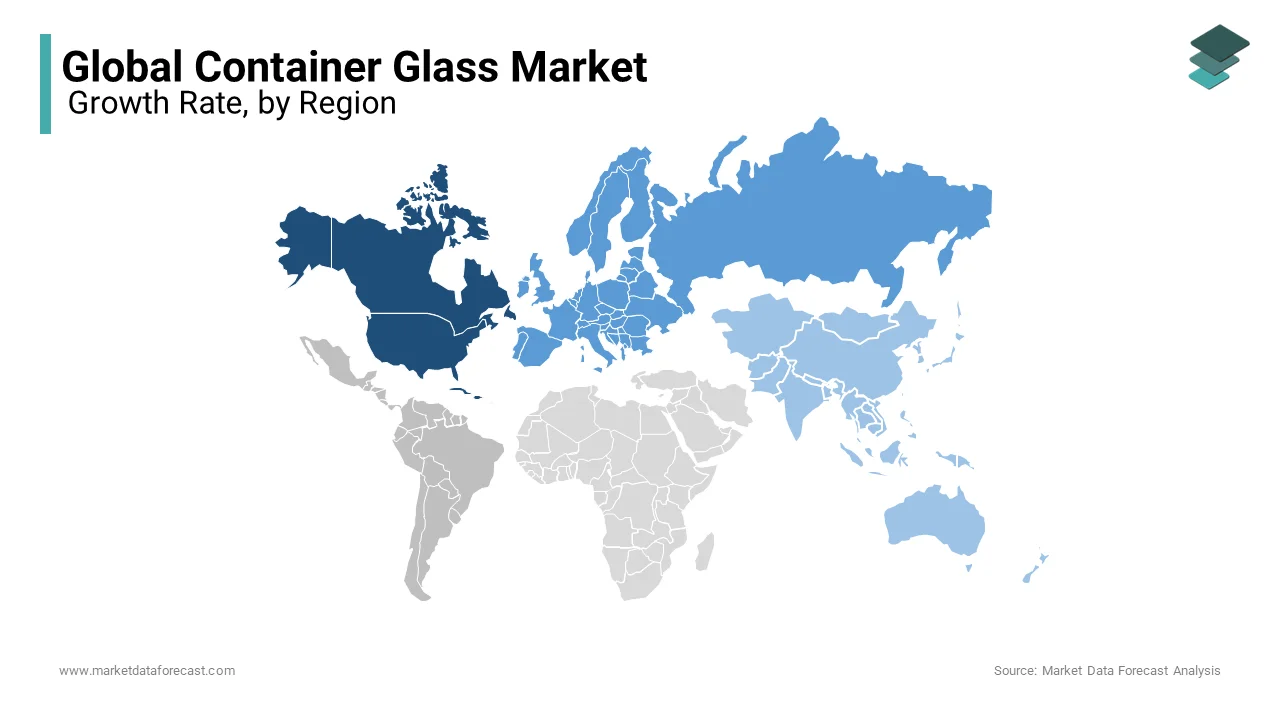
- Europe was the largest contributor to the global container glass market, holding 37.3% share in 2025, due to strong recycling initiatives, stringent packaging regulations, and high beverage consumption.
- North America maintained a significant market share, supported by demand for craft beverages and premium glass-packaged products.
- Asia-Pacific is expected to grow at the fastest CAGR, fueled by urbanization, rising disposable incomes, and the expansion of the pharmaceutical and food sectors.
- Latin America and the Middle East & Africa are showing steady growth, supported by the alcoholic beverages and food processing industries.
Competitive Landscape
The global container glass market is moderately consolidated, with companies focusing on lightweight, durable, and eco-friendly solutions. Prominent players in the global container glass market include Ardagh Group, Gerresheimer AG, Borosil, Schott AG, Stevanato Group, Nippon Sheet Glass Co., Ltd. (NSG Group), Piramal Glass Private Limited, Corning Incorporated, Unitrade FZE, Saverglass SAS, O-I Glass, Inc., Vitro, Frigoglass SAIC, Amcor plc, SGD SA, and Owens-Illinois.
Global Container Glass Market Size
The global container glass market size was valued at USD 71.23 billion in 2025 and is anticipated to reach a valuation USD 73.91 billion in 2026 and USD 99.30 billion by 2034, growing at a CAGR of 3.76%, from 2026 to 2034.
The container glass is used for the production and distribution of glass packaging, primarily used for beverages, food, pharmaceuticals, and cosmetics. It is valued for its impermeability, chemical inertness, and infinite recyclability without loss of quality. As per the European Container Glass Federation (FEVE), over 80% of glass containers in Europe are recycled, reflecting its integral role in circular economy models.
MARKET DRIVERS
Consumer Preference for Premium and Sustainable Packaging in the Beverage Industry
The sustained consumer preference for glass in premium beverage packaging in wine, craft beer, and spirits is driving the growth of the container glass market. Glass is perceived as a premium, non-reactive, and eco-conscious material that preserves flavor and enhances brand image. According to the Wine Institute, 72% of American consumers consider packaging material when purchasing wine, with glass being the dominant choice due to its ability to prevent oxidation and maintain product quality over time. The craft beer segment has also embraced glass bottles, with over 60% of craft breweries in the U.S. using glass containers, as reported by the Brewers Association in 2023. Additionally, spirits brands such as Diageo and Pernod Ricard continue to rely on glass for high-end products, citing consumer expectations for luxury presentation.
Regulatory Push for Recycled Content and Circular Economy Compliance
The stringent environmental regulations mandating the use of recycled materials in packaging are significantly bolstering the container glass market growth. Glass is uniquely suited to meet these mandates due to its ability to incorporate high levels of post-consumer recycled (PCR) content without compromising structural integrity. As per the European Union’s Packaging and Packaging Waste Directive (PPWD), member states are required to achieve a minimum of 70% recycling target for glass packaging by 2030, with individual countries like Germany already exceeding 90% collection rates. Companies such as O-I Glass have responded by launching furnaces that utilize up to 95% cullet in production, drastically reducing energy consumption and CO₂ emissions. These regulatory frameworks are compelling brand owners across the food and beverage sectors to shift toward glass, reinforcing its long-term viability in a sustainability-driven regulatory landscape.
MARKET RESTRAINTS
High Energy Consumption and Carbon Intensity of Glass Manufacturing
The production of container glass is inherently energy-intensive, hindering the growth of the container glass market. Melting raw materials requires temperatures exceeding 1,500°C, primarily achieved through natural gas combustion, resulting in substantial carbon emissions. According to the U.S. Department of Energy, the glass manufacturing sector accounts for approximately 0.5% of total industrial energy use in the United States, with an average emission intensity of 600–700 kg of CO₂ per ton of glass produced. Additionally, the weight of glass containers elevates transportation-related emissions; a study by the Carbon Trust found that glass bottles generate up to 2.5 times more transport-related CO₂ than equivalent PET bottles due to higher density.
Fragility and Logistics Limitations in Emerging Markets
The inherent brittleness of glass containers in regions with underdeveloped infrastructure and high-temperature variability is limiting the growth of the container glass market. Breakage during transportation and handling leads to product loss, increased costs, and supply chain inefficiencies. In India, for instance, the National Highways Authority reports that over 18% of perishable goods are damaged during transit, with fragile packaging like glass contributing significantly to this loss. Furthermore, glass requires specialized handling equipment and cushioning materials, increasing packaging complexity. These constraints limit its adoption in fast-moving consumer goods (FMCG) segments in developing economies, where lightweight, durable alternatives such as PET and aluminum cans dominate due to their resilience and lower freight burden.
MARKET OPPORTUNITIES
Expansion of Glass Packaging in the Pharmaceutical and Healthcare Sector
The growing demand for high-purity, chemically inert packaging in the pharmaceutical industry is another attribute posing a new opportunity for the growth of the container glass market. Type I borosilicate glass, known for its thermal stability and resistance to leaching, is the standard for injectables, vaccines, and biologics. Companies like Schott AG and Gerresheimer have expanded production of ready-to-fill syringes and cartridges, with Schott investing €300 million in a new facility in Turkey in 2023 to meet regional demand.
Innovation in Lightweight and Design-Enhanced Glass Containers
Advancements in glass-forming technology are enabling the production of lightweight containers without compromising strength, which is additionally leveraged by the growth of the container glass market. Modern press-and-blow techniques and improved annealing processes have reduced average bottle weight by 20–25% over the past decade, as documented by the British Glass Manufacturers’ Confederation. For example, O-I Glass launched its “LightLite” technology, which produces bottles that are up to 30% lighter while maintaining durability, significantly reducing material use and transportation emissions. Similarly, Ardagh Glass Packaging introduced design-optimized bottles with enhanced ergonomics and branding surface area, appealing to premium beverage brands seeking differentiation. These innovations not only lower costs but also improve sustainability metrics, aligning with corporate ESG goals.
MARKET CHALLENGES
Competition from Alternative Packaging Materials in Mass-Market Applications
The intense competition from lighter, more cost-effective materials such as PET, aluminum, and flexible packaging in mass-market beverage and food applications is solely to hinder the growth of the container glass market. PET bottles dominate the carbonated soft drink sector, with over 70% of global soft drinks packaged in plastic, as reported by the International Council of Beverages Associations (ICBA). These materials offer logistical advantages, including lower breakage rates and reduced shipping costs. In emerging markets, where cold chain infrastructure is limited, aluminum’s faster cooling properties make it preferable. Moreover, innovations in bio-based PET and recyclable laminates are eroding glass’s sustainability advantage.
Volatility in Raw Material and Energy Supply Chains
The high susceptibility to fluctuations in the availability and pricing of key raw materials and energy sources additionally restricts the growth of the container glass market. Soda ash is subject to geopolitical and production disruptions. Similarly, natural gas, which fuels over 80% of glass melting furnaces in Europe, experienced extreme price volatility following the 2022 energy crisis, with TTF gas prices reaching €300/MWh in August 2022, according to Eurostat. These instabilities directly impact production costs and profit margins. In response, companies like Vidrala have diversified sourcing and invested in hybrid furnaces using up to 40% electric melting.
REPORT COVERAGE
| REPORT METRIC | DETAILS |
| Market Size Available | 2026 to 2034 |
| Base Year | 2025 |
| Forecast Period | 2026 to 2034 |
| CAGR | 3.76% |
| Segments Covered | By Product, End-User, and Region |
| Various Analyses Covered | Global, Regional, & Country Level Analysis; Segment-Level Analysis; DROC, PESTLE Analysis; Porter’s Five Forces Analysis; Competitive Landscape; Analyst Overview of Investment Opportunities |
| Regions Covered | North America, Europe, APAC, Latin America, Middle East & Africa |
| Market Leaders Profiled | Ardagh Group, Gerresheimer AG, Borosil, Schott AG, Stevanato Group, Nippon Sheet Glass Co., Ltd. (NSG Group), Piramal Glass Private Limited, Corning Incorporated, Unitrade FZE, Saverglass SAS, O-I Glass, Inc., Vitro, Frigoglass SAIC, Amcor plc, SGD SA, Owens-Illinois |
SEGMENTAL ANALYSIS
By Product Insights
The bottles segment was the largest and held a dominant share of the container glass market in 2025, with its extensive use in the beverage industry, particularly for wine, beer, spirits, and premium non-alcoholic drinks. The craft beer sector has also significantly contributed, with more than 5,900 craft breweries in the United States alone relying on glass bottles for branding and shelf appeal, as noted by the Brewers Association. Consumer perception of glass as a premium, flavor-preserving material reinforces its preference over plastic or aluminum in high-value segments. Additionally, regulatory support for recyclable packaging in Europe and North America has sustained demand.
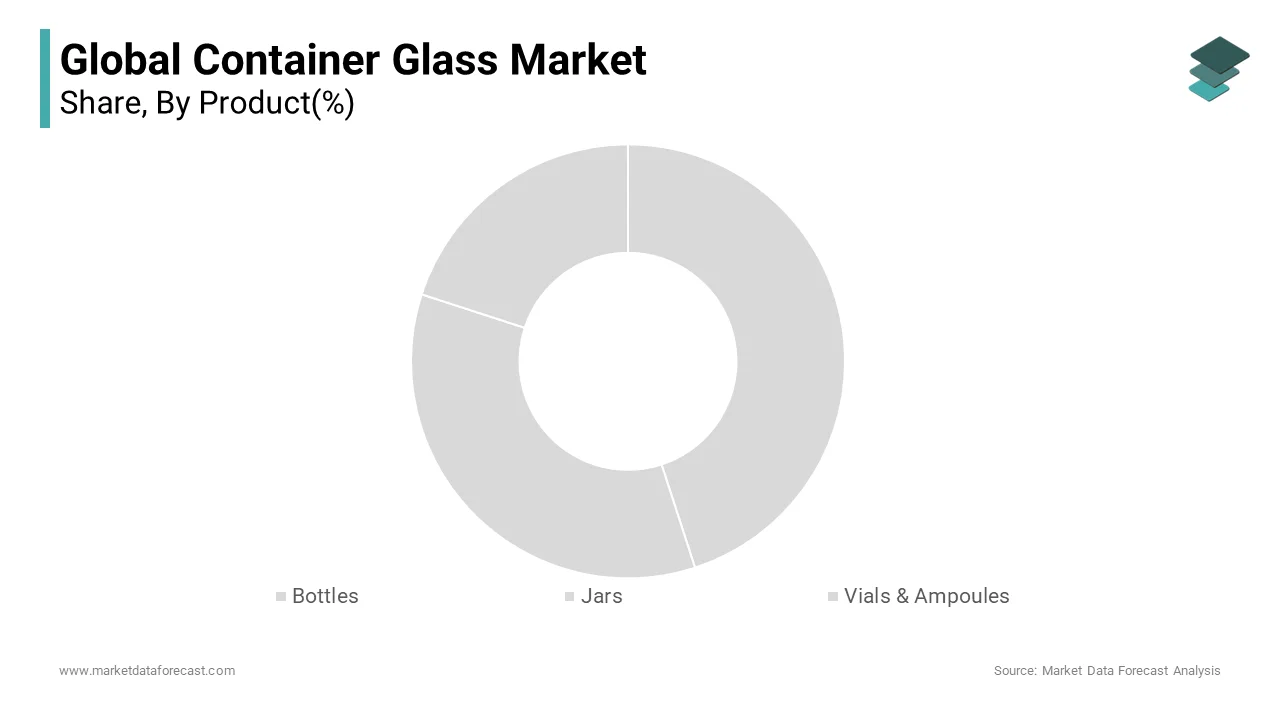
The vials and ampoules segment is likely to grow with an expected CAGR of 8.4% during the forecast period, with the rising demand in the global pharmaceutical industry, especially for injectable drugs, vaccines, and biologics. Type I borosilicate glass vials are essential for storing sensitive therapeutics due to their chemical inertness and thermal stability. According to the World Health Organization, over 4 billion vaccine doses were distributed worldwide in 2023, nearly all requiring glass vials or cartridges.
By End User Insights
The consumer applications segment accounted in holding 58.3% of the global container glass market share in 2025. This category includes food and beverage packaging such as wine, spirits, soft drinks, sauces, and gourmet products. In the U.S., Nielsen data shows that products in glass packaging command a 15–20% price premium over those in plastic, with consumer willingness to pay for perceived quality and sustainability. The rise of e-commerce and direct-to-consumer branding in craft beverages has further amplified demand for visually distinctive glass containers.
The pharmaceutical industry segment is likely to grow with an expected CAGR of 9.1% during the forecast period, with the increasing production of injectable medications, monoclonal antibodies, and mRNA-based vaccines, all of which require high-purity glass containers. Type I borosilicate glass vials and pre-filled syringes for maintaining drug stability and preventing contamination. According to the U.S. Food and Drug Administration, over 80% of injectable drugs in the U.S. market are packaged in glass, due to its impermeability and low extractables.
REGIONAL ANALYSIS
Europe Market Analysis
Europe container glass market was the largest contributor by occupying 37.3% of the share in 2025, with sustainable glass manufacturing driven by robust recycling infrastructure and stringent environmental regulations. Germany, France, and Italy are major production hubs, with Germany alone operating over 40 glass container manufacturing plants, according to the German Glass Packaging Association (IVRG). The European Union’s Circular Economy Action Plan mandates that all packaging be reusable or recyclable by 2030, accelerating investment in cullet-based production.
Asia Pacific Market Analysis
Asia Pacific container glass market held 21.2% of the share in 2025. China is the largest producer, manufacturing over 45 million metric tons of glass containers annually, as reported by the China Glass Association. The region’s growth is fueled by rising disposable incomes, urbanization, and a booming FMCG sector. Additionally, Japanese companies like Nippon Sheet Glass are investing in lightweighting technologies to reduce environmental impact.
North America Market Analysis
North America container glass market is expected to grow with prominent growth opportunities during the forecast period. The United States was the largest contributor to the container glass market. According to the U.S. Environmental Protection Agency, the glass container recycling rate reached 31% in 2023, with states like California and Oregon implementing extended producer responsibility (EPR) laws to improve recovery. Companies such as O-I Glass have introduced lightweight bottles and electric-melting furnaces to reduce emissions. The pharmaceutical sector also contributes significantly, with the FDA approving 55 novel drugs in 2023, many requiring glass vials.
Latin America Market Analysis
Latin America container glass market is likely to grow, with Brazil and Mexico as the primary contributors. The region’s market is expanding due to rising domestic consumption of alcoholic and non-alcoholic beverages. Brazil is the largest producer, with over 10 million metric tons of glass containers manufactured annually, as per the Brazilian Glass Container Industry Association (ABIVIDRO). In healthcare, Brazil’s pharmaceutical production grew by 7.3% in 2023, as per the Brazilian Health Regulatory Agency (ANVISA), which is increasing demand for vials and ampoules.
Middle East & Africa Market Analysis
The Middle East and Africa container glass market is expected to grow in the coming days. The UAE and Saudi Arabia are investing heavily in beverage and pharmaceutical infrastructure as part of economic diversification plans. Saudi Arabia’s Vision 2030 includes the development of a domestic pharmaceutical industry, with plans to localize 70% of drug production by 2030, as stated by the Saudi Food and Drug Authority. South Africa remains the regional manufacturing hub, producing over 1.2 million metric tons of glass containers annually, according to the Southern African Glass Association.
COMPETITIVE LANDSCAPE
The container glass market is marked by a competitive landscape where technological capability, sustainability credentials, and regional agility determine success. The shift toward ESG compliance is compelling companies to differentiate through carbon footprint reduction and circularity initiatives. In the Asia Pacific, the race is intensifying as global firms expand operations to serve rising domestic demand in the food, beverage, and pharmaceutical sectors.
KEY MARKET PLAYERS
A few of the market players in the global container glass market include
- Ardagh Group
- Gerresheimar AG
- Borosil
- Schott AG
- Stevanato Group
- Nippon Sheet Glass Co., Ltd. (NSG Group)
- Piramal Glass Private Limited
- Corning Incorporated
- Unitrade FZE
- Saverglass SAS
- O-I Glass, Inc.
- Vitro
- Frigoglass SAIC
- Amcor plc
- SGD SA
- Owens-Illinois
Top Players In the Market
- O-I Glass is a global leader in container glass manufacturing with a significant footprint across the Asia Pacific region. The company has strengthened its presence through localized production and innovation in lightweight, sustainable packaging. In 2023, O-I launched its LightLite technology in India, enabling a 30% reduction in bottle weight while maintaining durability, supporting brands in reducing carbon emissions and logistics costs. It operates multiple manufacturing facilities in China, India, and Southeast Asia, aligning with regional beverage and food producers.
- Ardagh Glass Packaging has intensified its focus on the Asia Pacific through strategic investments in design innovation and customer collaboration. The company supplies high-end glass containers to premium spirits, wine, and craft beverage brands across Japan, South Korea, and Australia. In 2023, Ardagh introduced a new line of ergonomically designed, ultra-clear glass bottles in Japan, developed in partnership with local sake producers to enhance shelf appeal and consumer experience. It also launched a digital design platform allowing clients to visualize and customize packaging in real time, improving time-to-market.
- Nippon Sheet Glass, through its container glass division, maintains a strong presence in Japan and is expanding across Asia with a focus on technological advancement and environmental performance. The company has pioneered energy-saving furnace technologies that reduce CO₂ emissions by up to 20% compared to conventional systems, as demonstrated in its Yokohama production facility in 2023. NSG supplies specialized glass containers for pharmaceutical and high-end food applications, leveraging its expertise in borosilicate and heat-resistant glass.
Top Strategies Used By Key Market Participants
Key players in the container glass market are prioritizing sustainability-driven innovation, regional manufacturing expansion, and strategic customer partnerships to strengthen their positions. Companies are investing in lightweighting technologies, increasing recycled content, and adopting hybrid or fully electric furnaces to reduce carbon emissions. Expansion in high-growth regions like the Asia Pacific is achieved through localized production and technical support centers. Collaborations with beverage and pharmaceutical brands enable co-development of branded, high-performance packaging. Digital tools for design simulation and supply chain transparency are being deployed to enhance client engagement.
MARKET SEGMENTATION
This research report on the global container glass market is segmented and sub-segmented into the following categories.
By Product
- Bottles
- Jars
- Vials & Ampoules
- Others
By End-user
- Food & Beverage Industry
- Pharmaceutical Industry
- Cosmetics & Personal Care Industry
- Chemical Industry
- Consumer Application
- Others
By Region
- North America
- Europe
- Asia-Pacific
- Latin America
- Middle East and Africa