- Product Description Description
- Table of Contents TOC
- List of Table & Figure LOT
- Get Free Sample PDF Sample PDF
Market Size, 2025
$407.8 MnMarket Estimate, 2026
$426.3 MnMarket Forecast, 2034
$607.1 MnCAGR, 2026–2034
4.52%Executive Summary: Global Cooking Wine Market
- Market Scope: Comprehensive global assessment of the cooking wine market analyzing product variants, B2B and B2C application channels, regional consumption frameworks, and evolving culinary trends.
- Market Valuation: Valued at USD 407.87 million (2025), estimated at USD 426.31 million (2026), and projected to reach USD 607.18 million by 2034, registering a steady CAGR of 4.52% (2026–2034).
- Primary Growth Drivers: Growing global population seeking new flavors, expanding foodservice and catering sectors, and the rising popularity of wine-based marinades and seasoning among modern chefs. Key operational factors include low-fat and low-sodium flavor enhancement, versatile culinary use in gourmet and street foods, and increased social media food awareness driving home-cooking experiments.
Key Market Segment Metrics (2026–2034)
| Category | Leading Segment (2025 Position) | Fastest-Growing Segment |
|---|---|---|
| By Product | Cooked White Wines (~36% share, favored for risottos, sauces, and acidity enhancement) | Dessert Variant (expanding at a steady CAGR with popular varieties like Madeira, Marsala, Jerez, and Porto) |
| By Application | B2B / Commercial (captured ~68.3% sales, heavily utilized in restaurants, haute cuisine, and food processing lines) | B2C / Retail (projected to grow at the fastest annual rate of 3.9% driven by millennials cooking exotic meals at home) |
| By Region | Europe (historically prominent and trend-setting region driven by long-standing culinary integration) | Asia Pacific (expected to register the fastest CAGR of 4.1% supported by traditional usage and modern cooking trends like makgeolli) |
Major Market Players & Market Structure
Market Structure: Highly dynamic early-stage global market featuring established culinary and food-ingredient companies competing on flavor profiles, shelf stability, retail distribution, and industrial food processing supply.
Key Companies: World Finer Foods, Mizkan America, Inc., RecipeTin Eats, Roland Foods, LLC, Kame, Goya Foods, Inc., Kedem Food Products, Kikkoman Sales USA, Inc., Ecovinal SL, Batory Foods, LinChen Inc., Gourmet Classic Ltd., AAK AB, and Marina Foods, Inc.
 Download Free Sample Report
Global Cooking Wine Market Size
The global cooking wine market size was valued at USD 407.87 million in 2025 and is expected to reach USD 607.18 billion by 2034 from USD 426.31 million in 2026. The market's promising CAGR for the predicted period is 4.52%.
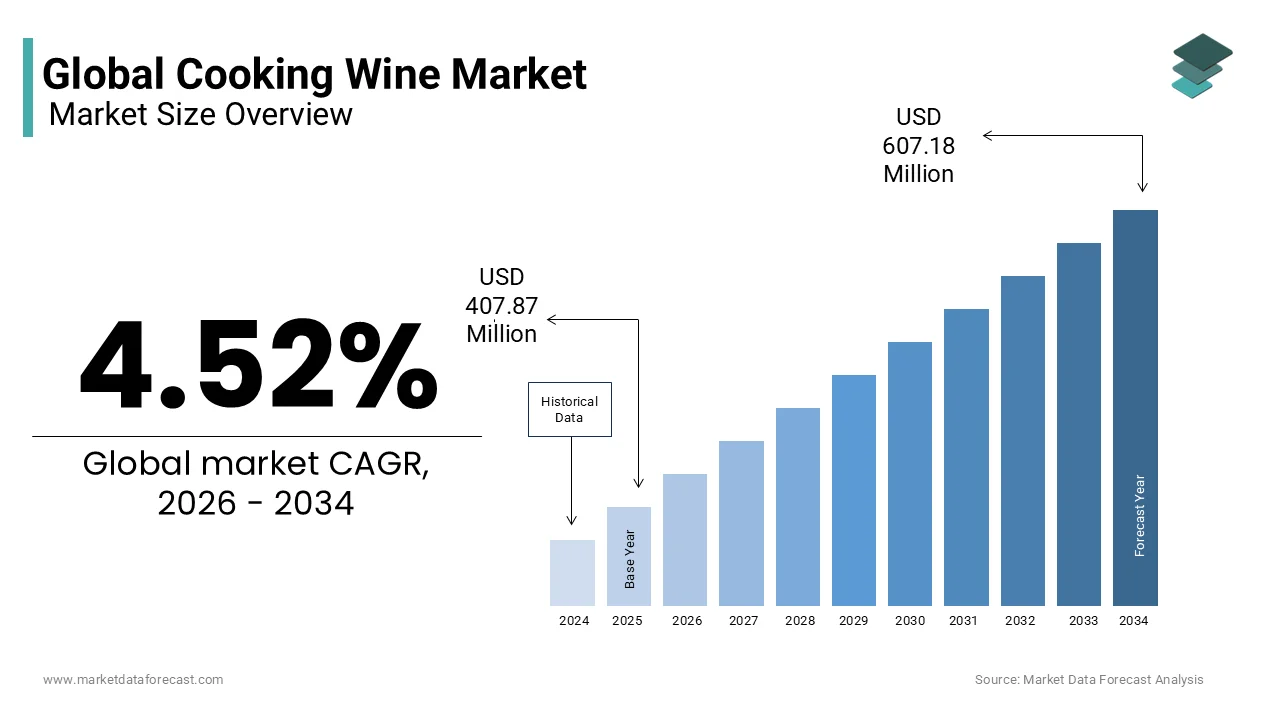
Cooking wine is culinary liquid derived from fermented grapes or other fruits that are specifically formulated with salt and preservatives to enhance flavor profiles in food preparation rather than for direct consumption. According to the Wine Institute, United States wine production reached 684 million gallons in 2023, which establishes a substantial raw material base for value-added culinary derivatives within North America. According to the European Commission, the EU exported 25.9 million hectoliters of wine products globally during the same period, which indicates extensive supply chain integration for specialized cooking variants across international borders. This sector distinguishes itself through regulatory classifications that exempt these products from beverage alcohol taxes due to their unpalatable saline content. Culinary professionals and home cooks utilize these ingredients to deglaze pans and create complex reductions where acidity balances rich fats.
MARKET DRIVERS
Elevated Domestic Culinary Ambitions Fueling Ingredient Sales
Consumer enthusiasm for restaurant-quality meals at home directly stimulates purchasing volume within the cooking wine market as amateur chefs seek authentic flavor foundations. According to the National Grocers Association, 78% of American consumers reported cooking more frequently at home in 2023 compared to pre-pandemic levels, which creates sustained demand for specialized pantry staples like sherry and mirin. According to the Specialty Food Association, sales of gourmet cooking ingredients grew by 9.4% year-over-year in 2023, reaching 194 billion dollars in total retail value across the United States. This behavioral shift transforms cooking wine from an occasional purchase into a routine grocery item as households replicate complex ethnic recipes requiring specific acidic components. Manufacturers respond by expanding shelf presence beyond traditional liquor aisles into mainstream condiment sections to capture this evolving demographic. The correlation between increased home meal preparation and specialty ingredient adoption demonstrates how lifestyle changes fundamentally reshape procurement patterns for denatured wine products intended for sauce reduction and marination techniques in residential kitchens nationwide.
Diverse Global Flavor Profiles Accelerating Product Adoption
Widespread acceptance of international gastronomy propels the cooking wine market forward as traditional dishes from Asia and Europe require specific fortified wines for authenticity. The National Restaurant Association identifies Korean and Peruvian cuisines among the top trending food categories for 2024, which necessitates increased usage of rice wines and pisco-based cooking agents in both foodservice and retail sectors. According to Datassential, menu mentions of sake-based preparations increased by 22% across United States restaurants between 2021 and 2023, reflecting growing chef reliance on these functional ingredients. This culinary diversification forces distributors to stock varied regional wine types beyond standard dry white or red cooking varieties to satisfy authentic recipe requirements. Consumers attempting to recreate global flavors at home drive parallel retail growth as they recognize that substitutions compromise dish integrity. Consequently, importers and domestic producers expand portfolios to include niche varietals, ensuring availability matches the accelerating consumer curiosity toward cross-cultural cooking traditions that depend heavily on specific fermented grape or grain derivatives for proper taste balance.
MARKET RESTRAINTS
Complex Alcohol Classification Hurdles Limiting Accessibility
Ambiguous legal definitions regarding alcohol content severely hamper the cooking wine market growth by creating inconsistent distribution channels and confusing consumer access points. The Alcohol and Tobacco Tax and Trade Bureau mandates that products containing less than 0.5% alcohol by volume may be sold as non-alcoholic foods, while those exceeding this threshold face strict beverage alcohol regulations regardless of salt content. According to the WineAmerica trade association, 32 individual states maintain separate licensing requirements for cooking wine sales, which fragments national distribution strategies and increases compliance costs for manufacturers. This regulatory patchwork prevents uniform placement in grocery stores, forcing some retailers to restrict sales to licensed liquor outlets despite the product being undrinkable. Such logistical barriers reduce impulse purchases and limit visibility among target demographics who expect to find culinary ingredients alongside vinegar or soy sauce. The resulting friction between intended use classification and actual legal treatment suppresses potential volume growth by making procurement unnecessarily complicated for everyday consumers seeking convenient flavor enhancement solutions for home meal preparation.
Clean Label Movement Undermining Traditional Formulations
Growing consumer preference for transparent ingredient lists negatively impacts the cooking wine market because traditional formulations contain high sodium levels and artificial preservatives that conflict with modern wellness standards. According to the International Food Information Council, 64% of consumers actively try to limit sodium intake when selecting packaged food products in 2023, which directly challenges conventional cooking wine compositions averaging 200 milligrams of sodium per serving. Furthermore, according to the Center for Science in the Public Interest, many commercial cooking wines list potassium sorbate and sulfites as primary additives, which deters health-focused shoppers seeking clean label alternatives. This skepticism drives demand toward premium low-sodium or organic options that currently represent a small fraction of available inventory. Manufacturers face reformulation pressures to maintain functionality while reducing salt content, yet preserving shelf stability remains technically difficult without synthetic preservatives. Until product innovation aligns with evolving nutritional expectations, significant portions of health-aware consumers will continue avoiding this category entirely in favor of fresh wine or alternative acidulants perceived as more natural.
MARKET OPPORTUNITIES
Wellness Aligned Product Innovation Unlocking New Segments
Reformulating traditional recipes to meet clean label expectations is a substantial opportunity for the cooking wine market to capture health-conscious demographics previously alienated by high sodium content. According to the Organic Trade Association, organic food sales in the United States surpassed 67 billion dollars in 2023, demonstrating robust consumer willingness to pay premiums for certified clean label pantry staples. According to the Hartman Group, 52% of shoppers now consider reduced sodium claims as a primary purchase driver for condiments and sauces, which directly applies to next-generation cooking wine development. Brands introducing organic grape bases with sea salt alternatives or herb-infused reductions can differentiate themselves on crowded shelves while commanding higher price points. This strategic pivot addresses the core objection regarding artificial additives and excessive saltiness that historically limited category expansion. By aligning product attributes with prevailing wellness trends, manufacturers can convert skeptical non-users into loyal customers who view cooking wine as compatible with their dietary values rather than contradictory to them, thereby expanding the total addressable audience significantly.
Commercial Kitchen Efficiency Demands Creating B2B Growth
Labor shortages and operational streamlining in professional kitchens generate significant opportunity for the cooking wine market through pre-reduced and seasoned wine concentrates that save preparation time. According to the National Restaurant Association, 71% of operators identify labor costs as their most pressing challenge in 2024, which incentivizes adoption of value-added ingredients that eliminate reduction steps during service. According to Technomic, usage of prepared sauce bases and marinades increased by 15% in full-service restaurants over the past two years as chefs prioritize consistency and speed without sacrificing flavor complexity. Cooking wine suppliers can capitalize on this trend by offering bulk formats of pre-balanced reductions tailored to specific cuisine types such as demi-glace or teriyaki bases. These products deliver predictable results while reducing back-of-house workload and waste associated with open bottle spoilage. Positioning cooking wine as an efficiency tool rather than merely a raw ingredient allows manufacturers to penetrate foodservice accounts seeking cost-effective solutions that maintain culinary quality standards amid persistent staffing constraints across the hospitality industry.
MARKET CHALLENGES
Agricultural Uncertainty Threatening Raw Material Consistency
Climate-induced fluctuations in grape harvests is a critical challenge to the cooking wine market by creating unpredictable input costs and quality variations for manufacturers dependent on consistent fruit supplies. According to the California Department of Food and Agriculture, the 2023 wine grape crush totaled 2.57 million tons, representing a 19% decline from the previous year due to extreme weather events affecting vineyard yields. According to the University of California Davis Agricultural Issues Center, climate change could reduce premium wine grape suitability in coastal regions by up to 50% by 2050, which threatens long-term supply stability for derivative products. Cooking wine producers often rely on surplus or lower-grade grapes that become scarce during poor harvest years when wineries compete intensely for available fruit to preserve their own production volumes. This scarcity drives up raw material prices and forces manufacturers to either absorb margin erosion or pass costs to price-sensitive consumers. Unlike beverage winemakers who can adjust blends annually, cooking wine requires standardized flavor profiles, making vintage variation particularly problematic for brand consistency and customer retention in both retail and foodservice channels.
Retailer Owned Alternatives Pressuring Premium Pricing Structures
Proliferation of store brand cooking wines creates intense pricing pressure that challenges established players in the cooking wine market to justify premium positioning through tangible differentiation. According to the Private Label Manufacturers Association, private label food and beverage sales grew by 8.2% in 2023, outpacing national brand growth as inflation drove consumers toward value alternatives. According to NielsenIQ data, private label share within the cooking ingredients category reached 24% in early 2024, indicating significant migration away from branded products for commoditized items like cooking sherry or marsala. Retailers leverage their distribution advantages to offer comparable products at 20 to 30% lower price points, which erodes margins for legacy brands unable to communicate superior quality or unique functional benefits. This dynamic forces manufacturers to invest heavily in marketing education or product innovation to defend shelf space against retailer-owned competitors who benefit from preferential placement and promotional support. Without clear value propositions beyond basic functionality, established brands risk becoming irrelevant as consumers increasingly perceive cooking wine as an interchangeable commodity rather than a differentiated specialty ingredient worthy of premium expenditure.
REPORT COVERAGE
| REPORT METRIC | DETAILS |
| Market Size Available | 2025 to 2034 |
| Base Year | 2025 |
| Forecast Period | 2026 to 2034 |
| CAGR | 4.52% |
| Segments Covered | By Product, Application, and Region |
| Various Analyses Covered | Global, Regional and Country Level Analysis; Segment-Level Analysis; DROC; PESTLE Analysis; Porter’s Five Forces Analysis; Competitive Landscape; Analyst Overview of Investment Opportunities |
| Regions Covered | North America, Europe, APAC, Latin America, Middle East & Africa |
| Market Leaders Profiled | World Finer Foods, Mizkan America, Inc, RecipeTin Eats, Roland Foods, LLC, Kame, Goya Foods, Inc, Kedem Food Products, Kikkoman Sales USA, Inc, Ecovinal SL, Batory Foods, LinChen Inc, Gourmet Classic Ltd, AAK AB and Marina Foods, Inc |
SEGMENTAL ANALYSIS
By Product Insights
The white cooking wine segment occupied the major share of the global market in 2025 and is estimated to maintain its position as the leading segment due to its universal applicability across diverse culinary traditions and protein types. According to the United States Department of Agriculture, white wine consumption accounts for 55% of total wine volume in American households, which directly correlates with higher availability of surplus inventory for denatured culinary production. According to the National Restaurant Association, 68% of full-service restaurant menus feature white wine-based sauces such as beurre blanc or piccata preparations, necessitating consistent bulk procurement by commercial kitchens. This widespread adoption stems from the neutral acidity profile of white varieties, which complements poultry, seafood, and vegetable dishes without overpowering delicate flavors. Manufacturers prioritize white grape varietals like Chardonnay and Sauvignon Blanc for cooking formulations because their lower tannin content prevents bitterness during reduction processes. The segment benefits from established consumer familiarity, as home cooks perceive white cooking wine as a safer introductory product compared to robust red alternatives. Retailers allocate prime shelf space to white variants, reflecting their higher turnover rates and broader demographic appeal among novice and experienced cooks alike who require a reliable all-purpose deglazing agent for everyday meal preparation routines.
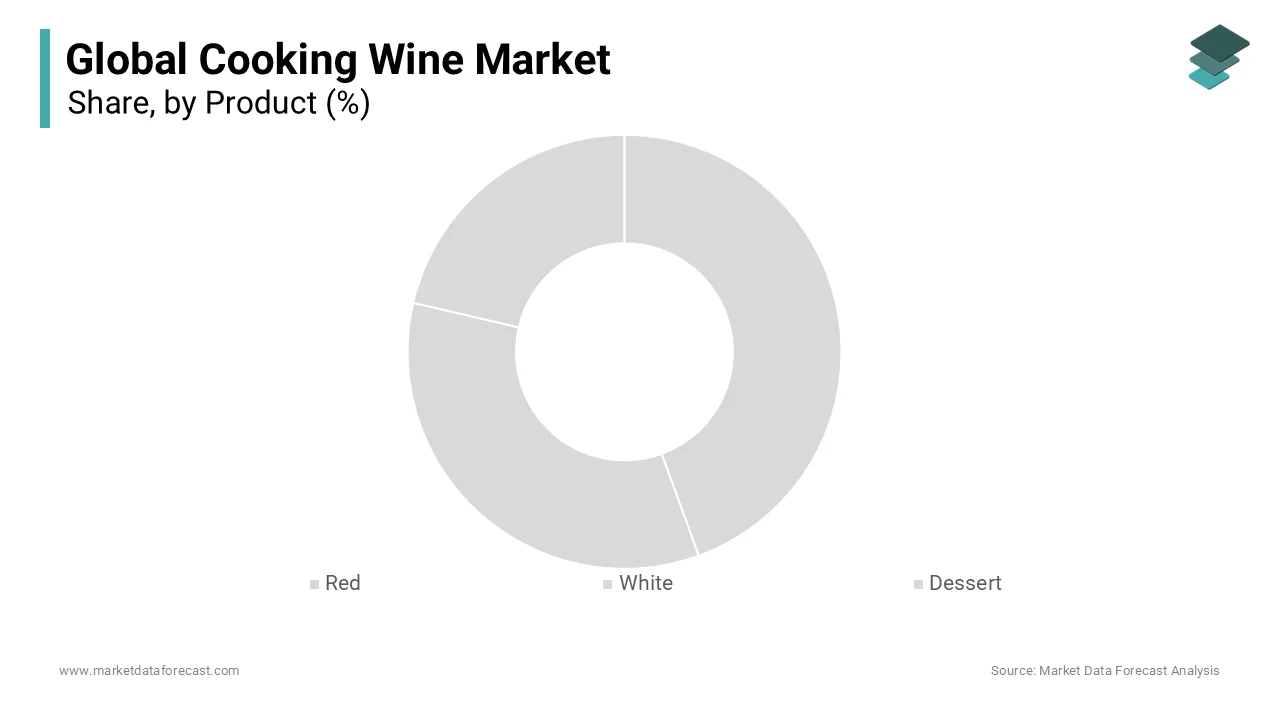
On the other hand, the dessert cooking wine segment exhibits the fastest growth and is expected to showcase a CAGR of 7.5% over the forecast period owing to the increasing consumer interest in sophisticated home baking and gourmet confectionery. According to the American Bakers Association, sales of premium baking ingredients, including fortified wines for cakes and tortes, increased by 12% in 2023 as consumers sought to replicate high-end patisserie experiences at home. According to the Specialty Food Association, artisanal dessert products featuring sherry, marsala, and port reductions grew in retail presence by 15% year-over-year, indicating strong demand for specialized sweet cooking wines. This expansion occurs because traditional recipes for tiramisu, zabaione, and fruit compotes require specific fortified wine profiles that standard table wines cannot provide. Home bakers increasingly view these ingredients as essential for achieving authentic texture and depth in holiday desserts and special occasion treats. Manufacturers respond by introducing smaller format bottles with pour spouts designed specifically for precise measurement in baking applications. The segment thrives on seasonal spikes during winter holidays when dessert preparation peaks, creating recurring revenue opportunities for brands that successfully market their products as indispensable tools for festive culinary creativity and elevated home entertaining standards.
By Application Insights
The Business to Business segment dominated the market by holding the major share of the global market in 2025 due to massive volume consumption by restaurants, hotels, and institutional foodservice providers. According to the National Restaurant Association, the United States foodservice industry generated 947 billion dollars in sales in 2023, with substantial portions allocated to ingredient procurement, including specialized cooking liquids for sauce bases and marinades. According to the Bureau of Labor Statistics, there are over 1 million eating and drinking places in the United States, each requiring consistent supplies of denatured wine for daily menu execution. This scale creates steady demand that dwarfs individual household purchases as commercial kitchens utilize cooking wine for batch preparation of stocks, reductions, and braising liquids. Chefs prefer standardized cooking wine products because they offer predictable salt levels and acidity that ensure consistency across multiple service periods. Distributors benefit from bulk ordering patterns that reduce logistical complexity and enhance supply chain efficiency. The segment remains resilient against economic fluctuations because foodservice operators prioritize core flavor ingredients that define their signature dishes, making cooking wine a non-negotiable staple in professional culinary operations regardless of broader consumer spending trends.
However, the Business to Consumer segment is estimated to register a CAGR of 6.3% over the forecast period as more individuals engage in frequent home meal preparation using restaurant-quality techniques. According to the Food Marketing Institute, 82% of grocery shoppers now plan meals around specific recipes that often call for specialized ingredients like cooking wine to achieve desired flavor profiles. According to the Hartman Group, 58% of millennials actively seek out global cuisine ingredients for home cooking, which drives demand for accessible retail formats of sherry, mirin, and marsala. This growth accelerates because modern consumers view cooking as a creative hobby rather than a chore, leading them to invest in proper tools and ingredients that elevate dish quality. Retailers respond by placing cooking wines in prominent condiment aisles rather than restricting them to liquor sections, thereby reducing purchase friction. Social media platforms amplify this trend by showcasing easy recipes that feature cooking wine as a key component, encouraging trial among novice cooks. The segment benefits from innovative packaging solutions such as squeeze bottles and single-serve pods that cater to occasional users who wish to avoid waste associated with large-format containers typically designed for commercial use.
REGIONAL ANALYSIS
North America Cooking Wine Market Analysis
North America accounted for the highest share of the global market in 2025 and is likely to experience steady market expansion over the next few years, supported by strong retail infrastructure and high per capita consumption of processed culinary ingredients and mature retail infrastructure and high per capita consumption of processed culinary ingredients. According to the Wine Institute, the United States produced 684 million gallons of wine in 2023, providing an abundant raw material base for domestic cooking wine manufacturers to source surplus grapes cost-effectively. According to the National Grocers Association, specialty food sales reached 194 billion dollars in 2023, reflecting strong consumer willingness to purchase premium pantry staples, including denatured wine products. This market maturity allows for extensive product differentiation, with brands offering organic, low-sodium, and heritage varietal options that command higher price points. Regulatory frameworks in Canada and the United States clearly define cooking wine as a food product rather than a beverage, enabling widespread distribution in mainstream grocery channels. The region benefits from high penetration of ethnic cuisines, particularly Italian, French, and Asian styles that traditionally rely on wine-based sauces. Consumers here exhibit brand loyalty toward established names while remaining open to innovation in packaging and formulation. The robust e-commerce ecosystem further supports growth by allowing niche producers to reach dispersed demographics seeking specific regional cooking wine types not available in local physical stores.
Europe Cooking Wine Market Analysis
Europe is anticipated to maintain stable growth over the next few years, propelled by deep-rooted culinary traditions and strict clean-label manufacturing standards and deep-rooted culinary traditions that integrate wine into daily cooking practices across multiple countries. According to the European Commission, the EU exported 25.9 million hectoliters of wine products in 2023, demonstrating the region's massive production capacity that supports both beverage and culinary derivative markets. According to the International Organisation of Vine and Wine, France and Italy together account for nearly 50% of global wine production, ensuring ample supply of lower-grade grapes suitable for cooking wine formulation. Unlike other regions, European consumers often prefer using actual table wine for cooking, which limits the addressable market for heavily salted denatured products. However, demand persists for convenience-oriented cooking wines among younger demographics and urban populations who lack time for traditional preparation methods. The market faces strict labeling regulations under EU food safety standards, which require transparent disclosure of additives and preservatives. This regulatory environment pushes manufacturers toward cleaner formulations using natural preservatives. Southern European countries show higher usage rates due to Mediterranean dietary patterns, while Northern Europe demonstrates growing interest through adoption of international recipes. The region values authenticity, leading to a preference for protected designation of origin wines adapted for culinary use.
Asia Pacific Cooking Wine Market Analysis
Asia Pacific is expected to remain the fastest-growing and largest regional market over the next few years, driven by rising disposable incomes and the expansion of rice-based culinary traditions and rising disposable incomes and increasing westernization of dietary habits in emerging economies. According to the Food and Agriculture Organization of the United Nations, Asia accounted for 60% of global rice production in 2023, which supports the parallel growth of rice-based cooking wines like mirin and sake widely used in East Asian cuisine. According to the China Alcoholic Drinks Association, domestic wine consumption increased by 8% annually over the past five years as middle-class consumers adopt global cooking techniques requiring wine-based ingredients. Japan and South Korea lead regional adoption due to established culinary traditions that incorporate fermented grain and grape wines into daily meal preparation. Southeast Asian markets show accelerating demand as urban consumers experiment with European and American recipes through digital cooking platforms. Local manufacturers are expanding production capabilities to meet rising domestic demand while importers introduce premium Western cooking wine brands. The region benefits from a young demographic profile that is more open to trying new flavors and convenience foods. Government initiatives promoting food processing industries further support market development by improving supply chain infrastructure and cold storage facilities necessary for preserving product quality in tropical climates.
Latin America Cooking Wine Market Analysis
Latin America presents an emerging opportunity within the cooking wine market as culinary tourism and export-oriented food industries drive demand for standardized cooking ingredients. According to the Inter-American Institute for Cooperation on Agriculture, the region produced 2.6 billion liters of wine in 2023, with Argentina and Chile leading production volumes that create surplus inventory for culinary derivative processing. According to the Economic Commission for Latin America and the Caribbean, food processing exports grew by 7% in 2023, indicating stronger integration into global supply chains that require consistent ingredient specifications, including cooking wines. Brazil and Mexico show increasing domestic consumption as middle-class households adopt international cooking styles influenced by media and travel. Traditional cuisines in the region already utilize wine in certain dishes, but formalized cooking wine products remain underpenetrated compared to North America. Local producers are beginning to formulate products specifically for regional taste preferences, incorporating local grape varietals. The market faces challenges related to distribution infrastructure in rural areas, but urban centers demonstrate strong uptake. Economic volatility affects purchasing power, yet cooking wine remains an affordable luxury that enhances meal quality without significant cost burden. Regional trade agreements facilitate cross-border movement of products, allowing brands to scale across neighboring countries efficiently.
Middle East and Africa Cooking Wine Market Analysis
The Middle East and Africa region displays nascent development in the cooking wine market, constrained by cultural and religious factors but supported by growing expatriate populations and hospitality sectors. According to the Food and Agriculture Organization of the United Nations, South Africa produced 940 million liters of wine in 2023, establishing itself as a major production hub that supplies both domestic and export markets for culinary wine products. According to the Gulf Cooperation Council, the hospitality sector in Dubai and Abu Dhabi grew by 12% in 2023, driving demand for international standard ingredients, including cooking wines in high-end hotels and restaurants catering to global tourists. Non-alcoholic cooking wine alternatives gain traction in conservative markets where alcohol restrictions limit traditional product sales. These halal-certified versions use grape juice concentrates with acidulants to mimic flavor profiles without fermentation. Expatriate communities in major cities create niche demand for imported cooking wines available through specialized retail outlets. The African continent shows limited penetration outside of South Africa and Morocco, where wine culture has historical roots. Infrastructure challenges affect distribution reliability, but urbanization trends suggest future growth potential as international culinary influences spread through digital media and increased travel exposure among younger demographics in the region.
COMPETITIVE LANDSCAPE
The competitive landscape of the cooking wine market et features a mix of established legacy brands and emerging artisanal producers vying for consumer attention through quality and innovation. Large multinational corporations leverage extensive distribution networks and brand recognition to dominate mainstream retail channels while smaller niche players focus on premium segments with authentic imported varieties. Competition intensifies as private label offerings from major grocery chains gain traction due to lower price points and improved quality standards. Companies differentiate themselves through product formulation advancements such as organic certifications and low sodium options that address health concerns. Marketing efforts emphasize culinary education and recipe integration to build brand loyalty among home cooks. Strategic alliances with foodservice providers ensure steady bulk demand from commercial kitchens seeking consistency and efficiency. Innovation in packaging formats like squeeze bottles and portable sachets appeals to convenience oriented consumers. The market remains fragmented with no single entity holding overwhelming dominance allowing room for specialized players to thrive by targeting specific culinary traditions or dietary preferences. Continuous adaptation to regulatory changes and consumer trends defines successful competitive positioning in this evolving sector.
KEY MARKET PLAYERS
Some of the key players in the global cooking wine market are
- World Finer Foods
- Mizkan America, Inc
- RecipeTin Eats
- Roland Foods, LLC
- Kame
- Goya Foods, Inc
- Kedem Food Products
- Kikkoman Sales USA, Inc
- Ecovinal SL
- Batory Foods
- LinChen Inc
- Gourmet Classic Ltd
- AAK AB
- Marina Foods, Inc
Top Players in the Market
- Holland House Brands maintains a dominant presence through its extensive portfolio of specialized culinary wines including sherry marsala and port variants. The company focuses on delivering consistent quality for both home cooks and professional chefs by leveraging decades of expertise in wine fortification and seasoning. Recent initiatives involve expanding distribution channels into mainstream grocery outlets to enhance accessibility for everyday consumers. Holland House invests heavily in educational marketing campaigns that demonstrate proper usage techniques in various international recipes. This approach strengthens brand loyalty among novice cooks who seek reliable guidance for flavor enhancement. The company also prioritizes sustainable sourcing practices to ensure long term supply chain stability. By maintaining strict quality control standards Holland House reinforces its reputation as a trusted provider of essential kitchen staples. Their commitment to product innovation includes introducing low sodium options that align with modern health consciousness trends while preserving authentic taste profiles required for traditional dishes.
- Reese Specialty Foods contributes significantly to the market by offering premium imported cooking wines that cater to discerning culinary professionals and gourmet enthusiasts. The company distinguishes itself through partnerships with European vineyards that provide authentic varietals specifically selected for culinary applications. Reese focuses on high end retail segments where consumers prioritize origin and production methods over price sensitivity. Recent actions include launching artisanal small batch collections that highlight unique regional characteristics of Spanish and Italian cooking wines. These products appeal to chefs seeking distinctive flavor notes for signature restaurant menus. The company also enhances its digital presence by providing detailed pairing guides and recipe inspiration through online platforms. Reese Specialty Foods emphasizes transparency in labeling to meet growing consumer demand for clean label ingredients. Their strategic focus on quality over volume allows them to command premium pricing while building a loyal customer base that values authenticity and superior taste performance in complex sauce preparations.
- Mitsukan International Corporation plays a pivotal role in the Asian segment of the market by supplying high quality mirin sake and rice based cooking wines. The company leverages its deep roots in Japanese fermentation technology to produce products that deliver authentic umami flavors essential for East Asian cuisine. Mitsukan expands its global footprint by establishing distribution networks in North America and Europe where interest in Japanese cooking continues to rise. Recent efforts involve introducing organic certified lines that address health conscious consumer preferences without compromising traditional taste profiles. The company collaborates with celebrity chefs to promote the versatility of rice wines in fusion cuisine applications. Mitsukan also invests in advanced packaging technologies that preserve freshness and extend shelf life for export markets. Their commitment to cultural authenticity ensures that products meet the exacting standards of traditional Japanese cooking while adapting to international regulatory requirements. This dual focus on heritage and innovation solidifies their position as a leading provider of specialized Asian culinary ingredients.
Top Strategies Used by Key Market Participants
Key players in the Cooking Wine Market et primarily employ product differentiation strategies to distinguish their offerings from generic private label alternatives. Companies focus on developing clean label formulations with reduced sodium content and natural preservatives to align with evolving consumer health preferences. Strategic partnerships with renowned chefs and culinary institutions help brands build credibility and educate consumers on proper usage techniques. Expansion into e commerce platforms enables direct engagement with niche demographics seeking specialized regional varieties such as sherry or mirin. Manufacturers also invest in sustainable sourcing initiatives to secure long term supply chain stability and appeal to environmentally conscious shoppers. Packaging innovation remains a critical strategy with brands introducing resealable bottles and single serve pods to reduce waste and enhance convenience for occasional users. Geographic expansion into emerging markets allows companies to tap into growing middle class populations adopting international cooking styles. Collaborative marketing campaigns with food retailers increase shelf visibility and drive impulse purchases through targeted promotional activities. These combined approaches enable established players to maintain competitive advantages while adapting to dynamic market conditions and changing consumer behaviors.
MARKET SEGMENTATION
This research report on the global cooking wine market has been segmented and sub-segmented based on application, product & region.
By Product
- Red
- White
- Dessert
By Application
- B2B
- B2C
By Region
- North America
- Europe
- The Asia Pacific
- Latin America
- The Middle East and Africa