- Product Description Description
- Table of Contents TOC
- List of Table & Figure LOT
- Get Free Sample PDF Sample PDF
Market Size, 2025
$8.72 BnMarket Estimate, 2026
$10.97 BnMarket Forecast, 2034
$68.85 BnCAGR, 2026–2034
25.81%Global Crop Farming Market Report Summary
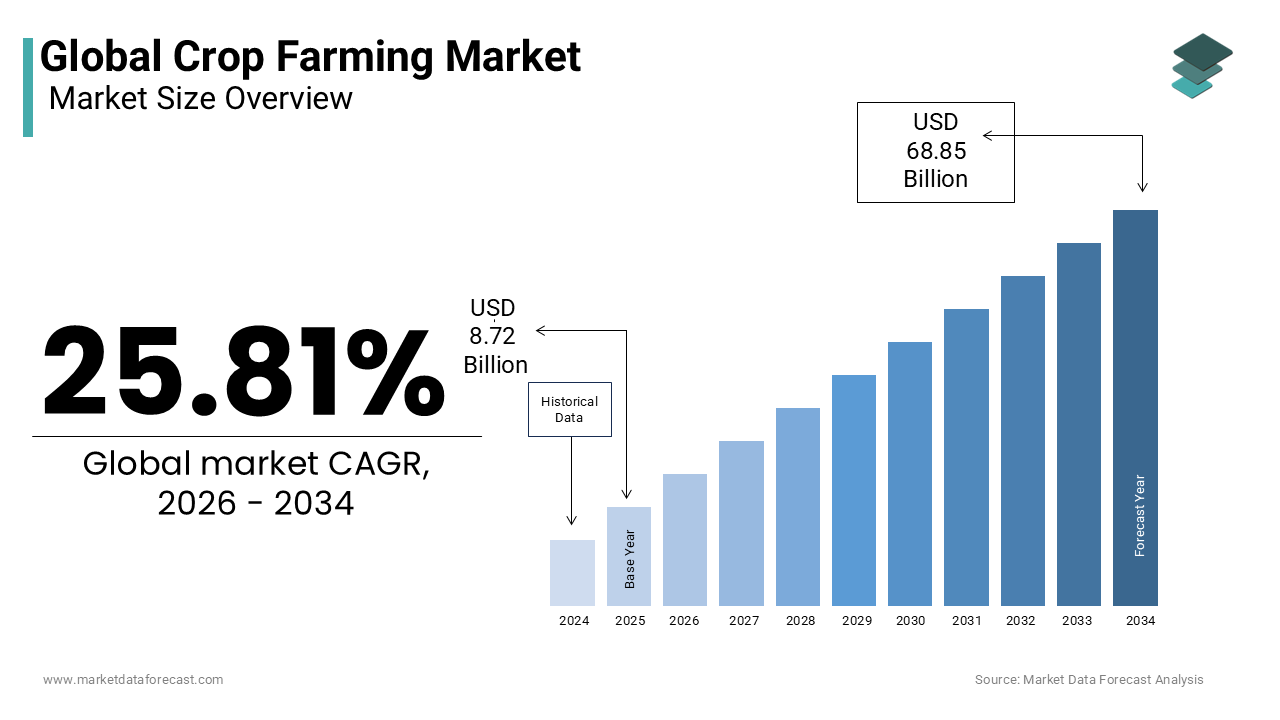
The global crop farming market was valued at USD 8.72 billion in 2025 and is anticipated to reach USD 10.97 billion in 2026 from USD 68.85 billion by 2034, growing at a CAGR of 25.81% during the forecast period from 2026 to 2034. The growth of the global crop farming market is driven by the rising global population, increasing demand for food security, and growing adoption of sustainable agricultural practices. Expanding investments in precision agriculture technologies, increasing government support through agricultural subsidies, and rising demand for high-yield crop production are further accelerating market growth. Moreover, the integration of artificial intelligence, drone monitoring, IoT-enabled farming solutions, and the rapid expansion of organic farming practices are supporting the expansion of the global crop farming market.
Key Market Trends
-
Rising adoption of precision agriculture technologies to optimize crop productivity and resource utilization.
-
Increasing expansion of organic farming driven by growing consumer demand for chemical-free agricultural products.
-
Growing deployment of smart farming technologies including drones, sensors, and AI-powered analytics.
-
Rising investments in vertical farming and controlled environment agriculture.
-
Increasing government support for sustainable farming practices and climate-resilient agriculture.
Segmental Insights
- Based on type, the hydroponics segment dominated the global crop farming market and accounted for 44.3% of the market share in 2025. The dominance of the segment is attributed to its superior water-use efficiency, higher crop productivity, faster growth cycles, and increasing adoption across commercial indoor farming facilities. Continuous technological advancements in nutrient delivery systems and controlled-environment agriculture further strengthen segment growth.
- The aquaponics segment is projected to witness the fastest CAGR of 12.5% during the forecast period owing to increasing demand for sustainable food production, growing adoption of circular economy farming systems, expanding urban agriculture initiatives, and rising consumer preference for environmentally friendly farming methods that integrate fish and crop production.
- Based on structure, the building-based vertical farms segment dominated the global crop farming market and accounted for 55.6% of the market share in 2025. The growth of the segment is driven by increasing urbanization, year-round crop production capability, efficient land utilization, expanding investments in indoor farming infrastructure, and growing demand for locally produced fresh vegetables in metropolitan areas.
- The shipping-container vertical farms segment is anticipated to register the fastest CAGR of 14.5% during the forecast period due to its modular design, rapid deployment capabilities, scalability, increasing adoption in urban and remote locations, and growing investments in decentralized food production systems.
- Based on component, the lighting systems segment dominated the global crop farming market in 2025. The dominance of the segment is attributed to the increasing adoption of energy-efficient LED lighting technologies, rising implementation of smart lighting systems, expanding indoor farming operations, and continuous advancements in crop-specific lighting solutions that maximize productivity and crop quality.
- The sensors segment is expected to witness the fastest CAGR of 16.2% during the forecast period owing to increasing adoption of IoT-enabled farming, growing demand for real-time environmental monitoring, expanding use of artificial intelligence in crop management, and rising implementation of automated climate control systems across controlled-environment agriculture facilities.
Regional Insights
- North America dominated the global crop farming market and accounted for 34.2% of the global market share in 2025. The region's leadership is driven by rapid adoption of precision agriculture technologies, strong investments in vertical farming, advanced agricultural infrastructure, increasing consumer demand for locally grown produce, and the presence of leading agri-tech companies. Continuous innovation in automation and controlled-environment farming further strengthens regional market growth.
- Europe held 18.2% of the global crop farming market share in 2025 owing to strong government support through the Common Agricultural Policy, increasing emphasis on sustainable agriculture, expanding organic farming practices, and widespread adoption of greenhouse and vertical farming technologies. Strict environmental regulations and growing consumer awareness continue to support market expansion.
- Asia Pacific is projected to witness the fastest growth during the forecast period due to rapid urbanization, increasing food security concerns, expanding investments in smart agriculture, growing government support for controlled-environment farming, and rising adoption of vertical farming technologies across China, Japan, Singapore, and South Korea.
- Latin America continues to maintain a significant position in the global market owing to abundant agricultural resources, expanding greenhouse farming, increasing export-oriented crop production, rising adoption of precision irrigation technologies, and growing government initiatives supporting agricultural modernization.
- The Middle East & Africa is expected to experience notable growth during the forecast period due to increasing investments in hydroponics and vertical farming, rising demand for water-efficient agriculture, expanding adoption of controlled-environment farming technologies, and growing government initiatives aimed at strengthening regional food security.
Competitive Landscape
The global crop farming market is highly competitive and characterized by the presence of multinational agribusiness companies, agricultural technology providers, and controlled-environment farming companies competing through technological innovation, automation, sustainability initiatives, and strategic partnerships. Leading companies are focusing on developing advanced precision agriculture technologies, expanding vertical farming operations, integrating artificial intelligence and IoT-based crop monitoring systems, and improving resource efficiency through smart farming solutions. Strategic collaborations with retailers, investments in research and development, and expansion into emerging agricultural markets continue to strengthen competitive positioning across the global crop farming market. The prominent players operating in the global crop farming market include Archer Daniels Midland Company (ADM), Cargill, Incorporated, Bunge Global SA, Louis Dreyfus Company, Bayer AG, Corteva Agriscience, Syngenta Group, BASF SE, Nutrien Ltd., Yara International ASA, CF Industries Holdings, Inc., The Mosaic Company, Deere & Company, CNH Industrial N.V., and AGCO Corporation.
 Download Free Sample Report
Global Crop Farming Market Size
The global crop farming market size was valued at USD 8.72 billion in 2025 and is anticipated to reach USD 10.97 billion in 2026 from USD 68.85 billion by 2034, growing at a CAGR of 25.81% during the forecast period from 2026 to 2034.
The crop farming is the cultivation of plants for food, fiber, fuel, and other agricultural products, forming the backbone of global food security and economic stability. In Europe, crop farming is characterized by high productivity standards, stringent regulatory frameworks, and a strong emphasis on sustainability. The European Union supports this sector through the Common Agricultural Policy, which aims to ensure fair incomes for farmers and promote environmentally friendly practices. France, Spain, and Germany remain the largest contributors to crop production within the region. The integration of digital tools, such as precision agriculture and drone monitoring is transforming traditional methods by enhancing efficiency and reducing resource waste. Consumer demand for organic and locally sourced produce continues to rise by influencing planting decisions and supply chain dynamics across the continent.
MARKET DRIVERS
Rising Global Population Drives Sustained Demand for Staple Crops
The rising population is creating an unyielding demand for staple crops, such as wheat, rice, and maize is a major factor propelling the growth of the crop farming market. As per the United Nations Department of Economic and Social Affairs, the world population is projected to reach 9.7 billion by 2050, necessitating a significant increase in food production to prevent widespread shortages. This demographic surge places immense pressure on agricultural systems to enhance yield per hectare without expanding arable land excessively. In Europe, where land availability is limited, farmers are compelled to adopt intensive farming practices and high yield varieties to meet both domestic consumption and export obligations. Furthermore, changing dietary patterns in emerging economies are increasing the consumption of grain fed livestock products, indirectly boosting demand for feed crops. Governments across the globe are investing heavily in agricultural research to develop drought resistant and high yield crop varieties.
Government Subsidies and Policy Support Enhance Farmer Viability
The government subsidies and comprehensive policy frameworks a pivotal role by mitigating financial risks and encouraging modernization is also promoting the growth of the crop farming market. In Europe, the Common Agricultural Policy represents one of the most significant financial instruments, allocating approximately 387 billion euros for the 2021 to 2027 period to support farmers and rural development. These financial incentives enable farmers to invest in advanced machinery, sustainable irrigation systems, and precision agriculture technologies that enhance productivity and environmental compliance. Additionally, national governments within the EU offer supplementary grants for adopting organic farming practices and reducing chemical inputs, aligning agricultural output with broader environmental goals. Such policies not only secure farmer livelihoods but also stimulate innovation in eco-friendly farming techniques. This robust support system ensures that crop farming remains economically viable even during periods of low commodity prices or adverse climatic events, thereby stabilizing supply chains and fostering long term sector growth.
MARKET RESTRAINTS
Climate Change Induces Unpredictable Weather Patterns and Yield Volatility
The climate change poses a severe restraint to the crop farming market by introducing unprecedented variability in weather patterns, which directly impacts crop yields and farming predictability. The unpredictable weather changes and yield volatility is additionally declining the growth of the crop farming market. Rising global temperatures, altered precipitation regimes, and increased frequency of extreme weather events such as droughts, floods, and heatwaves disrupt traditional growing seasons and damage harvests. According to the Intergovernmental Panel on Climate Change, global mean surface temperature has risen by approximately 1.1 degrees Celsius since pre industrial times by leading to more frequent and intense agricultural disruptions. Such climatic anomalies force farmers to contend with uncertain planting windows and heightened pest pressures, increasing production costs and reducing profitability. Water scarcity exacerbates these challenges, particularly in southern European regions where irrigation demands are rising while water resources dwindle. The European Environment Agency states that nearly 30% of the EU territory faces high water stress during summer months, limiting the viability of water intensive crops. Farmers must invest in expensive adaptation measures such as drought resistant seeds and efficient irrigation infrastructure, which many smallholders cannot afford. This volatility discourages long term investment in crop expansion and creates supply chain instability.
Stringent Environmental Regulations Increase Operational Costs
The stringent environmental regulations aimed at reducing agricultural pollution and promoting sustainability impose significant operational costs is additionally hindering the growth of the crop farming market. The European Green Deal and its associated Farm to Fork Strategy mandate substantial reductions in chemical pesticide use by 50% and mineral fertiliser use by 20% by 2030, as stated by the European Commission. Compliance with these targets requires farmers to adopt alternative pest management techniques and organic fertilisers, which are often more expensive and less immediately effective than conventional inputs. Transitioning to these sustainable practices involves considerable upfront investment in new equipment, training, and certification processes. Small and medium sized farms face disproportionate challenges due to limited financial reserves and technical expertise, potentially leading to market consolidation and reduced diversity in the farming sector. Furthermore, penalties for non-compliance can be severe, adding financial risk to already margin thin operations. While these regulations aim to protect ecosystems and public health, their immediate economic impact strains farmer profitability. The cost of sustainable inputs such as biopesticides and organic compost can be two to three times higher than synthetic alternatives, squeezing margins.
MARKET OPPORTUNITIES
Precision Agriculture Technologies Offer Efficiency Gains and Resource Optimization
The adoption of precision agriculture technologies presents a significant opportunity for the crop farming market by enabling precise resource application by enhancing yields, and minimizing environmental impact. These technologies include GPS guided machinery, drone based monitoring, soil sensors, and data analytics platforms that provide real time insights into field conditions. Farmers using variable rate technology can apply inputs such as seeds, water, and chemicals only where needed, optimizing efficiency and reducing waste. Additionally, data driven decision making allows for better prediction of pest outbreaks and disease risks, enabling proactive management rather than reactive treatments. This shift towards smart farming aligns with consumer demand for sustainably produced food and helps farmers meet regulatory requirements more easily. By leveraging these innovations, farmers can enhance competitiveness, improve profit margins, and contribute to long term sustainability goals by making precision agriculture a transformative opportunity for the sector.
Expansion of Organic Farming Meets Growing Consumer Demand
The expansion of organic farming, as consumer preference for chemical free and environmentally friendly produce continues to rise sharply is ascribed to bolster the growth of the crop farming market. Organic agriculture prohibits the use of synthetic pesticides, genetically modified organisms, and artificial fertilisers, appealing to health-conscious consumers and those concerned about environmental sustainability. Consumers are willing to pay premium prices for organic crops, providing farmers with higher profit margins compared to conventional produce. The European Commission aims to have 25% of the EU's agricultural land under organic management by 2030, creating a favorable policy environment for expansion. Countries, such as Austria and Sweden already exceed this target, demonstrating the feasibility and profitability of organic systems. Retailers are increasingly dedicating shelf space to organic products, and online platforms facilitate direct sales from farmers to consumers, bypassing traditional intermediaries.
MARKET CHALLENGES
Labor Shortages Impede Operational Efficiency and Harvest Timeliness
The labor shortages during important planting and harvesting periods by leading to reduced operational efficiency and potential crop lossesis, which is a huge challenge for the growth of the crop farming market. The agricultural sector relies heavily on seasonal workers, many of whom are migrants, but restrictive immigration policies and changing demographic trends are shrinking the available workforce. This shortage forces farmers to leave crops unharvested or incur higher costs to secure limited labor, eroding profit margins. Mechanization offers a partial solution, but many high value crops, such as berries and delicate vegetables require manual handling, limiting the scope for automation. The aging farmer population exacerbates the issue, with fewer young people entering the profession due to perceived low wages and harsh working conditions. Training and retaining skilled workers becomes increasingly difficult, impacting the adoption of new technologies that require technical proficiency. Labor disputes and demands for better working conditions further complicate workforce management.
Supply Chain Disruptions Affect Input Availability and Market Access
The supply chain disruptions by affecting the timely availability of essential inputs such as seeds, fertilisers, and fuel, as well as hindering access to end areas is also a huge challenge for the growth of the crop farming market. Geopolitical tensions, trade restrictions, and logistical bottlenecks can severely impact the flow of agricultural goods and services. The conflict in Ukraine, a major exporter of grain and fertilisers, disrupted global supply chains in 2022, causing fertiliser prices to surge by over 50% in some European regions, as reported by the International Fertilizer Association. Such price volatility increases production costs for farmers, forcing them to reduce application rates or switch to less effective alternatives, potentially compromising yields. Additionally, transportation delays due to port congestion or driver shortages can prevent timely delivery of perishable crops to markets, resulting in spoilage and financial losses. Dependence on imported inputs makes the sector vulnerable to external shocks, highlighting the need for greater localisation and diversification of supply sources. Farmers must navigate complex regulatory environments and customs procedures when exporting, adding administrative burdens and delays. Building resilient supply chains requires investment in local production capabilities, strategic stockpiling, and digital tracking systems to enhance visibility and responsiveness.
REPORT COVERAGE
| REPORT METRIC | DETAILS |
| Market Size Available | 2025 to 2034 |
| Base Year | 2025 |
| Forecast Period | 2026 to 2034 |
| CAGR | 25.81% |
| Segments Covered | By Type, Structure, Component and Country. |
| Various Analyses Covered | Global, Regional & Country Level Analysis, Segment-Level Analysis, DROC, PESTLE Analysis, Porter’s Five Forces Analysis, Competitive Landscape, Analyst Overview of Investment Opportunities |
| Regions Covered | North America, Europe, APAC, Latin America, Middle East & Africa |
| Market Leaders Profiled | Archer Daniels Midland Company (ADM), Cargill, Incorporated, Bunge Global SA, Louis Dreyfus Company, Bayer AG, Corteva Agriscience, Syngenta Group, BASF SE, Nutrien Ltd., Yara International ASA, CF Industries Holdings, Inc., The Mosaic Company, Deere & Company, CNH Industrial N.V., and AGCO Corporation |
SEGMENTAL ANALYSIS
By Type Insights
The hydroponics segment was the largest by holding 44.3% of the crop farming market share in 2025 due to its mature technology base, widespread adoption, and proven ability to deliver high yields with minimal water usage. This method involves growing plants in nutrient rich water solutions without soil by allowing for precise control over plant nutrition and faster growth cycles. As per the research, hydroponic systems can use up to 90% less water than traditional soil based agriculture by making it highly attractive in regions facing water scarcity. The established infrastructure for hydroponics includes a vast network of suppliers for nutrients, growing media, and system components, which lowers entry barriers for new farmers. Many protected crop production in the Netherlands utilizes hydroponic methods by reflecting deep integration into mainstream agriculture. The reliability of hydroponic systems in delivering consistent quality and volume appeals to large scale retailers and food service providers who require steady supply chains. Furthermore, extensive research and development have optimized nutrient formulations and system designs by reducing operational risks and increasing profitability. The familiarity among farmers and agricultural technicians with hydroponic protocols ensures smoother implementation and maintenance compared to newer alternatives.
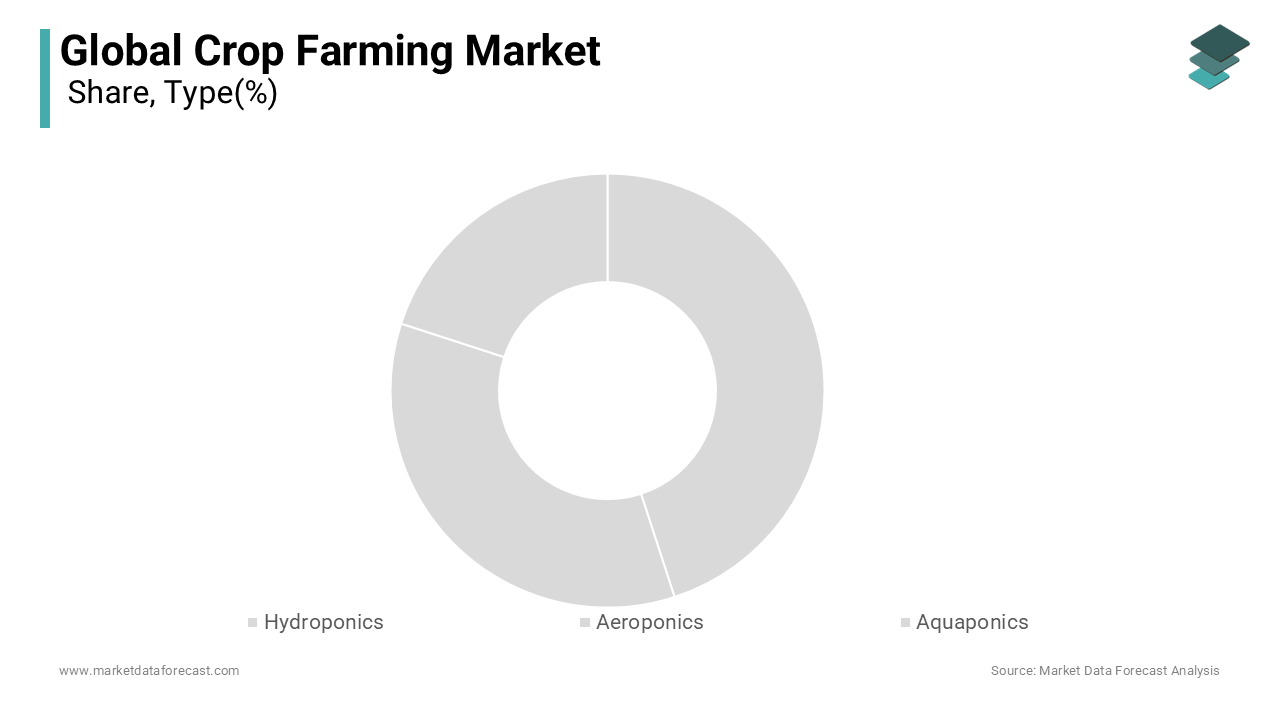
The aquaponics segment is esteemed to register a fastest 12.5% from 2026 to 2034 with its unique integration of aquaculture and hydroponics into a sustainable circular ecosystem. This system combines fish farming with plant cultivation, where fish waste provides organic nutrients for plants, and plants naturally filter and clean the water for fish. Many aquaponics aligns perfectly with the circular economy action plan by minimizing waste and maximizing resource efficiency, attracting significant policy support and investment. Urban farmers and educational institutions are increasingly adopting aquaponics for its dual output of protein and vegetables by enhancing food security in limited spaces. The novelty and ecological appeal of aquaponics resonate strongly with environmentally conscious consumers, commanding premium prices in niche markets. Technological advancements in system automation and biofiltration are improving reliability and scalability, addressing previous limitations. Government grants promoting sustainable agriculture further accelerate adoption, particularly in Europe and North America.
By Structure Insights
The building based vertical farms segment was the largest by holding 55.6% of the crop farming market share in 2025. These facilities are typically housed in repurposed warehouses or newly constructed multi story buildings, allowing for extensive horizontal and vertical expansion. Major cities such as Singapore, Tokyo, and New York have invested heavily in building based vertical farms to enhance local food security and reduce reliance on imports. The structural integrity of buildings supports heavy equipment, advanced lighting systems, and large-scale irrigation networks by enabling industrial level production volumes. These facilities can operate year round regardless of external weather conditions, ensuring consistent supply to retail partners. The ability to customize internal environments for specific crop requirements enhances yield quality and uniformity. Furthermore, building based structures benefit from existing urban infrastructure, such as electricity grids and water supplies by reducing initial setup complexities. Their prominence in metropolitan areas facilitates direct distribution to restaurants and grocery stores, shortening supply chains and improving freshness.
The shipping container vertical farms segment is likely to exhibit a fastest CAGR of 14.5% during the forecast period with the modularity, portability, and rapid deployment capabilities. These compact units are retrofitted shipping containers equipped with LED lighting, climate control, and hydroponic systems, allowing for installation in diverse locations including parking lots, rooftops, and remote areas. The modular nature enables farmers to start small and scale up by adding more units as demand increases, reducing initial capital risk. The container farms can be operational within weeks, compared to months or years for traditional greenhouse construction. Their mobility allows for deployment in disaster relief scenarios or temporary events, providing fresh produce where infrastructure is lacking. Energy efficient designs and solar power integration enhance sustainability, appealing to eco conscious operators. Retailers and restaurants utilize container farms for on site production, marketing hyper local produce to customers. The ease of standardization and mass production of container units lowers manufacturing costs, making them accessible to small entrepreneurs.
By Component Insights
The lighting systems segment was accounted in holding a significant share of the crop farming market in 2025 as they are essential for photosynthesis in indoor environments and represent the largest share of operational energy costs. High efficiency LED lights have become the standard, offering customizable light spectra that optimize plant growth stages while minimizing heat output. Advances in LED technology have reduced energy consumption by 40% over the past decade by making indoor farming more economically viable. The adoption of smart lighting systems with dynamic spectrum adjustment has increased crop yields by up to 25% in commercial facilities. Farmers prioritize lighting investments to maximize productivity per square meter, as light intensity and duration directly influence biomass accumulation. Regulatory standards for energy efficiency in agriculture further promote the uptake of advanced lighting solutions. Research institutions collaborate with manufacturers to develop light recipes tailored to specific crops by enhancing nutritional content and flavor profiles.
The sensors segment is lucratively growing at a fastest CAGR of 16.2% from 2026 to 2034 owing to the increasing reliance on data driven decision making and automation to optimize resource use and crop health. These devices monitor parameters such as temperature, humidity, pH levels, nutrient concentration, and light intensity in real time by enabling precise adjustments to growing conditions. Integration with artificial intelligence platforms allows for predictive analytics, identifying potential issues before they impact yields. Wireless connectivity and miniaturization have lowered sensor costs, making them accessible to small and medium sized farms. Real time monitoring reduces labor requirements for manual checks, addressing workforce shortages. Consumers and regulators demand transparency in production processes, which sensors facilitate through detailed data logging. The ability to remotely manage multiple facilities via cloud based dashboards enhances operational scalability.
REGIONAL ANALYSIS
North America Crop Farming Market Analysis
North America was the top performer in the global crop farming market by accounting for 34.2% of the share in 2025 owing to the robust technological innovation, substantial venture capital investment, and strong consumer demand for locally sourced produce. The United States and Canada are at the forefront of adopting vertical farming and precision agriculture technologies, supported by government initiatives, such as the US Department of Agriculture’s Sustainable Agriculture Research and Education program. Urban population growth in cities like New York, Chicago, and Toronto creates dense markets for fresh, pesticide free produce, encouraging the establishment of indoor farms near consumption centers. Consumer awareness regarding food safety and environmental sustainability drives preference for controlled environment agriculture outputs. Major retail chains have partnered with vertical farming companies to secure consistent supply, stabilizing revenue streams for producers. The presence of leading technology providers and research institutions fosters continuous innovation in lighting, sensors, and automation systems. Labor shortages in traditional agriculture further accelerate the shift towards automated indoor farming solutions.
Europe Crop Farming Market Analysis
Europe crop farming market was ranked second by capturing 18.2% of the share in 2025 with the stringent environmental regulations, substantial policy support, and a deep cultural emphasis on sustainability and food quality. The European Union’s Common Agricultural Policy and Green Deal provide financial incentives and regulatory frameworks that promote sustainable farming practices and reduce environmental impact. Countries, such as the Netherlands, Germany, and France lead in adopting advanced greenhouse technologies and vertical farming systems to maximize land use efficiency. Urban farming initiatives in cities like Berlin, Paris, and London are gaining traction, supported by municipal policies promoting local food security. High energy costs in Europe drive innovation in energy efficient lighting and renewable energy integration in indoor farms. Consumer willingness to pay premium prices for sustainable and locally grown products enhances profitability for farmers. Collaborative research projects between universities and industry players foster innovation in crop varieties and farming techniques.
Asia Pacific Crop Farming Market Analysis
Asia Pacific crop farming market growth is likely to grow with the rapid urbanization, rising middle class incomes, and urgent food security concerns in densely populated countries. Governments in China, Japan, Singapore, and South Korea are actively investing in vertical farming and controlled environment agriculture to reduce dependence on food imports and ensure stable supply chains. Singapore aims to produce 30% of its nutritional needs locally by 2030 through its 30 by 30 initiative, driving significant investment in indoor farming technologies. China is scaling up smart greenhouse operations to address land degradation and water scarcity issues, with over 1000 large scale facilities currently operational. Technological partnerships with Western firms facilitate knowledge transfer and equipment adoption. Labor availability remains relatively high, supporting operational needs, although automation is increasing to improve efficiency.
Latin America Crop Farming Market Analysis
Latin America crop farming market growth is propelled with the favorable climate, abundant natural resources, and strong orientation towards agricultural exports. While traditional open field farming dominates, there is growing interest in controlled environment agriculture to enhance crop quality and extend growing seasons for high value exports. Countries such as Brazil, Mexico, and Chile are investing in greenhouse technologies to meet international quality standards and reduce pesticide residues. Mexico has become a leading exporter of tomatoes and berries to the United States, utilizing advanced irrigation and climate control systems to ensure consistency. Water scarcity in certain regions prompts adoption of hydroponic and drip irrigation systems to optimize usage. Rising urbanization in cities like Sao Paulo and Buenos Aires creates local areas for fresh produce, encouraging small scale vertical farming initiatives. Government programs support technology adoption among smallholders to improve competitiveness. However, limited access to financing and technical expertise remains a barrier to widespread adoption.
Middle East and Africa Crop Farming Market Analysis
The Middle East and Africa crop farming market growth is likely to grow in next coming years. Water scarcity, extreme temperatures, and limited arable land drive the adoption of hydroponics, aeroponics, and vertical farming to produce food locally. Israel leads in agricultural innovation, exporting advanced irrigation and desalination technologies to neighboring countries. In Africa, countries, such as Kenya and South Africa are piloting container farms and solar powered greenhouses to serve urban populations. Limited infrastructure and high energy costs pose challenges, but declining solar panel prices offer viable solutions. International aid organizations support pilot projects to demonstrate feasibility and train local farmers. Growing urban populations and rising incomes create demand for fresh produce by making indoor farming economically attractive.
COMPETITIVE LANDSCAPE
The competition in the crop farming market is intensifying as numerous startups and established agricultural firms vie for dominance in the rapidly expanding controlled environment agriculture sector. Technological innovation serves as the primary differentiator, with companies investing heavily in proprietary lighting, automation, and data analytics solutions to optimize yields and reduce costs. Geographic expansion is another key competitive strategy, as firms seek to establish presence in major urban centers, across North America, Europe, and Asia Pacific. Partnerships with retail giants provide crucial access and brand visibility by enabling producers to reach consumers directly. Sustainability credentials increasingly influence purchasing decisions, prompting companies to highlight water savings and carbon footprint reductions. Funding availability plays a critical role, with well capitalized firms able to scale operations faster and absorb initial losses. Talent acquisition remains challenging, as specialized skills in agronomy and engineering are in high demand. Regulatory compliance varies by region, requiring adaptable business models.
KEY MARKET PLAYERS
Some of the promising companies that are playing a dominating role in the crop farming market include
- Archer Daniels Midland Company (ADM)
- Cargill, Incorporated
- Bunge Global SA
- Louis Dreyfus Company
- Bayer AG
- Corteva Agriscience
- Syngenta Group
- BASF SE
- Nutrien Ltd.
- Yara International ASA
- CF Industries Holdings, Inc.
- The Mosaic Company
- Deere & Company
- CNH Industrial N.V.
- AGCO Corporation
Top Players in the Global Crop Farming Market
AeroFarms
AeroFarms stands as a pioneering force in indoor vertical farming, utilizing proprietary aeroponic technology to grow leafy greens without soil or sunlight. The company operates large scale facilities across the United States, supplying fresh produce to major retail chains and food service providers. AeroFarms recently expanded its production capacity by opening new facilities in New Jersey and Kentucky, enhancing its ability to meet growing regional demand. Recent strategic partnerships with grocery retailers have strengthened its distribution network, ensuring consistent product availability. AeroFarms also invests heavily in research and development to optimize light recipes and nutrient delivery systems, improving crop yield and nutritional value. These efforts reinforce its position as a leader in sustainable urban agriculture while addressing food security challenges in densely populated areas through localized production models.
Infarm
Infarm is a global vertical farming company that deploys modular growing units directly within retail stores and distribution centers. Headquartered in Berlin, the company partners with major supermarket chains across Europe and North America to provide hyper local fresh produce. Infarm recently secured significant funding to expand its network of in store farms, allowing consumers to purchase herbs and leafy greens harvested hours before sale. The company emphasizes transparency and sustainability by reducing transportation emissions and packaging waste. Infarm utilizes advanced data analytics and machine learning to monitor plant health and optimize growth conditions in real time. Recent collaborations with technology providers have enhanced its automation capabilities by reducing labor requirements and increasing operational efficiency.
Plenty Unlimited
Plenty Unlimited operates advanced vertical farms that combine robotics, artificial intelligence, and precision agriculture to grow a wide variety of crops indoors. Based in California, the company focuses on scaling production while maintaining high quality and flavor profiles. Plenty recently announced plans to build multiple new facilities across the United States, aiming to significantly increase its output capacity. The company uses proprietary LED lighting and climate control systems to create optimal growing environments year round. Recent investments in automation technology have streamlined harvesting and packaging processes, reducing costs and improving consistency. The firm also engages in continuous innovation to expand its crop portfolio beyond leafy greens to include fruits and vegetables. These actions demonstrate Plenty commitment to transforming agriculture through technology by enhancing food security, and delivering superior quality produce to consumers while minimizing environmental impact.
Top Strategies Used by Key Market Participants
Key players in the crop farming market primarily focus on technological innovation to enhance efficiency and reduce operational costs. Companies invest heavily in research and development to improve lighting systems, sensors, and automation technologies. Strategic partnerships with retail chains and food service providers help secure stable demand and streamline distribution channels. Expansion into new geographic markets allows firms to tap into emerging consumer bases and diversify revenue streams. Vertical integration enables companies to control entire supply chains from seed to shelf, ensuring quality and consistency. Sustainability initiatives, such as water conservation and renewable energy adoption appeal to environmentally conscious consumers and regulators.
MARKET SEGMENTATION
The research report on the global crop farming market has been segmented and sub-segmented based on categories.
By Type
- Hydroponics
- Aeroponics
- Aquaponics
By Structure
- Building-Based Vertical Farms
- Shipping-Container Vertical Farms
By Component
- Lighting System
- Irrigation and Fertigation System
- Climate Control
- Sensors
- Others
By Region
- North America
- Europe
- Asia-Pacific
- Latin America
- Middle East and Africa