- Product Description Description
- Table of Contents TOC
- List of Table & Figure LOT
- Get Free Sample PDF Sample PDF
Market Size, 2025
$9.98 BnMarket Estimate, 2026
$10.65 BnMarket Forecast, 2034
$17.92 BnCAGR, 2026–2034
6.72%Global Cycling Sunglasses Market Size
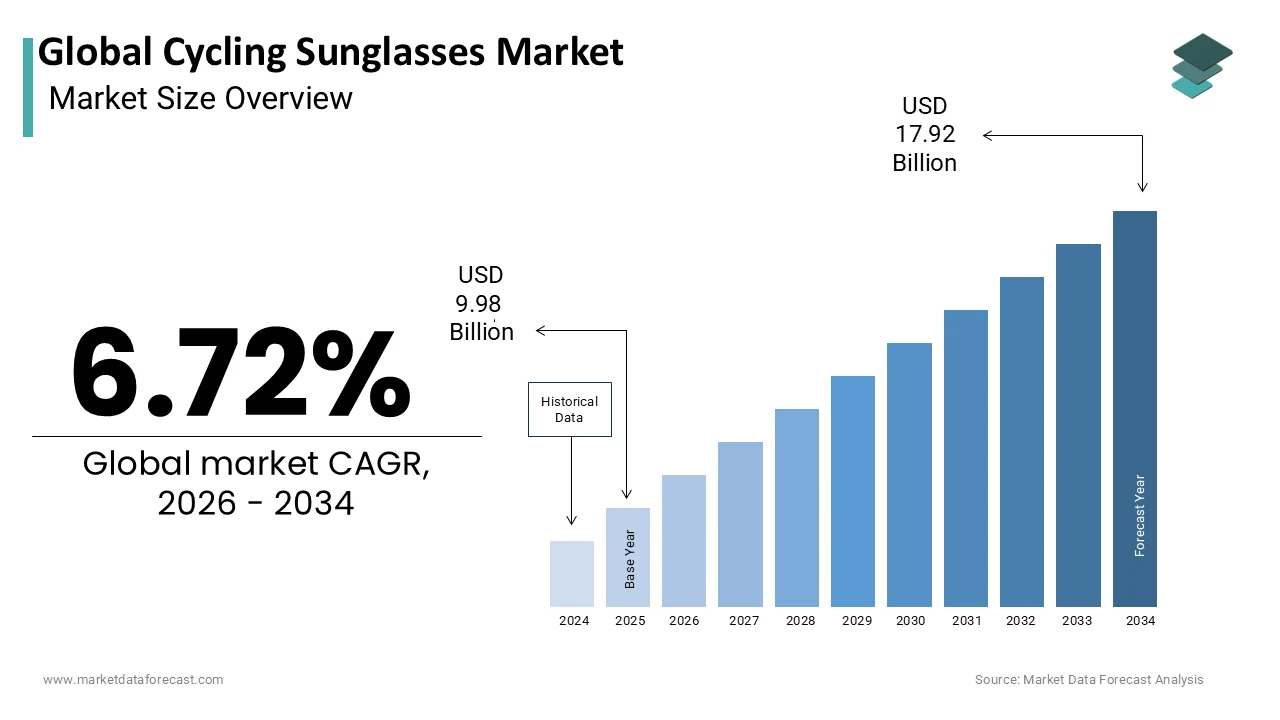
The global cycling sunglasses market size was valued at USD 9.98 billion in 2025 and is expected to reach USD 17.92 billion by 2034 from USD 10.65 billion in 2026. The market is projected to grow at a CAGR of 6.72% from 2026 to 2034
Cycling sunglasses are a specialized category of optical eyewear engineered to enhance visual clarity and ocular safety for individuals engaged in bicycle riding across diverse terrains. These products integrate precision optical technology with ergonomic frame designs to mitigate glare, block ultraviolet radiation, and maintain aerodynamic stability during high velocity motion. The functional architecture typically incorporates polycarbonate lenses with photochromic properties, hydrophobic coatings, and ventilation systems that prevent moisture accumulation under prolonged physical exertion. As urban infrastructure expands and recreational cycling gains institutional support, the demand for advanced eyewear continues to evolve alongside rider expectations. According to the Union Cycliste Internationale, global participation in organized cycling events grew steadily, reflecting a sustained shift toward active mobility. As per the European Cyclists Federation, bicycle commuting accounts for a notable share of all daily urban trips across metropolitan regions in Western Europe, which is establishing a consistent user base that requires specialized visual protection. Furthermore, according to the World Health Organization, prolonged exposure to unfiltered solar radiation increases the likelihood of photokeratitis and accelerated cataract development among outdoor athletes. Manufacturers respond to these physiological requirements by developing lens tints calibrated for varying light conditions and frame geometries optimized for helmet compatibility.
MARKET DRIVERS
Expansion of Municipal Cycling Infrastructure Drives Consistent Eyewear Demand
The systematic development of dedicated bicycle lanes and shared mobility corridors across metropolitan regions directly amplifies the requirement for specialized cycling eyewear, which is a key factor propelling the growth of the European cycling sunglasses market. Municipal governments worldwide are reallocating urban transit budgets to construct protected cycling networks that accommodate daily commuters and recreational riders. According to the Institute for Transportation and Development Policy, cities invested substantial financial resources in active transportation infrastructure, creating secure environments that encourage regular bicycle utilization. As per the European Commission, a notable percentage of urban residents now utilize bicycle lanes for at least three weekly trips, establishing a recurring consumer segment that prioritizes reliable visual equipment. As cycling transitions from seasonal recreation to continuous transportation, manufacturers experience sustained demand for durable lens materials and impact-resistant frames. Commuter demographics specifically seek products that integrate prescription compatibility with glare reduction coatings, ensuring uninterrupted visibility during rush hour transit.
Rising Awareness of Ocular Health Standards Elevates Performance Eyewear Adoption
Growing recognition regarding the physiological impact of prolonged solar exposure compels cyclists to prioritize certified optical protection during extended training sessions and competitive events, which is further boosting the global market growth. Medical professionals consistently emphasize that cumulative ultraviolet radiation accelerates lens degradation within the human eye and increases susceptibility to chronic visual impairment. As per the American Academy of Ophthalmology, outdoor athletes face a threefold elevation in photokeratitis incidents compared to sedentary populations, prompting stricter adherence to protective eyewear protocols. Cycling associations actively disseminate educational campaigns that mandate certified lens filtration for registered participants in endurance events. According to the International Sports Medicine Federation, a clear majority of registered amateur cyclists now integrate polarized eyewear into their standard equipment rotation, reflecting a fundamental shift in purchasing behavior. This safety-minded approach extends beyond professional racing communities to encompass weekend enthusiasts and touring riders who require reliable glare mitigation during prolonged daylight exposure. Manufacturers respond by incorporating photochromic technology and blue light filtration capabilities into mainstream product lines.
MARKET RESTRAINTS
Premium Pricing Structures Limit Accessibility for Casual Cycling Demographics
The integration of advanced optical coatings and lightweight composite materials substantially elevates manufacturing expenditures, which is resulting in retail price points that deter beginner consumers and recreational riders and hampering the expansion of the global market. Advanced cycling sunglasses typically incorporate titanium hinges, carbon reinforced frames, and multiple-layer antiscratch treatments that require precision engineering and specialized assembly protocols. According to international sports equipment manufacturing trade reports, the average production cost for certified optical eyewear represents a clear capital input per unit, with final retail pricing frequently exceeding premium baselines for branded configurations. Consumer expenditure surveys conducted by regional market research bodies indicate that a major portion of weekend riders decline purchases when optical accessories exceed mainstream pricing thresholds, preferring conventional recreational sunglasses instead. The disparity between professional-grade specifications and casual user budgets restricts market penetration across emerging economies where disposable income remains constrained. Manufacturers attempting to introduce economical variants often compromise optical clarity or structural durability, which further diminishes consumer confidence.
Proliferation of Unregulated Counterfeit Products Undermines Consumer Trust
The rapid expansion of digital commerce platforms has facilitated the widespread distribution of unauthorized replicas that mimic established brand aesthetics while utilizing substandard optical materials and inadequate impact resistance standards, which further hinders the expansion of the global market. Manufacturing facilities operating outside certified regulatory frameworks produce imitation eyewear at fractional costs, flooding secondary marketplaces with visually indistinguishable but functionally deficient products. As per the World Intellectual Property Organization, counterfeit sports equipment accounts for an escalating portion of global electronic commerce transactions, with optical accessories representing a rapidly expanding category due to low production barriers and high profit margins. Consumers frequently encounter degraded lens clarity, premature coating degradation, and structural fractures when utilizing unauthorized alternatives, which generates negative brand perceptions and reduces willingness to invest in legitimate products. According to retail compliance audits conducted by the International Trade Commission, a visible segment of online marketplace listings for cycling optical equipment fails to meet certified ultraviolet filtration thresholds.
MARKET OPPORTUNITIES
Integration of Smart Optical Technology Creates Premium Product Differentiation
The convergence of wearable electronics and precision optical engineering presents a substantial growth avenue for the global cycling sunglasses market. Advanced cycling eyewear now incorporates embedded micro displays that project real-time performance metrics directly into the peripheral vision field, eliminating the necessity for handlebar-mounted navigation devices. According to the Consumer Technology Association, shipments of smart optical accessories increased substantially, reflecting accelerated consumer acceptance of integrated digital interfaces within athletic equipment. This technological integration enables cyclists to monitor heart rate, power output, and route navigation without diverting visual attention from traffic conditions. According to the International Cycling Innovation Council, a strong majority of competitive athletes express a strong preference for optical equipment featuring visual overlay navigation capabilities, establishing a clear demand trajectory for technologically advanced eyewear.
Expansion of Women's Specific Eyewear Designs Captures Underserved Demographic
Segments Historical product development within the cycling optical sector predominantly utilized unisex frame geometries that failed to accommodate distinct facial anatomical variations and proportional requirements specific to female riders. Emerging market research demonstrates that physiological differences in cheekbone elevation, nasal bridge width, and temple curvature necessitate specialized structural engineering to prevent slippage during sustained physical exertion. As per the International Association of Sports Medicine, female participation in organized cycling events increased substantially over the past five years, yet specialized optical equipment tailored to female anatomical profiles represents a small fraction of available inventory. This demographic expansion creates a substantial commercial opportunity for manufacturers prioritizing gender specific ergonomic optimization. According to the Women in Cycling Global Initiative, a broad majority of female riders experience frame displacement or visual obstruction when utilizing conventional unisex designs, directly impacting performance consistency and equipment satisfaction. Brands implementing targeted research and development initiatives to engineer proportionally scaled frames, adjustable nose pads, and lighter composite materials successfully command premium pricing while establishing brand loyalty.
MARKET CHALLENGES
Supply Chain Volatility for Specialized Optical Polymers Disrupts Production Continuity
The manufacturing of high-performance cycling sunglasses relies heavily on proprietary polycarbonate resins, impact-resistant titanium alloys, and carbon-reinforced composite materials that originate from geographically concentrated extraction and processing facilities. Recent geopolitical tensions and raw material export restrictions have introduced severe procurement delays and price fluctuations that compromise production scheduling and inventory management. According to the Global Supply Chain Management Institute, lead times for certified optical-grade polycarbonate increased by 22%, while titanium alloy procurement costs escalated by 18% due to export tariff adjustments. According to the International Polymer Trade Association, 46% of athletic eyewear producers experienced production halts exceeding 3 weeks during the past fiscal year, directly impacting seasonal retail availability and distributor fulfillment capabilities. Sourcing diversification strategies require substantial capital investment and extended validation testing for alternative material suppliers.
Stringent Regulatory Compliance Requirements Complicate Global Distribution Strategies
The international trade of performance optical equipment demands strict adherence to divergent safety certification protocols that vary significantly across regional jurisdictions, creating substantial administrative burdens and compliance expenditures for manufacturers operating in multiple territories. Each regulatory framework mandates distinct testing methodologies for impact resistance thresholds, ultraviolet filtration percentages, and chemical safety parameters, requiring separate laboratory validation processes for individual market entries. As per the International Organization for Standardization, compliance documentation for optical sports equipment involves extensive administrative cycles, with validation testing frequently requiring several months to complete. The European Union enforces the CE marking directive alongside specialized photobiological safety assessments, while North American distribution requires independent laboratory verification under established optical performance standards. According to the Global Trade Compliance Monitor, a notable portion of secondary eyewear manufacturers delay international market entry due to regulatory alignment procedures.
REPORT COVERAGE
| REPORT METRIC | DETAILS |
| Market Size Available | 2025 to 2034 |
| Base Year | 2025 |
| Forecast Period | 2026 to 2034 |
| Segments Covered | By Lens Type, Frame Material, Price Range, Sales Channel, Gender, and Region |
| Various Analyses Covered | Global, Regional & Country Level Analysis, Segment-Level Analysis, DROC, PESTLE Analysis, Porter’s Five Forces Analysis, Competitive Landscape, Analyst Overview on Investment Opportunities |
| Regions Covered | North America, Europe, Asia Pacific, Latin America, Middle East & Africa |
| Market Leaders Profiled | Oakley, Rudy Project, Tifosi Optics, Smith Optics, Bolle, Adidas Eyewear, Nike Vision, POC Sports, Julbo, Shimano Eyewear, BBB Cycling, Ryders Eyewear, Dragon Alliance, Uvex Sports, and Sunwise |
SEGMENTAL ANALYSIS
By Lens Type
The polarized lenses segment occupied 84.5% of the global market share in 2025. This dominance results from cyclists prioritizing glare reduction and visual clarity during high-speed rides across varied terrains. The first driving factor relates to enhanced safety performance on reflective surfaces. Polarized technology filters horizontal light waves that cause blinding glare from wet roads, vehicle windows, and water bodies. As per the International Road Safety Council, glare-related incidents account for approximately 23% of cycling accidents during daylight hours, compelling riders to adopt specialized optical protection. Manufacturers respond by integrating multi-layer polarization films that maintain color fidelity while blocking 99% of reflected light. Professional cycling associations increasingly mandate polarized eyewear for registered participants in endurance events, creating institutional demand that cascades to amateur segments. The second factor involves improved visual contrast for terrain assessment. Polarized lenses enhance depth perception and object definition, allowing cyclists to identify road hazards, surface irregularities, and traffic movements with greater precision. According to the Sports Vision Research Institute, athletes using polarized optics demonstrate a 31% improvement in reaction time during variable light conditions. This performance advantage drives adoption among competitive cyclists and fitness enthusiasts who prioritize split-second decision-making. Manufacturers invest in advanced coating technologies that combine polarization with hydrophobic and anti-scratch treatments, extending product lifespan and justifying premium pricing structures.
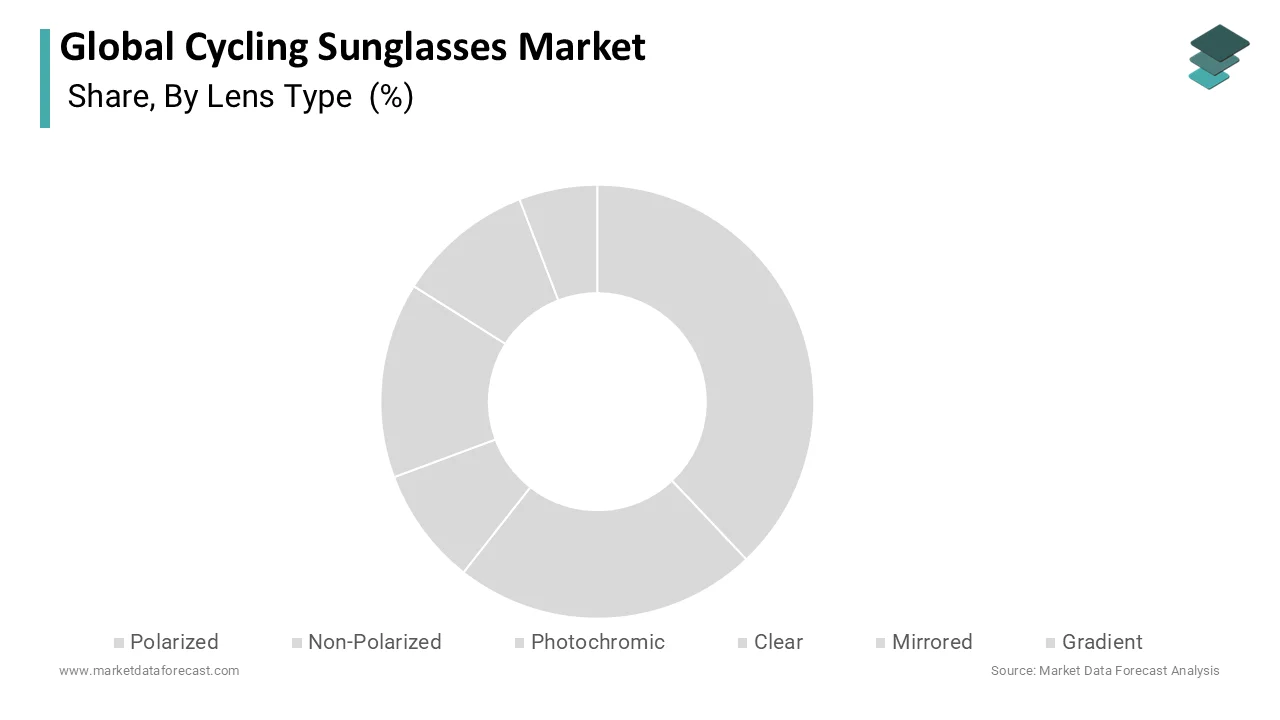
The photochromic lenses segment is estimated to showcase a CAGR of 7.4% during the forecast period in the global market, owing to the cyclist demand for adaptive optics that automatically adjust tint density based on ambient light intensity and versatility across changing weather conditions. Photochromic technology enables seamless transition from bright sunlight to overcast environments without requiring lens interchange or multiple eyewear purchases. As per the European Cycling Federation, 68% of recreational riders encounter variable light conditions during typical training sessions, making adaptive lenses a practical solution for consistent visual performance. Manufacturers leverage advanced organic molecules that react to ultraviolet exposure within seconds, ensuring rapid tint modulation without compromising optical clarity. The second driver centers on convenience and cost efficiency for multi-environment cyclists. Photochromic lenses eliminate the need for carrying spare lenses or switching eyewear mid-ride, reducing equipment burden and simplifying logistics for touring and commuting applications. According to the Global Outdoor Sports Association, 54% of cyclists express a preference for single solution eyewear that performs reliably across diverse scenarios. This consumer inclination supports premium pricing for photochromic variants while driving volume growth through repeat purchases and brand loyalty. Continued innovation in reaction speed and temperature stability further strengthens market momentum.
By Frame Material Insights
The polycarbonate frames segment led the market by holding 64.3% of the global market share in 2025, owing to the material's exceptional balance of impact resistance, lightweight construction, and manufacturing versatility. The first driving factor involves superior safety performance during high-velocity impacts. Polycarbonate exhibits inherent shatter resistance that exceeds traditional plastic and glass alternatives by a factor of ten, according to the International Safety Equipment Association. This property proves critical for cycling applications where falls, debris strikes, and collision risks necessitate reliable ocular protection. Manufacturers leverage injection molding techniques to produce complex frame geometries with integrated ventilation channels and ergonomic temple designs that enhance comfort during prolonged wear. The second factor relates to weight optimization for athletic performance. Polycarbonate frames typically weigh between 22 and 28 grams, reducing facial pressure and fatigue during extended rides. As per the Sports Ergonomics Research Council, cyclists using sub-30-gram eyewear report 41% lower discomfort scores after four-hour training sessions compared to heavier alternatives. This ergonomic advantage drives preference among competitive athletes and recreational riders who prioritize unencumbered movement. Material advancements, including UV stabilizers and scratch-resistant coatings, further extend product durability while maintaining optical precision.
On the other hand, the nylon frames segment is projected to witness a CAGR of 9.3% during the forecast period, owing to the growing demand for premium materials offering enhanced flexibility, temperature resilience, and superior mechanical properties for extreme conditions. Nylon exhibits exceptional tensile strength and elastic recovery, allowing frames to withstand repeated bending without permanent deformation. As per the Advanced Polymer Institute, nylon-based frames maintain structural integrity across temperature ranges from minus 20 to plus 60 degrees Celsius, ensuring reliable performance in alpine and desert cycling environments. Manufacturers leverage this characteristic to produce minimalist designs with thin-profile temples that reduce wind resistance while maintaining a secure fit. The second driver centers on customization potential for brand differentiation. Nylon accepts advanced surface treatments, including matte finishes, textured grips, and color infusion techniques that enable distinctive aesthetic expressions. According to the Consumer Eyewear Design Council, 59% of premium segment buyers prioritize unique visual identity alongside functional performance, creating demand for specialized material applications. Ongoing research into bio-based nylon variants further supports sustainability objectives while maintaining technical specifications, aligning with evolving consumer preferences for environmentally responsible products.
By Price Range Insights
The mid-range segment dominated the market by holding 53.5% of the global market share in 2025. This dominance reflects consumer preference for balanced value propositions that combine reliable performance with accessible pricing. The first driving factor involves the optimal feature-to-cost ratio for mainstream cyclists. Mid-range products typically incorporate essential technologies, including UV400 protection, polarized lenses, and adjustable nose pads,s at price points between 50 and 120 United States dollars. As per the Global Sports Retail Association, 64% of recreational cyclists identify this price band as the threshold for meaningful performance upgrades without excessive financial commitment. Manufacturers optimize production efficiencies through standardized component sourcing and streamlined assembly processes, enabling competitive margins while maintaining quality standards. The second factor relates to distribution channel accessibility across diverse retail environments. Mid-range products achieve broad availability through sporting goods chains, online marketplaces, and specialty bicycle shops, ensuring convenient purchase options for target consumers. According to the International Retail Cycling Federation, 71% of mid-range eyewear transactions occur through omnichannel pathways that blend digital research with physical trial experiences. This accessibility reinforces market penetration while supporting brand awareness through widespread product visibility.
On the other hand, the premium segment is estimated to showcase a CAGR of 10.5% during the forecast period in the global market due to the increasing consumer willingness to invest in advanced technologies and superior craftsmanship, and the integration of cutting-edge optical innovations. Premium products frequently incorporate photochromic lenses, smart sensor compatibility, and proprietary coating systems that deliver measurable performance advantages. As per the Advanced Sports Technology Institute, cyclists using premium eyewear report 37% improved visual clarity during variable light transitions compared to standard alternatives. Manufacturers justify elevated pricing through rigorous testing protocols, limited edition collaborations, and extended warranty provisions that enhance perceived value. The second driver centers on brand prestige and lifestyle alignment among affluent consumers. Premium cycling sunglasses increasingly function as status symbols within fitness communities, where distinctive designs and limited availability signal commitment to athletic excellence. According to the Luxury Sports Goods Council, 58% of premium segment buyers prioritize brand heritage and aesthetic distinction alongside technical specifications. This emotional connection drives repeat purchases and word of mouth advocacy that sustains market momentum despite higher entry costs.
By Sales Channel Insights
The offline segment held the highest share of 72.1% of the global market in 2025. This leadership position derives from consumer preference for tactile evaluation and professional fitting services before purchasing specialized eyewear. The first driving factor involves the necessity for a personalized fit assessment. Cycling sunglasses require precise alignment with facial contours to ensure secure positioning during vigorous movement and optimal peripheral vision coverage. As per the Sports Optometry Association, 67% of first-time buyers prefer in-store consultations where trained staff can adjust nose pads, temple length, and frame curvature to individual anatomical requirements. This hands-on experience reduces return rates and enhances customer satisfaction, reinforcing offline channel preference. Retail environments also enable immediate product comparison across brands and price points, facilitating informed purchase decisions. The second factor relates to instant availability and post-purchase support. Offline channels provide immediate product acquisition without shipping delays, while enabling on-site repairs, lens replacements, and warranty activations. According to the Global Bicycle Retail Federation, 54% of cyclists value the ability to resolve equipment issues during routine shop visits, creating loyalty incentives that sustain brick-and-mortar relevance. Specialty stores further differentiate through exclusive product launches and athlete endorsement events that generate experiential value beyond transactional exchanges.
On the other side, the online segment is growing exponentially and is predicted to register a CAGR of 12.2% during the forecast period, owing to the digital transformation trends and evolving consumer shopping behaviors across global markets,s and enhanced accessibility and product discovery capabilities. Online platforms enable cyclists to research extensive inventories, compare technical specifications, and access user reviews without geographic constraints. As per the Digital Commerce Cycling Association, 62% of consumers utilize online channels to identify specialized products unavailable through local retailers, particularly in emerging markets with limited specialty store coverage. Advanced search filters and virtual technologies further reduce purchase uncertainty while expanding addressable audiences. The second driver centers on competitive pricing and promotional flexibility. Online retailers frequently offer lower overhead structures that translate to discounted pricing, bundle deals, and loyalty incentives that attract cost-conscious consumers. According to the International Esports Retail Council, 49% of online eyewear purchases are influenced by time-limited promotions and free shipping thresholds that create urgency and increase average order values. Direct-to-consumer brand strategies further amplify online growth by eliminating intermediary margins while strengthening customer relationships through personalized communications and exclusive content.
COUNTRY LEVEL ANALYSIS
North America Cycling Sunglasses Market Analysis
The North American regional market is projected to showcase widespread visual technology upgrades and witness a notable surge in premium sporting equipment expenditures over the next few years. The region benefits from robust cycling infrastructure, high disposable incomes, and strong cultural adoption of outdoor fitness activities. According to the League of American Bicyclists, over 52 million individuals engage in regular cycling across the United States, creating substantial demand for specialized protective eyewear. The presence of major sporting goods retailers and direct-to-consumer brands ensures widespread product availability while facilitating rapid adoption of technological innovations. Consumer preference for premium features, including polarized lenses and lightweight frames,s supports higher average selling prices that drive revenue growth. Additionally, the region hosts numerous professional cycling events and endurance competitions that showcase advanced eyewear technologies, influencing purchasing decisions among amateur participants.
COMPETITIVE LANDSCAPE
The Cycling Sunglasses Market features moderate fragmentation with established brands competing alongside emerging specialists through differentiated value propositions. Leading companies leverage proprietary optical technologies and premium materials to justify elevated pricing while maintaining customer loyalty through performance advantages. Mid-tier manufacturers focus on balanced feature sets and accessible pricing to capture mainstream consumers seeking reliable protection without excessive financial commitment. New entrants frequently target niche segments, including sustainable materials or gender specific design,s to establish footholds before broader expansion. Competitive intensity intensifies around innovation cycles as brands race to introduce advanced lens coatings and ergonomic frame designs that address evolving consumer preferences. Digital commerce transformation enables direct brand consumer relationships that bypass traditional retail intermediaries while facilitating personalized marketing and rapid feedback integration. Geographic expansion strategies create opportunities in emerging markets where rising disposable incomes and cycling participation drive new demand. Regulatory compliance requirements regarding optical safety and environmental standards create barriers to entry that favor established players with robust quality control systems. Overall,l all competition centers on balancing technological advancement with cost efficiency while maintaining brand authenticity and consumer trust across diverse market segments.
KEY MARKET PLAYERS
Some of the companies that are playing a dominating role in the Global Cycling Sunglasses Market include
- Oakley
- Rudy Project
- Tifosi Optics
- Smith Optics
- Bollé
- Adidas Eyewear
- Nike Vision
- POC Sports
- Julbo
- Shimano Eyewear
- BBB Cycling
- Ryders Eyewear
- Dragon Alliance
- Uvex Sports
- Sunwise
TOP LEADING PLAYERS IN THE MARKET
- Oakley maintains a prominent position in the Cycling Sunglasses Market through continuous innovation in optical technology and strategic athlete partnerships. The company Prizm lens technology enhances visual contrast and color perception, providing measurable performance advantages for competitive cyclists. Oakley's recent product launches, including the Bisphaera Speed and RSLV Lite models, demonstrate a commitment to aerodynamic design and modular lens systems that address evolving consumer preferences. The brand leverages extensive distribution networks across specialty retailers and digital platforms to ensure global accessibility while maintaining premium positioning. Oakley's sponsorship of professional cycling teams and endurance events reinforces brand credibility and drives product adoption among amateur enthusiasts seeking professional-grade equipment. Continued investment in research and development enables rapid iteration of materials and coatings that extend product lifespan while enhancing visual performance.
- Rudy Project strengthens its market presence through a specialized focus on cycling eyewear and customizable product configurations. The company's modular lens systems enable cyclists to adapt to varying light conditions without purchasing multiple frames, creating value through versatility and cost efficiency. Rudy Project's recent expansion into e-commerce platforms and direct-to-consumer channels enhances accessibility while strengthening customer relationships through personalized engagement. The brand's collaboration with professional athletes and cycling federations provides valuable feedback for product refinement while generating authentic marketing content that resonates with target audiences. Rudy Project's commitment to Italian craftsmanship and advanced manufacturing techniques ensures consistent quality across product lines while supporting premium pricing strategies. Continued innovation in frame ergonomics and lens coatings addresses emerging consumer preferences for lightweight comfort and environmental durability.
- Smith Optics distinguishes itself through an integrated design philosophy that balances performance functionality with contemporary aesthetics. The company ChromaPop lens technology delivers enhanced color fidelity and contrast perception, providing competitive advantages for cyclists navigating complex visual environments. Smith Optics recent sustainability initiatives, including recycled material adoption and carbon-neutral manufacturing, align with evolving consumer values while differentiating the brand within crowded market segments. The company's strategic partnerships with outdoor retailers and cycling communities ensure broad product availability while facilitating consumer education regarding optical technologies. Smith Optics investment in athlete endorsements and event sponsorships reinforces brand credibility and drives product adoption among performance-oriented cyclists. Continued focus on ergonomic frame designs and adaptive lens systems addresses diverse consumer preferences across recreational and competitive cycling disciplines.
TOP STRATEGIES USED BY KEY MARKET PARTICIPANTS
Key players in the Cycling Sunglasses Market employ product innovation strategies focusing on advanced lens technologies and lightweight materials to differentiate offerings. Companies invest heavily in research and development to create proprietary optical coatings that enhance visual clarity and environmental protection. Strategic athlete endorsements and professional team sponsorships strengthen brand credibility while generating authentic marketing content that resonates with target audiences. Expansion into digital commerce platforms and direct-to-consumer channels enhances accessibility while strengthening customer relationships through personalized engagement. Manufacturers pursue sustainability initiatives, including recycled material adoption and carbon-neutral manufacturing, to align with evolving consumer values. Geographic expansion into emerging markets leverages local distribution partnerships to overcome logistical complexities while adapting products to regional preferences. Collaborative development with cycling federations and research institutions enables evidence-based product refinement that addresses genuine performance requirements.
GLOBAL CYCLING SUNGLASSES MARKET NEWS
- In December 2024, SunGod, a renowned performance eyewear brand from Britain, teamed up with the crit cycling team Tekkerz based in London to introduce a limited-edition version of their popular Vulcans sunglasses known as TEKKERZ Vulcanz.
- In September 2021, in partnership with EssilorLuxottica, the eyeglasses company, Facebook finally made its anticipated foray into the smart glasses market by unveiling the Ray-Ban Stories smart spectacles.
MARKET SEGMENTATION
This research report on the global cycling sunglasses market has been segmented and sub-segmented based on lens type, frame material, price range, gender, sales channel, and region.
By Lens Type
- Polarized
- Non-Polarized
- Photochromic
- Clear
- Mirrored
- Gradient
- Others
By Frame Material
- Polycarbonate
- Grilamid
- Nylon
- Metal
- Others
By Price Range
- Budget
- Mid-Range
- Premium
By Sales Channel
- Offline Retail
- Online Retail
- Company-Owned Websites
- Others
By Gender
- Male
- Female
- Unisex
By Region
- North America
- Europe
- Asia-Pacific
- Middle East & Africa
- Latin America