- Product Description Description
- Table of Contents TOC
- List of Table & Figure LOT
- Get Free Sample PDF Sample PDF
Market Size, 2025
$3.28 BnMarket Estimate, 2026
$3.54 BnMarket Forecast, 2034
$6.45 BnCAGR, 2026–2034
7.8%Global Dairy Herd Management Market Size, Share, Trends & Forecast (2026–2034)
- Market Scope: Comprehensive global market analysis of the dairy herd management industry covering hardware/software products, deployment models (web-based vs. on-premise), core applications, and country-level structural adoption trends.
- Market Valuation: Valued at USD 3.28 billion (2025), estimated at USD 3.54 billion (2026), and projected to reach USD 6.45 billion by 2034, growing at a compound annual growth rate (CAGR) of 7.8% (2026–2034).
- Primary Growth Drivers: Integration of precision livestock farming to improve reproductive efficiency, escalating regulatory and consumer demand for animal welfare transparency, and the expansion of cloud-based analytics with predictive health modeling.
Global Dairy Herd Management Market Segment Metrics (2026–2034)
| Category | Leading Segment (2025 Position) | Fastest-Growing Segment |
|---|---|---|
| By Product | Milk Management Systems (42.4% share in 2025, driven by automated units, yield monitors, and milk quality testing) | Cattle Management Systems (projected at a 12.4% CAGR due to individualized animal tracking and wearables) |
| By Deployment Model | Web-Based Software (capturing the majority share via cloud flexibility and reduced on-site IT burdens) | On-Premise Software (expanding at a 9.1% CAGR driven by data governance and legacy infrastructure compatibility) |
| By Application | Milk Harvesting (38.9% share in 2025, anchoring automated milking efficiency and revenue assurance) | Heat Stress Management (growing at a 14.2% CAGR propelled by climate change and thermal load adaptations) |
| By Region | North America (holding a 32.1% market share in 2025, backed by scale-intensive operations and digital readiness) | Asia-Pacific (fast-evolving through large-scale structural consolidation in China and technology investments in India and Australia) |
Major Industry Players & Market Structure
Market Structure: Highly competitive global marketplace defined by rapid technological innovation, hardware-software integration, artificial intelligence applications, and compliance-driven product development.
Key Companies: Afimilk Ltd, BouMatic, Dairy Master, DeLaval, GEA Group AG, Infovet, Lely Holdings S.A.R.L, SCR Dairy Inc, Sum-It Computer Systems, Ltd, and Valley Agriculture Software.
 Download Free Sample Report
Global Dairy Herd Management Market Size
The global dairy herd management market was valued at USD 3.28 billion in 2025 and is anticipated to reach USD 3.54 billion in 2026 from USD 6.45 billion by 2034, growing at a CAGR of 7.8% during the forecast period from 2026 to 2034.

Current Introduction of the Dairy Herd Management Market
Dairy herd management refers to the integrated application of digital technologies, data analytics, and precision livestock farming practices to monitor, analyze, and optimize the health, reproduction, nutrition, and productivity of dairy cattle. This domain encompasses hardware such as wearable sensors, automated milking systems, and in-barn monitoring devices, as well as software platforms that process real-time biological and behavioral data to support farm-level decision-making.
The European Union holds a substantial population of dairy cows, with a large share concentrated in Germany, France, and the Netherlands. Also, the size of the average European dairy farm has shown a consistent upward trend. Moreover, the sector is experiencing an ongoing process of consolidation and intensification, resulting in larger herd sizes per farm. This structural shift toward larger, more specialized operations has created fertile ground for technology adoption aimed at enhancing animal welfare and operational transparency in response to tightening regulatory and consumer expectations.
MARKET DRIVERS
Integration of Precision Livestock Farming to Enhance Reproductive Efficiency
The deployment of precision livestock farming tools has significantly elevated reproductive management in dairy operations by enabling early estrus detection and timely artificial insemination, which contributes to the growth of the global dairy herd management market. Continuous and automated monitoring of cow activity and behavior patterns provides more consistent, accurate identification of estrus than traditional manual observation. Automated heat detection technology directly addresses the challenge of sub-optimal conception rates in dairy herds, often resulting in higher pregnancy success rates. Extending the calving interval beyond optimal targets results in significant economic losses for producers, driven by reduced milk production and increased feeding costs. Improved, technology-driven reproductive outcomes, such as better heat detection, are associated with enhanced profitability and financial efficiency in dairy operations. Widespread adoption of automated management systems is becoming a common pattern in regions looking to improve overall fertility performance and reproductive efficiency. These gains are further reinforced by European Union policies promoting sustainable intensification, which incentivize practices that reduce non-productive days while maintaining herd health. The convergence of biological insight and real-time data analytics thus forms a compelling driver for adoption.
Escalating Regulatory and Consumer Demand for Animal Welfare Transparency
European regulatory frameworks and consumer expectations are increasingly mandating higher standards of animal welfare, with traceability and documentation becoming non-negotiable components of dairy production, which further fuels the expansion of the global dairy herd management market. Regulatory frameworks emphasize systemic procedures for managing safety risks, which many agricultural enterprises address by adopting electronic systems for tracking livestock data. Newer policy initiatives suggest a shift toward standardized labeling that reflects the well-being of animals, prompting producers to maintain detailed records regarding living environments and health status. Public sentiment indicates a growing consumer interest in the ethical treatment of livestock as a consideration during the selection of dairy commodities. The transition toward transparency requires a more comprehensive approach to data collection to meet both legal expectations and consumer preferences. This sentiment is already influencing retail procurement policies, with major chains like Aldi and Lidl requiring suppliers to demonstrate adherence to welfare benchmarks verified through digital monitoring. In response, dairy farms adopting integrated herd management platforms can automatically log lameness incidents, calving events, and treatment histories, thereby streamlining compliance and enhancing market access. The Netherlands, for instance, has embedded digital welfare monitoring into its national certification program, which covers a portion of the country’s dairy farms, as per research. This regulatory and ethical momentum is accelerating investment in management technologies far beyond mere productivity motives.
MARKET RESTRAINTS
High Initial Investment and Fragmented Return on Investment Perception
The substantial upfront capital required for comprehensive dairy herd management systems remains a formidable barrier, particularly for small to midsize operations, which still constitute the majority of the region’s dairy landscape, despite technological advances. This hampers the growth of the global dairy herd management market. The initial financial commitment required for a comprehensive suite of precision dairy technologies represents a substantial portion of a producer's annual earnings. Producers often find it difficult to reconcile the high cost of automated systems with the typically modest net income levels observed within the sector. There is a noticeable tension between the desire to adopt advanced monitoring tools and the necessity of achieving a rapid return on investment. The transition toward fully integrated digital management systems appears constrained by the gap between equipment pricing and the fiscal capacity of many agricultural operations. Economic uncertainty can lead to a cautious approach regarding the adoption of high-tech infrastructure when immediate financial benefits are not clearly guaranteed. Moreover, the return on investment is often perceived as fragmented because benefits accrue across multiple domains, including reduced labor costs, improved fertility, and lower veterinary expenses, rather than through a single measurable output. As per a study, a notable share of farmers with fewer than 100 cows view digital herd management as financially inaccessible. This perception is exacerbated by limited access to specialized financing and a lack of standardized performance benchmarks that could demonstrate long-term value. Consequently, adoption remains concentrated in larger commercial dairies, while smaller farms delay or forgo implementation altogether, thereby slowing market penetration across the broader sector.
Interoperability Limitations Across Proprietary Technology Platforms
The absence of universal data standards and the proliferation of closed proprietary ecosystems among dairy technology vendors severely restrict seamless data integration and holistic herd analysis, and limit the expansion of the global dairy herd management market. Most herd management software solutions operate independently from milking robot data feeds, feed monitoring systems, or veterinary record platforms, resulting in operational silos that dilute analytical potential. According to research, a smaller number of European dairy farms use fully interoperable systems capable of aggregating data from multiple hardware sources into a unified dashboard. This fragmentation increases management complexity and forces farmers to manually reconcile disparate data streams, a time-consuming process that undermines the efficiency gains promised by automation. The situation is further complicated by the lack of adherence to emerging standards, which remain inconsistently implemented across manufacturers. In Germany, for example, many different herd management software platforms are in active use with minimal cross-compatibility, as per sources. The full potential of precision dairy remains out of reach without coordinated efforts for data portability, especially for farms seeking to adopt best-in-class, multi-vendor technology.
MARKET OPPORTUNITIES
Expansion of Cloud-Based Analytics with Predictive Health Modeling
The evolution of cloud-based platforms equipped with machine learning algorithms provides a compelling opportunity to transform reactive herd management into proactive health intervention, which is likely to fuel the growth of the global dairy herd management market. Advanced predictive models can now identify subclinical diseases such as ketosis or mastitis up to several hours before clinical symptoms manifest by analyzing deviations in feeding behavior, activity levels, and milk composition. Cloud infrastructure also enables scalable access to sophisticated analytics without requiring on-farm computational resources, a critical advantage for smaller operations. Moreover, the integration of weather data, feed quality metrics, and regional disease prevalence maps allows for contextualized risk forecasting. Companies like DeLaval and GEA are already deploying federated learning models that improve accuracy across farms while preserving data privacy. Expanding rural European broadband allows for the large-scale deployment of these predictive tools. This shift from monitoring to anticipation represents a paradigmatic opportunity for value creation.
Policy-Driven Incentives for Digitalization Under the Common Agricultural Policy
The ongoing reform of the European Union’s Common Agricultural Policy has introduced targeted digitalization subsidies, which open up potential prospects for the global dairy herd management market. These initiatives directly lower the adoption barriers for dairy herd management technologies. The initial financial commitment required for a comprehensive suite of precision dairy technologies represents a substantial portion of a producer's annual earnings. Producers often find it difficult to reconcile the high cost of automated systems with the typically modest net income levels observed within the sector. There is a noticeable tension between the desire to adopt advanced monitoring tools and the necessity of achieving a rapid return on investment. The transition toward fully integrated digital management systems appears constrained by the gap between equipment pricing and the fiscal capacity of many agricultural operations. Economic uncertainty can lead to a cautious approach regarding the adoption of high-tech infrastructure when immediate financial benefits are not clearly guaranteed. Such policy tailwinds not only alleviate capital constraints but also validate technology adoption as a strategic component of regulatory compliance and environmental stewardship. These CAP incentives encourage midsize farms to modernize, overcoming previous cost and complexity barriers as implementation deepens across member states.
MARKET CHALLENGES
Persistent Shortage of Skilled Labor in Dairy Farming Operations
The regional dairy sector faces an acute and worsening labor deficit that directly impedes the effective deployment and maintenance of sophisticated herd management systems, and ultimately holds back the growth of the global dairy herd management market. The European Union's agricultural workforce has continued to decrease as farms increasingly adopt labor-saving automation, resulting in significant labor shortages for technical, automated, and data-driven roles, particularly in specialized sectors like dairy farming. This shortage is particularly acute in Eastern and Southern Europe, where youth attrition from rural areas continues unabated. Even when technologies are installed, the lack of personnel trained in interpreting analytics or troubleshooting hardware often leads to underutilization or system abandonment. Limited technical proficiency among agricultural workers may hinder the broader integration of advanced administrative and monitoring tools within the dairy sector. The progression of younger individuals into senior operational roles appears to occur at a gradual pace, which can influence the overall speed of modernization. An older demographic of farm leadership often correlates with established traditional practices that may not align with the rapid uptake of emerging digital systems. The transition toward new management methodologies is frequently affected by the existing skill sets and educational backgrounds of the current labor force. Advanced herd management is constrained by a lack of skilled human capital, not by a lack of technology.
Data Privacy and Cybersecurity Vulnerabilities in Farm-Level Systems
Dairy operations are increasingly relying on interconnected digital platforms, exposing them to significant data privacy and cybersecurity risks that are slowing the expansion of the global dairy herd management market. Such risks could compromise operational integrity and regulatory compliance. Unlike industrial sectors covered by stringent cybersecurity directives, the agricultural technology ecosystem lacks comprehensive EU-wide safeguards, leaving individual farms vulnerable to data breaches, ransomware attacks, and unauthorized access to sensitive production records. The European Union Agency for Cybersecurity identified dairy management systems as among the most frequently targeted agri-tech applications, with hundreds of reported incidents across Europe in recent years. These vulnerabilities are compounded by the widespread use of consumer-grade routers and default passwords on farm equipment. Furthermore, the General Data Protection Regulation, although applicable, creates ambiguity around the classification of animal health data as personal information, prompting legal uncertainty for data sharing with veterinarians or cooperatives. Producers in Germany and Austria are hesitant to digitize herd management due to data sovereignty concerns, requiring better security and regulations first.
REPORT COVERAGE
| REPORT METRIC | DETAILS |
| Market Size Available | 2025 to 2034 |
| Base Year | 2025 |
| Forecast Period | 2026 to 2034 |
| CAGR | 7.8% |
| Segments Covered | By Product, Application, and Region |
| Various Analyses Covered | Global, Regional & Country Level Analysis, Segment-Level Analysis, DROC, PESTLE Analysis, Porter’s Five Forces Analysis, Competitive Landscape, Analyst Overview on Investment Opportunities |
| Regions Covered | North America, Europe, APAC, Latin America, Middle East & Africa |
| Market Leaders Profiled | Afimilk Ltd, BouMatic, Dairy Master, DeLaval, GEA Group AG, Infovet, Lely Holdings S.A.R.L, SCR Dairy Inc, Sum-It Computer Systems, Ltd, Valley Agriculture Software, and Others. |
SEGMENTAL ANALYSIS
By Product Insights
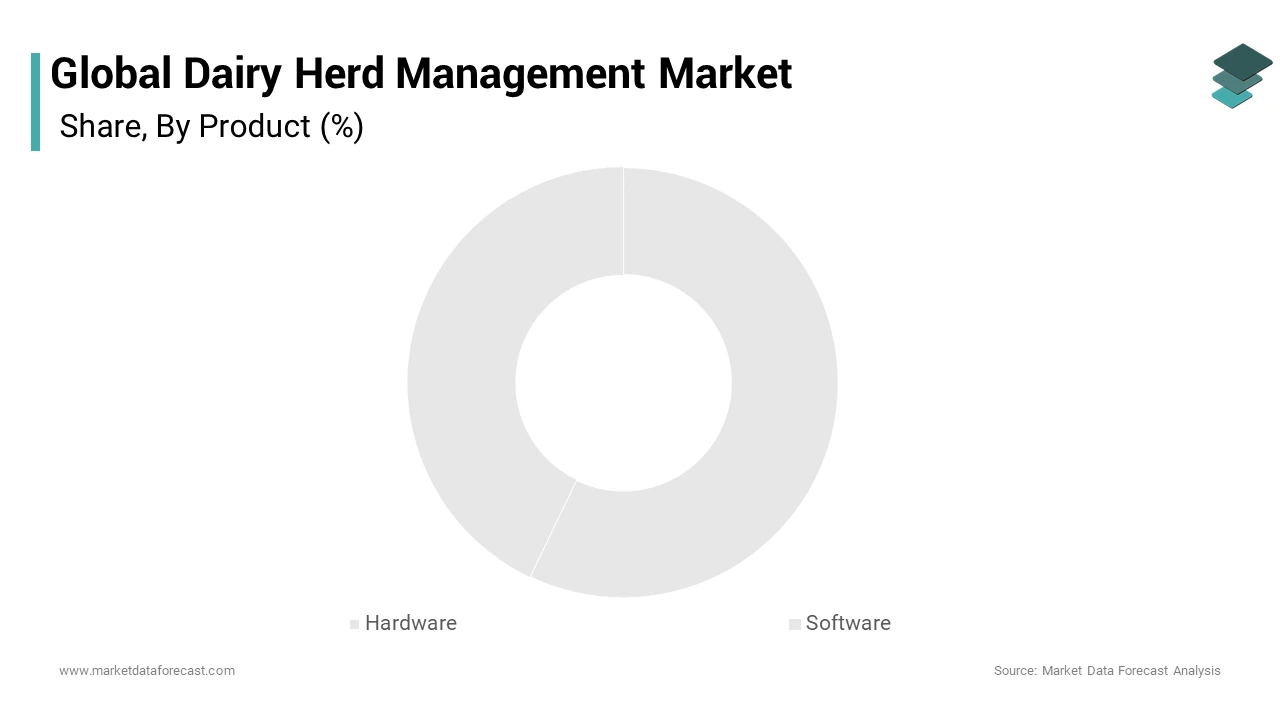
In 2025, the milk management systems segment led the global dairy herd management market by accounting for a 42.4% share. A primary driver of the milk management systems segment is the intensifying pressure from dairy cooperatives and processors to meet stringent quality benchmarks. These systems cover automated milking units, in-line milk sensors, and yield monitors. Their dominance is also supported by the direct link between milk output monitoring and farm profitability. Real-time metrics on volume, fat content,t protein levels, and somatic cell counts enable immediate interventions that safeguard milk quality and compliance with processor standards. Raw milk delivery payments in the European region are heavily structured around composition-based metrics, fostering a shift toward higher-quality, specializedmilk production. This payment structure incentivizes producers to adopt precision technologies that enable in-line, real-time monitoring of milk quality, such as fat/protein levels and somatic cell counts. The widespread implementation of these technologies serves as a proactive tool for identifying early indicators of herd health issues, specifically mastitis. Automation, particularly in the form of robotic milking systems, is experiencing rapid adoption as producers seek to optimize efficiency in response to high operational costs and labor shortages. The deployment of robotic technology is heavily concentrated in regions where labor-related economic pressures make automation a highly competitive option. Consequently, milk management hardware continues to anchor the hardware segment through its irreplaceable role in revenue assurance and quality control.
The cattle management systems segment is anticipated to witness the fastest CAGR of 12.4% from 2026 to 20,34 owing to the rising regulatory emphasis on individual animal tracking. This acceleration is also propelled by the convergence of animal welfare mandates and labor scarcity. Regulatory trends within Europe are increasingly focusing on the digitization of cattle tracking, with new frameworks aiming to implement digital identification and movement monitoring for bovines. Wearable cattle management devices fulfill this requirement while simultaneously generating behavioral data that predicts health events. Longitudinal observations indicate that the adoption of monitoring technologies, such as activity and rumination sensors, is associated with a potential decrease in lameness incidents and a reduction in the time needed for treatment response. An additional driver is the integration of these systems with national disease surveillance networks. Regional livestock health funds are providing subsidies for farms that adopt standardized, compliant wearable technologies as part of efforts to prevent bovine health issues. Similarly, programs exist in France and Sweden, en, wherereal-timee cattle data feeds into national early warning platforms. Northern European dairy farms are increasingly installing wearable tech to manage cattle individually, moving away from group-level observation.
By Deployment Model Insights
The web-based dairy herd management software segment captured the majority share of the global dairy herd management market in 2025. The supremacy of the web-based dairy herd management software segment is attributed to the operational flexibility and cost efficiency offered by cloud-hosted platforms, which eliminate the need for on-site servers, extensive IT support, rt or manual data backups. A further growth factor is the increasing reliance on remote monitoring by farm owners and consultants. Agricultural managers are increasingly utilizing portable digital tools to monitor livestock information multiple times throughout the day. Online platforms now provide instant notifications regarding significant biological events, wellness concerns, and nutritional inconsistencies within the herd. The transition toward frequent digital oversight reflects a broader trend of maintaining operational awareness through remote connectivity. The adoption of such responsive technology corresponds with a shift toward leaner staffing models on modern dairy operations. Enhanced data accessibility helps offset challenges associated with fewer personnel managing larger numbers of animals. A different reinforcing factor is seamless integration with third-party services. Web-based platforms routinely sync with national milk recording databases, veterinary networks,, ks and feed formulation tools. Many dairy farms in the Netherlands use specialized software for direct, automatic transfer of production data to a centralized national database. This seamless data integration assists with compliance processes for agricultural subsidy schemes, according to agricultural authorities. The combination of system interoperability and accessible subscription-based pricing models has contributed to the widespread adoption of web-based platforms, making them a common choice for modern dairy management in the region.
The on-premise software segment is likely to experience the fastest CAGR of 9.1% over the forecast period due to national data protection jurisprudence. This resurgence is also notably concentrated in Germany, Austria, and parts of Eastern Europe, where concerns over data control and cybersecurity outweigh convenience. Regulations regarding data protection classify detailed animal health information as sensitive, which influences how this information is managed when shared with third parties. As a result of these data control considerations, many large-scale dairy operations maintain, or are choosing to maintain, on-premise systems for local data storage rather than utilizing cloud-based alternatives. This preference for on-premise solutions indicates a trend towards localized, direct management of operational and health records within the German dairy sector. An additional driver is integration with legacy automation infrastructure. Numerous older agricultural facilities in regions known for dairy production utilize automated equipment that was manufactured before integrated internet connectivity became a standard feature. Integrating these older mechanical systems with modern web-based management platforms frequently necessitates a complete overhaul of the physical infrastructure. Localized software solutions often prove more compatible with legacy hardware because they can utilize traditional physical communication ports already present on the machines. Many dairy operations continue to utilize dedicated local servers for managing their herds as a strategy to maintain functional automation without the expense of a full technology migration. Thus, on-premises software thrives not as a legacy artifact but as a strategic solution for data governance and system compatibility in mature dairy regions.
By Application Insights
The milk harvesting segment was the largest segment in the dairy herd management market by occupying a share of 38.9% in 2025. The prominence of the milk harvesting segment is credited to the centrality of milking efficiency and milk quality to dairy farm economics. Automated systems that monitor yield composition and udder health in real time directly influence me, as most European milk contracts tie payments to fat protein and somatic cell thresholds. A further growth driver is near-universal adoption of automated milking in progressive dairy regions. Automated milking systems have become a widespread standard across Dutch dairy operations. These robotic systems continuously collect extensive datasets during every milking cycle. Integrating this information allows for the use of predictive tools to monitor and manage herd health concerns like mastitis. Automated technology has shifted the focus of dairy management toward proactive analysis and precision care. An additional factor is processor-driven traceability. Major dairy companies require real-time milk quality data from supplier farms to meet the EU Regulation on raw milk safety. Farms failing to provide digital records of temperature deviations or abnormal cell counts face contract penalties or exclusion. Consequently, milk harvesting applications have evolved from simple yield counters to compliance gateways, making them indispensable in integrated supply chains.
The heat stress management segment is on the rise and is expected to be thefastesthe fastest-growingin the market by witnessing a CAGR of 14.2% from 2026 to 2034. The swift growth of the heat stress management segment is propelled by climate change impacts on livestock productivity across temperate and Mediterranean zones. Moreover, rising ambient temperatures also contributeto the growth of this segment. Observations indicate a rise in average summer temperatures and an increased frequency of heatwaves across Southern Europe. Elevated environmental temperatures are associated with reduced milk production and diminished fertility in Holstein cows. Agricultural operations are adopting environmental monitoring systems that analyze temperature, humidity, and wind speed in conjunction with animal behavior and physiological metrics. Real-time risk forecasts are being utilized to activate automated cooling protocols, such as fans and sprinklers, in response to heat conditions. Companies like Lely and GEA have embedded AIAI-driveneat stress algorithms into their herd platforms that adjust ration energy density and milking frequency based on thermal load predictions. This application segment is transforming from a niche to a necessity due to rising climate vulnerability in key EU dairy regions.
REGIONAL ANALYSIS
North America Market Analysis
North America dominated the global dairy herd management market by accounting for a 32.1% share in 2025. The dominance of the North American market is driven by technological readiness and scale-intensive farming. Large-scale dairy operations are becoming a more prominent feature of the agricultural landscape. The increased size of these operations allows for more efficient distribution of fixed costs. A significant portion of larger dairy farms has adopted comprehensive digital platforms to monitor animal well-being and production. Data from various operational areas, such as nutrition and milking, is increasingly being synthesized into unified management systems. Technological integration is frequently utilized to streamline daily tasks and improve oversight across sizable herds. Regulatory frameworks such as the Pasteurized Milk Ordinance mandate rigorous record keeping, further incentivizing digital adoption. AdditionAdditionallic-private partnerships like the Dairy Data Warehouse facilitate benchmarking across millions of cows, providingreal-worldd validation of management decisions. This ecosystem of scale regulation and data collaboration sustains North America’s leadership position.
Europe Market Analysis
Europe followed closely in the global dairy herd management market by capturing a share of 29.1% in 2025. The expansion of the European market is fuelled by policy-driven digitization and cooperative structures. Regional strategies include funding specifically for integrating digital tools into agriculture to improve livestock health monitoring. There is a growing focus on using precision tools for animal care, which can help reduce the need for medical interventions. Several northern territories show a trend in implementing automated systems for tracking biological and behavioral patterns in herds. This shift toward digital monitoring indicates a broader modernization effort in livestock management. The presence of strong dairy cooperatives such as Arla and DMK enables bulk procurement of management systems, reducing per-unit costs. Furthermore, the EU’s Animal Health Law requires digital traceability for all movements, creating a baseline demand for identification and monitoring hardware. Europe’s market is distinguished not by farm size but by regulatory coherence and collective infrastructure that accelerates technology diffusion even on midsize holdings.
Asia Pacific Market Analysis
Asia Pacific is a key player in the global dairy herd management market, with growth concentrated in China, India, and Australia. The Chinese dairy industry is undergoing a structural shift toward larger, more centralized operations, significantly reducing the overall number of small-scale farms. This consolidation in China is facilitating the adoption of advanced technologies, such as robotic milking and automated health monitoring systems. In India, initiatives focused on digital herd recording are being implemented to improve livestock management and enhance calf survival rates. Australia's rural infrastructure, particularly its high level of connectivity, supports the use of cloud-based management tools for remote farming operations. Technological advancements and digitization are transforming dairy farming practices across different regions, albeit through varying approaches based on local industry structure and infrastructure. The region’s dynamism stems from structural transformation andstate-supportedd modernization.
Latin America Market Analysis
Latin America expanded gradually in the global dairy herd management market, led by Brazil and Mexico, where export-oriented dairies adopt management systems to meet international standards. Growth in regional dairy trade is incentivizing large-scale producers in key South American regions to adopt advanced traceability platforms to meet international compliance standards. The adoption of digital estrus detection technology is increasing on dairy farms to improve reproductive efficiency in tropical climates where traditional visual heat detection methods underperform. Major milk buyers in North America are mandating real-time quality monitoring for suppliers to meet enhanced sanitary and trade requirements. Latin American dairy farms are choosing mobile and practical tools over full automation to suit their pasture-based systems.
Middle East and Africa Market Analysis
The Middle East and Africa region is anticipated to grow in the global dairy herd management market from 2026 to 2034, with concentrated activity in Israel, South Africa, and the Gulf states. The Israeli dairy industry achieves high milk yields per cow, largely due to advanced, data-driven herd management practices. The widespread use of sophisticated, integrated technology systems contributes significantly to optimizing production efficiency within the sector. These integrated systems facilitate close monitoring and management of herd health, nutrition, and environmental factors. This technology-focused management approach characterizes operational practices within this dairy landscape. Water and feed scarcity drive precision feeding and health monitoring to maximize resource efficiency. In South Africa, the red meat and dairy sectors face increasing pressure to demonstrate animal welfare compliance for EU market access, with a portion of export-oriented farms now using digital health logs. Gulf nations like Saudi Arabia are investing in vertical dairies with climate-controlled barns where herd management software coordinates lighting, feeding, and feeding in extreme ambient conditions. Though small in size, this region exhibits high intensity adoption per operational herd driven by environmental constraints and premium market aspirations.
COMPETITIVE LANDSCAPE
The Dairy Herd Managing Market features intense competition characterized by rapid technological evolution and strategic differentiation among established players and specialized startups. Leading firms compete not only on hardware performance but increasingly on the depth of data analytics, interface design, and system interoperability. Innovation cycles have shortened as companies race to integrate artificial intelligeintelligencecomput,icomputicomputing c limate-responsive features into their platforms. Regional regulatory landscapes, particularly in Europe and North America, drive compliance-oriented development, pushing vendors to align with animal welfare and traceability mandates. At the same time, emerging markets attract competitive pricing models and localized support structures. The absence of universal data standards fosters both fragmentation and opportunity as firms vie to establish their ecosystems as de facto industry norms. This dynamic environment demands continuous R and D investment, agile o-to-market strategies, and de, engagement with farming communities to maintain relevance and leadership.
KEY MARKET PLAYERS
Some of the market players that dominate the global dairy herd management market are.
- Afimilk Ltd
- BouMatic
- Dairy Master
- DeLaval
- GEA Group AG
- Infovet
- Lely Holdings S.A.R.L
- SCR Dairy Inc
- Sum-It Computer Systems, Ltd
- Valley Agriculture Software
Top Players In The Market
- DeLaval is a globally recognized leader in dairy farming technology with deep integration across milkingg,g feedingand herdrd management solutions. The company offers a comprehensive suite of hardware and software inincludinghe DeLaval Herd Navigator, which uses real-time analysis to monitor cow health and fertility. In recent years, DeLa Val has intensified its focus on artificial intelligence and predictive analytics to enhance decision support for farmers. It has also expanded its cloud infrastructure to enable seamless data flow between on farm don-farmon-farmand mobile applications. DeLaval strengthens its position as a global leader in precision dairy innovation by partnering with agricultural universities and engaging in EU-funded digital farming projects.
- GEA Group deliversend-to-end farmm automation systems with a strong emphasis odata-drivenen herd management. Its GEA DairyNet platform unifies milk, ng,, fee, ding, and health monitoring into a single operational inte,,rface enreal-timeal time farm oversight. The company has recently accelerated its investment in edge computing to process sensor data directly on f a farm, rm reducing latency and improving response accuracy. GEA has also launched modular upgrade paths for eximilk systems,, ems allowing smaller farms to adopt digital tools incrementally. GEA is aligning its product roadmap with key sustainability goals like methane reduction and feed efficiency, establishing its herd management solutions as essential tools for compliant dairy operations across Europe, Asia, and the Americas.
- Lely is renowned for its robotic milking and barn automation systems that form the backbone of autonomous dairy farms. Its T4C InHerd software provides granular insights into individual cow behavior, fertility,y and health through continuous sensor monitoring. Lely has recently enhanced its data interoperability by adopting the ICAR standard, ds enabling seamless data exchawith third-partyyrty veterinary and nutrition platforms. The company also launched a farmer training academy to bridge the digital skills gap and ensure optimal system utilization. Lely expands its global reach by providing scalable digital solutions to both large commercial dairies and midsize family farms.
Top Strategies Used By The Key Market Participants
Key players in the Dairy Herd Management Market prioritize technological integration through the fusion of hardware ancloud-based analyticscs to deliver actionable insights. They actively pursue strategic partnerships with research institutions and agricultural cooperatives to validate and refine their solutions in real real-worlditions. Product innovation is accelerated by embedding artificial intelligence and machine learning to enable predictive health and fertility alerts. Companies are also investing in modular and scalable system architectures to cater to diverse farm sizes and budgets. Additionally t, they emphasize data standardization and interoperability to overcome velock-inck ecosystem-wideecosystem, wide collaboration, thereby enhancing user adoption and retention across global dairy regions.
MARKET SEGMENTATION
This research report on the global dairy herd management market is segmented and sub-segmented into the following categories.
By Product
- Hardware
- Milk
- Fertility
- Feeding
- Cattle Management Systems
- Software
- On-Premise
- Web-Based
By Application
- Milk Harvesting
- Reproduction
- Heat Stress
- Calf Management
By Region
- North America
- Europe
- Asia-Pacific
- Latin America
- Middle East and Africa