- Product Description Description
- Table of Contents TOC
- List of Table & Figure LOT
- Get Free Sample PDF Sample PDF
Market Size, 2025
$28.79 BnMarket Estimate, 2026
$34.32 BnMarket Forecast, 2034
$139.87 BnCAGR, 2026–2034
19.2%Executive Summary: Digital Workplace Management Market
- Market Scope: Comprehensive global digital workplace management market analysis covering hybrid work adoption, unified employee experiences, AI/cloud collaboration tools, intelligent automation, and cybersecurity solutions.
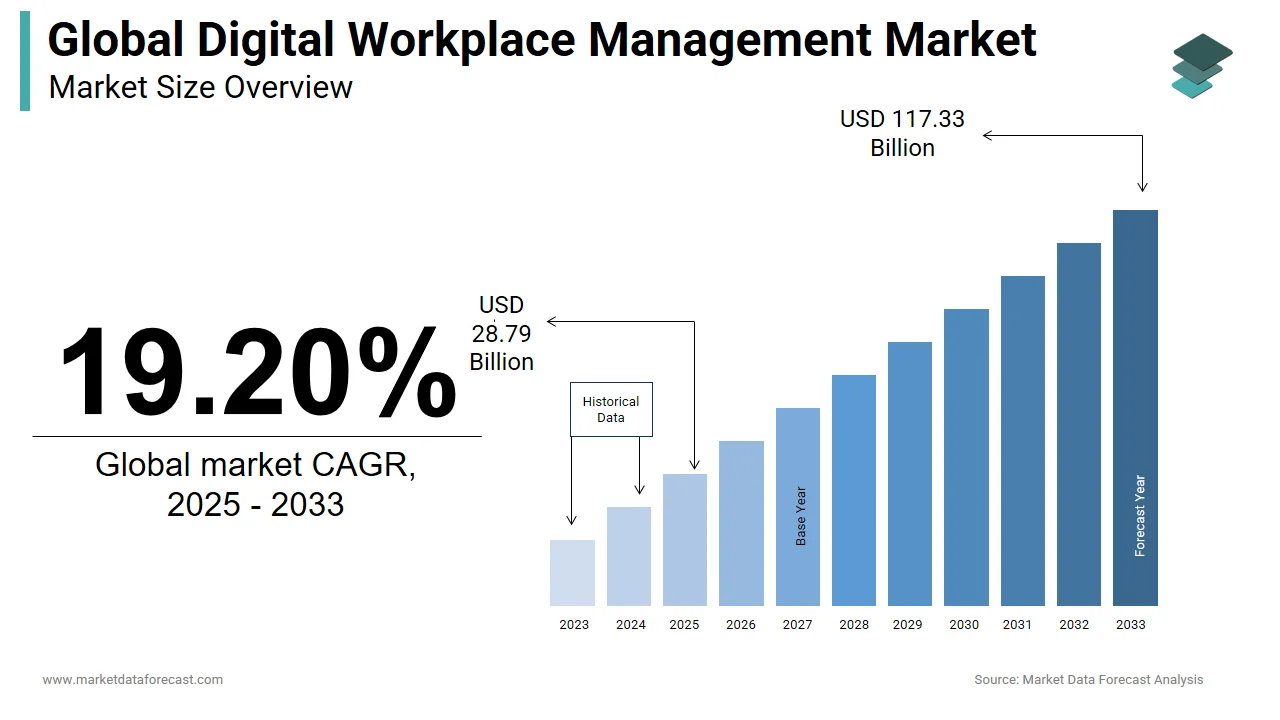
- Market Valuation: Valued at USD 28.79 billion (2025), estimated at USD 34.32 billion (2026), and projected to reach USD 139.87 billion by 2034, registering a strong CAGR of 19.2% (2026–2034).
- Primary Growth Drivers: Hybrid work model acceleration, demand for unified employee experiences, AI and cloud collaboration integration, intelligent automation, and blockchain data integrity. Key challenges include high initial investment costs and persistent cyber threats.
Key Market Segment Metrics (2026–2034)
| Category | Leading Segment (Position) | Fastest-Growing Segment |
|---|---|---|
| By Component, Enterprise & Vertical | Professional services (dominate component segment for consulting/integration) & Large enterprises (hold maximum market share) & North America (leads regional market size) | BFSI vertical (attains highest growth rate driven by secure digital collaboration and facial recognition adoption) |
| By Regional Adoption | North America (mature IT infrastructure and digital literacy) | Emerging regions (steady growth fueled by government digitalization initiatives and mobile-first strategies) |
Major Market Players & Market Structure
Market Structure: Highly competitive global IT services and digital workplace solutions landscape featuring major technology enterprises driving AI talent management, cloud-based HCM suite deployments, and blockchain data integrity innovations.
Key Companies: IBM, Atos, Wipro, DXC Technology, NTT Data, Citrix, Unisys, Capgemini, Cognizant, Accenture, TCS, CompuCom, HCL, Stefanini, Computacenter, and Getronics.
Global Digital Workplace Management Market Size
The global digital workplace management market was worth USD 28.79 billion in 2025. The global market is predicted to reach USD 34.32 billion in 2026 and USD 139.87 billion by 2034, growing at a CAGR of 19.2% from 2026 to 2034.
As organizations transition from traditional office setups to hybrid and remote models, the need for centralized management solutions has become paramount. According to Gartner, 74% of chief financial officers plan to shift some employees to permanent remote work, which underscores the structural shift driving adoption. As per the International Labour Organization, approximately 560 million people were working from home globally during the height of the pandemic, creating an urgent demand for robust digital infrastructure. These platforms enable enterprises to monitor performance, manage access rights, and ensure data compliance across distributed teams. According to McKinsey, connected organizations are significantly more likely to outperform peers in agility and innovation metrics. The integration of artificial intelligence and automation further refines these environments by predicting user needs and optimizing resource allocation. This market is not merely about software deployment, but represents a fundamental transformation in how work is organized, executed, and measured. Organizations are increasingly viewing digital workplace management as a strategic asset rather than a technical utility, aligning it with broader business continuity and talent retention goals.
MARKET DRIVERS
Surge in Hybrid Work Models Driving Unified Platform Adoption
The proliferation of hybrid work models is majorly driving the expansion of the global digital workplace management market. Organizations are no longer viewing remote work as a temporary contingency, but as a permanent operational structure that requires sophisticated coordination. According to Microsoft, 53% of employees are more likely to prioritize health and well-being over work than before the pandemic, which is compelling employers to invest heavily in digital infrastructure that supports mobility. This shift necessitates platforms that can seamlessly bridge the gap between physical and virtual offices, ensuring that employees remain connected regardless of location. As per Statista, the number of remote workers globally is projected to reach 1.1 billion, representing nearly 30% of the global workforce. Such massive dispersion of talent demands unified communication tools, project management systems, and secure access portals that function cohesively. Companies are prioritizing solutions that offer single sign-on capabilities, integrated video conferencing, and real-time document collaboration to maintain productivity levels. The complexity of managing diverse devices and operating systems further amplifies the need for centralized management consoles. Enterprises are increasingly adopting zero-trust security frameworks within their digital workplaces to protect sensitive data across unsecured home networks. This driver is not merely about convenience, but reflects a strategic imperative to retain top talent and maintain competitive agility in a labor market where flexibility is a key differentiator. The inability to provide a seamless digital experience directly correlates with decreased employee engagement and higher turnover rates, investing in these platforms critical for organizational stability.
Escalating Cybersecurity Threats Necessitating Integrated Security Protocols
The rising frequency and sophistication of cyberattacks have made integrated security a non-negotiable component of digital workplace management strategies, which is further contributing to the global digital workplace management market growth. As organizations expand their digital footprints, they expose themselves to a broader array of vulnerabilities that traditional perimeter-based security measures cannot adequately address. According to IBM, the average cost of a data breach reached 4.45 million dollars, marking a substantial increase over previous years. This financial burden compels enterprises to adopt digital workplace platforms that embed security at every layer of operation. As per Verizon, 74% of all breaches include the human element, highlighting the critical need for tools that monitor user behavior and enforce strict access controls. Digital workplace management solutions now incorporate advanced threat detection, multi-factor authentication, and encrypted communication channels to mitigate these risks. The integration of security information and event management systems allows organizations to detect anomalies in real time and respond swiftly to potential incidents. With regulatory frameworks such as the General Data Protection Regulation imposing hefty fines for non-compliance, companies are compelled to ensure that their digital environments meet stringent privacy standards. The convergence of security and productivity tools eliminates the friction often associated with separate security applications, thereby enhancing user adoption. Organizations are increasingly recognizing that a secure digital workplace is foundational to maintaining customer trust and brand reputation. The ability to manage identities, devices, and applications from a single pane of glass provides the visibility necessary to protect intellectual property and sensitive client data in an increasingly hostile cyber landscape.
MARKET RESTRAINTS
Complexity of Integrating Legacy Systems Hindering Seamless Deployment
The presence of entrenched legacy systems is a significant restraint to the global digital workplace management market growth. Many established enterprises operate on outdated infrastructure that lacks the interoperability required to connect with modern cloud-based platforms. According to Deloitte, 60% of organizations cite legacy system integration as a major barrier to digital transformation initiatives. These older systems often rely on proprietary protocols and closed architectures that do not support application programming interface connectivity, making data migration and synchronization challenging. As per Accenture, companies spend a notable portion of their technology budgets on maintaining legacy systems, leaving limited resources for innovation and modernization. The complexity of integrating these disparate systems results in prolonged implementation timelines and increased operational costs. Employees frequently encounter friction when switching between old and new platforms, leading to decreased productivity and resistance to change. The lack of standardized data formats further complicates the process, requiring extensive custom development to ensure compatibility. Organizations often face the dilemma of choosing between a complete system overhaul, which is costly and disruptive, or attempting partial integration, which may result in fragmented workflows. This technological debt creates a bottleneck that slows down the realization of benefits from digital workplace investments. Furthermore, the scarcity of skilled professionals who understand both legacy and modern technologies exacerbates the issue. Until organizations can effectively bridge this gap, the full potential of digital workplace management solutions will remain constrained by the limitations of their existing infrastructure.
High Initial Implementation Costs Limiting Adoption among Small Enterprises
The substantial upfront investment required for deploying comprehensive digital workplace management solutions is a significant restraint, particularly for small and medium-sized enterprises. These costs encompass not only software licensing fees, but also expenses related to hardware upgrades, network infrastructure improvements, and specialized training programs. According to Forrester, the total cost of ownership for enterprise digital workplace platforms can exceed 500,000 dollars in the first year for mid-sized organizations. This financial burden is often prohibitive for smaller businesses operating with tight budget constraints. As per the U.S. Small Business Administration, 20% of small businesses fail within the first year, making them risk-averse when it comes to large capital expenditures. The hidden costs associated with customization, data migration, and ongoing maintenance further inflate the initial outlay. Many small enterprises lack the internal expertise to manage complex deployments, necessitating the hiring of external consultants, which adds to the expense. The return on investment for these platforms is often long-term, making it difficult for cash-strapped organizations to justify the immediate expenditure. Additionally, the rapid pace of technological evolution means that today's investment may become obsolete within a few years, creating uncertainty about the longevity of the solution. This financial barrier prevents a significant segment of the market from accessing advanced digital workplace capabilities, thereby limiting overall market penetration. Without scalable pricing models or financing options, many potential users remain locked out of the benefits offered by these transformative technologies.
MARKET OPPORTUNITIES
Expansion of Artificial Intelligence Capabilities Creating Personalized Experiences
The integration of artificial intelligence into digital workplace management platforms is a substantial opportunity for enhancing user experience and operational efficiency. AI-driven features such as predictive analytics, natural language processing, and automated workflow orchestration enable organizations to deliver highly personalized interactions to their employees. According to PwC, artificial intelligence could contribute up to 15.7 trillion dollars to the global economy, with significant portions of this value derived from productivity improvements in workplace environments. As per MIT Sloan Management Review, companies that actively experiment with artificial intelligence report notable productivity growth compared to their peers. Digital workplace platforms leveraging AI can analyze user behavior patterns to recommend relevant documents, schedule meetings optimally, and automate routine administrative tasks. This level of personalization reduces cognitive load on employees, allowing them to focus on high-value activities. Intelligent chatbots and virtual assistants provide instant support for common queries, reducing the burden on human resources and information technology teams. The ability to process vast amounts of unstructured data enables these systems to identify trends and insights that would otherwise remain hidden. Organizations can use these insights to refine their processes, improve decision-making, and enhance employee engagement. The continuous learning capabilities of AI ensure that the digital workplace evolves alongside user needs, maintaining relevance and effectiveness. This opportunity extends beyond mere automation to create intuitive environments that anticipate user requirements, thereby fostering a more responsive and agile organizational culture.
Growth in Internet of Things Devices Enabling Smart Office Ecosystems
The proliferation of Internet of Things devices offers a compelling opportunity to transform physical office spaces into intelligent, responsive environments that integrate seamlessly with digital workplace management platforms. Sensors, smart lighting, climate control systems, and occupancy trackers generate real-time data that can be leveraged to optimize resource utilization and enhance employee comfort. According to IDC, global spending on Internet of Things solutions is expected to reach 1.1 trillion dollars, indicating robust growth in connected device adoption. As per Cisco, the number of Internet of Things connections is projected to surpass tens of billions, creating a vast network of data sources. Digital workplace management systems can ingest this data to provide insights into space utilization, energy consumption, and environmental conditions. This information enables facilities managers to make data-driven decisions regarding office layout, cleaning schedules, and equipment maintenance. Employees benefit from environments that automatically adjust to their preferences, such as lighting and temperature settings, improving overall satisfaction and well-being. The integration of Internet of Things data with workplace analytics allows organizations to identify bottlenecks in physical workflows and implement targeted improvements. Smart meeting rooms equipped with automated booking systems and presence detection eliminate scheduling conflicts and reduce wasted time. This convergence of physical and digital realms creates a holistic workplace experience that supports both productivity and sustainability goals. Organizations that capitalize on this opportunity can differentiate themselves by offering superior workplace experiences that attract and retain top talent in a competitive labor market.
MARKET CHALLENGES
Data Privacy Concerns Complicating Regulatory Compliance Efforts
Navigating the complex landscape of data privacy regulations is a major challenge for digital workplace management providers and their clients. As these platforms collect and process vast amounts of employee data, including communication records, location information, and behavioral metrics, they must adhere to stringent privacy laws that vary across jurisdictions. According to the International Association of Privacy Professionals, over 130 countries have enacted data protection legislation, creating a fragmented regulatory environment that is difficult to navigate. As per the European Data Protection Board, fines for non-compliance with the General Data Protection Regulation exceeded billions of euros in recent years, demonstrating the severe financial consequences of violations. Organizations struggle to balance the need for detailed analytics with the obligation to protect individual privacy rights. The requirement for explicit consent, data minimization, and the right to erasure complicates the design and operation of digital workplace systems. Providers must implement robust data governance frameworks that ensure transparency and accountability in data handling practices. The dynamic nature of privacy laws means that compliance is an ongoing process rather than a one-time achievement. Cross-border data transfers add another layer of complexity, as different regions have varying restrictions on where data can be stored and processed. Failure to address these concerns can result in legal penalties, reputational damage, and loss of customer trust. Organizations must invest heavily in legal expertise and technical safeguards to mitigate these risks, which can strain resources and slow down innovation.
Resistance to Change Impacting Employee Adoption Rates
Overcoming employee resistance to new digital workplace tools remains a persistent challenge that undermines the effectiveness of implementation efforts. Despite the availability of advanced features, many workers prefer familiar methods and are reluctant to alter their established routines. According to Prosci, projects with excellent change management are six times more likely to meet objectives than those with poor change management, highlighting the critical role of human factors in technology adoption. As per Gallup, only 23% of employees are fully engaged in their work, and introducing new systems without adequate support can further diminish morale. Lack of proper training and communication leads to confusion and frustration, causing employees to revert to shadow IT solutions that bypass official channels. This behavior creates security vulnerabilities and data silos that counteract the benefits of centralized management. Generational differences in technology proficiency also contribute to varying levels of acceptance, with older workers often requiring more assistance and reassurance. The perceived loss of autonomy or increased surveillance through monitoring features can trigger negative reactions and distrust. Organizations often underestimate the cultural shift required for digital workplace transformations, focusing instead on technical deployment. Without addressing the psychological and social aspects of change, even the most sophisticated platforms fail to achieve desired adoption rates. Sustained effort in change management, including leadership endorsement, peer advocacy, and continuous feedback loops, is essential to overcome this barrier and ensure successful integration.
REPORT COVERAGE
| REPORT METRIC | DETAILS |
| Market Size Available | 2025 to 2034 |
| Base Year | 2025 |
| Forecast Period | 2026 to 2034 |
| Segments Covered | By Component, Organization Size, Vertical, and Region. |
| Various Analyses Covered | Global, Regional, and Country-Level Analysis, Segment-Level Analysis, Drivers, Restraints, Opportunities, Challenges; PESTLE Analysis; Porter’s Five Forces Analysis, Competitive Landscape, Analyst Overview of Investment Opportunities |
| Countries Covered |
|
| Market Leaders Profiled | IBM, Atos, Wipro, DXC Technology, VMware Inc, NTT Data, Citrix, Unisys, Capgemini, Cognizant, Accenture, Cisco Systems Inc, TCS, Microsoft Corporation, CompuCom, HCL, Stefanini, Computacenter, and Getronics. |
SEGMENTAL ANALYSIS
By Component Insights
The solutions segment dominated the digital workplace management market by holding the leading share of the global market in 2025 due to the foundational need for robust software platforms that enable core functionalities such as collaboration, security, and device management. Organizations prioritize acquiring comprehensive suites that integrate seamlessly with existing enterprise resource planning systems to ensure operational continuity. According to Gartner, 75% of organizations will adopt a digital workplace platform to support hybrid work models, driving substantial demand for unified communication and collaboration tools. The proliferation of cloud-based infrastructure has further accelerated this trend, as businesses seek scalable solutions that can adapt to fluctuating workforce sizes without significant capital expenditure. As per IDC, spending on digital workplace solutions is expected to grow at a compound annual growth rate of 12% through 2026, reflecting the critical role these technologies play in maintaining productivity. The integration of artificial intelligence into these solutions enhances their value proposition by offering predictive analytics and automated workflow optimization. Enterprises are increasingly investing in endpoint management solutions to secure a diverse array of devices used by remote employees. The ability to provide a single pane of glass for managing applications, data, and identities reduces operational complexity and improves user experience. This dominance is sustained by continuous innovation in features such as real-time monitoring, threat detection, and seamless integration with third-party applications, ensuring that solutions remain indispensable to modern organizational structures.
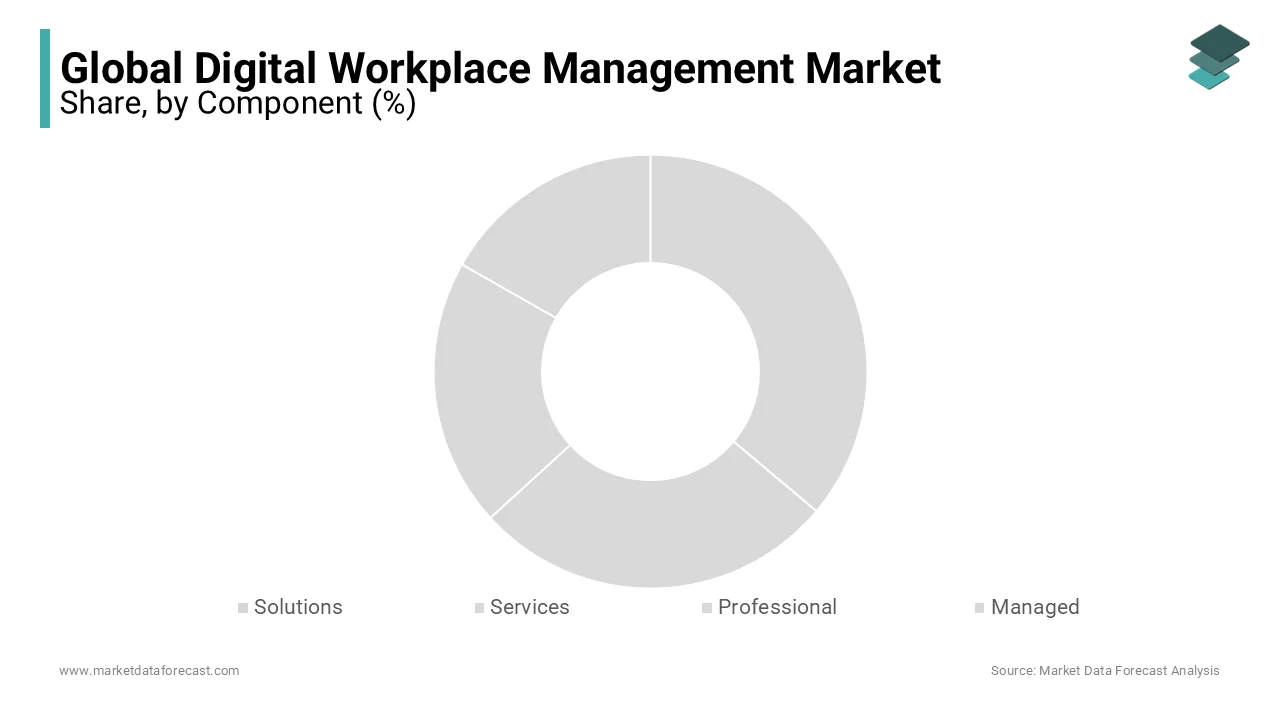
However, the managed services segment is estimated to record a promising CAGR in the global market over the forecast period owing to the rising complexity of IT environments and the shortage of skilled technical personnel. Organizations are increasingly outsourcing the management of their digital workplace infrastructure to specialized providers who offer expertise in security, compliance, and performance optimization. According to Deloitte, 45% of companies plan to increase their spending on managed IT services over the next two years to address talent gaps and reduce operational costs. The rise of cyber threats has further fueled this growth, as businesses seek proactive monitoring and rapid incident response capabilities that internal teams often struggle to provide. As per Statista, the global market for managed security services is projected to reach massive financial milestones, highlighting the critical importance of external expertise in safeguarding digital assets. The shift towards subscription-based models allows organizations to predict costs more accurately while accessing state-of-the-art technologies without large upfront investments. Managed service providers offer 24/7 support and continuous updates, ensuring that digital workplace environments remain secure and efficient. This segment is also benefiting from the adoption of artificial intelligence-driven automation, which enables providers to resolve issues faster and more effectively. The ability to scale services up or down based on business needs provides flexibility that is highly valued in dynamic market conditions.
By Organization Size Insights
The large enterprises segment held the leading share of the global market in 2025 due to their extensive resources, complex operational requirements, and urgent need for standardized processes across global teams. These organizations operate with thousands of employees spread across multiple locations, necessitating robust platforms that can manage diverse devices, applications, and security protocols centrally. According to Forrester, 80% of Fortune 500 companies have implemented comprehensive digital workplace strategies to enhance collaboration and drive innovation. The scale of operations in large enterprises generates significant volumes of data, requiring advanced analytics and management tools to derive actionable insights. As per McKinsey, large organizations that effectively leverage digital workplace technologies report higher productivity levels compared to those relying on traditional methods. Regulatory compliance is another critical driver, as large enterprises must adhere to stringent data protection laws across various jurisdictions, prompting investment in secure and compliant management solutions. The availability of substantial IT budgets allows these organizations to adopt cutting-edge technologies such as artificial intelligence and machine learning to optimize workflows. Furthermore, large enterprises often lead in adopting hybrid work models, creating a pressing need for integrated platforms that support seamless connectivity. Their influence extends to setting industry standards, encouraging vendors to develop sophisticated features tailored to enterprise-grade requirements. This leadership position is reinforced by long-term contracts with major technology providers, ensuring sustained revenue streams and market stability.
However, the small and medium-sized enterprises segment is estimated to grow at a healthy CAGR in the global market over the forecast period owing to the democratization of technology and the availability of affordable cloud-based solutions. Previously constrained by limited budgets and technical expertise, these organizations now have access to scalable platforms that offer enterprise-level capabilities at a fraction of the cost. According to the U.S. Small Business Administration, small businesses account for 99.9% of all U.S. businesses, representing a vast untapped market for digital workplace providers. The post-pandemic shift towards remote work has compelled small and medium-sized enterprises to adopt digital tools to remain competitive and attract talent. As per Gartner, a substantial majority of small and medium-sized businesses plan to increase their investment in digital collaboration tools. The ease of deployment and minimal maintenance requirements of cloud-based solutions make them particularly attractive to organizations with limited IT staff. Vendors are responding to this demand by offering modular packages that allow businesses to pay only for the features they need, reducing financial barriers. The agility of small and medium-sized enterprises enables them to adopt new technologies quickly, driving rapid market penetration. Additionally, government initiatives supporting digital transformation in the small business sector are further accelerating adoption rates. This segment offers significant growth potential as more organizations recognize the strategic value of digital workplace management in enhancing efficiency and customer engagement.
By Vertical Insights
The BFSI segment dominated the market by holding the major share of the global market in 2025 due to its stringent regulatory requirements, high security concerns, and the critical need for seamless customer interactions. Financial institutions handle sensitive data and must comply with rigorous standards such as the General Data Protection Regulation and the Sarbanes-Oxley Act, necessitating robust management solutions that ensure data integrity and privacy. According to PwC, 85% of banks are prioritizing digital transformation initiatives to enhance customer experience and operational efficiency, driving significant investment in workplace technologies. The shift towards digital banking and mobile payments has increased the complexity of IT environments, requiring centralized management of diverse endpoints and applications. As per Deloitte, financial services firms are among the top spenders on cybersecurity, allocating a notable portion of their IT budgets to protect against evolving threats. The need for real-time collaboration among traders, analysts, and customer service representatives further fuels demand for unified communication platforms. Regulatory pressures also mandate strict access controls and audit trails, which are integral features of advanced digital workplace management systems. The competitive landscape in the financial sector compels institutions to adopt innovative technologies to differentiate themselves and retain customers. Furthermore, the integration of artificial intelligence for fraud detection and personalized customer services requires sophisticated infrastructure that digital workplace platforms provide. This vertical's leadership is sustained by its continuous investment in technology to maintain trust and compliance in an increasingly digital economy.
However, the healthcare segment is experiencing the fastest growth in the digital workplace management market owing to the urgent need for improved patient care, regulatory compliance, and operational efficiency in the wake of global health crises. Hospitals and clinics are rapidly adopting digital tools to facilitate remote consultations, manage electronic health records, and coordinate care among distributed teams. According to HIMSS, 90% of healthcare organizations have accelerated their digital transformation plans, recognizing the critical role of technology in delivering quality care. The rise of telemedicine has created a demand for secure and reliable communication platforms that enable doctors to interact with patients remotely. As per Accenture, healthcare providers that invest in digital workplace technologies report marked improvements in patient satisfaction scores. The complexity of managing medical devices, ensuring data privacy under regulations like HIPAA, and integrating disparate systems drives the adoption of comprehensive management solutions. The shortage of healthcare professionals further necessitates tools that streamline administrative tasks and reduce burnout. Digital workplace platforms offer automation capabilities that free up staff to focus on patient care. The integration of Internet of Things devices for remote patient monitoring adds another layer of complexity that requires robust management infrastructure. Government initiatives supporting digital health initiatives are also contributing to this rapid growth. As healthcare continues to evolve towards value-based care models, the demand for efficient and secure digital workplace solutions will remain strong.
REGIONAL ANALYSIS
North America Digital Workplace Management Market Analysis
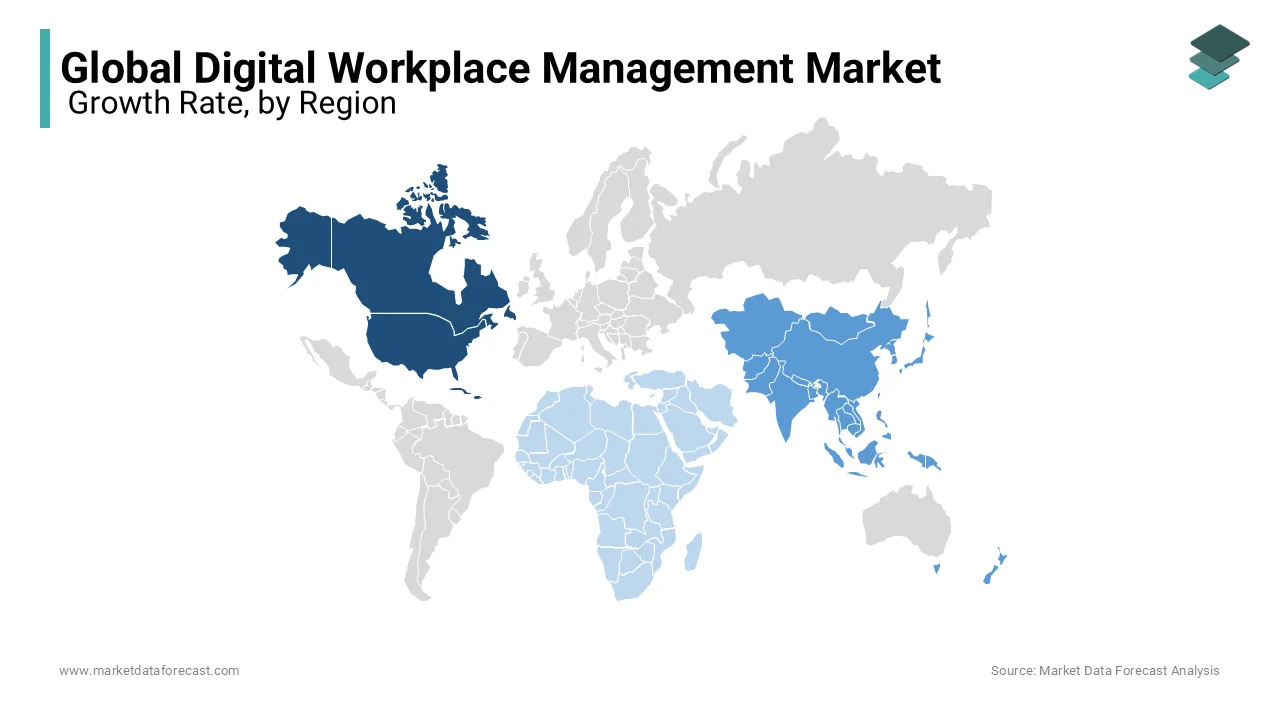
North America accounted for 36.3% of the global market share in 2025 and is likely to maintain its dominant market position through robust technological expansions and sustained high enterprise adoption rates over the next few years owing to the early adoption of advanced technologies and the presence of major technology vendors. The region benefits from a highly developed IT infrastructure and a workforce that is accustomed to using digital tools for collaboration and productivity. According to the Bureau of Labor Statistics, the number of remote workers in the United States increased significantly between pre-pandemic baselines and recent years, creating sustained demand for management solutions. The presence of leading companies such as Microsoft, Cisco, and VMware fosters innovation and competition, resulting in sophisticated offerings that meet diverse enterprise needs. As per Statista, the United States alone accounts for over 60% of the regional market value, reflecting its dominant position in the global technology landscape. Regulatory frameworks such as the California Consumer Privacy Act encourage organizations to invest in secure and compliant workplace platforms. The strong emphasis on employee experience and talent retention further drives adoption, as companies seek to provide flexible and engaging work environments. Investment in research and development remains high, ensuring that North American vendors stay at the forefront of technological advancements. The region's mature market status means that growth is driven by upgrades and expansions rather than initial deployments, focusing on integration and artificial intelligence capabilities.
Europe Digital Workplace Management Market Analysis
Europe is projected to experience steady, compliance-driven market expansion propelled by stringent data protection mandates and a continuous regional push toward sustainable enterprise solutions over the next few years. The implementation of the General Data Protection Regulation has compelled organizations to adopt secure and compliant management solutions, driving market growth. According to Eurostat, a substantial%age of employed individuals in the European Union worked from home at least occasionally, highlighting the prevalence of hybrid work models. Countries such as Germany, the United Kingdom, and France are leading adopters, driven by robust industrial bases and progressive labor policies. As per the European Commission, digital transformation is a key priority for the region, with substantial funding allocated to support small and medium-sized enterprises in adopting digital tools. The cultural emphasis on work-life balance encourages the adoption of flexible work arrangements, which rely heavily on digital workplace platforms. Vendors in Europe are increasingly focusing on green IT solutions, aligning with the region's sustainability goals. The fragmented nature of the market, with multiple languages and regulatory environments, presents challenges but also opportunities for localized solutions. Collaboration between public and private sectors is fostering innovation and accelerating the adoption of advanced workplace technologies across the continent.
Asia Pacific Digital Workplace Management Market Analysis
The Asia Pacific region is expected to register the fastest regional growth rate, heavily catalyzed by massive digital economy initiatives, rapid mobile-first deployments, and expanding enterprise infrastructure over the next few years. Countries such as China, India, and Japan are leading the charge, driven by government initiatives promoting digital economy development. According to the Asian Development Bank, digital economies in Asia are expected to contribute significantly to regional GDP, underscoring the economic importance of digital transformation. The proliferation of smartphones and affordable internet access has enabled widespread adoption of mobile-first workplace solutions. As per IDC, the Asia Pacific market for digital workplace services is projected to experience double-digit annual growth, driven by rapid cloud adoption and a massive surge in enterprise digitization across emerging economies.
COMPETITIVE LANDSCAPE
The competition in the Digital Workplace Management Market is characterized by intense rivalry among established technology giants and innovative niche players who strive to offer comprehensive and integrated solutions. Major vendors compete on the basis of platform breadth, security capabilities, ease of use, and interoperability with existing enterprise systems. The market sees frequent mergers and acquisitions as companies seek to fill gaps in their portfolios and acquire specialized technologies such as artificial intelligence-driven analytics and advanced threat detection. Differentiation is increasingly achieved through the integration of intelligent automation features that personalize user experiences and streamline administrative tasks. Price competition is moderate, with value being derived from the total cost of ownership and the ability to reduce operational complexity rather than just initial licensing fees. Customer retention is a key focus, with providers investing heavily in customer success programs and continuous platform updates. The entry of cloud native startups adds pressure on incumbents to innovate rapidly and offer more flexible pricing models. Regulatory compliance and data privacy concerns also shape competitive dynamics, as vendors must demonstrate robust governance frameworks to win trust in highly regulated industries. Overall, the market remains dynamic, with success depending on the ability to deliver seamless, secure, and scalable digital workplace experiences.
KEY MARKET PLAYERS
The leading companies operating in the global digital workplace management market include:
- IBM
- Atos
- Wipro
- DXC Technology
- VMware Inc.
- NTT Data
- Citrix
- Unisys
- Capgemini
- Cognizant
- Accenture
- Cisco Systems Inc.
- TCS
- Microsoft Corporation
- CompuCom
- HCL
- Stefanini
- Computacenter
- Getronics
TOP PLAYERS IN THE MARKET
- Microsoft Corporation maintains a dominant position in the Digital Workplace Management Market through its comprehensive Microsoft 365 suite and Azure cloud infrastructure. The company integrates productivity tools such as Teams, SharePoint, and OneDrive with advanced security features like Microsoft Defender and Intune to provide a unified experience. Recent actions include enhancing artificial intelligence capabilities within Copilot to automate tasks and improve decision-making for employees. Microsoft continuously updates its platform to support hybrid work models, ensuring seamless collaboration across devices. The organization focuses on interoperability with third-party applications, allowing enterprises to customize their digital environments. By prioritizing user experience and robust security protocols, Microsoft strengthens its ecosystem appeal. Their investment in global data centers ensures low latency and high availability, which is critical for large-scale deployments. This holistic approach enables organizations to manage identities, devices, and data from a single interface, reinforcing Microsoft’s role as a foundational provider in the digital workplace landscape.
- Cisco Systems Inc leverages its extensive networking expertise to deliver secure and connected digital workplace solutions. The company offers Webex as a central collaboration hub, integrating video conferencing, messaging, and calling capabilities with strong security endpoints. Cisco has recently focused on expanding its hybrid work offerings by introducing hardware and software solutions that bridge physical and virtual offices. Their acquisition of Splunk enhances their ability to provide observability and security insights across digital workplace environments. Cisco emphasizes zero trust security architectures, ensuring that access to resources is strictly controlled and monitored. The company collaborates with partners to integrate its technologies with various enterprise applications, creating a flexible ecosystem. By investing in Internet of Things connectivity and edge computing, Cisco enables smart office functionalities that optimize space utilization and energy efficiency. Their commitment to open standards and interoperability allows organizations to build customized digital workplaces that meet specific operational needs while maintaining high levels of security and performance.
- VMware Inc provides critical infrastructure solutions that underpin modern digital workplace environments through its Workspace ONE platform. The company specializes in unified endpoint management, enabling organizations to securely manage devices, applications, and identities across diverse operating systems. VMware has recently strengthened its position by integrating artificial intelligence-driven analytics into its management console, offering predictive insights into user behavior and system performance. The focus on digital workspace transformation helps enterprises streamline operations and enhance employee productivity. VMware collaborates closely with cloud providers to ensure seamless integration with public and private cloud environments. Their emphasis on security includes advanced threat detection and compliance monitoring tools that protect sensitive corporate data. By supporting a wide range of devices and applications, VMware offers flexibility that appeals to organizations with complex IT landscapes. The company continues to innovate in areas such as virtual desktop infrastructure and application delivery, ensuring that users have consistent and secure access to resources regardless of location or device type.
TOP STRATEGIES USED BY KEY MARKET PARTICIPANTS
Key players in the Digital Workplace Management Market primarily employ strategies centered on strategic acquisitions, product innovation, and ecosystem partnerships to maintain competitive advantage. Companies frequently acquire specialized technology firms to integrate advanced capabilities such as artificial intelligence, security analytics, and user experience monitoring into their existing platforms. This approach allows them to rapidly expand their feature sets and address emerging customer needs without developing everything in-house. Product innovation remains a core strategy, with vendors continuously updating their suites to support hybrid work models, enhance security protocols, and improve interoperability with third-party applications. Establishing robust partner ecosystems is another critical strategy, enabling providers to offer comprehensive solutions that integrate seamlessly with other enterprise software. Additionally, companies focus on expanding their global presence by localizing services and complying with regional regulatory requirements. Investment in research and development ensures that platforms remain at the forefront of technological advancements, particularly in areas like machine learning and automation. These strategies collectively help vendors differentiate their offerings, retain existing customers, and attract new clients in a rapidly evolving market landscape.
MARKET SEGMENTATION
This research report on the global digital workplace management market has been segmented and sub-segmented based on the component, organization size, vertical, and region.
By Component
-
Solutions
-
Services
-
Professional
-
Managed
By Organization Size
-
Small and Medium-Sized Enterprises
-
Large Enterprises
By Vertical
-
BFSI
-
Telecommunications and ITEs
-
Media and Entertainment
-
Retail and Consumer Goods
-
Manufacturing
By Region
-
North America
-
The United States
-
Canada
-
Rest of North America
-
-
Europe
-
The United Kingdom
-
Spain
-
Germany
-
Italy
-
France
-
Rest of Europe
-
-
The Asia Pacific
-
India
-
Japan
-
China
-
Australia
-
Singapore
-
Malaysia
-
South Korea
-
New Zealand
-
Southeast Asia
-
-
Latin America
-
Brazil
-
Argentina
-
Mexico
-
Rest of LATAM
-
-
The Middle East and Africa
-
Saudi Arabia
-
UAE
-
Lebanon
-
Jordan
-
Cyprus
-