- Product Description Description
- Table of Contents TOC
- List of Table & Figure LOT
- Get Free Sample PDF Sample PDF
Market Size, 2025
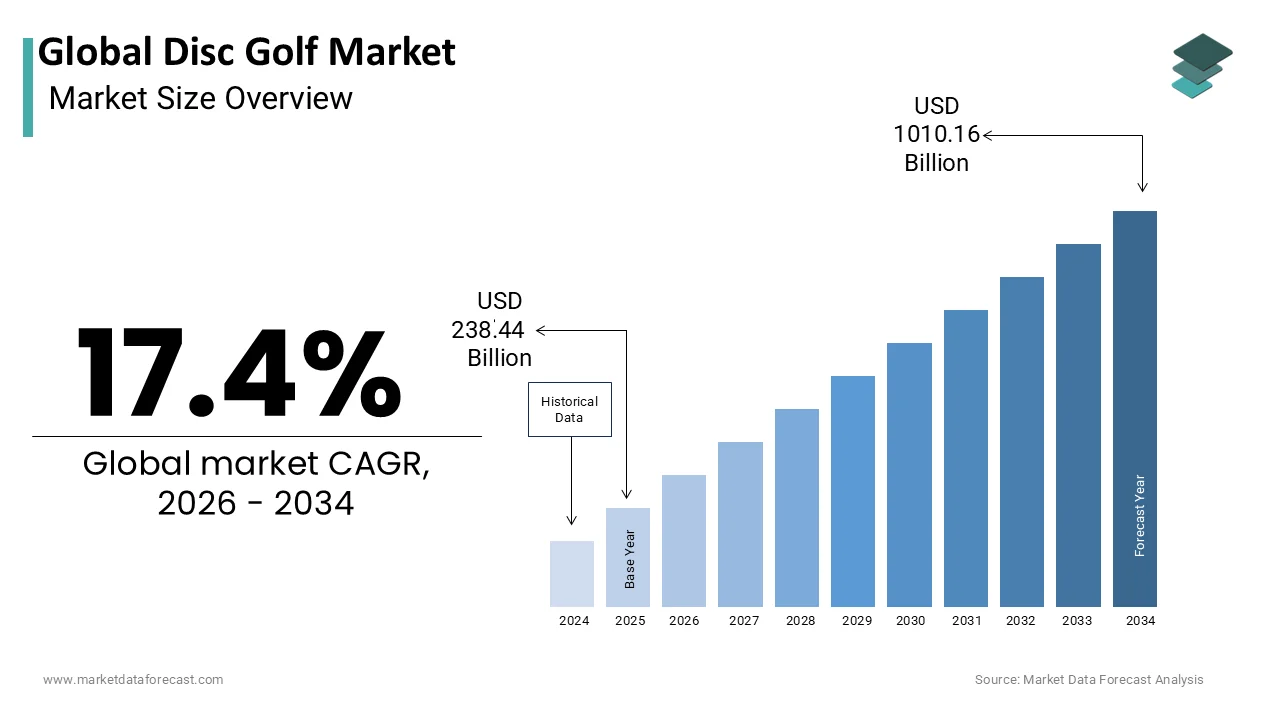
$238.44 BnMarket Estimate, 2026
$279.93 BnMarket Forecast, 2034
$1,010.16 BnCAGR, 2026–2034
17.4%Global Disc Golf Market Size
The global disc golf market was valued at USD 238.44 billion in 2025, is expected to have a 17.4% CAGR from 2026 to 2034, and be worth USD 1010.16 billion by 2034 from USD 279.93 billion in 2026.
Disc golf represents a rapidly expanding segment within the broader recreational sports industry characterized by the use of specialized flying discs to navigate obstacle-rich courses to complete each hole in the fewest throws. This sport combines elements of traditional golf with the accessibility of frisbee throwing, attracting a diverse demographic ranging from casual enthusiasts to competitive athletes. The growth trajectory is supported by increasing participation rates globally as individuals seek affordable and outdoor-oriented leisure activities. According to the Professional Disc Golf Association, the number of active members has surpassed 100,000 globally, reflecting heightened interest and engagement across various age groups. The sport requires minimal equipment and can be played in public parks, making it an inclusive option for communities with limited recreational budgets. As per data from the World Flying Disc Federation, disc golf is recognized in over 100 countries,s indicating its global reach and cultural penetration. The environmental aspect of the sport also appeals to eco-conscious consumers who prefer low-impact activities that utilize existing green spaces without extensive infrastructure development. Urban planning initiatives increasingly incorporate disc golf courses into park designs to promote physical activity and social interaction. The rise of social media platforms has further amplified visibility, allowing players to share techniques, es course reviews, and tournament highlights, thereby fostering a vibrant online community. This digital engagement complements local club activities, creating a robust ecosystem that sustains long-term growth and participant retention in the disc golf sector.
MARKET DRIVERS
Surging Participation Rates and Community-Driven Growth
The exponential increase in player participation is majorly driving the growth of the global disc golf market, which is fueled by the sport’s low barrier to entry and strong community appeal. Unlike traditional golf, which requires expensive equipment and membership fees, es disc golf can be started with a single disc costing less than 15 dollars and access to free public courses. According to the Professional Disc Golf Association, the number of course layouts globally has grown to exceed 14,000, with thousands more under construction globally. This expansion in infrastructure directly correlates with rising player counts as new courses attract residents and tourists alike. The social nature of the sport encourages group play and family involvement, making it a popular choice for community bonding. Local clubs and leagues organize regular events that foster camaraderie and skill development among players of all levels. The Professional Disc Golf Association reports that junior participation has grown substantially, ly indicating a sustainable pipeline of future players. Schools and youth organizations are increasingly introducing disc golf as part of physical education programs due to its simplicity and safety. The inclusive environment welcomes individuals regardless of athletic ability or background, further broadening the participant base. This grassroots momentum creates consistent demand for discbags and accessories as players progress from beginner to advanced levels. The viral nature of disc golf content on social media platforms also inspires newcomers to try the sport, contributing to sustained market expansion through organic word of mouth and digital influence.
Media Exposure and Professional Tournament Sponsorship
Increased media coverage and high-profile sponsorships have significantly elevated the profile of disc golf, driving commercial interest and market growth. Major streaming platforms now broadcast professional tournaments,s reaching millions of viewers worldwide and showcasing the athleticism and precision required in competitive play. According to viewership data from major disc golf tours, video coverage of premium events has gathered tens of millions of views annually, drawing large crowds and significant corporate sponsorship. Brands from various sectorss, including automotive, beverage, and outdoor apparel, are investing in the sport to connect with its dedicated and engaged audience. The production quality of tournament broadcasts has improved dramatically with multiple camera angles, drone footage, and expert commentary enhancing the viewer experience. This professionalization attracts new fans who may not play but follow the sport closely, purchasing merchandise and supporting sponsored players. The establishment of prestigious championships with substantial prize pools incentivizes top talent to pursue disc golf full-time, raising the overall level of competition. Media partnerships have also facilitated the creation of instructional content and documentaries that educate audiences about the nuances of the game. As per industry observations, the correlation between media exposure and equipment sales is evident as viewers seek to emulate their favorite professionals. This synergy between entertainment and participation fuels a virtuous cycle where increased visibility drives participation, which in turn attracts more sponsors and media attention, sustaining the market’s upward trajectory.
MARKET RESTRAINTS
Limited Availability of Suitable Land in Urban Areas
The scarcity of suitable land for course construction in densely populated urban areas is hampering the disc golf market expansion. Developing a standard 18-hole course requires approximately 30 to 50 acres of land with specific topographical features such as trees, elevation changes,s and open fairways. According to urban planning studies, available green space in major cities is often prioritized for housing infrastructure or traditional sports facilities, leaving little room for new disc golf installations. Zoning regulations and environmental protection laws further complicate the approval process for new courses,s leading to lengthy delays and increased costs. Community opposition sometimes arises due to concerns about noise traffic and potential damage to vegetation, although these issues are often mitigated through proper design. The lack of dedicated courses forces players to rely on multi-use parks, where conflicts with other users can occur, ur limiting the quality of the playing experience. In regions with high land values, municipalities are reluctant to allocate large parcels for niche sports without guaranteed high usage rates. This constraint limits the geographic expansion of the market, particularly in metropolitan areas where population density is highest and potential player bases are largest. Without strategic integration into the urban planning framework, the growth of disc golf may stagnate in key demographic centers. Developers must innovate with compact course designs or shared use agreements to overcome these spatial limitations and ensure continued accessibility for urban players.
Perception as a Niche Sport Limiting Mainstream Adoption
The persistent perception of disc golf as a niche or alternative sport hinders its widespread adoption and mainstream commercial viability, which is further hampering the expansion of the disc golf market. Despite growing popularity,y many potential participants remain unaware of the sport or view it as a casual backyard activity rather than a legitimate competitive endeavor. According to consumer behavior surveys, a significant portion of the general public lacks familiarity with the rules, equipment and benefits of disc golf compared to established sports like soccer or basketball. This knowledge gap limits the effectiveness of mass marketing campaigns and reduces the likelihood of spontaneous trial. Retailers often allocate minimal shelf space to disc golf products due to perceived lower turnover rates compared to traditional sporting goods. The lack of representation in mainstream sports media further reinforces its outsider status, making it difficult to attract broad-based sponsorship and investment. Educational institutions may hesitate to include disc golf in their curricula due to unfamiliarity among staff and administrators. The absence of Olympic recognition also limits government funding and institutional support in many countries. Overcoming this stigma requires sustained educational efforts and high-visibility events that demonstrate the sport’s competitive depth and physical demands. Until disc golf achieves greater cultural legitimacy, it will struggle to compete for resources and attention against more entrenched recreational activities. Changing public perception is a gradual process that requires coordinated efforts from governing bodies, manufacturers,s and players alike.
MARKET OPPORTUNITIES
Integration into Public Park Infrastructure and Tourism
The strategic integration of disc golf courses into public park systems and tourism initiatives presents a significant opportunity for market expansion. Municipalities are increasingly recognizing disc golf as a cost-effective way to enhance park utility and attract visitors without substantial capital investment. According to tourism boards, regions with well-maintained disc golf courses report increased foot traffic and longer visitor stays, benefiting local businesses such as restaurants and hotels. Destination disc golf tourism is emerging as a lucrative niche with travelers planning trips specifically to play renowned courses in scenic locations. This trend encourages collaboration between park departments and private operators to develop high-quality facilities that cater to both locals and tourists. The installation of permanent baskets and signage transforms underutilized green spaces into active recreational hubs, promoting health and wellness in communities. Grants and funding opportunities from health and recreation agencies support these projects by highlighting the social and physical benefits of the sport. Partnerships with tourism boards can promote disc golf trails that connect multiple courses across a region, encouraging extended stays and exploration. The low maintenance requirements of disc golf courses make them an attractive option for cash-strapped local governments seeking to maximize return on investment. By positioning disc golf as a key component of outdoor recreation infrastructure, stakeholders can unlock new revenue streams and foster community engagement while expanding the sport’s reach.
Development of Youth Programs and School Curricula
Expanding disc golf presence in educational institutions through youth programs and school curricula offers a substantial opportunity for long-term market growth. Introducing the sport at an early age cultivates lifelong players and builds a strong foundation for future participation. According to educational researchers, physical activities that are inclusive and skill-based, like disc golf,improve student engagement and physical fitness levels. Schools can easily implement disc golf units using existing fields and affordable equipment, ent making it an accessible option for physical education departments. Partnerships between disc golf manufacturers and educational organizations can provide training resources,rces lesson lans, and equipment grants to facilitate adoption. Youth leagues and after-school programs create structured environments for skill development and social interaction, which foster a sense of belonging among participants. The success of pilot programs in various districts demonstrates the potential for widespread integration into national education standards. Universities are also expanding their disc golf teams and scholarships, attracting talented athletes and legitimizing the sport at the collegiate level. This academic endorsement enhances the sport’s credibility and provides a pathway for competitive advancement. By embedding disc golf in the educational system,m stakeholders can ensure a steady influx of new players and supporters. This strategy not only boosts equipment sales but also strengthens the cultural footprint of the sport,ensuring its sustainability and relevance for future generations.
MARKET CHALLENGES
Standardization of Rules and Course Design Guidelines
The lack of universal standardization in rules and course design guidelines is majorly challenging the disc golf market expansion. While the Professional Disc Golf Association provides comprehensive rules, es variations exist in local leagues and informal play,, leading to confusion among newcomers. According to course designers, inconsistent layout standards can result in uneven playing experiences, affecting fairness and enjoyment. Some courses may be overly technical or poorly maintained,d discouraging repeat visits and negative word of mouth. The absence of standardized certification for course architects means quality varies significantly depending on the designer’s expertise and budget. This inconsistency complicates the organization of large-scale tournaments where players must adapt to vastly different conditions without adequate preparation. International competition is hindered by differing regional interpretations of rules and scoring methods, creating barriers to global unity. Efforts to harmonize standards are ongoing but face resistance from local communities accustomed to their own traditions. The lack of clear guidelines for safety and environmental impact also raises concerns among land managers and regulators. Establishing and enforcing universal standards is crucial for elevating the sport’s professional image and ensuring a positive experience for all participants. Without cohesive guidelines,s the market risks fragmentation, which could impede its ability to attract mainstream sponsors and media partners who value consistency and reliability.
Environmental Impact and Sustainability Concerns
Growing awareness of environmental sustainability is further challenging the global market expansion as concerns arise regarding the ecological impact of course construction and maintenance. Although disc golf is generally considered low impact, the concentration of foot traffic on specific fairways can lead to soil erosion, vegetation damage, and habitat disruption. According to environmental studies, repeated use of certain paths can compact soil and reduce biodiversity if not managed properly. The use of non-biodegradable materials in some discs and course infrastructure also raises waste management issues. Players and organizers are increasingly scrutinized for their environmental stewardship, prompting calls for more sustainable practices. Course designers must balance playability with conservation,n requiring careful planning and ongoing maintenance to mitigate negative effects. The introduction of invasive plant species through footwear or equipment is another risk that requires monitoring and prevention strategies. Negative publicity related to environmental damage can lead to course closures or restrictions limiting access for players. Addressing these concerns requires proactive measures such as installing durable tee p,s implementing rotation schedules for fairways, and using eco-friendly materials. Education campaigns aimed at players can promote responsible behavior, such as staying on designated paths and packing out trash. Failure to address sustainability issues may result in regulatory pushback and loss of public support, rt threatening the long-term viability of disc golf venues in sensitive natural areas.
REPORT COVERAGE
| REPORT METRIC | DETAILS |
| Market Size Available | 2025 to 2034 |
| Base Year | 2025 |
| Forecast Period | 2026 to 2034 |
| Segments Covered | By Product, Application, and Region |
| Various Analyses Covered | Global, Regional & Country Level Analysis, Segment-Level Analysis, DROC, PESTLE Analysis, Porter’s Five Forces Analysis, Competitive Landscape, Analyst Overview on Investment Opportunities |
| Regions Covered | North America, Europe, Asia Pacific, Latin America, the Middle East, and Africa |
| Market Leaders Profiled | ABC Discs, CHING, DGA, Discmania, FADE, Frisbee, Lightning, Millennium.Prodigy, Unbranded Wham-O, Innova Disc Golf, Chilli Disc Golf |
SEGMENTAL ANALYSIS
By Product Insights
The distance drivers segment held the leading share of the global market in 2025 due to their essential role in maximizing throw length and their high visibility in professional play. These discs are designed with sharp edges and high speed ratings, allowing experienced players to achieve maximum distance off the tee,e which is critical for competitive advantage. According to the Professional Disc Golf Association, distance drivers account for the largest volume of disc sales as they are the first discs purchased by advanced players seeking to improve their game. The technological advancements in plastic blends and aerodynamic designs have made these discs more stable and predictable, encouraging frequent upgrades and multiple purchases. Players often own several distance drivers with different flight characteristics to handle various wind conditions and course layouts. The marketing focus of major manufacturers heavily emphasizes distance capabilities,s leveraging professional endorsements to drive consumer desire. Social media content frequently showcases long drives, es creating aspirational demand among amateur players who wish to emulate professional techniques. Furthermore, ore the replacement cycle for distance drivers is relatively high as they are subjected to significant wear and tear from impact with trees and hard surfaces. This combination of performance necessity, market influence,uence and physical durability requirements ensures that distance drivers remain the most dominant product category in terms of revenue and unit volume within the global disc golf equipment market.
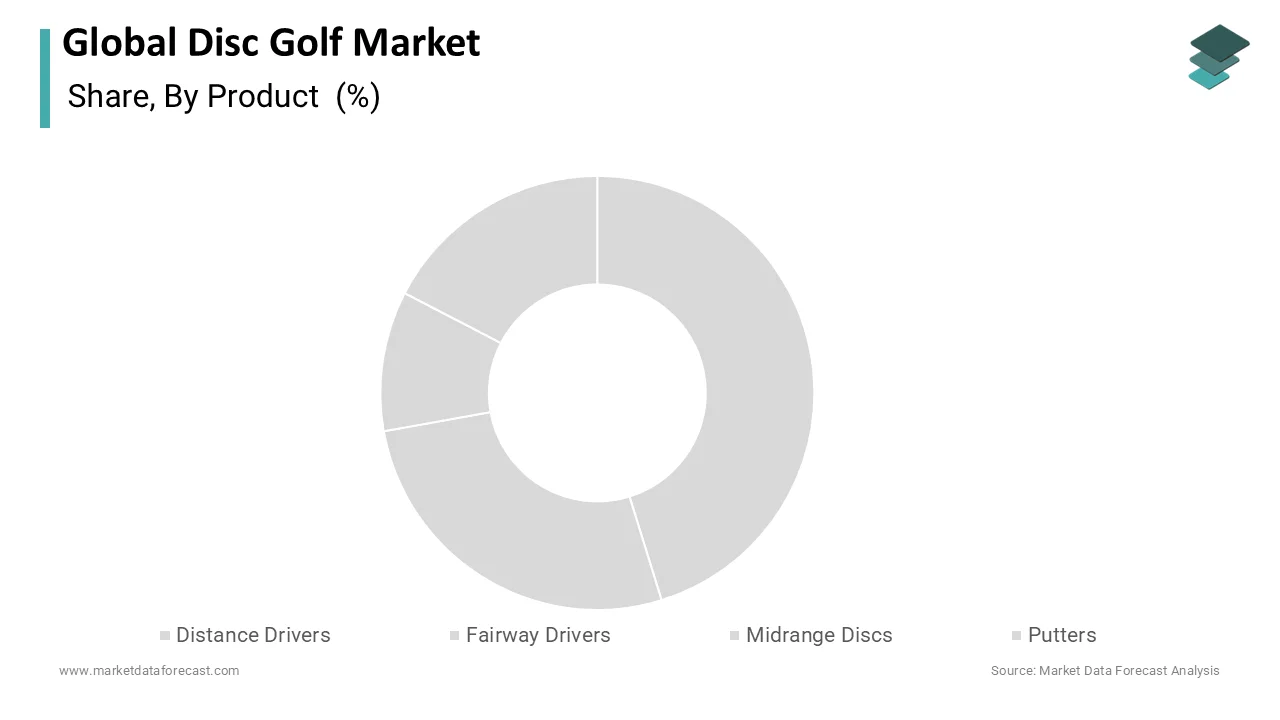
On the other side, the putters segment is estimated to record a CAGR of 6.6% during the forecast period in the global market, owing to the increasing recognition of putting accuracy as the most critical skill for lowering scores across all player levels. For instance, improving putting consistency yields the quickest improvement in overall performance, prompting players to invest heavily in specialized putter molds. Unlike distance drivers,s which require high arm speed,eed putters are used by every player on every hole, making them universally necessary. The trend towards soft grip plastics and unique beadless designs has attracted new users who prioritize comfort and control over raw power. Manufacturers are releasing limited edition putter runs and signature models from popular professionals w,, which create scarcity and drive immediate sales spikes. The rise of mini disc golf and backyard practice setups has also increased demand for putters, as they are the primary discs used in these casual formats. Additionally, the lower price point of putters compared to premium drivers makes them an accessible entry point for beginners and a low-risk impulse buy for experienced players. As the player base expands and focuses more on short game mechanics, the consistent turnover and variety-seeking behavior in the putter category fuel its rapid growth trajectory.
By Application Insights
The amateur segment held the dominant position in the disc golf market by holding the leading share of the global market in 2025. The growth of the amateur segment in the global market is mainly driven by the vast number of recreational players who participate for leisure fitness and social interaction. According to the World Flying Disc Federation, the majority of disc golf participants are casual players who do not compete in sanctioned tournaments but contribute significantly to equipment sales and course usage. This segment includes families, friends, nd individual enthusiasts who play regularly in local parks without formal registration. The low cost of entry allows amateurs to purchase multiple disc bags and accessories without the financial pressure faced by professional athletes. Community leagues and informal groups organize weekly events that sustain regular engagement and drive repeat purchases of gear. The social aspect of amateur play fosters a welcoming environment that retains players over long periods c, creating a stable base of consumers. Retailers report that amateur players are more likely to experiment with different brands and styles as they develop their preferences, leading to diverse purchasing patterns. Furthermore, the expansion of public courses has made the sport more accessible to amateurs, removing barriers related to membership fees. The sheer volume of amateur players dwarfs the professional cohort,t ensuring that mass market products and beginner-friendly equipment remain the primary revenue generators for manufacturers. This broad base supports the industry infrastructure, including course maintenance and retail distribution networks.
However, the professional competition segment is the fastest growing application segment and is estimated to showcase a CAGR of 9.2% during the forecast pperiod due to the increasing professionalism of the sport, rt including higher prize purses,ses structured tours, and enhanced media coverage. According to the Professional Disc Golf Association, the number of licensed professional players has increased substantially as more individuals pursue disc golf as a full-time career. The establishment of major tours such as the Disc Golf Pro Tour and the National Tour provides consistent competitive opportunities, attracting talent from around the world. Sponsorship deals with major brands have become more lucrative, enabling professionals to invest in high-end equipment and training resources. The growth of professional divisions, including open women and mixed ccategoriess has diversified the competitive landscape and expanded the participant pool. Increased viewership of professional events drives interest in competitive play among amateurs who aspire to reach higher skill levels. Tournament organizers are investing in better course setups and live scoring technologies,ie therebynhancing the spectator experience and attracting larger crowds. The rise of professional coaching and training camps further supports this segment by providing pathways for skill development. As the sport gains legitimacy and financial viability,lity the professional segment continues to grow at a faster rate than other applications, driving innovation and raising the overall standard of play globally.
COUNTRY LEVEL ANALYSIS
North America Disc Golf Market Analysis
North America had the major share of the global market in 2025 and is expected to fortify its leading position over the next few years due to its highly established ecosystem, extensive infrastructure developments, and deep-rooted athletic community across the United States and Canada. The region benefits from a mature infrastructure with thousands of established courses, particularly in the United States and Canada. According to the Professional Disc Golf Association, the majority of active members and registered courses are located in North America, reflecting deep cultural integration. The presence of major manufacturers and governing bodies in the region drives continuous innovation and standardization. High participation rates are supported by extensive media coverage and a robust tournament circuit that attracts global attention. The climate diversity across the continent allows year-round play in southern regions w,hile northern areas see seasonal peaks. Community engagement is strong with local clubs organizing leagues and events that sustain player interest. Government support for park development often includes disc golf facilities, recognizing their value for public recreation. The economic scale of the North American market enables significant investment in professional tours and grassroots programs. This dominance is reinforced by the high disposable income of players who frequently upgrade equipment. The region serves as a trendsetter for the rest of the world, influencing product design and playing styles. Continued growth is expected through expansion into underserved areas and increased youth participation initiatives.
Europe Disc Golf Market Analysis
Europe is anticipated to demonstrate exceptional growth and further cement its position as an influential power in the global landscape over the next few years, fueled by structured governmental support and a rapidly rising youth player base. Countries such as Sweden,, Finlan,d Germa,n,y and the Czech Republic have developed vibrant disc golf cultures with high per capita participation rates. According to the European Disc Golf Federation, the number of member countries and registered players has risen steadily, indicating broad regional acceptance. The integration of disc golf into existing park systems has been successful due to efficient land use and low maintenance requirements. European players are known for their technical proficiency and strong adherence to rules, ule,s fostering a competitive environment. Government funding for sports development in many European nations includes disc golf as part of broader health and wellness initiatives. The region hosts several prestigious international tournaments that attract top talent from around the world. Local manufacturing companies have emerg, ed producihigh-qualityity discs that compete with global brands. The emphasis on sustainability aligns well with the eco-friendly nature of the sport, appealing to environmentally conscious consumers. Educational programs in schools are beginning to introduce disc golf, expanding the youth player base. The collaborative spirit among European nations facilitates cross-border competitions and knowledge sharing. As infrastructure improves and awareness grows, Europe is poised to become an even more influential force in the global disc golf landscape.
Asia Pacific Disc Golf Market Analysis
The Asia Pacific region is poised to unlock substantial commercial opportunities over the next few years as major urban centers accelerate infrastructure development to meet the rising demand for accessible outdoor recreational activities. Countries such as Japan, Australia, New Zealand, nd and South Korea are leading the adoption of the sport with increasing numbers of courses and players. According to regional sporting bodies, disc golf is gaining traction as an affordable alternative to traditional golf, which is often expensive and exclusive in this region. The dense urban populations create demand for compact recreational activities that can be integrated into city parks. Japan has a long history of flying disc sports, providing a foundational culture for disc golf expansion. Australia benefits from its favorable climate and outdoor lifestyle, le encouraging year-round participation. Government initiatives promoting physical activity and mental well-being support the development of new courses. International collaborations and visits from professional players have helped raise the profile of the sport in the region. Local distributors are expanding their product offerings, making equipment more accessible to consumers. The growth of social media usage in the Asia Pacific facilitates community building and event promotion. While still smaller than North America or Europe, the region offers untapped potential for manufacturers and investors. Strategic partnerships with local governments and sports organizations will be key to unlocking this market.
Latin America Disc Golf Market Analysis
Latin America is projected to experience a steady progression in course infrastructure and community engagement over the next few years, establishing a solid foundation for the sport across key metropolitan hubs. Countries such as Brazil, Mexico, and Chile are seeing a rise in player numbers and courseconstructionn, particularly in urban centers. According to local disc golf associations, the sport is appealing to younger demographics seeking affordable and social recreational options. The warm climate in many parts of the region allows for consistent outdoor activity throughout the year. Limited public green space in some cities poses a challenge, but creative solutions such as multi-use courses are being implemented. International tournaments held in the region have helped stimulate interest and attract sponsorship. Local players are increasingly participating in international events, bringing back knowledge and enthusiasm to their home communities. The cost-effectiveness of disc golf makes it accessible to a broader socioeconomic range compared to other racket or ball sports. Social media plays a crucial role in connecting scattered players and organizing informal games. Equipment availability is improving as distributors expand their reach into the region. Government support varies by country, but there is growing recognition of the sport’s benefits for public health. With continued efforts in infrastructure development and community engagement,t Latin America has the potential to become a significant contributor to the global disc golf ecosystem.
Middle East and Africa DisGolfof Market Analysis
The Middle East and Africa region is expected to undergo structural evolution from a niche market to an organized recreational framework over the next few years, primarily driven by the expansion of expatriate sporting programs and tourism-focused sports developments. South Africa leads the continent in terms of organized play and course availability, while countries like the United Arab Emirates and Israel are introducing the sport through expatriate communities and tourism initiatives. According to regional sporting federations, the lack of dedicated infrastructure remains a primary barrier, but interest is growing among outdoor enthusiasts. The hot climate in many areasrequires adaptationn,n such as evening play schedules or shaded courses. Efforts to introduce disc golf in schools and universities are helping to build a foundational player base. International aid and development programs sometimes include sports equipmendonationsi o,,ns which can introduce flying discs to new audiences. The novelty of the sport attracts curiosity and media attention, which can be leveraged for growth. Local entrepreneurs are beginning to import and distribute d,iscs making equipment more accessible. Collaborations with established disc golf nations provide technical assistance and training for local organizers. While the market size is currently small, the growth potential exists as awareness increases and infrastructure improves. Strategic investments in course development and community programs will be essential to establish a sustainable presence in this diverse and expansive region.
COMPETITIVE LANDSCAPE
The Disc Golf Market features a competitive landscape dominated by established manufacturers and emerging brands vying for player loyalty and retail shelf space. Leading companies compete on product quality, innovation, and brand reputation, while smaller firms niche down with specialized designs or eco-friendly materials. The barrier to entry for manufacturing is relatively low, leading to a fragmented market with numerous participants offering similar products. Price competition exists particularly in the beginner segment, but premium brands maintain margins through superior performance and exclusivity. Sponsorship of professional players serves as a key differentiator, as fans often emulate the idols' equipment choices. Retailers play a crucial role in shaping competition by deciding which brands to stock and promote. Online direct-to-consumer sales have intensified competition by allowing brands to bypass traditional retail channels and offer better prices. Collaboration between manufacturers and course designers also influences market dynamics by promoting specific disc types for new layouts. The community-driven nature of the sport means that word of mouth and peer recommendations significantly impact brand success. Companies must continuously innovate and engage with players to retain relevance in this passionate and growing market.
KEY MARKET PLAYERS
Some of the companies that are playing a dominating role in the Global Disc Golf Market include
- ABC Discs
- CHING Sports
- DGA (Disc Golf Association)
- Discmania
- FADE Gear
- Frisbee
- Lightning Discs
- Millennium Golf Discs
- Prodigy Disc
- Unbranded
- Wham-O, Inc.
- Innova Disc Golf
- Chilli Disc Golf
TOP LEADING PLAYERS IN THE MARKET
- Innova Champion Discs stands as a pioneering force in the global disc golf industry, credited with inventing the modern distance driver. The company maintains a strong presence through its extensive network of authorized dealers and direct-to-consumer sales channels. Innova recently expanded its manufacturing capabilities to meet surging global demand, ensuring consistent product availability. Their commitment to innovation is evident in the continuous release of new plastic blends and stamp designs that appeal to collectors and players alike. The organization actively supports professional tours and grasgrassroots eventsfostering community engagement and brand loyalty. By leveraging its heritage and reputation for quality, Innova continues to set industry standards. Strategic partnerships with top professional athletes enhance visibility and credibility. These efforts solidify its position as a trusted leader in equipment manufacturing and sport development worldwide.
- Discraft Corporation is a major manufacturer known for its high-performance discs and strong support of professional competition. The company produces a wide range of discs catering to all skill levels, from beginners to elite professionals. Discraft recently invested in advanced molmold technology toto provehe consistency and durability of its products. Their sponsorship of major tournaments and top-ranked players increases brand exposure and drives consumer interest. The organization focuses on expanding its retail distribution network globally, making its products more accessible to international markets. Discraft also engages in educational initiatives, providing resources for new players to learn the game. By combining technical excellence with strategic marketing, Discraft strengthens its competitive edge. Their dedication to quality and community support ensures sustained growth and influence in the evolving disc golf landscape.
- Dynamic Discs has rapidly grown into a key player by focusing on premium quality plastics and innovative design aesthetics. The company distinguishes itself through limited edition releases and collaborative projects with popular professional players. Dynamic Discs recently launched new retail concepts and online platforms to enhance customer experience and engagement. Their emphasis on visual appeal and tactile feel attracts discerning players seeking unique equipment. The organization actively participates in community building by hosting local events and supporting club development. Strategic collaborations with artists and designers result in distinctive stamp art that drives collector interest. By prioritizing product differentiation and brand storytelling, Dynamic Discs captures a loyal segment of the market. Their agile approach to trends and consumer preferences allows them to maintain relevance and drive growth in a competitive industry.
TOP STRATEGIES USED BY KEY MARKET PARTICIPANTS
Key players in the Disc Golf Market employ product innovation and diverse plastic formulations to differentiate their offerings and attract specific consumer segments. Companies actively sponsor professional athletes and major tournaments to enhance brand visibility and credibility among serious players. Strategic expansion of distribution networks, including online platforms and specialtyretail stores, ensuress broader market reach and accessibility. Manufacturers focus on community engagement by supporting local clubs and grassroots eeventso foster lonlong-term loyaltyimited edition releases and collaborative designs create scarcity and drive immediate sales from collectors and enthusiasts. Investment in sustainable manufacturing practices appeals to environmentally conscious consumers and aligns with the outdoor nature of the sport. Digital marketing strategies leveraging social media influencers and instructional content help educate new players and stimulate interest. These combined approaches enable companies to build strong brand identities and maintain a competitive advantage in a growing recreational market.
MARKET SEGMENTATION
This research report on the global DISC GOLF market has been segmented and sub-segmented based on type, source, application, and region.
By Product
- Distance Drivers
- Fairway Drivers
- Midrange Discs
- Putters
By Application
- Professional Competition
- Amateur
- Other
By Region
- North America
- Europe
- Asia Pacific
- Latin America
- Middle East & Africa