- Product Description Description
- Table of Contents TOC
- List of Table & Figure LOT
- Get Free Sample PDF Sample PDF
Market Size, 2025
$35.76 MnMarket Estimate, 2026
$38.66 MnMarket Forecast, 2034
$72.14 MnCAGR, 2026–2034
8.11%Executive Summary: Global Donkey Milk Market
- Market Scope: Comprehensive global donkey milk market analysis covering product forms, application sectors, distribution channels, geographic contributions, key growth drivers, market trends, and strategic industry developments.
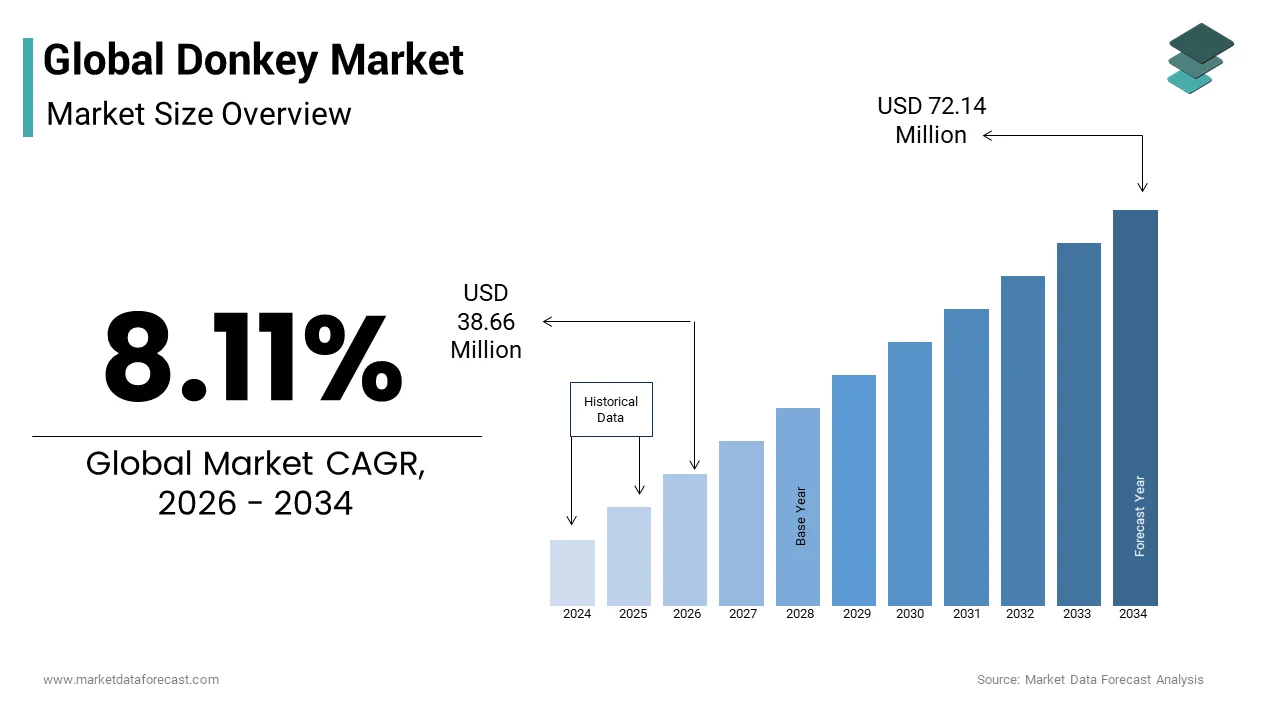
- Market Valuation: Valued at USD 35.76 million (2025), estimated at USD 38.66 million (2026), and projected to reach USD 72.14 million by 2034, registering a robust CAGR of 8.11% (2026–2034).
- Primary Growth Drivers: Escalating bovine milk protein allergies among infants requiring hypoallergenic alternatives and consumer shifts toward clean-label organic cosmetic products rich in bioactive compounds. Notable trends include specialized pharmaceutical nutraceutical integration for gut health and agritourism brand-loyalty initiatives.
Key Market Segment Metrics (2026–2034)
| Category | Leading Segment (2025 Position) | Fastest-Growing Segment |
|---|---|---|
| By Product Form & Application | Liquid segment (65.2% market share) and Cosmetics and personal care (55% share) | Powder segment (12.5% CAGR) and Pharma and nutraceuticals (11.2% CAGR) |
| By Distribution & Region | Direct farm sales (60.4% majority share) and Major regional contributors including Europe, Asia Pacific, and Africa | Online sales channel (fastest CAGR of 14.8%) |
Major Market Players & Market Structure
Market Structure: Niche specialty dairy and bioactive cosmetic ingredients landscape featuring major entities competing through direct farm experience expansions, freeze-drying facility investments, and advanced bioprocessing laboratory research.
Key Companies: Asinus Atlanticus SA, Dolphin IBA, Donna Tina Co., Iberian Donkey, Sardinian Equine Dairy Cooperative, Eurolactis Italia Srl, Alpine Equine Nutrition Enterprises, Golden Donkeys Farm, Hellenic Asinus Farms, Stephenson Group Ltd, The Donkey Dairy Pty Ltd, White Sea, and Baltic Co. Ltd.
Global Donkey Market Size
The global donkey market size was valued at USD 35.76 million in 2025 and is anticipated to reach a valuation of USD 38.66 million in 2026 and USD 72.14 million by 2034, growing at a CAGR of of 8.11% during the forecast period from 2026 to 2034.
MARKET OVERVIEW
Donkey milk is a highly specialized and nutritionally unique dairy liquid extracted from equine females, characterized by its remarkable biochemical similarity to human breast milk. This distinct fluid contains low levels of casein and fat while being rich in lactose, whey proteins, and essential polyunsaturated fatty acids, making it an exceptional biological resource. Historically utilized in European folk medicine, this precious secretion has transitioned into a highly valued commodity in modern nutritional and dermatological applications. The agricultural landscape supporting this niche dairy sector is deeply rooted in traditional European farming practices and specific regional breeding programs. According to the Food and Agriculture Organization (FAO), the global horse population is estimated at roughly 58 million animals, while the global donkey population sits at approximately 43 million, with the vast majority utilized as working and pack animals. Furthermore, the integration of this unique milk into luxury cosmetic formulations reflects a broader societal shift toward natural and ethically sourced ingredients. As per the European Environment Agency (EEA), organic agricultural land management across the European Union expanded to cover approximately 10.8% of total utilized farmland, driven by a broader regional push for biodiversity and environmental sustainability. This convergence of historical medicinal wisdom and modern biological application solidifies the foundational importance of this specialized dairy liquid in contemporary European health paradigms.
MARKET DRIVERS
The escalating prevalence of bovine milk protein allergies among European infants acts as a primary catalyst for widespread utilization.
Modern pediatric diagnostics have identified a significant increase in adverse immunological reactions to standard cow milk proteins, which is one of the major drivers of the donkey milk market. Consequently, there is a critical need for safe and highly digestible alternative nutritional sources for vulnerable infants. Donkey milk possesses a protein profile that closely mimics human breast milk, specifically lacking the heavy casein fractions that typically trigger severe gastrointestinal distress in allergic children. According to the European Society for Paediatric Gastroenterology Hepatology and Nutrition, cow's milk allergy prevalence is highly variable based on diagnostic methods and regional tracking. As per the World Allergy Organization Journal, an alternative nutritional solution is strictly classified as a hypoallergenic formula only if clinical testing proves it is tolerated by at least 90% of infants with confirmed cow's milk allergies. This profound physiological compatibility allows pediatricians to recommend this milk as a natural transitional formula, bypassing the need for heavily processed synthetic alternatives. Furthermore, the high lactose content and optimal calcium to phosphorus ratio support healthy bone development during critical early stages. According to the European Food Safety Authority (EFSA), all alternative milk sources intended for specific infant consumption must meet rigid European Union composition regulations regarding macro-nutritional balance before they can be legally marketed for infant health.
The profound consumer shift toward clean label and organic cosmetic products significantly accelerates incorporation into premium dermatological applications.
Modern demographics are increasingly scrutinizing the chemical composition of their personal care items, actively rejecting synthetic additives and parabens in favor of pure and biologically active natural ingredients to ultimately propel the expansion of the donkey milk market. Donkey milk is highly prized in the cosmetic industry for its exceptional moisturizing properties, rich vitamin content, and high concentration of alpha hydroxy acids which naturally promote cellular regeneration and skin elasticity. According to a study, a pronounced consumer preference for natural and organic beauty and personal care options continues to act as a primary positive driver accelerating the compound annual growth rate of the European Union beauty sector. As per international standards for natural cosmetic ingredients outlined under ISO 16128 guidelines, natural animal-derived milk fats can be formulated into clean-label skin barriers to support hydration and skin naturalness metrics without relying on fully synthetic polymers. This undeniable dermatological efficacy drives luxury brands to integrate this precious liquid into high end anti aging creams, soaps, and facial serums. Furthermore, the ethical and sustainable sourcing of this milk aligns perfectly with the growing consumer demand for cruelty free and environmentally responsible beauty products. The enduring preference for pure and effective natural cosmetics ensures that the cosmetic sector remains a massive and continuously expanding revenue driver for this specialized dairy market.
MARKET RESTRAINTS
The inherently low lactation volume of dairy equines combined with substantial financial expenditures severely restricts widespread commercial scalability.
Donkeys produce a remarkably small volume of milk per lactation cycle, which fundamentally limits the total supply, and thereby hampers the growth of the donkey milk market. On the other hand, traditional dairy cattle and goats have been selectively bred for centuries to maximize milk output. According to Food Science Journals, the primary barrier to the commercialization of the donkey milk market is the animal's small udder anatomy, which restricts daily milk yields to a fraction of a liter up to a few liters per animal. As per ResearchGate, the daily milk volume harvested from a dairy jenny typically remains highly restrictive, necessitating multi-phase daily milking procedures that increase overhead costs for specialty farms. According to Entrepreneur India's commercial livestock tracking, donkey milk farming requires precise upfront capital for setup and specialized feed management, inflating the market cost per liter relative to standard mass-produced cow's milk. This massive financial burden forces producers to price the final liquid at a substantial premium, inherently restricting its accessibility to only affluent consumer segments. Furthermore, the milking process requires the presence of the foal to stimulate milk let down, adding another layer of complexity and time to the daily operational routine. As per the World Equine Veterinary Association frameworks, milk extraction from donkeys requires strict adherence to specialized hygienic and behavioral guidelines to maintain the safety of both the handlers and the animals. These profound biological and economic constraints act as a formidable barrier to mass market penetration and rapid industry expansion.
The rigorous enforcement of animal welfare standards and growing public scrutiny heavily constrain operational practices and supply chain expansion.
Regulatory bodies and animal rights organizations in the region maintain exceptionally strict guidelines for rearing and milking donkeys, which hinders the expansion of the global market. This ensures the physiological and psychological well-being of the animals is never compromised for commercial gain. Donkeys are highly sensitive creatures that require extensive pasture access, social interaction with other equines, and specific dietary balances to maintain their health during lactation. As per the European Commission's Animal Welfare Platform, a dedicated guide to good animal welfare practice governs the ethical care, housing, and management specifically needed for keeping donkeys and donkey hybrids. According to Eurogroup for Animals and World Horse Welfare, sustainable dairy donkey management guidelines prioritize specific milking procedures that protect foal welfare to foster humane practices within the donkey milk sector. This regulatory framework mandates that milking can only occur when the foal is present and nursing, which inherently limits the frequency and volume of daily extraction. Furthermore, the rising public awareness regarding ethical consumption means that any perceived mistreatment of these animals can lead to immediate and devastating consumer boycotts. According to the OECD, most European shoppers express confusion over natural or organic labeling, meaning specialized niche markets like donkey milk must rely on clear, transparent branding to build trust. This intense regulatory and social scrutiny forces producers to operate at a slower pace with higher overheads, severely restraining the rapid commercialization of this niche dairy sector.
MARKET OPPORTUNITIES
The incorporation of this biologically active liquid into specialized pharmaceutical and nutraceutical products presents a highly lucrative avenue for premium market differentiation.
The unique biochemical composition of this equine milk offers immense potential for the development of advanced medical and health supplement formulations, which is likely to fuel the growth of the donkey milk market. This goes beyond basic nutrition and cosmetics. The high concentration of lysozyme, lactoferrin, and specific immunoglobulins provides potent antimicrobial and anti inflammatory properties that are highly sought after in modern therapeutic research. According to the European Medicines Agency (EMA), any animal-derived compound or advanced alternative substance introduced for specific pharmaceutical or therapeutic claims must pass standard, non-streamlined clinical validation protocols to ensure patient safety. As per ScienceDirect, the high presence of functional lysozymes and lactoferrin in donkey milk acts as a natural prebiotic, supporting the growth of beneficial gut microbiota and proving useful in clinical dietary management. Furthermore, the extraction of specific peptides and proteins from this liquid can be utilized to create targeted drug delivery systems that enhance the bioavailability of oral medications. According to a study, the global donkey milk sector is scaling rapidly due to its transition from a niche regional agricultural byproduct into a highly valued functional ingredient within premium health supplement markets. By investing in advanced bioprocessing technologies to isolate and stabilize these therapeutic compounds, dairy producers can transition from supplying raw agricultural commodities to providing high value active pharmaceutical ingredients. This strategic pivot into the medical and nutraceutical sectors opens a massive and highly profitable new frontier for the European equine dairy industry.
The strategic development of immersive agritourism initiatives and direct to consumer farm experiences offers a powerful opportunity to enhance brand loyalty and generate supplementary revenue.
Modern consumers in the region are increasingly seeking authentic and educational experiences that connect them directly with the origins of their food and personal care products, which unlocks potential for the donkey milk market. Donkey farms are uniquely positioned to capitalize on this trend by offering interactive tours, feeding sessions, and wellness retreats that highlight the ethical and sustainable practices of equine dairy farming. According to the European Commission, the integration of educational agritourism allows specialty livestock producers, including donkey milk farms, to generate auxiliary revenue streams while reinforcing regional tourism. By establishing on site retail shops and subscription delivery services, farmers can bypass traditional retail intermediaries and capture the full profit margin of their specialized liquid. Furthermore, these direct interactions foster a deep emotional connection between the consumer and the animals, transforming casual buyers into highly loyal brand advocates. As per Eurogites (European Federation of Rural Tourism), merging hospitality with direct-on-farm boutique sales allows niche micro-producers like donkey dairies to capture maximum retail margins directly from visitors. This seamless integration of hospitality and agriculture provides a robust and sustainable growth pathway for small and medium sized equine dairy producers across Europe.
MARKET CHALLENGES
The profound absence of unified and standardized regulatory frameworks governing production and commercialization creates significant quality control vulnerabilities.
The commercial extraction of donkey milk currently operates within a fragmented and largely unharmonized regulatory environment across different nations in the region, which slows down the growth of the global donkey milk market. This trend is different from the highly regulated bovine dairy sector. Moreover, this lack of specific legislative guidelines means that there are no universally mandated parameters for somatic cell counts, bacterial limits, or nutritional composition specific to this equine product. As per the International Dairy Federation (IDF), maintaining uniform pasteurization parameters is highly critical for non-bovine milk variants to safely extend commercial shelf life without damaging fragile, bioactive molecules.This regulatory ambiguity makes it exceedingly difficult for large scale food manufacturers to integrate this ingredient into their standardized production lines with absolute confidence. Furthermore, the lack of a protected designation of origin or unified quality certification scheme prevents consumers from easily distinguishing between premium ethically produced milk and inferior commercial alternatives. According to BEUC (The European Consumer Organisation), the proliferation of unverified eco-labels and vague quality claims across specialty markets underlines the urgent need for clear, government-backed certification on premium foods. This pervasive lack of regulatory clarity severely undermines consumer trust and complicates the establishment of a cohesive pan European supply network.
The acute susceptibility of equine populations to specific infectious diseases and the profound impact of animal welfare crises severely threaten supply chain stability.
The entire commercial viability of this niche dairy sector is inextricably linked to the biological health and psychological well-being of a relatively small and geographically dispersed equine population, which holds back the expansion of the donkey milk market. Donkeys are highly vulnerable to specific infectious diseases such as equine influenza, strangles, and various parasitic infections, which can rapidly decimate local herds and halt milk production entirely. According to animal health guidelines published by the EU Platform on Animal Welfare, keeping equine herds protected against contagious outbreaks through biosecurity measures is essential to maintaining stable operations on commercial dairy farms. As per the World Organisation for Animal Health (WOAH), strict quarantine protocols primarily govern live equid transport during critical disease outbreaks, which indirectly restricts the logistics of raw animal-derived products from affected zones. Furthermore, any publicized incident of animal neglect or improper welfare standards triggers immediate and severe backlash from both regulatory authorities and ethical consumer groups. This extreme fragility of the biological supply base means that producers must maintain massive financial reserves to survive unexpected health crises. The constant threat of disease and intense scrutiny of animal welfare practices create a volatile operational environment that severely challenges the long term stability of the European equine dairy market.
REPORT COVERAGE
| REPORT METRIC | DETAILS |
| Market Size Available | 2025 to 2034 |
| Base Year | 2025 |
| Forecast Period | 2026 to 2034 |
| CAGR | 8.11% |
| Segments Covered | By Product, Application, Channel, By Country |
| Various Analyses Covered | Global, Regional & Country Level Analysis; Segment-Level Analysis, DROC, PESTLE Analysis, Porter’s Five Forces Analysis, Competitive Landscape, Analyst Overview of Investment Opportunities |
| Regions Covered | North America, Europe, Asia Pacific, Latin America, Middle East and Africa. |
| Market Leaders Profiled | Asinus Atlanticus SA, Dolphin IBA, Donna Tina Co, Iberian Donkey, Sardinian Equine Dairy Cooperative, Eurolactis Italia Srl, Alpine Equine Nutrition Enterprises, Golden Donkeys Farm, Hellenic Asinus Farms, Stephenson Group Ltd, The Donkey Dairy Pty Ltd, White Sea, Baltic Co. Ltd. |
SEGMENTAL ANALYSIS
By Product Insights
Liquid Segment
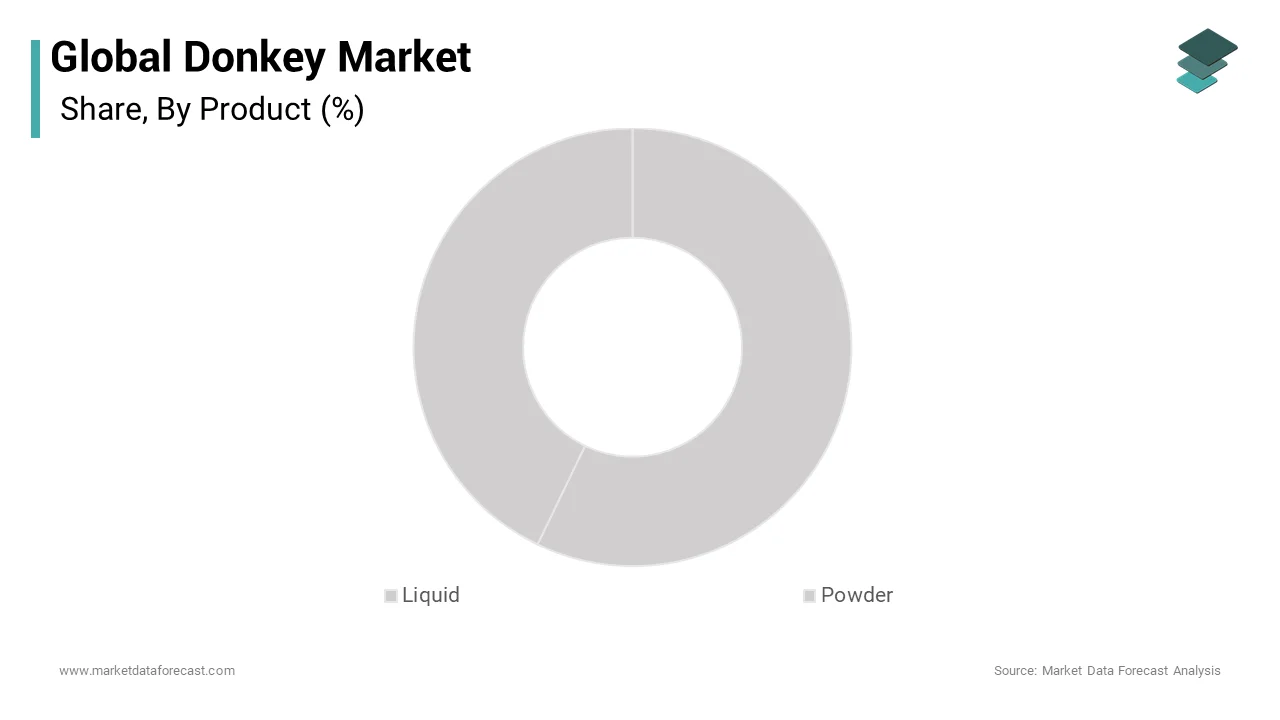
The liquid segment dominated the donkey milk market and accounted for a 65.2% share in 2025. In addition, the absolute preference of consumers for fresh and unprocessed nutritional profiles establishes the dominance of this segment. Modern buyers seeking alternative dairy solutions strongly believe that minimal processing preserves the delicate bioactive compounds and natural enzymes present in the raw secretion. According to ScienceDirect, raw liquid donkey milk naturally preserves its original bioactive components, though thermal pasteurization must be carefully calibrated to prevent degrading its sensitive lysozyme and immunoglobulin profiles. As per the National Institutes of Health (NIH), liquid donkey milk exhibits distinct sensory properties, including a naturally sweet flavor due to high lactose levels, which improves its palatability among young consumers compared to other non-bovine options. Parents introducing this milk to infants with severe allergies prioritize the natural fluid to ensure maximum digestive comfort and nutrient absorption. Furthermore, the liquid form allows for immediate consumption without the need for reconstitution, aligning with the fast paced lifestyle of modern urban families. This unwavering consumer conviction in the superior health benefits of the unadulterated fluid guarantees its continuous market leadership.
The direct application in pediatric nutrition and specialized allergy management heavily reinforces the leading position of the liquid segment. Medical professionals and pediatricians predominantly recommend the fresh fluid as a transitional dietary solution for infants suffering from severe bovine milk protein allergies. According to the European Society for Paediatric Gastroenterology Hepatology and Nutrition (ESPGHAN), animal milks, including equine variants, require strict industrial modification to match the macro-nutritional profile of human breast milk before they can be safely fed to infants. The immediate bioavailability of nutrients in the liquid state accelerates recovery times in allergic children, making it the undisputed standard of care in clinical settings. Furthermore, the absence of any thermal degradation or chemical additives in the fresh liquid assures parents of its absolute safety.
Powder segment
The Powder segment is anticipated to witness the fastest CAGR of 12.5% during the forecast period due to the extended shelf life and logistical advantages for international export. Moreover, the fresh liquid has a highly restricted shelf life and requires an unbroken cold chain, severely limiting its distribution radius. In contrast, according to ResearchGate, freeze-drying is the preferred industrial method to dehydrate donkey milk, successfully extending its shelf life while preserving its delicate whey proteins. According to the International Association for Food Protection (IAFP), the primary function of dairy dehydration technologies is to eliminate water activity, which minimizes microbial growth risks during long-term storage and distribution. As per sources, the development of powdered formats has enabled European donkey milk brands to access overseas markets in Asia and North America by bypassing fresh cold-chain requirements. Furthermore, the powdered format eliminates the risk of microbial contamination during transit, ensuring compliance with strict international import regulations.
The seamless integration into industrial food manufacturing and cosmetic formulation processes significantly accelerates the adoption of the powder segment. Large scale commercial manufacturers require standardized, stable, and easily measurable ingredients to incorporate into their automated production lines. The powdered format provides exact dosing capabilities and uniform dispersion properties that the fresh liquid cannot achieve. According to international cosmetic ingredient guidelines under ISO 16128 standards, powdered donkey milk derivatives are highly valued by cosmetic chemists for clean-label skincare formulations due to their rich concentration of skin-nourishing vitamins. The stability of the bioactive peptides in the dehydrated state ensures that the final commercial products retain their therapeutic efficacy throughout their entire shelf life.
By Application Insights
Cosmetics and Personal Care segment
The Cosmetics and Personal Care segment led the Donkey Milk Market and captured a share of 55% in 2025. This leading position of the segment was attributed to its exceptionally high concentration of alpha hydroxy acids and its natural moisturizing properties. Moreover, this unique equine secretion is naturally rich in lactic acid, which gently exfoliates the skin, promotes cellular turnover, and stimulates collagen production without causing the irritation associated with synthetic chemical peels. According to the International Journal of Cosmetic Science, equine milk contains high concentrations of Vitamin C and essential fatty acids that actively protect cutaneous tissue from oxidative stress, enhancing skin regeneration and wrinkle reduction when applied in anti-aging cosmetic serums. As per NCBI PMC, specialized emollient formulations utilizing natural milk components significantly prolong the time to flare and reduce the severity of chronic eczema symptoms by strengthening the skin's protective lipid barrier. Luxury cosmetic brands heavily market these profound dermatological benefits to affluent consumers seeking natural and highly effective anti aging solutions. Furthermore, the milk contains high levels of vitamins A, B, and E, which act as powerful antioxidants to neutralize free radicals and protect the skin from environmental damage. According to research, cosmetic items formulated with rare animal derivatives like donkey milk command premium retail prices due to high production complexities and their high-end branding positioning within the organic personal care market.
The rising consumer demand for clean label and cruelty free beauty products heavily reinforces the leading position of the cosmetics segment. Modern demographics are meticulously scrutinizing the ingredient lists of their personal care items, actively rejecting harsh synthetic chemicals, parabens, and artificial fragrances in favor of pure and biologically active natural alternatives. According to the COSMOS-standard AISBL, the consumer demand for certified organic skincare products continues to see stable double-digit growth, driving premium brands to integrate traditional ingredients like mare and donkey milk into certified ecological formulations. Donkey farms in Europe typically operate under strict ethical guidelines, ensuring the animals are pasture raised and the milking process does not harm the foal, which perfectly aligns with the cruelty free ethos. Furthermore, the biodegradable nature of this natural ingredient appeals to environmentally conscious consumers seeking to reduce their ecological footprint.
Pharma and Nutraceuticals segment
The Pharma and Nutraceuticals segment is likely to experience the fastest CAGR of 11.2% from 2026 to 2034, owing to the extraction of potent antimicrobial peptides and immunoglobulin for therapeutic use. In addition, the unique biochemical composition of this equine milk contains high levels of lysozyme and lactoferrin, which possess powerful natural antibacterial and antiviral properties. According to the National Institutes of Health (NIH), donkey milk exhibits potent natural antimicrobial action because its lysozyme and lactoferrin concentrations actively break down the cell walls of pathogenic microbes, presenting paths for functional food therapies. Furthermore, the specific immunoglobulins present in the fluid are being extracted and purified to create advanced oral supplements designed to boost the immune systems of immunocompromised patients. By leveraging advanced bioprocessing technologies to isolate and stabilize these potent therapeutic compounds, producers are unlocking a highly lucrative and rapidly expanding new frontier in the medical sector.
The clinical validation of gut health benefits and inflammatory bowel disease management significantly accelerates the expansion of the pharma and nutraceuticals segment. The specific protein profile of this milk is highly digestible and lacks the heavy casein fractions that typically trigger severe gastrointestinal inflammation in sensitive individuals. According to the American Journal of Physiology, dietary use of prebiotic functional liquids and specific non-bovine dairy matrices can help modulate immune functions and mitigate inflammatory cytokines in preclinical models of colitis. Furthermore, specialized nutraceutical companies are developing targeted dietary supplements in capsule and powder forms that deliver concentrated doses of these gut healing compounds directly to the digestive tract. This robust clinical validation and growing medical endorsement propel the segment to the fastest growth trajectory in the market.
By Channel Insights
Direct Farm Sales segment
In 2025, the Direct Farm Sales segment held a 60.4% majority share of the Donkey Milk Market because of agritourism integration and direct consumer trust-building through farm visits. Modern European consumers increasingly seek authentic and educational experiences that connect them directly with the origins of their food and personal care products. Donkey farms are uniquely positioned to capitalize on this trend by offering interactive tours, feeding sessions, and wellness retreats that highlight the ethical and sustainable practices of equine dairy farming. According to sources, the European donkey milk market heavily relies on direct-to-consumer distribution channels, as a substantial portion of premium raw and pasteurized donkey milk is sold locally directly from small-scale generational farms to ensure maximum freshness. By establishing on site retail shops, farmers can bypass traditional retail intermediaries and capture the full profit margin of their specialized liquid. Furthermore, these direct interactions foster a deep emotional connection between the consumer and the animals, transforming casual buyers into highly loyal brand advocates.
The elimination of intermediary retail markups ensuring higher profit margins for farmers heavily reinforces the leading position of the direct farm sales segment. The commercial production of this specialized milk is inherently limited by the low lactation volume of the animals, making every single liter extremely valuable and costly to produce. Selling directly to the end consumer allows farmers to retain the entire retail value of the product, which is essential for the financial survival of these small scale agricultural operations. As per the European Commission, direct-to-consumer sales channels eliminate traditional intermediary retail margins, allowing small-scale ecological farmers to capture higher economic returns and remain financially sustainable. Furthermore, direct sales enable farmers to gather immediate and valuable feedback from their customers, allowing them to quickly adapt their product offerings to meet specific local demands.
Online Sales segment
The Online Sales segment is on the rise and is expected to be the fastest growing segment in the market by witnessing a CAGR of 14.8% over the forecast period. This swift expansion of the segment is propelled by the proliferation of specialized digital health platforms and subscription-based delivery models. Modern consumers increasingly rely on digital channels to research, purchase, and manage their health and wellness routines, bypassing traditional physical retail intermediaries. Specialized online platforms dedicated to natural health products and allergy friendly diets provide a highly targeted environment for marketing this niche equine dairy liquid. According to Ecommerce Europe, online retail across the food, health, and wellness sectors has maintained steady upward growth trajectories, heavily driven by consumers seeking specialized organic and alternative dietary products online. The seamless digital convenience is particularly appealing to parents of allergic infants who require a constant and reliable supply of the specialized milk. Furthermore, online platforms utilize advanced data analytics to offer highly personalized product recommendations and educational content regarding the health benefits of the milk.
The enhanced digital marketing capabilities reaching niche demographics across broader geographic regions significantly accelerates the growth of the online sales segment. Because the physical production of this specialized milk is geographically concentrated in specific rural areas of Europe, traditional brick and mortar retail distribution is highly limited and inefficient. Digital platforms completely erase these geographical barriers, allowing small scale farmers and specialized brands to reach a vast, continent wide audience of highly targeted consumers. According to IAB Europe, targeted programmatic digital advertising and specialized niche audience segmentation provide modern brands with highly trackable returns on investment compared to un-targeted legacy channels. Furthermore, e commerce platforms allow brands to showcase detailed product certifications, ethical farming practices, and clinical studies through rich multimedia content, building profound trust with skeptical online buyers. This unparalleled reach and targeted marketing efficiency fuel the explosive expansion of the online channel.
COMPETITIVE LANDSCAPE
The competition within the specialized equine dairy market is defined by intense rivalry among small scale agricultural cooperatives and highly specialized bioprocessing enterprises. Major regional players dominate the fresh liquid segment through extensive agritourism networks, leveraging deep emotional connections with local consumers to secure direct farm sales. These cooperatives continuously invest heavily in ethical breeding practices and organic certifications to justify premium pricing and build unshakeable brand loyalty among affluent buyers. Conversely, independent processing firms compete aggressively by emphasizing advanced dehydration technologies and the extraction of potent bioactive compounds for the lucrative cosmetic and pharmaceutical sectors. The market is currently witnessing a fierce strategic battle for digital dominance, with companies aggressively launching specialized online subscription platforms to capture niche demographics across broader geographic regions. Furthermore, the integration of clinical research partnerships has become a critical battleground, as operators strive to validate the therapeutic benefits of their products through rigorous medical trials. Intense regulatory scrutiny regarding animal welfare standards forces competitors to differentiate themselves through transparent supply chain practices and verifiable ethical certifications. Ultimately, success requires a delicate balance of agricultural tradition, relentless scientific innovation, and deep respect for the biological complexities forming the foundation of this specialized modern industry landscape.
KEY MARKET PLAYERS
A dominating market players that are in the global donkey milk market are
- Asinus Atlanticus SA
- Dolphin IBA
- Donna Tina Co.
- Iberian Donkey
- Sardinian Equine Dairy Cooperative
- Eurolactis Italia Srl
- Alpine Equine Nutrition Enterprises
- Golden Donkeys Farm
- Hellenic Asinus Farms
- Stephenson Group Ltd
- The Donkey Dairy Pty Ltd
- White Sea
- Baltic Co. Ltd.
Top Players In The Market
- Sardinian Equine Dairy Cooperative operates as a foundational pioneer in the European specialized dairy sector, leveraging traditional breeding methods to produce ultra premium liquid milk. The company deeply integrates agritourism initiatives to build direct consumer trust and educate the public regarding the ethical rearing of dairy equines. Recently, the cooperative has aggressively expanded its direct farm sales network by opening new interactive visitor centers and on site retail shops. The corporation also prioritizes strict quality control protocols to ensure the absolute purity and microbiological safety of its fresh products. These focused actions continuously enhance brand loyalty and solidify the company reputation as a premier regional leader.
- Iberian Donkey Milk Producers maintains a highly formidable presence in the international market through its advanced dehydration technologies and extensive export networks. The company leverages deep scientific expertise to transform the perishable fresh liquid into highly stable and nutrient rich powdered formats. Recently, Iberian Donkey Milk Producers has accelerated its investments in specialized freeze drying facilities to increase the production capacity of its premium cosmetic and nutraceutical ingredients. The corporation also places a strong emphasis on securing organic certifications to appeal to the rapidly growing global demand for clean label beauty products. These strategic initiatives significantly improve commercial reach and reinforce the company status as a trusted industry innovator.
- Alpine Equine Nutrition Enterprises operates as a dynamic and highly influential player in the therapeutic dairy landscape, renowned for its comprehensive range of specialized health supplements. The company aggressively drives market expansion by continuously refining its extraction processes to isolate potent bioactive peptides and immunoglobulins for clinical use. Recently, Alpine Equine Nutrition Enterprises has invested heavily in state of the art bioprocessing laboratories to support advanced pharmaceutical research and development. Additionally, the corporation is deeply committed to collaborative clinical trials with leading European medical institutions to validate the gut health benefits of its specialized formulations. These focused actions continuously drive scientific advancement and reinforce the company reputation as an innovative industry leader.
Top Strategies Used By The Key Market Participants
Key participants in the specialized equine dairy market predominantly utilize aggressive direct consumer engagement and advanced processing innovations to secure their competitive positions. Major players heavily invest in agritourism infrastructure to build profound emotional connections with buyers and eliminate intermediary retail markups. Simultaneously, companies are deploying sophisticated freeze drying and bioprocessing technologies to extend product shelf life and isolate high value therapeutic compounds for the pharmaceutical sector. Strategic partnerships with luxury cosmetic brands allow corporations to integrate their premium extracts into exclusive skincare lines, capturing substantial profit margins. Furthermore, industry leaders are actively pursuing rigorous organic and ethical welfare certifications to appeal to the rapidly growing demographic of environmentally conscious consumers. Finally, comprehensive digital marketing campaigns are being implemented to educate the public regarding the hypoallergenic benefits of the milk, driving massive traffic to specialized online subscription platforms.
MARKET SEGMENTATION
This research report on the global donkey milk market is segmented and sub-segmented into the following categories.
By Product Type
- Liquid
- Powder
By Application
- Cosmetics & Personal Care
- Food & Beverage
- Pharma & Nutraceuticals
- Others
By Channel
- Direct Farm Sales
- Online/E-Commerce
- Others
By Region
- North America
- Europe
- Asia Pacific
- Latin America
- Middle East and Africa