- Product Description Description
- Table of Contents TOC
- List of Table & Figure LOT
- Get Free Sample PDF Sample PDF
Market Size, 2025
$10.84 BnMarket Estimate, 2026
$11.12 BnMarket Forecast, 2034
$13.68 BnCAGR, 2026–2034
2.62%Executive Summary: Global Dredging Market
- Market Scope: Comprehensive market evaluation of the global dredging sector, analyzing equipment types (suction dredgers, bucket dredgers, trailing suction hopper dredgers, backhoe dredgers), end-user segments (trading, tourism, coastal protection), and regional performance across Asia-Pacific, Europe, North America, Latin America, and the Middle East & Africa.
- Market Valuation: Valued at USD 10.84 billion in 2025, reaching USD 11.12 billion in 2026, and projected to scale up to USD 13.68 billion by 2034, registering a steady CAGR of 2.62% throughout the forecast period from 2026 to 2034.
- Primary Growth Drivers: Exponential growth in global maritime trade and ultra-large container vessel drafts, climate change-induced sea-level rise driving coastal protection and land reclamation, and the rapid expansion of offshore wind energy infrastructure projects.
Key Market Segment Metrics
| Category | Leading Segment (Base Year Position) | Fastest-Growing / High-Impact Segment |
|---|---|---|
| By Type & End-User | Suction Dredgers (34.5% share in 2025) & Trading End-User Sector (55.3% share in 2025) (dominant baseline volumes anchored by major trade port channel maintenance and bulk material transport) | Bucket Dredgers (7.3% CAGR) & Tourism Sector (8.7% CAGR) (fast-expanding areas propelled by precision underwater rock/debris excavation, marina developments, and coastal cruise line terminals) |
| By Region | Asia-Pacific (45.5% share in 2025) (leading regional market driven by heavy maritime infrastructure investments, Belt and Road port expansions in China/India, and land reclamation) | Europe (25.6% share in 2025) (high-impact regional market fueled by advanced green dredging innovations, North Sea offshore wind energy developments, and rigorous climate defense initiatives) |
Major Market Players & Market Structure
Market Structure: Highly capital-intensive and concentrated global market characterized by long-term municipal/governmental contracts, high technological barriers to entry, and specialized marine engineering heavy-weights.
Key Companies: Royal Boskalis Westminster N.V., Jan De Nul N.V., Dredging Environmental and Marine Engineering N.V. (DEME), Great Lakes Dredge and Dock Co., Van Oord N.V., Coastal Dredging Company, Inc., and Weeks Marine, Inc.
Global Dredging Market Growth Size
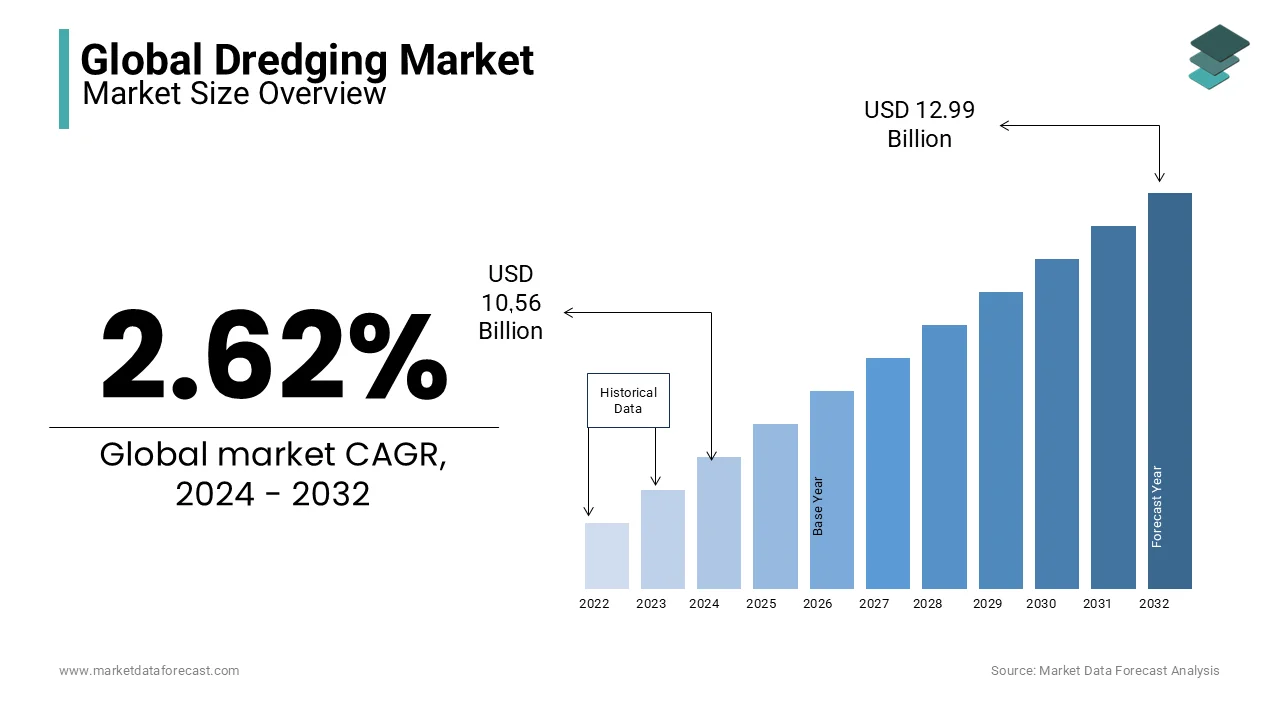
The global dredging market size was valued at USD 10.84 billion in 2025 and is anticipated to reach USD 11.12 billion in 2026 and USD 13.68 billion by 2034, growing at a compound annual growth rate (CAGR) of 2.62% during the forecast period from 2026 to 2034.
MARKET OVERVIEW
Dredging is the underwater excavation and removal of sediments, such as sand, silt, mud, and debris, from the bottom of water bodies like rivers, lakes, and harbors. This specialized sector is integral to global trade logistics port expansion and environmental restoration projects. The industry relies on sophisticated vessels such as cutter suction dredgers trailing suction hopper dredgers and backhoe dredgers to manage sediment accumulation effectively. According to the United Nations Conference on Trade and Development approximately 80% of global merchandise trade by volume is carried by sea highlighting the critical need for maintained and deepened shipping lanes. Furthermore the International Maritime Organization states that the average size of container ships has increased significantly with ultra large container vessels requiring draft depths exceeding 15 meters necessitating continuous dredging operations in major ports. Climate change induced sea level rise also drives demand for coastal protection measures. As per the Intergovernmental Panel on Climate Change global mean sea level could rise by up to 1 meter by 2100 under high emission scenarios prompting governments to invest in land reclamation and dyke construction. These geopolitical and environmental factors underscore the strategic importance of dredging in sustaining maritime commerce and protecting vulnerable coastal communities. The market is characterized by long term contracts and high barriers to entry due to the capital intensive nature of dredging equipment and stringent environmental regulations governing sediment disposal.
MARKET DRIVERS
Expansion of Global Maritime Trade and Port Infrastructure Development
The exponential growth in global maritime trade is contributing to the growth of the Dredging Market. This drives the need for expanded and deepened port infrastructure. Ports must accommodate larger vessels and handle increasing cargo volumes to remain competitive. This is essential as international commerce intensifies. According to the World Bank global container port throughput reached approximately 850 million twenty foot equivalent units in recent years reflecting a steady upward trend in shipping activity. To handle these volumes ports are undergoing significant modernization projects that require extensive dredging to achieve necessary depths and berth lengths. The Asian Development Bank notes that Asia Pacific alone requires hundreds of billions of dollars in infrastructure investment annually with a substantial portion allocated to port and logistics facilities. Deepening channels allows ports to receive ultra large container vessels which offer economies of scale but require drafts of 16 meters or more. Without regular maintenance dredging sediment accumulation can reduce channel depth by several meters annually restricting access for fully loaded ships. This operational constraint directly impacts trade efficiency and costs. Consequently governments and port authorities prioritize dredging projects to ensure seamless connectivity in global supply chains. The strategic imperative to enhance port capacity and efficiency sustains robust demand for dredging services worldwide particularly in emerging economies experiencing rapid industrialization and trade growth.
Coastal Protection and Land Reclamation Initiatives Due to Climate Change
Coastal protection and land reclamation initiatives driven by climate change impacts are further propelling the expansion of the Dredging Market. Rising sea levels and increased frequency of extreme weather events threaten low lying coastal regions necessitating robust defensive infrastructure. According to the National Oceanic and Atmospheric Administration sea levels along the United States coastlines are projected to rise by 10 to 12 inches on average over the next 30 years posing risks to millions of residents and assets. In response countries are investing heavily in dykes seawalls and beach nourishment projects which rely on dredged sand and sediment. The Netherlands, a global leader in water management, uses dredging for land reclamation; however, the Room for the River initiative is a flood safety program focused on increasing river discharge capacity through measures like lowering floodplains and relocating dikes. Similarly small island nations and coastal cities in Asia are undertaking massive reclamation projects to expand habitable land and protect against erosion. The World Bank estimates that climate related damages to coastal infrastructure could cost hundreds of billions of dollars annually if no adaptation measures are taken. Dredging provides the essential material for building these protective barriers and restoring natural buffers such as wetlands and dunes. Governments are prioritizing climate resilience and adaptation strategies. As a result, the demand for dredging services in coastal protection and land creation continues to grow substantially.
MARKET RESTRAINTS
Stringent Environmental Regulations and Sediment Disposal Constraints
Stringent environmental regulations and challenges associated with sediment disposal are major restraints on the Dredging Market. Dredging activities can disturb aquatic ecosystems release contaminated sediments and increase water turbidity leading to significant ecological concerns. According to the European Environment Agency strict directives such as the Water Framework Directive and the Marine Strategy Framework Directive impose rigorous standards on dredging operations in European waters requiring comprehensive environmental impact assessments before project approval. Contaminated sediments containing heavy metals or organic pollutants cannot be disposed of in open waters and must be treated or stored in confined disposal facilities which significantly increases project costs and timelines. The United States Environmental Protection Agency regulates ocean dumping under the Marine Protection Research and Sanctuaries Act limiting locations where dredged material can be deposited. Finding suitable disposal sites is increasingly difficult due to land scarcity and community opposition. These regulatory hurdles often lead to prolonged permitting processes delaying project commencement and increasing financial burdens for contractors. Additionally compliance with noise and emission standards for dredging vessels adds to operational complexity. The need to adopt environmentally friendly technologies such as green dredging methods further raises capital expenditures. These constraints restrict the flexibility of dredging companies and can deter investment in certain projects thereby slowing market growth in regions with aggressive environmental protection agendas.
High Capital Expenditure and Operational Costs of Dredging Equipment
The high capital expenditure and operational costs associated with dredging equipment are also hampering the expansion of the Dredging Market. Dredging vessels are highly specialized and expensive assets with new build costs for large trailing suction hopper dredgers exceeding 100 million euros. According to industry analysis the maintenance and fuel costs for these vessels are substantial given their intensive energy consumption and harsh operating conditions. Fluctuating fuel prices directly impact operational profitability as diesel constitutes a major portion of total expenses. Global energy markets can cause marine fuel costs to fluctuate by 30% or more annually. Research and maritime experts note this volatility creates significant budget risks for long-term dredging contracts that lack fuel escalation clauses. Additionally the shortage of skilled personnel capable of operating and maintaining complex dredging machinery drives up labor costs. Specialized engineers and captains command premium salaries due to the niche nature of their expertise. High interest rates and limited access to financing further exacerbate the financial burden for smaller dredging firms attempting to upgrade their fleets. The depreciation of older equipment and the need for continuous technological upgrades to meet efficiency and emission standards require constant reinvestment. These financial barriers limit market entry for new players and constrain the expansion capabilities of existing companies particularly in developing regions where funding availability is limited. Consequently high costs can delay or cancel projects reducing overall market activity.
MARKET OPPORTUNITIES
Adoption of Green Dredging Technologies and Sustainable Practices
The adoption of green dredging technologies and sustainable practices offers a significant opportunity for the dredging market. This is driven by growing environmental consciousness among stakeholders. Innovations such as electric hybrid dredgers solar powered monitoring systems and sediment recycling techniques offer ways to reduce the ecological footprint of dredging operations. According to the Central Dredging Association there is increasing demand for eco friendly solutions that minimize noise emissions fuel consumption and sediment dispersion. Companies investing in research and development of low carbon dredging vessels can differentiate themselves and secure contracts with environmentally conscious clients. The European Union’s Green Deal aims for climate neutrality by 2050 encouraging the maritime sector to decarbonize through incentives for clean technology adoption. Dredging firms that integrate renewable energy sources into their operations can benefit from tax breaks and subsidies. Furthermore the ability to treat and reuse dredged sediments for construction materials or habitat restoration creates additional revenue streams. For instance recycled sand can be used in concrete production or beach nourishment reducing the need for virgin material extraction. Partnerships with environmental organizations to restore wetlands and coral reefs using dredged materials also enhance corporate reputation. As regulatory pressures intensify the market for sustainable dredging solutions is poised for growth offering competitive advantages to early adopters who prioritize environmental stewardship alongside operational efficiency.
Expansion of Offshore Wind Energy Infrastructure Projects
The rapid expansion of offshore wind energy infrastructure projects provides a promising prospect for the Dredging Market. Offshore wind farms require extensive seabed preparation including trenching for cable laying foundation installation and scour protection all of which involve specialized dredging activities. According to the Global Wind Energy Council, global offshore wind capacity is projected to see a massive expansion, with a 2023 forecast of 380 GW by 2032; updated 2025 data anticipates total capacity reaching 441 GW by 2034, driven by a compound average growth rate of 21%. This surge in installations creates sustained demand for dredging services to prepare sites and maintain infrastructure. The United Kingdom Germany and China are leading investors in offshore wind with numerous projects in various stages of development. Dredging companies can leverage their expertise in marine construction to participate in this growing sector by offering integrated solutions for foundation digging and cable burial. The complexity of offshore environments requires advanced dredging vessels capable of operating in deep waters and harsh conditions presenting a barrier to entry that favors established players. Additionally maintenance dredging around wind farm foundations is necessary to prevent scour and ensure structural integrity providing recurring revenue opportunities. As countries accelerate their shift towards clean energy the synergy between the dredging and offshore wind sectors will strengthen. Companies that adapt their fleets and skills to serve the renewable energy industry can capture significant market share and diversify their service portfolios beyond traditional port and coastal projects.
MARKET CHALLENGES
Volatility in Raw Material Prices and Supply Chain Disruptions
Volatility in raw material prices and supply chain disruptions pose a significant challenge to the Dredging Market. This affects project costs and timelines. The construction of dredging vessels and infrastructure requires substantial amounts of steel copper and specialized components which are subject to global price fluctuations. According to the World Steel Association steel prices have experienced significant volatility in recent years due to varying demand patterns and trade policies impacting the cost of new builds and repairs. Supply chain bottlenecks exacerbated by geopolitical tensions and pandemics can delay the delivery of critical parts such as engines pumps and cutting heads. The International Chamber of Shipping highlights that logistical constraints in global shipping networks have led to extended lead times for marine equipment. These delays can postpone project commencements and result in penalty clauses for contractors unable to meet deadlines. Additionally the reliance on specific suppliers for proprietary technology creates vulnerability to single point failures. Currency fluctuations further complicate procurement for international projects as costs may escalate unexpectedly. Managing these risks requires robust supply chain strategies and hedging mechanisms which add to operational complexity. The uncertainty in material availability and pricing makes budgeting difficult and can erode profit margins. Consequently dredging companies face heightened financial risk and operational instability challenging their ability to deliver projects efficiently and cost effectively in an unpredictable global market environment.
Shortage of Skilled Labor and Technical Expertise
The shortage of skilled labor and technical expertise is a persistent hurdle for the Dredging Market. This hinders operational efficiency and innovation. Operating modern dredging vessels requires highly specialized knowledge in marine engineering hydraulics and navigation which is not widely available in the general labor market. According to the BIMCO and International Chamber of Shipping (ICS) Seafarer Workforce Report, the global shipping industry is facing a critical shortage of qualified officers, with projections indicating a deficit of 89,510 professionals by 2026. This scarcity is particularly acute in the dredging sector where experience with specific equipment and soil conditions is crucial. The aging workforce in many developed countries exacerbates the problem as experienced professionals retire without sufficient replacements entering the field. Training new personnel is time consuming and expensive requiring extensive on the job experience and formal education. The lack of standardized training programs across different regions further complicates workforce mobility and quality assurance. Companies struggle to retain talent due to competition from other maritime sectors offering better working conditions or higher pay. This labor gap can lead to operational delays increased safety risks and higher labor costs. Furthermore the inability to recruit skilled technicians hinders the adoption of new technologies as there are fewer personnel capable of managing advanced systems. Addressing this human capital challenge requires significant investment in education and retention strategies which strains resources and limits growth potential for dredging firms globally.
REPORT COVERAGE
| REPORT METRIC | DETAILS |
| Market Size Available | 2025 to 2034 |
| Base Year | 2025 |
| Forecast Period | 2026 to 2034 |
| CAGR | 2.62% |
| Segments Covered | By Type, By End User, and Region |
| Various Analyses Covered | Global, Regional & Country Level Analysis, Segment-Level Analysis, DROC, PESTLE Analysis, Porter’s Five Forces Analysis, Competitive Landscape, Analyst Overview of Investment Opportunities |
| Regions Covered | North America, Europe, APAC, Latin America, Middle East & Africa |
| Market Leaders Profiled | Royal Boskalis Westminster N.V., Jan De Nul N.V., Dredging Environmental and Marine Engineering N.V., Great Lakes Dredge and Dock Co., Van Oord N.V., Coastal Dredging Company, Inc., Weeks Marine, Inc., and others. |
SEGMENTAL ANALYSIS
By Type Insights
The suction dredgers segment led the Dredging Market and captured a 34.5% share in 2025. This leading position of the segment can be attributed to its unparalleled versatility and efficiency in executing large scale capital projects. These vessels are capable of operating in diverse environments ranging from deep sea ports to inland waterways and are essential for maintaining navigational channels for global trade. According to the International Association of Dredging Companies suction dredgers account for the majority of the global fleet capacity reflecting their critical role in infrastructure development. The ability of trailing suction hopper dredgers to transport dredged material over long distances makes them indispensable for land reclamation projects which are prevalent in densely populated coastal regions. The World Bank highlights that port infrastructure investments often prioritize deepening channels to accommodate ultra large container vessels a task primarily achieved through suction dredging technology. Furthermore cutter suction dredgers offer precise excavation capabilities for hard soil conditions enabling the construction of complex marine structures such as tunnels and bridge foundations. The high production rates and continuous operation capabilities of suction dredgers reduce project timelines and costs making them the preferred choice for government authorities and private developers. The established manufacturing base and technological advancements in pump efficiency further solidify the dominance of this segment ensuring its continued leadership in the global dredging landscape. Furthermore, the established infrastructure and high adoption of suction dredgers in routine port maintenance significantly support their market leadership. Ports worldwide require regular maintenance dredging to remove sediment accumulation and ensure safe navigation depths for commercial vessels. According to the United Nations Conference on Trade and Development over 80 percent of global merchandise trade is carried by sea necessitating well maintained port facilities. Suction dredgers are uniquely suited for this task as they can operate with minimal disruption to port activities thanks to their ability to dredge while moving. The American Association of Port Authorities emphasizes that maintenance dredging is a recurring expense for port authorities creating a stable and consistent demand for suction dredging services. Major global hubs, including Rotterdam, Singapore, and Shanghai, utilize large-scale suction dredging campaigns annually to maintain and expand approach channels to depths of 16 to 20 meters or more to accommodate the latest generation of ultra-large container vessels. The reliability and proven track record of suction technology reduce operational risks for contractors and clients alike. Additionally the availability of skilled operators and spare parts for suction dredgers is higher compared to other types facilitating easier maintenance and repair. This operational convenience combined with the critical need for uninterrupted port operations ensures that suction dredgers remain the backbone of the dredging industry. The ongoing expansion of global trade volumes further reinforces the necessity for efficient and reliable suction dredging solutions.
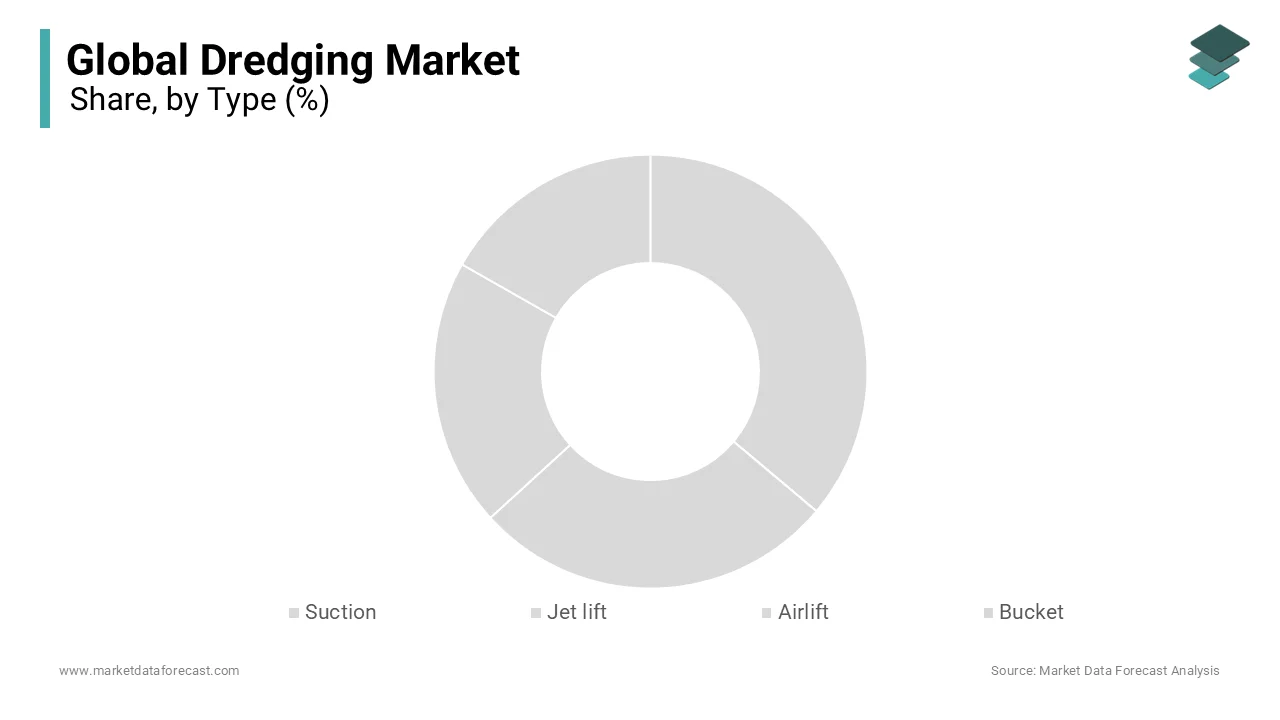
But, the bucket dredgers segment is likely to experience the fastest CAGR of 7.3% over the forecast period owing to the increasing demand for precision excavation in complex marine construction projects. Unlike suction dredgers which are ideal for loose sediments bucket dredgers excel in removing hard compacted materials rocks and debris making them essential for foundation works and underwater mining. The specialized application commands higher margins and drives investment in advanced bucket dredging fleets. Furthermore urban waterfront redevelopment projects often involve contaminated sediments or mixed waste materials that require careful handling to prevent dispersion. Bucket dredgers offer controlled excavation minimizing environmental impact and ensuring compliance with strict regulatory standards. The ability to handle diverse material types and operate in confined spaces enhances their utility in crowded harbor environments. The reliance on bucket dredgers for accurate and efficient material removal continues to rise as marine construction projects become more sophisticated. Consequently, this technology is established as the fastest-growing segment in the market. Technological advancements in automation and remote operation are key factors contributing to the rapid growth of the bucket dredger segment. Modern bucket dredgers are increasingly equipped with automated control systems and real time monitoring sensors that enhance operational precision and safety. According to the Central Dredging Association the integration of digital technologies allows operators to optimize digging patterns and reduce fuel consumption improving overall productivity. Remote operated vehicles and autonomous features enable dredging in hazardous or inaccessible areas reducing risks to human personnel. This technological evolution appeals to contractors seeking to improve efficiency and meet stringent safety regulations. The development of hybrid and electric powered bucket dredgers also aligns with global sustainability goals attracting environmentally conscious clients. Governments in Europe and North America are incentivizing the adoption of low emission machinery through subsidies and regulatory mandates accelerating the replacement of older fleets with modern automated units. The ability of automated bucket dredgers to perform complex tasks with minimal supervision reduces labor costs and operational errors. As the industry moves towards Industry 4.0 standards the demand for smart dredging equipment grows. These innovations not only enhance performance but also open new applications in deep sea mining and environmental restoration driving the accelerated expansion of the bucket dredger segment in the global market.
By End-User Insights
The trading segment was the largest segment in the Dredging Market and occupied a 55.3% share in 2025. This prominence of the segment was supported by the critical dependence of global supply chains on efficient maritime logistics and port infrastructure. Approximately 80 percent of global trade by volume is transported by sea according to the United Nations Conference on Trade and Development necessitating robust and deep port facilities. As container ships increase in size to achieve economies of scale ports must deepen their channels and berths to accommodate these vessels. Major trading hubs in Asia Europe and North America are continuously investing in port expansion projects to handle growing cargo volumes. The World Bank indicates that trade facilitation improvements including port efficiency are crucial for economic growth driving governments to prioritize dredging activities. Maintenance dredging ensures that ports remain operational year round preventing delays and costly diversions for shipping companies. The strategic importance of trade routes such as the Suez Canal and Panama Canal also involves regular dredging to maintain capacity and safety. This consistent demand from the trading sector creates a stable revenue stream for dredging companies. The interdependence of global commerce and maritime infrastructure ensures that trading remains the primary driver of dredging activities worldwide sustaining its dominant position in the market. Infrastructure investments in emerging markets significantly support the dominance of the trading segment in the Dredging Market. Countries in Asia Africa and Latin America are expanding their port capacities to integrate into global supply chains and boost exports. According to the Asian Development Bank billions of dollars are being invested in port infrastructure across the region to facilitate trade and economic development. New port constructions and expansions require substantial initial dredging to create navigable channels and terminal areas. The Belt and Road Initiative led by China has spurred numerous port projects in participating countries further driving demand for dredging services. These initiatives aim to enhance connectivity and trade flows between regions requiring extensive marine engineering works. Local governments often partner with international dredging contractors to execute these large scale projects bringing advanced technology and expertise to developing markets. The growth of middle classes in these regions increases consumption and import volumes further stressing existing port facilities and necessitating upgrades. The focus on improving trade competitiveness through better infrastructure ensures a steady pipeline of dredging projects. As emerging economies continue to industrialize and urbanize the demand for port expansion will remain strong. This sustained investment in trade related infrastructure cements the trading sector's position as the largest end user in the global dredging market.
The tourism segment is on the rise and is expected to be the fastest growing segment in the market by witnessing a CAGR of 8.7% during the forecast period due to the expansion of coastal development and the booming cruise industry. Coastal destinations are investing heavily in marina construction beach nourishment and waterfront revitalization to attract tourists and enhance recreational opportunities. According to the World Travel and Tourism Council the travel and tourism sector contributes significantly to global GDP with coastal tourism being a major component. The Cruise Lines International Association reports that passenger numbers are rebounding strongly with new larger cruise ships requiring deeper ports and specialized terminals. This trend drives demand for dredging to deepen harbors and create safe docking facilities for these massive vessels. Additionally beach erosion poses a threat to tourism revenues prompting governments to undertake regular beach nourishment projects using dredged sand. The aesthetic and functional improvement of waterfronts through dredging enhances the appeal of tourist destinations encouraging further investment. The growth of luxury yachting and marine leisure activities also requires the development of marinas and clean waterways. Tourism is rebounding and expanding globally. This drives the rapid growth of dredging services to support new marine infrastructure. Environmental restoration and eco tourism initiatives are key factors contributing to the rapid growth of the tourism segment in the Dredging Market. Modern tourists increasingly value pristine natural environments and sustainable practices driving destinations to invest in ecological restoration projects. According to the United Nations Environment Programme healthy coastal ecosystems such as coral reefs and mangroves are vital for tourism attractiveness and resilience. Dredging plays a crucial role in restoring these habitats by removing pollutants and reshaping landscapes to support biodiversity. Eco tourism operators rely on clear waters and healthy marine life which are maintained through careful sediment management and habitat restoration dredging. Governments and private entities are collaborating on projects to revive degraded coastal areas enhancing their appeal to environmentally conscious travelers. The Global Sustainable Tourism Council emphasizes the importance of sustainable infrastructure in maintaining long term tourism viability. Dredging companies are adopting green technologies to minimize environmental impact during these restoration efforts aligning with the values of eco tourism stakeholders. The creation of artificial reefs and wetlands using dredged materials also supports marine life and attracts divers and nature enthusiasts. As the focus on sustainability intensifies the demand for environmentally sensitive dredging services in the tourism sector continues to accelerate. This shift towards eco friendly development positions tourism as a dynamic and fast growing segment in the dredging market.
REGION LEVEL ANALYSIS
Asia Pacific Market Analysis
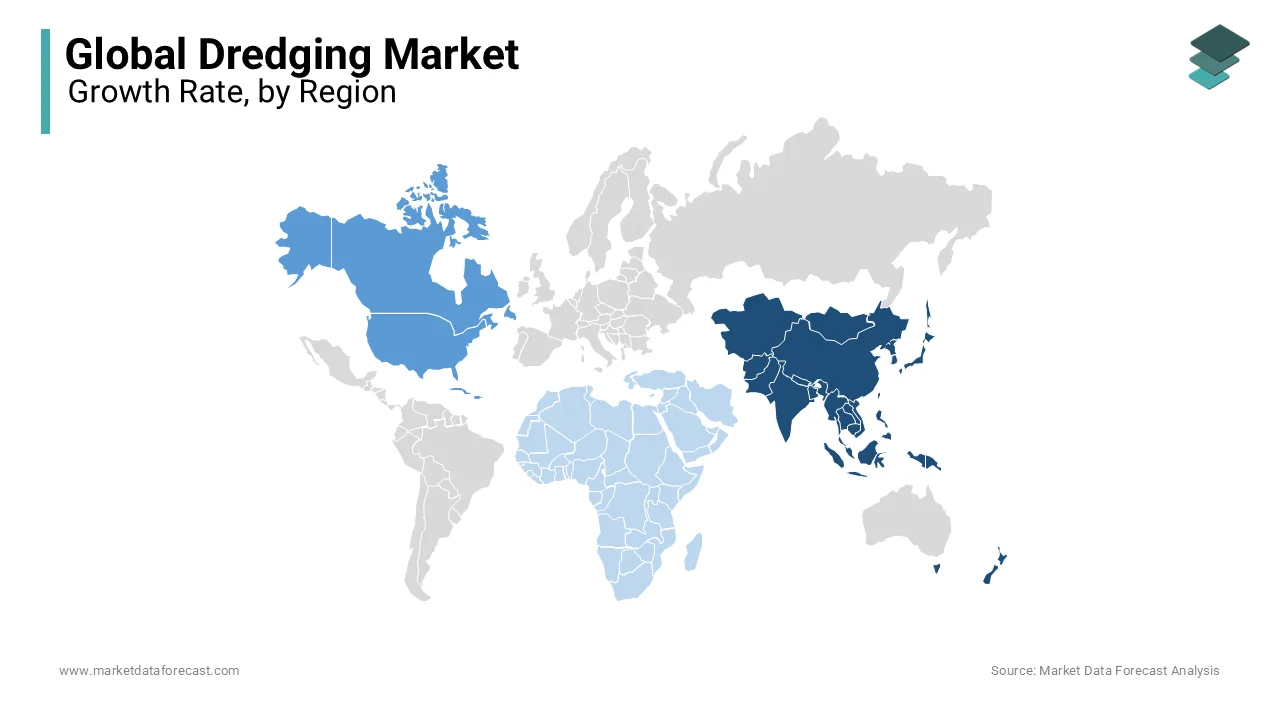
Asia Pacific dominated the global Dredging Market and accounted for a 45.5% share in 2025. The region’s dominance is driven by rapid urbanization extensive land reclamation projects and significant investments in port infrastructure. According to the Asian Development Bank countries like China India and Southeast Asian nations are investing heavily in maritime infrastructure to support economic growth and trade connectivity. China is a global leader in dredging capacity with state owned enterprises executing large scale projects domestically and internationally. The Belt and Road Initiative has further amplified demand for dredging services in participating countries to enhance port connectivity. Land reclamation for urban expansion in cities like Singapore and Jakarta requires massive dredging operations to create new land areas. The region’s growing middle class and increasing trade volumes also drive the need for port modernization and expansion. Government initiatives to develop coastal tourism and protect against climate change impacts further contribute to market growth. The presence of major dredging contractors and a robust supply chain supports the execution of complex projects. Additionally the expansion of offshore energy projects in countries like Vietnam and Australia adds to the demand. The combination of economic development infrastructure investment and strategic geographic positioning ensures Asia Pacific remains the central hub for global dredging activities.
Europe Market Analysis
Europe followed closely behind in the Dredging Market and captured a 25.6% share in 2025. This position of the European market is propelled by advanced technological adoption stringent environmental regulations and a focus on sustainable dredging practices. According to the European Dredging Association the region is a leader in developing green dredging technologies and innovative solutions for sediment management. Countries like the Netherlands Belgium and Germany have extensive experience in water management and coastal protection driving consistent demand for dredging services. The European Union’s Green Deal and Marine Strategy Framework Directive impose strict environmental standards influencing project planning and execution. Port modernization projects in major hubs like Rotterdam and Hamburg require continuous maintenance dredging to accommodate large vessels. Coastal protection initiatives in response to sea level rise are also significant drivers with projects aimed at reinforcing dykes and restoring natural buffers. The region’s emphasis on research and development fosters innovation in dredging equipment and methods. Additionally the offshore wind energy sector in the North Sea creates substantial demand for seabed preparation and cable laying services. The mature market structure and high regulatory standards ensure that European dredging companies remain at the forefront of technological advancement and sustainability. This focus on quality and environmental stewardship maintains Europe’s strong position in the global market.
North America Market Analysis
North America plays a key role in the Dredging Market due to extensive port infrastructure upgrades coastal protection projects and environmental restoration initiatives. As per the ASCE 2025 Report Card, while the U.S. ports received a "B" grade, their highest ever, the nation still faces a $13 billion investment deficit in water transportation infrastructure that must be addressed to sustain efficient trade operations. The US Army Corps of Engineers manages numerous dredging projects annually to maintain navigational channels and protect coastal communities from erosion and storms. Hurricane recovery efforts in states like Florida and Louisiana drive demand for emergency dredging and beach nourishment. The expansion of the Panama Canal and its impact on US East Coast ports has led to deepening projects to accommodate larger vessels. Environmental regulations under the Clean Water Act influence sediment disposal practices promoting the use of beneficial reuse strategies. Canada also contributes to the market with projects focused on Arctic connectivity and port development. The presence of advanced technology providers and skilled labor supports high quality dredging operations. Government funding through infrastructure bills further stimulates market activity. The focus on resilience against climate change and maintaining trade efficiency ensures steady demand for dredging services in North America.
Middle East and Africa Market Analysis
The Middle East and Africa region holds a noteworthy share of the Dredging Market owing to large scale land reclamation projects in the Gulf Cooperation Council countries and port development initiatives in Africa. According to the African Development Bank infrastructure gaps in African ports hinder trade efficiency driving investments in modernization and expansion. Countries like Egypt Morocco and South Africa are upgrading port facilities to enhance regional connectivity and support economic growth. In the Middle East ambitious tourism and real estate projects such as those in Dubai and Saudi Arabia require extensive dredging for land creation and marina construction. The Neom project in Saudi Arabia represents a massive undertaking involving significant marine engineering works. Oil and gas infrastructure development also contributes to demand with dredging required for pipeline installation and platform support. Climate change impacts such as coastal erosion in West Africa drive need for protection measures. However political instability and funding constraints in some African nations can hinder project execution. The region offers potential for growth as governments prioritize infrastructure development and diversification of economies. International dredging companies are increasingly active in the region bringing expertise and capital to support large scale projects.
Latin America Market Analysis
Latin America is anticipated to expand in the Dredging Market from 2026 to 2034 due to periodic infrastructure investments driven by commodity exports and port modernization needs. According to the Economic Commission for Latin America and the Caribbean (ECLAC), the region's heavy reliance on bulk agricultural and mineral exports necessitates efficient port operations; however, a lack of deep-water infrastructure (channel drafts) contributes to logistics costs that average 18% to 35% of product value, significantly higher than global benchmarks. Countries like Brazil Chile and Peru are investing in port expansions to handle increasing export volumes of soy iron ore and copper. The Panama Canal remains a critical asset requiring continuous maintenance and expansion efforts to maintain its global relevance. Coastal tourism in countries like Mexico and the Caribbean drives demand for beach nourishment and marina development. However economic volatility and budget constraints often delay or cancel planned dredging projects. Environmental concerns in sensitive ecosystems such as the Amazon delta and Caribbean reefs impose strict regulations on dredging activities. The region relies heavily on international contractors for complex projects due to limited local capacity. Despite challenges the strategic importance of maritime trade and tourism ensures a baseline demand for dredging services. As economic conditions stabilize and infrastructure priorities shift the market has potential for gradual growth supported by regional integration and trade agreements.
COMPETITIVE LANDSCAPE
The competition in the Dredging Market is characterized by a consolidated landscape dominated by a few major international contractors who possess significant technical expertise and financial resources. These leading players compete based on their ability to execute complex projects efficiently while adhering to strict environmental standards. Innovation in dredging technology and sustainable practices serves as a key differentiator among competitors. Companies strive to develop specialized vessels and digital solutions that enhance productivity and reduce ecological impact. Strategic alliances and joint ventures are common tactics used to share risks and access new markets particularly in regions with high infrastructure development potential. The high barriers to entry due to capital intensive requirements limit the number of new entrants fostering intense rivalry among established firms. Regulatory compliance and safety records also play crucial roles in determining competitive advantage. As demand for coastal protection and offshore energy projects grows companies must continuously adapt their strategies to maintain leadership. This dynamic environment encourages ongoing investment in research and development to stay ahead in the highly specialized global dredging sector.
KEY MARKET PLAYERS
Major Key Players in the Global Dredging Market are
- Royal Boskalis Westminster N.V.
- Jan De Nul N.V.
- Van Oord NV
- Dredging Environmental
- Marine Engineering N.V.
- Great Lakes Dredge
- Dock Co.
- Van Oord N.V.
- Coastal Dredging Company, Inc.
- Weeks Marine, Inc.
Top Players In The Market
- Van Oord NV is a leading international contractor specializing in dredging and marine infrastructure with a strong focus on sustainable solutions. The company plays a pivotal role in global land reclamation and offshore wind farm installations leveraging its specialized fleet of trailing suction hopper dredgers. Recent strategic initiatives include significant investments in digitalization and automation to enhance operational efficiency and reduce environmental impact. Van Oord actively collaborates with governments and private developers on large scale coastal protection projects ensuring long term resilience against climate change. The company has also expanded its capabilities in nature inclusive design integrating ecological considerations into engineering projects. By prioritizing innovation and sustainability Van Oord strengthens its market position as a preferred partner for complex marine challenges. These efforts demonstrate its commitment to delivering high quality services while addressing the evolving needs of the global dredging industry.
- Royal Boskalis Westminster NV is a prominent player in the global dredging market known for its comprehensive suite of services ranging from port development to disaster relief. The company utilizes advanced technology to execute precise dredging operations supporting critical infrastructure projects worldwide. Recent actions include the acquisition of specialized engineering firms to broaden its expertise in offshore energy and hydraulic infrastructure. Boskalis focuses on creating value through integrated solutions that combine dredging with environmental restoration and land reclamation. The company has invested heavily in research and development to improve fuel efficiency and reduce emissions across its fleet. By emphasizing safety and quality Boskalis maintains strong relationships with clients in both public and private sectors. These strategic moves enhance its competitive advantage and reinforce its reputation as a reliable provider of innovative dredging solutions in diverse geographic markets.
- Jan De Nul Group is a key contributor to the global dredging market with extensive experience in complex marine construction and maintenance dredging. The company operates a modern fleet equipped with state of the art technology enabling it to handle challenging projects in various environments. Recent strategic moves include expanding its presence in the offshore renewable energy sector by developing specialized vessels for cable laying and foundation installation. Jan De Nul prioritizes sustainability by implementing green technologies and circular economy principles in its operations. The company engages in long term partnerships with port authorities and industrial clients to ensure continuous improvement of waterways. By focusing on technical excellence and customer satisfaction Jan De Nul solidifies its position as a leader in the industry. These efforts enable the company to adapt to changing market dynamics and deliver superior results for stakeholders globally.
Top Strategies Used By The Key Market Participants
Key players in the Dredging Market primarily employ strategies such as technological innovation and sustainability integration to strengthen their market position. Companies invest heavily in developing automated and eco friendly dredging vessels to meet stringent environmental regulations and improve operational efficiency. Strategic partnerships with governments and private entities facilitate access to large scale infrastructure projects and land reclamation opportunities. Expansion into emerging markets allows firms to capitalize on growing demand for port modernization and coastal protection. Additionally companies focus on diversifying their service portfolios to include offshore wind farm support and environmental restoration. These strategic initiatives enable participants to address complex marine challenges effectively while maintaining competitiveness in the global dredging industry through enhanced capabilities and sustainable practices.
MARKET SEGMENTATION
This research report on the global Dredging market has been segmented and sub-segmented based on type, end-user, application, and region.
By Type
- Suction
- Jet lift
- Airlift
- Bucket
- others
By End-User
- Oil & Gas
- Trading
- Tourism
By Region
- North America
- Europe
- Asia Pacific
- Latin America
- Middle East and Africa