Global Environmental Remediation Market Size, Share, Trends, & Growth Forecast Report, Segmented By Environment Media (Soil and Groundwater), Technology (Air Sparging, Soil Washing, Chemical Treatment, Bioremediation, Electrokinetic Remediation, Excavation, Permeable Reactive Barriers, In- Situ Grouting, Phytoremediation, Pump And Treat, Soil Vapour Extraction, In- Situ Vitrification, Thermal Treatment), Site Type (Public and Private), Application & Region, Industry Forecast From 2026 to 2034
Market Size, 2025
$131.60 BnMarket Estimate, 2026
$141.34 BnMarket Forecast, 2034
$252.20 BnCAGR, 2026–2034
7.4%Global Environmental Remediation Market Size
The global environmental remediation market was valued at USD 131.60 billion in 2025 and is anticipated to reach USD 141.34 billion in 2026 and to USD 250.20 billion by 2034, growing at a CAGR of 7.4% from 2026 to 2034.
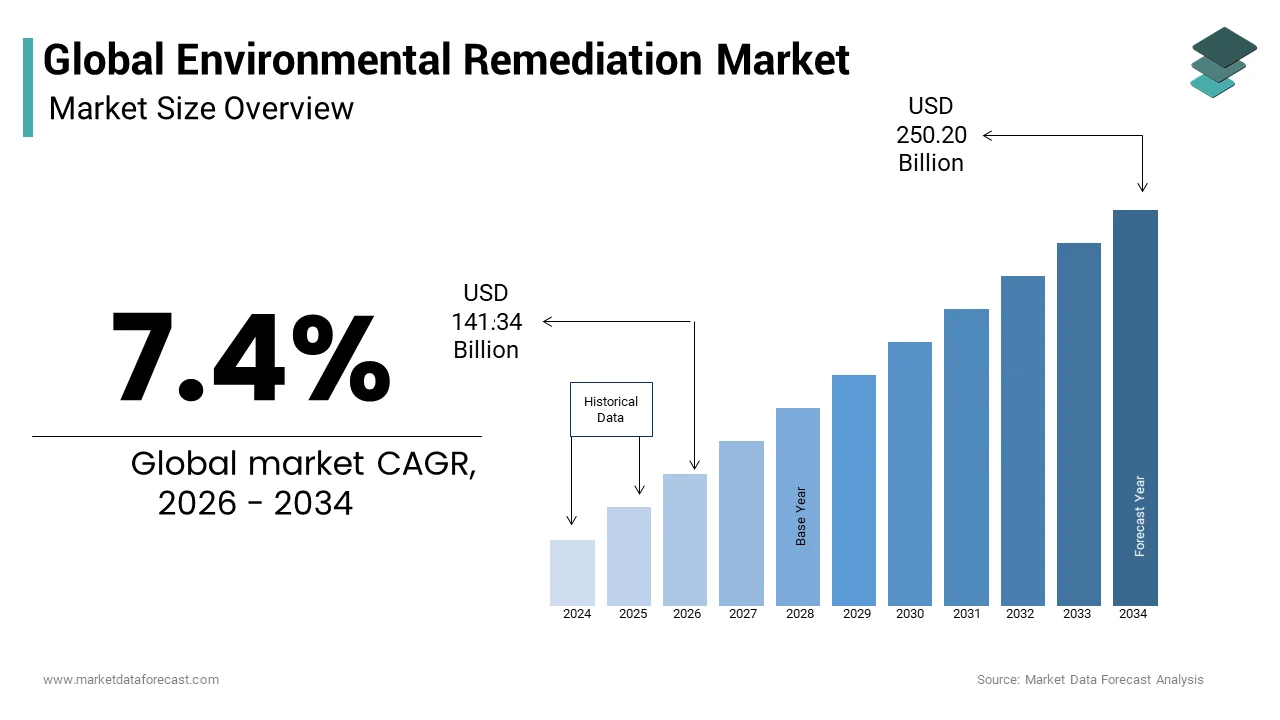
Environmental remediation is the process of eliminating poisons or pollutants from various environmental media such as soil, groundwater, sediments, and surface water. To safeguard human health as well as the environment, it is critical to eliminate harmful and waste materials. The two forms of environmental remediation are water and soil remediation. Water remediation includes groundwater and surface water, whereas soil remediation includes topsoil, subsoil, and sediment. It comprises both ex-situ and in-situ operations as a remediation method. These methods can be used to clean wastewater, aerosols, and solid waste generated during oil and gas extraction. The Environmental Remediation Market has grown in response to the rising demand for safety requirements connected to groundwater and soil.
MARKET DRIVERS
The environmental remediation market growth is driven by rising awareness of ecological problems, stricter regulations, and technological developments in restoration methods.
As the need for environmental purification continues to increase, the industry for remediation services is expected to expand considerably in the next few years. Moreover, world collaboration to lower global warming to 1.5 degrees and the volume of greenhouse gases in the climate, such as international initiatives or projects, are encouraging the industry players to develop innovative products or services. According to the World Bank, the failure to preserve and restore the environment will significantly impact the global GDP by 2.7 trillion dollars from estimated yearly standards in this decade alone. So, regulatory compliance by a rising number of nations with the Global Biodiversity Framework is majorly contributing to the market growth. For instance, the United Kingdom’s Environment Act needs to provide at least 10 per cent biodiversity net benefit from November 2023.
The consistent rise in health issues and chronic diseases, water scarcity in certain areas, and loss of vegetation are other key factors propelling the market expansion. Higher levels of water pollution in developing countries resulted in a greater numberof jaundice, typhoid, diarrhoea, hormone changes, and even cancer cases. On the other hand, acid rain kills more trees and plants, hurts animals, and destroys key layers of the ecosystem. This compelled several governments to establish different environmental protection and restoration laws and legislations to preserve the environment from the negative consequences of pollution, consequently leading to the increasing use of environmental remediation technology worldwide.
Besides this, nano remediation technology, which uses nanoparticles for cleaning, aids in the identification and treatment of ecological pollutants, further paving the way for future development. These materials are combined with analytical techniques to provide low-cost, easy-to-use, and tiny devices for detecting a wide range of environmental pollutants. They also have a lot of promise for use in the clean-up of contaminated water, soil, and sediment.
MARKET RESTRAINTS
Excavation may be the most expensive option when large amounts of dirt must be removed or disposed of as hazardous or toxic waste. Throughout the excavation and treatment operations, heavy equipment such as excavators, bulldozers, loading trucks, and other treatment systems is quite expensive. Setting up a soil remediation cleaning facility necessitates a significant financial commitment. In addition, the plant's maintenance expenditures are relatively high. The global adoption of environmental remediation technologies is hampered by these concerns. The oil and gas business relies heavily on environmental cleanup. Oil prices have dropped to new lows, causing many exploration and production (E&P) and refining businesses to reduce capital spending and production. Many firms have postponed or cancelled environmental rehabilitation orders, resulting in a drop in demand for environmental remediation services for damaged oil field locations.
REPORT COVERAGE
| REPORT METRIC | DETAILS |
| Market Size Available | 2025 to 2034 |
| Base Year | 2025 |
| Forecast Period | 2026 to 2034 |
| CAGR | 7.4% |
| Segments Covered | By Environment Medium, Technology, Site Type, Application, and Region |
| Various Analyses Covered | Global, Regional & Country Level Analysis, Segment-Level Analysis, DROC, PESTLE Analysis, Porter’s Five Forces Analysis, Competitive Landscape, Analyst Overview on Investment Opportunities |
| Regions Covered | North America, Europe, APAC, Latin America, Middle East & Africa |
| Market Leaders Profiled | Bristol Industries, LLC., MWH Global, Inc., Tarmac International, Inc., Sequoia Environmental Remediation Inc., Environmental Remediation, Resources Pty Ltd., Entact LLC, GEO Inc., ERSI, Newterra Ltd., Golder Associates Corporation, CleanHarbourss, Inc., and Others. |
SEGMENTAL ANALYSIS
By Technology Insights
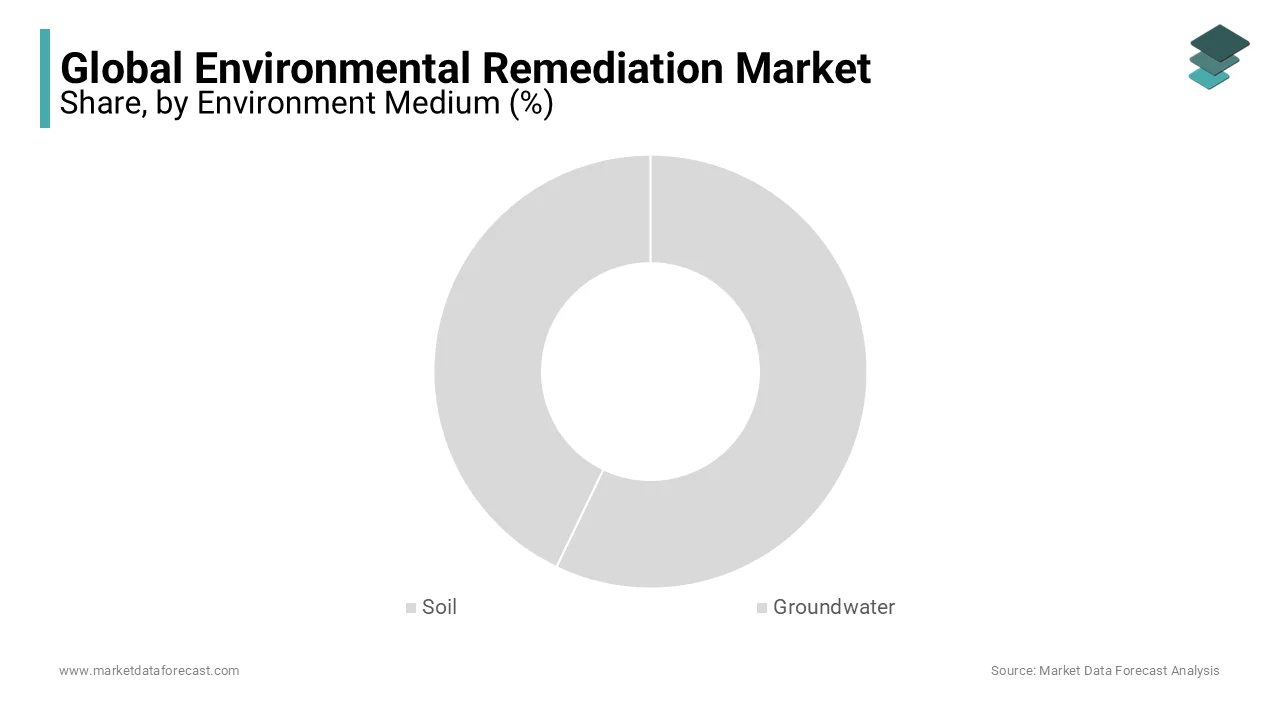
Bioremediation technology is expected to account for the majority of the environmental remediation market by 2026. The bioremediation segment is expected to dominate the environmental remediation market during the forecast period, due to the growing demand for this technology for environmental remediation of soils and groundwater. Bioremediation is a biological remediation process that uses organisms to reduce or clean up soil and groundwater contamination. It eliminates the use of toxic chemicals, often using biochemicals and green plants, making it a cost-effective and safe technology.
By Application Insights
The oil and gas application is expected to continue to represent the largest size in the environmental remediation market, due to the high demand for remediation solutions to clean up volatile organic compounds in this industry. Contamination is related to various phases of oil and gas creation, including wastewater, gas discharges, strong waste, vaporisers created during production and refineries, as well as during transportation, during spillage, oil, and oil-based goods. Remediation innovations are utilised in the oil and gas industry to eliminate foreign substances like methane, propane, sulfur dioxide, unstable natural mixtures, and different poisons.
By Environment Medium Insights
REGIONAL ANALYSIS
North America Market Analysis
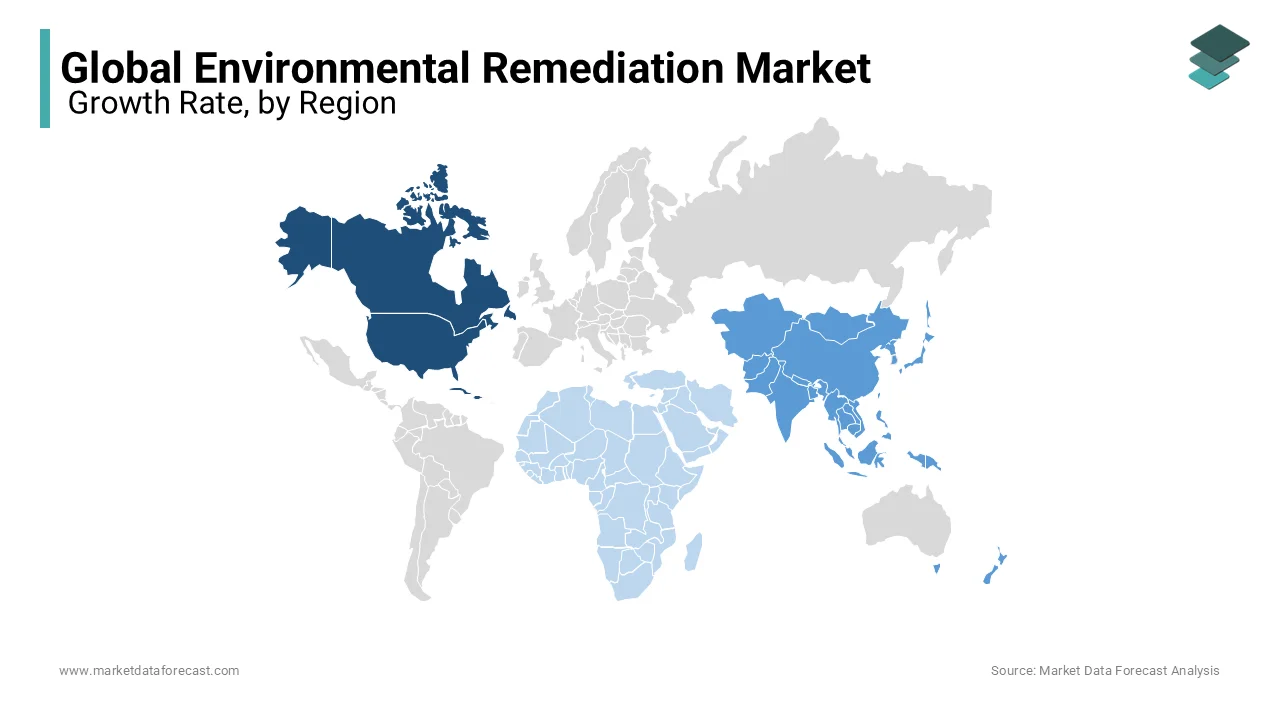
North America and Western Europe represent over 80% of the global environmental remediation market share, with severe natural disasters and countless environmental protection organizations arouaround themrth America is leading owing to the presence of prominent market companies. Also, strict laws and regulations about waste management and pollution control drive the early acceptance of restoration services. In addition, rising awareness of sustainability, heavy industrial operations, and big brownfield locations are pushing the regional market size. It has well-developed dangerous waste treatment facilities that promote the whole remediation value chain.
Asia Pacific Market Analysis
In the Asia Pacific, Japan is also considered a leading market for companies in the environmental remediation landscape. Also, with the rapid industrialisation and rapid development of China's oil and gas industry, demand in the APEJ region is expected to increase during the forecast period. Moreover, the increasing levels of pollution in ICCA countries are propelling the growth of the environmental remediation market size in the region. Population growth, industrialisation, high oil and gas consumption, and the adoption of government regulations for environmental protection are driving the APAC market. Hence, this is accelerating the expansion of the regional environmental remediation market.
Europe Market Analysis
Europe accounts for a considerable share of the Environmental Remediation market, and this is attributed to strict regulatory levels, growing medical expenditure, and a rising ageing population. Moreover, industry players focus on sustainable activities and expansion into developing markets to take advantage of growth opportunities. As per research, the approximate annual expenditure for handling polluted land in Europe is 6.5 billion euros. Also, there are around 650 thousand estimated plots of toxic ground in the region; however, in the last 5 years, 8500 new places were restored.
Latin America Market Analysis
Latin America is experiencing stable progress currently in the environmental remediation market. It is propelled by enhancing healthcare facilities, rising public medical infrastructure, and a better understanding of prospective healthcare policies. Moreover, companies in South America are using strategic alliances and market dominance strategies to benefit from the region's abilities.
Middle East And Africa Market Analysis
The Middle East and Africa present an encouraging development potential for the environmental remediation market, which is backed by government policies and programs that aim to improve sustainable oil and gas operations and the progressive adoption of modern medical technologies. Further, the industry players are investing in supply chain networks and indigenised marketing techniques to reinforce their visibility and footprint in the region.
KET MARKET PLAYERS
Companies playing a major role in the global environmental remediation market include
- Bristol Industries
- LLC.
- MWH Global, Inc
- Tarmac International, Inc.
- Sequoia Environmental Remediation Inc.
- Environmental Remediation Resources Pty Ltd
- Entact LLC
- GEO Inc.
- ERSI
- Newterra Ltd
- Golder Associates Corporation
- Clean Harbours, Inc.
RECENT MARKET NEWS
- In February 2024, the United States government announced more than $11 billion to commence new remediation projects and work persistently at 100 Superfund locations throughout the nation.
- In March 2024, it was reported that the European Union is in the process of enforcing a series of important ecological laws covering water quality, carbon discharge, and wildlife conservation.
MARKET SEGMENTATION
This research report on the global environmental remediation market has been segmented and sub-segmented based on product type, mode type, end-use, and region.
By Environment Medium
- Soil
- Groundwater
By Technology
- Air Sparging
- Soil Washing
- Chemical Treatment
- Bioremediation
- Electrokinetic Remediation
- Excavation
- Permeable Reactive Barriers
- in-Situ Grouting
- Phytoremediation
- Pump and Treat
By Site Type
- Public
- Private
By Application
- Mining and Forestry
- Oil & Gas
- Agriculture
- Automotive
- Landfills and Waste Disposal Sites
- Manufacturing, Industrial, and Chemical Production/Processing
- Construction and Land Development
By Region
- North America
- Europe
- The Asia Pacific
- Latin America
- The Middle East and Africa
Frequently Asked Questions
What is the environmental remediation market?
It is the global industry focused on cleaning up contaminated soil, water, and air using chemical, biological, and physical methods.
What drives growth in the environmental remediation market?
Strict environmental regulations, rising pollution levels, and increased investment in sustainable cleanup technologies drive market expansion.
What are common environmental remediation techniques?
Bioremediation, soil vapor extraction, chemical oxidation, groundwater treatment, and phytoremediation are widely used methods.
Which industries contribute most to remediation demand?
Oil & gas, manufacturing, mining, and chemical industries are key contributors due to contamination risk and regulatory requirements.
How do government regulations impact the market?
Stringent cleanup standards and compliance mandates push organizations to invest in remediation solutions.
What role does technology play in remediation?
Advanced sensors, data analytics, and innovative treatment technologies improve cleanup efficiency and monitoring accuracy.
Are biological methods popular in remediation?
Yes, bioremediation and phytoremediation are increasingly used due to their eco-friendly nature and cost effectiveness.
What is soil remediation?
Soil remediation involves removing or neutralizing contaminants in soil to restore land for safe use.
How does groundwater remediation work?
Groundwater remediation removes pollutants from underground water using pumping, filtration, or chemical treatment.
Why is air remediation important?
Air remediation reduces hazardous emissions and airborne toxins to protect human health and the environment.
Related Reports
Access the study in MULTIPLE FORMATS
Purchase options starting from
$ 2500
Didn’t find what you’re looking for?
TALK TO OUR ANALYST TEAM
Need something within your budget?
NO WORRIES! WE GOT YOU COVERED!
Call us on: +1 888 702 9696 (U.S Toll Free)
Write to us: sales@marketdataforecast.com