Europe Oatmeal Market Size, Share, Trends, & Growth Forecast Report By Form (Organic, Conventional), Type, Distribution Channel and Country (UK, France, Spain, Germany, Italy, Russia, Sweden, Denmark, Switzerland, Netherlands, Turkey, Czech Republic and Rest of Europe), Industry Analysis From 2026 to 2034
Market Size, 2025
$0.95 BnMarket Estimate, 2026
$1.01 BnMarket Forecast, 2034
$1.54 BnCAGR, 2026–2034
5.45%Europe Oatmeal Market Report Summary
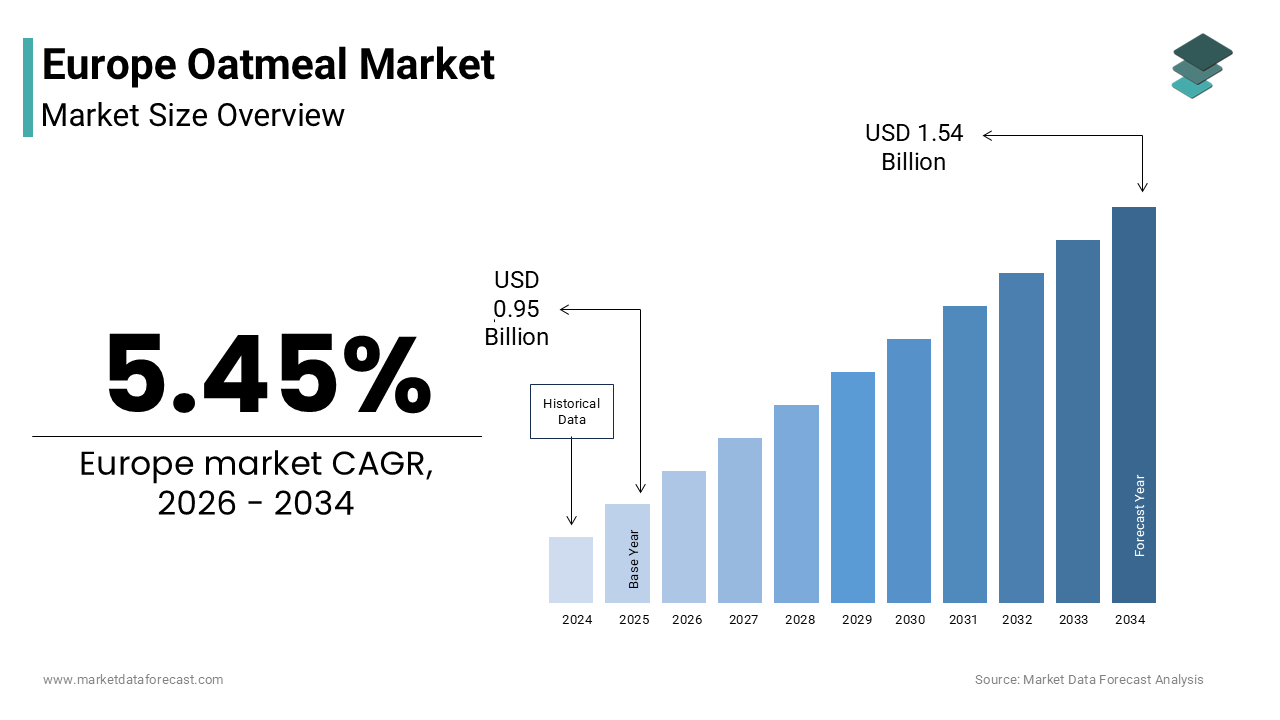
The Europe oatmeal market was valued at USD 0.95 billion in 2025, is estimated to reach USD 1.01 billion in 2026, and is projected to reach USD 1.54 billion by 2034, growing at a CAGR of 5.45% during the forecast period from 2026 to 2034. The growth of the Europe oatmeal market is driven by the rising prevalence of cardiovascular diseases, increasing consumer preference for preventive nutrition, and growing demand for plant-based food products. Expanding consumption of oat-based dairy alternatives, rising awareness regarding the health benefits of beta-glucans, and increasing demand for whole-grain functional foods are further fueling market growth. Moreover, innovations in value-added oat products, sustainable packaging solutions, and the growing popularity of clean-label and organic food products are supporting the expansion of the Europe oatmeal market.
Key Market Trends
-
Rising demand for oatmeal driven by increasing awareness of its heart-health and cholesterol-lowering benefits.
-
Growing popularity of oat-based dairy alternatives such as oat milk, yogurt, and cream across Europe.
-
Increasing demand for organic, gluten-free, and clean-label oatmeal products among health-conscious consumers.
-
Strong focus on sustainable packaging and circular economy initiatives utilizing oat by-products.
-
Emergence of fortified and functional oatmeal products enriched with vitamins, minerals, probiotics, and plant proteins.
Segmental Insights
- Based on form, the conventional oatmeal segment was the largest and held a significant share of the Europe oatmeal market in 2025. The segment’s dominance is attributed to its affordability, well-established supply chain, widespread availability across retail channels, and extensive utilization in breakfast cereals, bakery products, and processed foods.
- Based on type, the quick/instant rolled oats segment accounted for 56.7% of the Europe oatmeal market share in 2025. The dominance of this segment stems from changing consumer lifestyles, increasing demand for convenient and ready-to-prepare breakfast options, product innovation in flavored instant oatmeal, and the growing popularity of single-serve packaging.
- Based on distribution channel, the supermarkets and hypermarkets segment was the largest, occupying 66.1% of the Europe oatmeal market share in 2025. The dominance of this segment is driven by extensive retail networks, strong private-label offerings, competitive pricing strategies, and consumers' preference for one-stop grocery shopping, while online retail is witnessing rapid growth due to expanding e-commerce adoption and subscription-based grocery services.
Regional Insights
The Europe oatmeal market is witnessing robust growth across major economies, supported by increasing consumer preference for healthy breakfast foods, growing plant-based diets, and rising awareness of preventive nutrition.
- The United Kingdom was the largest contributor to the Europe oatmeal market in 2025, driven by its strong cultural preference for oatmeal, growing demand for functional foods, widespread consumption of oat-based products, and continuous product innovation by leading manufacturers.
- Germany continues to perform strongly, supported by its expanding organic food market, increasing consumption of sustainable food products, and well-established oat processing industry.
- Sweden remains a key market owing to its high per-capita oat consumption, leadership in oat-based dairy alternatives, and strong focus on sustainable agriculture.
- France is witnessing significant growth due to increasing health consciousness, growing demand for organic and gluten-free oatmeal, and expanding retail availability of premium oat products.
- Poland is also emerging as an important market, supported by its position as one of Europe's leading oat producers, strong export capabilities, and increasing domestic consumption of whole-grain foods.
Competitive Landscape
The Europe oatmeal market is characterized by intense competition among multinational food companies and regional oat processors focusing on product innovation, sustainability, and premium product development. Leading companies are expanding their portfolios with organic, gluten-free, and functional oatmeal products while investing in sustainable sourcing, regenerative agriculture, and value-added oat applications. Strategic acquisitions, expansion across online retail channels, and continuous innovation in convenience-based oatmeal products are further strengthening the competitive landscape across Europe. Prominent players in the Europe oatmeal market include PepsiCo, Inc. (Quaker Oats), Nestlé S.A., Kellogg Company, General Mills, Inc., Dr. Oetker, Weetabix Ltd, Associated British Foods plc, Nature’s Path Foods, Bob’s Red Mill Natural Foods, Alnatura Produktions- und Handels GmbH, Hain Celestial Group, and Jordans Dorset Ryvita.
Europe Oatmeal Market Size
The Europe oatmeal market size was valued at USD 0.95 billion in 2025 and is anticipated to reach USD 1.01 billion in 2026 from USD 1.54 billion by 2034, growing at a CAGR of 5.45% during the forecast period from 2026 to 2034.
Oatmeal is a popular porridge made from hulled oat grains (groats) that have been milled, steel-cut, or rolled. This market is deeply rooted in the agricultural heritage of Northern and Eastern Europe where climatic conditions favor the cultivation of this hardy cereal crop. The European Union stands as a global leader in oat production, with member states collectively harvesting significant volumes annually, maintaining its position as a top contributor to the world supply. Poland and Finland consistently emerge as the largest producers contributing significantly to the regional supply chain that feeds both domestic consumers and export markets. The definition of the market extends beyond simple rolled oats to include instant varieties steel cut grains and oat flour used in baking and plant based milk alternatives. Consumer behavior in the region reflects a strong preference for whole grain foods driven by national dietary guidelines that recommend high fiber intake. As per various sources, consumption of foods rich in beta-glucans is supported for its role in maintaining cardiovascular health, leading to a notable interest among adults in Western Europe for functional oat-based products. The market operates within a complex framework of agricultural policies and sustainability initiatives that encourage crop rotation to improve soil health. Unlike other cereal markets dominated by wheat or maize the oatmeal sector in Europe benefits from a unique perception as a functional food that bridges traditional nutrition with modern wellness trends.
MARKET DRIVERS
Rising Prevalence of Cardiovascular Diseases and Preventive Nutrition
A massive shift toward preventive nutrition strategies centered on soluble fiber is propelling the Europe oatmeal market. This trend is driven by the escalating incidence of cardiovascular diseases across the continent. Oats are uniquely rich in beta glucan a type of soluble fiber scientifically proven to lower low density lipoprotein cholesterol levels and reduce the risk of heart disease. According to the World Health Organization, cardiovascular diseases remain the leading cause of death in Europe, accounting for a significant proportion of all mortalities, which has intensified public health campaigns promoting heart-healthy diets. National health agencies in countries like the United Kingdom and Germany explicitly recommend the daily consumption of oats as a dietary intervention to manage cholesterol without pharmaceutical reliance. Clinical guidelines supported by European health authorities indicate that consuming a specific daily amount of beta-glucan, which is achievable through a standard serving of oatmeal, can effectively reduce total cholesterol levels. This medical endorsement has transformed oatmeal from a basic breakfast option into a therapeutic food item widely prescribed by nutritionists and dietitians. The growing awareness among middle aged and elderly demographics regarding the link between diet and heart health has solidified oatmeal as a pantry staple. Furthermore, food manufacturers leverage these health claims on packaging to attract health conscious shoppers who prioritize functional benefits over mere taste. This deep seated connection between oat consumption and disease prevention creates a robust and resilient demand base that continues to expand as the population ages and health literacy improves.
Surging Demand for Plant Based Dairy Alternatives
The explosive growth of the plant-based dairy sector is also a significant driver for the Europe oatmeal market. Oats have become the preferred raw material for producing milk, yogurt, and cream substitutes. Consumers are increasingly abandoning cow's milk due to lactose intolerance environmental concerns and ethical considerations regarding animal welfare leading to a surge in oat milk popularity. Multiple studies reveal that sales of plant-based milk alternatives have continued to grow, with oat milk capturing a substantial share of the market due to its creamy texture and neutral flavor profile. The versatility of oats allows processors to create a wide range of dairy free products that mimic the sensory experience of traditional dairy without the allergens associated with soy or nuts. Major food corporations and startups alike are investing heavily in oat processing facilities to meet this insatiable demand for liquid and fermented oat products. In nations like Sweden and Spain the penetration of oat milk in coffee shops and households has reached near ubiquitous levels driving upstream demand for high quality milling oats. This industrial utilization diversifies the market beyond the breakfast table ensuring that oats are consumed throughout the day in various forms. The alignment of oat based products with sustainability goals further accelerates adoption as consumers perceive oats as having a lower water footprint compared to almonds or rice. This structural shift in protein and calcium sourcing ensures sustained growth for the entire oat value chain.
MARKET RESTRAINTS
Susceptibility to Climate Variability and Yield Fluctuations
Extreme weather patterns and climate change make oat crops highly sensitive, which acts as the primary constraint on the European oatmeal market. Consequently, this creates significant volatility in supply volumes and pricing. Unlike more resilient cereals such as wheat or barley oats require cool and moist conditions during their growing season making them particularly vulnerable to heatwaves and droughts that are becoming increasingly frequent in Southern and Central Europe. According to the Joint Research Centre of the European Commission, climate models predict a significant decline in suitable growing areas for oats by the mid-century due to rising temperatures and changes in precipitation patterns. The severe drought experienced in recent years led to a general decline in cereal harvests across the European Union, creating a tighter market that required millers to navigate higher costs to fulfill their supply requirements. This yield instability complicates long term planning for food manufacturers who require consistent quality and quantity for their production lines. Farmers in traditional oat growing regions are increasingly switching to more drought tolerant crops to mitigate financial risk thereby reducing the total acreage dedicated to oats. The lack of advanced genetic varieties capable of withstanding high heat stress further exacerbates the situation limiting the ability of the agricultural sector to adapt quickly. These environmental constraints create a bottleneck for market expansion as supply struggles to keep pace with the burgeoning demand from both food and beverage sectors. The market will remain exposed to the whims of weather, threatening price stability and availability. This will continue until breeding programs deliver more resilient cultivars.
Contamination Risks and Strict Gluten Free Certification Hurdles
Pervasive gluten contamination is a critical restraint on the European oatmeal market. It restricts access for consumers who have gluten sensitivity or celiac disease. Although oats are naturally gluten free they are frequently contaminated with wheat barley or rye during cultivation harvesting and processing due to shared equipment and adjacent fields. According to regulations enforced by European health authorities, only oats that have been specially handled and verified to contain a minimal, trace amount of gluten can be legally labeled as gluten-free. The process of securing this certification is costly and technically demanding requiring dedicated supply chains and specialized cleaning facilities that many small scale farmers and millers cannot afford. Consequently the availability of certified gluten free oats remains limited and commands a premium price that excludes a significant portion of potential consumers. Studies by health organizations indicate that a portion of celiac patients choose to avoid oats due to concerns over potential cross-contamination or sensitivity to a specific protein found in the grain that is similar to gluten. This hesitation restricts market penetration among a demographic that would otherwise benefit greatly from the nutritional profile of oats. The rigorous testing protocols and the need for complete segregation from conventional grains increase operational costs and reduce profit margins for producers. These barriers prevent the market from fully capitalizing on the health trends driving demand for safe and inclusive food options.
MARKET OPPORTUNITIES
Innovation in Value Added Functional Food Products
The development of value-added functional food products unlocks great potential in the Europe oatmeal market. Such products leverage the inherent nutritional benefits of oats to address specific health concerns beyond heart health. Manufacturers can innovate by fortifying oatmeal with probiotics prebiotics vitamins and minerals to create targeted solutions for gut health immune support and energy management. The unique matrix of oat fiber serves as an excellent carrier for these bioactive ingredients allowing for the creation of ready to eat snacks breakfast bars and fortified porridges that appeal to busy lifestyles. Startups in the Netherlands and Germany are already pioneering oat based products enriched with adaptogens and plant proteins to cater to the fitness and wellness communities. This shift from commodity grain to specialized health food enables producers to command higher price points and build stronger brand loyalty. The versatility of oat flour also allows for its incorporation into gluten free baked goods pasta and meat analogues expanding its application far beyond the breakfast bowl. By positioning oats as a foundational ingredient for holistic wellness the market can tap into the rapidly growing functional food sector. This strategic evolution transforms oatmeal from a staple into a dynamic component of modern preventive healthcare unlocking new revenue streams and consumer segments.
Expansion into Sustainable Packaging and Circular Economy Models
The transition toward sustainable packaging and circular economy models offers a major opportunity for the Europe oatmeal market. This shift allows the industry to align with the stringent environmental goals of the European Green Deal." Consumers are increasingly demanding eco friendly packaging solutions and brands that demonstrate a commitment to reducing plastic waste and carbon emissions. Oat hulls a byproduct of milling which were traditionally discarded or used as low value fuel can now be upcycled into biodegradable packaging materials compostable cutlery and even textile fibers. Companies that invest in technologies to convert oat waste into valuable resources can significantly enhance their sustainability credentials and reduce disposal costs. Furthermore, adopting regenerative agricultural practices such as cover cropping and reduced tillage in oat farming can sequester carbon and improve soil biodiversity creating a positive environmental narrative. Retailers in Scandinavia and the United Kingdom are prioritizing suppliers who offer zero waste solutions and transparent supply chains. By embracing a cradle to cradle approach the oatmeal industry can differentiate itself from competitors and appeal to the environmentally conscious demographic. This holistic focus on sustainability not only mitigates regulatory risks but also fosters deep emotional connections with consumers who view their purchasing decisions as a vote for a greener future.
MARKET CHALLENGES
Intense Competition from Alternative Grain and Seed Crops
Alternative grains and seeds like quinoa, buckwheat, chia, and millet are gaining traction as superfoods in the region. This trend poses a mounting challenge to the Europe oatmeal market. These competitors often boast higher protein content or more exotic nutritional profiles that appeal to consumers seeking variety and novel health benefits. The perception of oats as a common or mundane breakfast option makes it difficult for them to compete with the trendy status of quinoa or the high omega 3 content of chia seeds. Retailers are allocating increasing shelf space to these diverse alternatives to cater to adventurous palates and specific dietary needs such as paleo or keto diets where oats are sometimes restricted due to carbohydrate content. The marketing budgets of niche grain producers are often more aggressive in highlighting unique selling points leaving oat brands struggling to maintain relevance among younger demographics. Additionally, the rise of grain free breakfast options based on nuts and legumes further fragments the market and dilutes the dominance of oatmeal. To overcome this challenge oat producers must invest heavily in rebranding efforts and product innovation to highlight the unique cost effectiveness and proven health benefits of oats. Failure to differentiate effectively could result in a gradual erosion of market share as consumers explore the vast and expanding landscape of alternative breakfast cereals.
Supply Chain Disruptions and Geopolitical Instability
Geopolitical tensions and supply chain disruptions are a major barrier for the European oatmeal market. These factors threaten the stability of raw material flows and input costs. The ongoing conflict in Eastern Europe has severely impacted the logistics of grain transportation and the availability of essential agricultural inputs such as fertilizers and energy which are crucial for oat cultivation. The reliance on cross border trade within the EU means that any disruption in transport corridors or border controls can lead to immediate shortages and price spikes. Furthermore, the energy crisis has escalated the costs of processing and drying oats making it economically challenging for millers to maintain production levels. The uncertainty surrounding trade policies and export restrictions creates a volatile environment where long term contracts become difficult to negotiate. This instability affects the entire value chain from farmers who face unpredictable returns to retailers who struggle with inconsistent stock levels. The cumulative effect of these geopolitical factors is a reduction in market confidence and a hesitation to invest in expansion or innovation. As the global political landscape remains fluid the Europe oatmeal market must navigate these external shocks to ensure food security and price stability for consumers.
REPORT COVERAGE
| REPORT METRIC | DETAILS |
| Market Size Available | 2025 to 2034 |
| Base Year | 2025 |
| Forecast Period | 2026 to 2034 |
| CAGR | 5.45% |
| Segments Covered | By Form, Type, Distribution Channel and Region. |
| Various Analyses Covered | Global, Regional & Country Level Analysis, Segment-Level Analysis, DROC, PESTLE Analysis, Porter’s Five Forces Analysis, Competitive Landscape, Analyst Overview of Investment Opportunities |
| Country Covered | UK, France, Spain, Germany, Italy, Russia, Sweden, Denmark, Switzerland, the Netherlands, Turkey, the Czech Republic, and the Rest of Europe. |
| Market Leaders Profiled | PepsiCo, Inc. (Quaker Oats), Nestlé S.A., Kellogg Company, General Mills, Inc., Dr. Oetker, Weetabix Ltd, Associated British Foods plc, Nature’s Path Foods, Bob’s Red Mill Natural Foods, Alnatura Produktions- und Handels GmbH, Hain Celestial Group, and Jordans Dorset Ryvita |
SEGMENTAL ANALYSIS
By Form Insights
The Conventional Oatmeal segment dominated the Europe oatmeal market and accounted for a substantial share in 2025. This dominance of the segment is driven by the deep integration of conventional oats into the daily dietary habits of the European population, where they serve as a cost effective and accessible staple for breakfast and baking. The segment benefits from established supply chains that ensure consistent availability across all retail formats, from discount supermarkets to large hypermarkets. Furthermore, the lower price point of conventionally grown oats compared to organic alternatives makes them the default choice for price sensitive consumers and institutional buyers such as schools and hospitals. The widespread use of conventional oat flour in industrial food processing for cookies, breads, and snacks further solidifies its market position. Conventional oatmeal remains dominant in Europe primarily because its affordability makes it accessible to all income levels. In an environment characterized by rising inflation and increased cost of living, consumers prioritize value without compromising on basic nutritional needs. The production costs for conventional oats are lower due to higher yields per hectare achieved through the use of synthetic fertilizers and modern agronomic practices, allowing retailers to offer competitive pricing. This price advantage is critical in Eastern and Southern European markets where disposable income levels are comparatively lower. Major private label brands in countries like Germany and the United Kingdom rely heavily on conventional sourcing to maintain their low price strategies, driving massive volume sales. The ability of conventional oats to serve as a filling and nutritious meal at a fraction of the cost of processed cereals or animal based proteins ensures their continued reign as the most purchased form of oat product in the region. A further reason for this growth is the robust and mature supply chain infrastructure that supports large scale industrial utilization beyond direct consumer consumption. Conventional oats are the preferred raw material for major food manufacturers producing biscuits, breakfast bars, baby food, and bakery items due to the reliability of supply and standardized quality parameters. The economies of scale achieved by large milling operations allow for efficient processing and distribution to industrial clients who require vast quantities of uniform product. Unlike organic supply chains which can be fragmented and subject to seasonal shortages, conventional networks offer the stability needed for continuous manufacturing lines. This industrial demand creates a massive baseline volume that dwarfs retail sales of specialty oats. Furthermore, the versatility of conventional oat derivatives in extending shelf life and improving texture in processed foods makes them indispensable to the food industry. The entrenched relationship between conventional oat growers and industrial processors creates a high barrier to entry for other forms, securing the segment's dominant market share.
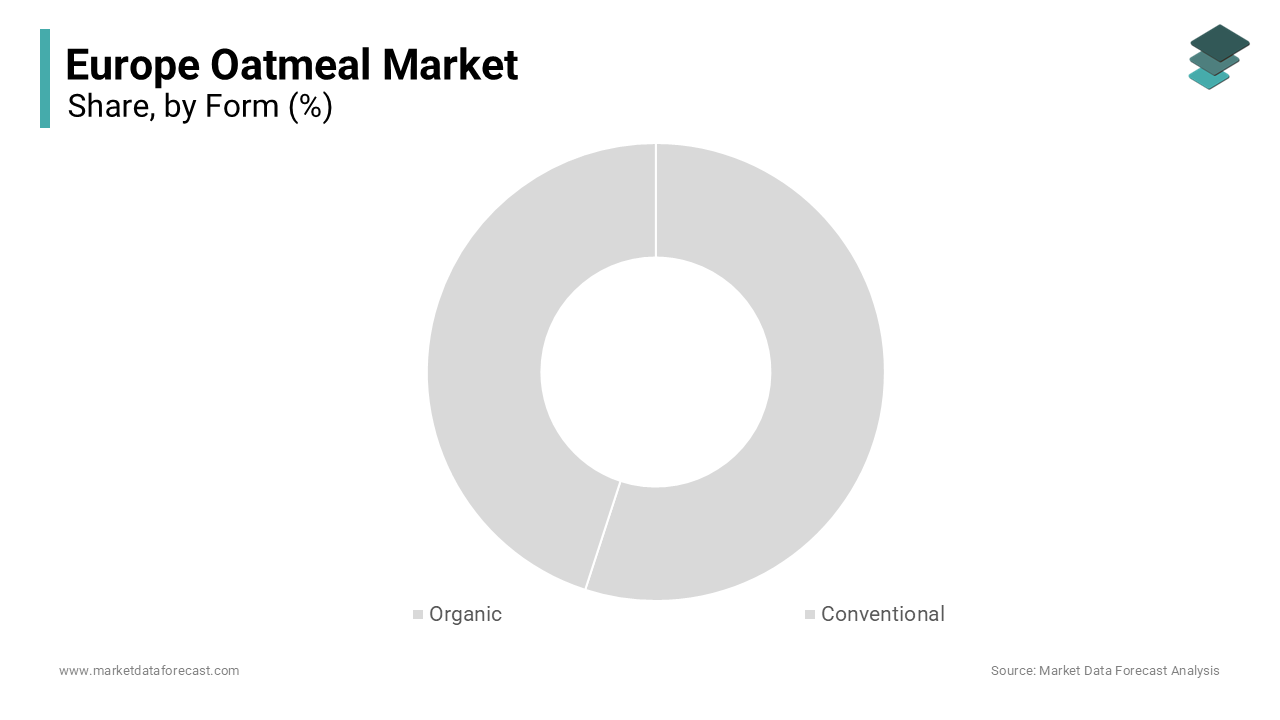
The Organic Oatmeal segment is anticipated to witness the fastest CAGR of 9.9% from 2026 to 2034 due to heightened consumer awareness regarding pesticide residues, environmental sustainability, and animal welfare. The growth is particularly pronounced in Western and Northern Europe where regulatory support for organic farming and strong consumer preference for clean label products converge. This segment benefits from premium positioning and the perception of higher nutritional quality, attracting health conscious demographics willing to pay a premium for purity. A key factor for the rapid expansion of the organic oatmeal segment is the growing consumer fear regarding pesticide residues and chemical contaminants in conventional food supplies. European shoppers are increasingly scrutinizing ingredient lists and demanding transparency about farming practices, leading to a surge in demand for certified organic products guaranteed to be free from synthetic pesticides and herbicides. High profile media reports linking glyphosate and other agrochemicals to health risks have accelerated this trend, pushing consumers toward organic oats as a safer alternative. Retailers in countries like France and Sweden have responded by expanding their organic ranges and prominently displaying certification labels to build trust. The strict regulatory framework of the European Union regarding organic certification provides a reliable guarantee that resonates with anxious consumers. This shift in consumer psychology from price sensitivity to safety prioritization is driving double digit growth in organic oat sales, as individuals view the higher cost as an investment in long term health and well being. In addition, this area is supported by the substantial government support and policy initiatives aimed at expanding organic farmland across the European Union. The European Green Deal and the Farm to Fork strategy explicitly target increasing the share of agricultural land under organic management percent by 2030, creating a favorable environment for organic oat producers. Financial incentives, subsidies, and technical assistance provided by national governments encourage farmers to transition from conventional to organic methods, reducing the risk associated with conversion. This policy driven expansion ensures a more stable supply of organic raw materials, allowing retailers to commit to long term contracts and promotional campaigns. Countries like Austria and Estonia have already exceeded EU targets, becoming hubs for organic oat production that supply the broader European market. The alignment of agricultural policy with consumer demand creates a virtuous cycle of supply and demand growth, propelling the organic segment to become the fastest growing force in the market.
By Type Insights
The Quick or Instant Oatmeal segment led the Europe oatmeal market and captured a 56.7% share in 2025. This leading position of the segment is supported by the fast paced lifestyle of modern European consumers who prioritize convenience and speed in meal preparation without sacrificing nutrition. The segment benefits from extensive product innovation including flavored sachets, microwaveable cups, and ready to mix blends that cater to diverse taste preferences. The ease of preparation requiring only hot water or milk and a minute of time makes it the ideal solution for busy mornings, office lunches, and on the go consumption. Furthermore, the long shelf life and portability of instant oat products make them a staple in pantries and travel kits across the continent. The primary factor sustaining the dominance of quick and instant oatmeal is the profound shift in European lifestyles toward faster rhythms and reduced time available for meal preparation. As urbanization increases and work hours extend, the traditional sit down breakfast is being replaced by quick nutritious options that can be consumed immediately. Instant oatmeal addresses this pain point perfectly by offering a hot wholesome meal in under two minutes, fitting seamlessly into morning commutes and busy schedules. The availability of single serve packaging enhances this convenience, eliminating the need for measuring and cleaning up. In countries with high workforce participation rates like the Netherlands and Germany, instant oats have become a ubiquitous part of the daily routine. Manufacturers continue to innovate with self heating cups and resealable pouches to further enhance usability. This alignment with the temporal constraints of modern life ensures that instant oatmeal remains the default choice for the mass market, outpacing slower cooking varieties. Also, this sector is boosted by the aggressive innovation in flavor profiles and formulation that appeals to a broad spectrum of palates and dietary needs. Unlike plain steel cut or Scottish oats which offer a neutral taste, instant varieties are available in a vast array of flavors ranging from classic fruits and honey to exotic spices and chocolate. Also, the diversification allows brands to target specific demographics such as fitness enthusiasts, children, and seniors with tailored offerings. The ability to mask the sometimes bland texture of oats with appealing flavors and sweeteners makes instant oatmeal more palatable to picky eaters and those new to whole grains. Promotional activities and limited edition flavors keep the category exciting and encourage repeat purchases. The versatility of instant oats also extends to savory applications in some regions, expanding their usage occasions beyond breakfast. This constant reinvention and adaptation to consumer taste trends ensure that the instant segment maintains its leadership position against more traditional and less versatile oat types.
The Oat Flour segment is likely to experience the fastest CAGR of 11.2% over the forecast period. This segment is gaining rapid traction as a key ingredient in the booming gluten free baking and plant based food sectors. The shift toward home baking during recent global events and the sustained interest in healthy homemade goods have fueled demand for alternative flours. Oat flour offers a unique combination of mild flavor, nutritional density, and functional properties that make it ideal for cookies, breads, pancakes, and thickening agents. One of the major drivers of the explosive growth of the oat flour segment is the surging popularity of gluten free baking among consumers managing celiac disease or adopting gluten free diets for perceived health benefits. Oat flour, when certified gluten free, serves as a vital substitute for wheat flour, providing structure and moisture to baked goods that other alternative flours often lack. The expanding consumer base drives significant demand for versatile baking ingredients that can replicate the texture of wheat without the allergen. The trend toward home cooking and baking, reinforced by social media platforms and culinary shows, has empowered consumers to experiment with oat flour in recipes ranging from muffins to pizza dough. Retailers have responded by stocking dedicated gluten free baking aisles featuring oat flour prominently. The ability of oat flour to improve the nutritional profile of baked goods by adding fiber and protein further enhances its appeal. As the gluten free market matures, oat flour is poised to remain the fastest growing type due to its essential role in enabling delicious and safe baking experiences. Additionally, the segment is helped by its increasing utilization as a functional binder and texturizer in the rapidly expanding plant based meat and dairy alternative industries. Food technologists value oat flour for its ability to absorb water, bind ingredients, and provide a creamy mouthfeel, making it indispensable in the formulation of veggie burgers, sausages, and plant based cheeses. Its neutral flavor profile allows it to blend seamlessly without altering the taste of the final product, while its nutritional credentials align with the health image of plant based foods. Manufacturers are increasingly replacing synthetic additives with natural oat flour to meet clean label demands. The versatility of oat flour extends to thickening soups and sauces in industrial food processing, opening up diverse application avenues. The demand for oat flour as a critical functional ingredient will accelerate as the plant-based sector continues to innovate and scale. Consequently, its growth rate will exceed all other oat types.
By Distribution Channel Insights
The Supermarkets and Hypermarkets channel segment held the majority share of 66.1% of the Europe oatmeal market in 2025 because of the habitual shopping behaviors of European consumers who prefer to purchase staple food items like oatmeal during their weekly grocery runs in large format stores. The extensive shelf space dedicated to breakfast cereals and baking ingredients in these outlets combined with the ability to offer competitive pricing through private label brands makes them the primary touchpoint for mass market oat products. The visibility of oatmeal in prominent aisles and end cap displays encourages impulse buys and reinforces brand recognition. The leading cause of the dominance of supermarkets and hypermarkets is the unparalleled convenience they offer for one stop shopping which aligns with the efficient lifestyle of modern European families. Consumers appreciate the ability to purchase oatmeal alongside fresh produce, dairy, and household essentials in a single trip, saving time and transportation costs. These stores facilitate bulk purchasing through multi pack offers and loyalty card discounts which are highly effective for staple items like oatmeal. The presence of extensive private label ranges in supermarkets allows retailers to offer high quality oat products at significantly lower prices than branded equivalents, appealing to price sensitive shoppers. The trust associated with major supermarket chains also reassures consumers about product safety and quality standards. As long as the weekly grocery run remains the primary method of food provisioning, supermarkets will retain their place in the distribution of oatmeal, leveraging their scale to dominate the market. A further key driver for the supermarket segment is its extensive geographic reach which ensures that oatmeal is accessible to consumers in both dense urban centers and remote rural areas across Europe. Unlike specialized health food stores or online retailers which may have limited coverage, supermarkets penetrate deep into local communities providing universal access to the category. Research indicates that the density of supermarket outlets in Western and Central Europe is among the highest globally, ensuring that nearly every consumer lives within a short distance of a store selling oatmeal. This ubiquity is vital for normalizing oat consumption and making it a routine purchase rather than a special trip item. Supermarkets also serve as the primary launchpad for new products, allowing major brands to introduce innovations to a massive audience instantly. The ability to utilize point of sale materials and in store promotions effectively drives awareness and trial among casual shoppers. The sheer volume of foot traffic in these stores guarantees high visibility and steady sales velocity. This widespread accessibility ensures that supermarkets remain the backbone of the distribution network for oatmeal in Europe.
The Online Retail segment is on the rise and is expected to be the fastest growing segment in the market by witnessing a CAGR of 13.5% between 2026 and 2034. Moreover, the digital channel is experiencing swift acceleration due to the proliferation of e commerce platforms, subscription services, and the changing shopping habits of digital native consumers. The ability of online channels to offer a vast selection of niche, organic, and specialty oat products that are unavailable in local stores is a key differentiator. A primary factor for the rapid growth of the online segment is the empowerment of consumers to access a limitless variety of niche and specialty oat products that are often absent from local supermarket shelves. Physical stores are constrained by shelf space limitations forcing them to stock only the most popular mainstream SKUs whereas online retailers can offer an infinite aisle of specialized products. Direct to consumer websites of specialty mills and health food brands allow them to bypass traditional distribution barriers and sell directly to fans across borders. This access to variety attracts dedicated health conscious consumers and culinary explorers who are willing to pay shipping costs to obtain rare finds such as heritage oat varieties or fortified blends. Online platforms also provide detailed product descriptions, nutritional information, and user reviews which educate consumers and reduce the risk of trying unknown brands. The removal of geographical constraints means a consumer in a small town can easily access the latest organic releases from top producers in Scandinavia or Scotland. As digital literacy increases and trust in online food delivery grows, this model will continue to drive the fastest growth rates in the sector. A major factor that aids this segment is the innovative use of subscription models and automated replenishment services that foster recurring revenue and deep customer loyalty. Many online retailers and direct brands now offer monthly subscription boxes where consumers receive a regular supply of oatmeal tailored to their consumption patterns. These models allow companies to gather valuable data on consumer preferences enabling them to send targeted recommendations and exclusive offers. Digital platforms also facilitate direct engagement through newsletters, recipe blogs, and virtual community events that build a brand following. This level of personalization and convenience is difficult to achieve in a traditional retail environment. The ability to bundle oatmeal with other breakfast items or superfoods in a subscription box increases average order value and retention. As the digital ecosystem evolves, the synergy between seamless logistics, subscription convenience, and personalized marketing will continue to propel the online channel to the forefront of oatmeal distribution growth.
REGIONAL ANALYSIS
United Kingdom Oatmeal Market Analysis
The United Kingdom outperformed other countries in the European oatmeal market in 2025 by consistently securing the top position in both per capita consumption and product innovation thereby setting the trends for the rest of the continent. The nation's market has a deep cultural affinity for porridge and oats which are ingrained in the national diet as a comforting and nutritious staple. One more point that adds strength is the strong endorsement of oats by public health bodies and the NHS which promote them as a heart healthy food rich in soluble fiber. The market is characterized by high levels of product sophistication, with British brands leading the way in flavored instant pots, overnight oats, and functional oat blends. The presence of major global oat processors and a robust domestic farming sector ensures a stable supply chain. Furthermore, the "free from" movement in the UK has driven significant growth in certified gluten free oat products. The combination of cultural tradition, health awareness, and relentless innovation ensures the UK remains the largest and most dynamic market for oatmeal in Europe.
Germany Oatmeal Market Analysis
Germany was the second largest player in the Europe oatmeal market in 2025. Factors such as its massive demand for organic oats and its role as a central hub for industrial oat processing are driving the growth of the German market. The country's market status is characterized by a highly discerning consumer base that prioritizes sustainability, organic certification, and environmental stewardship in their food choices. The driving force behind Germany's prominence is the world's largest organic food market in Europe, where oats are a flagship product due to their association with natural and clean eating. According to studies, sales of organic cereals including oats have notably grown by double digits annually, with Germany accounting for a significant share of EU organic oat production. German consumers are willing to pay a premium for high quality organic and regional oats, driving brands to source locally. Additionally, Germany serves as a major processing center where raw oats are milled into flour and flakes for export to neighboring countries. The strong bakery sector in Germany also utilizes vast quantities of oat flour for healthy breads and pastries. This dual engine of conscious consumerism and industrial capacity solidifies Germany's position as a key growth engine and quality benchmark in the European market.
Sweden Oatmeal Market Analysis
Sweden is also a key player in the Europe oatmeal market. It is known for having one of the highest per capita consumption rates of oats globally and serving as the cultural heartland of oat innovation. The market status in Sweden is defined by the historical significance of oats in Scandinavian cuisine and the pioneering role of Swedish companies in developing oat based beverages and foods. A primary driver of this position is the "oat milk revolution" which originated in Sweden and has spurred immense demand for milling oats across the entire value chain. According to research, domestic consumption of oat products has surged as consumers replace dairy with plant based alternatives, making oats a daily staple for millions. The Swedish government actively supports oat farming through sustainable agricultural policies, encouraging crop rotation that benefits soil health. Swedish brands are global leaders in exporting high value oat products, reinforcing the domestic market's vitality. The cultural normalization of oats as a versatile ingredient for everything from breakfast to dinner ensures consistent and high volume demand. This unique blend of heritage, innovation, and plant based leadership makes Sweden a disproportionate influencer in the European oat landscape relative to its population size.
France Oatmeal Market Analysis
France is an emerging player in the European oatmeal market due to a shifting dietary landscape and growing health consciousness among its population. The market status in France is transitioning from a wheat and bread dominated culture to a more diversified grain consumption pattern where oats are gaining traction as a modern superfood. The driving force behind this expansion is the increasing prevalence of lifestyle diseases and the subsequent adoption of preventive nutrition strategies by French consumers. According to sources, recommendations to increase fiber intake have led to a steady rise in oat consumption, particularly among urban and educated demographics. The French market is seeing a surge in premium and flavored oat products designed to appeal to local palates, moving away from the perception of oats as bland animal feed. Major French retailers are expanding their organic and gluten free oat ranges to meet this new demand. Additionally, the integration of oat flour into traditional French baking as a healthy alternative is creating new usage occasions. This gradual but steady shift in consumer behavior, supported by strong agricultural production in northern France, is propelling the market forward with significant potential for future growth.
Poland Oatmeal Market Analysis
Poland is likely to expand significantly in the Europe oatmeal market from 2026 to 2034 owing to its status as one of the largest oat producers in the European Union and a critical export hub for the region. The market status in Poland is characterized by a robust agricultural sector that supplies high quality raw oats to domestic millers and international buyers alike. A key driving factor is the favorable climatic conditions and extensive arable land dedicated to oat cultivation, making Poland a cost effective source of supply for the entire continent. Domestic consumption is also rising as Polish consumers become more aware of the health benefits of whole grains, driven by local marketing campaigns. The presence of modern processing facilities allows Poland to add value to its raw production before export. The strategic location of Poland facilitates efficient logistics to key Western European markets. This combination of production scale, export orientation, and growing domestic demand ensures Poland remains a foundational pillar of the European oat supply chain.
COMPETITIVE LANDSCAPE
The competition in the Europe oatmeal market is characterized by a fierce rivalry between multinational food conglomerates and specialized regional mills vying for dominance in a health driven sector. Large global corporations leverage their extensive distribution networks and massive marketing budgets to secure prime shelf space in supermarkets and hypermarkets across the continent. Conversely, smaller artisanal producers differentiate themselves through premium positioning, organic certification, and unique milling techniques that appeal to discerning consumers seeking authenticity. Competitive intensity is heightened by the rapid growth of the plant based segment where oats serve as a primary ingredient for milk and yogurt alternatives, attracting new entrants from the dairy and beverage industries. Price competition remains relevant in the conventional segment but is increasingly secondary to quality, sustainability credentials, and brand trust. Rivalry often centers on innovation in convenience formats such as single serve cups and flavored instant packets designed for modern lifestyles. Companies constantly launch new products fortified with vitamins or probiotics to capture niche health markets. The battle for raw material security also drives competition as firms seek long term contracts with farmers to mitigate supply volatility. This vibrant and multifaceted competitive landscape fosters continuous improvement in product quality and sustainability practices ensuring the market remains dynamic and responsive to evolving consumer trends.
KEY MARKET PLAYERS
Some of the companies that are playing a dominating role in the Europe oatmeal market include
- PepsiCo, Inc. (Quaker Oats)
- Nestlé S.A.
- Kellogg Company
- General Mills, Inc.
- Dr. Oetker
- Weetabix Ltd
- Associated British Foods plc
- Nature’s Path Foods
- Bob’s Red Mill Natural Foods
- Alnatura Produktions- und Handels GmbH
- Hain Celestial Group
- Jordans Dorset Ryvita
Top Players in the Europe Oatmeal Market
Arla Foods amba
Arla Foods amba operates as a leading European dairy cooperative that has significantly expanded its footprint in the oatmeal sector through its innovative plant based portfolio. The company contributes to the global market by leveraging its extensive distribution network to introduce oat based milk and yogurt alternatives that complement traditional oatmeal products. Recent actions to strengthen its position include the launch of new organic oat drink varieties and strategic partnerships with local farmers to secure sustainable oat supplies across Scandinavia and the United Kingdom. Arla focuses on integrating oats into its core dairy operations to offer hybrid and fully plant based solutions that appeal to flexitarian consumers. By investing in state of the art processing facilities dedicated to oat fermentation and milling, the cooperative ensures high quality standards and consistent supply. This dual approach of strengthening dairy roots while aggressively expanding into oat based categories allows Arla to capture diverse consumer segments and reinforce its status as a key player in the European breakfast and beverage landscape.
Bob's Red Mill Natural Foods
Bob's Red Mill Natural Functions as a prominent employee owned company renowned for its wide array of whole grain oat products including steel cut, rolled, and quick cooking varieties. The organization contributes to the global market by setting high standards for stone milling techniques that preserve the nutritional integrity and flavor profile of oats. Recent actions to strengthen its position involve expanding its certified gluten free oat lines to cater to sensitive consumers and increasing its presence in major European retail chains through targeted distribution agreements. The company emphasizes transparency and traceability by sourcing oats directly from trusted farmers who adhere to strict agricultural practices. Bob's Red Mill actively engages in educational campaigns to promote the health benefits of whole grains and diverse oat preparations. By maintaining a commitment to non genetically modified organisms and organic certification, the brand builds strong loyalty among health conscious Europeans. This dedication to quality and ethical sourcing enables the company to differentiate itself in a crowded marketplace and drive growth in the premium oat segment.
Nestlé S.A.
Nestlé S.A. stands as a global nutrition giant with a substantial influence on the Europe oatmeal market through its diverse portfolio of breakfast cereals and infant nutrition products. The corporation contributes to the global market by utilizing its vast research and development capabilities to create fortified oat formulations that address specific nutritional needs across different age groups. Recent actions to strengthen its position include the reformulation of popular cereal brands to increase whole oat content and the introduction of convenient ready to eat oat cups tailored for busy lifestyles. Nestlé leverages its powerful marketing machinery to promote oats as a heart healthy staple while ensuring affordability through efficient supply chain management. The company also invests in sustainable sourcing initiatives to support oat farmers in adopting regenerative agricultural practices. By combining innovation in product texture and flavor with a strong focus on sustainability, Nestlé maintains its relevance and competitiveness. This comprehensive strategy allows the conglomerate to dominate shelf space and meet the evolving demands of European consumers seeking both convenience and nutrition.
Top Strategies Used by the Key Market Participants
Key players in the Europe oatmeal market primarily employ strategies focused on product innovation to diversify offerings beyond traditional porridge into convenient ready to eat formats. Companies invest heavily in developing organic and gluten free variants to cater to specific dietary requirements and health conscious demographics. Another major strategy involves vertical integration where firms secure direct relationships with farmers to ensure consistent supply and quality control of raw oats. Market participants actively pursue sustainability certifications and regenerative agriculture initiatives to align with European Green Deal objectives and appeal to eco friendly consumers. Strategic acquisitions of niche organic brands allow larger corporations to quickly expand their portfolios and access loyal customer bases. Firms also leverage digital marketing and social media campaigns to educate consumers about the versatile culinary uses of oats and their proven health benefits. Additionally, companies optimize their distribution networks to enhance presence in both physical retail and rapidly growing e commerce channels. These combined approaches enable key players to navigate competitive pressures and drive sustained growth in the dynamic European oatmeal sector.
MARKET SEGMENTATION
This research report on the Europe oatmeal market has been segmented and sub-segmented based on the following categories.
By Form
- Organic
- Conventional
By Type
- Quick/Instant Rolled Oats
- Steel Cut/Irish Oatmeal
- Scottish Oatmeal
- Oat Flour
By Distribution Channel
- Supermarkets/Hypermarkets
- Convenience Stores
- Online Retail
- Others
By Country
- UK
- France
- Spain
- Germany
- Italy
- Russia
- Sweden
- Denmark
- Switzerland
- Netherlands
- Turkey
- Czech Republic
- Rest of Europe
Access the study in MULTIPLE FORMATS
Purchase options starting from
$ 2000
Didn’t find what you’re looking for?
TALK TO OUR ANALYST TEAM
Need something within your budget?
NO WORRIES! WE GOT YOU COVERED!
Call us on: +1 888 702 9696 (U.S Toll Free)
Write to us: sales@marketdataforecast.com