- Product Description Description
- Table of Contents TOC
- List of Table & Figure LOT
- Get Free Sample PDF Sample PDF
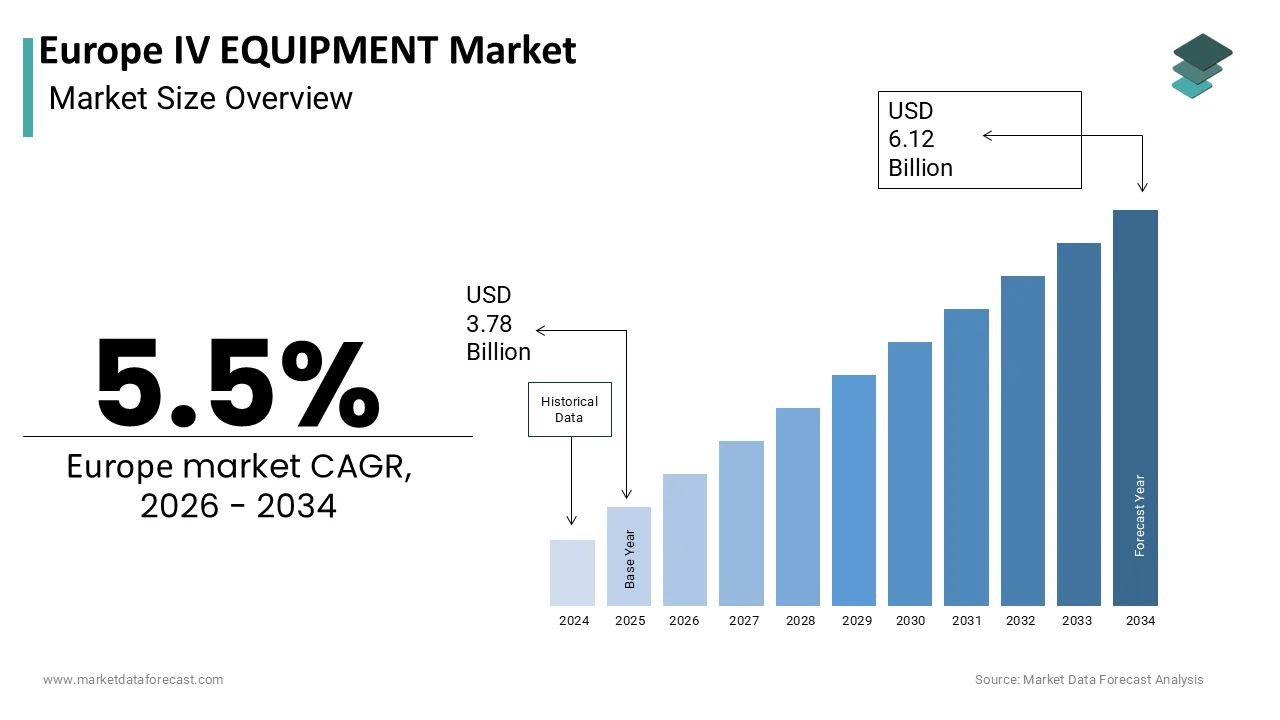
Market Size, 2025
$3.78 BnMarket Estimate, 2026
$3.98 BnMarket Forecast, 2034
$6.12 BnCAGR, 2026–2034
5.5%Europe IV EQUIPMENT Market Size
The Europe IV Equipment Market is projected to grow from USD 3.78 billion in 2025 to USD 3.98 billion in 2026 and reach USD 6.12 billion by 2034, registering a CAGR of 5.50% during the forecast period from 2026 to 2034.
Intravenous (IV) equipment includes a range of devices and consumables used to administer fluids, medications and nutrients directly into a patient's bloodstream, which is ensuring precise and rapid therapeutic delivery. Within Europe, this market includes IV catheters, infusion pumps, IV sets, needleless connectors and associated accessories that support both acute and chronic care settings. The landscape is shaped by the region’s ageing demographic, high burden of chronic diseases and rigorous regulatory frameworks governing medical device safety and efficacy. As per Eurostat, over 21% of the European Union’s population was aged 65 or above in 2025, which is a cohort that disproportionately requires hospitalisation and IV-based interventions. Furthermore, research indicates that bloodstream infections linked to peripheral venous catheters occur in approximately 0.18% of placements, which indicates the critical need for advanced, safer IV equipment. These clinical and demographic dynamics define a market where innovation intersects with patient safety imperatives across both hospital and home care environments.
MARKET DRIVERS
Rising Prevalence of Chronic and Acute Conditions Fuels Demand for IV Therapy
Chronic diseases such as cancer, diabetes and cardiovascular disorders are increasingly prevalent across Europe and form a foundational driver for IV equipment utilisation, which is one of the key factors propelling the European IV equipment market. According to the World Health Organisation, noncommunicable diseases account for nearly 87% of all deaths in the European region, with cancer alone responsible for over 1.3 million fatalities annually. Chemotherapy, which is a cornerstone of oncology treatment, is predominantly delivered via central and peripheral IV lines, which is requiring repeated catheter insertions, and advanced infusion systems minimise complications. Additionally, as per the European Society of Cardiology, more than 49 million people in Europe live with cardiovascular diseases, many of whom require IV-administered thrombolytics or inotropic support during acute episodes. The surge in hospital admissions for conditions like sepsis further amplifies demand for reliable IV access devices. These clinical realities create persistent and expanding requirements for IV equipment that balances therapeutic efficacy with vascular integrity and infection control.
Expansion of Outpatient and Home-Based Infusion Services Drives Market Growth
The shift from inpatient to outpatient and home-based care models across Europe is significantly increasing reliance on portable and user-friendly IV equipment, which is further boosting the European IV equipment market growth. As per the Organisation for Economic Co-operation and Development, hospital bed occupancy rates in most Western European nations have declined since 2015, which reflects a broader policy emphasis on ambulatory care and cost containment. Concurrently, national health systems such as the United Kingdom’s National Health Service report that a growing share of infusion therapies for conditions like multiple sclerosis and rheumatoid arthritis are now administered outside traditional hospital settings. This decentralisation necessitates IV equipment engineered for durability, ease of use and compatibility with home infusion pumps and pre-filled medication containers. In Germany, home infusion services have continued to expand, which is driven by patient preference post-pandemic healthcare redesign. These evolving care paradigms compel manufacturers to develop closed system transfer devices, antimicrobial catheters and smart infusion sets that support safe delivery in non-clinical environments while meeting stringent European Medical Device Regulation standards.
MARKET RESTRAINTS
Stringent Regulatory Compliance Increases Time to Market and Development Costs
The European Union’s Medical Device Regulation, fully applicable since May 2021, imposes rigorous clinical evidence and post-market surveillance requirements that significantly delay product approvals and escalate development expenditures for IV equipment manufacturers, which is impeding the regional market growth. As per the European Commission, many legacy IV devices faced re-certification challenges under the new framework, with smaller firms withdrawing products due to prohibitive compliance costs. The regulation mandates comprehensive risk management documentation, real-world performance data and unique device identification for every product, which collectively extend approval timelines compared to previous directives. Furthermore, notified bodies responsible for conformity assessments remain limited in number and capacity, with reports indicating that the average backlog for device evaluations can extend for several months. These procedural complexities disproportionately affect innovative resource-constrained companies seeking to introduce next-generation IV catheters or smart infusion sets. Consequently, market entry barriers intensify, slowing the pace of technological adoption and limiting competitive diversity in a sector where timely access to safer devices directly impacts patient outcomes.
Persistent Shortages of the Healthcare Workforce Impede Optimal Utilisation of IV Devices
Europe faces a critical and worsening deficit of qualified nursing and clinical staff that is directly undermining the safe and efficient deployment of IV equipment across care settings, which is further hampering the IV equipment market growth in Europe. According to the European Federation of Nurses Associations, Europe requires an additional 2 million nurses by 2030 to meet baseline staffing ratios, with countries like Italy and Poland already experiencing significant vacancy rates in acute care units. IV therapy, particularly involving central lines or pressure-controlled infusions and demands skilled insertion, monitoring and maintenance to prevent complications such as infiltration, catheter-related bloodstream infections. According to the World Health Organisation’s State of the Health Workforce in the European Region 2023, understaffed facilities exhibit a higher incidence of IV-related adverse events. Moreover, the attrition rate among newly graduated nurses in Spain and France remains high within the first two years, which exacerbates skill gaps in vascular access procedures. This workforce instability not only increases procedural errors but also limits the adoption of advanced IV systems that require specialised training, thereby constraining market growth despite technological readiness and clinical need.
MARKET OPPORTUNITIES
Integration of Smart Infusion Technologies Presents Significant Growth Potential
The convergence of digital health and IV therapy is unlocking new frontiers for the European IV equipment market through smart infusion systems that enhance safety, reduce errors and enable data-driven clinical decisions. As per the European Health Management Association, many large hospitals in Germany, France and the Nordic countries have initiated pilot programs or full-scale deployments of connected infusion pumps integrated with electronic health records. These systems utilise dose error reduction software and real-time analytics to prevent medication overdoses, which is a critical need given that the European Medicines Agency notes infusion inaccuracies as a contributor to adverse drug events in hospitals. The adoption is further accelerated by national digital health strategies; for instance, Finland’s Kanta Services platform mandates interoperability standards that facilitate seamless pump to EHR communication. Additionally, the proliferation of antimicrobial-coated smart catheters, which clinical studies have shown can significantly reduce colonisation rates, aligns with Europe’s antimicrobial resistance action plans. This technological evolution transforms IV equipment from passive consumables into active components of digital care ecosystems, which is creating substantial opportunities for manufacturers offering compliant, interoperable and clinically validated solutions.
Growing Emphasis on Infection Prevention Drives Innovation in Closed System Devices
The European healthcare sector’s intensified focus on healthcare-associated infections is catalysing demand for advanced IV equipment engineered to minimise microbial transmission, which is a promising opportunity for the European IV equipment market. According to the European Centre for Disease Prevention and Control, thousands of cases of catheter-related bloodstream infections occur annually in EU hospitals, which is resulting in extended stays and attributable deaths. In response, national infection control protocols now strongly recommend the use of closed system transfer devices and needle-free connectors with antimicrobial properties. Clinical studies reviewed by the European Society of Clinical Microbiology and Infectious Diseases demonstrate that closed systems can significantly reduce microbial ingress compared to conventional setups. Furthermore, the EU’s One Health Action Plan against Antimicrobial Resistance incentivises the adoption of engineering controls that pre-empt the need for antibiotic interventions. This regulatory and clinical environment favours next-generation IV sets featuring integrated disinfection caps, silver ion coatings and fluid pathway barriers. Manufacturers aligning their R&D with these infection prevention imperatives are positioned to capture premium segments of a market increasingly valuing patient safety over upfront cost.
MARKET CHALLENGES
Complex Reimbursement Landscapes Across European Countries Create Market Fragmentation
Reimbursement policies for IV equipment in Europe vary significantly by country, payer and indication, which is creating a fragmented commercial environment that complicates market access and pricing strategies and is one of the major challenges to the European IV equipment market. As per the European Network for Health Technology Assessment, only a portion of EU member states maintain a centralised health technology evaluation process for medical devices, while others delegate decisions to regional or institutional bodies. For example, France’s National Authority for Health requires separate assessments for each new IV catheter type, which often takes several months, whereas in the Netherlands, procurement is driven by hospital group tenders with limited clinical input. The heterogeneity is further accentuated by differing coverage criteria; Italy’s National Health Service reimburses antimicrobial catheters only for oncology and intensive care patients, excluding broader surgical use despite clinical evidence of benefit. This patchwork of policies forces manufacturers to navigate multiple evidence dossiers, pricing negotiations and budget impact models for a single product launch. Consequently, smaller companies often restrict their commercial focus to a few high-margin markets, which is leaving innovation gaps in Eastern and Southern Europe and undermining equitable access to advanced IV technologies across the region.
Environmental Regulations Restrict Use of Certain Materials in IV Device Manufacturing
The stringent environmental and chemical safety regulations of Europe are increasingly influencing the composition and disposal protocols of IV equipment, which is posing technical and compliance challenges for manufacturers and further challenging the expansion of the European IV equipment market. The Registration, Evaluation, Authorisation and Restriction of Chemicals framework, enforced by the European Chemicals Agency, has placed multiple plasticisers and stabilisers under restricted use due to endocrine disruption and ecotoxicity concerns. As of 2025, over 240 substances are listed under the Candidate List for Substances of Very High Concern, several of which were historically integral to flexible medical tubing. Transitioning to alternative materials such as thermoplastic elastomers or non-phthalate plasticised polymers requires extensive re-validation under the Medical Device Regulation, adding significant time to product redesign cycles. Moreover, the EU’s Single Use Plastics Directive mandates extended producer responsibility schemes that obligate manufacturers to fund collection and recycling programs, increasing operational costs. For instance, a majority of IV device companies report material reformulation as a top compliance priority. These environmental imperatives, while aligned with sustainability goals, create engineering constraints that delay innovation and elevate production expenses in a cost-sensitive market.
REPORT COVERAGE
| REPORT METRIC | DETAILS |
| Market Size Available | 2025 to 2034 |
| Base Year | 2025 |
| Forecast Period | 2026 to 2034 |
| Segments Covered | By Product, End User, and Region. |
| Various Analyses Covered | Global, Regional and Country-Level Analysis, Segment-Level Analysis, Drivers, Restraints, Opportunities, Challenges; PESTLE Analysis; Porter’s Five Forces Analysis, Competitive Landscape, Analyst Overview of Investment Opportunities |
| Countries Covered | UK, France, Spain, Germany, Italy, Russia, Sweden, Denmark, Switzerland, Netherlands, Turkey, Czech Republic, Rest of Europe |
| Market Leaders Profiled | ICU Medical, Inc., Smiths Medical (U.K.), Moog, Inc., Becton, Dickinson and Company, B. Braun Melsungen AG (Germany), Baxter International Inc., Fresenius SE & Co. KGaA (Germany), Terumo Corporation, C. R. Bard, Inc., |
SEGMENTAL ANALYSIS
By Product Insights
Among product segments in the Europe IV Equipment Market, the IV Catheters segment held the largest share of 33.8% of the regional market in 2025. The dominance of the IV catheters segment in the European market is driven by their indispensable role across nearly all intravenous therapies and their high consumption volume in both acute and chronic care settings. Peripheral venous catheters account for the majority of vascular access procedures in European hospitals. IV catheters are the first point of vascular access in emergency departments, surgical units, oncology wards and home care environments, which is resulting in exceptionally high procedural volume. Millions of peripheral venous catheters are inserted annually across the European Union, with the average hospitalised patient often receiving multiple catheter placements during a single admission. This recurrent usage is amplified by short dwell time recommendations. The UK’s National Institute for Health and Care Excellence advises replacing peripheral catheters every 72 to 96 hours to reduce infection risk, which directly inflates consumable demand. Furthermore, initiatives such as Germany’s national sepsis reduction program mandate ultrasound-guided catheter insertion for central lines, which is increasing the use of both standard and advanced catheter variants. Given their foundational role in fluid resuscitation, antibiotic delivery and chemotherapy administration, IV catheters remain irreplaceable across clinical pathways, ensuring sustained and robust market share.
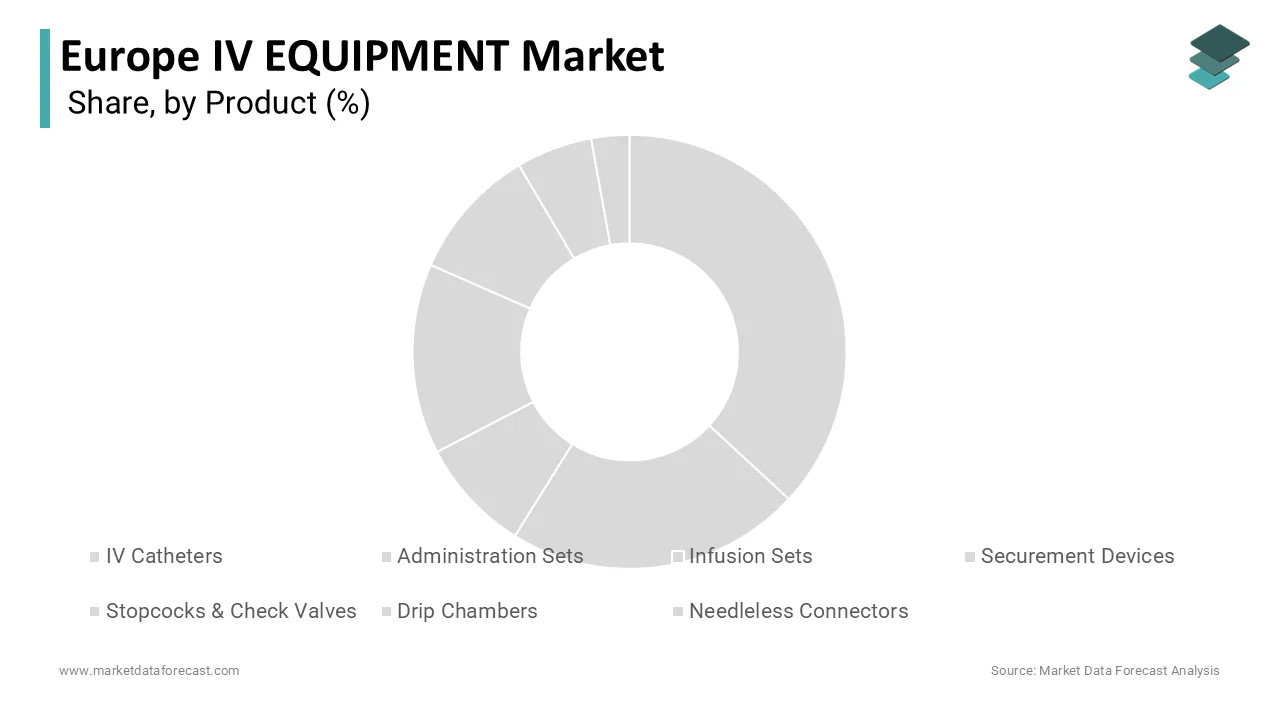
The needleless connectors segment is projected to grow at a CAGR of 10.12% over the forecast period, Europe IV Equipment Market, owing to the stringent infection control protocols and regulatory mandates promoting closed system access. European infection prevention frameworks increasingly mandate closed fluid pathways to curb microbial contamination during IV-line access. The Robert Koch Institute in Germany issued updated guidelines in 2023 requiring all central line access points in intensive care units to utilise needleless, disinfectable connectors, which is a policy now mirrored in national protocols across Austria, Belgium and Finland. According to the European Society of Clinical Microbiology and Infectious Diseases, adherence to closed system protocols can significantly reduce catheter hub colonisation, which directly lowers bloodstream infection incidence. Moreover, the EU’s 2025 Antimicrobial Resistance One Health Action Plan explicitly identifies engineering solutions like needleless connectors as priority interventions. Hospitals participating in the European Antimicrobial Resistance Surveillance System have reported declines in central line-associated bloodstream infections following implementation of needleless systems, which reinforces their clinical and policy relevance. This regulatory momentum transforms needleless connectors from optional accessories into mandatory components of modern IV therapy.
By End User Insights
The hospitals and clinics segment commanded the largest share of the European IV equipment market in 2025. The growth of the hospitals and clinics segment in the European market is driven by their role as primary providers of acute and surgical care, where IV therapy is foundational to treatment protocols. Hospitals remain the epicentre of high-intensity IV interventions, including emergency resuscitation, major surgery and critical care. According to Eurostat, European hospitals performed millions of surgical procedures in 2023, with each requiring at least one IV catheter and an associated administration set. As per the European Society of Intensive Care Medicine, the majority of ICU patients receive continuous intravenous infusions, often involving multiple lines for vasoactive drugs, sedatives and nutrition. Furthermore, emergency departments across the EU manage a very high number of patient visits annually, with intravenous access established in a significant proportion of cases. This sheer procedural volume, combined with strict hospital infection control standards mandating single-use devices this creates an unmatched consumption base. Unlike outpatient settings, hospitals operate under centralised procurement systems that ensure consistent, high-volume orders, which reinforces their market leadership.
The home care segment is anticipated to record a CAGR of 11.2% over the forecast period in the European IV equipment market over the forecast period owing to the systemic healthcare reforms and patient preference for ambulatory treatment. European governments are actively restructuring health systems to reduce hospital dependency and control costs, which is directly expanding home-based IV therapy. As per the Organisation for Economic Co-operation and Development, public spending on home care services in Europe has grown in recent years, which is outpacing hospital expenditure growth. National programs exemplify this trend as Italy’s 2023 Home Care Reform allocated significant funding to expand infusion services for chronic disease management, while Sweden’s Regional Health Authorities now reimburse home-administered antibiotic regimens for osteomyelitis and endocarditis. The European Commission’s 2025 Action Plan for Integrated Community Care identifies home infusion as a key enabler of sustainable long-term care, especially for ageing populations. This policy backing transforms home care from a niche alternative into a mainstream delivery channel, which requires standardised, patient-safe IV kits that meet both clinical and logistical requirements.
COUNTRY LEVEL ANALYSIS
Germany IV Equipment Market Analysis
Germany dominated the IV equipment market in Europe by holding 23.4% of the European market share in 2025. The dominance of Germany in the European market is driven by its robust healthcare infrastructure, high procedural volumes and strong emphasis on medical device innovation. The universal health coverage of Germany ensures broad access to hospital and outpatient IV therapies, while stringent national guidelines prioritise patient safety. Germany performs millions of surgical procedures annually, according to the Federal Statistical Office, each requiring multiple IV access points. Moreover, the nation’s intensive care units admit a large number of patients per year, as reported by the German Interdisciplinary Association for Intensive Care and Emergency Medicine, with virtually all requiring central or peripheral lines. The 2023 amendment to the Infection Protection Act mandates the use of safety-engineered IV devices in all public hospitals, accelerating the adoption of advanced catheters and needleless systems. Additionally, Germany is home to several major MedTech manufacturers and research clusters in Baden-Württemberg and North Rhine-Westphalia, fostering rapid translation of innovation into clinical practice. These structural, regulatory and industrial advantages consolidate Germany’s status as the continent’s largest and most dynamic IV equipment market.
France IV Equipment Market Analysis
France captured a substantial share of the European market in 2025. The growth of France in the European market is attributed to the centralised healthcare planning, high hospitalisation rates and aggressive infection control initiatives. According to the French National Authority for Health, millions of hospital admissions in 2023 with IV access established in a large proportion of inpatient stays. A nationwide sepsis reduction campaign launched in 2022 by the Ministry of Solidarity and Health has significantly increased the use of antimicrobial catheters and closed infusion systems in ICUs and emergency departments. France also leads in home hospitalisation programs. According to the National Health Insurance Fund, home-based IV antibiotic therapy has grown steadily in recent years, which is serving hundreds of thousands of patients annually. The country’s unique medical device reimbursement system, which provides favourable pricing for CE-marked devices with proven safety benefits, incentivises rapid adoption of next-generation IV equipment. Coupled with a dense network of university hospitals engaged in clinical trials, France maintains a strong and evolving demand profile that sustains its second place in the regional hierarchy.
United Kingdom IV Equipment Market Analysis
The United Kingdom is expected to command a prominent CAGR of the European IV equipment market over the forecast period, owing to the National Health Service’s scale, standardised procurement and post-pandemic focus on infection prevention. NHS England oversees millions of inpatient episodes annually, with peripheral IV catheter insertion among the most common procedures performed. In response to persistently high catheter-related infection rates, the NHS implemented the 2023 Vascular Access Safety Initiative, mandating ultrasound-guided insertion and antimicrobial devices in high-risk units. This directive has increased the procurement of advanced catheters in its first year. Additionally, the UK leads Europe in home infusion for oncology, with Macmillan Cancer Support noting that a large proportion of eligible patients now receive chemotherapy at home, each requiring specialised IV sets and securement devices. Despite Brexit-related regulatory shifts, the Medicines and Healthcare products Regulatory Agency maintains alignment with EU MDR standards, which ensures continued access to innovative IV technologies. These coordinated clinical and policy actions sustain the UK’s prominent market position.
Italy IV Equipment Market Analysis
Italy is projected to witness a healthy CAGR in the European IV equipment market over the forecast period, owing to the growing ageing population, regional healthcare disparities and expanding home care services. Over 24% of Italians are aged 65 or older according to ISTAT, the national statistics institute, resulting in high demand for chronic disease management involving IV antibiotics, heart failure drugs and nutritional support. The 2023 National Recovery and Resilience Plan allocated significant funding to digitise community care, including home infusion hubs in underserved southern regions. This initiative has already increased home-based IV therapy year over year, as noted by the Italian Society of Hospital Pharmacists. However, market fragmentation persists due to regional autonomy in procurement; Lombardy and Emilia Romagna lead in adopting smart infusion systems, while southern regions rely on basic sets. Despite these disparities, national infection control guidelines updated in 2025 now require needleless connectors in all public hospitals, which is creating a unified demand signal. Italy’s dual dynamic of demographic pressure and healthcare modernisation ensures consistent, if uneven, market expansion.
Spain IV Equipment Market Analysis
Spain is estimated to showcase a notable CAGR in the Europe IV equipment market during the forecast period, owing to the universal healthcare access, rising oncology caseloads and national efforts to reduce device-related complications. The Spanish Ministry of Health recorded 18.4 million hospital discharges in 2023, with IV therapy administered in nearly 70% of cases. Cancer incidence is particularly significant; the Spanish Society of Medical Oncology estimates that over 280,000 new cancer cases are diagnosed annually, most requiring IV chemotherapy via peripheral or central lines. In 2025, the National Health System launched the “Zero Bacteriemia” program, targeting a 50% reduction in catheter-related bloodstream infections by 2027 through mandatory use of closed systems and staff retraining. Early data from pilot hospitals in Madrid and Barcelona show a 33% infection decline within six months. Additionally, Spain’s home care infrastructure expanded by 12% in 2025 under the Dependency Law reforms, which are enabling more patients with chronic conditions to receive IV treatments at home. These clinical, regulatory and social care developments collectively position Spain as a stable and growing market within the European landscape.
COMPETITIVE LANDSCAPE
The Europe IV Equipment Market features intense competition among global innovators and regional specialists vying for dominance through technological differentiation and regulatory agility. Established players leverage extensive distribution networks and longstanding hospital relationships, while new entrants focus on niche segments such as smart infusion or eco-friendly materials. The implementation of the EU Medical Device Regulation has raised barriers to entry, favouring companies with robust quality management systems and clinical evidence capabilities. Competitive intensity is further amplified by national procurement tenders that prioritise cost efficacy alongside safety performance. Companies increasingly engage in post-market surveillance partnerships and real-world data collection to demonstrate device value. This dynamic landscape encourages continuous innovation in vascular access safety, infection control and user-centred design across both hospital and home care settings.
KEY MARKET PLAYERS
Top Companies dominating the europe IV equipment market are
- ICU Medical, Inc.
- Smiths Medical (U.K.)
- Moog, Inc.
- Becton, Dickinson and Company
- B. Braun Melsungen AG (Germany)
- Baxter International Inc.
- Fresenius SE & Co. KGaA (Germany)
- Terumo Corporation
- C. R. Bard, Inc.
TOP LEADING PLAYERS IN THE MARKET
- Becton Dickinson is a global leader in medical technologies with deep involvement in the European IV Equipment Market. The company offers a comprehensive portfolio including safety IV catheters, needleless connectors and infusion therapy systems. In recent years, Becton Dickinson has intensified its focus on antimicrobial technologies and closed system solutions to align with European infection control mandates. The company launched its itnext-generationon Nexiva Diffusics IV catheter across major EU markets in 202,4, featuring enhanced visualisation and reduced complications. It also expanded its smart infusion training programs in collaboration with European nursing associations to support safe device adoption in both hospital and home care settings.
- B Braun is a German-based multinational with strong regional influence and a longstanding presence in intravenous therapy across Europe. The company provides a wide array of IV catheters, infusion pumps and administration sets engineered to meet stringent EU safety standards. B Braun has recently invested in digital health integration by enhancing its Infusomat Space infusion pump platform with interoperability features compliant with European electronic health record systems. In 2025, the company also inaugurated a dedicated IV safety innovation centre in Melsungen, Germany, to accelerate the development of infection-resistant and sustainability-focused IV devices tailored for European healthcare environments.
- Smiths Medical, a subsidiary of Smiths Group, operates extensively in the European IV Equipment Market with a focus on advanced vascular access and infusion management. The company supplies safety catheters, securement devices and ambulatory infusion systems to hospitals and home care providers across the region. In 2025, Smiths Medical strengthened its European footprint by achieving CE certification for its new SmartSite Plus needle-free valve, which reduces microbial ingress risk. The company also partnered with several European university hospitals to conduct real-world evidence studies on catheter-related complications, supporting clinical validation and market adoption of its latest IV portfolio updates.
TOP STRATEGIES USED BY THE KEY MARKET PARTICIPANTS
Key players in the Europe IV Equipment Market prioritise regulatory alignment, innovation in infection prevention and digital integration to maintain competitive advantage. Companies invest heavily in research to develop safety-engineered catheters, antimicrobial coatings and closed system connectors that meet European Medical Device Regulation standards. Strategic collaborations with hospitals, nursing associations and public health bodies enhance clinical adoption and training. Expansion of home care compatible product lines addresses the shift toward ambulatory therapy. Additionally, manufacturers emphasise sustainable design and material compliance with EU chemical regulations to ensure long-term market access and environmental responsibility.
MARKET SEGMENTATION
This research report on the Europe IV equipment market has been segmented and sub-segmented into the following categories.
By Product
- IV Catheters
- Administration Sets
- Infusion Sets
- Securement Devices
- Stopcocks & Check Valves
- Drip Chambers
- Needleless Connectors
- Others
By End User
- Hospitals & Clinics
- Home Care
- Ambulatory CareCentress
By Country
- UK
- France
- Spain
- Germany
- Italy
- Russia
- Sweden
- Denmark
- Switzerland
- Netherlands
- Turkey
- Czech Republic
- Rest of Europe