- Product Description Description
- Table of Contents TOC
- List of Table & Figure LOT
- Get Free Sample PDF Sample PDF
Market Size, 2025
$12.05 BnMarket Estimate, 2026
$12.39 BnMarket Forecast, 2034
$15.47 BnCAGR, 2026–2034
2.81%Europe Absinthe Market Size, Share & Growth Analysis (2026–2034)
- Market Scope: Regional analysis covering product applications, diverse structural types (Blanche, Verte, Amber, Ordinaire, Bohemian, and Liqueurs), country frameworks (Italy, France, UK, Germany, Spain), growth catalysts, restraints, and competitive landscapes.
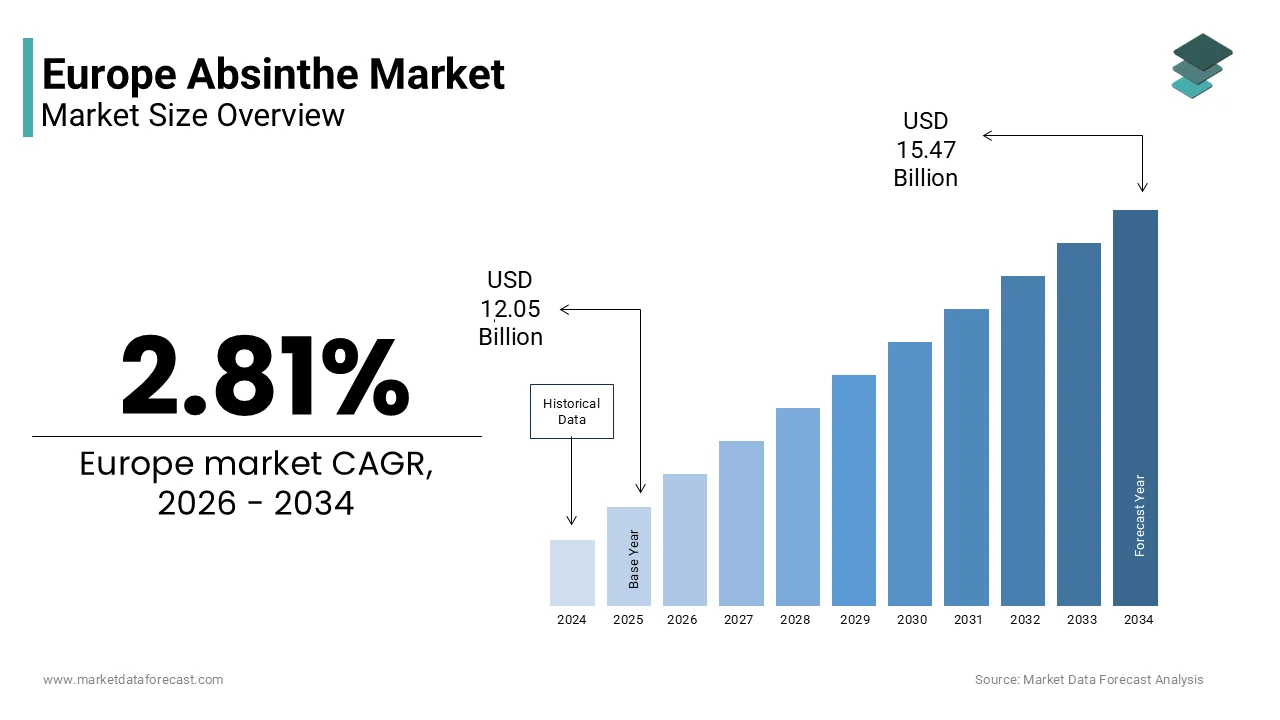
- Market Valuation: Valued at USD 12.05 billion in 2025, estimated at USD 12.39 billion in 2026, and projected to reach USD 15.47 billion by 2034, registering a steady CAGR of 2.81% over the forecast period (2026–2034).
- Primary Growth Drivers: Emerging discovery of medicinal benefits (such as digestive stimulation and parasitic infection management), expanding applications within cosmetics, and resilient traditional demand for premium alcoholic beverages. Key restraints include regulatory scrutiny regarding thujone content and persistent public health myths concerning hallucinogenic properties.
Key Market Segment Metrics (2026–2034)
| Category | Leading Segment (2025 Position) | Fastest-Growing Segment |
|---|---|---|
| By Application | Beverage (dominated market consumption as a traditional high-proof distilled spirit and cocktail ingredient) | Medical & Cosmetics (growing through therapeutic herbal uses and botanical extracts in skincare formulations) |
| By Type | Absinthe Verte & Blanche (anchored by authentic historic coloring and traditional clear distillation methods) | Premium & Bohemian Variants (expanding via craft distillery interest and accessible pricing models) |
| By Country | France & UK (held dominant regional revenue shares driven by deep cultural heritage and established mixology bars) | Germany & Spain (registering steady uptake alongside specialty spirits tourism and craft beverage growth) |
Major Market Players & Competitive Landscape
Market Structure: Mature European spirits market characterized by historic distilleries and independent craft makers focusing on authentic botanical profiles, heritage recipes, and regulatory compliance.
Key Companies: La Fée Absinthe, Doubs Mystique, Duplais Verte, Pacific Distillery, Pernod Ricard, Alandia GmbH & Co. KG, Butterfly Absinthe, Jade Liqueurs LLC, La Fee Distillery, Lucid Absinthe Supérieure, Kübler Absinthe Superieure, La Clandestine, Hill's Liquere North America, Philadelphia Distilling Company, Teichenne, S.A., and Milan METELKA and RUDOLF.
Europe Absinthe Market Size
The Europe absinthe market size was valued at USD 12.05 billion in 2025 and is estimated to reach USD 15.47 billion by 2034 from USD 12.39 billion in 2026, growing at a CAGR of 2.81% from 2026 to 2034.
The absinthe is highly alcoholic spirit, traditionally flavored with botanicals including grand wormwood, green anise, and sweet fennel. Historically associated with the bohemian culture of late nineteenth century, absinthe has undergone a significant renaissance in recent decades, following the lifting of bans across various European nations. The European Union remains one of the largest consumers of spirits globally with premium and super premium categories witnessing steady growth, as consumers shift towards quality over quantity. The cultural heritage of absinthe, particularly in countries like Switzerland, France, and the Czech Republic serves as a strong foundation for its modern revival. Distillers are increasingly focusing on traditional production methods and authentic recipes to differentiate their products in a crowded spirits landscape. The rise of mixology and the popularity of classic cocktails have further propelled demand as bartenders rediscover absinthe, as a versatile ingredient.
MARKET DRIVERS
Resurgence of Craft Cocktail Culture and Mixology
The global resurgence of craft cocktail culture and professional mixology, as bartenders and enthusiasts rediscover the spirit’s versatility in classic and contemporary drinks is amplifying the growth of the Europe absinthe market. Absinthe is a key ingredient in iconic cocktails, such as the Sazerac, the Death in the Afternoon, and the Corpse Reviver, which have gained renewed popularity in upscale bars and lounges across major European cities. The inclusion of historical recipes in official cocktail lists has legitimized absinthe, as an essential bar staple rather than a novelty item. This professional endorsement encourages consumers to experiment with the spirit at home and in social settings. The rise of speakeasy style bars in London Paris and Berlin has created an environment where the ritual of preparing absinthe with sugar and water is celebrated as part of the dining experience. Furthermore, the proliferation of online mixology tutorials and social media content has demystified the consumption process making it more accessible to younger demographics. The premium spirits sector benefits significantly from this trend as consumers are willing to pay higher prices for authentic and high quality ingredients.
Growing Consumer Preference for Premium and Artisanal Spirits
The increasing consumer preference for premium and artisanal spirits is greatly influencing the growth of the Europe absinthe market. Modern consumers are more educated about the ingredients and processes involved in spirit production leading to a demand for small batch distilleries that emphasize craftsmanship over mass production. The premiumization trend in the alcohol industry shows that consumers are trading up to higher priced brands that offer unique stories and superior taste profiles. The use of organic botanicals and sustainable farming practices further appeals to health conscious and environmentally aware consumers, who prioritize purity and ethical production. This shift is supported by the growth of specialty liquor stores and online platforms that curate selections of rare and limited-edition absinthes. The regulations on geographical indications protect traditional production zones ensuring authenticity and quality, which builds consumer trust. The willingness of consumers to invest in premium experiences sustains the growth of high-end absinthe brands and encourages new entrants to focus on quality differentiation rather than price competition.
MARKET RESTRAINTS
Persistent Misconceptions Regarding Health and Safety
The persistent misconceptions regarding the health effects and safety of absinthe, despite scientific evidence disproving historical myths is limiting the growth of the Europe absinthe market. The spirit was banned in many countries in the early twentieth century due to fears that thujone a compound found in wormwood caused hallucinations and addiction. Although, modern research confirmed by the European Food Safety Authority indicates that thujone levels in commercially available absinthe are well within safe limits and do not pose health risks these outdated beliefs persist among certain consumer segments. This stigma limits the willingness of casual drinkers to try the spirit and restricts its appeal to a niche audience of enthusiasts. Additionally, some older generations retain negative associations with absinthe linking it to social decay and mental illness which discourages intergenerational transmission of consumption habits. The lack of widespread public awareness campaigns to correct these myths means that misinformation continues to circulate on social media and in popular culture.
High Alcohol Content and Regulatory Taxation Burdens
The high alcohol content of absinthe, which typically exceeds 50% by volume subjects it to stringent regulatory controls and higher excise taxes is another attribute declining the growth of the Europe absinthe market. Governments impose substantial taxes on spirits based on alcohol volume to discourage excessive consumption and generate revenue, which significantly increases the retail price of absinthe compared to lower proof beverages. The excise duty rates vary across member states but remain consistently high for strong spirits, making absinthe less affordable for price sensitive consumers. This pricing pressure limits impulse purchases and restricts consumption to special occasions or dedicated aficionados. Additionally, strict labeling requirements and advertising restrictions aimed at preventing alcohol abuse further limit the ability of brands to promote their products effectively. In some countries, specific regulations govern the maximum allowable thujone content requiring rigorous testing and compliance measures that add to production costs. These regulatory hurdles create barriers to entry for smaller distilleries and reduce profit margins for established players.
MARKET OPPORTUNITIES
Expansion into Emerging Asian and North American Export Markets
The expansion into emerging Asian and North American export to diversify their revenue streams beyond saturated domestic channels is certainly ascribed to bolster new opportunities for the growth of the Europe absinthe market. As global interest in European culinary and beverage traditions grows, countries such as China, Japan, and the United States are seeing increased demand for authentic imported spirits. The exports of European spirits to Asia have grown steadily, as rising middle classes seek premium international brands. European producers can leverage trade agreements and participation in international food and beverage exhibitions to establish distribution networks in these regions. The success of other European spirits like gin and whiskey in these markets demonstrates the potential for absinthe to gain traction among affluent consumers. Additionally, the global reach of digital marketing allows brands to tell their heritage stories to international audiences effectively.
Innovation in Flavor Profiles and Ready to Drink Formats
The innovation in flavor profiles and the development of ready to drink formats to attract younger and more diverse consumer groups, which is also to elevate the growth of the Europe absinthe market. Traditional absinthe is known for its intense anise flavor, which can be polarizing but modern producers are experimenting with variations that incorporate fruits herbs and spices to create milder and more approachable tastes. Launching pre mixed absinthe based cocktails in cans or bottles allows brands to reach consumers who may be intimidated by the traditional preparation ritual. These innovations lower the barrier to entry for new users and expand consumption occasions beyond specialized bars to home gatherings and outdoor events. Collaborations with mixologists to create signature blends can further enhance appeal and credibility. Additionally, limited edition releases and seasonal flavors create urgency and excitement driving trial and repeat purchases. By adapting to changing consumer preferences for convenience and variety, absinthe producers can revitalize the category and compete effectively with other ready to drink options in the dynamic alcoholic beverage sector.
MARKET CHALLENGES
Supply Chain Volatility for Key Botanical Ingredients
The supply chain volatility for key botanical ingredients such as grand wormwood, anise, and fennel due to climate change and agricultural instability is likely to pose as a major challenge for the growth of the Europe absinthe market. These specific herbs are essential for achieving the authentic flavor profile and legal classification of absinthe yet their yields are highly susceptible to weather conditions pests and soil quality. The extreme weather events in Europe have become more frequent disrupting harvests and causing price fluctuations for agricultural commodities. Small batch distillers, who rely on high quality organic botanicals are particularly vulnerable to these disruptions as they lack the bargaining power of larger corporations to secure long term supply contracts. Shortages of key ingredients can lead to production delays inconsistent product quality and increased costs, which may be passed on to consumers reducing competitiveness. Furthermore, the geographic specificity of certain botanicals means that substitution is often not possible without compromising the integrity of the spirit. This dependency on natural resources creates operational risks that require careful management and investment in sustainable farming partnerships.
Intense Competition from Established Spirit Categories
The intense competition from established spirit categories such as gin, whiskey, is also to impede the growth of the Europe absinthe market. Gin in particular has experienced a massive boom in Europe with hundreds of new brands launching annually offering diverse flavor profiles and marketing narratives that overshadow niche spirits like absinthe. The gin accounts for a significant portion of spirit sales growth drawing investment and retail focus away from smaller categories. Absinthe producers must compete for limited retail visibility and consumer discretionary spending against well funded giants with extensive distribution networks. The saturation of the premium spirits market makes it difficult for absinthe to gain mainstream traction without significant marketing budgets. Additionally, the complexity of absinthe consumption requires more consumer education compared to straightforward spirits which can deter casual buyers. Retailers often prioritize faster moving products leaving absinthe with less prominent placement. This competitive pressure forces absinthe brands to continuously innovate and justify their premium pricing, while struggling to achieve the volume necessary for economies of scale.
REPORT COVERAGE
| REPORT METRIC | DETAILS |
| Market Size Available | 2025 to 2034 |
| Base Year | 2025 |
| Forecast Period | 2026 to 2034 |
| CAGR | 2.81% |
| Segments Covered | By Application, Type, and Region |
| Various Analyses Covered | Global, Regional, & Country Level Analysis; Segment-Level Analysis; DROC, PESTLE Analysis; Porter’s Five Forces Analysis; Competitive Landscape; Analyst Overview of Investment Opportunities |
| Regions Covered | UK, France, Spain, Germany, Italy, Russia, Sweden, Denmark, Switzerland, Netherlands, Turkey, and the Czech Republic |
| Market Leaders Profiled | La Fée Absinthe, Doubs Mystique, Duplais Verte, Pacific Distillery, Pernod Ricard, Alandia GmbH & Co. KG, Butterfly Absinthe, Jade Liqueurs LLC, La Fee Distillery, Lucid Absinthe Supérieure, Kübler Absinthe Superieure, La Clandestine, Hill's Liquere North America, Philadelphia Distilling Company, Teichenne, S.A., and Milan METELKA and RUDOLF |
SEGMENTAL ANALYSIS
By Application Insights
The beverage segment was accounted in holding a significant share of the Europe absinthe market in 2025 with the spirit’s primary identity as a high proof alcoholic drink consumed for its unique flavor profile and historical allure. The core driver of this domination is the deep-rooted cultural association of absinthe with European social life, particularly in France, Switzerland, and the Czech Republic, where it is enjoyed as an aperitif or digestif. The alcohol consumption patterns in Europe show a distinct shift towards premium spirits with consumers prioritizing quality and experience over volume. Absinthe fits perfectly into this trend as it offers a complex sensory experience that appeals to connoisseurs. The ritualistic preparation involving water and sugar enhances its appeal in bars and restaurants making it a staple in the hospitality sector. Furthermore the integration of absinthe into modern cocktail menus by professional mixologists has revitalized its image from a banned substance to a sophisticated ingredient. This institutional support ensures consistent demand and visibility. The versatility of absinthe in mixing allows it to complement various other spirits and ingredients broadening its consumer base.
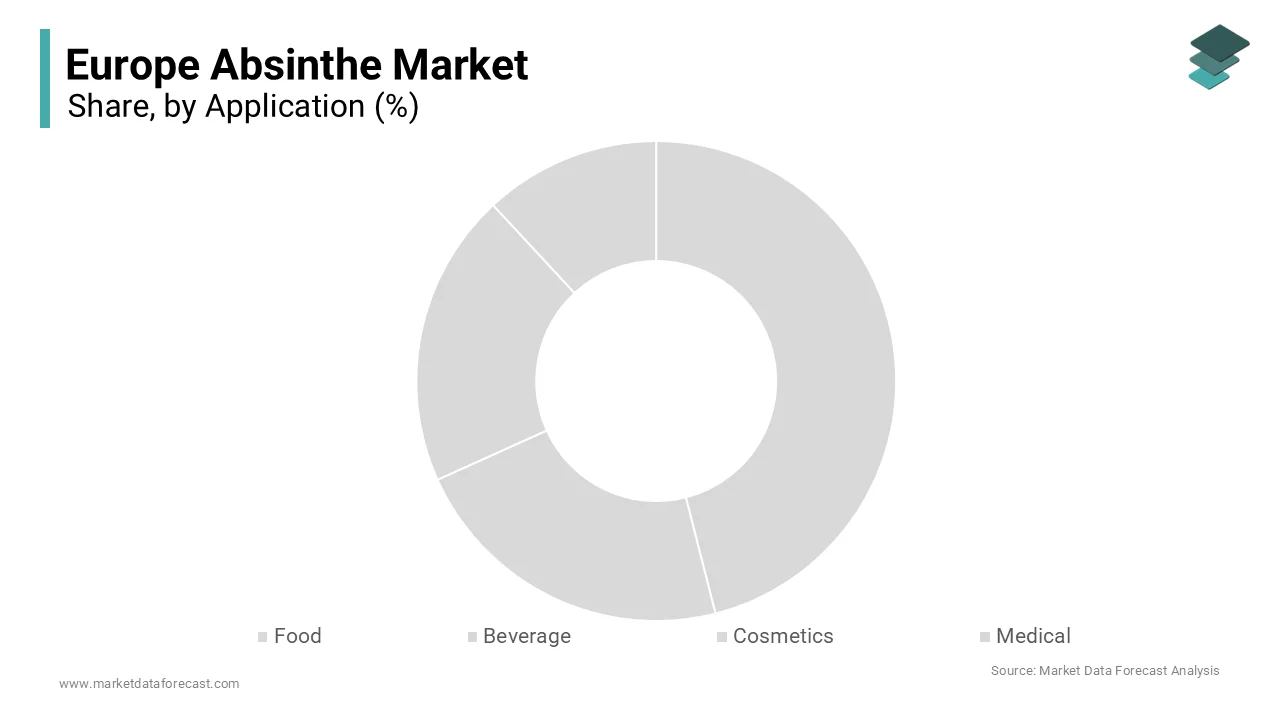
The cosmetics segment is likely to witness a fastest CAGR of 8.5% from 2026 to 2034 owing to the increasing demand for natural and botanical ingredients in personal care products as consumers seek alternatives to synthetic chemicals. Absinthe contains wormwood and other herbs known for their antioxidant and anti-inflammatory properties, which are highly valued in skincare formulations. Brands are incorporating absinthe extracts into toners serums and creams to leverage these beneficial properties, while capitalizing on the exotic appeal of the ingredient. The unique selling proposition of using a historically controversial spirit in luxury skincare creates a compelling narrative that attracts niche consumers. Additionally, the rise of artisanal cosmetic brands in Europe who focus on small batch production and unique sourcing aligns well with the absinthe industry’s craft ethos. Regulatory support for natural ingredients under the European Union’s cosmetic regulations facilitates the entry of such products into the market.
By Type Insights
The absinthe Verte or green absinthe segment held 36.4% of the Europe absinthe market share in 2025 due to its status as the traditional and most recognized form of the spirit. This type is characterized by its distinctive green color which is achieved through a secondary maceration of herbs after distillation a process that also adds complexity to the flavor profile. The growth of the Verte is driven by consumer preference for authenticity and adherence to historical recipes particularly in France and Switzerland, where the spirit originated. The traditional production methods are protected and promoted ensuring that Absinthe Verte remains the benchmark for quality. Consumers associate the green hue with the classic bohemian image of absinthe, making it the preferred choice for both purists and newcomers. The visual appeal of the louche effect when water is added is more pronounced in verte varieties enhancing the ritualistic experience. Major producers focus on this type as it commands higher prices and prestige compared to clear or ordinary variants. The widespread availability of Absinthe Verte in premium liquor stores and bars reinforces its market leadership. Its robust herbal flavor profile appeals to the target demographic of spirit enthusiasts who value depth and character.
The premium absinthe segment is expected to register a fastest CAGR of 9.2% from 2026 to 2034 with the broader premiumization trend in the spirits industry, where consumers are trading up to higher quality and more expensive products. Premium absinthes are distinguished by their use of organic botanicals traditional distillation methods and elegant packaging, which appeal to affluent buyers. The super premium spirits category is outperforming standard segments as consumers prioritize experience and quality over price. Distillers are launching limited edition and single estate absinthes that cater to this discerning audience. The storytelling aspect of premium brands which often highlight the master distiller’s expertise and the origin of ingredients creates an emotional connection with consumers. High end bars and restaurants are featuring premium absinthes in their cocktail lists enhancing their visibility and desirability. The gift market also contributes to this growth as premium absinthe is perceived as a sophisticated present.
REGIONAL ANALYSIS
France Market Analysis
France was the largest contributor of the Europe absinthe market by accounting for 45.3% of share in 2025 with its historical role as the birthplace of the spirit and its strong cultural connection to absinthe consumption. The country is home to some of the most renowned distilleries in the world particularly in the Jura region, which produces Pontarlier absinthe a protected geographical indication. The domestic consumption of premium spirits has risen as consumers rediscover traditional liqueurs. The French government supports local artisans through subsidies and promotional campaigns, which helps maintain the quality and authenticity of French absinthe. Paris and Lyon are hubs for cocktail culture, where absinthe is featured prominently in bar menus. The presence of major international distributors in France facilitates export growth, while ensuring wide domestic availability. Consumer education initiatives by industry bodies have helped dispel myths about absinthe encouraging broader acceptance. The strong tourism sector also contributes to sales as visitors seek authentic French experiences. Regulatory stability regarding thujone levels allows producers to innovate, while maintaining safety standards.
Switzerland Market Analysis
Switzerland absinthe market was second by holding 19.6% of share in 2025 with its high quality production and strict adherence to traditional methods. The Val de Travers region is famously known as the heartland of absinthe production with numerous small distilleries operating there. The country exports a substantial portion of its production to neighboring countries leveraging its reputation for purity and craftsmanship. Swiss consumers have a high appreciation for local artisanal products which supports domestic sales. The legal framework in Switzerland is favorable to traditional production by allowing for higher thujone levels than in some other EU countries, which appeals to purists. Tourism plays a vital role as visitors tour distilleries and participate in tasting events driving direct sales. The Swiss market is characterized by a focus on premium and super premium segments with little presence of low cost alternatives. Collaboration among producers ensures consistent quality and promotes the region as a destination for absinthe enthusiasts.
Spain Market Analysis
Spain absinthe market is swiftly growing at a fastest CAGR throughout the forecast period with its vibrant nightlife and increasing interest in craft cocktails. While traditionally known for wine and beer Spanish consumers are expanding their palate to include diverse spirits. According to the Spanish Association of Distillers imports of premium spirits have increased reflecting changing consumer preferences. Barcelona and Madrid have seen a surge in speakeasy bars that feature absinthe in their cocktail offerings. Local producers are beginning to experiment with absinthe production using native herbs which adds a unique twist to the traditional recipe. The younger demographic is particularly open to trying new and exotic drinks fueled by social media trends. Regulatory alignment with EU standards ensures safe and legal sales. The tourism industry contributes significantly as international visitors introduce locals to absinthe culture. Distributors are expanding their portfolios to include more absinthe brands catering to this rising demand.
Germany Market Analysis
Germany absinthe market growth is likely to grow with the strong regulatory framework and a mature spirits industry. German consumers are known for their appreciation of quality and precision which aligns well with the artisanal nature of premium absinthe. Berlin and Hamburg are centers for cocktail culture, where absinthe is gaining popularity among mixologists. The country has a robust distribution network that ensures wide availability of international and local brands. Strict labeling laws ensure transparency, which builds consumer trust. The high disposable income in Germany supports the purchase of premium products. Educational workshops and tasting events help demystify the spirit for new consumers.
Italy Market Analysis
Italy absinthe market growth is likely to grow with the rich culinary heritage and growing interest in aperitivo culture. While vermouth and amaro are traditional staples Italian consumers are beginning to explore absinthe as a sophisticated alternative. According to the Italian Federation of Wine and Spirits producers are experimenting with blending absinthe with local herbs to create unique products. Milan and Rome have witnessed a rise in high end bars that feature absinthe based cocktails. The Italian love for ritual and presentation aligns well with the traditional preparation of absinthe. Tourism boosts sales as visitors seek authentic Italian experiences that include modern twists on classic drinks. Regulatory compliance with EU standards ensures product safety and quality. Local distilleries are investing in marketing to educate consumers about the spirit’s history and usage. The premium segment is growing as Italians prioritize quality over quantity in their alcohol consumption.
United Kingdom Market Analysis
The United Kingdom absinthe market growth is driven by its historic connection to the spirit and a thriving craft cocktail scene. London is a global hub for mixology where absinthe is a staple ingredient in many classic and contemporary drinks. The UK imports significant volumes of premium absinthe to meet demand from bars and retailers. The British consumer is well informed and appreciates the historical narrative of absinthe, which aids in marketing efforts. Recent years have seen a rise in domestic production with small distilleries launching their own versions. The off-trade sector including online retailers has expanded access to a wide variety of brands. Regulatory clarity post Brexit has allowed for continued trade with European suppliers. The popularity of gin has paved the way for other botanical spirits, including absinthe. Consumer education through blogs and social media has reduced stigma and increased trial.
COMPETITIVE LANDSCAPE
The competition in the Europe absinthe market is characterized by a mix of established multinational corporations and niche artisanal distilleries vying for dominance in the premium spirits sector. Large players leverage their extensive distribution networks and marketing budgets to maintain visibility while smaller producers compete on authenticity craftsmanship and unique flavor profiles. The market is fragmented with numerous regional brands catering to local preferences and historical traditions. Competition is intensifying as new entrants launch innovative products such as organic or flavored absinthes to attract diverse consumer segments. Price wars are rare due to the premium nature of the category but brands must justify higher price points through superior quality and storytelling. Regulatory compliance regarding thujone levels and labeling creates barriers to entry ensuring that only serious players remain.
KEY MARKET PLAYERS
Some of the key players in Europe absinthe market are
- La Fée Absinthe
- Doubs Mystique
- Duplais Verte
- Pacific Distillery
- Pernod Ricard
- Alandia GmbH & Co. KG
- Butterfly absinthe
- Jade Liqueurs LLC
- La Fee Distillery
- Lucid Absinthe Supérieure
- Kübler Absinthe Superieure
- La Clandestine
- Hill's Liquere North America
- Philadelphia Distilling Company
- Teichenne, S.A.
- Milan METELKA
- RUDOLF
Top Players in the Market
- Pernod Ricard stands as a dominant force in the Europe absinthe market through its ownership of the historic Pernod brand, which is synonymous with the spirit’s heritage. The company leverages its extensive global distribution network to ensure wide availability of its premium absinthe products across major European markets. Recent actions include launching limited edition releases that highlight traditional production methods and collaborating with high end bars to promote authentic cocktail recipes. Pernod Ricard invests heavily in marketing campaigns that educate consumers about the history and proper consumption of absinthe thereby enhancing brand loyalty. By maintaining strict quality standards and emphasizing its French origins, the company strengthens its position as a leader in the premium spirits segment, while driving growth through innovation and strategic partnerships with hospitality industry stakeholders.
- La Fee Distillery has established itself as a key player in the Europe absinthe market by focusing on artisanal production and historical authenticity in Pontarlier France. The company distinguishes itself through small batch distillation processes and the use of organic botanicals, which appeal to discerning consumers seeking purity and quality. La Fee actively engages with the community by offering distillery tours and educational workshops that deepen consumer understanding of absinthe culture. By prioritizing sustainability and traditional craftsmanship, the brand strengthens its reputation among connoisseurs and influences the broader market trend towards premiumization and transparency in spirit production.
- Kubler Absinthe contributes significantly to the Europe absinthe market as a leading Swiss producer known for its adherence to traditional Val de Travers recipes. The company maintains a strong presence in Switzerland and neighboring countries by emphasizing its heritage and commitment to natural ingredients without artificial coloring. Kubler collaborates with local tourism boards to promote absinthe trails and tasting experiences which drive direct sales and brand awareness. By balancing tradition with contemporary marketing strategies, the company solidifies its position as a trusted name in the Swiss absinthe sector and supports the overall growth of the category in Central Europe.
Top Strategies Used by the Key Market Participants
Key players in the Europe absinthe market primarily employ strategies focused on heritage branding premiumization and experiential marketing to differentiate their products. Companies emphasize their historical roots and traditional production methods to build authenticity and trust among consumers who value craftsmanship. Launching limited edition and single estate variants allows brands to cater to niche markets and create exclusivity. Strategic partnerships with high end bars and mixologists help promote absinthe as a sophisticated cocktail ingredient rather than just a novelty item. Educational initiatives, including tastings and distillery tours are used to demystify the spirit and correct historical misconceptions. Digital marketing campaigns leverage social media influencers to reach younger audiences and showcase modern consumption rituals. Expanding distribution channels through online platforms and specialty retailers ensures broader accessibility.
MARKET SEGMENTATION
This Research Report on Europe absinthe market is segmented and sub segmented into following categories
By Application
- Food
- Beverage
- Cosmetics
- Medical
By Type
- Absinthe Blanche
- Absinthe Amber
- Absinthe Verte
- Absinthe Ordinaire
- Absinthe Reve Pastis
- Absinth Bohemian
- Absinthe Liqueur
- Premium Absinthe
- Others
By Country
- UK
- France
- Spain
- Germany
- Italy
- Russia
- Sweden
- Denmark
- Switzerland
- Netherlands
- Turkey
- Czech Republic
- Rest of Europe