- Product Description Description
- Table of Contents TOC
- List of Table & Figure LOT
- Get Free Sample PDF Sample PDF
Market Size, 2025
$5.71 BnMarket Estimate, 2026
$6.17 BnMarket Forecast, 2034
$10.84 BnCAGR, 2026–2034
8.01%Executive Summary: Europe Advanced Biofuel Market
- Market Scope: Comprehensive European advanced biofuel industry analysis covering raw material feedstocks (lignocellulosic, algae), biofuel types (biodiesel, biogas), technological conversion pathways, regional leadership frameworks, strategic corporate developments, and competitive landscapes.
- Market Valuation: Valued at USD 5.71 billion (2025), estimated at USD 6.17 billion (2026), and projected to reach USD 10.84 billion by 2034, registering a steady CAGR of 8.01% (2026–2034).
- Primary Growth Drivers: EU regulatory mandates (3.5% advanced biofuels transport energy share by 2030), ReFuelEU aviation/maritime decarbonization needs, waste-based fuel commercialization, biomass conversion advancements (gasification, hydrothermal liquefaction), and energy-airline partnerships. Restraints include high production costs (€800–€1,500/tonne) and feedstock logistics limits.
Key Market Segment Metrics (2026–2034)
| Category | Leading Segment / Region (Position) | Fastest-Growing Segment |
|---|---|---|
| By Raw Material & Biofuel Type | Lignocellulosic biomass (dominated raw material) & Biodiesel (held largest share at over 60% of consumption in 2025) | Algae raw material (CAGR of 13.3%) & Biogas upgraded to biomethane (CAGR of 15.1%) |
| By Technology Pathway | Biochemical technology (led in 2025 through mature enzymatic conversion processes) | Thermochemical pathways and proprietary conversion technologies (e.g., Ecofining) |
| By Region / Country | Germany (dominated regionally with 23.2% share in 2025 via 9,000+ biogas plants) & France and Netherlands | Regions scaling agricultural residue sourcing and sustainable feedstock trading hubs |
Major Market Players & Market Structure
Market Structure: Highly strategic European low-carbon fuel ecosystem characterized by long-term waste feedstock supply agreements (used cooking oil), converted refinery integrations, agricultural cooperative partnerships, and heavy investments in conversion efficiency.
Key Companies: Abengoa Bioenergy, Chemtex Group, Neste Corporation, TotalEnergies SE, and Eni SpA.
Europe Advanced Biofuel Market Size
The Europe advanced biofuel market size was valued at USD 5.71 billion in 2025 and is anticipated to reach USD 6.17 billion in 2026 and USD 10.84 billion by 2034, growing at a CAGR of 8.01% from 2026 to 2034.
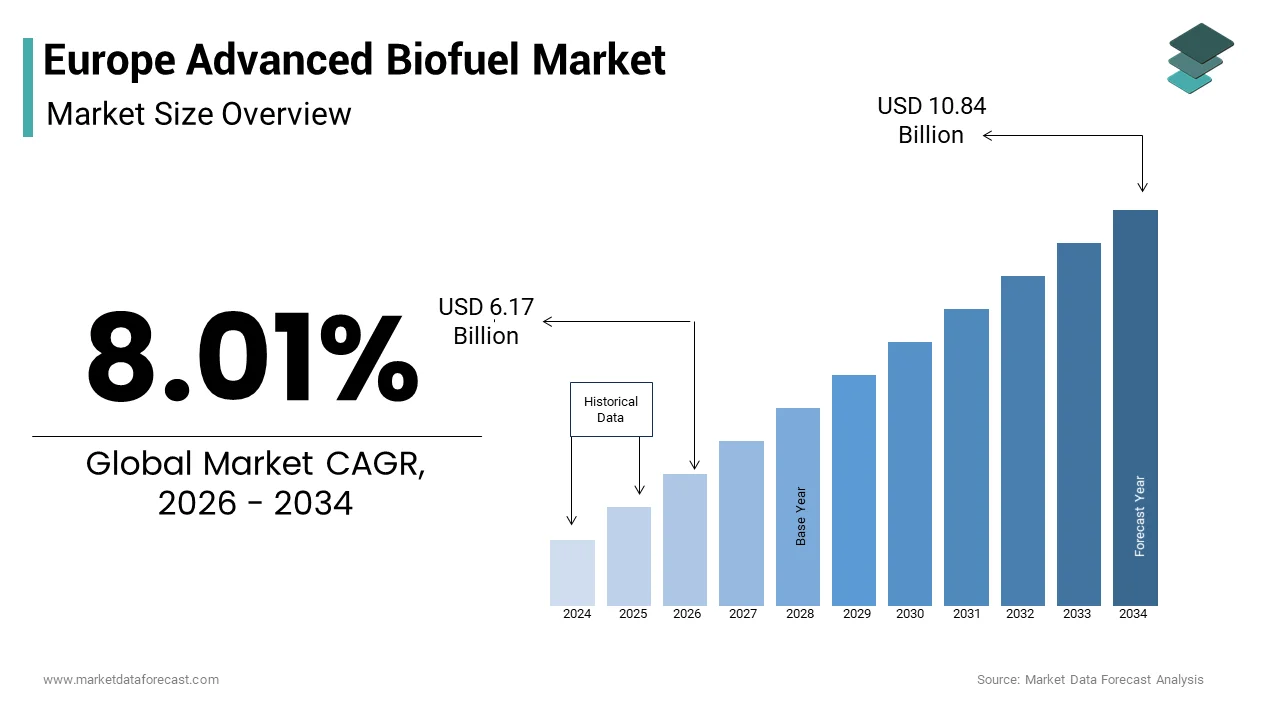
Advanced biofuels are liquid and gaseous fuels derived from non-food biomass sources, including agricultural residues, forestry waste, algae, and municipal solid waste. These second- and third-generation fuels serve as critical decarbonization agents for hard-to-abate sectors such as aviation, maritime transport, and heavy-duty road logistics, where electrification remains technically or economically challenging. The sector operates under the stringent regulatory framework of the European Union Renewable Energy Directive, which mandates specific sub-targets for advanced biofuels to ensure sustainability and prevent indirect land use change. According to Eurostat data from 2023, the transport sector accounts for approximately 32% of total final energy consumption in the European Union, highlighting the immense scale of the decarbonization challenge. The European Commission has set a binding target for renewable energy in transport to reach 14% by 2030, with a specific sub-quota of 3.5% for advanced biofuels produced from Annex IX Part A feedstocks. Current production capacities remain insufficient to meet these ambitious goals, creating a significant supply deficit that drives policy intervention and investment. The market is characterized by a transition from pilot-scale demonstrations to commercial-scale industrial facilities utilizing technologies such as gasification, pyrolysis, and hydrothermal liquefaction. As the continent strives to achieve climate neutrality by 2050, advanced biofuels represent a bridge technology that leverages existing internal combustion engine infrastructure while drastically reducing lifecycle greenhouse gas emissions. This strategic importance positions the market at the intersection of waste management, circular economy principles, and energy security initiatives.
MARKET DRIVERS
Stringent Regulatory Mandates Drive Compliance Demand
The robust legislative framework established by the European Union that imposes binding consumption targets and greenhouse gas reduction requirements on fuel suppliers is primarily driving the Europe advanced biofuel market growth. The revised Renewable Energy Directive explicitly distinguishes advanced biofuels from conventional crop-based fuels to mitigate risks associated with food competition and land use changes. Member states are legally obligated to ensure that advanced biofuels constitute at least 3.5% of the energy supplied to the transport sector by 2030, creating a guaranteed demand baseline for producers. Fuel suppliers who fail to meet these quotas face substantial financial penalties, which is making compliance a non-negotiable operational imperative. The directive also assigns higher multipliers to advanced biofuels in national renewable energy calculations, effectively doubling their contribution toward overall targets, which incentivizes their adoption over first-generation alternatives. According to the European Environment Agency, the transport sector remains the only major economic sector where greenhouse gas emissions have increased since 1990 and this requires urgent deployment of low-carbon alternatives. This regulatory pressure forces oil majors and independent fuel distributors to secure long-term supply contracts with advanced biofuel producers. The certainty provided by these long-term policy horizons reduces investment risk and encourages capital allocation toward commercial-scale production facilities. Consequently, regulatory compliance acts as the foundational pillar sustaining market growth and attracting diverse stakeholders from waste management companies to energy conglomerates.
Decarbonization Needs in Aviation and Maritime Sectors
The urgent need to decarbonize the aviation and maritime industries is further contributing to the Europe advanced biofuel market expansion. These sectors are considered hard-to-abate due to the high energy density requirements of long-haul flights and large vessels, which current battery technologies cannot adequately support. The European Union ReFuelEU Aviation initiative mandates that jet fuel suppliers blend increasing shares of sustainable aviation fuel, starting at 2% in 2025 and rising to 70% by 2050. Similarly, the FuelEU Maritime regulation requires a gradual reduction in the greenhouse gas intensity of energy used on board ships, driving demand for renewable methanol and biodiesel derived from advanced feedstocks. According to the International Air Transport Association, the aviation industry aims to achieve net-zero carbon emissions by 2050, relying heavily on sustainable aviation fuel to deliver over 65% of the required emission reductions. Advanced biofuels offer a drop-in solution that requires minimal modification to existing aircraft engines and refueling infrastructure, enabling immediate emission cuts. Airlines and shipping companies are increasingly entering into off-take agreements with biofuel producers to secure future supply and meet corporate sustainability commitments. This sector-specific regulatory push creates a premium market segment willing to pay higher prices for certified low-carbon fuels. The convergence of international climate goals and regional legislation ensures sustained and growing demand for advanced biofuels in these critical transport modes.
MARKET RESTRAINTS
High Production Costs Impede Commercial Viability
The significantly higher production costs associated with advanced biofuels compared to fossil fuels and even first-generation biofuels is a major restraint on market expansion. The technological complexity of converting lignocellulosic biomass and other resistant feedstocks into usable fuels requires expensive preprocessing steps such as enzymatic hydrolysis, gasification, and catalytic upgrading. According to industry benchmarks, the production cost of advanced biofuels can range from 800 to 1500 euros per tonne depending on the technology and feedstock used, whereas conventional diesel typically trades at significantly lower prices. This cost disparity makes advanced biofuels uncompetitive in the open market without substantial government subsidies or carbon pricing mechanisms. The capital expenditure required to build commercial-scale biorefineries is enormous, often exceeding 100 million euros per facility, which deters private investment in the absence of guaranteed revenue streams. Feedstock collection and logistics also contribute to high operational costs, as agricultural residues are dispersed and bulky, requiring extensive transportation networks. Volatility in energy prices further impacts the economics of production, as thermal processes are energy-intensive. Without consistent policy support such as tax exemptions or blending mandates, the high cost structure prevents advanced biofuels from achieving widespread market penetration. Investors remain cautious due to the long payback periods and technological risks associated with scaling up novel conversion processes. This financial barrier limits the number of operational plants and slows the overall growth trajectory of the market.
Limited Availability and Logistics of Sustainable Feedstocks
The constrained supply and logistical challenges of sourcing sustainable advanced feedstocks pose a significant restraint to the Europe advanced biofuel market. Unlike conventional crops, which are grown specifically for fuel production, advanced feedstocks such as straw, forestry residues, and used cooking oil are byproducts with competing uses in agriculture, animal bedding, and other industries. According to the European Biomass Association, the sustainable potential of agricultural residues in the European Union is estimated at approximately 100 million tonnes annually, but only a fraction is currently collected due to economic and technical barriers. Collection costs are high because these materials are scattered across vast rural areas, requiring specialized harvesting and transportation equipment. Storage and preservation of biomass also present challenges, as organic materials are prone to degradation and moisture absorption, which reduces their energy content and processing efficiency. Competition for these limited resources intensifies as other sectors such as bioplastics and bio-based chemicals also seek to utilize the same waste streams. Regulatory definitions of what constitutes waste versus residue vary across member states, creating uncertainty for cross-border trade and supply chain planning. The lack of a standardized and integrated European market for biomass feedstocks leads to local shortages and price spikes. This supply-side bottleneck restricts the ability of producers to scale up operations and meet growing demand. Until efficient collection systems and stable supply chains are established, feedstock availability will remain a critical limiting factor.
MARKET OPPORTUNITIES
Expansion of Circular Economy and Waste Valorization
The growing emphasis on circular economy principles is a major opportunity for the Europe advanced biofuel market to integrate with waste management systems and create value from discarded materials. European policies increasingly view waste not as a burden but as a resource, encouraging the conversion of municipal solid waste, sewage sludge, and industrial byproducts into energy carriers. The European Green Deal prioritizes waste prevention and recycling, creating a favorable environment for technologies that valorize residual streams into high-value fuels. According to the European Commission, the circular economy action plan aims to double the circular material use rate by 2030, providing a steady stream of low-cost or negative-cost feedstocks for biofuel producers. Municipalities are seeking sustainable solutions for waste disposal and are willing to partner with biofuel companies to reduce landfill volumes and methane emissions. Technologies such as hydrothermal liquefaction can process wet waste streams like sewage sludge without the need for energy-intensive drying, opening new avenues for feedstock utilization. This synergy between waste management and energy production creates dual revenue streams from tipping fees and fuel sales, improving project economics. Investors are increasingly attracted to projects that demonstrate clear environmental benefits and alignment with sustainability goals. The development of integrated biorefineries that produce both fuels and bio-based materials further enhances profitability. This transition transforms waste management infrastructure into energy hubs, driving innovation and investment in the advanced biofuel sector.
Technological Advancements in Conversion Efficiency
Rapid advancements in conversion technologies offer significant opportunities for the Europe advanced biofuel market to improve efficiency, reduce costs and expand feedstock flexibility. Innovations in enzyme engineering, catalyst design, and process integration are enhancing the yield and quality of advanced biofuels, making them more competitive with fossil alternatives. Research institutions and private companies are developing next-generation gasification and pyrolysis systems that operate at higher efficiencies and lower temperatures, reducing energy consumption and operational costs. According to recent studies, breakthroughs in synthetic biology are enabling the creation of microorganisms that can directly convert biomass sugars into hydrocarbon fuels with higher yields and fewer byproducts. Digitalization and artificial intelligence are being applied to optimize process control and predictive maintenance, further improving plant reliability and output. Modular biorefinery designs allow for scalable deployment in remote locations closer to feedstock sources, reducing logistics costs. Government funding programs such as the Horizon Europe initiative support research and demonstration projects, accelerating the commercialization of these innovative technologies. As technology matures, economies of scale will drive down production costs, making advanced biofuels more accessible to a broader range of consumers. The ability to process a wider variety of feedstocks, including invasive species and algae, expands the resource base and reduces dependency on specific waste streams. These technological leaps position the market for sustained growth and increased competitiveness in the global energy landscape.
MARKET CHALLENGES
Supply Chain Fragmentation and Infrastructure Gaps
The fragmented nature of the biomass supply chain and the lack of dedicated infrastructure for advanced biofuel distribution is challenging the regional market growth. Unlike fossil fuels, which benefit from centuries of infrastructure investment, advanced biofuels require new logistics networks for collecting, storing, and transporting diverse and often bulky feedstocks. The seasonal availability of agricultural residues creates storage bottlenecks and requires significant capital investment in silos and preservation facilities. According to logistics experts, the lack of standardized handling procedures and equipment for different types of biomass increases operational complexity and costs. Furthermore, the distribution infrastructure for advanced biofuels such as sustainable aviation fuel and renewable diesel is not yet fully integrated with existing fuel networks. Dedicated pipelines and storage tanks are limited, leading to reliance on road and rail transport, which is less efficient and more expensive. Blending facilities at refineries and airports need upgrades to handle new fuel specifications and ensure quality control. The absence of a unified European market for biomass and biofuels results in regulatory disparities and trade barriers between member states. This fragmentation hinders the optimization of supply chains and prevents economies of scale. Addressing these infrastructure gaps requires coordinated investment and policy harmonization, which is difficult to achieve across multiple jurisdictions. Until these logistical hurdles are overcome, the market will struggle to achieve the efficiency and cost competitiveness needed for mass adoption.
Regulatory Uncertainty and Policy Implementation Delays
Inconsistencies in regulatory implementation and policy uncertainty across European Union member states is further challenging the Europe advanced biofuel market. While the overarching directives set binding targets, the transposition into national law varies significantly, leading to a patchwork of rules and incentives. Some countries have introduced aggressive support schemes while others lag behind, creating an uneven playing field for producers and investors. According to industry analysis, delays in approving certification schemes for new feedstocks and technologies hinder market entry and slow down project development timelines. The definition of waste and residue remains a contentious issue, with differing interpretations causing legal disputes and supply chain disruptions. Changes in government priorities and political shifts can lead to sudden adjustments in subsidy levels or blending mandates, undermining investor confidence. The complexity of proving sustainability criteria and greenhouse gas savings adds administrative burdens and costs for producers. Lack of clarity on future policy directions beyond 2030 makes it difficult for companies to plan large-scale capital investments. This regulatory volatility increases the risk premium for advanced biofuel projects, making financing more expensive and scarce. Harmonizing regulations and providing long-term policy stability are essential to unlock the full potential of the market. Without consistent and predictable frameworks, the pace of innovation and deployment will remain suboptimal.
REPORT COVERAGE
| REPORT METRIC | DETAILS |
| Market Size Available | 2025 to 2034 |
| Base Year | 2025 |
| Forecast Period | 2026 to 2034 |
| CAGR | 8.01% |
| Segments Covered | By Raw Material, Biofuel, Technology, By Country |
| Various Analyses Covered | Global, Regional & Country Level Analysis; Segment-Level Analysis, DROC, PESTLE Analysis, Porter’s Five Forces Analysis, Competitive Landscape, Analyst Overview of Investment Opportunities |
| Regions Covered | UK, France, Spain, Germany, Italy, Russia, Sweden, Denmark, Switzerland, Netherlands, Turkey, Czech Republic,c & Rest of Europe |
| Market Leaders Profiled | Abengoa Bioenergy, Chemtex Group, Neste Corporation, Total Energies SE, Eni SpA, Clariant Produkte GmbH, Greenergy International Ltd, Envien Group, DuPont Industrial Biosciences, INEOS Bio |
SEGMENTAL ANALYSIS
By Raw Material Insights
The lignocellulosic biomass segment dominated the market by accounting for the leading share of the European market in 2025. The dominance of lignocellulosic biomass segment can be credited to its widespread availability as a byproduct of existing agricultural and forestry industries. This category includes crop residues such as wheat straw, corn stover, and rice husks, as well as wood chips, sawdust, and forest thinnings, which do not compete with food production. According to the European Biomass Association, the European Union generates approximately 300 million tonnes of agricultural residues annually, providing a vast and sustainable feedstock base for advanced biofuel production. The utilization of these materials aligns perfectly with circular economy principles by converting waste into energy, thereby reducing landfill volumes and methane emissions. Unlike dedicated energy crops, lignocellulosic residues are already collected for other purposes or left in fields, making their incremental cost for biofuel production relatively low. The established logistics networks for forestry and agriculture facilitate efficient collection and transportation to biorefineries. Regulatory frameworks under the Renewable Energy Directive explicitly prioritize Annex IX Part A feedstocks, which are predominantly lignocellulosic, ensuring higher multipliers and compliance value for fuel suppliers. This regulatory preference drives investment in technologies capable of processing complex biomass structures. The sheer volume of available material ensures that lignocellulose remains the backbone of the advanced biofuel sector, supporting large-scale commercial operations across the continent.
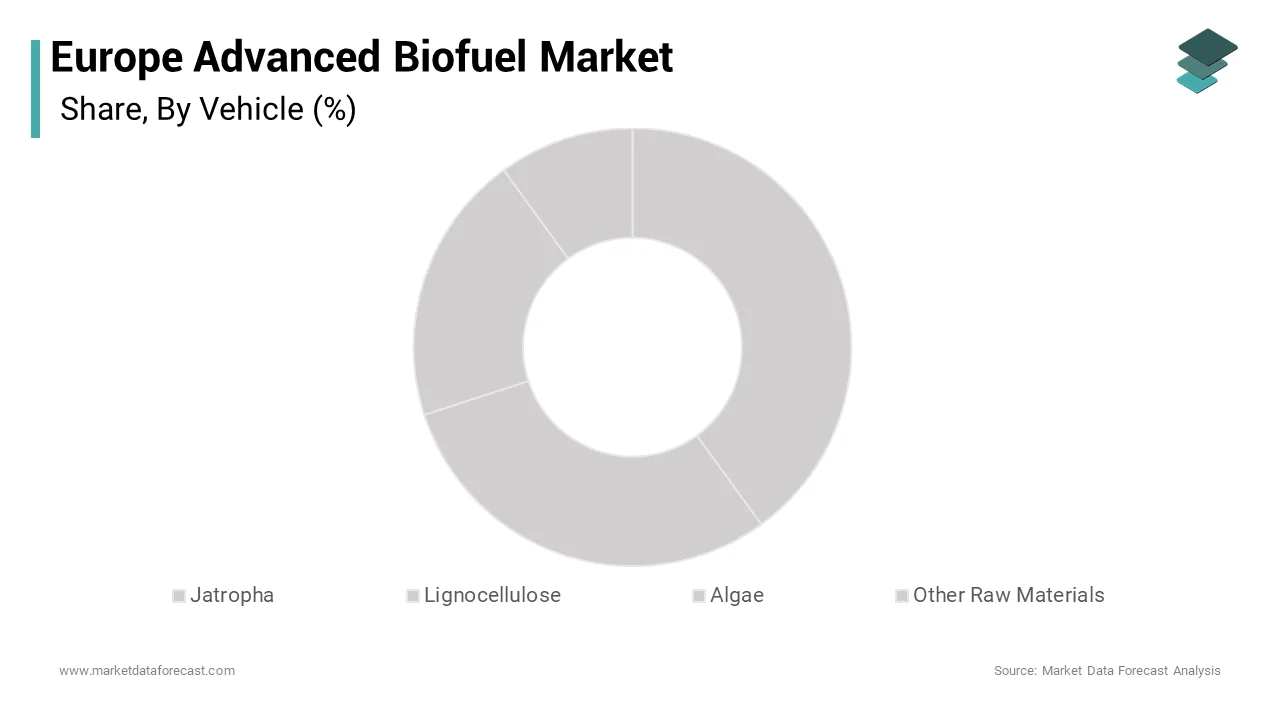
However, the algae segment is a promising segment and is estimated to record a CAGR of 13.3% over the forecast period owing to its superior productivity and ability to cultivate on non-arable land without competing for freshwater resources. Unlike terrestrial crops, algae can produce up to 30 times more oil per hectare than traditional oilseeds, making it an extremely efficient feedstock for biodiesel and renewable diesel. According to research by the European Algae Biomass Association, third-generation algae systems can achieve lipid contents exceeding 50% of dry weight, offering high energy density for fuel conversion. Cultivation can occur in wastewater, seawater, or brackish water, reducing pressure on scarce freshwater supplies and providing additional environmental benefits through nutrient removal. The ability to grow algae in photobioreactors or open ponds on marginal lands avoids indirect land use change issues, a critical concern for European regulators. This spatial efficiency allows for integration with industrial facilities, where algae can capture carbon dioxide emissions from flue gases, creating a symbiotic relationship between heavy industry and biofuel production. The rapid growth rate of algae species enables multiple harvests per year, ensuring a consistent supply of biomass. These unique advantages position algae as a high-potential future feedstock despite current cost challenges.
By Biofuel Insights
The biodiesel segment had the largest share of the European market in 2025. The growth of the biodiesel segment in the European market is attributed to its seamless compatibility with existing diesel engines and distribution infrastructure. Also known as hydrotreated vegetable oil or renewable diesel when produced via hydroprocessing, this fuel meets strict quality standards such as EN 15940, ensuring it can be used as a drop-in replacement without blending limits. According to industry data, biodiesel accounts for over 60% of advanced biofuel consumption in Europe, primarily driven by the road transport sector, which relies heavily on diesel engines. The ability to utilize existing pipelines, storage tanks, and retail stations eliminates the need for costly infrastructure upgrades, accelerating market penetration. Fuel suppliers prefer advanced biodiesel because it offers superior cold flow properties and oxidative stability compared to first-generation fatty acid methyl ester biodiesel. Regulatory mandates under the Renewable Energy Directive favor advanced biodiesel due to its high greenhouse gas savings potential, often exceeding 80% compared to fossil diesel. The mature production technology involving hydrodeoxygenation allows for large-scale commercial operations with proven reliability. This combination of technical ease, regulatory support, and market readiness sustains biodiesel leadership in the advanced biofuel landscape.
On the other end, the biogas upgraded to biomethane segment is expected to exhibit a CAGR of 15.1% over the forecast period owing to its versatility in generating electricity and heat and serving as a transport fuel. Produced through anaerobic digestion of organic waste, sewage sludge, and agricultural residues, biomethane is chemically identical to natural gas, allowing injection into the existing gas grid. According to the European Biogas Association, biomethane production in Europe has doubled in recent years, reaching over 4 billion cubic meters annually, driven by policy support and waste management needs. Its ability to serve multiple sectors makes it a flexible energy carrier that can balance intermittent renewable electricity through power-to-gas technologies. In the transport sector, compressed and liquefied biomethane are gaining traction for heavy-duty trucks and buses, offering significant nitrogen oxide and particulate reduction. The injection of biomethane into the gas grid enables decentralized production and consumption, enhancing energy security and reducing transmission losses. This multi-sector applicability creates diverse revenue streams for producers, improving project economics. The modular nature of anaerobic digestion plants allows for scalability from small farm-based units to large industrial facilities. This flexibility and wide range of applications drive the rapid expansion of the biogas segment.
By Technology Insights
The biochemical technology segment led the market with the highest share of the European market in 2025. The growth of the biochemical technology segment in the European market is driven by its maturity and high efficiency in converting specific biomass fractions into fuels. This pathway involves the use of enzymes and microorganisms to break down cellulose and hemicellulose into sugars, which are then fermented into ethanol or other alcohols. According to industry assessments, biochemical processes achieve high selectivity and yield for cellulosic ethanol production, making them the preferred choice for many commercial biorefineries. The technology has benefited from decades of research and development in the first-generation biofuel sector, allowing for knowledge transfer and optimization. Enzyme costs have decreased significantly while activity and stability have improved, enabling economical processing of lignocellulosic feedstocks. Biochemical plants operate at lower temperatures and pressures compared to thermochemical systems, reducing energy consumption and capital costs for specialized equipment. The production of high-purity ethanol allows for easy blending with gasoline or conversion into jet fuel via alcohol-to-jet pathways. Regulatory support for liquid biofuels in the transport sector favors biochemical outputs due to their compatibility with existing fuel standards. The proven track record and continuous improvement in fermentation efficiencies sustain the dominance of biochemical technology.
On the other side, the thermochemical technology segment is anticipated to record a promising CAGR of 12.2% during the forecast period owing to its ability to process a wide variety of mixed and recalcitrant feedstocks that are unsuitable for biochemical conversion. Methods such as gasification, pyrolysis, and hydrothermal liquefaction can convert lignin-rich biomass, municipal solid waste, and sewage sludge into synthetic gas, bio-oil, or char. According to technical reviews, thermochemical processes do not require extensive pretreatment or separation of biomass components, making them ideal for heterogeneous waste streams. Gasification produces syngas, which can be catalytically converted into drop-in hydrocarbon fuels including sustainable aviation fuel and renewable diesel. This versatility addresses the feedstock limitations of biochemical pathways and aligns with circular economy goals by valorizing difficult wastes. The high energy density of thermochemical outputs facilitates easier storage and transport compared to intermediate biological products. Advances in catalyst design have improved the quality and yield of synthetic fuels, making them competitive with fossil alternatives. The ability to handle wet feedstocks through hydrothermal liquefaction further expands the resource base. These technical advantages drive rapid adoption of thermochemical technologies for advanced biofuel production.
COUNTRY LEVEL ANALYSIS
Germany Advanced Biofuel Market Analysis
Germany dominated the market by holding 23.2% of the regional market share in 2025 and is likely to experience robust growth and solidify its expansion over the next few years due to its strong industrial base and ambitious energy transition policies. The country is a leader in biogas production with over 9000 biogas plants operating nationwide, according to the German Biogas Association. Germany's stringent greenhouse gas reduction quotas for transport fuels drive demand for advanced biodiesel and cellulosic ethanol. The government provides substantial funding for research and development in thermochemical conversion technologies, enhancing domestic production capabilities. Large chemical companies are investing in power-to-gas and biomass-to-liquid projects, leveraging existing infrastructure. The country's robust waste management system ensures a steady supply of organic feedstocks for anaerobic digestion. Regulatory clarity and long-term policy support attract international investment in advanced biofuel facilities. Germany's central location facilitates cross-border trade of feedstocks and fuels. The focus on industrial decarbonization creates synergies between biofuel production and manufacturing sectors. These factors consolidate Germany's position as the largest and most influential market for advanced biofuels in Europe.
France Advanced Biofuel Market Analysis
France is projected to maintain steady development and upward momentum over the next few years owing to its extensive agricultural sector and focus on lignocellulosic biomass. The country is a major producer of wheat and sugar beet, generating significant amounts of straw and bagasse suitable for advanced biofuel production. According to the French Ministry of Ecological Transition, national strategies prioritize the development of second-generation bioethanol facilities to utilize these residues. France has implemented strict blending mandates for advanced biofuels, encouraging oil refiners to invest in domestic production. Several commercial-scale cellulosic ethanol plants are in operation or under construction, demonstrating technological leadership. The government supports research into algae and thermochemical conversion through national innovation programs. Strong agricultural cooperatives facilitate efficient collection and logistics of biomass feedstocks. France's commitment to energy independence drives investment in diverse biofuel pathways. The integration of biofuels with rural development policies ensures broad political support. These dynamics sustain France's significant share in the European advanced biofuel landscape.
Netherlands Advanced Biofuel Market Analysis
The Netherlands is anticipated to show consistent commercial advancement and strategic adaptation over the next few years due to its strategic port infrastructure and role as a hub for advanced biofuel trading and production. Ports like Rotterdam serve as entry points for imported advanced feedstocks such as used cooking oil and animal fats, which are processed into renewable diesel. According to industry data, the Netherlands is home to several large-scale hydrotreated vegetable oil refineries supplying the entire European market. The government promotes innovation through public-private partnerships focusing on algae and waste-to-fuel technologies. Strict sustainability criteria ensure that only certified advanced feedstocks are processed. The country's strong logistics network facilitates efficient distribution of biofuels to neighboring countries. Investment in carbon capture and storage enhances the sustainability profile of biofuel production. The Netherlands' proactive policy framework attracts multinational energy companies to establish regional headquarters. These advantages maintain the Netherlands' position as a key player in the advanced biofuel value chain.
United Kingdom Advanced Biofuel Market Analysis
The United Kingdom is expected to post notable commercial gains and progressive scaling over the next few years due to its ambitious sustainable aviation fuel targets and waste-to-energy initiatives. The UK Sustainable Aviation Fuel mandate requires increasing blends of advanced biofuels in jet fuel, creating a specialized demand segment. According to the Department for Transport, the UK aims to produce significant volumes of domestic sustainable aviation fuel by 2030, supporting new refinery projects. The country has a well-established waste management sector providing feedstocks such as municipal solid waste and sewage sludge for gasification and anaerobic digestion. Government grants support the construction of commercial-scale waste-to-fuel facilities. The exit from the European Union has led to independent policy developments focusing on domestic energy security. Strong research institutions contribute to advancements in synthetic biology and thermochemical conversion. The focus on aviation decarbonization positions the UK as a leader in niche advanced biofuel applications. These factors drive steady growth in the UK advanced biofuel market.
Sweden Advanced Biofuel Market Analysis
Sweden is poised for sustained operational expansion and green technology adoption over the next few years owing to its vast forestry resources and focus on lignocellulosic biofuels. The country utilizes wood residues and black liquor from the pulp and paper industry to produce advanced biodiesel and bio-crude. According to the Swedish Energy Agency, forestry-based biofuels contribute significantly to national transport decarbonization goals. Sweden's aggressive carbon tax incentivizes the use of low-carbon fuels, driving demand for advanced options. Several demonstration plants for gasification and pyrolysis are operational, showcasing technological innovation. The government supports the development of biorefineries that integrate with existing forest industry infrastructure. High public awareness of environmental issues supports policy acceptance. Cross-border collaboration with Nordic neighbours enhances market efficiency. Sweden's commitment to fossil-free welfare by 2045 ensures long-term demand for advanced biofuels. These elements sustain Sweden's strong position in the forest-based biofuel segment.
COMPETITIVE LANDSCAPE
The competition in the Europe advanced biofuel market is characterized by intense rivalry among integrated energy majors specialized biofuel producers and emerging technology startups vying for dominance in a rapidly evolving sector. Large oil companies leverage their existing refining infrastructure and distribution networks to produce and market advanced biofuels at scale. Specialized firms compete on technological innovation and niche feedstock utilization offering unique solutions for specific waste streams. Competition focuses on securing limited sustainable feedstocks such as used cooking oil and animal fats leading to strategic alliances and vertical integration. Regulatory compliance and sustainability certification serve as key differentiators influencing customer selection and market access. Price competition is moderated by policy driven mandates but cost efficiency remains critical for profitability without subsidies. The shift toward sustainable aviation fuel creates new competitive dynamics requiring specialized production capabilities and certifications. Collaborative research initiatives between industry and academia accelerate technological advancements and reduce development risks. Mergers and acquisitions allow larger entities to consolidate expertise and expand geographic reach. This dynamic environment fosters continuous improvement in conversion technologies and supply chain optimization while driving down costs for end users.
KEY MARKET PLAYERS
A few of the market players that are dominating the Europe advanced biofuel market are
- Abengoa Bioenergy
- Chemtex Group
- Neste Corporation
- Total Energies SE
- Eni SpA
- Clariant Produkte GmbH
- Greenergy International Ltd
- Envien Group
- DuPont Industrial Biosciences
- INEOS Bio
Top Players In The Market
- Neste Corporation is a global leader in renewable diesel and sustainable aviation fuel production with significant operations across Europe. The company utilizes advanced hydroprocessing technology to convert waste oils and animal fats into high quality drop in fuels. Neste recently expanded its Rotterdam refinery capacity to meet growing European demand for low carbon transport fuels. It actively secures long term supply contracts for used cooking oil and residues ensuring stable feedstock availability. The firm collaborates with airlines and logistics companies to develop tailored decarbonization solutions. Its strong focus on sustainability certification and lifecycle analysis strengthens customer trust. These strategic initiatives reinforce Neste position as a premier provider of advanced biofuels in the European market.
- Total Energies SE contributes significantly to the advanced biofuel sector through its integrated refining and chemical expertise. The company operates large scale hydrotreated vegetable oil units in France converting diverse biomass streams into renewable diesel and jet fuel. TotalEnergies recently partnered with agricultural cooperatives to source lignocellulosic residues for second generation biofuel projects. It invests heavily in research for algae based fuels and thermochemical conversion technologies. The firm leverages its extensive distribution network to blend and deliver advanced biofuels to retail and industrial customers. Commitment to circular economy principles drives innovation in waste valorization. These actions enhance its competitiveness and support the transition to sustainable mobility solutions across Europe.
- Eni SpA plays a vital role in the European advanced biofuel market by transforming traditional refineries into biorefineries. The company utilizes proprietary Ecofining technology to produce high quality biodiesel from vegetable oils and waste materials at its Venice facility. Eni recently initiated projects to convert municipal solid waste into advanced biofuels using gasification and synthesis processes. It partners with waste management firms to secure consistent feedstock supplies for its biorefineries. The firm focuses on producing sustainable aviation fuel to meet emerging regulatory mandates. Strategic investments in genetic engineering for algae cultivation demonstrate long term vision. These efforts solidify Eni reputation as an innovator in advanced biofuel production and circular energy systems.
Top Strategies Used By The Key Market Participants
Key players in the Europe advanced biofuel market prioritize securing sustainable feedstock supplies through long term contracts with waste management firms and agricultural cooperatives to ensure operational stability. Companies invest heavily in research and development to improve conversion efficiencies and reduce production costs for lignocellulosic and algae based fuels. Strategic partnerships with airlines and logistics providers create guaranteed off take agreements for sustainable aviation fuel and renewable diesel. Diversification into multiple technology pathways such as hydroprocessing gasification and fermentation mitigates technical risks and expands product portfolios. Integration with existing refinery infrastructure allows for cost effective scaling and utilization of shared utilities. Lobbying efforts aim to shape favorable regulatory frameworks and sustainability criteria that recognize advanced biofuel benefits. Focus on circular economy principles enhances brand reputation and aligns with corporate social responsibility goals. These combined approaches enable market leaders to navigate supply chain challenges and capitalize on growing demand for low carbon transport solutions.
MARKET SEGMENTATION
This research report on the Europe advanced biofuel market is segmented and sub-segmented into the following categories.
By Raw Material
- Jatropha
- Lignocellulose
- Algae
- Other Raw Materials
By Biofuel Type
- Cellulosic Ethanol
- Biodiesel
- Biogas
- Biobutanol
- Other Biofuel Types
By Technology
- Biochemical
- Thermochemical
By Country
- UK
- France
- Spain
- Germany
- Italy
- Russia
- Sweden
- Denmark
- Switzerland
- Netherlands
- Turkey
- Czech Republic
- Rest of Europe