- Product Description Description
- Table of Contents TOC
- List of Table & Figure LOT
- Get Free Sample PDF Sample PDF
Market Size, 2025
$357.9 MnMarket Estimate, 2026
$384.03 MnMarket Forecast, 2034
$674.78 MnCAGR, 2026–2034
7.3%Executive Summary: European Agricultural Surfactants Market
- Market Scope: Comprehensive regional market evaluation of the European agricultural surfactants sector covering product types, application fields, substrate variations, fertilizer types, and country-level distribution frameworks.
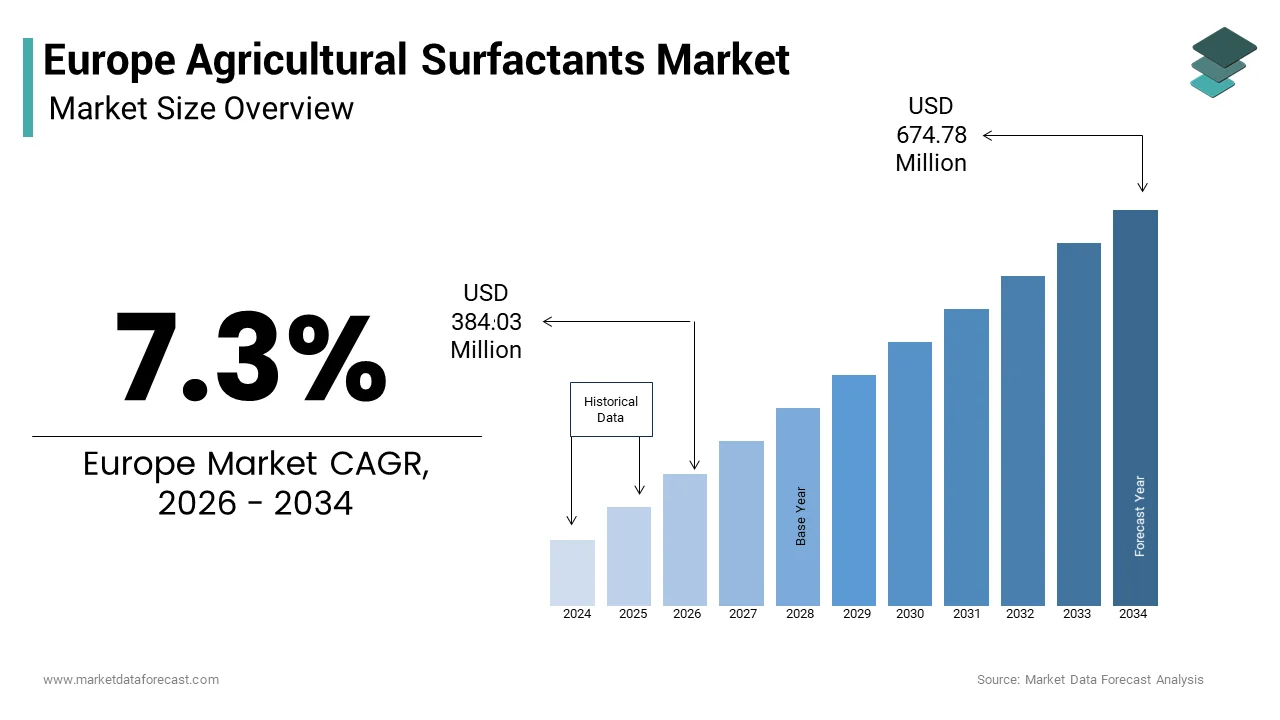
- Market Valuation: Valued at USD 357.9 million in 2025, estimated at USD 384.03 million in 2026, and projected to reach USD 674.78 million by 2034, registering a solid CAGR of 7.3% from 2026 to 2034.
- Primary Growth Drivers: Stringent European Union pesticide regulations driving demand for high-performance adjuvants, expansion of precision and low-volume spraying technologies (such as drones and electrostatic systems), and the rising focus on eco-friendly crop protection.
Key Market Segment Metrics (2026–2034)
| Category | Leading Segment (2025 Position) | Fastest-Growing / Preferred Segment |
|---|---|---|
| By Type | Non-ionic Surfactants (held 44.5% of the regional market share in 2025 due to exceptional compatibility and minimal phytotoxicity) | Amphoteric Surfactants (projected to expand at a CAGR of 10.6% driven by pH-responsive behavior and suitability for RNA-based fungicides) |
| By Application | Herbicides (dominated capturing 49.4% market share in 2025 for systemic weed control in cereals, oilseeds, and maize) | Fungicides (estimated to witness a CAGR of 9.44% fueled by high-value horticulture, vineyards, and increasing climate-driven disease pressures) |
| By Fertilizer Type | Nitrogenous Fertilizers (held 51.6% market share in 2025 due to extensive use in urea, ammonium nitrate solutions, and volatilization control) | Phosphate Segment (estimated to grow at a CAGR of 8.08% driven by EU focus on phosphorus use efficiency and root mobility) |
| By Country | France (held the top spot capturing 23.1% market share in 2025 as the EU's largest agricultural producer under the Ecophyto Plan) | Spain & United Kingdom (expanding rapidly through intensive horticulture, anti-evaporation technologies, and post-Brexit biosurfactant innovation) |
Major Market Players & Market Structure
Market Structure: Highly competitive European market characterized by multinational chemical giants, specialized adjuvant developers, and green chemistry startups focusing on sustainability, biodegradability, and strict regulatory compliance.
Key Companies: Evonik Industries AG, AkzoNobel N.V., The Dow Chemical Company, BASF SE, and Solvay S.A.
Europe Agricultural Surfactants Market Size
The European Agricultural Surfactants Market was valued at USD 357.9 million in 2025 and is anticipated to reach USD 384.03 million in 2026 from USD 674.78 million by 2034, growing at a CAGR of 7.3% from 2026 to 2034.
Current Introduction of the European Agricultural Surfactants Market
Agricultural surfactants comprise adjuvants and formulation additives designed to enhance the efficacy, dispersion,n and foliar uptake of crop protection products, including herbicides, fungicides, and insecticides. These compounds reduce surface tension, enabling uniform spray coverage and improved active ingredient penetration into plant tissues or pest cuticles. As per the European Food Safety Authority, many pesticide formulations registered in the EU contain at least one surfactant to meet performance standards under real field conditions. The regulatory framework governing their use is stringent, with the European Chemicals Agency evaluating each substance under REACH for environmental persistence, aquatic toxicity, and endocrine disruption potential. According to Eurostat, approximately 160 million hectares of land are under agricultural use in the EU, with intensive cropping systems in France, Germany, and Spain driving consistent demand for precision application technologies. This interplay of agronomic necessity and chemical safety oversight defines the unique trajectory of surfactant innovation and adoption across European farming landscapes.
MARKET DRIVERS
Stringent EU Pesticide Regulations Driving Demand for High-Performance Adjuvants
The European Union’s progressive reduction in approved active substances has intensified reliance on surfactants to maximize the efficiency of remaining crop protection chemistries, which is a major factor propelling the European agricultural surfactants market. According to the European Commission, hundreds of pesticide active ingredients have been withdrawn from the EU market since 2010, which is leaving farmers with fewer tools to manage resistant weed and disease pressures. In this context, surfactants serve as force multipliers, enabling lower application rates while maintaining efficacy. For instance, the adoption of organosilicone surfactants in glyphosate tank mixes has been shown to improve droplet retention on waxy leaf surfaces, as documented by the Julius Kühn Institute in Germany. National action plans under Directive 2009/128/EC further incentivize integrated pest management strategies where adjuvants reduce chemical load without compromising yield. In France, the Ecophyto Plan II mandates a reduction in pesticide use by 2025, prompting widespread use of drift reduction andeposition-enhancingng surfactants. This regulatory pressure transforms surfactants from passive additives into strategic enablers of sustainable intensification across European agriculture.
Expansion of Precision and Low Volume Spraying Technologies
The proliferation of drone-based and electrostatic spraying systems across Europe requires advanced surfactants that ensure stability and deposition under ultra-low volume conditions, which is further boosting the expansion of the European agricultural surfactants market. According to the European Crop Protection Association, agricultural drones are increasingly registered for crop protection use in the EU, with Germany, Poland, and Italy leading adoption. These systems apply as little as 5 to 20 liters per hectare compared to conventional 200-liter sprays, demanding surfactants with superior spreading and anti-evaporation properties. Research from Wageningen University demonstrated that non-ionic alkyl poly-glucoside-based surfactants reduced droplet bounce on cereal leaves during drone applications, thereby minimizing off-target loss. Similarly, electrostatic sprayers used in orchards and vineyards rely on charged surfactant molecules to wrap around leaf undersides, which is a critical zone for pest control. The Netherlands reported growth in low-volume sprayer usage between 2021 and 2024, as per Statistics Netherlands, driven by labor shortages and environmental compliance. This technological shift creates sustained demand for next-generation surfactants engineered for compatibility with digital and automated application platforms.
MARKET RESTRAINTS
Restrictive REACH and Biocidal Products Regulation Limiting Ingredient Availability
The European Chemicals Agency’s implementation of REACH and the Biocidal Products Regulation has led to the phase out of several historically effective surfactant chemistries due to ecotoxicological concerns, which is a major restraint to the growth of the European agricultural surfactants market. According to the ECHA, dozens of surfactant substances have been classified as substances of very great concern since 2015, including certain alkylphenol ethoxylates and quaternary ammonium compounds. In 2023, the agency added alcohol ethoxylates to the candidate list for authorization, triggering reformulation efforts across major agrochemical brands. This regulatory attrition reduces formulators’ toolbox, forcing substitutions that may compromise performance or increase cost. Surveys by the European Crop Protection Association confirm that member companies incur significant additional R and D expenses annually to comply with surfactant restrictions. Moreover, the authorization process can take several years, creating supply uncertainty. These constraints elevate production costs and delay the launch of new crop protection solutions, particularly for minor crops where economic incentives for reformulation are limited.
Public and Retailer Pressure Against Synthetic Adjuvant Use
Growing consumer skepticism toward synthetic agricultural inputs has extended to surfactants,s even when used in minute quantities, which is further impeding the European agricultural surfactants market growth. According to the European Consumer Organisation BEUC, more than half of EU citizens express concern about chemical residues on food, including adjuvant components not always listed on labels. Major retailers like Carrefour and Aldi have responded by imposing private standards that restrict or ban specific surfactant classes in produce sourced from their supply chains. Carrefour’s Responsible Sourcing Charter excluded certain ethoxylated alcohols,ols citing potential risks. Such policies create de facto market barriers independent of regulatory status. Furthermore, organic certification bodies under EU Regulation 2018/848 permit only a narrow list of natural surfactants such as saponins and lecithin, limiting options for organic growers facing pest outbreaks. This dual pressure from civil society and commercial gatekeepers constrains innovation within a shrinking envelope of socially acceptable chemistry despite the technical performance advantages of conventional alternatives.
MARKET OPPORTUNITIES
Rise of Bio-Based and Readily Biodegradable Surfactant Formulations
European agrochemical companies are accelerating the development of surfactants derived from renewable feedstocks such as sugar beet, coconut oil, and tall oil to align with the EU Green Deal and Farm to Fork Strategy, which is a promising opportunity in the European agricultural surfactants market. According to the European Bioplastics Association, sales of bio-based agricultural adjuvants have grown significantly in recent years, driven by corporate sustainability commitments. BASF and Solvay have launched alkyl polyglucoside and rhamnolipid-based products proven to achieve comparable efficacy to petrochemical counterparts while exhibiting ready biodegradability in soil and water, as confirmed by OECD 301 tests. In Sweden, the government’s Eco Label program now includes adjuvant composition as a criterion for certified crop protection services, incentivizing farmer adoption. Furthermore, the European Investment Bank provided a loan in 2023 to support a French biorefinery producing biosurfactants from agricultural waste streams. These initiatives position green surfactants not merely as compliance tools but as value-added differentiators in premium crop production systems targeting environmentally conscious markets.
Integration of Surfactants in Biological and RNA-Based Crop Protection Platforms
The emergence of biopesticides and RNA interference-based agrochemicals creates novel opportunities for specialized surfactants that stabilize fragile active ingredients and facilitate cellular uptake, which is another prominent opportunity in the European agricultural surfactants market. According to the European Biocontrol Manufacturers Association, biological products containing living organisms or natural substances are increasingly authorized in the EU, representing strong annual growth. Many of these require non-ionic or zwitterionic surfactants to prevent microbial inactivation and enhance leaf adhesion. More critically, RNA-based pesticides depend on nano-emulsion systems stabilized by tailored surfactants to protect payloads until cellular entry. Bayer’s recent RNA fungicide trials in German wheat fields used a proprietary sucrose ester surfactant to extend residual activity, as reported in field data shared with the Julius Kühn Institute. With the EU aiming for 25% organic land by 2030 and increased biopesticide quotas under national action plans, demand for compatible adjuvants will expand beyond traditional chemical paradigms into next-generation biological modalities.
MARKET CHALLENGES
Technical Complexity in Tank Mix Compatibility and Phytotoxicity Management
Surfactant selection in European agriculture is increasingly complicated by the need to ensure compatibility across diverse tank mix partners, including hard water, fertilizers, and multiple pesticide modes of action, which is challenging the regional market growth. According to the Agricultural Industries Confederation, a majority of European farmers practice tank mixing to reduce passes and fuel use, yet improper surfactant choice can cause precipitation, gelation, or phytotoxicity. A study by the French National Institute for Agricultural Research showed that cationic surfactants induced leaf burn in grapevine varieties when mixed with copper-based fungicides. Similarly, organo-silicones can amplify the penetration of certain herbicides, leading to unintended crop damage under high humidity. Field advisors now require advanced training to navigate these interactions, with Germany’s Chamber of Agriculture certifying thousands of crop consultants in adjuvant science since 2020. This complexity increases the risk of application failure and liability, discouraging smallholders from optimizing spray performance despite clear agronomic benefits.
Fragmented National Approval Processes forAdjuvant-Containingg Formulations.
Despite EU-level regulation of active substances, adjuvant evaluation remains inconsistently implemented across member states, creating regulatory fragmentation that delays product availability, which is another significant challenge to the regional market expansion. According to the European Crop Protection Association, a single surfactant-enhanced formulation may require multiple national dossiers, each with differing data requirements for environmental fate and toxicology. In 2024, registration timelines varied significantly across countries due to divergent interpretations of groundwater leaching models, as documented by the Italian Ministry of Health. This patchwork increases compliance costs and disincentivizes innovation for minor crops or regional pests where market size cannot justify multi-jurisdictional submissions. Moreover, some countries like Austria impose additional restrictions on surfactant types beyond EU mandates, further distorting the internal market. Until full harmonization under a centralized adjuvant assessment framework is achieved, product developers face unpredictable timelines and uneven access across the European agricultural landscape.
REPORT COVERAGE
| REPORT METRIC | DETAILS |
| Market Size Available | 2025 to 2034 |
| Base Year | 2025 |
| Forecast Period | 2026 to 2034 |
| CAGR | 7.3% |
| Segments Covered | By Type, Application, Substrate, Fertilizer Type, And By Region |
| Various Analyses Covered | Global, Regional, and Country-Level Analysis; Segment-Level Analysis; DROC; PESTLE Analysis; Porter’s Five Forces Analysis; Competitive Landscape; Analyst Overview of Investment Opportunities |
| Regions Covered | UK, France, Spain, Germany, Italy, Russia, Sweden, Denmark, Switzerland, Netherlands, Turkey, the Czech Republic, and the Rest of Europe |
| Market Leaders Profiled | Evonik Industries AG (Germany), AkzoNobel N.V. (The Netherlands), The Dow Chemical Company (U.S.), BASF SE (Germany), and Solvay S.A. (Belgium) |
SEGMENTAL ANALYSIS
By Type Insights
The non-ionic surfactants segment led the market by holding 44.5% of the regional market share in 2025. The dominance of non-ionic segments in this regional market is driven by their exceptional compatibility with a wide range of active ingredients and minimal phytotoxicity across diverse crop systems. Non-ionic types such as alcohol ethoxylates and alkyl poly-glucosides effectively reduce surface tension without interacting negatively with cationic or anionic pesticide molecules, which is enabling stable tank mixes. In Germany, herbicide formulations registered with the Federal Office of Consumer Protection and Food Safety frequently include non-ionic surfactants due to their reliability in hard water conditions, which affect much of the arable land,d as per the German Environment Agency. Additionally, these surfactants exhibit lower aquatic toxicity compared to ionic alternatives, aligning with the EU’s Water Framework Directive requirements. Their versatility in both foliar and soil applications further cements their status as the backbone of modern adjuvant strategies across European agriculture.
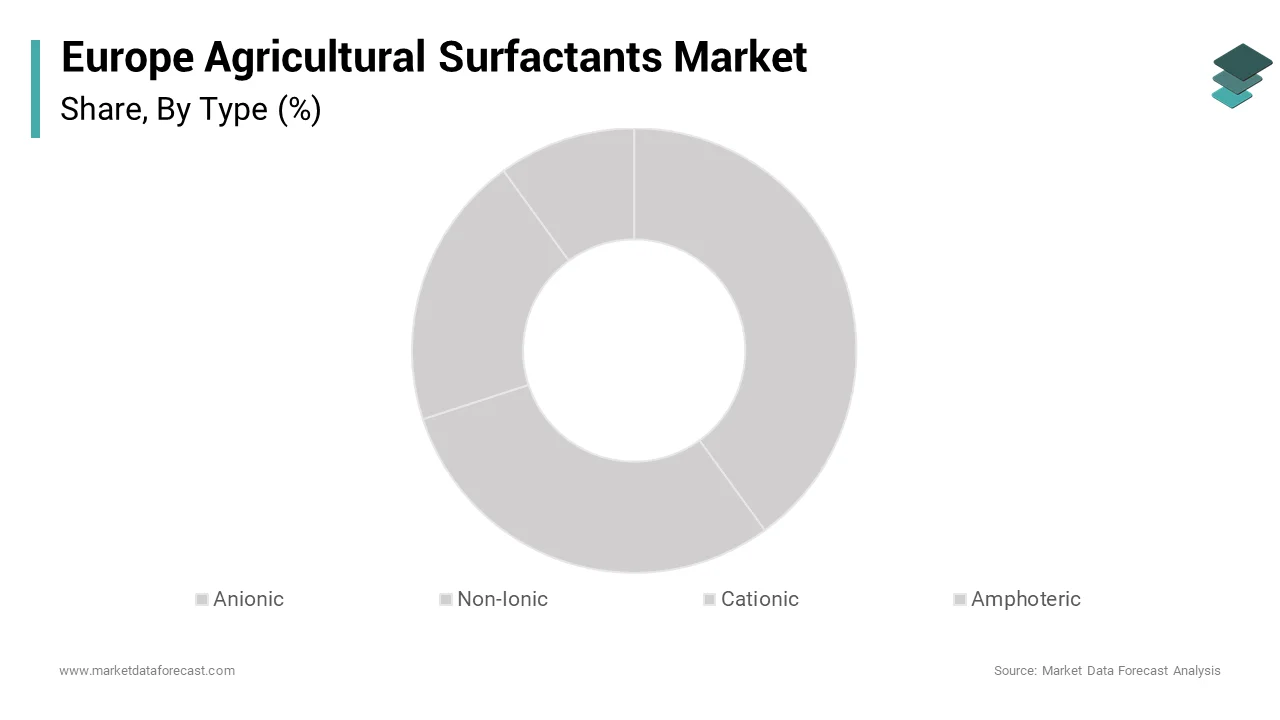
The amphoteric surfactants segment is projected to expand at a CAGR of 10.6% over the forecast period,iod owing to their unipH-responsive behavior, allowing them to function as cationic in acidic environments and anionic in alkaline conditions, which is ideal for complex tank mixes involving multiple chemistries. Amphoteric surfactants based on betaines and imidazolines demonstrate superior leaf adhesion and rainfastness, particularly in high humidity regions like Northern Italy and the Netherlands. In 2024, Solvay launched a new amphoteric adjuvant specifically designed for RNA-based fungicides, enhancing cellular uptake without degrading the fragile payload. Furthermore, their low irritation profile makes them suitable for use in organic-compatible formulations under evolving EU organic regulations. As precision agriculture demands smarter adjuvants that adapt to dynamic field conditions, amphoteric surfactants are emerging as high-performance enablers of next-generation crop protection efficacy.
By Application Insights
The herbicides segment dominated the market by capturing 49.4% of the European agricultural surfactants market share in 2025. The leading position of the herbicides segment in the regional market is attributed to the widespread cultivation of cereals, oilseeds, and maize across the continent, where post emergence weed control relies heavily on systemic herbicides like glyphosate and glufosinate that require surfactants for cuticle penetration. In France, millions of hectares of winter wheat are treated annually with glyphosate-based desiccants before harvest, necessitating organo-silicone or non-ionic adjuvants to ensure uniform coverage, as reported by FranceAgriMer. The rise of herbicide-resistant black grass in the UK and Germany has further intensified surfactant use, with growers adopting deposition-enhancing additives to maximize efficacy at reduced rates. National action plans under the Sustainable Use Directive also promote adjuvant inclusion to minimize drift and runoff, thereby supporting environmental compliance. This combination of agronomic necessity, regulatory alignment, and resistance management sustains herbicides as the primary driver of surfactant consumption in European cropping systems.
The fungicides segment is estimated to witness a CAGR of 9.44% over the forecast period, owing to the expansion of high-value horticulture, including vineyards, orchards, and vegetable production, which are highly susceptible to fungal pathogens and require frequent protective sprays. In Italy, extensive grapevine areas receive multiple fungicide applications per season, with surfactants critical for canopy penetration and spore inhibition as documented by the Italian Ministry of Agriculture, Food, and Forestry Policies. Climate change exacerbates disease pressure, with warmer, wetter springs increasing outbreaks of downy mildew and botrytis across Central Europe. Newer multisite fungicides and biofungicides often have poor spreading characteristics, necessitating tailored adjuvants for optimal performance. Moreover, the EU’s push toward reduced-risk products favours formulations enhanced with biodegradable surfactants that improve rainfastness without harming beneficial microbes. This convergence of climatic, agronomic, and regulatory forces positions fungicide adjuvant uses as the most dynamic growth frontier in the European surfactants landscape.
By Fertilizer Insights
The nitrogenous fertilizers segment held 51.6% of the European market share in 2025. The growth of the nitrogenous fertilizers segment in this regional market is driven by the extensive use of urea, ammonium nitrate solutions, and stabilized nitrogen products across cereal and forage crops, which cover tens of millions of hectares in the EU as per Eurostat. Surfactants are incorporated into liquid nitrogen formulations to improve droplet spreading on waxy cereal leaves and reduce volatilization losses—a critical concern given that ammonia emissions from agriculture account for the majority of the EU’s total, as reported by the European Environment Agency. In Denmark, the mandatory use of urease inhibitors combined with deposition-enhancing surfactants has reduced nitrogen loss since 2020, according to the Danish Agriculture and Food Council. Additionally, foliar nitrogen applications during grain fill increasingly rely on non-ionic surfactants to facilitate rapid uptake without leaf burn. This integration of surfactants into nutrient efficiency strategies aligns with the EU’s Nitrogen Expert Panel recommendations and national climate action plans, making nitrogenous systems the primary conduit for adjuvant innovation in fertilizer delivery.
The phosphate segment is estimated to grow at a CAGR of 8.08% over the forecast period in this regional market due to the EU’s focus on phosphorus use efficiency amid tightening regulations on water pollution and finite rock phosphate reserves. Surfactants enhance the mobility of orthophosphate ions in soil, reducing fixation and improving root access, particularly in calcareous soils prevalent in Spain and Southern France. In 2024, Yara launched a new liquid starter fertilizer for maize containing a rhamnolipid biosurfactant that increased early root development in trials conducted by the Swedish University of Agricultural Sciences. Furthermore, the Farm to Fork Strategy’s target of reducing nutrient losses by 50% by 2030 incentivizes the adoption of surfactant-enhanced phosphorus products that maximize uptake per kilogram applied. As circular economy models promote recovered phosphates from waste streams, surfactants become essential enablers of next-generation sustainable nutrient management.
COUNTRY ANALYSIS
Top Countries In The Market
France Agricultural Surfactants Market Analysis
France held the top spot in the European agricultural surfactants market in 2025, holding 23.1% of the regional market share. The country’s dominance reflects its status as the EU’s largest agricultural producer, with millions of hectares of utilized agricultural area dedicated to cereals, vineyards, and oilseeds. Stringent implementation of the Ecophyto Plan II, which mandates a reduction in pesticide use by 2025, has intensified reliance on high-performance adjuvants to maintain efficacy at lower active ingredient rates. Professional pesticide applicators in France widely use certified surfactant blends approved by the Ministry of Agriculture for specific crop pest combinations. The presence of global agrochemical R and D centers in Lyon and Toulouse further drives innovation in adjuvant chemistry tailored to Mediterranean and temperate cropping systems. This fusion of regulatory pressure, agronomic scale, and scientific infrastructure solidifies France as the epicenter of surfactant demand and development in Europe.
Germany Agricultural Surfactants Market Analysis
Germany accounted for the second-largest share of the European agricultural surfactants market in 2025 due to its advanced arable farming and strong regulatory framework. According to the German Federal Statistical Office, the country cultivates over 10 million hectares of cereals, where herbicide resistance in black grass has made surfactant-optimized tank mixes essential for effective control. The Federal Office of Consumer Protection and Food Safety maintains one of Europe’s most rigorous adjuvant approval processes, requiring detailed ecotoxicological dossiers under the Plant Protection Act. This has spurred domestic chemical companies like BASF and Evonik to pioneer biodegradable non-ionic surfactants that meet both performance and environmental criteria. Additionally, Germany leads in digital farming adoption, with many large farms using variable rate sprayers that require precisely calibrated surfactant concentrations for zone-specific applications. This synergy of resistance pressure, regulatory rigor, and technological sophistication ensures Germany’s pivotal role in shaping the future of agricultural adjuvants.
Spain Agricultural Surfactants Market Analysis
Spain is expected to contribute significantly to the European agricultural surfactants market during the forecast period, owing to its intensive horticulture and challenging climatic conditions. As per the Spanish Ministry of Agriculture, Fisheries and Food, the country manages millions of hectares of permanent crop,s including olives, citrus, and vegetables, which demand frequent fungicide and insecticide applications under high temperature and UV exposure. These conditions accelerate spray droplet evaporation, necessitatinanti-evaporationon surfactants that extend active ingredient residence time. In Andalusia, trials by the Institute for Sustainable Agriculture demonstrated that organosilicone adjuvants improved copper fungicide retention on olive leaves during summer applications. Spain also faces severe water scarcity affecting much of its territory, according to the Spanish Geological Survey, prompting the adoption of low-volume spraying technologies that rely heavily on deposition-enhancing surfactants. This unique combination of crop structure, climate stress, and resource constraints makes Spain a high-intensity user and innovator in specialized adjuvant solutions.
Italy Agricultural Surfactants Market Analysis
Italy is predicted to showcase a promising CAGR in the European agricultural surfactants market during the forecast period, owing to its diverse agricultural landscape, pe ranging from Po Valley cereals to Southern vineyards and orchards. According to ISTAT, the Italian National Institute of Statistics, the country applies large volumes of pesticides annually, with fungicides representing a significant share due to persistent mildew and scab pressures. Surfactants are critical in these applications to ensure thorough coverage of dense canopies, particularly in apple and grape products, where missed areas lead to yield loss. The Italian Ministry of Health enforces strict adjuvant labeling requirements under Legislative Decree 150/2012, mandating compatibility testing with regional water hardness levels, values which vary dramatically from North to South. In response, companies like Syngenta have developed region-specific surfactant blends for Italian growers. Moreover, the rise of organic viticulture has spurred demand for natural surfactants derived from plant oils compliant with EU organic standards. This regional complexity and regulatory specificity sustain Italy’s influential yet fragmented surfactants market.
United Kingdom Agricultural Surfactants Market Analysis
The United Kingdom is anticipated to record a notable CAGR in the European agricultural surfactants market during the forecast period due to the post Brexit regulatory autonomy and resistance-driven innovation. According to the UK Department for Environment, Food and Rural Affairs, herbicide-resistant black grass infests large areas of English arable land, making surfactant-enhanced glyphosate applications essential for pre-harvest desiccation. The Health and Safety Executive’s revised adjuvant guidance issued in 2023 requires all tank mix additives to undergo independent efficacy verification before commercial sale, a move that has accelerated the adoption of data-backed products from certified suppliers. UK research institutions like Rothamsted Research continue to lead in adjuvant science, publishing numerous peer-reviewed studies on droplet dynamics in recent years. Post Brexit, the UK has fast-tracked approvals for novel biosurfactants not yet authorized in the EU, creating a testing ground for green adjuvant innovation. This blend of agronomic urgency, scientific excellence, and agile regulation positions the UK as a forward-looking yet distinct node in the European surfactants ecosystem.
COMPETITIVE LANDSCAPE
The European agricultural surfactants market features intense competition among multinational chemical giants, specialized adjuvant developers,s and emerging green chemistry startups. While large players like BASF, Solvay, and Evonik dominate through integrated portfolios and regulatory expertise, niche firms differentiate via novel biosurfactants or digital formulation tools. Competition is increasingly centred on sustainability credentials, including biodegradability d,ata and compatibility with biological pesticides rather than price alone. Regulatory complexity under REACH and national plant protection laws creates high barriers to entry,ntry favoring established companies with robust compliance infrastructure. However, the rise of organic farming and retailer-driven chemical restrictions opens avenues for agile innovators offering natural alternatives. Geographic variation in cropping systems, water quality, and resistance profiles further fragments demand, requiring localized product strategies. This dynamic environment fosters continuous innovation in molecular design, in application science, and in environmental safety, positioning surfactants as critical yet contested enablers of modern European agriculture.
KEY MARKET PLAYERS
Some of the major competitors dominating the European Agricultural Surfactants market are
- Evonik Industries AG (Germany)
- AkzoNobel N.V. (The Netherlands)
- The Dow Chemical Company (U.S.)
- BASF SE (Germany)
- Solvay S.A. (Belgium),
Top Players in the Market
- BASF SE is a leading innovator in theEuropeane agricultural surfactants market, offering a broad portfolio of adjuvants under its Lutensit and Dehypon brands, designed to enhance pesticide efficacy and reduce environmental impact. The company leverages its global R and D network to develop tailored surfactant solutions compatible with both conventional and biological crop protection products. BASF contributes significantly to the global market by supplying high-performance non-ionic and organo-silicone surfactants to formulators across North America, Asia, and Latin America. Recently, the company launched a new line of readily biodegradable alkyl poly-glucoside-based adjuvants aligned with EU Green Deal objectives. These products support sustainable farming while maintaining spray performance under low volume and drone application systems widely adopted in European agriculture.
- Solvay SA plays a pivotal role in the European agricultural surfactants market through its Novecare division, which specializes in advanced formulation additives,s including amphoteric and bio-based surfactants. The company’s expertise in green chemistry enables the development of adjuvants that meet stringent REACH and biodegradability requirements without compromising functionality. Solvay supplies key ingredients to major agrochemical companies for use in herbicide, fungicide, insecticide,e and insecticide formulations across Europe and globally. In recent years, the company introduced rhamnolipid biosurfactants derived from fermentation processes, offering superior leaf adhesion and compatibility with RNA-based pesticides. This innovation strengthens its position as a sustainability-focused partner in next-generation crop protection delivery systems.
- Evonik Industries AG is a major contributor to the European agricultural surfactants landscape with its TEGO-branded adjuvants known for precision performance in complex tank mixes. The company focuses on specialty non-ionic and silicone-based surfactants that improve droplet deposition, rainfastness, and active ingredient uptake, particularly in cereals and horticulture. Evonik supports global markets through technical service centers that provide formulation guidance and regulatory compliance support. To reinforce its European presence,ce the company recently expanded its production capacity for alcohol ethoxylate-free surfactants at its facility in Germany, responding to growing demannitrosamine-risk-mitigatedateded adjuvants mitigated by nitrosamine risk. This strategic investment underscores its commitment to delivering safe,e high-performance solutions aligned with evolving EU chemical safety standards.
Top Strategies Used By The Key Market Participants
Key players in the European agricultural surfactants market prioritize the development of bio-based and readily biodegradable chemistries to comply with tightening environmental regulations and retailer sustainability demands. They invest in application-specific adjuvant formulations optimized for low-volume drone and electrostatic spraying technologies, gaining traction across the region. Strategic partnerships with agrochemical companies enableco-developmentt of integrated solutions that enhance the performance of proprietary active ingredients. Companies also strengthen their regulatory affairs capabilities to navigate fragmented national approval processes and accelerate time to market. Additionally, they expand technical service networks to provide farmers and distributors with field-validated recommendations, ensuring correct adjuvant use and maximizing agronomic outcomes.
MARKET SEGMENTATION
This research report on the European agricultural surfactants market is segmented and sub-segmented into the following categories:
By Type
- anionic
- non-ionic
- cationic
- amphoteric
By Application
- fungicides
- insecticides
- herbicides
- others
By Substrate Type
- bio-based
- synthetic
By Fertilizer Type
- nitrogenous
- potassium
- phosphate segments
By Country
- UK
- France
- Spain
- Germany
- Italy
- Russia
- Sweden
- Denmark
- Switzerland
- Netherlands
- Turkey
- Czech Republic
- Rest of Europe