- Product Description Description
- Table of Contents TOC
- List of Table & Figure LOT
- Get Free Sample PDF Sample PDF
Market Size, 2025
$1.04 BnMarket Estimate, 2026
$1.09 BnMarket Forecast, 2034
$1.58 BnCAGR, 2026–2034
4.74%Europe Algae Protein Market Size, Growth, Trends & Forecast (2026–2034)
The Europe Algae Protein Market size was calculated to be USD 1.04 billion in 2025, stands at USD 1.09 billion in 2026, and is anticipated to reach USD 1.58 billion by 2034, registering a compound annual growth rate (CAGR) of 4.74% during the forecast period from 2026 to 2034. Propelled by rising consumer demand for nutrient-rich, sustainable plant-based diets, supportive European agricultural policies, and cultivation cost reductions, algae protein continues to establish itself as a primary pillar of Europe's sustainable nutritional future.
Key Executive Metrics (At-a-Glance)
- 2025 Base Valuation: USD 1.04 Billion
- 2026 Current Valuation: USD 1.09 Billion
- 2034 Forecast Valuation: USD 1.58 Billion
- Compound Annual Growth Rate (CAGR): 4.74% (2026–2034)
- Dominant Type Segment: Spirulina (45.8% share in 2025)
- Fastest-Growing Type Segment: Chlorella (Projected CAGR of 12.5%)
- Dominant Application Segment: Dietary Supplements (35.5% share in 2025)
- Fastest-Growing Application Segment: Pharmaceuticals & Nutraceuticals (Projected CAGR of 15.8%)
- Leading Country Market: Germany (20.7% share), with Western Europe holding the majority share and Eastern Europe emerging as the fastest-growing regional hub (CAGR of 18.8%)
Core Market Drivers & Restraints
- Drivers: Surging popularity of vegetarian/vegan diets, robust government funding/subsidies for sustainable agriculture, and carbon-reduction targets.
- Restraints & Challenges: High production expenses relative to traditional protein sources (soy/whey), limited general consumer awareness regarding taste/texture, and lengthy EFSA novel food regulatory approvals.
Europe Algae Protein Market Segmentation Breakdown
| Segment Category | Leading / Dominant Sub-Segment | Fastest-Growing Sub-Segment |
|---|---|---|
| By Type | Spirulina (45.8% share) | Chlorella (CAGR of 12.5%) |
| By Application | Dietary Supplements (35.5% share) | Pharmaceuticals & Nutraceuticals (CAGR of 15.8%) |
| By Region / Country | Germany (20.7% share) & Western Europe | Eastern Europe (Poland, Romania, CAGR of 18.8%) |
Major Industry Players Profiled
Key global and regional pioneers driving the European algae protein market include Corbion N.V., Roquette Frères, Duplaco, Phycom BV, Algama, Cyanotech Corporation, and Earthrise Nutritionals.
Europe Algae Protein Market Size
The Europe algae protein market size was calculated to be USD 1.04 billion in 2025 and is anticipated to be worth USD 1.58 billion by 2034 from USD 1.09 billion in 2026, growing at a CAGR of 4.74% during the forecast period.
Algae protein is derived from microalgae such as spirulina, chlorella, and other species and this has emerged as a sustainable and nutrient-rich alternative to traditional protein sources. The European algae protein market is gaining traction due to increasing consumer awareness about plant-based diets, environmental sustainability, and health-conscious lifestyles. Algae proteins are rich in essential amino acids, vitamins, and minerals, making them ideal for applications in food & beverages, dietary supplements, and pharmaceuticals. According to the European Food Safety Authority (EFSA), algae-based products accounted for approximately 15% of the total plant-based protein market in Europe in 2022. According to the European Commission, more than 60% of consumers in the EU prefer eco-friendly and sustainable protein sources, which is further driving demand. Moreover, advancements in cultivation technologies have reduced production costs by nearly 30% over the past five years, making algae protein more accessible. With Europe aiming to reduce its carbon footprint by 55% by 2030, algae protein aligns perfectly with regional sustainability goals, positioning it as a key player in the future of nutrition.
MARKET DRIVERS
Growing Demand for Plant-Based Diets
The rising adoption of plant-based diets across Europe is a significant driver of the algae protein market. According to the European Vegetarian Union, the number of vegetarians and vegans in Europe increased by 25% between 2018 and 2022, reaching approximately 75 million individuals. Algae protein serves as an excellent substitute for animal-derived proteins that offer high nutritional value without compromising ethical or environmental standards. Highlighting this trend, Germany alone witnessed a 40% surge in sales of algae-based dietary supplements in 2022. The European Consumer Organization also reports that over 70% of consumers prioritize sustainable and health-focused food options, further propelling demand for algae protein.
Government Support for Sustainable Agriculture
Government initiatives promoting sustainable agriculture and reducing reliance on conventional livestock farming are bolstering the algae protein market in Europe. According to the European Environment Agency, subsidies for sustainable protein production increased by 15% in 2022, with algae-based projects receiving significant funding. For instance, France launched a EUR 50 million initiative to support algae farming, aiming to reduce agricultural emissions by 20% by 2026. These efforts not only enhance production capabilities but also encourage innovation in algae cultivation techniques, ensuring long-term market growth.
MARKET RESTRAINTS
High Production Costs
Despite technological advancements, high production costs remain a major restraint for the algae protein market. According to the European Investment Bank, the average cost of producing one kilogram of algae protein ranges from EUR 15 to EUR 30, significantly higher than traditional protein sources like soy or whey. According to a study by the European Biotechnology Association, nearly 40% of manufacturers cite cost barriers as a challenge to scaling operations. This limits accessibility for price-sensitive consumers and hinders widespread adoption.
Limited Consumer Awareness
Another restraint is the limited awareness among consumers regarding the benefits of algae protein. According to Eurostat, only 35% of European consumers are familiar with algae-based products, with misconceptions about taste and texture deterring potential buyers. Educational campaigns are needed to bridge this gap and drive acceptance.
MARKET OPPORTUNITIES
Expansion into Emerging Markets
Emerging markets within Europe, particularly Eastern Europe, present significant opportunities for algae protein growth. According to the European Bank for Reconstruction and Development, investments in Agri-tech sector of Eastern Europe grew by 25% in 2022, creating a conducive environment for algae farming. Countries like Poland and Romania are increasingly adopting sustainable practices, providing fertile ground for algae protein expansion.
Innovations in Product Development
Innovations in product formulations offer immense potential for market growth. According to the European Innovation Council, over 60% of new product launches in the health and wellness sector incorporate algae protein. For example, algae-infused energy bars and beverages have gained popularity, with sales increasing by 30% annually.
MARKET CHALLENGES
Regulatory Hurdles
Navigating complex regulatory frameworks poses a significant challenge for algae protein producers. According to the European Food Safety Authority, obtaining approval for novel food ingredients can take up to three years, delaying market entry.
Supply Chain Disruptions
Supply chain disruptions, exacerbated by geopolitical tensions, have impacted raw material availability. According to the European Supply Chain Institute, 20% of algae producers faced delays in sourcing nutrients required for cultivation in 2022.
REPORT COVERAGE
| REPORT METRIC | DETAILS |
| Market Size Available | 2025 to 2034 |
| Base Year | 2025 |
| Forecast Period | 2026 to 2034 |
| CAGR | 4.74% |
| Segments Covered | By Type, Application, and Region |
| Various Analyses Covered | Global, Regional & Country Level Analysis; Segment-Level Analysis; DROC, PESTLE Analysis; Porter’s Five Forces Analysis; Competitive Landscape; Analyst Overview of Investment Opportunities |
| Regions Covered | UK, France, Spain, Germany, Italy, Russia, Sweden, Denmark, Switzerland, Netherlands, Turkey, and Czech Republic |
| Market Leaders Profiled | Corbion N.V., Roquette Frères, Duplaco, Phycom BV, Algama |
SEGMENTAL ANALYSIS
By Type Insights
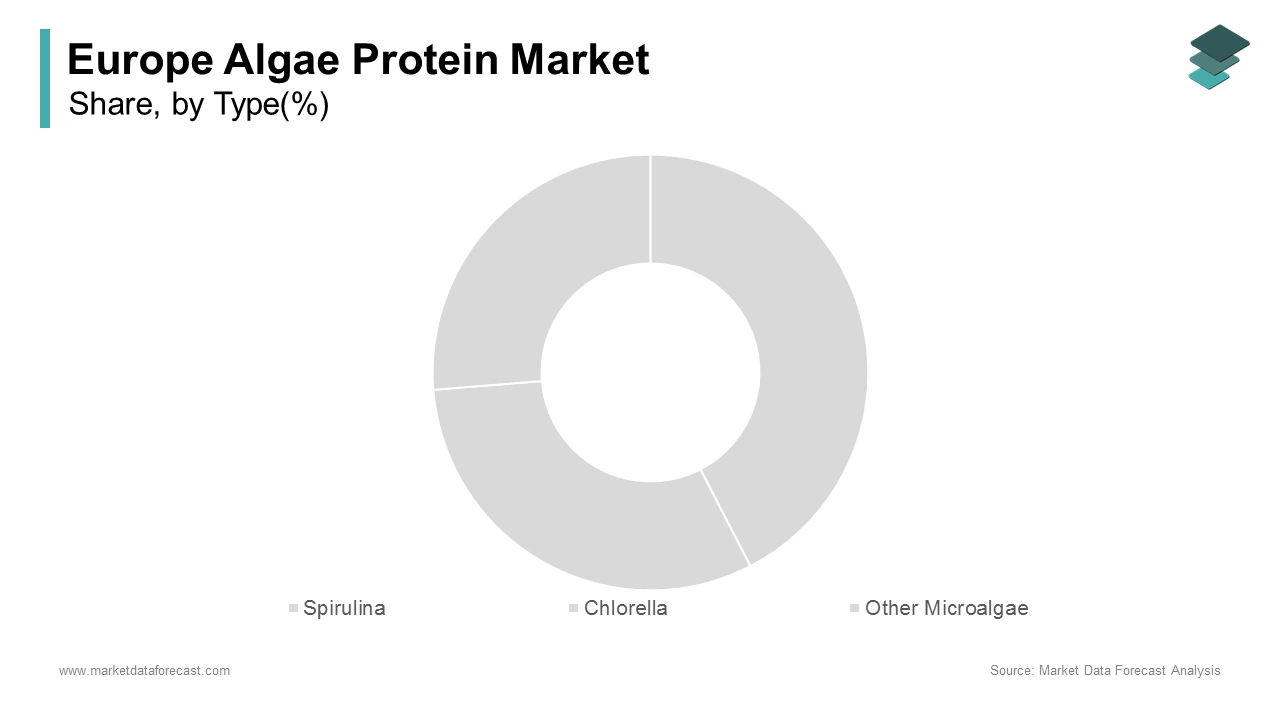
The spirulina segment dominated the algae protein market in Europe by accounting for 45.8% of the European market share in 2025. The high protein content of spirulina is one of the key factors contributing to the domination of spirulina segment in the European market. According to the European Algae Biomass Association, the protein content of spirulina can reach up to 70%, which is making it a preferred choice for dietary supplements and functional foods. Additionally, spirulina has an established production infrastructure, with large-scale cultivation facilities across Europe ensuring consistent supply. Its versatility and proven health benefits, such as boosting immunity and improving metabolism, further fuelling the growth of the spirulina segment in the European market.
The chlorella segment is estimated to register the fastest CAGR of 12.5% over the forecast period owing to the increasing consumer demand for immune-boosting supplements. Chlorella is rich in antioxidants, vitamins, and minerals that are making it particularly appealing to health-conscious consumers. Moreover, advancements in cultivation technologies have reduced production costs that is enabling manufacturers to offer competitive pricing. This affordability and the growing awareness of detoxifying properties of chlorella are contributing to the expansion of chlorella segment in the European market.
By Application Insights
The dietary supplements segment dominated the market by accounting for 35.5% of the European market share in 2025. The domination of dietary supplements segment is attributed to the rising health consciousness among European consumers that are increasingly seeking natural and plant-based alternatives to traditional supplements. Algae proteins, particularly spirulina and chlorella, are widely used in capsules, tablets, and powders due to their high nutritional value and ease of integration into formulations. The versatility of algae protein in meeting diverse dietary needs further enhances its importance in this segment.
The pharmaceuticals segment is predicted to showcase the highest CAGR of 15.8% over the forecast period. According to the European Pharmaceutical Market Research Association, algae protein’s anti-inflammatory and antioxidant properties are driving its adoption in drug development. For instance, algae-derived compounds are being explored for treating chronic conditions such as arthritis and cardiovascular diseases. Additionally, the growing emphasis on personalized medicine and biopharmaceuticals has created new opportunities for algae protein applications, making this segment a critical area for future innovation.
REGIONAL ANALYSIS

Germany accounted for 20.7% of the European market share and emerged as the leading performer in this regional market. The strong R&D investments, advanced cultivation technologies, and high consumer awareness of sustainable nutrition are fuelling the German market growth. Western Europe accounts for the major share of the overall European market due to the advanced infrastructure, high disposable incomes, and stringent sustainability regulations that favor algae-based solutions. Countries like Germany, France, and the UK are at the forefront of adopting algae protein in various industries, including food, supplements, and pharmaceuticals.
On the other hand, Eastern Europe is anticipated to grow at the fastest CAGR of 18.8% over the forecast period. According to the European Bank for Reconstruction and Development, the growth of the Eastern Europe is fueled by government incentives, rising awareness of plant-based diets, and increasing investments in agri-tech. Countries like Poland and Romania are emerging as key players, leveraging their agricultural expertise to scale algae cultivation.
KEY MARKET PLAYERS
Major Players of the Europe Algae Protein Market include Corbion N.V., Roquette Frères, Duplaco, Phycom BV, Algama
Roquette, Cyanotech Corporation, and Earthrise Nutritionals are the leading players in the European algae protein market, collectively contributing to over 60% of total production. Roquette, headquartered in France, focuses on developing innovative algae-based solutions for the food and pharmaceutical industries. Cyanotech Corporation, based in the USA but with a strong presence in Europe, specializes in producing high-quality spirulina and chlorella for dietary supplements. Earthrise Nutritionals, a pioneer in algae farming, supplies premium-grade algae protein to meet the growing demand for sustainable nutrition. These companies leverage their expertise in cultivation, processing, and product development to maintain their leadership positions.
KEY MARKET STRATEGIES
To strengthen their market positions, key players in the European algae protein market employ several strategic approaches. Partnerships and collaborations are a primary focus, with companies like Roquette working closely with EU governments to promote algae farming and secure funding for sustainable projects. According to the European Innovation Council, R&D investments are another critical strategy, with firms investing heavily in advanced cultivation technologies to enhance yield and reduce costs. Additionally, sustainability certifications and eco-labeling initiatives are gaining traction, as highlighted by the European Environmental Agency. These strategies not only ensure compliance with regulatory standards but also build consumer trust and drive long-term growth.
DETAILED SEGMENTATION OF EUROPE ALGAE PROTEIN MARKET INCLUDED IN THIS REPORT
This research report on the Europe algae protein market has been segmented and sub-segmented based on type, application & region.
By Type
- Spirulina
- Chlorella
- Other Microalgae (Dunaliella, Haematococcus, etc.)
By Application
- Food & Beverages (Dairy Alternatives, Meat Substitutes, Functional Foods)
- Dietary Supplements
- Animal Feed & Aquaculture
- Pharmaceuticals & Nutraceuticals
- Cosmetics & Personal Care
By Region
- UK
- France
- Spain
- Germany
- Italy
- Russia
- Sweden
- Denmark
- Switzerland
- Netherlands
- Turkey
- Czech Republic
- Rest of Europe