- Product Description Description
- Table of Contents TOC
- List of Table & Figure LOT
- Get Free Sample PDF Sample PDF
Europe Aloe Vera Market Report Summary
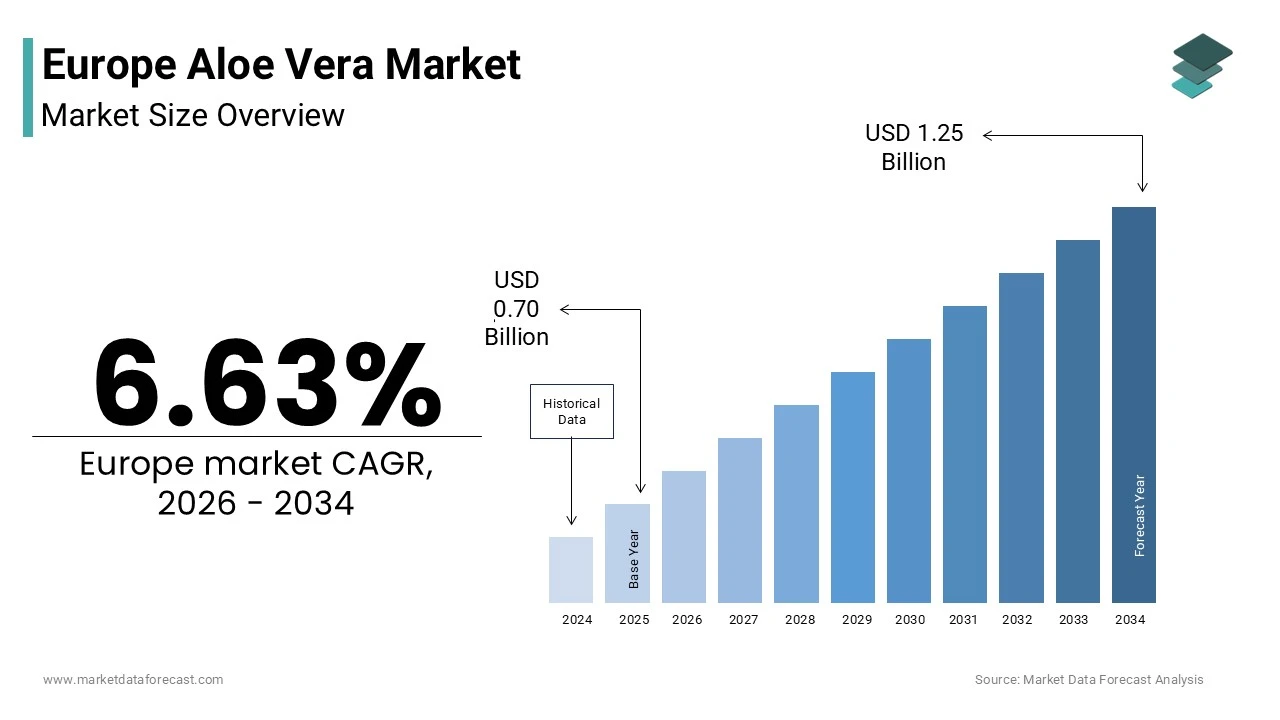
The Europe aloe vera market was valued at USD 0.70 billion in 2025, is estimated to reach USD 0.76 billion in 2026, and is projected to reach USD 1.25 billion by 2034, growing at a CAGR of 6.63% during the forecast period from 2026 to 2034. The growth of the Europe aloe vera market is driven by increasing demand for natural and organic personal care products, rising consumer awareness regarding botanical ingredients, and expanding applications across cosmetics, pharmaceuticals, and wellness sectors. The growing adoption of aloe vera in skincare formulations, increasing scientific validation of its therapeutic benefits, and the expansion of organic-certified product lines are further fueling market growth. Moreover, the rising trend of sustainable sourcing, traceability, and premium natural formulations is strengthening aloe vera demand across European markets.
Key Market Trends
-
Rising demand for aloe vera in natural and organic personal care products is driven by clean-label and sustainability trends.
-
Increasing adoption of aloe vera in skincare, sun care, and dermatological formulations due to its soothing and hydrating properties.
-
The growing popularity of aloe vera-based supplements and wellness products is supported by health-conscious consumers.
-
Expansion of organic-certified aloe vera products driven by premiumization and regulatory support.
-
Increasing focus on sustainable sourcing and traceability across aloe vera supply chains.
Segmental Insights
Based on type, the aloe vera gel segment was the largest and held a significant share of the Europe aloe vera market in 2025. The segment’s dominance is attributed to its direct applicability in skincare products, strong consumer perception of purity, and widespread usage in topical formulations.
Based on nature, the conventional segment accounted for a major share of the Europe aloe vera market in 2025. The dominance of this segment is driven by its cost-effectiveness, higher production volumes, and widespread adoption in mass-market personal care and household products.
Based on application, the cosmetics and personal care segment was the largest, occupying a significant share of the Europe aloe vera market in 2025. The dominance of this segment stems from the extensive use of aloe vera in skincare, haircare, and sun care products, supported by strong consumer demand for natural and soothing ingredients.
Regional Insights
The Europe aloe vera market is witnessing steady growth across major countries, supported by rising consumer preference for natural ingredients and strong demand from the cosmetics and wellness industries.
- Germany was the largest contributor, accounting for a significant share of the Europe aloe vera market in 2025, driven by its strong cosmetics industry, high consumer awareness, and demand for certified natural products.
- The United Kingdom holds a prominent position in the market, supported by a strong wellness culture, growing demand for dietary supplements, and expansion of online retail channels.
- France continues to perform well, fueled by its leading cosmetics industry, dermocosmetic demand, and emphasis on premium skincare formulations.
- Italy is emerging as a key market due to its strong tradition in natural beauty products and increasing integration of aloe vera in lifestyle and personal care applications.
- Spain is also witnessing notable growth, supported by local cultivation, tourism-driven demand, and rising consumption of aloe vera-based skincare products.
Competitive Landscape
The Europe aloe vera market is characterized by the presence of global ingredient suppliers, regional processors, and specialized brands competing across cosmetics, healthcare, and wellness segments. Leading companies are focusing on sustainable sourcing, product innovation, and regulatory compliance to strengthen their market position. Investments in organic certification, traceability systems, and advanced extraction technologies are shaping the competitive landscape. Strategic collaborations with cosmetic manufacturers and healthcare companies are further enhancing product development and market reach. Prominent players in the Europe aloe vera market include Aloecorp Inc., Terry Laboratories Inc., Foodchem International Corporation, HAWLIK BIOIMPORT GMBH, Forever Living Products (UK) Ltd., Aloe Laboratories, Inc., Aloe Farms, Inc., AMB Wellness, Amazonas Naturprodukte GmbH, and Jacques Andhrel.
Europe Aloe Vera Market Size
The Europe aloe vera market size was valued at USD 0.70 billion in 2025 and is anticipated to reach USD 0.76 billion in 2026 from USD 1.25 billion by 2034, growing at a CAGR of 6.63% during the forecast period from 2026 to 2034.
Aloe vera (Aloe barbadensis miller) is a succulent plant species renowned for its thick, fleshy leaves that store a clear, nutrient-rich gel. Often called the "plant of immortality," it has been used for centuries in traditional medicine, particularly for skincare and digestive health. Aloe vera gel and extracts serve as multifunctional bioactive ingredients rich in polysaccharides, vitamins, and antioxidants, aligning with European consumer preferences for natural and sustainable formulation components. The European Union is a leading market for aloe vera, importing processed extracts and raw materials primarily under the "vegetable saps and extracts" category (HS 1302.19). While specific volumes fluctuate, research suggest the EU consumes significant tonnages annually, with Mexico remaining the major supplier, complemented by imports from the Dominican Republic and India, as indicated by combined Eurostat trade data and CBI market analyses. Scientific literature and WHO monographs identify that Aloe vera contains over 75 potentially active constituents, including enzymes (such as bradykinase), minerals, and fatty acids. Meanwhile, the European Pharmacopoeia establishes strict quality standards for these materials, focusing primarily on the assay of specific markers like hydroxyanthracene derivatives (e.g., barbaloin).Regulatory frameworks governing novel food authorization, cosmetic ingredient safety assessments, and organic certification standards shape market access and product development strategies across member states. The European cosmetics industry represents a massive economic sector and a primary end-user of aloe vera extracts. This demand is driven heavily by the skincare segment, which stands as the single largest and most valuable category within the broader personal care market, consistently outpacing other segments in retail sales value. Consumer awareness campaigns by health authorities have highlighted the dermatological benefits of aloe vera, influencing purchasing decisions across skincare and wellness categories. This intricate interplay between import dependency, regulatory compliance, and value added processing establishes the foundation for market evolution in the European aloe vera sector.
MARKET DRIVERS
Expanding Demand for Natural and Organic Personal Care Formulations
The accelerating consumer preference for clean beauty and natural personal care products is a primary factor for the growth of the Europe aloe vera market. This trend is heavily propelling aloe vera demand across the region’s cosmetics and skincare sectors. Aloe vera serves as a versatile active ingredient in moisturizers, sun care products, and after sun formulations due to its soothing, hydrating, and anti inflammatory properties. The European organic cosmetics market has achieved substantial retail sales volume, with aloe vera featuring prominently in certified natural product portfolios according to various sources. Retail data indicates that skincare products containing aloe vera extract have witnessed steady growth in major European markets including Germany, France, and the United Kingdom, reflecting robust consumer adoption as per retail market analysis. Manufacturers leverage aloe vera's compatibility with sensitive skin and its ability to enhance product texture without synthetic additives, aligning with clean label trends dominating the European beauty landscape. Consumer surveys reveal that a majority of European shoppers actively favor products with botanical ingredients when purchasing personal care items, reinforcing sustained demand for aloe vera based formulations according to consumer behavior research organizations. The European Commission's cosmetic regulation framework encourages the use of naturally derived ingredients with established safety profiles, enabling brands to communicate botanical benefits on product packaging. This structural shift toward transparency and natural efficacy ensures that aloe vera remains a cornerstone ingredient in the formulation of next generation personal care products throughout the region.
Growing Scientific Validation of Aloe Vera Therapeutic Properties
The expanding body of clinical research supporting aloe vera applications for wound healing, dermatological conditions, and digestive wellness further contributes to the expansion of the Europe aleo vera market. This evidence directly influences European consumer purchasing decisions and healthcare recommendations. Peer reviewed systematic reviews, such as those published in the journal Burns, indicate that aloe vera gel can significantly accelerate burn wound healing compared to conventional dressings and may help reduce skin irritation. Health authorities in several European nations have incorporated aloe vera based topical preparations into clinical guidelines for minor burn management and skin barrier repair. The European Medicines Agency has evaluated traditional herbal registrations for aloe vera containing products, enabling manufacturers to communicate established therapeutic uses on labeling according to regulatory documentation. Consumer research shows that a significant proportion of European adults recognize aloe vera as an effective remedy for skin discomfort, driving increased incorporation into home healthcare routines as per wellness awareness surveys. Pharmaceutical and nutraceutical companies respond by developing standardized aloe vera extracts, topical gels, and oral supplements to capitalize on evidence based demand. The alignment between scientific validation, regulatory endorsement, and consumer perception creates a powerful demand driver that sustains aloe vera consumption growth across diverse therapeutic and wellness segments throughout Europe.
MARKET RESTRAINTS
Regulatory Complexity Surrounding Novel Food Authorization and Ingredient Approval
The stringent regulatory environment governing aloe vera in food and beverage applications is hindering the European aloe vera market. Consequently, this limits expansion opportunities for oral consumption products. The European Commission effectively prohibited the use of whole leaf aloe vera extracts containing hydroxyanthracene derivatives (HADs) in foods following EFSA's conclusion that these substances are genotoxic and carcinogenic. However, inner leaf aloe gel, which is processed to remove these compounds, remains permitted for use in functional foods and beverages without restriction. Food manufacturers seeking to incorporate aloe vera into products must navigate complex approval processes that can exceed 24 months and require substantial investment in safety dossiers and toxicological studies. The limited number of novel food authorizations for aloe vera products reflects the fact that aloe vera gel (inner pulp) is classified as a traditional food ingredient rather than a novel food, exempting most standard aloe products from the pre-market authorization process provided they comply with safety limits on anthraquinones. Compliance with maximum residue limits for pesticides and heavy metals in imported aloe vera raw materials necessitates rigorous supplier qualification and laboratory testing, adding layers of supply chain management complexity. Small and medium sized enterprises often lack dedicated regulatory affairs resources to navigate these requirements, creating disproportionate barriers to innovation in aloe vera food applications. These regulatory demands, while essential for consumer protection, constrain product diversification and limit the addressable market for aloe vera beyond topical applications.
Supply Chain Vulnerability and Quality Consistency Challenges in Imported Raw Materials
Persistent supply chain dependencies serve as a critical restraint to the Europe aloe vera market. The region relies heavily on imported aloe vera biomass from geographically concentrated producing regions that expose the market to climatic, logistical, and quality control risks. European processing facilities rely on a diverse global supply chain for aloe vera raw materials, with major imports originating not only from Mexico and India but also significantly from China and the United States, mitigating reliance on any single region despite vulnerabilities to climate risks. Quality variability in imported aloe vera gel, influenced by harvest timing, processing methods, and storage conditions, complicates formulation consistency for European manufacturers who require standardized active compound concentrations. A notable portion of aloe vera consignments from non-EU origins face scrutiny or quality control challenges upon entry, primarily due to concerns over microbial contamination, improper preservation leading to polysaccharide degradation, or economic adulteration (e.g., with maltodextrin), which compromise the bioactive quality of the raw material. Currency fluctuations between the Euro and source country currencies directly impact landed costs for European importers, with exchange rate movements potentially altering procurement budgets significantly as per trade finance assessments. These environmental and logistical pressures elevate production costs, introduce supply volatility, and challenge the long term reliability of aloe vera sourcing strategies for European manufacturers dependent on consistent bioactive ingredient availability.
MARKET OPPORTUNITIES
Innovation in Sustainable Cultivation and Traceable Sourcing Models
The growing consumer and regulatory emphasis on sustainable agriculture and supply chain transparency offers a transformative opportunity for the European aloe vera market. This enables European brands to differentiate aloe vera products through verified environmental and social credentials. The European Green Deal and associated due diligence regulations encourage companies to demonstrate responsible sourcing practices, creating incentives for aloe vera suppliers to invest in traceability technologies and regenerative farming methods. Retailers across Germany, France, and the Netherlands have expanded shelf space dedicated to sustainably sourced botanical ingredients, recognizing their contribution to corporate sustainability goals and customer retention according to retail strategy reports. European consumers are increasingly prioritizing product traceability and natural origins in their purchasing decisions. Surveys indicate a growing segment of shoppers is willing to pay a premium for these attributes, driven by heightened environmental awareness and a demand for supply chain transparency, although price sensitivity remains a moderating factor. Aloe vera producers adopting water efficient cultivation, fair labor practices, and carbon neutral processing can enhance brand equity and access premium market segments through certifications such as Fair Trade, Organic, or Rainforest Alliance. Brand owners leveraging blockchain or QR code technologies to communicate farm level stories and environmental impact metrics can build deeper consumer engagement and loyalty. This innovation pathway enables market participants to capture incremental value from consumers aligned with planetary health values while supporting agricultural resilience in producing regions.
Expansion into Medical Device and Advanced Wound Care Applications
The rising demand for evidence-based topical therapies in clinical and home healthcare settings provides a lucrative growth avenue for the Europe aloe vera market. This opportunity is available for European aloe vera processors willing to invest in medical-grade product development and regulatory certification. Aloe vera's documented anti inflammatory, antimicrobial, and tissue regeneration properties position it as a valuable component in advanced wound dressings, burn care gels, and dermatological medical devices. The European market for advanced wound care products remains substantial, driven by the rising prevalence of chronic conditions and an aging population. Within this sector, bioactive materials, such as alginates, collagens, and medical-grade honey, are gaining adoption among healthcare providers. This shift is primarily due to their clinical effectiveness in managing complex wounds and promoting healing, rather than solely a preference for natural over synthetic alternatives. Companies developing standardized, sterilized aloe vera preparations that meet ISO 13485 medical device quality standards can command premium pricing and establish defensible market positions through regulatory approvals. Academic research institutions across Europe actively support clinical trials evaluating aloe vera efficacy in chronic wound management, providing pathways for rapid market entry of innovative medical applications. In the medical sector, high-performance advanced wound care formulations can command healthy margins driven by their clinical efficacy and regulatory complexity. While natural ingredients like purified honey or specialized botanicals are utilized, profitability is linked to their classification as specialized bioactive devices with proven therapeutic outcomes, rather than the raw material source itself. Strategic partnerships between aloe vera suppliers and medical device manufacturers can integrate optimized ingredients into turnkey wound care solutions, enhancing clinical outcomes and driving adoption. These innovation pathways enable suppliers to differentiate beyond commodity cosmetic applications and capture value in high growth healthcare segments.
MARKET CHALLENGES
Standardization and Bioactive Compound Variability in Commercial Aloe Vera Extracts
Mounting pressure from inconsistencies in the concentration and stability of key bioactive compounds across commercial products challenges the growth of the Europe aloe vera market. This variability complicates formulation reliability and efficacy claims for manufacturers. Aloe vera gel contains numerous polysaccharides including acemannan, whose concentration can vary significantly based on plant age, harvest conditions, and extraction methodologies, creating challenges for brands seeking consistent product performance according to a study. European cosmetic and pharmaceutical regulations require precise ingredient specifications and batch to batch reproducibility, yet the natural variability of botanical raw materials makes standardization technically complex and costly. Research analysis indicates that acemannan content in commercially available aloe vera extracts can range from less than 1% to over 20% of dry weight, creating uncertainty for formulators who rely on specific bioactive thresholds for product claims as per various soures. Advanced stabilization techniques such as freeze drying, enzymatic treatment, or encapsulation can improve compound retention but increase production costs, potentially pricing out smaller manufacturers. The absence of universally accepted analytical methods for quantifying aloe vera actives further complicates quality verification and regulatory compliance. This technical challenge necessitates sustained investment in extraction technology, quality control infrastructure, and collaborative standard setting initiatives to ensure product reliability and consumer trust.
Intensifying Competition from Alternative Botanical Ingredients with Similar Functional Profiles
A diverse array of alternative botanical extracts impedes the expansion of the Europe aloe vera market. These alternatives offer comparable soothing, hydrating, or anti-inflammatory properties, often at a lower cost or with more favorable regulatory status. Competitors such as centella asiatica, chamomile, calendula, and oat extract possess established supply chains and are frequently used as cost effective substitutes in cosmetic and pharmaceutical formulations according to research. The natural ingredients landscape is expanding, with manufacturers actively seeking diverse botanical options to mitigate reliance on any single ingredient source and manage supply chain risks as per sources. Innovations in fermentation derived actives and plant cell culture technologies provide additional alternatives that challenge aloe vera dominance in specific applications, particularly where allergen considerations or pricing sensitivity influence formulation decisions. Price sensitivity among cosmetic manufacturers drives substitution of aloe vera with cheaper botanicals, especially when aloe vera prices spike due to supply constraints or currency movements according to studies. Furthermore, some competitors offer superior performance in specific applications such as redness reduction for centella or barrier repair for oat, limiting the applicability of aloe vera in specialized formulations. The presence of blended botanical systems that combine multiple extracts to achieve desired textures and efficacy profiles further dilutes demand for pure aloe vera inputs. To maintain market relevance, aloe vera suppliers must continuously demonstrate unique value propositions and invest in application specific research to differentiate their product from this crowded field of substitutes.
REPORT COVERAGE
| REPORT METRIC | DETAILS |
| Market Size Available | 2025 to 2034 |
| Base Year | 2025 |
| Forecast Period | 2026 to 2034 |
| CAGR | 6.63% |
| Segments Covered | By Type, Nature, Application and Region. |
| Various Analyses Covered | Global, Regional & Country Level Analysis, Segment-Level Analysis, DROC, PESTLE Analysis, Porter’s Five Forces Analysis, Competitive Landscape, Analyst Overview of Investment Opportunities |
| Country Covered | UK, France, Spain, Germany, Italy, Russia, Sweden, Denmark, Switzerland, the Netherlands, Turkey, the Czech Republic, and the Rest of Europe. |
| Market Leaders Profiled | Aloecorp Inc., Terry Laboratories Inc., Foodchem International Corporation, HAWLIK BIOIMPORT GMBH, Forever Living Products (UK) Ltd., Aloe Laboratories, Inc., Aloe Farms, Inc., AMB Wellness, Amazonas Naturprodukte GmbH, and Jacques Andhrel. |
SEGMENTAL ANALYSIS
By Type Insights
The aloe vera gel segment held the majority share 57.5% of the Europe aloe vera market in 2025. This supremacy of the segment is attributed to its direct applicability in skincare, minimal processing requirements, and strong consumer perception of purity and efficacy in topical treatments. The primary driver for gel dominance is the consumer preference for ready to use formulations that require no dilution or mixing, particularly in the personal care and home healthcare sectors. Aloe vera gel is perceived as the most authentic form of the plant extract, retaining the natural viscosity and bioactive profile that users associate with soothing sunburns or moisturizing dry skin. Retail data indicates that a notable share of aloe vera products sold in European pharmacies and drugstores are gel based, reflecting strong shelf presence and consumer trust according to retail audit reports. The minimal processing involved in stabilizing fresh leaf gel preserves the polysaccharide structure better than extensive drying or filtration methods, which appeals to clean label advocates. Manufacturers leverage this perception by marketing inner leaf fillet gels as premium products that command higher price points than reconstituted alternatives. The versatility of gel allows it to be sold as a standalone product or as a base for DIY skincare routines, expanding its utility beyond commercial formulations. This direct connection between the raw plant material and the finished product ensures that the gel segment remains the volumetric leader, driving the majority of retail and professional usage throughout the region. A further reason for this growth is the mature logistics infrastructure dedicated to transporting and stabilizing fresh aloe vera biomass for European processing facilities. Suppliers have developed specialized cold chain solutions and preservation techniques using natural antioxidants like vitamin C and citric acid to maintain gel integrity during transit from growing regions to European manufacturing hubs. A study suggests that stabilized gel imports account for a significant share of raw material entering the European cosmetics industry, ensuring consistent quality for large scale production runs according to supply chain assessments. The ability to bulk purchase stabilized gel reduces production costs for formulators compared to processing powder or liquid concentrates which require additional hydration and mixing steps. Regulatory guidelines in the European Union support the use of stabilized gels provided preservative systems meet safety standards, enabling widespread adoption in commercial skincare lines. The established network of suppliers who can guarantee batch consistency and microbial safety gives manufacturers confidence in sourcing gel for high volume product lines. This logistical reliability ensures that the gel segment retains its dominant market position by offering the optimal balance of convenience, quality, and cost efficiency for European brands.
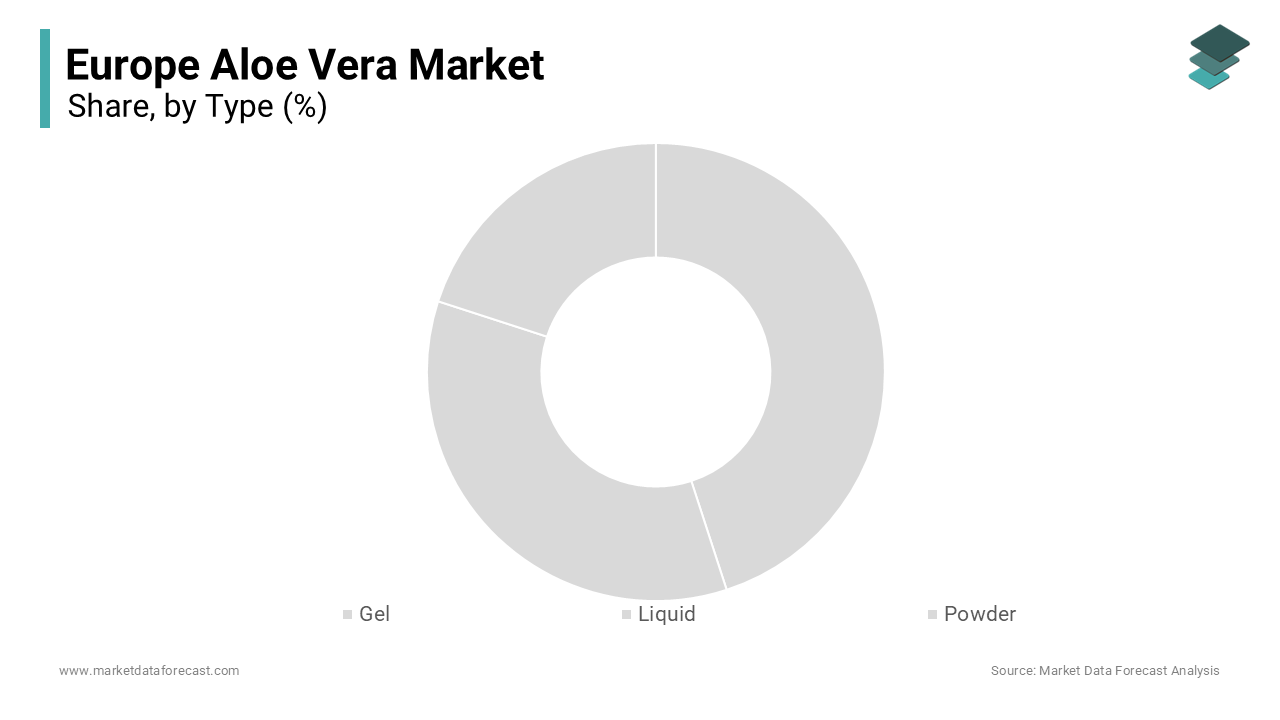
The aloe vera powder segment is predicted to witness the highest CAGR of 8.7% during the forecast period due to the superior shelf stability, ease of transportation, and formulation flexibility offered by dried aloe vera extracts in industrial applications. In additional, the rapid expansion of the powder segment is largely fueled by the significant advantages dried extracts offer in terms of storage longevity and shipping costs compared to liquid or gel formats. Aloe vera powder has a shelf life exceeding 24 months when stored properly, whereas liquid formulations often degrade within 12 months without heavy preservative systems according to stability testing data. This extended viability reduces waste for manufacturers and retailers, aligning with sustainability goals that are increasingly prioritized by European businesses. The reduced weight and volume of powder compared to water heavy gel solutions lower freight costs, making it an economically attractive option for brands sourcing ingredients globally. Multiple sources indicate that powder shipments face fewer regulatory hurdles regarding liquid restrictions on transport, streamlining the import process into European ports. Formulators appreciate the ability to hydrate powder to specific concentrations, allowing for precise control over active ingredient levels in final products. This operational efficiency and cost effectiveness drive adoption across food, pharmaceutical, and cosmetic sectors where margin optimization is critical. The logistical benefits ensure that the powder segment grows faster than traditional liquid forms as supply chains seek resilience and efficiency. In addition, this segment is supported by the high growth rate of the powder segment is the increasing incorporation of aloe vera into dry mix applications such as instant beverages, dietary supplements, and nutraceutical capsules. Powdered aloe vera integrates seamlessly into tablet compression and capsule filling processes without the moisture issues associated with liquid extracts, enabling diverse product formats. The European dietary supplement market values ingredients that offer high potency in small volumes, and freeze dried aloe vera powder provides concentrated polysaccharides suitable for wellness products. Research shows that demand for powdered botanical ingredients in the sports nutrition sector grew annually, reflecting a shift toward convenient functional formats according to nutrition industry surveys. Manufacturers can easily blend aloe vera powder with vitamins, minerals, and other herbal extracts to create comprehensive health formulations that appeal to health conscious consumers. The ability to claim high concentration levels on labels enhances marketing appeal for premium supplement brands targeting specific health outcomes like digestion or immunity. This versatility in application across dry consumer goods ensures that the powder segment captures significant growth as innovation expands beyond topical uses into ingestible wellness categories.
By Nature Insights
The conventional aloe vera segment led the Europe aloe vera market and captured a substantial share in 2025. This leading position of segment is supported by lower production costs, wider availability, and established usage in mass market personal care and household products across the continent. The foremost driver for conventional dominance is the significant price advantage it holds over organic certified alternatives, making it the preferred choice for high volume mass market manufacturers. Conventional aloe vera cultivation utilizes standard agricultural practices that yield higher volumes per hectare compared to organic farming which restricts synthetic inputs and requires more labor intensive management. Retail pricing data indicates that conventional aloe vera products are typically cheaper than organic equivalents, enabling broader consumer access across diverse income groups. Major supermarket chains and discount retailers prioritize conventional ingredients for their private label skincare and cleaning products to maintain competitive shelf prices. The extensive supply network for conventional aloe vera ensures consistent availability even during seasonal fluctuations, reducing supply chain risks for large scale producers. Consumer behavior studies show that while interest in organic is growing, price remains the primary purchase driver for a notable share of shoppers in the personal care category. This economic reality ensures that conventional aloe vera remains the backbone of the industry, supplying the vast majority of raw material for everyday consumer goods throughout Europe. Also, this segment is boosted by the well-defined regulatory framework governing conventional agricultural inputs which simplifies compliance for manufacturers compared to evolving organic certification standards. Conventional aloe vera producers adhere to established maximum residue limits for pesticides set by the European Union, providing a clear pathway for market entry without the additional bureaucracy of organic certification bodies. Manufacturers benefit from standardized testing protocols for conventional extracts that are widely accepted by regulatory authorities for cosmetic and pharmaceutical notifications. The familiarity of quality control laboratories with conventional residue profiles speeds up batch release times and reduces administrative burdens for product launches. This regulatory certainty encourages manufacturers to stick with conventional sourcing for core product lines where organic certification does not provide sufficient margin uplift to justify the switch. The stability of the conventional compliance environment ensures it remains the dominant nature segment by offering reliability and ease of operation for European formulators.
The organic aloe vera segment is estimated to register the fastest CAGR of 9.9% from 2026 to 2034 owing to intensifying consumer demand for clean label products, regulatory support for sustainable agriculture, and premiumization trends in the European beauty and wellness sectors. The swift expansion of the organic segment is largely fueled by the growing European consumer preference for products free from synthetic pesticides, fertilizers, and genetically modified organisms. The perception that organic aloe vera is safer and more potent resonates strongly with parents purchasing baby care items and individuals with sensitive skin conditions. Retailers are responding by dedicating more shelf space to organic ranges, with some chains committing to doubling their organic personal care assortments by 2027 according to sources. The willingness of consumers to pay a premium for organic certified items provides strong economic incentives for brands to switch sourcing. This shift in purchasing behavior creates a virtuous cycle where increased demand encourages more farmers to adopt organic practices, gradually expanding supply capacity. The cultural shift toward transparency and natural living ensures that the organic segment outpaces conventional growth rates as it captures value from health conscious demographics. A major factor that aids this segment is the supportive regulatory environment in the European Union that promotes sustainable agriculture and rewards certified organic production. Certification bodies like Ecocert and COSMOS provide recognized standards that enable brands to communicate sustainability credentials effectively to consumers. Financial incentives and subsidies for organic farmers in partner countries help stabilize supply and reduce the cost gap between conventional and organic aloe vera over time. The alignment between government policy, certification infrastructure, and consumer values creates a robust growth engine for organic aloe vera. This systemic support ensures that the organic segment maintains its status as the fastest growing nature category in the European market
By Application Insights
The Cosmetics and Personal Care application segment was the largest segment in the Europe aloe vera market and occupied a 63.2% share in 2025. High adoption of aloe vera in skincare, haircare, and sun care products drives this segment’s prominence. Its soothing and moisturizing properties are highly valued in these applications. Besides, the main driver for cosmetics dominance is the indispensable role aloe vera plays in soothing and hydrating formulations which are staples of European personal care routines. Aloe vera is a key ingredient in after sun lotions, moisturizers, and face masks, with research showing that a portion of facial skincare products launched in Europe contain aloe vera extract according to new product launch databases. The European climate varies from Mediterranean sun to Northern cold, creating year round demand for products that repair skin barrier function and provide hydration. Major beauty brands leverage the marketing appeal of aloe vera to communicate natural efficacy, driving high volume sales in both mass and prestige segments. The versatility of aloe vera allows it to function as a humectant, emollient, and active ingredient simultaneously, simplifying formulation complexity for chemists. Retail sales of aloe based skincare products reached a significant level annually, reflecting the massive scale of this application category according to market valuation reports. The entrenched position of aloe vera in daily beauty regimens ensures that the cosmetics segment remains the volumetric leader, consuming the majority of available raw material across the region. One more point that adds strength is the broad adoption of aloe vera in hair care and body wash products where it provides conditioning benefits and scalp soothing properties. Shampoos and conditioners formulated with aloe vera appeal to consumers seeking relief from dryness and irritation, expanding the ingredient's reach beyond facial skincare. The compatibility of aloe vera with surfactants allows it to be included in cleansing products without compromising foam stability or skin feel. Manufacturers utilize aloe vera to differentiate products in a crowded market by highlighting natural hydration claims that resonate with eco conscious shoppers. The high frequency of purchase for body wash and hair care items ensures consistent demand streams that stabilize market volume for aloe vera suppliers. This widespread integration across multiple personal care sub categories solidifies the cosmetics segment as the dominant application area for aloe vera in Europe.
The Pharmaceuticals and Dietary segment is anticipated to witness the fastest CAGR of 7.9% between 2026 and 2034. Key drivers behind this accelerated growth include strengthening clinical trials for aloe vera, regulatory approval milestones, and the rising popularity of wellness-focused ingestibles. The rapid expansion of the pharmaceutical segment is largely fueled by growing scientific evidence supporting aloe vera efficacy in wound healing, digestive health, and dermatological treatments which encourages medical professional recommendations. Clinical trials published in European journals have demonstrated significant improvements in burn recovery times and gastric comfort using standardized aloe vera preparations according to medical research publications. Regulatory bodies have granted medical device certifications for aloe vera based wound dressings, opening reimbursement pathways and hospital procurement channels that were previously inaccessible. The European medical device landscape for natural wound care solutions is expanding, with aloe vera featured in a portion of new hydrogel dressing launches according to healthcare product registries. This clinical endorsement shifts aloe vera from a cosmetic ingredient to a therapeutic agent, commanding higher price points and stricter quality standards. Hospitals and clinics increasingly stock aloe vera products for patient care, driving institutional demand that grows independently of consumer retail trends. The transition toward evidence based usage ensures that the pharmaceutical segment captures high value growth as healthcare systems integrate botanical solutions into standard care protocols. Added support for this segment comes from the surging consumer interest in digestive wellness and immune support supplements featuring aloe vera juice and capsules. Consumers are increasingly proactive about health management, purchasing supplements preventatively rather than just for treatment, which expands the total addressable market for ingestible aloe vera. Manufacturers are launching ready to drink shots and powder sachets that make daily consumption convenient for busy lifestyles. Regulatory clarity on novel food ingredients allows more companies to launch compliant supplement products without fear of enforcement actions. This shift toward internal wellness ensures that the pharmaceutical and supplement segment grows faster than topical applications as health priorities evolve among European populations.
REGIONAL ANALYISIS
Germany Aloe Vera Market Analysis
Germany dominated the Europe aloe vera market and accounted for a 23.7% share in 2025. The dominance of the German market is driven by its massive cosmetics industry and high health consciousness. The country's position is also strengthened by its status as the largest economy in the European Union and a global leader in natural personal care manufacturing. Germany hosts numerous organic certification bodies and natural cosmetic brands that prioritize botanical ingredients like aloe vera for their product lines according to multiple studies. A key driving factor is the strong consumer preference for certified natural products, with the Natrue and BDIH standards influencing purchasing decisions across the population. The pharmaceutical sector in Germany also contributes significantly, utilizing aloe vera in wound care and dermatological preparations supported by robust healthcare infrastructure. Retail data indicates that drugstores and pharmacies in Germany stock a wider variety of aloe vera products than any other European nation, reflecting deep market penetration. The presence of major chemical and ingredient suppliers facilitates local processing and formulation, reducing reliance on finished imports. Continuous investment in research and development by German universities and private firms ensures innovation in aloe vera applications. This combination of industrial capacity, regulatory leadership, and consumer demand solidifies Germany's dominance in the regional aloe vera market.
United Kingdom Aloe Vera Market Analysis
The United Kingdom was the second largest country in the European aloe vera market and captured a 18.9% share in 2025. This growth of the UK market is propelled by its vibrant retail sector and strong wellness culture. The UK market status is defined by high adoption of natural beauty products and a robust dietary supplement industry that utilizes aloe vera extensively. A primary driver is the influence of major supermarket chains and beauty retailers who drive trends through private label innovations and prominent shelf placement of aloe based items. British consumers are highly responsive to health trends, with sales of digestive wellness supplements featuring aloe vera growing rapidly in recent years according to sources. The presence of leading global personal care companies with European headquarters in the UK facilitates rapid product launches and marketing campaigns. Furthermore, the country's strong regulatory framework post Brexit maintains high safety standards that encourage consumer trust in botanical ingredients. The rise of online retailing in the UK has expanded access to niche aloe vera brands, increasing overall market volume. The convergence of retail power, health awareness, and digital commerce creates a resilient and growing market for aloe vera in the United Kingdom.
France Aloe Vera Market Analysis
France holds a significant position in the European aloe vera market due to its world renowned cosmetics industry and emphasis on dermocosmetics. The French market is known for a strong preference for high quality skincare products where aloe vera is valued for its soothing properties in sensitive skin formulations. France is home to major global beauty conglomerates that incorporate aloe vera into premium anti aging and hydration lines, driving significant volume demand according to studies. A key driving factor is the cultural importance of pharmacy sold skincare, where aloe vera gels and creams are recommended by pharmacists for various skin conditions. The organic beauty sector in France is highly developed, with strict labeling standards that promote the use of certified organic aloe vera. Government support for the bio economy encourages sustainable sourcing practices among French manufacturers. Tourism also plays a role, with visitors purchasing French aloe vera products as souvenirs, boosting retail sales. The combination of luxury branding, medical endorsement, and regulatory support positions France as a critical high value market for aloe vera in Europe.
Italy Aloe Vera Market Analysis
Italy is also a major part of the Europe aloe vera market by leveraging its strong tradition in natural beauty and lifestyle products that incorporate botanical ingredients. The Italian market status reveals a deep appreciation for natural remedies and a robust manufacturing base for personal care and household products. A key driver is the popularity of Mediterranean diet and wellness principles which emphasize natural plant based inputs for health and beauty. Italian consumers frequently purchase aloe vera based sun care products due to the climate, creating seasonal demand spikes that contribute significantly to annual volume. The country hosts many small to medium sized enterprises that specialize in artisanal cosmetics using aloe vera, adding diversity to the market supply. Export oriented manufacturing means that aloe vera imported into Italy is often processed into finished goods for re-export, amplifying its market significance. Regulatory alignment with EU standards ensures smooth trade flows for raw materials. The integration of aloe vera into both beauty and home care categories ensures broad based consumption. This cultural and industrial integration sustains Italy's position as a key growth market for aloe vera in Southern Europe.
Spain Aloe Vera Market Analysis
Spain is likely to grow notably in the Europe aloe vera market during the forecast period. The country is benefiting from increased local cultivation, high tourism, and a rising demand for natural products. In addition, the Spanish market is evolving from purely import dependent to one that increasingly values local sourcing, although imports still dominate current supply chains. Spain is a major producer of aloe vera within Europe, particularly in the Canary Islands, which reduces logistics costs for domestic manufacturers according to research. A major driving factor is the tourism industry, where millions of visitors purchase aloe vera based sun care and after sun products during their stay, driving retail volume in coastal regions. The local population also exhibits high usage of aloe vera for skin care due to the sunny climate, creating consistent domestic demand. Government initiatives promoting agricultural diversification support aloe vera farming, enhancing supply security. The presence of large cosmetic manufacturing facilities in Catalonia and Andalusia facilitates local processing and formulation. The combination of local production, tourism driven sales, and cultural usage habits positions Spain as a dynamic and important market for aloe vera in the European region.
COMPETITIVE LANDSCAPE
The Europe aloe vera market features a competitive landscape characterized by global ingredient suppliers regional processors and specialized brands competing across diverse product categories and distribution channels. Market dynamics reflect a balance between large multinational corporations offering comprehensive aloe vera portfolios and specialized regional players providing artisanal products with authentic provenance and traditional processing methods. Competition intensifies in premium segments where organic certification sustainability credentials and traceability capabilities create significant differentiation opportunities. European consumers prioritize natural ingredients ethical sourcing and scientific validation over price alone which encourages suppliers to invest in transparent supply chains and responsible agricultural practices. Innovation in stabilized extracts specialized fractions and convenient formats increasingly influences competitive positioning as health conscious consumers seek versatile aloe vera options for skincare wellness and therapeutic applications. The market also sees strategic collaborations between aloe vera suppliers cosmetic manufacturers and healthcare companies to co create products that meet emerging regulatory requirements and consumer expectations. This competitive environment drives continuous improvement in product quality sustainability performance and supply chain transparency as companies strive to secure partnerships with leading brands and retail chains across the region while navigating evolving consumer preferences and environmental challenges.
KEY MARKET PLAYERS
Some of the companies that are playing a dominating role in the Europe aloe vera market include
- Aloecorp Inc.
- Terry Laboratories Inc.
- Foodchem International Corporation
- HAWLIK BIOIMPORT GMBH
- Forever Living Products (UK) Ltd.
- Aloe Laboratories, Inc.
- Aloe Farms, Inc.
- AMB Wellness
- Amazonas Naturprodukte GmbH
- Jacques Andhrel
Top Players in the Europe Aloe Vera Market
Forever Living Products
Forever Living Products operates as a leading global aloe vera company with extensive European distribution networks that supply finished personal care and wellness products to consumers across the continent. The organization cultivates its own aloe vera plants and controls the entire production process from field to finished goods ensuring quality consistency. Forever Living has strengthened its European position through investments in local warehousing and digital marketing initiatives that engage health conscious consumers. Recent actions include expanding its certified organic aloe vera product portfolio and launching sustainability programs that promote responsible farming practices. The company actively collaborates with European retailers to enhance product visibility and promote consumer education about aloe vera benefits.
Terry Laboratories
Terry Laboratories functions as a premier supplier of aloe vera ingredients with significant European operations focused on providing high quality extracts to cosmetic and pharmaceutical manufacturers. The organization leverages advanced stabilization technologies to deliver consistent aloe vera powders and liquids that meet stringent European regulatory standards. Terry Laboratories has reinforced its market position through research partnerships with European universities and investments in analytical testing capabilities. Recent strategic initiatives include developing novel aloe vera fractions for specialized medical applications and enhancing traceability systems that verify ingredient origin. The company emphasizes technical support services that help customers optimize aloe vera formulations for diverse product categories across European markets.
Quake International
Quake International serves as a major global aloe vera processor with dedicated European supply chains supporting food beverage and personal care manufacturers throughout the region. The company provides customized aloe vera solutions including inner leaf fillets concentrates and powders that meet specific technical requirements for industrial applications. Quake International has strengthened its European presence through investments in quality certification programs and sustainable sourcing initiatives that align with regional environmental expectations. Recent actions include launching blockchain based traceability platforms that enable customers to verify aloe vera authenticity and developing stabilized formulations with extended shelf life. The organization prioritizes long term grower partnerships and responsible agricultural practices that ensure consistent raw material availability for European customers.
Top Strategies Used by Key Market Participants
Key players in the Europe aloe vera market employ strategic approaches centered on sustainable sourcing product innovation and regulatory compliance to strengthen competitive positioning. Companies prioritize investments in organic certification and traceability technologies that align with European consumer values and environmental regulations for botanical ingredients. Strategic partnerships with growers and research institutions enable firms to secure consistent raw material supplies while promoting quality standards and scientific validation across production networks. Manufacturers increasingly focus on value added product development including stabilized extracts specialized fractions and convenient formats that address evolving consumer preferences for efficacy and convenience. Quality certification pursuits such as organic ISO and cosmetic standards help suppliers access premium market segments and build trust with discerning customers. Digital transformation initiatives including e commerce platforms and supply chain transparency tools enhance customer engagement and operational efficiency. Capacity expansion through facility upgrades and process optimization ensures reliable supply while maintaining cost competitiveness in a dynamic market environment.
MARKET SEGMENTATION
This research report on the Europe Aloe Vera Market has been segmented and sub-segmented based on the following categories.
By Type
- Gel
- Liquid
- Powder
By Nature
- Conventional
- Organic
By Application
- Cosmetics
- Food
- Pharma
- Others
By Country
- UK
- France
- Spain
- Germany
- Italy
- Russia
- Sweden
- Denmark
- Switzerland
- Netherlands
- Turkey
- Czech Republic
- Rest of Europe