- Product Description Description
- Table of Contents TOC
- List of Table & Figure LOT
- Get Free Sample PDF Sample PDF
Market Size, 2025
$6.53 BnMarket Estimate, 2026
$7.1 BnMarket Forecast, 2034
$13.88 BnCAGR, 2026–2034
8.74%Europe Amino Acid Market Size, Growth, Trends & Forecast (2026–2034)
The Europe amino acid market size was calculated to be USD 6.53 billion in 2025, is anticipated to reach a valuation of USD 7.10 billion in 2026, and is projected to scale up to USD 13.88 billion by 2034, registering a compound annual growth rate (CAGR) of 8.74% during the forecast period from 2026 to 2034. Driven by environmental regulations requiring precision livestock feeding, aging demographics boosting clinical nutrition, and rising demand for sustainable plant-based and fermentation-derived solutions, the European market continues to witness strong expansion.
Key Executive Metrics (At-a-Glance)
- 2025 Base Valuation: USD 6.53 Billion
- 2026 Current Valuation: USD 7.10 Billion
- 2034 Forecast Valuation: USD 13.88 Billion
- Compound Annual Growth Rate (CAGR): 8.74% (2026–2034)
- Dominant Product Segment: Essential Amino Acids (occupied a substantial share in 2025 due to irreplaceable biological roles and compliance with EU ammonia reduction targets)
- Fastest-Growing Product Segment: Non-Essential Amino Acids (projected to witness a CAGR of 7.9% from 2026 to 2034, driven by therapeutic, clinical, and functional applications)
- Dominant Source Segment: Fermentation (held the majority share in 2025, supported by circular bioeconomy goals and high-yield stereospecific microbial production)
- Fastest-Growing Source Segment: Plant-Based Amino Acid Extraction (expected to exhibit a CAGR of 9.3% from 2026 to 2034, fueled by clean-label and organic supplement trends)
- Dominant Grade Segment: Feed Grade (led the market with a 58.3% share in 2025, driven by EU mandates for low-protein livestock diets)
- Fastest-Growing Grade Segment: Food Grade (predicted to record the highest CAGR of 8.6% during the forecast period due to surging clinical and sports nutrition demand)
- Dominant Region: Germany (outperformed peers in 2025, capturing a 25.3% regional market share supported by massive livestock production and a strong specialty chemical hub)
Core Market Drivers
- Implementation of Precision Feeding: Strict EU emission directives pushing livestock producers toward low-protein diets supplemented with synthetic amino acids.
- Growth in Medical and Clinical Nutrition: Aging regional demographics intensifying the focus on preventive health and age-related muscle maintenance.
Primary Market Restraints & Challenges
- Stringent Regulatory Hurdles: Long review and approval timelines for novel/non-traditional amino acids and therapeutic compounds under EU frameworks.
- Cost Volatility and Competition: High energy and raw material sensitivity for fermentation producers compounded by competition from alternative whole-food proteins.
Europe Amino Acid Market Segmentation Breakdown
| Segment Category | Largest Segment | Fastest-Growing Segment |
|---|---|---|
| By Product | Essential Amino Acids (Substantial Share in 2025) | Non-Essential Amino Acids (7.9% CAGR) |
| By Source | Fermentation (Majority Share in 2025) | Plant-Based Extraction (9.3% CAGR) |
| By Grade | Feed Grade (58.3% Share in 2025) | Food Grade (8.6% CAGR) |
Major Industry Players Profiled
Key enterprises shaping the Europe amino acid market include Evonik Industries AG, Ajinomoto Co., Inc., Archer Daniels Midland Company (ADM), CJ CheilJedang Corporation, Kyowa Hakko Bio Co., Ltd., Fufeng Group Company Limited, Meihua Holdings Group Co., Ltd., Adisseo France S.A.S., Glanbia Nutritionals, and Merck KGaA.
Europe Amino Acid Market Size
The Europe amino acid market size was calculated to be USD 6.53 billion in 2025 and is anticipated to be worth USD 13.88 billion by 2034, from USD 7.1 billion in 2026, growing at a CAGR of 8.74% during the forecast period.
Amino acids are organic compounds containing an amino group and a carboxyl group, serving as the building blocks of proteins, and having diverse applications in animal feed, food, pharmaceuticals, and nutraceuticals. The market includes both proteinogenic amino acids, such as lysine, methionine, threonine, and tryptophan, and non-proteinogenic variants like glutamine and carnitine, sourced through microbial fermentation, chemical synthesis, or extraction. According to the European Commission, feed-grade amino acids used in the EU must comply with the Feed Additives Regulation (EC) No 1831/2003, ensuring traceability and environmental safety. As per studies, a share of EU livestock farms now formulate diets using precision amino acid balancing to reduce crude protein content and lower nitrogen excretion. Apart from these, the Farm to Fork (F2F) Strategy is part of the European Green Deal, which includes a target to cut nutrient losses (specifically nitrogen and phosphorus) by at least 50% by 2030, with a goal of achieving a 25% reduction in the overall use of fertilizers. Beyond agriculture, rising demand for medical foods and sports nutrition, driven by aging demographics and health consciousness, further diversifies the market’s application base, which positions amino acids at the intersection of sustainability, health, and regulatory science in Europe.
MARKET DRIVERS
Implementation of Precision Feeding to Reduce Environmental Impact
The widespread adoption of precision feeding in livestock production accelerates the growth of the Europe amino acids market. It is a practice mandated by environmental regulations aimed at curbing nitrogen pollution. The European Union’s National Emission Ceilings Directive requires member states to reduce ammonia emissions from agriculture by 19 percent by 2030 compared to 2005 levels, a target that has pushed farmers toward low-protein diets supplemented with synthetic amino acids. According to recent European Environment Agency (EEA) assessments, the agriculture sector is responsible for approximately 93% of total ammonia emissions in the EU, with livestock farming (manure management, housing, grazing) being the primary source within agriculture (over 70%), while mineral fertilizers contribute about 20%. These policy levers transform amino acids from nutritional additives into essential tools for regulatory compliance and environmental stewardship across European agriculture.
Growth in Medical and Clinical Nutrition for Aging Populations
The region’s aging demographic is a powerful driver for the Europe amino acids market. It surges demand in clinical and therapeutic nutrition, where specific amino acids support muscle maintenance, immune function, and metabolic health in vulnerable populations. According to research, a share of the EU population was aged 60 or older in 2025, with projections indicating this will rise by 2035. This shift intensifies the prevalence of age-related conditions such as sarcopenia, which affects a portion of community-dwelling adults over 70. Furthermore, the EU’s Joint Action on Malnutrition in Older People has integrated amino acid fortified foods into national care protocols. Healthcare systems are shifting their focus to preventive and personalized nutrition, which leads to amino acids being recognized as active elements within clinical care pathways rather than just supplements.
MARKET RESTRAINTS
Stringent Regulatory Hurdles for Novel and Non-Traditional Amino Acids
Rigorous and time-consuming approval processes under the Novel Food and Feed Additives regulations continue to restrain the growth of the Europe amino acids market. While traditional proteinogenic amino acids like lysine and methionine are well established, emerging variants, such as D amino acids or modified side chain derivatives for pharmaceutical use, must undergo full safety dossiers including toxicological, metabolic, and environmental impact assessments. According to research, the average approval timeline for a new feed amino acid exceeds several months, deterring innovation among smaller biotech firms. Apart from these, the European Medicines Agency classifies certain amino acid-based therapeutics as advanced therapy medicinal products if derived from recombinant sources, which triggers even more complex regulatory pathways. National divergences further complicate matters. For instance, while France permits certain amino acid blends in sports supplements, Germany restricts the same formulations under its Medicinal Products Act. As per sources, many startups developing next-generation amino acids cite regulatory uncertainty as their primary barrier to commercialization. The market's ability to foster therapeutic and functional innovation will remain inhibited until faster, more consistent review and approval mechanisms are put in place.
Volatility in Raw Material and Energy Costs for Fermentation-Based Production
High sensitivity towards fluctuations in raw material and energy prices, particularly for fermentation-derived products that dominate the supply of lysine, threonine, and tryptophan, slows down the expansion of the Europe amino acids market. Most European producers rely on glucose from wheat or corn starch as the primary carbon source, with prices heavily influenced by agricultural commodity markets and biofuel policies. Moreover, natural gas, the main energy input for sterilization and downstream processing, spiked during the 2022 energy crisis, which increases production costs. The use of inexpensive coal energy in Asia gives its manufacturers a significant edge over European producers, who are burdened by the added expense of strict carbon regulations. These economic pressures constrain pricing flexibility and investment in capacity expansion, which makes the European amino acid supply chain susceptible to global agro energy shocks and undermines long-term competitiveness.
MARKET OPPORTUNITIES
Expansion of Amino Acids in Sustainable Aquaculture Feeds
Precision amino acid supplementation, by enabling the replacement of fishmeal with plant-based proteins while maintaining fish health and growth performance, provides fresh opportunities for the growth of the Europe amino acids market. The European Union produced significant metric tons of farmed fish, with species like sea bass and trout requiring balanced essential amino acid profiles that plant proteins alone cannot provide. Methionine and lysine are critical for compensating deficiencies in soy and pea protein concentrates, which constitute many aquafeed formulations. Regulatory support further accelerates adoption. Apart from these, consumer demand for eco-labeled seafood, such as ASC-certified products, mandates transparent feed composition, driving formulators toward scientifically balanced amino acid inclusion.
Integration of Amino Acids in Personalized Sports and Active Nutrition
The convergence of genomics, digital health, and regulatory innovation is making way for specialized amino acid formulations in the region’s sports and active nutrition sector, which generates fresh prospects for the expansion of the Europe amino acids market. Consumers are increasingly seeking personalized protein solutions based on training intensity, recovery needs, and metabolic profiles. The European Food Safety Authority has issued positive opinions on health claims linking leucine intake to maintenance of muscle mass during aging and intense exercise, providing legal grounds for targeted marketing. Startups are leveraging at-home DNA testing to recommend custom amino acid blends, while fitness apps integrate real-time recovery analytics to suggest supplementation timing. The EU’s upcoming Nutrition and Health Claims Regulation review is expected to streamline substantiation pathways for condition-specific amino acid benefits. This fusion of science, technology, and consumer empowerment positions amino acids at the forefront of Europe’s next-generation wellness economy.
MARKET CHALLENGES
Competition from Alternative Protein Sources and Whole Food Positioning
Growing consumer skepticism toward isolated nutrients in favour of whole food or minimally processed protein sources inhibits the growth of the Europe amino acids market. According to studies, 63 percent of EU citizens express a preference for “natural protein from food” over “added amino acids or isolates,” reflecting broader clean label sentiments. This perception is particularly strong in Southern Europe, where traditional diets emphasize legumes, dairy, and eggs as primary protein sources. Even in animal nutrition, some organic farming associations oppose synthetic amino acids and advocate instead for diverse crop rotations and forage-based feeding. This cultural and perceptual resistance limits market penetration in mainstream food and supplement categories, which forces manufacturers to invest heavily in consumer education and transparent sourcing narratives. The use of amino acids will remain niche, specifically in clinical, sports, and industrial applications, until they are successfully reframed as precision instruments, a necessity that currently overrides any negative public perception.
Fragmented Sustainability Metrics and Greenwashing Risks
A lack of standardized environmental assessment frameworks also constrains the expansion of the Europe amino acids market. This absence is leading to inconsistent sustainability claims and consumer confusion. A uniform method for assessing the carbon or water impact of fermentation-produced amino acids does not exist across diverse feedstocks and manufacturing locations, notwithstanding the EU's push for circular bioeconomy principles. Many distinct eco-labeling schemes operate in the feed and food sectors, each using different system boundaries and allocation methods. This fragmentation enables misleading claims. Life cycle assessments often overlook critical factors such as land use change for wheat or water stress in glucose production regions like Northern France. The absence of a mandatory EU-wide protein sustainability score, despite proposals under the Green Claims Directive, affects credible differentiation. As a result, responsible producers struggle to communicate genuine environmental advantages, while less scrupulous actors exploit the ambiguity. This regulatory gap not only distorts competition but also impedes the market’s ability to reward truly sustainable amino acid innovation, posing a systemic challenge to the sector’s green transition.
REPORT COVERAGE
| REPORT METRIC | DETAILS |
| Market Size Available | 2025 to 2034 |
| Base Year | 2025 |
| Forecast Period | 2026 to 2034 |
| CAGR | 8.74% |
| Segments Covered | By Type, Source, Grade, End Use, and Region |
| Various Analyses Covered | Global, Regional & Country Level Analysis; Segment-Level Analysis; DROC, PESTLE Analysis; Porter’s Five Forces Analysis; Competitive Landscape; Analyst Overview of Investment Opportunities |
| Regions Covered | UK, France, Spain, Germany, Italy, Russia, Sweden, Denmark, Switzerland, Netherlands, Turkey, and the Czech Republic |
| Market Leaders Profiled | Ajinomoto Co., Inc., Evonik Industries AG, Archer Daniels Midland Company (ADM), CJ CheilJedang Corporation, Kyowa Hakko Bio Co., Ltd., Fufeng Group Company Limited, Meihua Holdings Group Co., Ltd., Sichuan Tongsheng Amino Acid Co., Ltd., Shijiazhuang Donghua Jinlong Chemical Co., Ltd., Adisseo France S.A.S., Glanbia Nutritionals, Sumitomo Chemical Co., Ltd., Merck KGaA, Prinova Group LLC, Daesang Corporation, Global Bio-chem Technology Group Company Limited, Sunrise Nutrachem Group Co., LTD. |
SEGMENTAL ANALYSIS
By Product Insights
The essential amino acids segment was the prominent segment and occupied a substantial share of the Europe amino acids market in 2025. The prominence of the essential amino acids segment is largely because of their irreplaceable biological role, for these nine amino acids cannot be synthesized by humans or monogastric animals and must be supplied through diet. In animal nutrition, lysine, methionine, threonine, and tryptophan are critical for formulating low crude protein feeds that comply with the EU’s ammonia reduction targets under the National Emission Ceilings Directive. According to sources, precision feeding with essential amino acids reduces nitrogen excretion in pig and poultry operations. In human health, leucine, isoleucine, and valine, collectively branched-chain amino acids, are central to sports nutrition and clinical muscle preservation protocols. Regulatory frameworks further entrench their use. This combination of physiological necessity, environmental policy, and regulatory endorsement ensures essential amino acids remain the cornerstone of the European market.
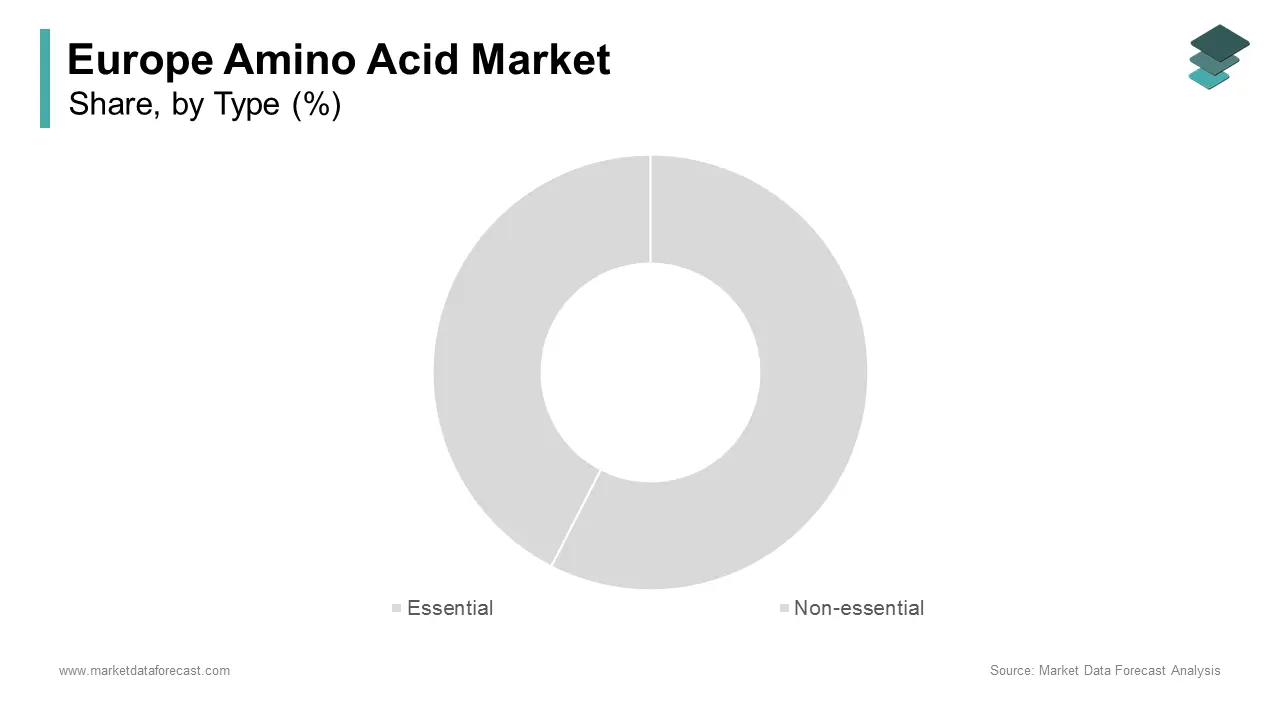
The non-essential amino acids segment is on the rise and is expected to be the fastest-growing segment in the regional market by witnessing a CAGR of 7.9 percent from 2026 to 2034 due to expanding therapeutic and functional applications beyond basic nutrition. Glutamine, for instance, is increasingly used in clinical settings to support gut integrity and immune function in oncology and post-surgical patients. Arginine is gaining traction in cardiovascular health formulations due to its role in nitric oxide synthesis, with EFSA issuing a positive opinion (resulting in an authorized claim) linking a specific food component (cocoa flavanols, and also Fruitflow) to the physiological effect of contributing to normal or healthy blood flow. In animal health, glycine and proline are being explored as alternatives to antibiotic growth promoters in weaning piglets, aligning with the EU’s 2022 ban on routine antimicrobials in farming. Apart from these, the rise of personalized nutrition has elevated interest in conditionally essential amino acids like cysteine and tyrosine for stress resilience and cognitive support. The deepening of scientific understanding and the regulatory approval of health claims are causing a transition in the perception of non-essential amino acids, from metabolic byproducts to valuable, targeted bioactive ingredients.
By Source Insights
In 2025, the fermentation segment held the majority share of the Europe amino acids market. Its alignment with sustainability, purity, and scalability requirements across feed, food, and pharmaceutical applications drives the growth of the fermentation segment. Microbial fermentation, primarily using Corynebacterium glutamicum, enables high-yield, stereospecific production of L lysine, L threonine, and L tryptophan without racemic mixtures, which ensures biological efficacy. The process uses renewable feedstocks like wheat or corn glucose, supporting circular bioeconomy goals under the EU Green Deal. Regulatory acceptance is also robust. Major producers operate GMP-certified fermentation facilities in the EU, which supply both animal and human-grade materials. This convergence of environmental performance, regulatory clarity, and industrial maturity solidifies fermentation as the backbone of Europe’s amino acid supply chain.
The plant-based amino acid extraction segment is expected to exhibit a noteworthy CAGR of 9.3 percent from 2026 to 2034, owing to consumer demand for natural and non-fermented ingredients in dietary supplements and clean-label foods. Unlike fermentation, which involves microbial transformation, plant-based amino acids are isolated directly from protein-rich crops like peas, soy, and fava beans through enzymatic hydrolysis, appealing to consumers wary of biotech processes. Companies are commercializing pea protein hydrolysates rich in branched-chain amino acids for sports nutrition, with neutral taste and allergen-free profiles. The EU’s Organic Regulation (EU) 2018/848 permits plant-derived amino acids in certified organic supplements, opening premium market access. Besides, life cycle assessments show that plant extraction can have lower energy demand than fermentation when using locally sourced legumes. The escalating focus on simple, transparent labelling means that plant-based sourcing naturally provides an attractive tale of origin and minimal processing, leading to innovation in sustainable ingredient strategies.
By Grade Insights
The feed grade amino acids segment led the Europe amino acids market and accounted for 58.3% share in 2025. The growth of the feed-grade amino acids segment is attributed to EU environmental policy mandating precision livestock feeding to reduce nitrogen pollution. The Farm to Fork Strategy’s target to cut ammonia emissions by 50 percent by 2030 has made synthetic amino acids indispensable in formulating low-protein diets for pigs and poultry. Many compound feed mills in the EU now use lysine and methionine to balance plant-based rations, which reduces crude protein content. National regulations reinforce this trend. The economic incentive is equally strong. Feed accounts for a share of livestock production costs, and amino acid supplementation improves feed conversion ratios.
The food-grade amino acids segment is predicted to witness the highest CAGR of 8.6% during the forecast period. The rapid expansion of the food-grade amino acids segment is propelled by rising demand in clinical nutrition, sports supplements, and functional foods targeting aging and active populations. Leucine fortified beverages for muscle maintenance, glutamine-enriched recovery powders, and taurine-enhanced energy drinks are gaining mainstream traction. In clinical settings, hospitals include amino acid-based oral nutritional supplements in standard geriatric care protocols. Apart from these, the clean label movement is driving the replacement of artificial flavor enhancers with natural umami sources like glutamic acid from fermented vegetables. This convergence of health science, regulatory support, and consumer wellness trends positions food-grade amino acids as the most dynamic growth vector.
REGIONAL ANALYSIS
Germany Amino Acids Market Analysis
Germany outperformed other countries in the Europe amino acids market in 2025 and captured a 25.3% share of the regional market. Its position as Europe’s largest livestock producer and a hub for specialty chemical manufacturing mainly drives the domination of the German market. Germany raises millions of pigs and broilers annually, which creates a massive demand for feed-grade lysine and methionine. Simultaneously, it hosts global amino acid producers like Evonik, which operates one of the world’s largest fermentation facilities for amino acids in Hanau. National environmental regulations amplify demand. In human nutrition, Germany’s strong supplement culture, supported by statutory health insurance coverage for medical foods, drives food-grade consumption. Germany stands as Europe's undisputed hub for the amino acid economy, supported by its strong agricultural, industrial, and regulatory frameworks.

France Amino Acids Market Analysis
France followed closely in the Europe amino acids market and accounted for 18.5% share in 2025. The growth of France in this market is fuelled by its large poultry and pig sectors, coupled with proactive environmental policies that incentivize precision feeding. France is the EU’s top poultry producer, with millions of birds slaughtered annually, necessitating consistent amino acid supplementation. Public research institutions have demonstrated that amino acid-optimized diets reduce nitrogen excretion in broilers, supporting policy adoption. In human health, France’s robust clinical nutrition sector, backed by universal healthcare, fuels demand for medical foods containing glutamine and branched-chain amino acids. Apart from these, the French Agency for Food, Environmental, and Occupational Health and Safety maintains a transparent approval process for novel amino acid applications. These agricultural, scientific, and regulatory synergies ensure France’s sustained leadership in both feed and food grade segments.
United Kingdom Amino Acids Market Analysis
The United Kingdom is also a key player in the Europe amino acids market. Despite Brexit, the UK maintains a strong demand driven by its intensive livestock sector and advanced clinical nutrition services. The country produces millions of broilers and pigs annually, relying on imported and domestically blended amino acid premixes. The National Health Service integrates amino acid-based oral nutritional supplements into care pathways for elderly and oncology patients, following guidelines from the British Association for Parenteral and Enteral Nutrition. Consumer trends also support growth. The UK maintains its position as a vital growth driver within the European amino acid sector, largely due to its internationally recognized nutritional research and a prevalent culture of scientifically supported supplementation.
Netherlands Amino Acids Market Analysis
The Netherlands saw moderate growth in the Europe amino acids market due to its role as a logistics and innovation hub for feed additives and specialty ingredients. The Port of Rotterdam handles a share of EU amino acid imports, while Dutch companies are global leaders in fermentation technology and nutritional science. The Netherlands is also a pioneer in sustainable livestock farming. In human nutrition, the country hosts numerous contract manufacturers of clinical and sports supplements serving pan-European brands. The Netherlands, a powerhouse of agritech innovation and rigorous regulation, is Europe's primary gateway for the development and distribution of amino acids, driven by its export-oriented economy.
Spain Amino Acids Market Analysis
Spain is predicted to expand in the Europe amino acids market over the forecast period owing to a large and modern pig sector as well as growing poultry and aquaculture industries. Spanish feed mills have rapidly adopted low protein formulations with synthetic amino acids to comply with the EU’s Industrial Emissions Directive and national manure management rules. The rise of intensive aquaculture, particularly sea bass and gilthead seabream, has further expanded demand for methionine to balance plant-based aquafeeds. In human health, Spain’s aging population drives clinical nutrition consumption, while fitness culture fuels sports supplement sales. Government support through the National Recovery Plan includes funding for sustainable feed innovation, which supports amino acids as a tool for environmental and economic resilience in Southern Europe.
COMPETITION OVERVIEW
The Europe amino acids market features intense competition among global specialty chemical giants, Asian producers with cost advantages, and niche European biotech firms. Competition is defined less by price and more by sustainability credentials, regulatory compliance, supply chain reliability, and technical service capabilities. Global leaders like Evonik and Ajinomoto leverage integrated fermentation facilities within or near Europe to ensure data transparency, reduced carbon logistics, and rapid response to policy shifts such as ammonia emission caps. Asian manufacturers compete on scale but face scrutiny over environmental footprints and longer shipping routes. Meanwhile, smaller EU-based innovators focus on plant-extracted or conditionally essential amino acids for premium human nutrition segments. The market exhibits high barriers to entry due to capital intensity, stringent EFSA and feed additive regulations, and complex customer validation processes. However, the lack of harmonized sustainability metrics creates uneven playing fields. Overall, success favors companies that combine industrial scale with scientific rigor, environmental accountability, and deep engagement in Europe’s agricultural and health policy ecosystems.
KEY MARKET PLAYERS
A few major players of the Europe Amino Acids Market include
- Ajinomoto Co., Inc
- Evonik Industries AG
- Archer Daniels Midland Company (ADM)
- CJ CheilJedang Corporation
- Kyowa Hakko Bio Co., Ltd
- Fufeng Group Company Limited
- Meihua Holdings Group Co., Ltd
- Sichuan Tongsheng Amino Acid Co., Ltd
- Shijiazhuang Donghua Jinlong Chemical Co., Ltd
- Adisseo France S.A.S
- Glanbia Nutritionals
- Sumitomo Chemical Co., Ltd
- Merck KGaA
- Prinova Group LLC
- Daesang Corporation
- Global Bio-chem Technology Group Company Limited
- Sunrise Nutrachem Group Co., LTD
Top Strategies Used by the Key Market Participants
Key players in the Europe amino acids market pursue integrated strategies centered on sustainability, regulatory alignment, and application-specific innovation. They invest in carbon-neutral production technologies and renewable energy integration to meet EU Green Deal expectations and customer ESG mandates. Companies develop digital tools that enable feed formulators to calculate nitrogen emission reductions in real time, directly supporting compliance with ammonia reduction policies. Strategic expansion of European logistics and warehousing infrastructure enhances supply chain resilience and reduces delivery lead times. Active collaboration with research institutions and participation in EU policy dialogues reinforce scientific credibility and shape favorable regulatory frameworks. Additionally, firms differentiate through GMP-certified multi-grade production—serving feed, food, and pharmaceutical segments from the same facility—ensuring quality consistency and operational efficiency in a highly scrutinized market environment.
Leading Players in the Europe Amino Acids Market
Evonik Industries AG
Evonik Industries AG is a global leader in specialty chemicals with a commanding presence in the Europe amino acids market through its Animal Nutrition and Health Care divisions. The company produces a comprehensive portfolio of essential amino acids, including lysine, methionine, threonine, and tryptophan, via advanced fermentation at its integrated site in Hanau, Germany. Evonik has strengthened its position by launching sustainable product lines such as MetAMINO ZeroCarbon, a methionine variant produced with renewable energy and certified carbon neutral. The company actively collaborates with European research institutions on precision feeding trials and contributes to EU policy discussions on ammonia reduction. Its global supply chain and GMP-certified facilities enable seamless service to both feed and pharmaceutical customers across continents, which supports its role as a science-driven and sustainability-focused amino acid innovator.
Ajinomoto Co Inc
Ajinomoto Co Inc plays a pivotal role in the Europe amino acids market through its extensive range of feed and food-grade amino acids, leveraging decades of fermentation expertise. The company supplies lysine, threonine, and valine to European livestock producers while offering glutamine, leucine, and other specialty amino acids for clinical and sports nutrition applications. Ajinomoto has reinforced its European footprint by expanding its production capacity at its facility in Elandsfontein, South Africa, to serve EU markets with shorter lead times and enhanced supply security. Its commitment to circular bioeconomy principles and transparent life cycle assessments strengthens its credibility among environmentally conscious customers across the region.
CJ CheilJedang Corporation
CJ CheilJedang Corporation has significantly expanded its influence in the Europe amino acids market by offering competitively priced, high-purity lysine, threonine, and tryptophan produced through proprietary fermentation technology. The company serves both animal nutrition and human health sectors, with GMP-certified facilities ensuring compliance with European food and feed safety standards. It also launched a sustainability initiative tracking the environmental impact of its amino acids across the value chain, which supports EU customers in meeting ESG reporting requirements.
MARKET SEGMENTATION
This research report on the Europe amino acid market has been segmented and sub-segmented based on type, source, grade, end use & region.
By Type
- Essential
- Histidine
- Isoleucine
- Leucine
- Lysine
- Methionine
- Phenylalanine
- Threonine
- Tryptophan
- Valine
- Non-essential
- Alanine
- Arginine
- Asparagine
- Aspartic Acid
- Cysteine
- Glutamic Acid
- Glutamine
- Glycine
- Proline
- Serine
- Tyrosine
- Ornithine
- Citrulline
- Creatine
- Selenocysteine
- Taurine
- Others
By Source
- Plant-based
- Animal-based
- Chemical Synthesis
- Fermentation
By Grade
- Food Grade
- Feed Grade
- Pharma Grade
- Other Grades
By End Use
- Food & Beverage
- Animal Feed
- Pet Food
- Pharmaceuticals
- Vaccine Formulation
- Personal Care & Cosmetics
- Dietary Supplements
- Agriculture
- Other End-uses
By Region
- UK
- France
- Spain
- Germany
- Italy
- Russia
- Sweden
- Denmark
- Switzerland
- Netherlands
- Turkey
- Czech Republic
- Rest of Europe