- Product Description Description
- Table of Contents TOC
- List of Table & Figure LOT
- Get Free Sample PDF Sample PDF
Market Size, 2025
$1166.4 MnMarket Estimate, 2026
$1254.8 MnMarket Forecast, 2034
$2204.9 MnCAGR, 2026–2034
7.3%Executive Summary: Europe Animal Feed Probiotic Bacteria Market
- Market Scope: Comprehensive European animal feed probiotic bacteria market analysis covering livestock categories, bacterial sources, dry/liquid forms, country-level adoption, regulatory frameworks (EFSA), and antimicrobial reduction initiatives.
- Market Valuation: Valued at USD 1,166.49 million (2025), estimated at USD 1,254.86 million (2026), and projected to reach USD 2,204.93 million by 2034, registering a robust CAGR of 7.3% (2026–2034) while capturing 25% of the global market.
- Primary Growth Drivers: Stringent EU regulations phasing out antibiotic growth promoters (Regulation (EC) No 1831/2003), intensifying consumer demand for antibiotic-free and ethically produced animal protein, and rising adoption of sustainable livestock health management. Key constraints include lengthy EFSA regulatory approval processes and the biological fragility of live microorganisms during feed processing.
Key Market Segment Metrics (2026–2034)
| Category | Leading Segment (2025 Position) | Fastest-Growing Segment |
|---|---|---|
| By Livestock | Poultry (dominated with 36.9% market share in 2025 driven by high production intensity, short cycles, and strict 'no antibiotics ever' retail mandates) | Aquaculture (projected at a 15.1% CAGR fueled by the EU's Blue Economy strategy and sustainable feed transition) |
| By Form | Dry Probiotic Formulations (captured an overwhelming 70.6% share in 2025 due to superior shelf-life, cost efficiency, and mill compatibility) | Liquid Probiotic Formulations (witnessing a 12.2% CAGR driven by post-pellet liquid application systems and early-life nutrition) |
| By Country | Germany (led with 23.9% market share in 2025 backed by major pork/poultry production, robust feed tech, and strict welfare standards) | Denmark & Spain (expanding rapidly through rigorous antimicrobial monitoring programs like the Yellow Card system and sustainable Mediterranean aquaculture) |
Major Market Players & Market Structure
Market Structure: Highly competitive bioscience and animal nutrition market featuring established multinational corporations and specialized microbial manufacturers competing on strain specificity, scientific validation, heat stability, and regulatory compliance.
Key Companies: Chr. Hansen A/S, Koninklijke DSM N.V., Lallemand Inc., Lesaffre & Cie, E.I. du Pont de Nemours and Company, Novozymes A/S, Calpis Co., Ltd., Land O'Lakes, Inc., Schouw & Co., Evonik Industries AG, Alltech, and Mitsui & Co., Ltd.
Europe Animal Feed Probiotic Bacteria Market Size
The Europe animal feed probiotic bacteria market size was valued at USD 1166.49 million in 2025 and is anticipated to reach USD 1254.86 million in 2026 from USD 2204.93 million by 2034, growing at a CAGR of 7.3% from 2026 to 2034. It captures 25% of the global market.

Current Introduction of the Europe Animal Feed Probiotic Bacteria Market
Animal feed probiotic bacteria encompass the production, formulation, and distribution of live microorganisms intentionally added to livestock and aquaculture feed to confer health benefits by modulating the gut microbiome. These microbial additives function as natural alternatives to antibiotic growth promoters, enhancing nutrient absorption, strengthening immune responses, and improving feed conversion efficiency. The European context is uniquely defined by its stringent regulatory stance on antimicrobial use in agriculture, driven by decades of public health advocacy and scientific consensus on antimicrobial resistance. As per the European Medicines Agency, sales of veterinary antimicrobials in the EU have declined in recent years, creating a structural vacuum that probiotics are strategically positioned to fill. This shift is further reinforced by consumer demand for residue-free animal products. According to the European Commission’s Eurobarometer survey, a majority of EU citizens consider the responsible use of antibiotics in farming to be important. Consequently, probiotic bacteria have transitioned from niche supplements to essential components of sustainable European livestock production systems.
MARKET DRIVERS
Stringent EU Regulations Phasing Out Antibiotic Growth Promoters
The comprehensive regulatory framework that has effectively banned the use of antibiotics as growth promoters since 2006 under Regulation (EC) No 1831/2003 is one of the major factors propelling the expansion of the European animal feed probiotic bacteria market. This landmark policy, enacted to combat antimicrobial resistance, has fundamentally reshaped animal husbandry practices, compelling farmers and feed manufacturers to seek viable alternatives that maintain animal health and productivity without compromising food safety. Probiotic bacteria have emerged as the leading solution due to their ability to stabilize gut flora, inhibit pathogenic bacteria, and enhance immune function. As per the European Food Safety Authority, the majority of new feed additive applications submitted in recent years have been for microbial or botanical alternatives to antibiotics. This regulatory mandate has created sustained demand for probiotics across major livestock sectors—poultry, swine, and ruminants—transforming them from optional supplements into indispensable tools of modern European farming.
Rising Consumer Demand for Antibiotic-Free and Ethically Produced Meat
The intensifying consumer preference for meat and dairy products derived from animals raised without routine antibiotics is further boosting the growth of the European animal feed probiotic bacteria market. European consumers are increasingly informed and ethically conscious, with food safety and animal welfare ranking among their top purchasing considerations. This sentiment has been amplified by campaigns from NGOs and media coverage of intensive farming practices. As per the European Consumer Organisation, a majority of respondents in recent surveys stated they would pay a premium for meat labeled as raised without antibiotics. This market signal has cascaded through the supply chain, with major retailers implementing strict sourcing policies that prohibit antibiotic use in their private-label meat programs. In response, integrated producers and feed mills are proactively incorporating probiotic bacteria into their formulations to meet these retailer standards and secure long-term contracts. This consumer-driven commercial pressure, combined with regulatory mandates, has created a robust dual-engine demand system that ensures the continued expansion of the probiotic feed additive market across the continent.
MARKET RESTRAINTS
Complex and Lengthy Regulatory Approval Process for Novel Strains
A significant restraint on the European animal feed probiotic bacteria market is the rigorous and time-consuming regulatory approval process governed by the European Food Safety Authority (EFSA). Before any new bacterial strain can be legally marketed as a feed additive, it must undergo a comprehensive evaluation for safety, efficacy, and environmental impact under the Feed Additives Regulation (EC) No 1831/2003. This process can take several years and requires substantial investment, creating a formidable barrier to entry for smaller biotech firms and academic spin-offs. As per EFSA’s annual reports, only a small portion of microbial feed additive applications submitted in recent years have received full authorization, with many failing due to insufficient data on strain-specific efficacy or potential risks. This regulatory bottleneck discourages investment in novel strain development and limits the diversity of probiotic solutions available to farmers, who remain reliant on a narrow set of approved species that may not be optimal for all livestock conditions or regional challenges.
Sensitivity of Live Microorganisms to Feed Processing Conditions
The inherent biological fragility of live probiotic bacteria presents a major technical restraint in the European feed industry, where standard manufacturing processes involve high temperatures, moisture, and mechanical stress. Most probiotic strains, particularly lactic acid bacteria, are highly sensitive to pelleting and extrusion, which can drastically reduce their viability and render the final product less effective. Research from institutions such as the University of Ghent has shown that standard pelleting can result in significant losses of viable Lactobacillus cells if protective measures are not employed. While technologies like microencapsulation and post-pellet liquid application exist, they add cost and complexity to feed production. Many small and medium-sized feed mills across Southern and Eastern Europe lack the infrastructure to implement these advanced delivery systems. Consequently, the gap between theoretical efficacy and real-world performance remains a persistent concern for farmers, undermining trust in probiotic products and hindering broader adoption despite strong regulatory and consumer tailwinds.
MARKET OPPORTUNITIES
Integration with Precision Livestock Farming and Digital Monitoring Systems
A transformative opportunity lies in the integration of probiotic supplementation with the rapidly expanding ecosystem of precision livestock farming technologies. European farms are increasingly adopting sensors, wearables, and AI-driven analytics to monitor individual animal health, behavior, and performance in real time. This data-rich environment creates a unique opening for probiotic solutions to move beyond generic dosing toward personalized, dynamic regimens. For instance, if a monitoring system detects early signs of digestive distress in a herd, an automated feed system could adjust probiotic dosage accordingly. As per the European Commission’s Digital Agriculture initiative, a significant share of large-scale dairy and poultry operations in the EU are now equipped with digital monitoring systems. Companies that develop probiotic strains with quantifiable biomarkers can partner with precision livestock farming platform providers to offer closed-loop health management systems. This convergence of microbiology and digital agritech promises to unlock higher efficacy, traceability, and value demonstration, positioning probiotics as intelligent inputs rather than passive additives.
Expansion into Sustainable Aquaculture Feed Formulations
The burgeoning European aquaculture sector presents a high-growth opportunity for probiotic bacteria, driven by the urgent need to replace fishmeal and antibiotics in sustainable fish and shrimp feed. As wild fish stocks decline, the EU is actively promoting aquaculture as a key pillar of its Blue Economy strategy, with production targets set to increase significantly by 2030. However, intensive fish farming is prone to disease outbreaks, historically managed with antibiotics—a practice now heavily restricted under EU regulations. Probiotics offer a natural solution by enhancing gut health, improving feed utilization of plant-based ingredients, and boosting immunity in species like salmon, sea bass, and trout. As per the European Aquaculture Society, probiotic use in EU aquaculture feeds has grown notably in recent years. With the European Union allocating substantial funding under Horizon Europe for sustainable aquafeed innovation, there is strong public and private investment flowing into this space. Probiotic developers who can formulate strains stable in aquatic environments and effective with novel protein sources like insect meal or algae stand to capture a significant share of this strategically important market segment.
MARKET CHALLENGES
Demonstrating Consistent and Reproducible Efficacy Across Diverse Farming Conditions
A persistent challenge for the European animal feed probiotic bacteria market is the difficulty in demonstrating consistent and reproducible efficacy across the continent’s highly heterogeneous farming systems. The performance of a probiotic strain can vary significantly based on factors such as animal genetics, baseline gut microbiota, diet composition, housing conditions, and regional pathogen loads. A formulation that delivers excellent results in a controlled pig farm may show marginal benefits in a free-range poultry operation. This variability makes it difficult for manufacturers to provide universal guarantees of performance, leading to skepticism among risk-averse farmers. As per the French National Institute for Agricultural Research, field studies have shown significant differences in probiotic outcomes depending on diet composition and environmental conditions. Without standardized testing protocols that account for this ecological complexity, the market struggles to build the robust evidence base needed to justify premium pricing and drive widespread adoption beyond early adopters.
Managing Consumer and Retailer Confusion Around Probiotic Terminology and Claims
A subtle but significant challenge is the widespread confusion among consumers, retailers, and even some farmers regarding the terminology, mechanisms, and legitimate health claims associated with probiotic bacteria in animal feed. The term “probiotic” is often conflated with prebiotics, synbiotics, or general gut health supplements, leading to unrealistic expectations and misattribution of results. Furthermore, EU regulations strictly prohibit health claims for feed additives that imply direct benefits to human health, yet marketing materials sometimes blur these lines, risking regulatory non-compliance and reputational damage. As per the European Feed Manufacturers Federation, a notable portion of probiotic product labels reviewed in recent audits contained ambiguous or non-compliant language. This lack of clarity erodes trust in the category and complicates efforts by responsible manufacturers to differentiate scientifically validated products from less rigorous offerings. Addressing this requires coordinated industry education campaigns, clearer labeling standards, and stronger enforcement of advertising guidelines to ensure the market’s long-term credibility and integrity.
REPORT COVERAGE
| REPORT METRIC | DETAILS |
| Market Size Available | 2025 to 2034 |
| Base Year | 2025 |
| Forecast Period | 2026 to 2034 |
| CAGR | 7.3% |
| Segments Covered | By Livestock, Source, Form, and By Country |
| Various Analyses Covered | Global, Regional & Country Level Analysis, Segment-Level Analysis, DROC, PESTLE Analysis, Porter’s Five Forces Analysis, Competitive Landscape, Analyst Overview on Investment Opportunities |
| Regions Covered | UK, France, Spain, Germany, Italy, Russia, Sweden, Denmark, Switzerland, Netherlands, Turkey, the Czech Republic, and the Rest of Europe |
| Market Leaders Profiled | Chr. Hansen A/S (Denmark), Koninklijke DSM N.V. (Netherlands), Lallemand, Inc. (Canada), Lesaffre & Cie (France), and E.I. du Pont de Nemours and Company (U.S.). Other players include Novozymes A/S (Denmark), Calpis Co., Ltd. (Japan), Land O'Lakes, Inc. (U.S.), Schouw & Co.(Denmark), Evonik Industries AG (Germany), Alltech (U.S.), and Mitsui & Co., Ltd. (Japan). |
SEGMENTAL ANALYSIS
By Livestock Insights
The poultry segment dominated the market by holding 36.9% of the European market share in 2025. The growth of the poultry segment in the European market is driven by the sector’s high production intensity, short production cycles, and acute vulnerability to enteric diseases. The European poultry industry operates under immense pressure to maintain flock health without antibiotics, making probiotics a critical tool for disease prevention and performance optimization. A primary factor sustaining this dominance is the sheer scale of production. As per Eurostat, the EU produced millions of metric tons of poultry meat in 2024, with broilers accounting for the majority. This high-volume system leaves little room for error, and any outbreak of necrotic enteritis or salmonellosis can result in catastrophic losses. Probiotics, particularly strains of Bacillus and Lactobacillus, have proven effective in colonizing the gut early in life, outcompeting pathogens, and strengthening the intestinal barrier. Furthermore, major retailers have implemented strict “no antibiotics ever” policies for their private-label chicken, compelling integrators across Germany, France, and the Netherlands to adopt probiotic-based health programs as a standard practice, thereby cementing poultry’s position as the cornerstone of the probiotic feed market.
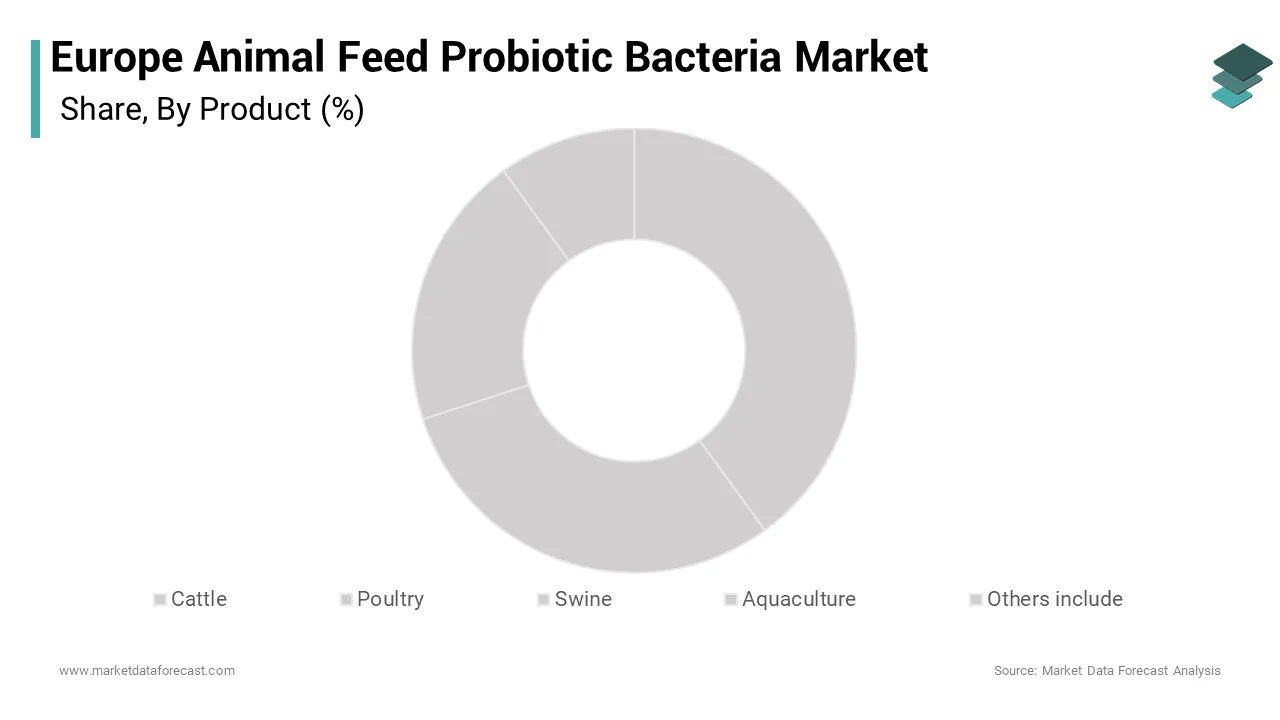
The aquaculture segment is estimated to register a CAGR of 15.1% over the forecast period in the European market owing to the EU’s strategic push to develop a sustainable blue economy and reduce dependence on imported seafood. As wild fish stocks stagnate, aquaculture production is being aggressively promoted, with the European Commission targeting a significant increase in output by 2030 under its Farm to Fork Strategy. However, intensive fish farming is highly susceptible to bacterial infections historically managed with antibiotics now restricted under EU veterinary regulations. Probiotics offer a natural alternative by enhancing gut microbiota, improving feed utilization of plant-based diets, and boosting innate immunity. As per the European Aquaculture Society, probiotic inclusion in commercial fish feeds has risen notably in recent years. Companies like BioMar and Skretting are now formulating feeds with specific marine-adapted strains that remain viable in aquatic environments. This confluence of policy support, disease pressure, and technological innovation is propelling aquaculture to become the most dynamic frontier for probiotic application in European animal nutrition.
By Form Insights
The dry probiotic formulations segment held the overwhelming majority of the Europe animal feed probiotic bacteria market by capturing 70.6% of the European market share in 2025. The leading position of dry probiotic formulations segment in the European market is primarily due to their superior stability, ease of handling, and seamless integration into existing feed manufacturing processes. The dry form, typically delivered as powders or granules, is compatible with standard mixing and pelleting equipment used across thousands of feed mills throughout the continent. A key driver of this dominance is logistical practicality. Dry products have a significantly longer shelf life and do not require refrigeration, drastically reducing transportation and storage costs. As per the European Feed Manufacturers Federation, most compound feed produced in the EU is in pelleted or mash form, both of which readily accommodate dry additives. Furthermore, advancements in microencapsulation technology have dramatically improved the heat resistance of dry probiotics, allowing them to survive pelleting temperatures. This technological maturity, combined with the entrenched infrastructure of the European feed industry, ensures that dry formulations remain the default and most economically viable choice for large-scale livestock operations.
The liquid probiotic formulations segment represents the fastest-growing segment in the Europe market and is expected to witness a CAGR of 12.2% over the forecast period owing to their superior bioavailability and immediate activity upon ingestion, as they bypass the need for rehydration in the animal’s gut. The primary driver is the increasing adoption of post-pellet liquid application systems in modern feed mills, which allow for the precise addition of heat-sensitive additives like probiotics after the high-temperature pelleting process. As per the German Agricultural Society, a growing share of large-scale feed producers in Western Europe have invested in this technology in recent years. Liquid probiotics are also favored in specialized applications such as calf milk replacers and piglet creep feeds, where direct mixing into liquid diets ensures uniform distribution and rapid colonization of the immature gut. Companies like Lallemand and Chr Hansen have responded by developing stabilized liquid concentrates with extended shelf life at ambient temperatures. As European farms shift toward more precision-oriented and early-life nutrition strategies, the demand for these highly bioavailable liquid formats is set to accelerate significantly.
COUNTRY-LEVEL ANALYSIS
Germany Animal Feed Probiotic Bacteria Market Analysis
Germany dominated the animal feed probiotic bacteria market in Europe in 2025 by capturing 23.9% of the European market share in 2025. The dominance of Germany in the European market is attributed to its status as the continent’s leading producer of pork and poultry. The country’s dense network of integrated livestock operations operates under strict environmental and animal welfare standards, creating a strong imperative to replace antibiotics with scientifically validated alternatives. The German Federal Ministry of Food and Agriculture has actively supported this transition through funding research into microbial solutions at institutions such as the Friedrich Loeffler Institute. As per the German Farmers Association, a majority of large-scale pig and poultry farms now incorporate probiotics into their standard feeding protocols. Furthermore, Germany’s robust feed additive industry, home to global players like Evonik and BASF, provides a ready supply of high-quality, EFSA-approved probiotic strains. This combination of regulatory pressure, scientific backing, and industrial capacity ensures Germany’s continued leadership in driving probiotic adoption across all major livestock sectors.
France Animal Feed Probiotic Bacteria Market Analysis
France occupied the second leading share of the animal feed probiotic bacteria market in Europe in 2025 by holding 19.6% of the regional market share. The growth of France in the European market can be credited to its diverse agricultural landscape that includes significant dairy, poultry, and emerging aquaculture sectors. The French government’s “Ambition Bio” plan, which aims to double organic farmland by 2030, has been a major catalyst for probiotic use, as organic certification prohibits antibiotic growth promoters. As per FranceAgriMer, organic poultry production has grown significantly, with probiotics being a mandatory component of health management plans. In the dairy sector, cooperatives such as Sodiaal are investing in probiotic trials to improve udder health and milk quality without antimicrobials. Additionally, France’s strong research infrastructure, including INRAE, has produced extensive field data validating the efficacy of native Lactobacillus strains in local farming conditions. This alignment of policy, cooperative action, and localized scientific validation creates a fertile environment for sustained probiotic market growth across multiple livestock categories.
Spain Animal Feed Probiotic Bacteria Market Analysis
Spain is estimated to hold a promising share of the European animal feed probiotic bacteria market during the forecast period due to its massive pig and poultry industries and its rapidly expanding aquaculture sector along the Mediterranean and Atlantic coasts. The country is the EU’s largest producer of pork, creating enormous demand for gut health solutions in swine production. Simultaneously, Spain is Europe’s top aquaculture producer, focusing on species such as sea bream and sea bass, where probiotics are essential for managing disease in antibiotic-free systems. The Spanish government’s Strategic Plan for Fisheries and Aquaculture has allocated substantial funding to sustainable feed innovation, directly benefiting probiotic developers. Furthermore, the hot climate in Southern Spain increases the risk of heat stress in livestock, which compromises gut integrity—a condition effectively mitigated by probiotic supplementation. This convergence of large-scale terrestrial and aquatic production under climatic stress positions Spain as a high-growth and strategically vital market for probiotic bacteria.
Netherlands Animal Feed Probiotic Bacteria Market Analysis
The Netherlands is estimated to command for a notable share of the European animal feed probiotic bacteria market over the forecast period due to its role as a global hub for agri-food innovation and its concentration of multinational feed and nutrition companies. Despite its small land area, the country is a top exporter of animal protein, achieved through highly efficient and technologically advanced farming systems that prioritize precision nutrition. Dutch feed giants such as Nutreco and ForFarmers have been early adopters of probiotic technology, integrating them into their global product lines and conducting extensive in-house trials to validate strain-specific efficacy. As per Wageningen University, Dutch research has demonstrated that tailored probiotic cocktails can reduce ammonia emissions from poultry houses, aligning with the country’s stringent environmental regulations. The Netherlands’ open innovation ecosystem, which connects startups, corporations, and academia, fosters rapid development and commercialization of next-generation probiotic solutions, making it a critical incubator for the entire European market.
Denmark Animal Feed Probiotic Bacteria Market Analysis
Denmark is predicted to witness a healthy CAGR in the animal feed probiotic bacteria market during the forecast period. Denmark is renowned for its world-leading pig production and its pioneering “Yellow Card” antimicrobial monitoring system. This government-mandated program publicly tracks antibiotic use on every farm, creating intense pressure to minimize treatments through preventive measures such as probiotics. As per the Danish Agriculture and Food Council, nearly all Danish pig farms now use probiotic supplements as part of their standard health protocol, contributing to a significant reduction in antibiotic consumption since 2010. Denmark’s cooperative farming model, dominated by companies like Danish Crown, ensures rapid dissemination of best practices across the sector. Furthermore, the Technical University of Denmark conducts cutting-edge research on host-microbe interactions, identifying novel probiotic strains with enhanced colonization capabilities. This blend of regulatory enforcement, cooperative structure, and scientific excellence has made Denmark a global benchmark for antibiotic-free livestock production and a consistent driver of probiotic innovation in Europe.
COMPETITIVE LANDSCAPE
The competition in the Europe animal feed probiotic bacteria market is characterized by a mix of established multinational bioscience firms and specialized regional players vying for influence across multiple livestock sectors. The landscape is intensely innovation driven with companies competing on the basis of strain specificity scientific validation manufacturing consistency and regulatory compliance. While large corporations leverage their global scale and integrated nutrition platforms smaller biotech firms differentiate through niche applications and agile product development. The market is further shaped by stringent European Food Safety Authority regulations which create high barriers to entry but also ensure a focus on quality and efficacy. Success requires not only microbiological expertise but also deep agronomic knowledge and the ability to demonstrate tangible economic benefits to risk averse farmers. Consequently the competitive environment fosters continuous collaboration between industry and academia while rewarding those who can translate complex science into practical on farm solutions that align with the EU’s antibiotic reduction and sustainability mandates.
KEY MARKET PLAYERS
The key players profiled in the report include
- Chr. Hansen A/S (Denmark),
- Koninklijke DSM N.V. (Netherlands)
- Lallemand, Inc. (Canada)
- Lesaffre & Cie (France)
- E.I. du Pont de Nemours and Company (U.S.).
- Novozymes A/S (Denmark)
- Calpis Co., Ltd. (Japan)
- Land O'Lakes, Inc. (U.S.)
- Schouw & Co.(Denmark)
- Evonik Industries AG (Germany)
- Alltech (U.S.)
- Mitsui & Co., Ltd. (Japan).
Top Players In The Market
- Lallemand Inc is a global leader in yeast and bacteria-based solutions with a strong foothold in the European animal nutrition sector. The company specializes in developing proprietary strains of Saccharomyces cerevisiae and lactic acid bacteria tailored for ruminants poultry and swine. Its contribution to the global market lies in its science driven approach combining microbiology expertise with extensive field validation across diverse farming systems. To strengthen its position in Europe Lallemand has recently expanded its production facility in France to increase capacity for its probiotic feed additives. It has also launched a digital platform that provides farmers with real time data on gut health biomarkers enabling more precise probiotic dosing and performance tracking across the continent.
- Chr Hansen Holding A/S is a Danish bioscience company renowned for its extensive microbial library and deep expertise in bacterial fermentation. The company plays a pivotal role in the global animal feed probiotic market by supplying highly stable and efficacious strains of Bacillus and Enterococcus to major feed producers. In Europe Chr Hansen has reinforced its leadership by investing in research collaborations with universities in Germany and the Netherlands to develop next generation probiotics that enhance nutrient utilization and reduce environmental emissions. Its recent launch of a multi strain probiotic specifically designed for aquaculture aligns with the EU’s sustainable blue economy goals and expands its footprint into high growth segments.
- Evonik Industries AG is a German specialty chemicals company that has strategically integrated probiotic bacteria into its comprehensive animal nutrition portfolio. The company leverages its global supply chain and formulation expertise to deliver synergistic solutions that combine probiotics with amino acids enzymes and organic acids. Evonik contributes to the global market by focusing on precision delivery systems that protect live bacteria during feed processing. To bolster its European presence the company has recently inaugurated a new innovation center in Hanau dedicated to gut health solutions. This facility accelerates the development of customized probiotic blends that address region specific challenges such as mycotoxin contamination and heat stress in Southern European livestock operations.
Top Strategies Used By The Key Market Participants
Key players in the Europe animal feed probiotic bacteria market pursue several strategic initiatives to maintain competitiveness and drive growth. First, they invest heavily in research and development to discover and validate novel bacterial strains with enhanced stability and host specific benefits. Second, they expand and modernize production facilities to ensure consistent quality and meet rising demand across diverse livestock sectors. Third they form strategic partnerships with feed mills integrators and research institutions to co-develop application specific solutions and generate robust field data. Fourth they integrate digital tools and data analytics to offer precision nutrition services that demonstrate clear return on investment for farmers. Finally, they diversify their portfolios by entering high potential segments such as aquaculture and organic farming to capture emerging opportunities aligned with EU sustainability policies.
MARKET SEGMENTATION
This research report on the European animal feed probiotic bacteria market is segmented and sub-segmented into the following categories.
By Livestock
- Cattle
- Poultry
- Swine
- Aquaculture
- Others include
- pets
- equine
- rabbits
By Source
- Bacteria
- Lactobacilli
- Streptococcus thermophiles
- Bifidobacteria
By Form
- dry
- liquid.
By Country
- UK
- France
- Spain
- Germany
- Italy
- Russia
- Sweden
- Denmark
- Switzerland
- Netherlands
- Turkey
- Czech Republic