- Product Description Description
- Table of Contents TOC
- List of Table & Figure LOT
- Get Free Sample PDF Sample PDF
Market Size, 2025
$3.49 BnMarket Estimate, 2026
$3.69 BnMarket Forecast, 2034
$5.79 BnCAGR, 2026–2034
5.8%Executive Summary: Europe Animal Parasiticides Market
- Market Scope: Comprehensive European animal parasiticides market analysis covering product variations, animal types, regional country frameworks, and animal healthcare adoption metrics.
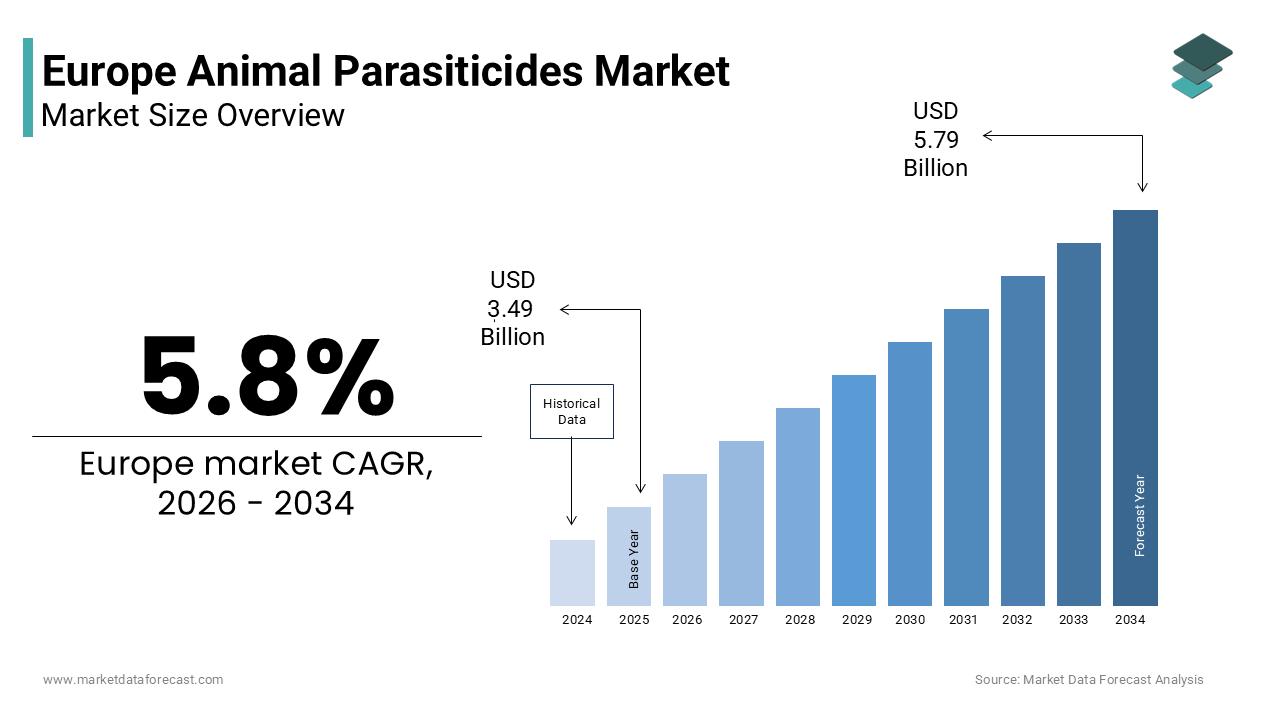
- Market Valuation: Valued at USD 3.49 billion (2025), estimated at USD 3.69 billion (2026), and projected to reach USD 5.79 billion by 2034, registering a solid CAGR of 5.8% (2026–2034).
- Primary Growth Drivers: Growing expenditure on animal healthcare, increasing adoption of pet animals, and heightened industry focus on high-quality meat and animal-derived products. Key operational constraints include strict regulatory approval restrictions and the rising acceptance of vegetarian lifestyle choices.
Key Market Segment Metrics (2026–2034)
| Category | Leading Segment (2025 Position) | Fastest-Growing Segment |
|---|---|---|
| By Product | Ectoparasiticides and endoparasiticides (integral therapeutic formulations for comprehensive animal protection) | Advanced combination parasiticidal formulations |
| By Animal Type | Companion animals and food-producing animals (driven by pet ownership trends and livestock disease management) | Companion animal veterinary health sectors |
| By Region / Country | Major European economies including the UK, Germany, France, and Italy (dominated regional consumption) | Europe overall (projected to experience steady market expansion through 2034) |
Major Market Players & Market Structure
Market Structure: Highly competitive European animal health and veterinary pharmaceutical landscape featuring major global life sciences leaders competing intensely on specialized chemical product portfolios, regulatory compliance, and animal welfare solutions.
Key Companies: Sanofi S.A. (Merial), Ceva Santé Animale, Virbac S.A., Vetoquinol S.A., Eli Lilly and Company, Zoetis Inc., Merck & Co., Inc., Bayer AG, Boehringer Ingelheim GmbH, and Perrigo Company plc.
Europe Animal Parasiticides Market Size
The europe animal parasiticides market size was valued at USD 3.49 billion in 2025 and is anticipated to reach USD 3.69 billion in 2026 from USD 5.79 billion by 2034, growing at a CAGR of 5.8% during the forecast period from 2026 to 2034.
Animal parasiticides are pharmaceutical and biological agents designed to prevent and treat ectoparasite and endoparasite infestations across companion animals and livestock within the European continent. This sector is intrinsically linked to regional animal health standards and zoonotic disease prevention protocols rather than simple commercial sales volume. According to the European Food Safety Authority, over 60% of emerging infectious diseases in humans are zoonotic in origin, which necessitates rigorous parasite control programs across member states to safeguard public health. As per the World Organisation for Animal Health, effective parasiticide application reduces livestock production losses by approximately 20% annually in European agricultural systems. Regulatory frameworks under the European Medicines Agency dictate stringent approval processes, ensuring product safety and environmental compatibility before market entry. Current definitions emphasize integrated pest management strategies combining chemical treatments with diagnostic monitoring to mitigate resistance development. This evolving scope reflects a paradigm shift toward sustainable veterinary medicine where efficacy must balance ecological preservation and therapeutic outcomes across diverse European climatic zones and farming practices.
MARKET DRIVERS
Rising Companion Animal Humanization Driving Premium Preventive Care Demand
The profound sociocultural transformation regarding pet ownership propels the European animal parasiticides market expansion. According to Euromonitor International, pet care expenditure per household in Western Europe reached 485 euros in 2023, reflecting a sustained willingness to invest in premium preventive health products over reactive treatments. This financial commitment directly correlates with increased adoption of year-round parasite prevention protocols among dog and cat owners who now view pets as integral family members requiring comprehensive medical protection. As per the European Pet Food Industry Federation, 78% of European pet owners administer parasiticides regularly throughout the entire calendar year rather than seasonally, which fundamentally expands the consumption frequency and total addressable volume for manufacturers. Such behavioral shifts have prompted veterinary clinics to prioritize client education on continuous protection, thereby creating stable recurring revenue streams independent of seasonal parasite activity peaks. Consequently, product innovation focuses heavily on palatable oral formulations and extended-duration spot-ons that align with owner convenience preferences while maintaining high efficacy standards demanded by this increasingly discerning consumer base seeking optimal wellness outcomes for their animal companions.
Intensifying Livestock Biosecurity Regulations Mandating Prophylactic Usage
Stringent regulatory frameworks governing food safety and animal welfare further contributes to the European market growth. According to the European Commission Directorate General for Health and Food Safety, mandatory biosecurity audits on intensive livestock farms increased by 35% between 2020 and 2024 to curb antimicrobial resistance and ensure residue-free meat production. These compliance requirements compel producers to implement systematic deworming schedules using approved parasiticides as a prerequisite for certification and market access rather than optional interventions. As per Eurostat, the organic livestock farming area expanded to 10.4 million hectares in 2023, representing a 12% annual growth rate, which simultaneously drives demand for authorized natural-origin parasiticides compatible with organic certification standards. The intersection of conventional intensification and organic expansion creates dual demand vectors where both segments require verified effective parasite control solutions meeting distinct regulatory criteria. Farmers increasingly recognize that proactive parasiticide investment prevents costly production disruptions and aligns with broader sustainability mandates, thus embedding these products into essential operational budgets regardless of commodity price fluctuations or short-term economic pressures affecting rural economies.
MARKET RESTRAINTS
Stringent Environmental Toxicity Assessments Delaying Product Approvals
Regulatory scrutiny concerning eco-toxicological impacts represents a significant restraint impeding timely market introduction of novel parasiticide molecules in Europe. According to the European Chemicals Agency, the average evaluation timeline for new active substance approvals under the Biocidal Products Regulation extended to 4.5 years in 2023 due to comprehensive aquatic and terrestrial toxicity testing requirements. This prolonged authorization window substantially increases research and development costs while delaying revenue generation for innovators who must maintain extensive data packages demonstrating negligible environmental persistence. As per CropLife Europe, 40% of proposed veterinary parasiticide candidates were withdrawn during pre-registration phases between 2019 and 2023 primarily because projected environmental risk quotients exceeded acceptable thresholds for sensitive ecosystems. Such attrition rates discourage investment in next-generation chemistries despite urgent clinical needs for resistance-breaking alternatives. Manufacturers face difficult trade-offs between molecular potency and environmental safety profiles, often resulting in suboptimal efficacy compromises or complete abandonment of promising compounds. This regulatory bottleneck constrains therapeutic diversity available to veterinarians and perpetuates reliance on older drug classes where resistance prevalence continues escalating across multiple parasite species, threatening long-term treatment sustainability.
Escalating Antiparasitic Resistance Reducing Treatment Efficacy
Widespread emergence of drug-resistant parasite populations further hampers the European market expansion. According to the European Scientific Counsel for Companion Animal Parasites, field studies conducted in 2024 documented macrocyclic lactone resistance in canine heartworm isolates from 7 Southern European countries, with treatment failure rates exceeding 25% in endemic zones. This diminishing therapeutic return forces veterinarians to prescribe higher doses or combination therapies, increasing treatment costs and potential adverse event risks for patients. As per the University of Utrecht Faculty of Veterinary Medicine, benzimidazole resistance in small ruminant nematodes affects over 80% of tested flocks in Northern Europe, necessitating frequent rotation among limited drug classes with overlapping mechanisms of action. Such resistance dynamics erode farmer and pet owner trust in product reliability, leading to treatment noncompliance or abandonment when expected outcomes fail to materialize. The biological constraint operates independently of pricing or availability issues, representing an inherent limitation of current pharmacopeia that cannot be resolved through marketing efforts alone. Continuous efficacy monitoring becomes mandatory yet adds operational complexity and expense, further straining stakeholder relationships and complicating value proposition communication in an increasingly skeptical marketplace.
MARKET OPPORTUNITIES
Expansion of Telemedicine Platforms Enabling Remote Prescription Access
Digital health infrastructure maturation is substantial opportunity for the European animal parasiticides market. According to the European Commission Digital Economy and Society Index, 68% of EU citizens utilized eHealth services in 2024, reflecting normalized acceptance of remote medical consultations, including veterinary telehealth platforms. This digital adoption enables licensed practitioners to conduct virtual assessments and issue electronic prescriptions for parasiticides without requiring physical clinic visits, thereby reducing access barriers for rural pet owners and time-constrained livestock managers. As per VetTech Europe, online veterinary prescription volumes for flea and tick preventives grew by 145% year-over-year in 2023 as dedicated platforms streamlined authentication and fulfillment workflows compliant with national regulations. Such channels facilitate direct-to-consumer education campaigns integrating personalized risk assessments based on geographic location and lifestyle factors, enhancing appropriate product selection and adherence. Manufacturers can leverage these digital touchpoints for targeted messaging about newer formulations while collecting real-world usage data informing future product development priorities. The convergence of regulatory acceptance and technological capability creates scalable pathways for reaching underserved demographics previously excluded from consistent preventive care protocols due to logistical or socioeconomic constraints limiting market penetration.
Growing Consumer Preference for Sustainable Natural-Origin Formulations
Environmental consciousness among European consumers is a significant opportunity for the European animal parasiticides market. According to the Soil Association Organic Market Report, sales of certified organic animal healthcare products in the United Kingdom increased by 18% in 2023 due to the retailer commitments to stock only environmentally benign inputs. This demand signal encourages formulation scientists to develop efficacious botanical extracts and microbial metabolites that satisfy both regulatory safety standards and consumer expectations for green chemistry. As per FiBL Europe, organic livestock producers represent 9.2% of total European agricultural holdings yet account for a disproportionate share of premium-priced natural parasiticide purchases, indicating strong willingness to pay for values-aligned products. Innovation in this space extends beyond active ingredients to include biodegradable packaging and carbon-neutral manufacturing processes that resonate with holistic sustainability narratives. Companies successfully positioning products within this niche benefit from enhanced brand loyalty and differentiation in crowded marketplaces where conventional synthetic options face increasing skepticism. The trend also opens export potential to global markets where European environmental standards serve as quality benchmarks, creating multiplier effects for early movers establishing credible natural parasiticide portfolios validated through rigorous third-party certifications and transparent supply chain documentation.
MARKET CHALLENGES
Complex Cross-Border Regulatory Harmonization Hindering Regional Launches
Divergent national implementation of centralized European legislation creates persistent operational challenges for the European animal parasiticides market. According to Heads of Medicines Agencies survey results published in 2024, 22 member states maintained unique labeling requirements or additional national provisions beyond core EMA approvals, causing average launch delays of 8 months across target territories. This fragmentation necessitates separate artwork creation, translation validation, and regulatory submissions for each jurisdiction, multiplying administrative burdens and inventory management complexity for companies operating pan-European supply chains. As per EFPIA, compliance costs associated with national variations consume approximately 15% of total marketing authorization budgets, diverting resources from scientific innovation and post-market surveillance activities. Small and medium enterprises face disproportionate impact as they lack dedicated regulatory affairs teams capable of navigating heterogeneous requirements efficiently. Even after centralized approval is granted, individual countries may impose additional pharmacovigilance reporting formats or distribution restrictions, creating ongoing maintenance overhead. Such systemic inefficiencies contradict single market objectives and perpetuate unequal patient access to innovative therapies depending on geographic location within the union. Addressing this challenge requires sustained advocacy for true harmonization alongside internal process adaptations enabling agile response to evolving national interpretations of shared legal frameworks.
Veterinary Workforce Shortages Limiting Professional Administration Capacity
Chronic insufficiency of qualified veterinary professionals restricts service delivery capacity essential for proper parasiticide prescription and application guidance across European regions. According to the Federation of Veterinarians of Europe workforce census, the continent faces a deficit of 35,000 practicing veterinarians relative to current animal population needs, with vacancy rates exceeding 20% in rural areas during 2024. This human resource constraint directly impacts the frequency of preventive care consultations where parasiticide recommendations typically occur, forcing clinics to triage appointments toward emergency cases at the expense of routine wellness visits. As per the British Veterinary Association, 42% of UK practices implemented appointment caps or waiting lists in 2023, specifically citing staffing limitations as the primary cause reducing opportunities for proactive parasite control discussions with clients. When professional oversight diminishes, pet owners may resort to inappropriate over-the-counter selections or discontinued use altogether, compromising individual animal health and community-level disease control. Livestock operations similarly experience delayed herd health assessments, extending parasite exposure windows and increasing production losses. While some tasks can be delegated to paraprofessionals, the scope of practice limitations vary nationally, preventing uniform solutions. This structural deficit represents a fundamental capacity constraint that no amount of product innovation can overcome without parallel investments in education, retention, and immigration policies addressing root causes of workforce depletion across the veterinary sector.
REPORT COVERAGE
| REPORT METRIC | DETAILS |
| Market Size Available | 2025 to 2034 |
| Base Year | 2025 |
| Forecast Period | 2026 to 2034 |
| CAGR | 5.8% |
| Segments Covered | By Product, Animal Type and Region. |
| Various Analyses Covered | Global, Regional & Country Level Analysis, Segment-Level Analysis, DROC, PESTLE Analysis, Porter’s Five Forces Analysis, Competitive Landscape, Analyst Overview of Investment Opportunities |
| Regions Covered | UK, France, Spain, Germany, Italy, Russia, Sweden, Denmark, Switzerland, the Netherlands, Turkey, the Czech Republic, and the Rest of Europe. |
| Market Leaders Profiled | Sanofi S.A. (Merial), Ceva Santé Animale, Virbac S.A., Vetoquinol S.A., Eli Lilly and Company, Zoetis Inc., Merck & Co., Inc., Bayer AG, Boehringer Ingelheim GmbH, Perrigo Company plc., and Others. |
SEGMENTAL ANALYSIS
By Product Insights
The ectoparasiticides segment dominated the market by commanding for the highest share of the European market in 2025 due to their critical role in managing fleas, ticks, and mites, which pose immediate health risks and high transmission potential for vector-borne diseases. The persistent threat of tick-borne illnesses such as Lyme disease and babesiosis serves as a primary catalyst for sustained ectoparasiticide consumption across companion and livestock sectors. According to the European Centre for Disease Prevention and Control, reported cases of Lyme borreliosis increased by 15% in 2023, reaching over 90,000 confirmed instances across member states, indicating the expanding geographic range of Ixodes tick vectors. This epidemiological trend compels veterinarians to recommend year-round protection strategies rather than seasonal applications, thereby stabilizing demand regardless of temperature fluctuations. As per the World Organisation for Animal Health, tick infestation rates in European cattle herds average 35% during peak seasons, causing significant production losses through anemia and reduced milk yield. Such agricultural impact ensures that livestock producers maintain rigorous dipping and spraying schedules using approved acaricides to meet biosecurity standards. The direct correlation between disease incidence and product usage creates a non-discretionary market segment where efficacy against specific local vector species dictates purchasing decisions. Manufacturers prioritize broad-spectrum formulations targeting multiple ectoparasite life stages to address complex infestation scenarios prevalent in mixed farming environments and urban pet populations alike.
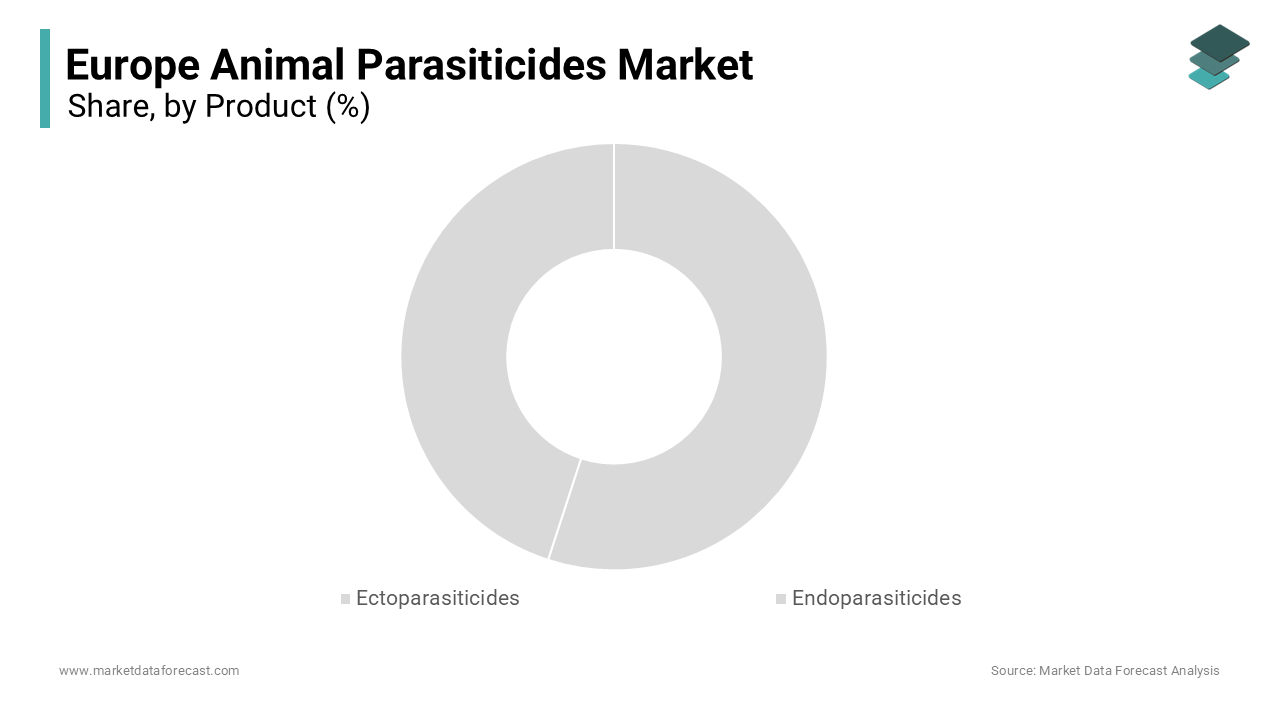
On the other end, the endoparasiticides segment is estimated to register a CAGR of 7.4% over the forecast period in the European market owing to the increasing recognition of internal parasite burdens and regulatory push for sustainable livestock management practices. The escalating burden of gastrointestinal nematodes in European ruminant populations necessitates frequent deworming interventions, driving robust growth in endoparasiticide sales, particularly within the agricultural sector. According to Eurostat agricultural reports, parasitic gastroenteritis accounts for approximately 12% of productivity losses in sheep and goat farms across Southern Europe, leading to mandatory treatment protocols under national animal welfare codes. This economic pressure forces farmers to adopt strategic dosing calendars utilizing benzimidazoles and macrocyclic lactones to maintain herd health and meet meat quality standards. As per the European Federation of Animal Health, anthelmintic sales for food-producing animals grew by 9% in 2023, reflecting intensified monitoring programs aimed at reducing pasture contamination levels. The integration of fecal egg count testing with targeted selective treatment approaches has refined usage patterns, ensuring efficient drug application while mitigating resistance development. Such precision agriculture techniques require reliable diagnostic-compatible pharmaceuticals, creating niche opportunities for manufacturers offering tailored solutions for specific parasite species prevalent in different climatic zones. The imperative to balance therapeutic efficacy with environmental stewardship drives innovation in slow-release formulations and combination therapies that enhance treatment duration and reduce frequency of administration.
By Animal Type Insights
The food-producing animals segment led the market by holding the leading share of the European market in 2025 owing to the sheer volume of livestock populations and stringent regulatory requirements mandating parasite control to ensure food safety and agricultural productivity. Strict European Union regulations governing maximum residue limits in animal-derived foods compel producers to utilize approved parasiticides with precise withdrawal periods to maintain market access. According to the European Food Safety Authority annual report, over 98% of tested meat and milk samples complied with residue standards in 2023, demonstrating effective adherence to treatment protocols using authorized veterinary medicines. This compliance framework necessitates systematic parasite management plans incorporating regular deworming schedules to prevent production losses while avoiding illegal substance presence. As per the European Commission Directorate General for Agriculture, non-compliant batches result in immediate financial penalties and market exclusion, creating strong incentives for farmers to invest in high-quality verified pharmaceutical products. The complexity of managing multiple parasite species across diverse farming systems drives demand for combination products offering broad-spectrum efficacy with favorable safety profiles. Regulatory scrutiny extends to environmental impact assessments, requiring manufacturers to provide comprehensive data on excretion pathways and soil persistence. Such rigorous oversight ensures only proven safe and effective products reach the market, reinforcing trust among producers who rely on these treatments for operational continuity. The alignment of regulatory compliance with economic viability secures the dominant position of the food-producing animal segment in overall market value.
However, the companion animals segment is estimated to showcase a CAGR of 7.5% over the forecast period in the European market owing to the rising pet ownership rates and increasing willingness to spend on premium preventive healthcare products. The evolving perception of pets as family members has triggered a substantial increase in expenditure on advanced veterinary care, including sophisticated parasiticide regimens. According to Euromonitor International data, European households spent an average of 520 euros per pet on healthcare services in 2024, reflecting 10% annual growth driven by demand for high-efficacy low-toxicity products. This emotional investment translates into a preference for branded pharmaceuticals offering convenient administration formats such as flavored chews and spot-on treatments that ensure compliance. As per the European Pet Food Industry Federation, 85% of millennial pet owners prioritize preventive medicine over reactive treatment, seeking products with proven safety records and minimal side effects. Such consumer behavior supports premium pricing strategies for innovative formulations combining multiple active ingredients for comprehensive protection against internal and external parasites. Veterinary clinics capitalize on this trend by offering bundled wellness packages including regular parasiticide dispensing, thereby creating recurring revenue streams. The shift toward holistic pet care encompasses mental and physical well-being, positioning parasite prevention as a fundamental component of responsible ownership. This cultural shift ensures a sustained growth trajectory for the companion animal segment, outpacing traditional livestock markets in terms of value expansion and innovation adoption rates.
COUNTRY ANALYSIS
Germany Animal Parasiticides Market Analysis
Germany had the major share of the European animal parasiticides market in 2025 and is likely to experience robust expansion over the next few years, maintaining its position as the largest national market for animal parasiticides in Europe driven by a robust livestock industry and high pet ownership rates coupled with strict regulatory enforcement. According to the German Federal Ministry of Food and Agriculture, the country hosts over 11 million cattle and 23 million pigs requiring systematic parasite control to meet export quality standards for meat and dairy products. This substantial agricultural base ensures consistent demand for veterinary pharmaceuticals, including advanced anthelmintics and acaricides. As per the German Veterinary Association, pet ownership reached 34 million households in 2023, with dogs and cats representing the majority of companion animals benefiting from premium preventive care products. The strong economic capacity of German consumers supports the adoption of innovative formulations offering extended protection and ease of administration. Regulatory frameworks enforced by the Federal Office of Consumer Protection and Food Safety ensure high safety standards, fostering trust in authorized products. The presence of major pharmaceutical manufacturers within the country facilitates the rapid availability of new launches and technical support for veterinary practitioners. This combination of agricultural scale and companion animal sophistication sustains Germany’s leadership position in regional market value and volume consumption.
France Animal Parasiticides Market Analysis
France is poised to accelerate its digital transformation and market modernization over the coming years owing to a diverse agricultural landscape and strong cultural affinity for companion animals influencing product preferences. As per the French Ministry of Agriculture, the nation maintains over 17 million cattle and 7 million sheep across varied climatic zones, necessitating region-specific parasite management strategies. This diversity drives demand for flexible product portfolios capable of addressing different parasite species prevalent in Mediterranean versus continental regions. As per the French National Veterinary Order, companion animal consultations increased by 8% in 2023, with significant focus on preventive health measures, including regular deworming and flea control. The high density of veterinary clinics in urban areas facilitates easy access to prescription parasiticides, ensuring widespread adoption among pet owners. Cultural emphasis on animal welfare supports regulatory compliance and ethical sourcing of veterinary medicines. The presence of leading global pharmaceutical companies with research facilities in France encourages innovation tailored to local needs. Government initiatives promoting organic farming also stimulate demand for natural-origin parasiticides compatible with certification requirements. This blend of traditional agriculture and modern pet care dynamics ensures steady growth and market stability for parasiticide manufacturers operating within French territory.
UK Animal Parasiticides Market Analysis
The UK is projected to maintain steady progress in the near future, representing a mature yet dynamic segment within the Europe Animal Parasiticides Market influenced by post-Brexit regulatory adjustments and high pet insurance penetration rates. According to the UK Department for Environment Food and Rural Affairs, the livestock sector comprises over 9 million cattle and 33 million sheep requiring ongoing parasite control to maintain productivity amid changing trade conditions. This agricultural foundation supports steady demand for conventional parasiticides while regulatory divergence from EU standards creates opportunities for localized product approvals. As per the Pet Food Manufacturers Association, pet ownership reached record levels with 17 million households owning pets in 2024, driving significant growth in companion animal parasiticide sales. High insurance coverage rates encourage owners to invest in preventive care, reducing out-of-pocket costs for veterinary visits and prescriptions. The climate variability in the UK necessitates year-round protection against fleas and ticks due to mild winters extending parasite activity periods. Veterinary practices increasingly adopt digital tools for prescription management, enhancing efficiency and compliance monitoring. The strong presence of domestic and international pharmaceutical firms ensures competitive pricing and product availability. These factors collectively sustain the UK’s significant market share despite regulatory transitions and economic fluctuations affecting broader healthcare sectors.
Italy Animal Parasiticides Market Analysis
Italy is anticipated to see gradual evolution in the upcoming years, occupying a strategic position in the Southern European market for animal parasiticides driven by extensive livestock farming and a growing companion animal sector influenced by Mediterranean climate conditions. According to the Italian Ministry of Agricultural Policies, the country maintains over 6 million cattle and 7 million sheep, primarily in northern regions where intensive farming practices require rigorous parasite management. The warm climate in southern regions extends the activity period for ectoparasites such as ticks and sandflies, necessitating prolonged protection protocols for both livestock and pets. As per the Italian National Federation of Veterinary Orders, companion animal registrations increased by 6% in 2023, with dogs being the predominant beneficiaries of preventive healthcare services. The cultural importance of pets in Italian households supports demand for premium products offering convenience and efficacy. Regulatory oversight by the Ministry of Health ensures compliance with European standards while addressing local epidemiological challenges. Tourism-related animal movement also contributes to parasite spread, requiring vigilant control measures. These regional characteristics create distinct demand patterns favoring broad-spectrum and long-acting formulations suitable for varied environmental conditions across the peninsula.
Spain Animal Parasiticides Market Analysis
Spain is expected to show accelerated development ahead, demonstrating strong growth potential in the European animal parasiticides market and is driven by a large livestock population and increasing pet humanization trends, particularly in urban areas. According to the Spanish Ministry of Agriculture Fisheries and Food, the country hosts over 6 million cattle and 16 million sheep, making parasite control essential for maintaining export competitiveness in meat and dairy sectors. The diverse climatic conditions ranging from the humid north to the arid south create varied parasite pressures requiring adaptable treatment strategies. As per the Spanish College of Veterinarians, pet ownership grew by 10% in 2023, with cats surpassing dogs in some urban centers, driving demand for feline-specific parasiticide formulations. The rise in single-person households correlates with increased pet adoption, fueling spending on preventive healthcare products. Regulatory frameworks aligned with European standards ensure product safety and efficacy, fostering consumer confidence. The expansion of veterinary telemedicine services enhances access to prescriptions, particularly in rural areas, improving compliance rates. Local manufacturing capabilities support timely supply chain management, reducing dependency on imports. These factors combine to establish Spain as a key growth engine within the Southern European market landscape for animal health products.
COMPETITIVE LANDSCAPE
The competitive landscape of the Europe Animal Parasiticides Market is characterized by intense rivalry among established multinational corporations and emerging specialized firms striving for technological superiority. Major participants continuously invest in research and development to introduce innovative formulations that address growing concerns regarding drug resistance and environmental toxicity. This drive for innovation results in frequent product launches featuring extended duration efficacy and improved safety profiles tailored to specific regional parasite species. Companies also compete through strategic acquisitions and partnerships aiming to expand their distribution networks and enhance service offerings. Digital transformation plays a crucial role as firms integrate telemedicine platforms and data analytics tools to provide personalized recommendations and improve customer retention. Regulatory compliance remains a significant differentiator with companies navigating complex approval processes to gain first mover advantages in new therapeutic categories. Price competition is moderate due to high barriers to entry and emphasis on quality over cost. Brand reputation and veterinary endorsement significantly influence purchasing decisions creating loyalty among professional users. The market sees continuous consolidation as larger entities acquire niche players to broaden their product portfolios and geographic reach ensuring comprehensive coverage of diverse animal health needs across the continent.
KEY MARKET PLAYERS
Companies playing a notable role in the European animal parasiticides market include
- Sanofi S.A. (Merial)
- Ceva Santé Animale
- Virbac S.A.
- Vetoquinol S.A.
- Eli Lilly and Company
- Zoetis Inc.
- Merck & Co., Inc.
- Bayer AG
- Boehringer Ingelheim GmbH
- Perrigo Company plc.
Top Players in the Europe Animal Parasiticides Market
Boehringer Ingelheim
Boehringer Ingelheim stands as a pivotal force in the European veterinary sector with its robust portfolio of parasiticide solutions for both companion and livestock animals. The company actively invests in research and development to introduce innovative molecules that address emerging resistance challenges while maintaining high safety profiles. Recent initiatives include expanding manufacturing capabilities in Germany to ensure consistent supply chain reliability across the region. Their strategic focus on digital health integration allows veterinarians to access real time data on parasite prevalence enhancing targeted treatment recommendations. By collaborating with academic institutions they advance understanding of parasite biology leading to more effective therapeutic interventions. This commitment to scientific excellence and operational efficiency solidifies their reputation as a trusted partner for European veterinary professionals seeking reliable parasite control options.
Elanco Animal Health
Elanco Animal Health demonstrates strong market presence through its comprehensive range of parasiticides designed to meet diverse needs of European farmers and pet owners. The company emphasizes sustainable practices by developing products with reduced environmental impact aligning with stringent regulatory requirements in the region. Recent actions involve launching novel combination therapies that simplify administration protocols improving compliance among users. They have strengthened distribution networks by partnering with local distributors ensuring timely availability of critical medications in remote agricultural areas. Investment in customer education programs helps stakeholders understand optimal usage patterns maximizing product efficacy. Their agile approach to market dynamics enables rapid response to emerging health threats positioning them as a responsive and reliable provider in the competitive European landscape.
Zoetis Inc
Zoetis Inc maintains a prominent position in the Europe Animal Parasiticides Market by leveraging advanced biotechnology to create highly effective preventive treatments. The company focuses on long acting formulations that reduce frequency of application offering convenience to busy pet owners and livestock managers. Recent developments include introducing digital platforms for prescription management streamlining access to veterinary approved parasiticides. They actively engage in clinical trials across multiple European countries to validate product performance under varied climatic conditions. Strategic alliances with veterinary associations facilitate dissemination of best practice guidelines promoting responsible use of antiparasitic agents. Their dedication to innovation and customer support ensures sustained growth and reinforces their status as a leader in animal health solutions throughout the continent.
Top Strategies Used by Key Market Participants
Key players in the Europe Animal Parasiticides Market primarily employ product innovation and strategic partnerships to maintain competitive advantage. Companies invest heavily in research and development to create novel active ingredients that overcome existing resistance mechanisms while meeting strict environmental safety standards. This focus on scientific advancement allows them to differentiate offerings in a crowded marketplace. Simultaneously firms establish collaborations with veterinary clinics and digital health platforms to enhance distribution channels and improve client engagement. These alliances facilitate direct consumer education and streamline prescription processes increasing adoption rates. Additionally manufacturers prioritize sustainability by developing eco friendly formulations and biodegradable packaging materials aligning with regional regulatory expectations. Such multifaceted strategies enable companies to address evolving market demands effectively while strengthening brand loyalty among professional and individual consumers across European nations.
MARKET SEGMENTATION
This research report on the European Animal Parasiticides Market has been segmented and sub-segmented into the following categories.
By Product
- Ectoparasiticides
- Endoparasiticides
By Animal Type
- Food-producing Animals
- Companion Animals
By Country
- UK
- France
- Spain
- Germany
- Italy
- Russia
- Sweden
- Denmark
- Switzerland
- Netherlands
- Turkey
- Czech Republic
- Rest of Europe