- Product Description Description
- Table of Contents TOC
- List of Table & Figure LOT
- Get Free Sample PDF Sample PDF
Market Size, 2025
$61.20 BnMarket Estimate, 2026
$97.82 BnMarket Forecast, 2034
$154.16 BnCAGR, 2026–2034
10.81Executive Summary: Europe Animal-Sourced Squalene Market
- Market Scope: Regional analysis of the European animal-sourced squalene market covering cosmetic and healthcare applications, key country breakdowns (including the UK, France, Germany, Italy, Spain, and others), and competitive industry players.
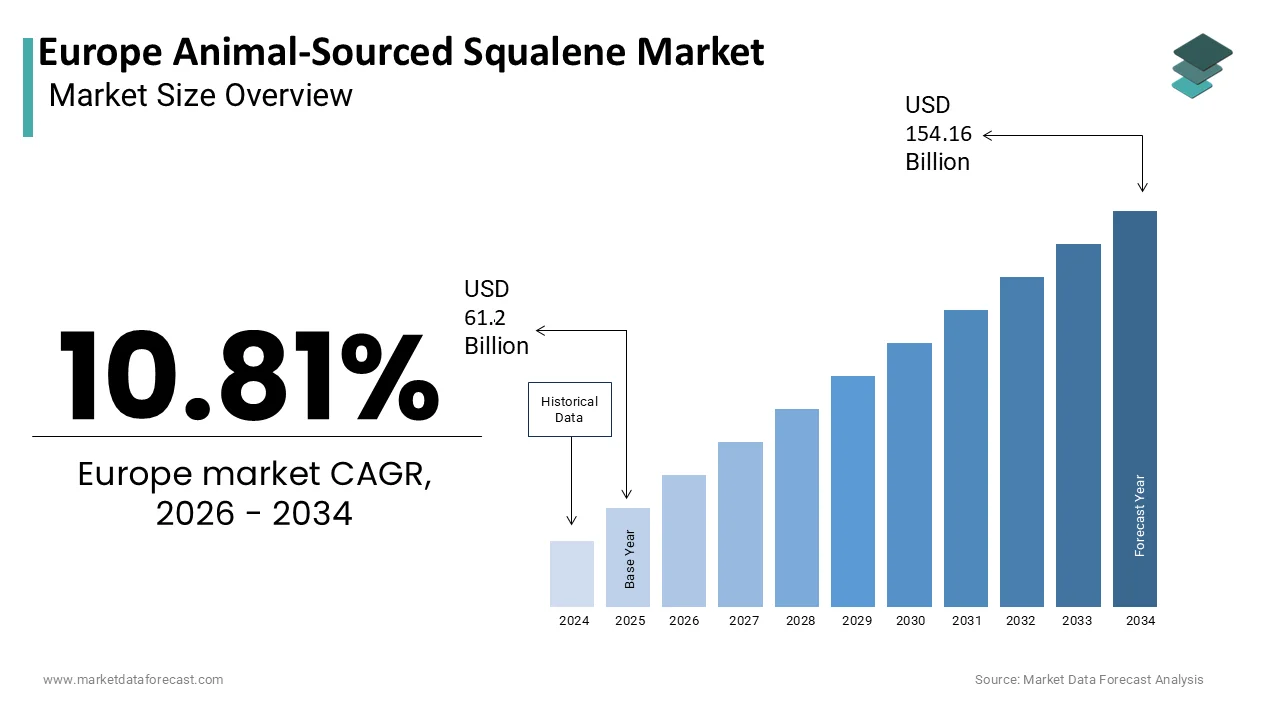
- Market Valuation: Valued at USD 61.20 billion in 2025, estimated at USD 97.82 billion in 2026, and projected to reach USD 154.16 billion by 2034, growing at a robust CAGR of 10.81% from 2026 to 2034.
- Primary Growth Drivers: High demand in luxury skincare and anti-aging formulations due to sebum-mimicking moisturizing properties, and critical deployment as an oil-in-water adjuvant base in influenza and pandemic vaccines. Key restraints include ethical/environmental concerns surrounding shark fishing, tightening regulatory traceability mandates, and rising competition from plant-based and synthetic alternatives.
Key Market Segment Metrics (2026–2034)
| Category | Leading Segment (2024/2025 Position) | Fastest-Growing Segment |
|---|---|---|
| By Application | Cosmetics (dominates market share, driven by high-end anti-aging serums, moisturizers, and facial oils used by luxury houses like Clarins, Guerlain, and La Mer) | Healthcare / Biopharmaceuticals (expanding lucratively at an 8.9% CAGR backed by vaccine adjuvant adoption and next-gen drug delivery nanoemulsions) |
| By Country | France (held top position with 24.3% share in 2024, anchored by major cosmetic leaders and dermatological research) | United Kingdom & Germany (exhibiting prominent growth driven by clean beauty trends, premium skincare adoption, and vaccine processing approvals) |
Major Market Players & Market Structure
Market Structure: Niche, high-value specialty chemical and marine-derived ingredient market balancing strict European sustainability regulations, traceability mandates, and strong strategic alliances between luxury beauty brands and biopharmaceutical firms.
Key Companies: Empressa Figueirrense de Pesca, Arista Industries Inc., Gracefruit Limited, Amyris Inc., Croda International PLC, Aker BioMarine, Nikko Chemicals, New Zealand Green Health Ltd., Kishimoto Special Liver Oil Co. Ltd., Maruha Nichiro Corporation, and Seadragon Marine Oils Limited.
Europe Animal-Sourced Squalene Market Size
The Europe Animal Sourced Squalene Market is projected to grow from USD 61.20 billion in 2025 to USD 97.82 billion in 2026 and reach USD 154.16 billion by 2034, registering a CAGR of 10.81% during the forecast period from 2026 to 2034.
Animal sourced squalene is a naturally occurring triterpene hydrocarbon primarily extracted from shark liver oil, known for its moisturizing, antioxidant, and skin-protective properties. It is widely used in cosmetics, pharmaceuticals, and nutraceuticals due to its biocompatibility and emollient characteristics. Europe holds a significant share of the global market, driven by robust demand from the skincare and healthcare sectors. Countries like France, Germany, and the United Kingdom lead in both consumption and innovation, supported by advanced dermatological research and strong regulatory frameworks. The European Chemicals Agency (ECHA) has maintained stringent quality standards for such ingredients, ensuring that only certified sustainable suppliers remain active.
MARKET DRIVERS
Increasing Demand in Premium Skincare and Anti-Aging Formulations
The extensive use in premium skincare and anti-aging products is majorly propelling the growth of the Europe animal sourced squalene market. Squalene offers exceptional hydration by making it a favored ingredient in luxury skincare brands across France, Germany, and Italy due to its molecular structure closely resembling human sebum. Consumers in these markets are increasingly seeking out high-performance, natural ingredients, which has led to a surge in squalene-infused serums, moisturizers, and facial oils. According to Euromonitor International, the premium skincare segment in Western Europe grew by 9% in value terms in 2023, with anti-aging products accounting for nearly 40% of total sales. Additionally, dermatologists and cosmetic scientists in Europe frequently recommend squalene-based products for sensitive and mature skin types, further embedding its presence in medical aesthetics and cosmeceutical applications.
Rising Applications in Pharmaceutical and Vaccine Adjuvant Development
The expansion of the pharmaceuticals as an essential component in vaccine adjuvants is additionally to drive the growth of the Europe animal sourced squalene market. Squalene serves as a key oil-in-water emulsion base in several influenza and pandemic vaccines, enhancing immune response and improving antigen efficacy. As per the European Centre for Disease Prevention and Control (ECDC), more than 50 million doses of adjuvanted influenza vaccines were administered across EU member states in 2023. Notably, Novartis and Seqirus have been major contributors to this trend, utilizing squalene in their seasonal and pandemic flu vaccines distributed throughout the continent. Additionally, during the development of novel mRNA and recombinant vaccines, squalene-based adjuvants have demonstrated compatibility with next-generation platforms, which is securing long-term demand from biopharmaceutical firms. Moreover, the European Medicines Agency (EMA) continues to approve new vaccine formulations containing squalene, reinforcing its regulatory acceptance and safety profile. Research published by the Pasteur Institute indicated that squalene-based adjuvants improved vaccine effectiveness by up to 30% in elderly populations, a demographic priority for European public health strategies.
MARKET RESTRAINTS
Ethical and Environmental Concerns Surrounding Shark-Derived Squalene
The growing ethical and environmental scrutiny around the extraction of squalene from sharks is ascribed to degrade the growth of the Europe animal sourced squalene market. Traditionally sourced from deep-sea shark livers, this practice has raised concerns among conservationists and environmentally conscious consumers regarding biodiversity loss and unsustainable fishing practices. Several shark species targeted for their high squalene content, such as the gulper shark and basking shark, are classified as vulnerable or endangered by the International Union for Conservation of Nature (IUCN). According to Oceana, an international marine conservation organization, approximately 3 million sharks are killed annually for squalene extraction globally, with a portion of this supply historically entering the European market. This pressure has influenced regulatory discussions within the European Parliament, where proposals for stricter sourcing transparency and sustainability certifications have gained traction. Although not yet fully implemented, these developments have prompted some major European brands to voluntarily phase out shark-derived squalene from their product lines.
Availability and Advancement of Plant-Based and Synthetic Alternatives
The increasing availability and technological advancement of plant-based and synthetic squalene alternatives is also a restraint to the growth of the Europe animal sourced squalene market. Innovations in green chemistry and biotechnology have enabled the production of sustainable, cruelty-free substitutes derived from sources such as sugarcane, algae, and olive oil. These alternatives offer similar functional properties while addressing ethical and environmental concerns associated with shark harvesting. According to a report by the European Commission on bio-based chemicals, the production capacity of plant-derived squalene in Europe expanded by 14% in 2023, driven by investment from biotech firms like Amyris and GFBiochemicals. Companies producing vegan-certified skincare and pharmaceutical products have increasingly adopted these alternatives to align with consumer preferences for sustainability and ethical sourcing. Additionally, the European Cosmetic, Toiletry and Perfumery Association (Colipa) has endorsed the transition toward alternative squalene sources, encouraging member companies to reduce reliance on animal-based ingredients. As per Mintel, over 60% of new skincare launches in Western Europe in 2023 featured plant-based squalene or promoted cruelty-free status.
MARKET OPPORTUNITIES
Expansion of Medical and Biopharmaceutical Applications Beyond Vaccines
The expansion of its applications beyond traditional vaccine adjuvants into broader biopharmaceutical uses is likely to elevate the growth of the Europe animal sourced squalene market in next coming years. Researchers and drug manufacturers are exploring squalene's potential in targeted drug delivery systems, cancer therapies, and topical treatments for chronic skin conditions. Its biocompatibility and ability to enhance transdermal absorption make it a promising candidate for next-generation pharmaceutical formulations. According to a study published in Advanced Drug Delivery Reviews , squalene-based nanoemulsions have shown potential in improving the solubility and bioavailability of poorly water-soluble drugs. In Europe, academic institutions such as the Karolinska Institute and University of Copenhagen have initiated clinical trials investigating squalene’s role in oncology and autoimmune disease treatments.
Strategic Partnerships with Luxury Beauty Brands Emphasizing Natural Ingredients
The increasing collaboration between squalene producers and luxury beauty brands that emphasize natural and high-performance ingredients is also to accelerate the growth of Europe animal sourced squalene market. Premium skincare labels continue to prefer animal sourced squalene for its purity and proven track record in high-end formulations. Additionally, partnerships between ingredient suppliers and boutique cosmetic labs have facilitated the creation of custom formulations that leverage the unique properties of animal sourced squalene. As reported by the French Federation of Cosmetics, independent perfumeries and artisanal skincare houses are increasingly sourcing squalene through certified and traceable channels, ensuring both quality and sustainability.
MARKET CHALLENGES
Regulatory Scrutiny and Compliance Requirements for Sustainable Sourcing
The tightening regulatory scrutiny around sustainable sourcing and traceability is certainly a key challenging factor for the Europe animal sourced squalene market. The policymakers and industry watchdogs are imposing stricter compliance requirements on businesses involved in shark-derived squalene procurement. The European Union has been actively updating its fisheries and trade regulations to ensure that squalene imports do not contribute to overfishing or endangerment of marine species. According to the European Environment Agency (EEA), the importation of shark liver oil for commercial purposes now requires detailed documentation of origin, species identification, and fishing method. Non-compliance can result in penalties, shipment rejections, or inclusion in restricted supplier lists. This regulatory burden increases operational costs for small-scale suppliers and necessitates investment in certification processes such as Marine Stewardship Council (MSC) accreditation. Moreover, multinational corporations operating in the European market are adopting internal sustainability policies that align with or exceed legal mandates. As per the Corporate Sustainability Reporting Directive (CSRD), publicly listed companies must disclose their supply chain impact, including the source of animal-derived ingredients.
Consumer Perception Shift Toward Vegan and Cruelty-Free Product Preferences
The ongoing shift in consumer perception toward vegan, cruelty-free, and ethically sourced personal care and pharmaceutical products is also to decline the growth of Europe animal sourced squalene market. This trend is reshaping purchasing behaviors across skincare, cosmetics, and even medical formulations.
According to a survey conducted by Mintel in 2023, over 65% of respondents in Germany and the UK stated that they would avoid products containing animal-derived ingredients if plant-based alternatives were available. The rise of social media activism and influencer-led campaigns promoting clean beauty and sustainable lifestyles has further amplified this sentiment. Major retailers such as Boots and Douglas have responded by expanding their range of vegan-certified products, many of which exclude animal sourced squalene entirely.
Additionally, organizations like PETA and Cruelty Free International have actively engaged with brands and regulators to push for greater transparency in ingredient sourcing. Their efforts have led to increased labeling requirements and voluntary commitments from companies to phase out animal-derived components.
REPORT COVERAGE
| REPORT METRIC | DETAILS |
| Market Size Available | 2025 to 2034 |
| Base Year | 2025 |
| Forecast Period | 2026 to 2034 |
| Segments Covered | By Application and Country. |
| Various Analyses Covered | Global, Regional, & Country Level Analysis; Segment-Level Analysis, DROC, PESTLE Analysis, Porter’s Five Forces Analysis, Competitive Landscape, Analyst Overview of Investment Opportunities |
| Country Covered | UK, Germany, Italy, France, Spain, Sweden, Denmark, Poland, Switzerland, Netherlands, Rest of Europe. |
| Market Leaders Profiled | Empressa Figueirrense de Pesca, Arista Industries Inc., Gracefruit Limited, Amyris Inc. |
SEGMENTAL ANALYSIS
By Application Insights
The cosmetics segment was accounted in holding a dominant share of the Europe animal sourced squalene market in 2024. The rising demand for natural-origin ingredients in high-end cosmetics, particularly among European consumers who prioritize product purity and efficacy will promote the growth of the segment. Luxury brands such as Clarins, Guerlain, and La Mer continue to feature animal sourced squalene in their formulations, which is emphasizing its long-standing heritage and performance benefits.
The growing consumer preference for anti-aging and dermatologically tested products in aging populations across Germany and Italy will also fuel the growth of the segment. As per the European Cosmetic and Toiletry Association (ECTA), the anti-aging skincare market in Europe expanded by 7.4% in 2023. The ability of squalene to mimic human sebum and enhance skin barrier function makes it a preferred ingredient in medical-grade skincare and cosmeceutical applications.
The healthcare segment is lucratively growing with a CAGR of 8.9% in the next coming years with the rapid expansion is the increasing reliance on squalene-based adjuvants in next-generation vaccines, including those developed for influenza, shingles, and pandemic preparedness. According to the European Centre for Disease Prevention and Control (ECDC), over 50 million doses of adjuvanted vaccines containing squalene were administered across EU member states in 2023 alone. Companies like Seqirus and Sanofi Pasteur have been instrumental in integrating squalene into their vaccine formulations, enhancing immune response and antigen efficiency. Additionally, research institutions across Europe are exploring squalene’s potential beyond immunization, including its use in drug delivery systems and targeted cancer therapies. A study published by the Karolinska Institute indicated that squalene-based nanoemulsions improved the bioavailability of lipid-soluble drugs, opening new avenues for its application in oncology and chronic disease management.
COUNTRY LEVEL ANALYSIS
France held the top position in the Europe animal sourced squalene market with 24.3% of the share in 2024. France has a strong presence of high-end cosmetic brands that incorporate squalene into premium formulations. Companies such as L’Oréal, Clarins, and Chanel actively source squalene for use in anti-aging creams, facial oils, and dermatological treatments, which is leveraging its proven efficacy and compatibility with sensitive skin. According to INSERM, France's national institute for health and medical research, numerous clinical studies have validated the benefits of squalene in skin repair and oxidative stress reduction. Additionally, regulatory support from the French Agency for Food, Environmental and Occupational Health & Safety (ANSES) ensures quality control and traceability in ingredient sourcing, reinforcing consumer confidence. Moreover, the country’s active participation in sustainable sourcing initiatives has positioned it as a leader in ethical squalene procurement. Organizations like COSMEBIO promote transparency in supply chains by encouraging companies to adopt certified and responsible practices.
Germany was positioned second by holding 18.2% of the Europe animal sourced squalene market share in 2024. The rising consumer interest in high-performance, natural-origin skincare products. According to Statista, the German premium skincare market grew by 6.7% in value terms in 2023, with squalene-infused serums and moisturizers gaining popularity among mature and environmentally conscious consumers. Brands like Weleda and Dr. Hauschka emphasize squalene’s skin-repairing properties, aligning with Germany’s broader wellness and clean beauty trends. In addition to cosmetics, Germany’s pharmaceutical industry plays a crucial role in sustaining squalene demand. The Paul-Ehrlich-Institut, which oversees vaccine development in the country, has approved multiple formulations using squalene-based adjuvants.
United Kingdom animal sourced squalene market growth is likely to grow with a prominent CAGR during the forecast period. The growing influence of clean beauty and ingredient transparency among British consumers is gearing up the growth of the market in this country. According to Mintel, over 60% of surveyed consumers in the UK in 2023 considered natural-origin ingredients as a decisive factor when purchasing skincare products. Luxury brands such as Elemis and Jo Malone have incorporated squalene into their product lines with its hydrating and protective qualities to appeal to discerning customers.
In addition to cosmetics, the UK pharmaceutical sector also contributes to sustained demand. The Medicines and Healthcare products Regulatory Agency (MHRA) continues to approve squalene-based formulations for use in flu vaccines and other immunization programs. According to Public Health England, more than 8 million doses of squalene-adjuvanted vaccines were administered in the UK in 2023.
Italy animal sourced squalene market is growing steadily with the country’s rich tradition in skincare, fashion, and luxury goods fosters a strong consumer base for high-end beauty products incorporating squalene. Italy’s pharmaceutical sector also supports steady squalene consumption. The Italian Medicines Agency (AIFA) has approved several vaccine formulations containing squalene-based adjuvants, ensuring continued usage in public health programs. As per the National Institute of Health (ISS), Italy administered over 7 million doses of squalene-containing vaccines in 2023. Additionally, Italy’s emphasis on sustainability and ethical sourcing through organizations like ICEF (Italian Ethical Fashion Committee) reinforces its alignment with responsible ingredient procurement.
Spain animal sourced squalene market growth is driven by the expanding premium skincare sector and increasing awareness of natural-origin ingredients are driving steady adoption of squalene-based formulations. Additionally, Spain’s pharmaceutical industry has shown increasing interest in squalene-based adjuvants for vaccine development. The Spanish Agency of Medicines and Medical Devices (AEMPS) has been involved in approving formulations that incorporate squalene, supporting its use in seasonal flu vaccines and other immunization programs.
KEY MARKET PLAYERS AND COMPETITIVE LANDSCAPE
Companies such as Empressa Figueirrense de Pesca, Arista Industries Inc., Gracefruit Limited, Amyris Inc., Croda International PLC, New Zealand Green Health Ltd., Kishimoto Special Liver Oil Co. Ltd., Maruha Nichiro Corporation, Seadragon Marine Oils Limited, Arista Industries Inc. are predicted to lead the market during the forecast period.
The competitive landscape of the Europe animal sourced squalene market is shaped by a blend of established chemical suppliers, specialty ingredient manufacturers, and emerging ethical sourcing advocates. With increasing scrutiny on marine conservation and sustainability, companies must differentiate themselves not only by product quality but also by sourcing transparency and environmental responsibility. Traditional players leverage their technological expertise and long-standing relationships with cosmetic and pharmaceutical clients to maintain dominance, while newer entrants focus on positioning squalene as a premium, responsibly sourced component in high-end formulations.
The animal sourced squalene continues to hold a niche yet significant place in markets where purity and performance are paramount. Strategic alliances between ingredient suppliers and brand houses further consolidate market positions, ensuring steady demand from luxury skincare and medical applications.
Top Players in the Market
Several companies play a pivotal role in shaping the Europe animal sourced squalene market. Among them, Aker BioMarine, Croda International, and Nikko Chemicals stand out for their contributions to both regional and global markets.
- Aker BioMarine is a Norwegian biotech company known for its sustainable marine ingredient sourcing. While primarily recognized for krill oil production, the company has expertise in lipid extraction technologies that influence squalene sourcing and purification methods. Its commitment to marine sustainability positions it as a thought leader in responsible ingredient procurement.
- Croda International is headquartered in the UK, is a major player in specialty chemicals for cosmetics and pharmaceuticals. The company integrates animal sourced squalene into high-performance formulations used by leading beauty brands across Europe. Its innovation in emollient technologies enhances product stability and skin absorption by making it a preferred supplier in premium skincare development.
- Nikko Chemicals is a Japanese firm with a strong presence in Europe, specializes in high-purity squalene for both cosmetic and medical applications. Known for its advanced refining processes, the company supplies squalene to vaccine manufacturers and dermatological product developers. Its technical expertise ensures consistent quality, which is reinforcing its strategic position in the European supply chain.
Top Strategies Used by Key Market Participants
- Key players in the Europe animal sourced squalene market employ strategic initiatives to reinforce their market standing and ensure long-term relevance. One of the most common strategies is investing in sustainable sourcing practices to address growing environmental concerns. Companies are partnering with fisheries and regulatory bodies to ensure ethical harvesting and traceability, aligning with consumer expectations and regulatory trends.
- Also, product differentiation through formulation innovation will enhance the market players productfolio. Leading suppliers enhance squalene’s performance by integrating it into novel delivery systems such as nanoemulsions and encapsulated formats. These advancements improve bioavailability and application versatility, particularly in pharmaceutical and luxury skincare sectors.
- The brand collaborations and co-development partnerships have become essential growth strategies. The squalene suppliers can tailor offerings to specific industry needs while strengthening customer loyalty and securing long-term contracts within niche market segments by working closely with premium beauty brands and biopharmaceutical firms.
RECENT HAPPENINGS IN THE MARKET
- In January 2023, Aker BioMarine announced a partnership with a leading French skincare brand to develop a new line of marine-derived skincare products featuring sustainably sourced squalene, emphasizing traceability and ecological impact reduction.
- In May 2023, Croda International launched an exclusive squalene-based emollient formulation tailored for sensitive skin applications, targeting the premium anti-aging market segment across Germany and the UK.
- In September 2023, Nikko Chemicals expanded its European distribution network by establishing a dedicated logistics hub in the Netherlands to ensure faster and more efficient delivery of high-purity squalene to pharmaceutical and cosmetic clients.
- In February 2024, a consortium of European squalene producers initiated a joint certification program aimed at promoting responsible shark fishing practices and enhancing consumer confidence in animal sourced ingredients.
- In June 2024, a major Italian luxury skincare brand collaborated with a Spanish pharmaceutical-grade squalene supplier to integrate the ingredient into a new line of clinical skincare treatments by expanding its use beyond traditional cosmetic applications.
MARKET SEGMENTATION
This research report on the European animal-sourced squalene market has been segmented and sub-segmented into the following categories.
By Application
- Cosmetic
- Healthcare
By Country
- UK
- France
- Spain
- Germany
- Italy
- Russia
- Sweden
- Denmark
- Switzerland
- Netherlands
- Turkey
- Czech Republic
- Rest of Europe