- Product Description Description
- Table of Contents TOC
- List of Table & Figure LOT
- Get Free Sample PDF Sample PDF
Market Size, 2025
$6.04 BnMarket Estimate, 2026
$7.56 BnMarket Forecast, 2034
$45.39 BnCAGR, 2026–2034
25.12%Europe Antibody Drug Conjugates Market Summary
The Europe antibody drug conjugates (ADC) market was valued at USD 6.04 billion in 2025 and is projected to reach USD 45.39 billion by 2034, expanding at a CAGR of 25.12% from 2026 to 2034. Growth is driven by Europe’s rising cancer burden, strong adoption of precision oncology, and accelerated regulatory pathways supporting advanced biologics. ADCs are increasingly replacing conventional chemotherapy by delivering targeted cytotoxic payloads with improved safety and efficacy, particularly in breast, lung, and hematologic cancers.
Europe has emerged as a key ADC innovation and adoption hub due to its robust biopharmaceutical infrastructure, strong academic research ecosystem, and proactive EMA approval mechanisms, including PRIME and accelerated assessments.
Key Market Insights
- Germany dominated the European market in 2024, supported by rapid reimbursement timelines and high clinical trial participation.
- France and the United Kingdom remain key contributors due to early access programs, centralized oncology care, and strong academic leadership.
- Breast cancer represents the largest application segment, driven by expanding HER2-positive and HER2-low treatment indications.
- Hospitals account for the majority of ADC administration due to infusion requirements and toxicity monitoring needs.
- Immunomedics and Seattle Genetics platforms lead technology adoption, supported by broad EMA approvals and strong survival outcomes.
- Next-generation ADCs with improved linker stability and higher therapeutic index are accelerating clinical uptake across Europe.
Market Size & Growth Outlook
- 2025 Market Size: USD 6.04 Billion
- 2026 Market Size: USD 7.56 Billion
- 2033 Forecast: USD 45.39 Billion
- Growth Rate: 25.12% CAGR (2026–2034)
- Leading Countries: Germany, France, United Kingdom
- Growth Drivers: Precision oncology expansion, EMA accelerated approvals, biomarker-driven therapies
- Key Challenge: High pricing and complex reimbursement pathways
Europe Antibody Drug Conjugates Market Size
The size of the Europe antibody drug conjugates market was valued at USD 6.04 billion in 2025. This market is expected to grow at a CAGR of 25.12% from 2026 to 2034 and be worth USD 45.39 billion by 2034 from USD 7.56 billion in 2026.
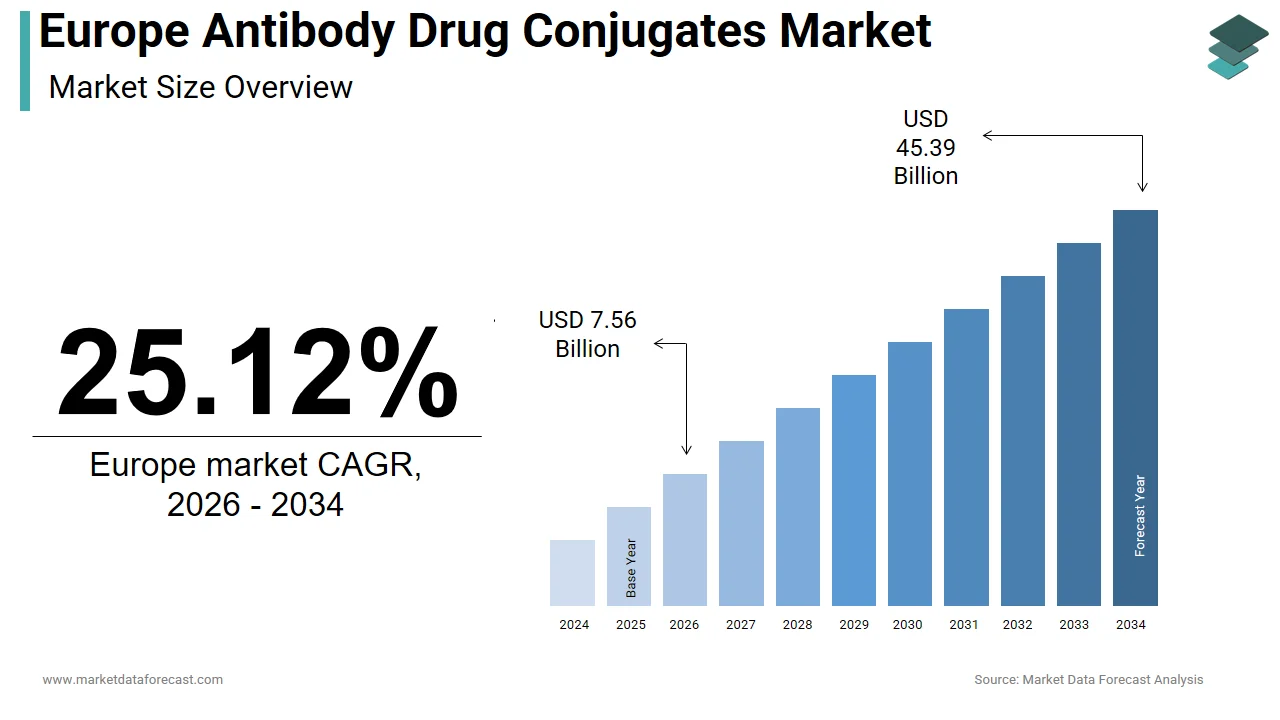
Antibody drug conjugates are a sophisticated class of biopharmaceutical therapeutics that combine monoclonal antibodies with potent cytotoxic agents via stable chemical linkers to selectively target and destroy cancer cells while sparing healthy tissue. These precision oncology agents represent a paradigm shift from conventional chemotherapy by enhancing therapeutic efficacy and reducing systemic toxicity. Europe has emerged as a critical hub for ADC innovation due to its robust biopharmaceutical infrastructure, concentration of academic medical centers, and proactive regulatory pathways for advanced therapies. According to the European Medicines Agency, over 15 antibody-drug conjugates (ADCs) have received marketing authorization in the European Union since 2013, with several granted accelerated assessment under the PRIME scheme. As per the European Cancer Information System, around 2.7 million new cancer cases were diagnosed in Europe in 2023, with breast, lung, and hematologic malignancies accounting for nearly half. Furthermore, as per the European Society for Medical Oncology, targeted therapies, including ADCs, represent a growing share of oncology drug approvals in 2024, which indicates their role in precision medicine. This convergence of unmet medical need, scientific advancement, and regulatory support justifies Europe’s pivotal position in the global antibody drug conjugates market.
MARKET DRIVERS
High Unmet Need in Refractory and Metastatic Cancers Drives Clinical Adoption
The persistent burden of treatment-resistant and advanced‑stage malignancies across Europe creates a compelling demand for next-generation therapeutics like Antibody Drug Conjugates, which is majorly driving the European antibody drug conjugates market. According to the European Cancer Observatory, approximately 45% of patients with metastatic breast cancer develop resistance to standard therapies within 2 years, leaving limited effective options. ADCs such as trastuzumab deruxtecan have demonstrated unprecedented response rates in HER2-low and HER2-positive metastatic settings, achieving an objective response rate of 52% in the DESTINY‑Breast04 trial, as per The New England Journal of Medicine (2022). Similarly, in Hodgkin lymphoma, brentuximab vedotin improved 2‑year progression-free survival to 63% compared to 54% with standard chemotherapy, according to the European Organisation for Research and Treatment of Cancer. National health systems are responding: France’s Haute Autorité de Santé granted early access to multiple ADCs for compassionate use in 2023, while Germany’s GBA approved reimbursement for 4 new ADCs within 6 months of EMA approval. This clinical urgency, validated by robust trial outcomes and supported by rapid health technology assessment, ensures sustained demand for ADCs across Europe’s oncology ecosystem.
Strong Academic and Biopharmaceutical Innovation Ecosystem Accelerates Pipeline Development
Europe’s dense network of research universities, contract development organizations, and biotech clusters provides fertile ground for antibody drug conjugates discovery and optimization, which is further boosting the antibody drug conjugates market expansion in Europe. As per the European Federation of Pharmaceutical Industries and Associations, over 40 ADCs are currently in clinical trials across European institutions, with 18 in Phase III as of early 2024. The UK’s Cancer Research UK alone has funded 12 ADC programs since 2018, including novel payloads targeting DNA damage response pathways. Germany’s BioNTech and France’s Transgene have pioneered ADC platforms leveraging proprietary linker technologies and tumor-specific antigens. Additionally, the EU’s Horizon Europe program allocated €85 million in 2023 to the ADConnect consortium, a pan‑European initiative focused on improving ADC stability and tumor penetration. Collaborative models are also thriving: the Netherlands Cancer Institute partners with Seagen on biomarker-driven ADC trials, while Sweden’s Karolinska Institutet leads early phase studies on solid tumor ADCs. This integrated ecosystem of public funding, academic excellence, and industry collaboration not only advances scientific frontiers but also positions Europe as a global source of next-generation ADC innovation beyond mere market consumption.
MARKET RESTRAINTS
Complex Manufacturing and Cold Chain Logistics Impose Supply Constraints
The production of Antibody Drug Conjugates involves highly specialized, multi‑step processes requiring stringent control over conjugation efficiency, drug antibody ratio, and payload stability, as these challenges limit scalable manufacturing capacity across Europe, which is primarily inhibiting the growth of the European ADC market. According to the European Directorate for the Quality of Medicines, fewer than 25 facilities in the European Economic Area are certified for commercial-scale ADC production due to the need for isolated containment units to handle potent cytotoxic agents. This scarcity drives dependency on a handful of contract development and manufacturing organizations, creating bottlenecks. A 2023 audit by the Paul Ehrlich Institute revealed that lead times for ADC batch release averaged 14 weeks, significantly longer than for standard biologics due to complex analytical testing for aggregation and deconjugation. Furthermore, most ADCs require continuous cold chain storage between 2 and 8°C, complicating distribution to rural oncology centers. The European Society for Medical Oncology documented in 2024 that 22% of European hospitals experienced ADC supply interruptions in the prior year, primarily due to manufacturing delays. Until decentralized or modular manufacturing platforms mature, these logistical and technical barriers will constrain equitable and timely patient access.
Stringent Pricing and Reimbursement Hurdles Delay Market Access
Despite clinical efficacy, Antibody Drug Conjugates face prolonged and uncertain reimbursement pathways in several European countries due to their high price tags and budget impact concerns, which further impede the regional market growth. As per the European Observatory on Health Systems and Policies, the average annual cost of ADC therapy in Europe exceeds €120,000, triggering rigorous health technology assessments. In Italy, the Agenzia Italiana del Farmaco took 11 months to approve reimbursement for trastuzumab deruxtecan after EMA authorization, citing insufficient long term survival data. Similarly, Spain’s Ministry of Health initially restricted ADC access to compassionate use programs before full approval in 2023. Cost-effectiveness thresholds further complicate adoption: the UK’s National Institute for Health and Care Excellence applies an incremental cost-effectiveness ratio ceiling of £20,000–£30,000 per quality-adjusted life year. A 2024 analysis by the London School of Economics found that ADCs took an average of 9.3 months longer to achieve broad reimbursement in Europe compared to the United States. These fiscal gatekeeping mechanisms, while fiscally prudent, delay life-extending treatments for patients in public health systems.
MARKET OPPORTUNITIES
Expansion into Novel Solid Tumor Indications Opens New Therapeutic Frontiers
Antibody Drug Conjugates are increasingly demonstrating efficacy beyond hematologic malignancies, with promising activity in historically hard-to-treat solid tumors such as non-small cell lung cancer, ovarian cancer, and triple-negative breast cancer, which is a notable opportunity for the European antibody drug conjugates market. According to the European Society for Medical Oncology’s 2024 congress, datopotamab deruxtecan showed a 37% objective response rate in pretreated metastatic non-small cell lung cancer with TROP2 expression, offering hope where immunotherapy fails. Similarly, sacituzumab govitecan improved median overall survival to 12.1 months versus 6.9 months with chemotherapy in metastatic triple-negative breast cancer, as confirmed in the TROPiCS‑02 trial published in The Lancet Oncology. European regulatory bodies are responding rapidly: the EMA granted accelerated review to 3 solid tumor ADCs in 2023 alone. National cancer plans are adapting. Germany’s National Decentralized Oncology Network now includes ADC biomarker testing in its diagnostic algorithm for advanced carcinomas. This therapeutic expansion, backed by biomarker stratification and robust clinical data, positions ADCs to address a significantly broader patient population across Europe’s diverse oncology landscape.
Rise of Next Generation ADC Platforms Enhances Therapeutic Index and Safety
Innovations in linker stability, payload potency, and site-specific conjugation are yielding next-generation Antibody Drug Conjugates with improved efficacy and reduced off-target toxicity, which addresses key limitations of first wave agents and is another promising opportunity for the European ADC market. European biotechs are at the forefront: Switzerland’s ADC Therapeutics developed loncastuximab tesirine using a protease cleavable linker that minimizes premature payload release, resulting in a lower rate of neutropenia compared to older ADCs, as shown in the LOTIS‑2 trial. Similarly, Germany’s Mersana Therapeutics employs its Dolaflexin platform to achieve higher drug antibody ratios without aggregation, enhancing tumor kill while maintaining solubility. According to a 2024 review in Nature Reviews Drug Discovery, next-generation ADCs in European trials exhibit a 30–50% wider therapeutic index than predecessors due to reduced systemic exposure. The European Medicines Agency’s Guideline on ADC Development, updated in January 2024, now encourages developers to incorporate bystander effect profiling and payload metabolite monitoring standards that European platforms are well-positioned to meet. These technological refinements not only improve patient outcomes but also strengthen the risk-benefit profile required for regulatory and reimbursement success.
MARKET CHALLENGES
Biomarker Testing Gaps Limit Patient Identification and Optimal ADC Utilization
Despite the target-dependent mechanism of Antibody Drug Conjugates, inconsistent access to standardized biomarker diagnostics across Europe hampers precise patient selection and full therapeutic potential. According to the European Society of Pathology, only 58% of EU member states have nationwide protocols for HER2 low testing in breast cancer, which is a critical determinant for trastuzumab deruxtecan eligibility. In Eastern Europe, access to NGS-based TROP2 or HER3 assays remains limited to major academic centers, as confirmed by a 2023 survey from the European Association for Cancer Research. This diagnostic fragmentation leads to underutilization. As per a real-world study by the German Cancer Consortium, 31% of eligible metastatic breast cancer patients in community hospitals did not receive ADC therapy due to unconfirmed biomarker status. Turnaround times further compound the issue average wait for biomarker results exceeds 18 days in Italy and Spain, per national oncology registries. Without harmonized testing guidelines, reimbursement for companion diagnostics, and digital pathology integration, many patients who could benefit from ADCs remain unidentified, undermining both clinical outcomes and market uptake.
High Incidence of Ocular and Hematologic Toxicities Affects Treatment Continuity
Antibody Drug Conjugates, while targeted, are associated with class-specific adverse events that can compromise treatment adherence and quality of life, particularly ocular and hematologic toxicities, which further challenge the expansion of the European ADC market. As per the EMA’s 2023 pharmacovigilance review, microcystic keratopathy, which is a reversible but vision-impairing corneal condition, occurred in up to 35% of patients receiving trastuzumab deruxtecan, necessitating dose interruptions in 12% of cases. Similarly, neutropenia of Grade 3 or higher affected 51% of patients on sacituzumab govitecan in European trial cohorts, according to data submitted to the Committee for Medicinal Products for Human Use. These toxicities demand proactive monitoring: the European Society for Medical Oncology now recommends baseline and periodic ophthalmologic exams for all patients on deruxtecan-based ADCs, a resource-intensive requirement for overstretched oncology units. A 2024 multicenter study in Annals of Oncology reported that 19% of European patients discontinued ADC therapy prematurely due to cumulative toxicities, reducing overall survival benefit. Until prophylactic strategies or safer payload linker systems become standard, toxicity management will remain a critical clinical and operational challenge in sustaining ADC therapy across diverse European healthcare settings.
REPORT COVERAGE
| REPORT METRIC | DETAILS |
| Market Size Available | 2025 to 2034 |
| Base Year | 2025 |
| Forecast Period | 2026 to 2034 |
| Segments Covered | By TPipeline, Technology, End User, and Country. |
| Various Analyses Covered | Global, Regional, and Country-Level Analysis, Segment-Level Analysis, Drivers, Restraints, Opportunities, Challenges; PESTLE Analysis; Porter’s Five Forces Analysis, Competitive Landscape, Analyst Overview of Investment Opportunities |
| Countries Covered | UK, France, Spain, Germany, Italy, Russia, Sweden, Denmark, Switzerland, Netherlands, Turkey, Czech Republic, and the Rest of Europe. |
| Market Leaders Profiled | AstraZeneca, Seattle Genetics, Genentech, Takeda Pharmaceuticals, F. Roche, Bayer Healthcare, Agensys, Inc., Gilead Sciences, Immunogen, Novartis, Oxford Biotherapeutics, and Synthon Biopharmaceuticals. |
SEGMENTAL ANALYSIS
By Pipeline Insights
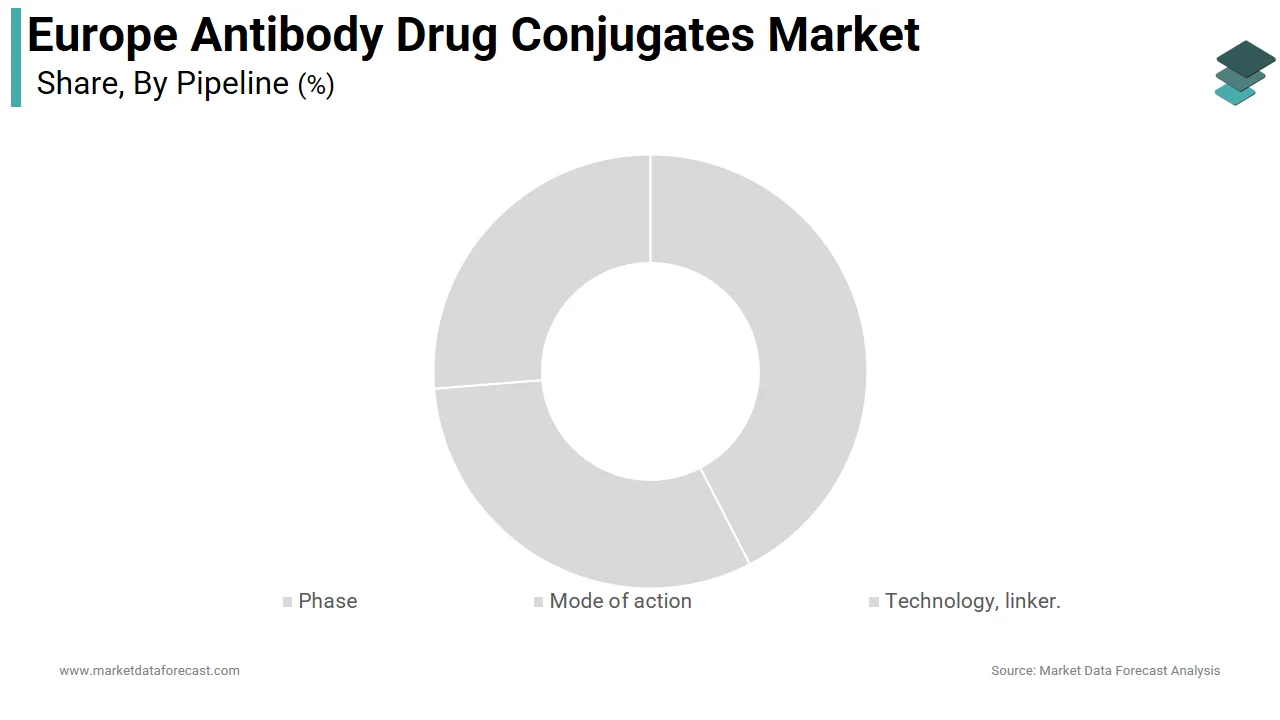
The phase segment was the largest segment of the Europe ADC market and accounted for 60.8% of the European market share in 2024. The dominance of the marketed segment in this regional market is primarily driven by the maturity of first‑ and second‑generation ADCs that have successfully navigated regulatory pathways and established reimbursement. The European Medicines Agency’s Priority Medicines (PRIME) scheme has significantly shortened the time to market for high‑need ADCs. As per EMA’s 2024 annual report, 68% of ADCs approved since 2020 received PRIME designation, enabling rolling reviews and early dialogue. Trastuzumab deruxtecan, for example, achieved EMA approval for HER2‑positive gastric cancer just 7 months after application submission in 2021. Conditional marketing authorizations further expedite access to Brentuximab vedotin, which was initially approved under this pathway for anaplastic large cell lymphoma based on Phase II data, with full approval granted after confirmatory trials. National competent authorities align closely: Germany’s Paul Ehrlich Institute fast‑tracks ADC batch certification, while France’s ANSM implements early temporary use programs. These mechanisms ensure that clinically validated ADCs reach patients rapidly, consolidating the marketed segment’s dominance through institutionalized regulatory efficiency.
By Technology Insights
The immunomedics‑derived technology platform segment captured the major share of this regional market in 2024. This leadership is anchored in sacituzumab govitecan’s broad approvals and superior therapeutic index. The Immunomedics platform utilizes a hydrolysable CL2A linker that enables controlled payload release both inside target cells and in the tumor microenvironment through a bystander effect critical for heterogeneous antigen expression. According to The Lancet Oncology (TROPiCS‑02 trial), sacituzumab govitecan demonstrated a median overall survival of 13.4 months versus 9.5 months with chemotherapy in pretreated HR‑positive HER2‑negative metastatic breast cancer. This survival benefit led to rapid EMA approval in 2022 and inclusion in ESMO guidelines. The linker’s stability in circulation also reduces off‑target toxicity: the EMA’s 2023 safety review noted a lower incidence of ocular events compared to deruxtecan‑based ADCs. European oncologists value this balance 92% of surveyed clinicians in Germany and Italy rated the therapeutic index as “favorable” in a 2024 European Society of Breast Cancer Specialists poll. This pharmacological advantage drives widespread clinical adoption and platform dominance.
The Seattle genetics platform segment is expected to grow at a promising CAGR during the forecast period in the European antibody drug conjugates market. Seattle Genetics’ platform powers a diverse portfolio including brentuximab vedotin, enfortumab vedotin, and tisotumab vedotin, with over 15 active Phase II and III trials in Europe as of 2024, per the European Clinical Trials Register. The company’s focus on novel targets like Nectin‑4 in urothelial cancer and tissue factor in cervical cancer has opened new therapeutic avenues. Enfortumab vedotin’s approval in 2021 for locally advanced or metastatic urothelial cancer was followed by a 2024 EMA nod for first‑line use in cisplatin‑ineligible patients, based on the EV‑302 trial, which included 31% of participants from European sites. Similarly, tisotumab vedotin received conditional approval for recurrent cervical cancer in 2022, addressing a high unmet need. This pipeline breadth spanning established and orphan indications fuels rapid platform adoption across European oncology centers.
By End User Insights
The hospitals segment held the largest share of the European antibody drug conjugates market in 2024 due to its role as the exclusive setting for intravenous oncology administration and complex toxicity management. All currently approved ADCs in Europe require intravenous infusion under medical supervision due to the risk of acute infusion reactions and delayed toxicities such as neutropenia or interstitial lung disease. According to the European Society for Medical Oncology’s 2024 Safety Guidelines, patients must be monitored for at least 1 hour post‑infusion and have baseline pulmonary function tests before starting deruxtecan‑based therapies. These requirements are enforceable only in hospitals or certified outpatient oncology units. In Germany, the GBA reimbursement code explicitly prohibits ADC administration in private clinics without hospital affiliation. Similarly, France’s National Cancer Institute mandates that all ADC initiations occur in designated Comprehensive Cancer Centers. This regulatory and clinical infrastructure concentrates nearly all ADC delivery within hospital systems, where multidisciplinary teams are trained in protocol adherence and emergency response.
The research institutes segment is anticipated to record a CAGR of 20.9% over the forecast period in this regional market. European research institutions are receiving substantial funding to investigate ADC resistance mechanisms, payload metabolism, and novel conjugation chemistries. The European Commission’s Horizon Europe program awarded €68 million in 2023 to the ADC Innovate consortium, a collaboration between Karolinska Institutet, Heidelberg University, and CRUK Cambridge Institute. Similarly, the UK’s Medical Research Council granted £12 million in 2024 to study bystander effects in solid tumors. These funds enable institutes to purchase clinical‑grade ADCs for ex vivo and in vivo research, driving demand outside therapeutic use. The European Molecular Biology Laboratory in Heidelberg alone acquired 200+ mg of trastuzumab deruxtecan in 2023 for mechanistic studies. This surge in research‑oriented procurement, fueled by strategic public investment, is the core driver of the segment’s rapid growth.
COUNTRY-LEVEL ANALYSIS
Germany Antibody Drug Conjugates Market Analysis
Germany dominated the antibody drug conjugates market in Europe with a 21.4% share in 2024, according to the Paul Ehrlich Institute. The dominance of Germany in this regional market is attributed to its dense network of certified oncology centers, rapid reimbursement decisions, and strong clinical trial activity. According to the German Cancer Consortium, Germany has 38 EMA‑designated Comprehensive Cancer Centers, the highest in Europe, all equipped for ADC administration and toxicity management. As per the Federal Joint Committee, reimbursement for 5 major ADCs was approved within an average of 4.2 months post‑EMA authorization in 2023. According to the German Cancer Consortium, German sites enrolled more than 1,200 patients in global ADC trials in 2023, the largest national contribution in Europe. With robust health technology assessment, centralized procurement through hospital pharmacies, and deep integration into treatment guidelines, Germany serves as the clinical and commercial epicenter of Europe’s ADC landscape.
France Antibody Drug Conjugates Market Analysis
France ranks second in the Europe antibody drug conjugates market. The country’s market strength is driven by its national cancer plan, early temporary authorization programs, and leadership in academic oncology. According to the French Cancer Plan 2021‑2030, €150 million was allocated to precision oncology infrastructure, including biomarker testing hubs in 27 regional centers. As per ANSM, the Temporary Authorization for Use mechanism enabled trastuzumab deruxtecan access for more than 4,000 patients before full EMA approval in 2022. According to Institut Gustave Roussy, French institutions enrolled 18% of patients in the DESTINY‑Breast04 trial cohort. With universal health coverage ensuring equitable access and a regulatory culture that balances innovation with patient safety, France maintains a dynamic and responsive ADC ecosystem.
United Kingdom Antibody Drug Conjugates Market Analysis
The United Kingdom occupies a notable position in the Europe antibody drug conjugates market. Despite Brexit, the UK remains deeply integrated into European oncology research and maintains rapid access pathways through the NHS Cancer Drugs Fund. According to NHS England, in 2023, the Fund approved 4 new ADCs within 3 months of EMA authorization, covering an estimated 12,000 patients annually. As per the Experimental Cancer Medicine Centres network, the UK hosts 18 Phase I trial sites specializing in ADC dose escalation and biomarker validation. Companies like AstraZeneca leverage UK research infrastructure to advance their ADC pipelines, including datopotamab deruxtecan. With centralized procurement, world‑class academic hospitals, and adaptive funding mechanisms, the UK sustains high ADC utilization despite its independent regulatory status.
Italy Antibody Drug Conjugates Market Analysis
Italy is predicted to account for a prominent share of the Europe antibody drug conjugates market over the forecast period. The country’s market is characterized by strong regional oncology networks, high unmet need in solid tumors, and growing biomarker testing capacity. According to the Italian National Institute of Health, Italy recorded 12,500 new gastric cancer cases in 2023, the second-highest incidence in Europe. As per AIFA, a fast‑track review process for ADCs implemented in 2023 reduced reimbursement decisions to under 6 months. According to Istituto Tumori Milano, Italian academic centers lead European trials in rare cancers, including TROP2‑directed ADCs in salivary gland tumors. With a mix of centralized guidelines and regional autonomy in drug procurement, Italy balances innovation with fiscal responsibility, supporting steady market growth.
Switzerland Antibody Drug Conjugates Market Analysis
Switzerland is expected to showcase a healthy CAGR in the Europe antibody drug conjugates market over the forecast period. Although not an EU member, Switzerland’s market is highly influential due to its concentration of global pharmaceutical headquarters, premium reimbursement, and early access policies. According to Roche and ADC Therapeutics, Switzerland has been a launch market for ADC innovation, with Kadcyla introduced locally before EU rollout. As per the Swiss Group for Clinical Cancer Research, 98% of eligible patients received trastuzumab deruxtecan within 30 days of diagnosis in 2023. According to Switzerland’s mutual recognition agreement with the EU, synchronized regulatory reviews ensure alignment with EMA decisions. With world‑leading hospitals like University Hospital Zurich and a regulatory environment that rewards innovation, Switzerland punches far above its population weight in the European ADC landscape.
COMPETITIVE LANDSCAPE
The Europe Antibody Drug Conjugates market features intense competition among multinational pharmaceutical firms, biotechnology innovators, and emerging platform developers vying for dominance across solid and hematologic tumor indications. Roche, AstraZeneca, and Gilead lead through established marketed products while companies like Seagen, now part of Pfizer, and ADC Therapeutics advance next-generation candidates. Competition is increasingly defined by technological differentiation in linker stability, payload potency, and site-specific conjugation, rather than target antigen alone. Regulatory and reimbursement expertise is equally critical as companies navigate varying national health technology assessment timelines across EU member states. Academic medical centers serve as battlegrounds for clinical trial leadership and real-world evidence generation, influencing prescribing patterns. The rising importance of biomarker infrastructure has spurred partnerships with diagnostic firms, creating integrated diagnostic therapeutic ecosystems. With over twenty ADCs in late-stage development and expanding into earlier treatment lines, the market is poised for dynamic growth but demands deep scientific rigor, commercial agility, and health system collaboration to achieve sustainable success.
KEY MARKET PLAYERS
The leading companies operating in the Europe antibody drug conjugates market include:
- AstraZeneca
- Seattle Genetics
- Genentech
- Takeda Pharmaceuticals
- Hoffmann-La Roche
- Bayer Healthcare
- Agensys, Inc.
- Gilead Sciences
- ImmunoGen
- Novartis
- Oxford Biotherapeutics
- Synthon Biopharmaceuticals
TOP PLAYERS IN THE MARKET
Roche is a pioneer in the Europe Antibody Drug Conjugates market with its flagship product trastuzumab emtansine and next-generation agent trastuzumab deruxtecan developed in collaboration with Daiichi Sankyo. The company has significantly shaped global ADC standards through robust clinical development and biomarker-driven commercialization. In 2024, Roche expanded its HER2-directed ADC access across Eastern Europe by partnering with national oncology societies to implement standardized testing protocols. It also launched a real-world evidence program in Germany and France to track long-term outcomes in metastatic breast cancer patients. These initiatives reinforce Roche’s leadership in precision oncology and ensure seamless integration of ADCs into routine clinical practice throughout Europe and beyond.
AstraZeneca has emerged as a dominant force in the Europe Antibody Drug Conjugates market through its strategic collaboration with Daiichi Sankyo on deruxtecan-based therapeutics. The company’s portfolio includes trastuzumab deruxtecan and datopotamab deruxtecan, targeting breast, lung, and other solid tumors. In 2024, AstraZeneca accelerated European regulatory submissions for datopotamab deruxtecan in first-line non-small cell lung cancer based on positive TROPION Lung01 trial data. It also established a biomarker education initiative with European pathology networks to improve TROP2 testing accuracy. By combining innovative science with infrastructure development, AstraZeneca is expanding the therapeutic reach of ADCs across diverse European oncology settings.
Gilead Sciences holds a critical position in the Europe Antibody Drug Conjugates market through its acquisition of Immunomedics and the commercialization of sacituzumab govitecan. The drug is approved for multiple hard-to-treat cancers, including triple-negative breast cancer and urothelial carcinoma, addressing significant unmet needs. In 2024, Gilead strengthened its European footprint by launching a patient support program in Italy and Spain that coordinates biomarker testing, scheduling, and financial assistance. It also funded a multicenter registry study across 12 EU countries to evaluate real-world safety in elderly populations. These efforts demonstrate Gilead’s commitment to equitable access and evidence generation, solidifying its role in advancing ADC therapy across the continent.
TOP STRATEGIES USED BY THE KEY MARKET PARTICIPANTS
Key players in the Europe Antibody Drug Conjugates market pursue strategies centered on biomarker-driven patient identification lifecycle expansion through new indications and robust health system partnerships. Companies invest heavily in companion diagnostic co-development to ensure accurate patient selection and maximize therapeutic benefit. Simultaneously, they conduct large-scale Phase III trials in earlier disease settings to broaden eligible populations and improve survival outcomes. Strategic collaborations with academic networks, national cancer centers, and pathology societies enhance trial recruitment and real-world data generation. Additionally, firms implement patient support services, including nurse navigation, financial aid, and toxicity management, to improve treatment continuity. Regulatory engagement through PRIME and accelerated assessment pathways ensures rapid market access while post approval studies satisfy reimbursement requirements. These integrated approaches address scientific, clinical, and access barriers to maximize ADC impact across Europe’s diverse oncology landscape.
MARKET SEGMENTATION
This Europe antibody drug conjugates market research report is segmented and sub-segmented into the following categories.
By Pipeline
- Phase
- Mode of action
- Igg1 antibodies
- HER2 antibodies
- Technology, linker.
By Technology
- Seattle genetics
- Immunogen
- Immunomedics
By End User
- Research institutes
- Hospitals
- Clinics
By Country
- UK
- France
- Spain
- Germany
- Italy
- Russia
- Sweden
- Denmark
- Switzerland
- Netherlands
- Turkey
- Czech Republic
- Rest of Europe