- Product Description Description
- Table of Contents TOC
- List of Table & Figure LOT
- Get Free Sample PDF Sample PDF
Market Size, 2025
$5.65 BnMarket Estimate, 2026
$5.95 BnMarket Forecast, 2034
$9.06 BnCAGR, 2026–2034
5.39%Europe Apple Juice Market Size, Trends, and Forecast (2025–2034)
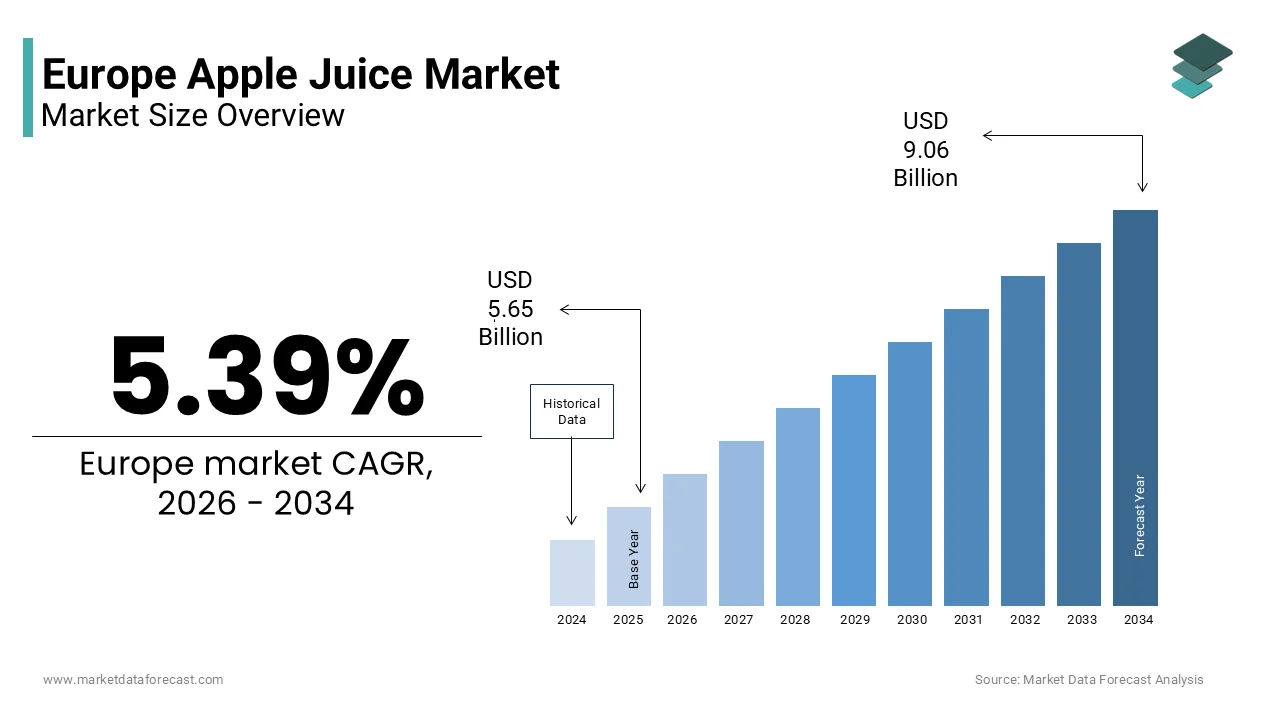
The Europe apple juice market size was valued at USD 5.65 billion in 2025, stands at USD 5.95 billion in 2026, and is anticipated to reach USD 9.06 billion by 2034, expanding at a compound annual growth rate (CAGR) of 5.39% during the forecast period from 2026 to 2034. Growth is structurally supported by Europe's robust agricultural base—particularly in Germany, Poland, and Italy—alongside a consumer shift toward natural, clean-label beverages and expanding organic product lines under the EU's Farm to Fork initiative.
Key Executive Metrics (At-a-Glance)
- 2025 Base Valuation: USD 5.65 Billion
- 2026 Current Valuation: USD 5.95 Billion
- 2034 Forecast Valuation: USD 9.06 Billion
- Compound Annual Growth Rate (CAGR): 5.39% (2026–2034)
- Dominant Nature Segment: Conventional
- Fastest-Growing Nature Segment: Organic (9.2% CAGR)
- Dominant Distribution Channel: Supermarkets
- Dominant End Use Segment: Household
Core Market Drivers & Opportunities
- Natural Beverage Transition: High obesity and diabetes rates are pushing consumers away from carbonated soft drinks toward pure, antioxidant-rich apple juice formulations.
- Functional Fortification: Strong revenue opportunities in fortifying juices with Vitamin D, calcium, and probiotics to target the rapidly growing 4.8% European functional beverage sector.
- Agricultural Supply Chain: Access to a massive localized harvest (yielding roughly 15-17% of global apple volumes), backed by EU Common Agricultural Policy subsidies.
Primary Market Restraints & Challenges
- Free Sugar Perception: Pediatric guidelines restricting free sugar intake to under 5% of daily energy are limiting family-size volume sales due to concerns over high natural fructose levels.
- Climate Volatility: Increased frequency of late frosts and droughts disrupting yields (such as Poland's recent 17% harvest decline), leading to fluctuating raw material prices.
- Strict EU Compliance: Navigating rigorous EU Breakfast Directive mandates detailing country-of-origin labeling and additive restrictions.
Europe Apple Juice Market Segmentation Breakdown
| Segment Category | Largest Segment | Fastest-Growing Segment |
|---|---|---|
| By Nature | Conventional | Organic (9.2% CAGR) |
| By Distribution Channel | Supermarkets | E-commerce |
| By End Use | Household | Commercial (Hospitality/Cafés) |
Major Industry Players Profiled
Key corporations shaping the European apple juice market include The Coca-Cola Company, Del Monte Food, Inc., Parle Agro Pvt Ltd, Tree Top Inc., PepsiCo. Inc., Britvic Plc, Manzana Products Co., The Kraft Heinz Company, Eden Foods Inc., Solana Gold Organics, and White House Company.
 Download Free Sample Report
Europe Apple Juice Market Size
The Europe apple juice market size was valued at USD 5.65 billion in 2025 and is expected to reach USD 9.06 billion by 2034 from USD 5.95 billion in 2026. The market is projected to grow at a CAGR of 5.39%.
Apple juice is a sweet liquid drink made by crushing and pressing fresh apples. It is usually filtered until clear, pasteurized for safety, and enjoyed cold. This sector is deeply rooted in European agricultural traditions, with countries like Germany, Poland, and Italy serving as major cultivation hubs for processing-grade apples. The market caters to diverse consumer preferences, including single-strength juices, concentrates for reconstitution, and premium cold-pressed options that retain maximum nutritional value. According to Eurostat, total fruit production in the European Union dropped by 2% to 24.3 million tons, with the overall regional apple harvest settling at approximately 11.6 million metric tons driven by a sharp 17% decline in Poland's yields. This abundance of raw material ensures a stable supply chain for juice manufacturers despite seasonal fluctuations. Consumer behavior in Europe is increasingly influenced by health consciousness with many individuals seeking natural alternatives to carbonated soft drinks. As per the European Commission's health claim authorizations, vitamin C is legally recognized within the single market for contributing to the normal function of the immune system. Regulatory frameworks such as the EU Fruit Juice Directive set strict standards for purity, labeling, and additive usage, ensuring product quality and consumer trust. The rise of clean label trends has prompted manufacturers to eliminate added sugars and preservatives, focusing instead on natural sweetness and authentic flavor profiles. This alignment with dietary wellness goals positions apple juice as a staple beverage in households across the region while driving innovation in packaging and formulation.
MARKET DRIVERS
Rising Health Consciousness and Demand for Natural Beverages
The escalating focus on health and wellness among the consumers in the region is a primary driver of the Europe apple juice market. Individuals are actively seeking nutritious alternatives to sugary sodas and artificial drinks. Apple juice is perceived as a wholesome option rich in antioxidants, dietary fiber, and essential vitamins, which align with preventive healthcare strategies. According to the World Health Organization Regional Office for Europe, nearly 60% of adults across the region suffer from overweight or obesity, which serves as a major driver for the high prevalence of cardiovascular diseases, cancers, and type 2 diabetes. Consumers are increasingly reading labels and prioritizing products with minimal processing and no added sugars, which benefits pure apple juice variants. As per studies, consumer interest in wellness drives healthy retail innovations, where an increasing majority of shoppers select organic and lower-sugar food options to systematically manage long-term personal well-being. The convenience of ready-to-drink formats appeals to busy urban professionals who desire quick nutritional boosts without compromising on quality. Schools and workplaces are also promoting water and natural juice consumption over sugary snacks, further embedding apple juice into daily routines. Marketing campaigns emphasizing the origin of apples and their farming practices resonate with environmentally conscious buyers who value transparency. This sustained demand for natural and beneficial beverages ensures steady growth for the apple juice sector as it becomes integral to modern healthy lifestyles across the continent.
Strong Agricultural Base and Established Supply Chain Infrastructure
The robust agricultural base and well-established supply chain infrastructure in the region significantly support the Europe apple juice market. This ensures consistent availability and cost efficiency. Countries such as Poland, Germany, and France are among the top apple producers globally, providing ample raw materials for juice processing. According to the Food and Agriculture Organization of the United Nations, global apple production stands at approximately 95 million metric tons annually, with the broader European territory yielding roughly 15% to 17% of total global volumes. The proximity of processing facilities to orchards reduces transportation costs and preserves fruit freshness leading to higher quality end products. Integrated cooperatives and large-scale processors have invested in advanced extraction and pasteurization technologies that maximize yield and maintain nutritional integrity. As per the European Commission, the Common Agricultural Policy deploys decoupled income support mechanisms and targeted fruit and vegetable operational programs to enhance market orientation and reward environmental actions rather than structurally stabilizing market prices. Efficient logistics networks, including cold storage and distribution centers, enable timely delivery of juice products to retailers across the region. This structural advantage allows manufacturers to respond quickly to demand fluctuations and maintain competitive pricing. The presence of skilled labor and technical expertise in food processing further enhances operational efficiency. Such a mature ecosystem minimizes supply risks and supports the continuous expansion of the apple juice market by meeting both domestic consumption needs and export opportunities.
MARKET RESTRAINTS
High Sugar Content Perception and Dietary Restrictions
The perception of high sugar content in apple juice is a significant restraint to the Europe apple juice market. Health-conscious consumers and medical professionals are increasingly cautioning against excessive fructose intake. Although naturally occurring, the sugar levels in apple juice can be comparable to soft drinks, leading to concerns about dental health, weight gain, and blood sugar spikes. According to the European Society for Pediatric Gastroenterology, Hepatology, and Nutrition, pediatric dietary recommendations focus heavily on restricting free sugars to under 5% of a child's total energy intake, targeting systemic reduction in calorie-dense retail juices to actively prevent childhood metabolic syndrome and obesity. This advisory influences parental purchasing decisions, reducing volume sales in family-sized packs. Many adults following low-carb or ketogenic diets also avoid traditional apple juice due to its carbohydrate density, seeking lower-sugar alternatives instead. As per the International Diabetes Federation, the adult population living with diabetes across the European region has reached approximately 61 million, driving a substantial long-term shift toward zero-sugar beverages and proactive consumer calorie tracking. Manufacturers face pressure to reformulate products or introduce diluted versions, which may alter taste and consumer acceptance. Clear labeling requirements under EU regulations mandate detailed nutritional information, making sugar content highly visible to shoppers. This transparency can deter potential buyers who are scrutinizing their daily sugar limits. Consequently, the market struggles to attract health-focused segments that prioritize low glycemic index options, limiting growth potential despite the natural origin of the product.
Volatility In Raw Material Prices Due To Climate Change
Volatility in raw material prices driven by climate change hinders the expansion of the Europe apple juice market. This affects production costs and profit margins. Extreme weather events such as late frosts, droughts, and heavy rains have increasingly disrupted apple harvests across key producing regions. As per the European Environment Agency, severe weather and climate-related extreme events generated massive historic infrastructure asset damages across the European Union, resulting in total economic losses exceeding 822 billion euros over the multi-decade tracking timeframe. Poor harvests lead to scarcity of processing-grade apples, forcing manufacturers to pay premium prices or source from distant markets, incurring higher logistics costs. Inconsistent supply affects the ability of producers to maintain stable pricing for retailers and consumers, leading to potential demand erosion. Small- and medium-sized juice makers are particularly vulnerable as they lack the financial reserves to absorb sudden cost spikes. The unpredictability of weather patterns complicates long-term planning and contract negotiations with farmers. Additionally, climate stress can affect the sugar-acid balance in apples, altering the flavor profile of the juice and requiring additional processing adjustments. These factors create an unstable operating environment that discourages investment in capacity expansion. The reliance on seasonal harvests means that any significant climatic disruption has immediate and lasting effects on the market dynamics constraining overall growth and stability.
MARKET OPPORTUNITIES
Innovation in Functional and Fortified Apple Juice Products
Innovation in functional and fortified apple juice products offers a significant opportunity for manufacturers to differentiate their offerings and capture value-added market segments, which is likely to fuel the growth of the Europe apple juice market. By incorporating additional nutrients such as vitamin D, calcium, probiotics, or plant-based extracts, companies can enhance the health profile of apple juice beyond its natural benefits. According to a study, Europe's functional beverage sector experiences an average annual growth rate of roughly 4.8% to 4.9%, with rising consumer interest in active hydration, physical stamina, and organic gut-health formulations driving category sales. Apple juice serves as an ideal base for fortification due to its mild flavor and widespread acceptance among all age groups. Products targeting specific demographics such as seniors needing bone support or athletes requiring electrolyte replenishment can command higher price points. Collaborations with nutritionists and health brands help validate claims and build consumer trust. The trend toward personalized nutrition encourages the development of specialized blends that address individual health needs. Retailers are increasingly dedicating shelf space to functional drinks, providing visibility for innovative apple juice variants. Marketing efforts emphasizing scientific backing and tangible health benefits resonate with educated consumers willing to pay for premium wellness products. This strategic shift transforms apple juice from a commodity into a specialized health supplement, opening new revenue streams and fostering brand loyalty in a competitive landscape.
Expansion of Organic and Sustainable Certification Labels
The expansion of organic and sustainable certification labels unlocks potential for the Europe apple juice market. Consumers are increasingly prioritizing ethical and environmental considerations. Organic apple juice free from synthetic pesticides and fertilizers appeals to environmentally conscious buyers who associate these products with higher safety and quality standards. As per the Research Institute of Organic Agriculture (FiBL), total retail sales of organic food across the European territory reached a record 52 billion euros, with high-volume beverage segments expanding to satisfy localized consumer wellness demands. Certifications such as EU Organic, Fair Trade, and Rainforest Alliance provide tangible proof of sustainable practices, enhancing brand credibility. Manufacturers investing in organic supply chains can access premium retail channels and niche markets that value transparency and responsibility. The younger demographic, particularly millennials and Gen Z, are willing to pay a premium for products that align with their values regarding climate change and biodiversity. Companies can leverage digital platforms to tell the story of their sourcing practices, connecting emotionally with consumers. Private label brands in supermarkets are also expanding their organic ranges, offering affordable yet certified options. Government incentives for organic farming further support this transition by reducing conversion costs for suppliers. Brands can differentiate themselves in a crowded market by embracing sustainability. This helps them build long-term loyalty among ethically minded consumers.
MARKET CHALLENGES
Intense Competition from Alternative Fruit Juices and Smoothies
Intense competition from alternative fruit juices and smoothies is a formidable challenge to the Europe apple juice market. Consumers explore diverse flavor profiles and nutritional benefits. Berries, tropical fruits, and vegetable blends are gaining popularity due to their perceived superior antioxidant content and exotic appeal. According to research, the growth rate of overall grocery and retail turnover across the European Union moderated significantly to 3.0%, while specialized private labels and premium wellness brands capture market share over generic single-flavor products. Smoothies often marketed as meal replacements offer higher fiber and protein content, attracting health-focused individuals who view apple juice as less satiating. The versatility of blending allows competitors to create unique combinations that cater to specific tastes and dietary trends such as detox or energy boosting. Major beverage brands invest heavily in marketing these innovative products, capturing shelf space and consumer attention away from traditional apple juice. Retailers prioritize high-turnover items, leading to reduced visibility for standard apple juice variants. Price promotions on competing juices further erode market share as budget-conscious shoppers switch brands. The perception of apple juice as a basic or childhood beverage limits its appeal to adults seeking sophisticated drink options. To remain relevant, apple juice producers must innovate in flavor mixing and packaging but face high barriers in changing entrenched consumer habits. This dynamic competitive landscape requires continuous adaptation and aggressive marketing to maintain position.
Stringent Regulatory Compliance and Labeling Requirements
Stringent regulatory compliance and labeling requirements are also a significant constraint for manufacturers in the region, which slows down the expansion of the Europe apple juice market. These increase operational complexity and costs. The European Union enforces rigorous standards regarding ingredient declaration, nutritional information, and health claims under the Food Information to Consumers Regulation. According to the European Commission's revised Breakfast Directive, newly implemented regulatory updates require manufacturers to explicitly list every individual country of origin for fruit harvests in decreasing weight order and introduce strict parameters for voluntary reduced-sugar categories. Noncompliance can result in hefty fines, product recalls, and reputational damage, making adherence critical yet burdensome. Small producers often lack the legal and technical resources to navigate these complex regulations efficiently. The ban on certain additives and preservatives forces reformulation, which may affect taste stability and shelf life. Additionally, varying national interpretations of EU laws create fragmentation, requiring customized labels for different markets. The requirement for clear allergen warnings and sustainability metrics adds further layers to packaging design. These regulatory demands increase time to market for new products and raise production costs. Manufacturers must invest in compliance teams and quality control systems to ensure accuracy. The constant evolution of food laws means that companies must remain agile and informed. This regulatory burden disproportionately affects smaller players, limiting their ability to compete with larger corporations that have dedicated compliance infrastructure.
REPORT COVERAGE
| REPORT METRIC | DETAILS |
| Market Size Available | 2026 to 2034 |
| Base Year | 2026 |
| Forecast Period | 2026 to 2034 |
| CAGR | 5.39% |
| Segments Covered | By Nature, Distribution Channel, End Use, and Region |
| Various Analyses Covered | Global, Regional & Country Level Analysis, Segment-Level Analysis, DROC, PESTLE Analysis, Porter’s Five Forces Analysis, Competitive Landscape, Analyst Overview on Investment Opportunities |
| Regions Covered | UK, France, Spain, Germany, Italy, Russia, Sweden, Denmark, Switzerland, Netherlands, Turkey, Czech Republic, Rest of Europe |
| Market Leaders Profiled | The Coca-Cola Company, Del Monte Food, Inc., Parle Agro Pvt Ltd, Tree Top Inc., PepsiCo. Inc., Britvic Plc, Manzana Products Co., The Kraft Heinz Company, Eden Foods Inc., Solana Gold Organics, and White House Company |
SEGMENTAL ANALYSIS
By Nature Insights
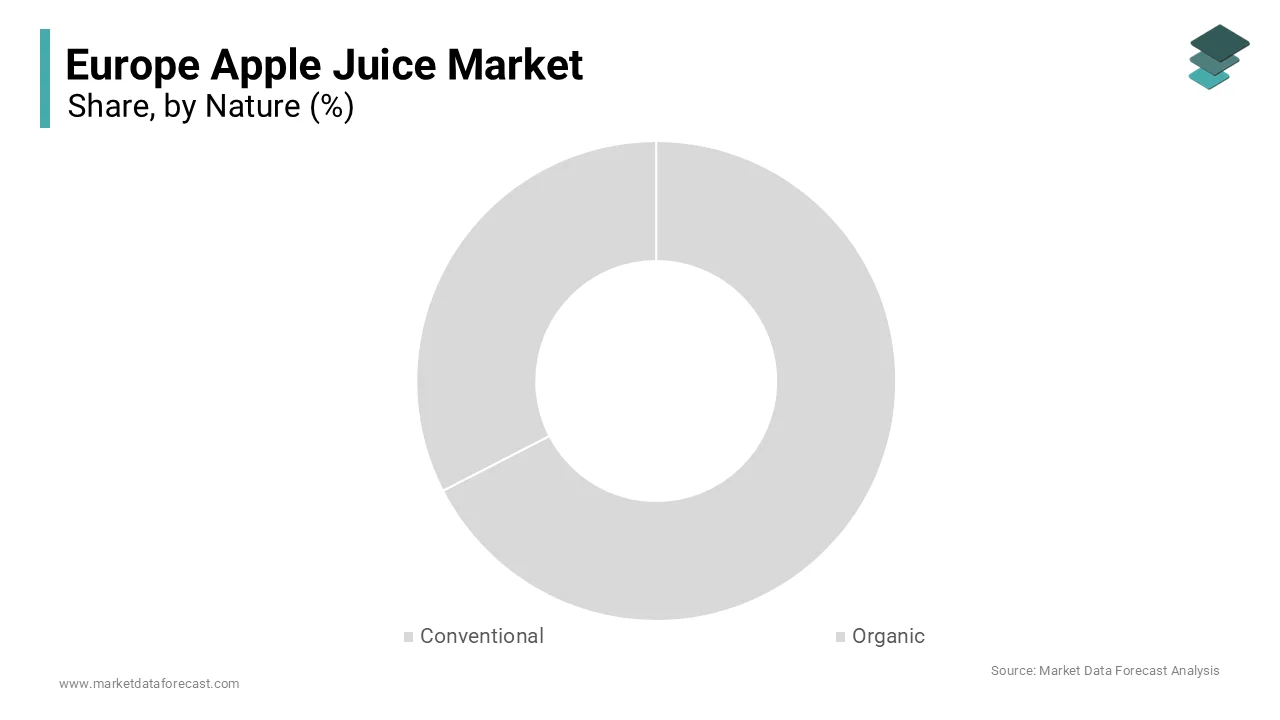
The conventional apple juice segment dominated the Europe apple juice market and accounted for a substantial share in 2025. This dominance of the segment was driven by its affordability and widespread availability across all retail channels. The lower production costs associated with conventional farming methods allow manufacturers to offer competitive pricing that appeals to price-sensitive consumers and large families. According to Eurostat, conventional orchards make up the overwhelming majority of fruit acreage within the single market, with total regional land under specialist fruit holdings encompassing approximately 3.7 million hectares to ensure stable agricultural raw material processing pipelines. This volume advantage enables economies of scale that further reduce retail prices, making conventional juice the default choice for daily consumption. Major supermarket chains prioritize conventional variants because they generate higher turnover rates and occupy significant shelf space. The familiarity of traditional apple juice flavors meets the expectations of mainstream consumers who prefer consistent taste profiles without the variability often found in organic or artisanal products. As per sources, standard and value-tier grocery store beverage products retain the dominant commercial volume share within Western Europe's fast-moving consumer goods landscape, even as consumer preference patterns continuously adapt to macro pricing volatility. The extensive distribution network established over decades ensures that conventional apple juice is accessible in urban and rural areas alike. Promotional activities and bulk buying options further enhance its appeal to budget-conscious shoppers. This combination of cost efficiency, reliability, and accessibility solidifies the leadership of conventional apple juice in the regional market.
Highly efficient supply chains and advanced industrial processing capabilities further reinforce the dominance of conventional apple juice. Large-scale processors in countries like Poland and Germany have invested in automated extraction and pasteurization technologies that maximize yield and minimize waste for conventional apples. According to the Food and Agriculture Organization of the United Nations, global apple yields exceed 93 million to 95 million metric tons annually, providing an extensive structural raw crop base for global fresh retail consumption and secondary industrial juice concentrate networks. These facilities operate continuously throughout the year utilizing stored apples and concentrates to maintain steady production levels regardless of seasonal harvest fluctuations. The integration of vertical supply chains from orchard to bottle reduces logistical complexities and ensures quality control at every stage. Established relationships between growers and processors guarantee raw material availability at predictable prices, shielding manufacturers from short-term market volatility. The ability to produce clear concentrates allows for easier transportation and storage, reducing overall logistics costs. This operational efficiency translates into stable product availability and consistent quality for retailers and consumers. The mature infrastructure supporting conventional juice production creates high barriers to entry for competitors relying on less scalable methods, thereby sustaining the segment's market leadership through superior operational performance.
The organic apple juice segment is predicted to witness the highest CAGR of 9.2% from 2026 to 2034 due to increasing consumer preference for chemical-free and sustainable products. Health-conscious shoppers are actively seeking beverages free from synthetic pesticides and fertilizers, associating organic certification with higher safety and nutritional value. As per tracking data published by the Research Institute of Organic Agriculture (FiBL), total annual retail sales of organic food and drink across the European continent reached a record 58.7 billion euros, signaling localized post-inflationary recovery trends. Parents are particularly inclined to purchase organic apple juice for children to minimize exposure to potential residues aligning with broader wellness trends. The European Union’s strict organic regulations provide a trusted framework that enhances consumer confidence in labeled products. Retailers are responding by expanding their organic sections and promoting private label organic juices, which offer better margins and brand loyalty. Marketing campaigns emphasizing environmental benefits such as soil health and biodiversity resonate with eco-conscious buyers. The willingness to pay a premium for perceived quality and ethical production practices drives the rapid adoption of organic apple juice.
Government support and regulatory incentives for organic farming significantly contribute to the accelerated growth of the organic apple juice segment. As per the European Commission's strategic framework, the official Farm to Fork initiative establishes a binding target to bring a minimum of 25% of the total European Union agricultural land area under organic management structures by the year 2030. According to the European Commission, France accounts for between 25.65% and 28.76% of the total geographic area dedicated specifically to organic apple cultivation within the European Union, positioning domestic producers as major single-market suppliers. The expansion ensures a more reliable supply of organic raw materials for juice processors, reducing dependency on imports. National governments also promote organic consumption through public procurement policies in schools and hospitals, creating institutional demand. Certification bodies streamline approval processes, making it easier for producers to enter the market and verify their claims. Collaborative projects between research institutions and farmers improve organic farming techniques, enhancing yields and fruit quality. The alignment of policy objectives with consumer demand creates a favorable environment for market expansion. Investment in organic processing facilities further supports growth by ensuring that certified raw materials are handled according to strict standards. These structural supports enable the organic segment to overcome previous supply constraints and achieve sustained high growth rates.
By Distribution Channel Insights
The supermarkets segment led the Europe Apple Juice Market and captured a significant share in 2025. This leading position of the segment was attributed to the convenience of one-stop shopping and extensive product variety. Consumers prefer purchasing groceries, including beverages, in single trips to large retail outlets where they can compare brands, sizes, and prices easily. According to studies, supermarkets and hypermarkets remain the bedrock of European fast-moving consumer goods distribution, capturing a clear majority of the continent's grocery revenue amid expanding market footprints from hard discounters. These retailers dedicate significant shelf space to apple juice, offering both private label and branded options in various formats such as cartons, bottles, and concentrates. Promotional displays and endcap placements enhance visibility and drive impulse purchases among shoppers. The ability to buy in bulk appeals to families and cost-conscious consumers who seek value for money. Supermarkets also leverage loyalty programs and digital coupons to incentivize repeat purchases and brand switching. The controlled environment ensures proper storage conditions, maintaining product quality until purchase. Efficient inventory management systems prevent stockouts, ensuring consistent availability. This combination of accessibility, variety, and promotional power makes supermarkets the primary channel for apple juice distribution across the region.
The top position of supermarkets is further supported by their strong bargaining power and efficient logistics networks, which ensure competitive pricing and reliable supply. Large retail chains negotiate favorable terms with suppliers, leveraging their high-volume purchases to secure lower costs and exclusive deals. According to the European Commission, retail alliances and procurement collaborations among grocery giants pool buyer power primarily to negotiate competitive terms against multinational brand suppliers to deliver cost efficiencies to consumers. The power allows supermarkets to offer aggressive discounts on apple juice, attracting price-sensitive customers. Their established logistics infrastructure, including centralized distribution centers and cold chain capabilities, ensures timely delivery and minimal spoilage. Advanced data analytics help retailers predict demand patterns, optimizing stock levels and reducing waste. Partnerships with local and international suppliers provide a diverse range of products catering to different consumer preferences. The professionalism and reliability of supermarket operations build trust with both suppliers and customers. Regular audits and quality checks ensure compliance with safety standards protecting brand reputation. This operational excellence makes supermarkets the preferred channel for manufacturers seeking broad market reach and volume sales.
The e-commerce segment is the fastest growing in the Europe apple juice market, owing to high digital penetration and the convenience of home delivery. Consumers increasingly prefer online shopping for bulky items like juice packs to avoid physical effort and save time. According to the International Telecommunication Union, internet penetration across the broader European territory reached approximately 91% to 93%, with modern network infrastructure providing near-universal connectivity. Specialized alcohol and beverage delivery services as well as general e-commerce giants like Amazon and Ocado offer seamless purchasing experiences with next-day delivery options. Subscription models for regular juice deliveries are gaining popularity among health-conscious households, ensuring a consistent supply without repeated ordering. The ability to read customer reviews and compare nutritional information online empowers buyers to make informed decisions. During periods of restricted mobility or busy schedules, online shopping provides a reliable alternative to physical stores. Retailers invest in user-friendly interfaces and personalized recommendations to enhance customer engagement. Data from Euromonitor International indicates that online grocery sales in Europe grew by 12 percent in 2024, with beverages being a key category. This digital shift enables niche and premium brands to reach wider audiences beyond local retail limits.
The expansion of online retailers and direct-to-consumer models significantly contributes to the rapid growth of the e-commerce segment. Many apple juice producers are launching their own online stores to sell directly to customers, bypassing traditional intermediaries and capturing higher margins. According to Eurostat, e-commerce adoption continues to structurally adjust consumer purchase behaviors within the single market, with nearly 78% of internet users purchasing or ordering goods and services online. Online platforms facilitate the sale of premium and artisanal juices that may not be available in standard supermarkets, appealing to discerning buyers. Social media integration allows brands to engage with customers and drive traffic to their websites through influencer partnerships and targeted ads. Improved packaging solutions ensure that glass bottles and fresh juices arrive safely, enhancing customer satisfaction. Loyalty programs and exclusive online offers encourage repeat purchases and brand advocacy. The flexibility of e-commerce allows for rapid introduction of new flavors and limited edition products, testing market response efficiently. As logistics networks improve and delivery costs decrease, online shopping becomes increasingly attractive for routine grocery purchases. This structural shift supports sustained high growth for the e-commerce channel.
By End Use Insights
In 2025, the household segment held the majority share in the Europe apple juice market because of daily consumption habits and the integration of juice into health-conscious family diets. Apple juice is a staple breakfast beverage and snack option for children and adults alike, providing a quick source of energy and vitamins. According to the European Fruit Juice Association (AIJN), orange juice historically maintains the highest market volume share of all liquid fruit flavors consumed within the broader European single market. Parents frequently purchase apple juice as a healthier alternative to sodas for school lunches and after-school snacks. The convenience of ready-to-drink packs fits seamlessly into busy morning routines. Rising awareness of hydration and nutrition prompts households to keep stocked supplies of juice for immediate consumption. Bulk purchasing options in supermarkets cater to large families, reducing per-unit costs. The versatility of apple juice allows it to be consumed plain, mixed with water, or used in cooking and baking. This entrenched role in daily life ensures steady and voluminous demand from the household sector.
The availability of affordable private label options further reinforces the dominance of the household segment. Supermarkets across Europe have expanded their private label ranges, offering high-quality apple juice at lower prices than national brands. As per tracking data published by the Private Label Manufacturers Association (PLMA), the aggregate market share for retailer-owned store brands across key European nations reached 38.8%, cementing Europe's position as a dominant global hub for grocery private labels. These store brands often match the quality of leading brands while offering better value for money, encouraging trial and loyalty. Households appreciate the cost savings, especially when purchasing large volumes for regular consumption. Retailers promote private label juices through prominent shelf placement and comparative pricing strategies. The consistency in quality and taste of private label options builds trust among shoppers who no longer view them as inferior alternatives. Economic pressures and inflation have made private labels even more attractive as families seek to manage household budgets effectively. This trend drives significant volume sales through the household channel as consumers prioritize value without compromising on basic nutritional needs. The widespread acceptance of private labels ensures that the household segment remains the primary driver of apple juice consumption.
The commercial segment is rapidly expanding in the Europe apple juice market, propelled by the revival of the hospitality sector and increasing demand for premium beverages. Hotels, restaurants, and cafes are expanding their beverage menus to include high-quality, fresh, and cold-pressed apple juices, catering to health-conscious diners. According to the UN Tourism World Tourism Barometer, total international tourist arrivals across European holiday destinations recovered to roughly 96% of historical pre-pandemic reference benchmarks, registering over 747 million cross-border visits. Chefs and bartenders utilize apple juice as a base for cocktails, mocktails, and culinary creations, adding sophistication to their offerings. The trend toward experiential dining encourages establishments to source artisanal and organic juices that differentiate their menus. Corporate cafeterias and office canteens are also upgrading their beverage options to support employee wellness initiatives. The emphasis on presentation and quality in commercial settings drives higher-value transactions compared to household purchases. This dynamic environment supports rapid growth in the commercial segment as businesses compete on service and product quality.
The growth of quick-service restaurants and the inclusion of healthy menu options significantly contribute to the accelerated growth of the commercial segment. Fast food chains and casual dining outlets are introducing apple juice as a standard beverage option to appeal to families and health-aware customers. According to the European Commission's marketing directives, 100% pure commercial fruit juices must retain entirely unadulterated fruit pulp structures and are legally forbidden from containing any added sugars or artificial sweeteners. Schools and universities partnering with food service providers also drive demand by offering nutritious meal plans that include juice. The convenience of single serve packaging suits the fast paced nature of quick service environments. Marketing collaborations between juice brands and restaurant chains enhance visibility and trial among younger demographics. The focus on transparency and natural ingredients aligns with the branding strategies of modern quick-service restaurants. As these chains expand their footprint across Europe the volume of apple juice consumed in commercial settings rises steadily. This institutional adoption creates a stable and growing revenue stream for suppliers targeting the commercial sector.
REGIONAL ANALYSIS
Germany Market Analysis
Germany was the top performer in the Europe apple juice market and occupied a 22.6% share in 2025. Its robust apple production and deep cultural affinity for fruit juices have contributed to Germany's leading position in the European market. The country is one of the top apple producers in Europe, providing ample raw materials for domestic processing. According to the German Federal Statistical Office, domestic commercial growers harvested a significantly reduced total of approximately 734,000 metric tons of apples in 2024 due to late spring frosts and severe weather anomalies. German consumers have a long-standing tradition of consuming apple juice, often preferring cloudy unfiltered varieties known as "Apfelsaft." The presence of major juice manufacturers and cooperatives ensures high quality standards and wide availability. Retailers offer extensive selections of both conventional and organic juices catering to diverse preferences. Government initiatives promoting healthy eating in schools and workplaces further boost consumption. The strong economy and high disposable incomes enable consumers to purchase premium and organic options. Export activities to neighboring countries also contribute to market vitality. Germany’s combination of production capacity, consumer demand, and industrial expertise solidifies its position as the market leader.
France Market Analysis
France was positioned second in the Europe apple juice market and held an 18.4% share in 2025. This expansion of the French market was fueled by a strong culinary heritage and preference for high-quality natural products. French consumers value authenticity and origin, leading to high demand for locally sourced apple juices from regions like Normandy and Brittany. According to Agreste, French apple production for the 2024 crop year registered a notable decline of roughly 1.4 million tons compared to the previous year's higher yield. The popularity of cider and apple-based beverages influences juice consumption patterns, with many households enjoying apple juice as a refined alternative. Supermarkets and specialty stores feature a wide range of artisanal and organic juices appealing to discerning buyers. The government promotes French agricultural products through labeling schemes such as AOC, enhancing consumer trust. The hospitality sector in Paris and other tourist hubs drives demand for premium juices in restaurants and hotels. Health consciousness among urban populations supports sales of organic and cold-pressed variants. France’s focus on quality and tradition maintains its significant market position and drives steady growth.
United Kingdom Market Analysis
The United Kingdom maintains a significant share of the European market. This demonstrates resilient demand for apple juice despite economic challenges and changing dietary habits. British consumers have a strong affinity for apple juice, particularly in carton formats for children and on-the-go consumption. According to the Office for National Statistics, average weekly household expenditure on food and non-alcoholic drinks in the United Kingdom grew nominally by 9% to £676.60, demonstrating shifting essential household spending patterns. The rise of health awareness has shifted preference toward no added sugar and organic varieties. Major retailers like Tesco and Sainsbury’s offer extensive private label ranges that drive volume sales. The hospitality sector in London and other cities contributes to commercial demand with cafes and restaurants serving fresh juices. Post-Brexit trade adjustments have influenced sourcing strategies, but domestic production in counties like Kent supports local supply. Marketing campaigns by industry bodies promote the benefits of apple juice, encouraging continued consumption. The UK’s mature retail landscape and health trends sustain its important role in the regional market.
Italy Market Analysis
Italy is also a key player in the European market. This market shows growth through premium and organic segments. Better health habits and strong farming drive this change. Italy is a major apple producer, particularly in the northern regions, providing high-quality fruit for juice processing. As per the Italian Institute of Statistics (ISTAT), the domestic organic agri-food market value reached 3.96 billion euros, with certified operators expanding across the food and beverage industry to satisfy structural safety and quality transformations. Consumers are shifting away from sugary drinks toward pure fruit juices, aligning with Mediterranean diet principles. Specialty stores and pharmacies often stock premium apple juices fortified with vitamins or combined with other fruits. The tourism industry boosts demand in coastal and urban areas where visitors seek refreshing and healthy beverage options. Government support for organic farming encourages producers to obtain certifications enhancing export potential. Local brands emphasize sustainability and traceability, appealing to environmentally conscious buyers. Italy’s rich agricultural resources and evolving consumer preferences support its steady market expansion.
Spain Market Analysis
Spain is likely to expand notably in the European market during the forecast period. Both exports and local consumption show that this market has good potential. While traditionally known for citrus, Spain has increased apple production in regions like Catalonia and Aragon, supporting local juice industries. According to the Ministry of Agriculture, Fisheries, and Food, Spain's overall agri-food sector exports hit new historic valuation records while commercial import projections for industrial apple juice concurrently expand to meet domestic processor shortfalls. Domestic consumers are increasingly adopting healthier lifestyles, driving demand for natural juices in supermarkets. The hot climate encourages consumption of refreshing beverages, including chilled apple juice. Retailers are expanding their organic and premium offerings to meet rising demand. The hospitality sector in tourist destinations like Barcelona and Madrid contributes to commercial sales. Investment in modern processing facilities improves product quality and shelf life. Spain’s strategic location facilitates distribution to other European markets, enhancing its regional importance.
COMPETITIVE LANDSCAPE
The competition in the Europe Apple Juice Market is characterized by a mix of established multinational corporations and agile local producers who vie for dominance through quality innovation and sustainability. Major players leverage their extensive distribution networks and brand recognition to maintain visibility in supermarkets and retail outlets. Local artisans differentiate themselves by offering premium cold pressed and organic juices that appeal to niche markets seeking authenticity and superior taste. Competitive intensity is driven by the need to adapt to changing consumer preferences such as low sugar content and clean label requirements. Price sensitivity remains a factor in mass market segments prompting companies to optimize production costs while maintaining quality. Regulatory compliance regarding labeling and safety standards acts as a barrier to entry protecting established brands with robust compliance infrastructure. The rise of private label offerings from major retailers adds pressure on branded manufacturers to demonstrate unique value propositions. Innovation in packaging and functional benefits serves as a key differentiator in a saturated market. Overall success depends on balancing cost efficiency with premium positioning and sustainable practices to retain customer loyalty in a dynamic and health focused environment.
KEY MARKET PLAYERS
Some of the key players in the Europe apple juice market are
- The Coca-Cola Company
- Del Monte Food, Inc.
- Parle Agro Pvt. Ltd.
- Tree Top Inc.
- PepsiCo, Inc.
- Britvic Plc
- Manzana Products Co.
- The Kraft Heinz Company
- Eden Foods Inc.
- Solana Gold Organics
- White House Company
Top Players in the Market
- Eckes Granini Group stands as a prominent player in the Europe Apple Juice Market leveraging its extensive portfolio of fruit juice brands across multiple countries. The company focuses on delivering high quality pure apple juices and nectars that cater to diverse consumer preferences for taste and nutrition. Recent strategic initiatives include expanding its organic product lines to meet growing demand for sustainable beverages in Germany and neighboring markets. Eckes Granini has invested in modernizing production facilities to enhance efficiency and reduce environmental impact through energy saving technologies. The company actively collaborates with local apple growers to secure premium raw materials ensuring consistent flavor profiles. By prioritizing brand innovation and supply chain sustainability Eckes Granini strengthens its reputation as a trusted provider of healthy beverage options. Its strong distribution network ensures wide availability in supermarkets and retail outlets reinforcing its competitive position in the European landscape.
- Ceres A/S contributes significantly to the Europe Apple Juice Market through its commitment to natural ingredients and innovative packaging solutions. Based in Denmark the company produces a wide range of apple juices including cold pressed and organic variants that appeal to health conscious consumers. Ceres has recently strengthened its market position by launching eco friendly carton packaging that reduces plastic waste and aligns with circular economy goals. The firm emphasizes transparency in sourcing working directly with certified orchards to guarantee quality and sustainability. Strategic partnerships with major Nordic retailers have expanded its reach and visibility in key markets. Ceres also invests in marketing campaigns that highlight the nutritional benefits of apple juice educating consumers about its role in a balanced diet. These efforts reinforce its brand loyalty and drive growth in the premium segment of the regional juice industry.
- Döhler Group plays a vital role in the Europe Apple Juice Market as a leading supplier of fruit based ingredients and finished products. The company provides high quality apple juice concentrates and purees to both industrial clients and retail brands ensuring consistency and flavor excellence. Döhler has recently enhanced its capabilities by investing in advanced extraction technologies that preserve natural nutrients and aroma. The group focuses on sustainability by implementing water conservation measures and supporting regenerative agriculture practices among its supplier network. Collaborations with research institutions enable the development of novel apple juice formulations tailored to specific health trends. Döhler’s global expertise allows it to offer customized solutions that meet stringent European regulatory standards. By combining technical innovation with responsible sourcing Döhler maintains its status as a key partner for manufacturers seeking premium apple juice ingredients across the continent.
Top Strategies Used by Key Market Participants
Key players in the Europe Apple Juice Market primarily focus on product innovation and sustainability to maintain competitive advantage. Companies invest in developing organic and cold pressed variants to cater to health conscious consumers seeking natural options. Strategic partnerships with local farmers ensure high quality raw materials and support sustainable agricultural practices. Expansion into eco friendly packaging solutions such as recyclable cartons and reduced plastic usage aligns with environmental regulations and consumer expectations. Digital marketing campaigns emphasize transparency and health benefits building brand trust and loyalty. Diversification of product portfolios includes functional juices fortified with vitamins or probiotics to address specific wellness needs. Efficient supply chain management reduces costs and ensures consistent product availability across diverse retail channels. These strategies collectively strengthen market positions by addressing evolving consumer preferences regulatory demands and operational efficiency goals in the European region.
MARKET SEGMENTATION
This research report on the Europe apple juice market has been segmented and sub-segmented based on nature, distribution channel, end use & region.
By Nature
- Conventional
- Organic
By Distribution Channel
- Supermarkets
- E-Commerce
- Convenience Stores
- Retail Stores
By End Use
- Household
- Commercial
By Country
- UK
- France
- Spain
- Germany
- Italy
- Russia
- Sweden
- Denmark
- Switzerland
- Netherlands
- Turkey
- Czech Republic
- Rest of Europe