- Product Description Description
- Table of Contents TOC
- List of Table & Figure LOT
- Get Free Sample PDF Sample PDF
Market Size, 2025
$1.52 BnMarket Estimate, 2026
$1.99 BnMarket Forecast, 2034
$17.25 BnCAGR, 2026–2034
30.24%Europe AR & VR in Healthcare Market Report Summary
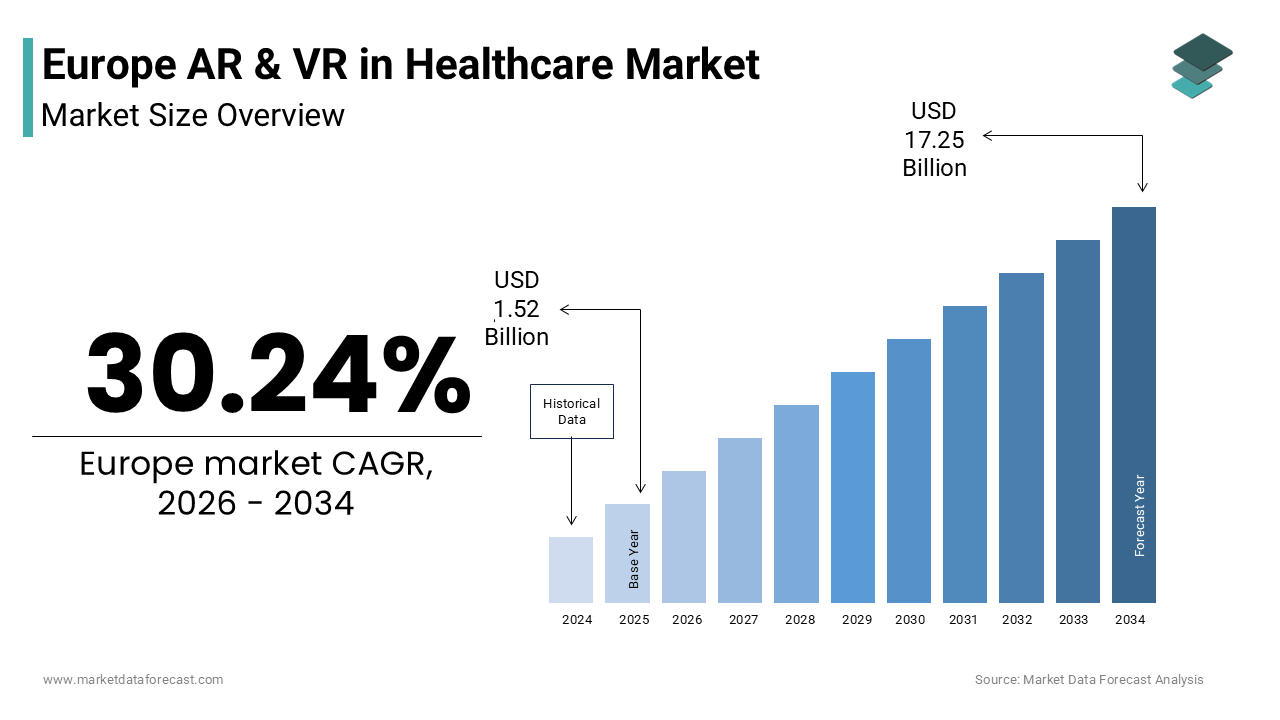
The Europe AR & VR in healthcare market was valued at USD 1.52 billion in 2025 and is anticipated to reach USD 1.99 billion in 2026 from USD 17.25 billion by 2034, growing at a CAGR of 30.24% during the forecast period from 2026 to 2034. The growth of the Europe AR & VR in healthcare market is driven by the increasing shortage of healthcare professionals, rising adoption of simulation-based medical training, and growing demand for advanced digital healthcare solutions. Expanding utilization of immersive technologies in surgical planning, rehabilitation, and patient care, coupled with increasing investments in digital health infrastructure, is further accelerating market growth. Moreover, advancements in wearable technologies, integration of artificial intelligence with immersive healthcare platforms, and growing acceptance of virtual therapeutics are supporting the expansion of the Europe AR & VR in healthcare market.
Key Market Trends
-
Rising adoption of virtual reality-based medical training and simulation programs.
-
Increasing utilization of augmented reality in surgical planning and intraoperative navigation.
-
Growing demand for immersive mental health therapies and rehabilitation solutions.
-
Rising integration of artificial intelligence with AR and VR healthcare applications.
-
Increasing development of remote patient monitoring solutions using AR-enabled wearables.
Segmental Insights
- Based on component, the hardware segment dominated the Europe AR & VR in healthcare market and held the largest share in 2025. The dominance of the segment is attributed to the growing deployment of head-mounted displays, haptic devices, smart glasses, and surgical navigation systems across healthcare facilities. Increasing investments in advanced medical visualization tools and the recurring need for hardware upgrades continue to support segment growth.
- The software segment is projected to witness the fastest CAGR of 19.4% during the forecast period owing to the increasing adoption of cloud-based healthcare platforms, artificial intelligence-powered analytics, and scalable subscription-based software solutions. The growing integration of immersive applications with electronic health records and clinical workflows is further accelerating segment growth.
- Based on technology, the virtual reality training and medical education segment accounted for the largest share of the Europe AR & VR in healthcare market in 2025. The growth of the segment is driven by increasing demand for standardized medical education, rising need for simulation-based surgical training, and growing focus on reducing medical errors through immersive learning environments. Widespread adoption of VR platforms by medical schools and healthcare institutions continues to strengthen segment demand.
- The augmented reality surgical application segment is anticipated to register the fastest CAGR of 22.6% during the forecast period due to increasing utilization of real-time anatomical overlays, rising demand for minimally invasive surgical procedures, and growing adoption of AR-guided navigation systems in complex surgeries. Improved surgical precision and reduced complication rates are further supporting segment growth.
Regional Insights
- Germany dominated the Europe AR & VR in healthcare market in 2025 and accounted for the largest regional share. The country's leadership is driven by strong healthcare infrastructure, significant government investments in digital health transformation, widespread reimbursement support for digital therapeutics, and the presence of leading medical technology companies. Growing adoption of immersive technologies in hospitals and research institutions further strengthens market expansion.
- The United Kingdom held a substantial share of the Europe AR & VR in healthcare market owing to strong National Health Service initiatives, increasing utilization of virtual reality training programs, expanding healthcare technology investments, and a thriving digital health startup ecosystem. The country continues to be a major center for innovation in immersive healthcare technologies.
- France continues to maintain a significant position in the European market due to its strong focus on evidence-based healthcare innovation, increasing adoption of certified virtual rehabilitation programs, expanding public healthcare investments, and growing demand for personalized digital therapeutics.
- Italy is witnessing steady growth supported by increasing demand for rehabilitation technologies, healthcare modernization initiatives, expanding telemedicine infrastructure, and growing utilization of AR & VR solutions in elderly care and motor rehabilitation applications.
- Spain is expected to experience notable growth during the forecast period due to rising adoption of immersive mental health therapies, increasing healthcare technology investments, growing medical tourism activities, and expanding utilization of advanced surgical visualization systems across healthcare facilities.
Competitive Landscape
The Europe AR & VR in healthcare market is highly competitive and characterized by the presence of global technology companies, medical device manufacturers, healthcare software developers, and digital therapeutics providers competing through innovation, clinical validation, and strategic partnerships. Leading companies are focusing on developing advanced immersive healthcare platforms, integrating artificial intelligence capabilities, improving user experience, and expanding clinical applications across surgery, training, rehabilitation, and mental health. Collaborations with healthcare institutions, regulatory approvals, and investments in research and development continue to strengthen market positioning across the European AR & VR healthcare ecosystem. The key players operating in the Europe AR & VR in healthcare market include Google, DAQRI, Microsoft, AppliedVR, MindMaze, Oculus VR, HTC Corporation, Firsthand Technology, Psious, Atheer, Medical Realities, Hologic, Inc., Augmedix, 3D Systems, Alphabet Inc., Samsung, Orca Health LLC, and CAE Healthcare.
Europe AR & VR in Healthcare Market Size
The Europe AR & VR in healthcare market size was valued at USD 1.52 billion in 2025 and is anticipated to reach USD 1.99 billion in 2026 from USD 17.25 billion by 2034, growing at a CAGR of 30.24% during the forecast period from 2026 to 2034.
AR VR in healthcare market represents a transformative intersection of immersive technology and medical practice, utilizing augmented reality and virtual reality systems to enhance diagnosis, treatment, training, and patient care. This sector leverages three-dimensional visualization to provide surgeons with real-time anatomical overlays during complex procedures, and offers patients immersive therapeutic environments for pain management and rehabilitation. The region is characterized by advanced digital infrastructure and a strong commitment to medical innovation, supported by robust regulatory frameworks that ensure safety and efficacy. As per a European Commission eHealth survey, over 80% of hospitals in Western Europe have initiated digital transformation strategies that include exploratory pilots for immersive technologies. The aging population creates urgent demand for efficient care delivery models, with Eurostat data indicating that 21.3% of the European Union population was aged 65 or older in 2024. This demographic shift necessitates scalable solutions for chronic disease management and remote monitoring. Furthermore, the shortage of healthcare professionals across the continent drives adoption of simulation-based training tools that accelerate skill acquisition without risking patient safety. According to the World Health Organization, the European Region faces a shortfall of approximately 1 million health professionals, prompting institutions to seek technological aids that maximize workforce productivity. Integration of these technologies into national health systems varies, with countries like Germany and France leading in reimbursement policies for digital therapeutics. The convergence of high-speed connectivity and sophisticated hardware enables seamless deployment of immersive solutions in clinical settings.
MARKET DRIVERS
Critical Shortage of Medical Professionals Accelerates Simulation-Based Training Adoption
The persistent and widening gap between the supply of qualified healthcare workers and the growing demand for medical services is primarily fuelling the expansion of the European AR & VR in healthcare market. Traditional apprenticeship models are insufficient to address the scale of the workforce crisis, prompting medical institutions to turn to immersive simulations that offer scalable and repeatable learning experiences. According to the World Health Organization, the European Region faces a shortfall of approximately 1 million health professionals, a deficit projected to worsen as current staff retires and burnout rates increase. Virtual reality platforms allow students and residents to practice complex surgical procedures thousands of times in risk-free environments, significantly reducing the learning curve compared to traditional methods. As per studies published in the Harvard Business Review on virtual reality training, VR-trained surgeons make 40% fewer errors and complete procedures 20% faster than those trained through conventional means. This efficiency gain is crucial for hospitals operating under severe staffing pressures. Augmented reality aids further support junior doctors by providing real-time guidance during procedures, effectively extending the expertise of senior specialists to less experienced staff. National health services in countries like the United Kingdom and Sweden have integrated VR modules into mandatory continuing medical education programs to maintain competency standards. The ability to standardize training across multiple locations ensures consistent quality of care, regardless of geographic location. This strategic shift toward technology-enhanced education not only addresses immediate staffing gaps, but also builds a more resilient and skilled workforce capable of handling future healthcare challenges.
Rising Prevalence of Mental Health Disorders Drives Demand for Immersive Therapies
The escalating burden of mental health conditions across Europe has created substantial demand for innovative therapeutic interventions, which is positioning AR VR technologies as vital tools in psychological treatment and rehabilitation and further boosting the regional market expansion. Traditional therapy methods often face limitations in accessibility and engagement, whereas immersive environments offer controlled settings for exposure therapy, stress reduction, and cognitive behavioral interventions. As per an Organization for Economic Co-operation and Development health report, one in six people across the European Union has a mental health problem, with anxiety and depression accounting for the majority of cases. Virtual reality exposure therapy has demonstrated superior efficacy in treating post-traumatic stress disorder and phobias by allowing patients to confront triggers in safe, customizable scenarios. Clinical trials conducted by major European research institutes show that VR-based interventions reduce symptoms by up to 30% more effectively than standard care alone. The anonymity and convenience of digital therapeutics also help overcome stigma barriers that prevent many individuals from seeking help. National health systems are increasingly recognizing these benefits, with countries like Germany beginning to reimburse prescribed digital health applications that include VR components. Schools and workplaces are adopting mindfulness VR programs to support emotional well-being among students and employees. The scalability of these solutions allows therapists to monitor multiple patients remotely, optimizing resource utilization. As awareness grows and clinical evidence accumulates, the integration of immersive mental health tools into mainstream care pathways continues to expand rapidly.
MARKET RESTRAINTS
Stringent Data Privacy Regulations Impede Seamless Technology Integration
Rigorous regulatory frameworks governing food additives in Europe is hindering the expansion of the European AR & VR in healthcare market. The European Food Safety Authority continuously reviews the safety of authorized additives, leading to bans or reduced acceptable daily intakes for several commonly used conditioning agents. According to the European Commission Regulation EC No 1333/2008, substances such as azodicarbonamide are prohibited in food production within the European Union, forcing manufacturers to seek less potent or more expensive alternatives. The approval process for new food additives is lengthy and costly, often taking several years and requiring extensive toxicological data, which discourages innovation in synthetic conditioning technologies. Small and medium-sized enterprises struggle to keep pace with changing regulations, facing compliance burdens that larger competitors can absorb. National variations in interpretation and enforcement create additional complexity for companies operating across multiple member states. The precautionary principle adopted by European regulators means that even suspected risks can lead to immediate restrictions, creating uncertainty for long-term product development. Reformulating products to meet new standards requires significant research and development investment and may result in temporary quality compromises that affect consumer acceptance. These regulatory hurdles slow the introduction of novel, high-performance conditioners and restrict the toolkit available to bakers, potentially impacting product quality and operational efficiency in the face of rising raw material costs.
High Initial Investment Costs and Infrastructure Limitations Restrict Accessibility
Substantial capital expenditure required for hardware, software, and technical infrastructure constitutes a major barrier to the adoption of AR VR technologies in European healthcare facilities, particularly in public sector institutions facing budget constraints. High-end VR headsets, haptic feedback devices, and powerful computing units necessary for rendering realistic medical simulations involve significant upfront costs. As per the Organisation for Economic Co-operation and Development, public health spending growth in several European countries has lagged behind inflation rates, forcing administrators to prioritize essential services over experimental technologies. Maintenance and regular upgrades of immersive equipment add to the long-term financial burden, making total cost of ownership a critical concern for procurement committees. Many older hospital buildings lack the high-bandwidth network infrastructure required to support low-latency streaming of complex AR applications, necessitating expensive retrofitting projects. The shortage of IT specialists trained in managing XR ecosystems further increases operational costs, as hospitals must rely on external vendors for support. Reimbursement models for VR-assisted procedures remain underdeveloped in many jurisdictions, meaning hospitals cannot easily recover investments through insurance claims. This financial uncertainty discourages large-scale deployments, limiting usage to isolated pilot projects rather than systemic integration. Smaller rural clinics are disproportionately affected, exacerbating healthcare disparities between urban centers and remote areas. Without clear return on investment metrics and supportive funding mechanisms, many potential users remain unable to access these transformative tools.
MARKET OPPORTUNITIES
Expansion of Remote Patient Monitoring Through Augmented Reality Wearables
The evolution of lightweight augmented reality wearables is a significant opportunity for the European AR & VR in healthcare market. These devices enable continuous tracking of vital signs while overlaying instructional guidance for patients managing chronic conditions at home. As per the European Telemedicine Network, remote monitoring initiatives have reduced hospital readmissions by 25% for heart failure patients, demonstrating the potential for broader application with enhanced interfaces. AR glasses can guide elderly patients through medication schedules, physical therapy exercises, and wound care procedures with visual cues, improving adherence and outcomes. This technology empowers patients to take active roles in their health management while reducing the burden on overstretched community nursing services. Insurance providers are increasingly interested in covering AR-enabled monitoring solutions due to their potential to lower long-term treatment costs. The integration of artificial intelligence with AR wearables allows for real-time anomaly detection and automatic alerts to healthcare providers, enabling proactive interventions. Aging populations in countries like Italy and Germany create ideal markets for such assistive technologies that support independent living. Manufacturers are focusing on developing user-friendly designs that minimize discomfort and maximize battery life to encourage daily use. Partnerships between tech companies and home care agencies facilitate seamless deployment and training. As connectivity improves with fifth-generation networks, the reliability and functionality of remote AR monitoring will expand, opening new revenue streams and improving quality of life for millions of Europeans.
Integration of Digital Twins for Personalized Surgical Planning and Education
The creation of patient-specific digital twins using AR VR technologies is another prominent opportunity for the European AR & VR in healthcare market. Digital twins are virtual replicas of patient anatomy derived from imaging data that allow surgeons to simulate procedures before entering the operating room. According to the European Society of Radiology, the accuracy of preoperative planning using three-dimensional reconstructions has improved surgical success rates by 15% in complex oncological cases. This technology enables personalized treatment strategies that account for individual anatomical variations, reducing operative time and complications. Medical schools are incorporating digital twin simulations into curricula to teach spatial reasoning and procedural steps in highly realistic contexts. Pharmaceutical companies utilize these models for drug testing and device development, accelerating innovation cycles. The ability to share digital twins securely among multidisciplinary teams enhances collaborative decision-making for difficult cases. Regulatory bodies are developing frameworks to validate digital twin algorithms, paving the way for broader clinical acceptance. Hospitals investing in this technology gain competitive advantages through improved outcomes and efficiency. The decreasing cost of computational power makes digital twin creation more accessible to mid-sized institutions. As libraries of anonymized digital twins grow, they will serve as valuable resources for training artificial intelligence systems to assist in diagnosis and treatment recommendations. This convergence of virtual modeling and clinical practice represents a frontier of medical innovation with profound implications for patient care.
MARKET CHALLENGES
Interoperability Issues with Existing Hospital Information Systems
The lack of seamless interoperability between AR VR platforms and existing hospital information systems is one of the major challenges to the expansion of the European AR & VR in healthcare market. Most immersive solutions operate as standalone applications that do not communicate effectively with electronic health records, picture archiving and communication systems, or laboratory information systems. As per the European Health Telematics Observatory, over 60% of healthcare IT projects fail to achieve full integration due to incompatible data standards and proprietary formats. This fragmentation forces clinicians to manually transfer patient data between systems, increasing administrative burden and risk of errors. The absence of universal application programming interfaces for XR devices complicates custom development efforts by hospital IT departments. Vendors often use closed ecosystems that lock customers into specific hardware and software combinations, limiting flexibility and choice. Standardization initiatives, such as Integrating the Healthcare Enterprise, are working to address these gaps, but progress remains slow due to diverse national regulations and legacy infrastructure. Clinicians frustrated by cumbersome workflows may resist adopting new technologies regardless of their clinical benefits. The need for middleware solutions to bridge compatibility gaps adds complexity and cost to implementation projects. Until open standards become widely adopted and enforced, healthcare organizations will struggle to realize the full potential of immersive technologies within their existing digital ecosystems.
User Resistance and Cyber Sickness Concerns among Clinical Staff
Psychological and physiological barriers, including cyber sickness and technophobia among healthcare professionals are another major challenge to the European AR & VR in healthcare market growth. A significant portion of medical staff experiences discomfort, such as nausea, dizziness, and eye strain, when using immersive headsets for extended periods. As per a study published by the European Journal of Occupational Medicine, approximately 30% of users report moderate to severe symptoms of simulator sickness during initial VR exposure, leading to reluctance in regular usage. Older clinicians who did not grow up with digital technologies often exhibit higher levels of anxiety and resistance to changing established workflows. The steep learning curve associated with mastering complex XR interfaces requires dedicated training time that busy professionals are unwilling to spare. Negative early experiences can create lasting prejudices against the technology, affecting institutional adoption rates. Ergonomic issues, such as headset weight and heat generation, further contribute to user fatigue during long shifts. Lack of intuitive design in many medical XR applications exacerbates these problems, requiring excessive cognitive load to operate. Institutions must invest heavily in change management and user support to overcome these human factors. Without addressing comfort, usability, and cultural acceptance, even the most advanced technological solutions will fail to achieve meaningful penetration in daily clinical practice.
REPORT COVERAGE
| REPORT METRIC | DETAILS |
| Market Size Available | 2025 to 2034 |
| Base Year | 2025 |
| Forecast Period | 2026 to 2034 |
| CAGR | 30.24% |
| Segments Covered | By Component, Technology and Region |
| Various Analyses Covered | Global, Regional & Country Level Analysis; Segment-Level Analysis; DROC, PESTLE Analysis; Porter’s Five Forces Analysis; Competitive Landscape; Analyst Overview of Investment Opportunities |
| Regions Covered | United Kingdom, France, Spain, Germany, Italy, Russia, Sweden, Denmark, Switzerland, the Netherlands, Turkey, and the Czech Republic |
| Market Leaders Profiled | Google, DAQRI, Microsoft, AppliedVR, Mindmaze, Oculus VR, HTC Corporation, Firsthand Technology, Psious, Atheer, Medical Realities, Hologic, Inc, Augmedix, 3D Systems, Alphabet, Inc, SAMSUNG, Orca Health LLC, and CAE HEALTHCARE. |
SEGMENTAL ANALYSIS
By Component Insights
The hardware segment dominated the market by holding the major share of the European market in 2025 because physical devices, such as head-mounted displays, haptic gloves, and surgical navigation systems, form the foundational infrastructure required for any immersive application. Without specialized hardware capable of high-resolution rendering and low-latency tracking, software solutions cannot function effectively in clinical settings. According to the International Data Corporation, shipments of enterprise-grade AR VR headsets in Europe reached 1.2 million units in 2025, with healthcare accounting for nearly 30% of this volume. Hospitals and training centers must invest heavily in these tangible assets before they can deploy educational or therapeutic programs. The complexity of medical procedures demands high-fidelity visualizations that only premium hardware can provide, ensuring accurate anatomical representation for surgeons and students. Major manufacturers continuously upgrade their devices with improved ergonomics and longer battery life to meet the rigorous demands of long surgical shifts. Public funding initiatives in countries like Germany and France often prioritize capital expenditure on medical technology equipment, facilitating large-scale hardware procurement. The tangible nature of hardware investments makes them easier to justify in budget planning compared to intangible software licenses. Additionally, the need for regular replacement cycles due to rapid technological obsolescence ensures recurring revenue streams for hardware vendors. This dependency on physical tools for delivering immersive experiences cements the dominance of the hardware segment in the overall market structure.
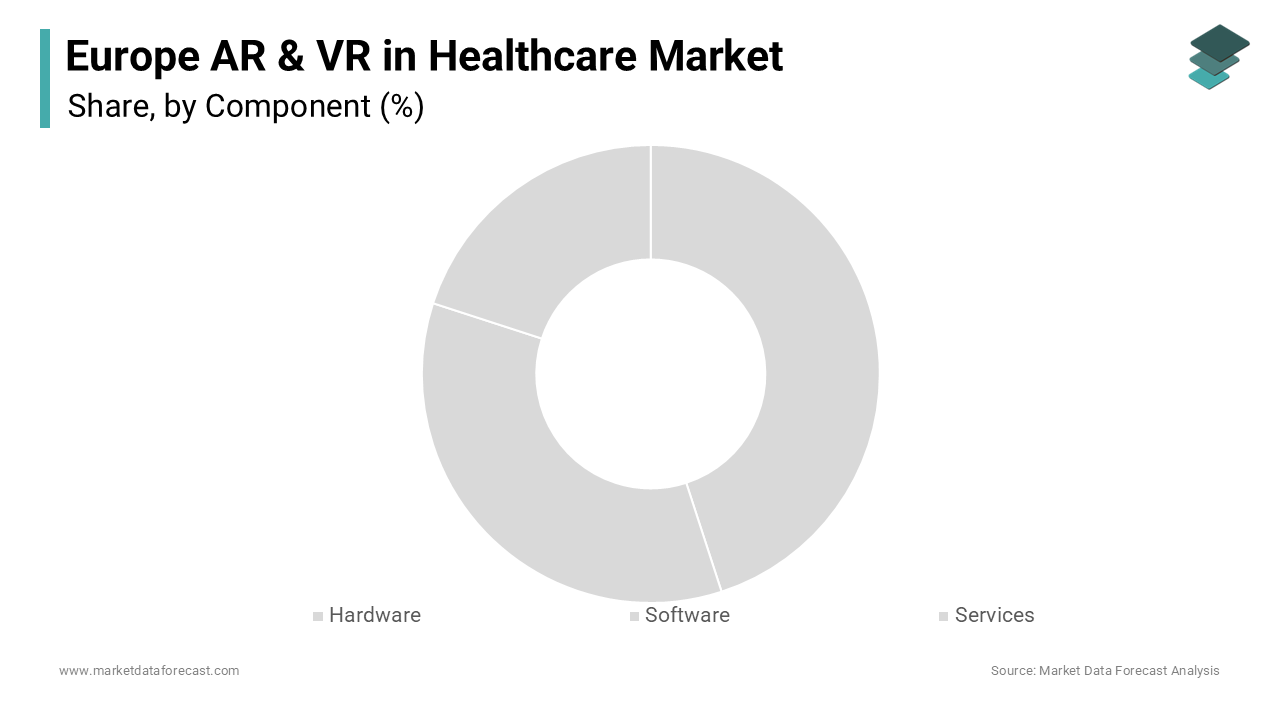
However, the software segment represents the fastest-growing segment within the Europe AR VR in healthcare market and is expected to register a CAGR of 19.4% during the forecast period owing to the shift toward cloud-based platforms and artificial intelligence integration. Unlike hardware, which requires significant upfront capital, software solutions offer scalable subscription models that lower entry barriers for smaller clinics and private practices. As per Gartner, European healthcare organizations increased their spending on medical software applications by 22% in 2025, reflecting a strategic pivot toward digital service delivery. Advanced algorithms now enable real-time image processing and predictive analytics within AR interfaces, enhancing diagnostic accuracy and surgical precision without requiring new physical devices. The proliferation of fifth-generation networks facilitates seamless streaming of complex three-dimensional models, allowing lightweight headsets to perform tasks previously reserved for powerful workstations. Developers are creating modular software suites that integrate easily with existing electronic health records, reducing implementation friction. Regulatory approvals for software as a medical device have streamlined market access for innovative startups, fostering a vibrant ecosystem of specialized applications. The ability to update features remotely ensures that healthcare providers always have access to the latest clinical protocols and training modules. This flexibility, combined with lower total cost of ownership, drives rapid adoption rates, outpacing the slower replacement cycles of physical hardware components.
By Technology Insights
The virtual reality training and medical education segment led the market by capturing the major share of the European market in 2025. The growth of the virtual reality and medical education segment in the European market can be credited to the critical need for safe, standardized, and scalable learning environments for healthcare professionals. Traditional apprenticeship models are insufficient to address the growing skills gap and patient safety concerns, prompting institutions to adopt immersive simulation technologies. According to the Association for Medical Simulation in Healthcare, over 75% of European medical schools now incorporate VR modules into their core curricula for anatomy and surgical procedure training. These virtual environments allow students to practice complex interventions repeatedly without risk to patients, significantly accelerating competency acquisition. Studies from leading universities indicate that VR-trained residents demonstrate 40% better procedural performance compared to those taught via traditional methods. The standardization of training across different institutions ensures consistent quality of care, regardless of geographic location. National health services support these initiatives through grants aimed at modernizing medical education infrastructure. The ability to simulate rare clinical scenarios prepares doctors for emergencies they might otherwise never encounter during residency. Furthermore, remote collaboration features enable experts to mentor students across borders, maximizing knowledge transfer. This widespread institutional adoption, coupled with proven educational outcomes, solidifies the dominance of VR training as the primary technological application in the sector.
On the other end, the augmented reality surgical application segment is the fastest-growing technology segment and is estimated to record a CAGR of 22.6% during the forecast period in the European market owing to its ability to enhance surgical precision and reduce operative times through real-time data overlay. Surgeons utilize AR headsets to visualize patient-specific anatomical structures, such as blood vessels and tumors, directly on the surgical field, improving spatial awareness and decision-making. As per the European Society of Computer Assisted Surgery, hospitals using AR guidance systems reported a 25% reduction in surgery duration and a 30% decrease in intraoperative complications in 2025. This technology minimizes the need for invasive exploratory procedures, allowing for minimally invasive techniques that improve patient recovery rates. The integration of preoperative imaging data with live video feeds provides unprecedented clarity during complex oncological and orthopedic procedures. Regulatory bodies are increasingly approving AR-assisted surgical devices, recognizing their clinical benefits and safety profiles. Leading medical device companies are partnering with tech firms to develop specialized AR platforms tailored to specific surgical specialties. The tangible improvements in patient outcomes and hospital efficiency metrics justify the investment, despite higher initial costs. As more surgeons become proficient with AR interfaces and evidence accumulates regarding its efficacy, adoption rates are expected to surge, particularly in high-volume tertiary care centers across Europe.
COUNTRY ANALYSIS
Germany AR & VR in Healthcare Market Analysis
Germany dominated the AR and VR in healthcare market in Europe in 2025 with holding the dominant share of the European market and is expected to expand its clinical adoption of immersive technologies significantly over the next few years due to its robust medical technology industry and progressive reimbursement frameworks. The country benefits from a dense network of world-class research hospitals and engineering firms that collaborate on developing advanced immersive solutions. According to the German Federal Ministry of Health, statutory health insurance funds began reimbursing certain digital health applications, including VR therapy for mental health conditions, in 2025, stimulating market growth. This policy support encourages healthcare providers to invest in AR VR technologies, knowing that costs can be recovered. The strong manufacturing base enables local production of high-quality hardware, reducing dependency on imports. German consumers exhibit high trust in medical innovations and a willingness to adopt new technologies for better health outcomes. Government initiatives, such as the Hospital Future Act, provide billions of euros in funding for digital infrastructure upgrades, facilitating AR VR integration. The aging population drives demand for efficient surgical and rehabilitation tools that AR VR provides. Strict regulatory standards ensure product safety, enhancing the global competitiveness of German-developed solutions. The presence of major trade fairs like Medica attracts international investors and partners, strengthening the ecosystem. This combination of policy support, industrial strength, and demographic needs sustains Germany’s leadership in the regional market.
United Kingdom AR & VR in Healthcare Market Analysis
The United Kingdom is projected to accelerate the deployment of virtual training tools across its public healthcare frameworks over the next few years, characterized by aggressive digital transformation strategies and strong startup ecosystems. The National Health Service has prioritized technology adoption to address staffing shortages and improve efficiency, making it a fertile ground for AR VR solutions. As per NHS Digital, over 60% of acute trusts in England have piloted VR training programs for staff in 2025, aiming to standardize skills and reduce errors. The UK government’s Life Sciences Vision provides substantial funding for immersive health technologies, fostering innovation among small and medium enterprises. London serves as a global hub for health tech investment, attracting venture capital for AR VR startups. British universities lead in clinical research, validating the efficacy of VR therapies for pain management and mental health. The regulatory environment post-Brexit allows for agile approval processes for novel medical devices, encouraging faster market entry. High internet penetration and fifth-generation rollout support cloud-based AR applications. Patients are increasingly digitally literate, demanding convenient and effective treatment options. Collaborative partnerships between academia, industry, and the public sector accelerate development and deployment. This dynamic environment positions the UK as a key innovator and early adopter in the European landscape.
France AR & VR in Healthcare Market Analysis
France is poised to establish more formalized clinical evaluation pathways for medical extended reality platforms over the next few years due to its strong emphasis on clinical validation and integration into public health services. French healthcare institutions prioritize evidence-based medicine, driving rigorous testing of AR VR applications before widespread adoption. According to the French National Authority for Health, several VR-based rehabilitation programs received official certification in 2025, enabling their prescription in public hospitals. This formal recognition legitimizes the technology and encourages usage among physicians and patients. The country has a rich tradition in mathematics and computer science, supporting the development of sophisticated algorithms for medical imaging and simulation. Government grants support collaborative projects between tech companies and university hospitals, focusing on oncology and neurology applications. French patients value personalized care, making AR-guided precision surgery appealing. The centralized healthcare system facilitates coordinated rollout of successful pilots across regions. Cultural acceptance of digital tools in education extends to medical training, where VR simulations are becoming standard. The export of French medical expertise enhances the global influence of its AR VR developments. Strict data privacy laws ensure high security standards, building trust among users. This focus on scientific rigor and public service integration defines France’s unique position in the market.
Italy AR & VR in Healthcare Market Analysis
Italy is anticipated to scale up its digital health initiatives for regional elderly care and motor rehabilitation programs over the next few years. The urgent need for efficient rehabilitation services for its large elderly population is majorly driving the Italian market expansion. The country has one of the highest proportions of seniors in Europe, creating immense pressure on long-term care facilities. As per the Italian National Institute of Statistics, over 23% of Italians were aged 65 or older in 2024, increasing demand for home-based and clinic-based rehabilitation tools. AR VR technologies offer engaging and effective therapy options for stroke recovery and mobility improvement that can be monitored remotely. Regional health authorities are investing in telemedicine infrastructure that supports immersive rehabilitation platforms. Italian design excellence influences the development of user-friendly and aesthetically pleasing medical devices. Local startups focus on gamified therapy applications that improve patient adherence and motivation. The tourism and wellness sectors also explore AR VR for preventive health and relaxation, creating adjacent market opportunities. Government incentives for digital innovation in southern regions aim to reduce healthcare disparities. Collaboration with European partners facilitates access to broader markets and funding. The alignment of demographic trends with technological capabilities positions Italy as a key growth area for rehabilitation-focused AR VR solutions.
Spain AR & VR in Healthcare Market Analysis
Spain is likely to expand its utilization of virtual reality applications within private surgical networks and medical tourism hubs over the next few years due to its strong tourism and wellness industries to drive adoption of immersive health technologies. The country is a global destination for medical tourism, attracting patients seeking innovative treatments including VR-assisted pain management and stress reduction. According to the Spanish Ministry of Health, mental health initiatives incorporating VR exposure therapy expanded by 20% in 2025, addressing rising anxiety and depression rates. A sunny climate and outdoor lifestyle complement digital wellness apps that encourage physical activity through augmented reality games. Private clinics in major cities like Madrid and Barcelona lead in adopting cutting-edge AR surgical tools to attract international patients. The government supports digital health startups through incubators and tax incentives, fostering local innovation. High smartphone penetration facilitates mobile AR applications for preventive care and health monitoring. Cultural openness to new experiences accelerates acceptance of immersive technologies among younger demographics. Partnerships with hotel chains integrate wellness VR experiences into hospitality offerings, expanding market reach. The focus on quality of life and holistic well-being aligns perfectly with the benefits of AR VR. This unique blend of tourism, wellness, and public health initiatives creates a distinct and vibrant market segment in Spain.
COMPETITIVE LANDSCAPE
The competitive landscape of the Europe AR VR in healthcare market features a mix of established medical device giants and agile technology startups vying for dominance through innovation and clinical validation. Major players leverage their existing distribution networks and regulatory expertise to introduce immersive solutions while startups focus on niche applications such as mental health therapy and specialized surgical training. Differentiation is achieved through superior hardware ergonomics advanced software algorithms and proven clinical outcomes supported by peer reviewed studies. Regulatory compliance serves as a significant barrier to entry favoring companies with resources to navigate complex approval processes for medical devices. Collaborations with universities and research hospitals are common strategies to generate evidence and build credibility among skeptical clinicians. Price competition exists but value proposition based on improved patient outcomes and operational efficiency drives purchasing decisions. Intellectual property protection around proprietary algorithms and content libraries creates defensive moats for leading firms. The market remains fragmented with no single entity dominating all segments allowing for diverse specialization and regional strengths.
KEY MARKET PLAYERS
Some of the notable players in the European AR & VR in the healthcare market include
- DAQRI
- Microsoft
- AppliedVR
- MindMaze
- Oculus VR
- HTC Corporation
- Firsthand Technology
- Psious
- Atheer
- Medical Realities
- Hologic, Inc.
- Augmedix
- 3D Systems
- Alphabet, Inc.
- Samsung
- Orca Health LLC
- CAE Healthcare
Top Players in the Europe AR VR in Healthcare Market
Siemens Healthineers
Siemens Healthineers leverages its extensive medical imaging expertise to integrate augmented reality into surgical planning and intraoperative guidance systems. The company focuses on combining computed tomography and magnetic resonance imaging data with AR headsets to provide surgeons with precise three dimensional anatomical overlays. Recent initiatives include expanding its mixed reality collaboration platform which allows remote experts to assist in complex procedures in real time. Siemens actively partners with European hospitals to validate clinical outcomes and refine user interfaces for better workflow integration. Their commitment to open architecture enables seamless connectivity with existing hospital information systems. By prioritizing interoperability and clinical validation Siemens strengthens its position as a trusted provider of high precision immersive healthcare solutions across the continent.
Medtronic
Medtronic utilizes augmented reality technology to enhance minimally invasive spinal and neurological surgeries through its Stealth Navigation systems. The company integrates real time imaging with AR displays to improve instrument tracking and accuracy during delicate procedures. Medtronic recently launched updated software modules that offer enhanced visualization of critical structures reducing the risk of complications. They collaborate with leading European spine centers to conduct clinical trials that demonstrate improved patient outcomes and reduced operative times. The organization invests heavily in training programs that use virtual reality simulations to educate surgeons on new techniques. By focusing on precision safety and education Medtronic reinforces its leadership in surgical innovation and builds strong relationships with healthcare professionals throughout Europe.
XRHealth
XRHealth provides end to end virtual reality therapy platforms that connect patients with licensed clinicians for remote mental health and physical rehabilitation treatment. The company ships customized VR headsets preloaded with therapeutic applications directly to patients homes enabling accessible care regardless of location. XRHealth recently expanded its network of European providers and obtained necessary regulatory certifications to operate in multiple countries. They utilize artificial intelligence to monitor patient progress and adjust treatment plans dynamically based on performance data. The platform supports conditions such as anxiety chronic pain and motor impairments through engaging gamified exercises. By combining hardware software and clinical services XRHealth offers a comprehensive digital therapeutic solution that addresses critical gaps in traditional healthcare delivery models.
Top Strategies Used by Key Market Participants
Key players in the Europe AR VR in healthcare market primarily focus on strategic partnerships with medical institutions to validate clinical efficacy and gain regulatory approval. Companies invest heavily in research and development to create specialized applications for surgery training and patient therapy that address specific medical needs. Integration with existing electronic health records ensures seamless workflow adoption and reduces administrative burden for healthcare providers. Manufacturers prioritize user experience design to minimize cyber sickness and enhance comfort during prolonged usage sessions. Cloud based platforms enable scalable deployment and remote updates allowing continuous improvement of therapeutic content. Compliance with strict European data privacy regulations builds trust among patients and providers regarding sensitive health information handling. Educational initiatives target medical professionals to overcome resistance and demonstrate tangible benefits of immersive technologies in daily practice.
MARKET SEGMENTATION
This research report on the European AR & VR in the healthcare market has been segmented and sub-segmented into the following categories.
By Component
- Hardware
- Software
- Services
By Technology:
- Augmented Reality
- Surgical Application
- Rehabilitation
- Training & Medical Education
- Virtual Reality
- Simulation
- Diagnostics
- Virtual Reality Exposure Therapy (VRET)
- Rehabilitation
- Pain Distraction
By Country:
- UK
- France
- Spain
- Germany
- Italy
- Russia
- Sweden
- Denmark
- Switzerland
- Netherlands
- Turkey
- Czech Republic
- Rest of Europe