- Product Description Description
- Table of Contents TOC
- List of Table & Figure LOT
- Get Free Sample PDF Sample PDF
Market Size, 2025
$0.96 BnMarket Estimate, 2026
$1.01 BnMarket Forecast, 2034
$1.48 BnCAGR, 2026–2034
4.89%Executive Summary: Europe Asparagus Market
- Market Scope: Comprehensive European asparagus industry analysis covering product classifications, color varieties, distribution channels, country leadership frameworks, strategic corporate developments, and competitive landscapes.
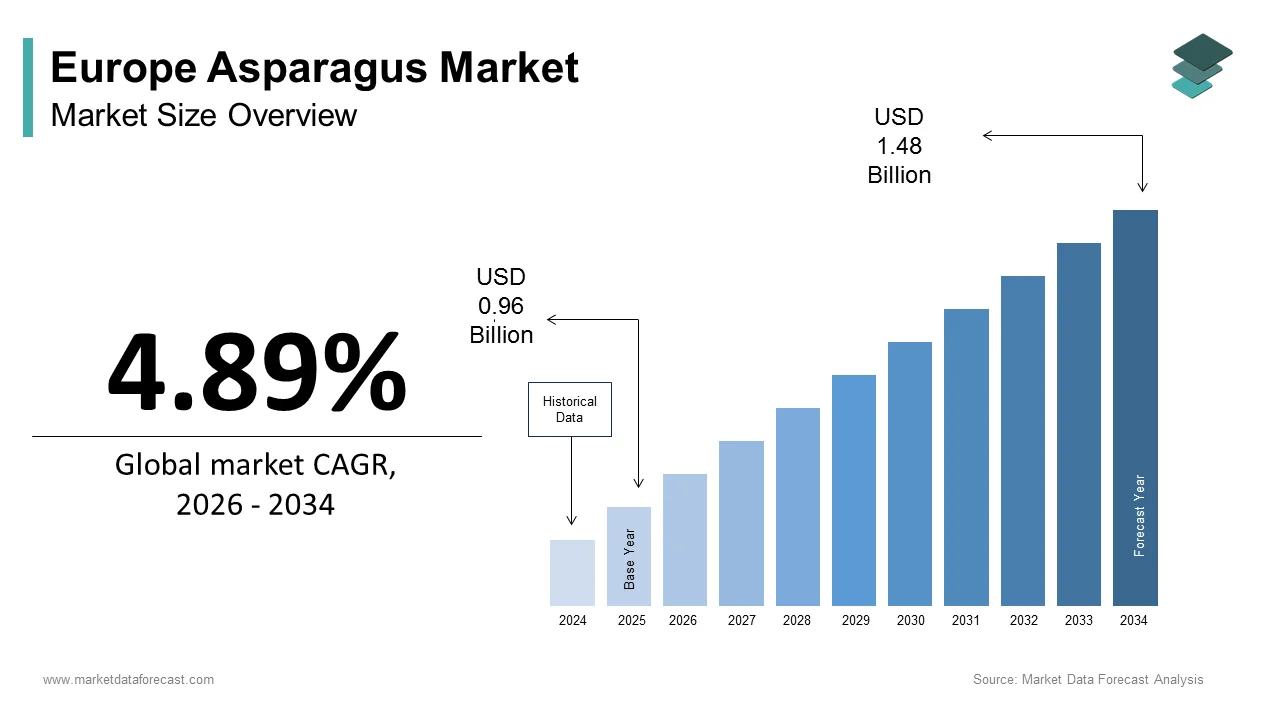
- Market Valuation: Valued at USD 0.96 billion (2025), estimated at USD 1.01 billion (2026), and projected to reach USD 1.48 billion by 2034, registering a steady CAGR of 4.89% (2026–2034).
- Primary Growth Drivers: Consumer preference for nutrient-dense functional foods, farm-to-table movement prioritizing local seasonal produce, high-fiber vegetable health consciousness, plant-based diet versatility, and controlled environment agriculture innovations. Restraints include critical labor shortages during harvests and climate vulnerability.
Key Market Segment Metrics (2026–2034)
| Category | Leading Segment / Country (Position) | Fastest-Growing Segment |
|---|---|---|
| By Type / Color | Fresh asparagus & White asparagus (led by color with a 60.1% share in 2025 as a national delicacy in Germany) | Green asparagus (fastest-growing color segment with a projected CAGR of 7.2% from 2026–2034) |
| By Distribution Channel | Supermarkets and hypermarkets (largest distribution channel holding a 55.3% share in 2025) | Alternative/other distribution channels (anticipated fastest CAGR of 9.5% over the forecast period) |
| By Region / Country | Germany (accounted for 35.7% share in 2025, followed by Spain with 22.8%) | Italy (expected to be the most lucrative region during the forecast period) |
Major Market Players & Market Structure
Market Structure: Highly fragmented yet specialized European agricultural and produce supply ecosystem driven by vertical integration, cold chain logistics enhancements, organic certification standards, and value-added processed product extensions.
Key Companies: Mazzoni Vivai, DanPer Trujillo SAC, Teboza BV, Ilios-The Greek Asparagus Company, Spargelhof Elsholz Gbr, Sociedad Agrícola Virú, Consorzio Assoliazione Produttori, Limgroup BV, Bejo Produce Ltd, Jersey Asparagus Farms Inc., California Asparagus Seeds, and Transplants Inc.
Europe Asparagus Market Size
The size of the Europe asparagus market was calculated to be USD 0.96 billion in 2025 and is anticipated to be worth USD 1.48 billion by 2034, from USD 1.01 billion in 2026, growing at a CAGR of 4.89% during the forecast period.
Asparagus is a perennial flowering plant (Asparagus officinalis) primarily cultivated for its young, edible shoots known as spears. A member of the lily family (Asparagaceae), it is a nutrient-dense spring vegetable prized for its delicate, slightly sweet, and earthy flavor. This agricultural sector is defined by its seasonal nature and strong regional preferences, particularly in countries like Germany, France, and Spain, where white asparagus commands a premium status during spring harvests. The market operates within a complex framework of smallholder farms and large commercial estates that adhere to strict European Union quality standards regarding spear diameter and freshness. According to various sources, Spain remains the primary hub for vegetable cultivation within the European Union, while German consumers maintain a world-leading appetite for seasonal produce, particularly white asparagus. The definition of this market extends beyond mere volume to include specialized logistics networks required to maintain shelf life, as the vegetable loses sweetness rapidly after cutting. As per research, Europe continues to be a major contributor to global agricultural output, supported by a cultural heritage that prioritizes the consumption of vegetables during their peak natural seasons. Consumer behavior in this region favors locally sourced produce, creating a dynamic where domestic supply chains often struggle to meet peak spring demand without supplemental imports from neighboring non-European regions or early-season greenhouse operations.
MARKET DRIVERS
Rising Consumer Preference for Nutrient-Dense Functional Foods
The escalating demand for nutrient-dense functional foods is a key factor driving growth in European households and the European asparagus market. Modern consumers increasingly view asparagus not merely as a seasonal side dish but as a vital component of a health conscious diet due to its rich profile of vitamins A, C, E, and K alongside high fiber content. Consumers are increasingly prioritizing nutrient-dense produce as a proactive method for managing long-term wellness through their daily diet. This shift is evident in retail sales data, where fresh vegetable categories featuring superfoods have seen consistent growth over the last five years. The rising prevalence of weight-related health challenges in the West is driving public interest in foods that offer nutritional density without high caloric content. Furthermore, the versatility of the vegetable in plant-based diets has broadened its appeal beyond traditional preparation methods. Culinary trends in urban centers like London and Paris now feature asparagus in smoothies and grain bowls, diversifying its usage occasions. This nutritional repositioning drives year-round interest rather than limiting consumption to the traditional spring window, encouraging retailers to stock imported varieties during off-seasons to satisfy this sustained dietary demand.
Expansion of Premium Gastronomy and Farm-to-Table Movements
The robust expansion of premium gastronomy and the entrenched farm-to-table movement significantly propel the valuation of the Europe asparagus market. High-end restaurants and Michelin-starred establishments across Italy, France, and Spain prioritize locally sourced white and green spears as centerpiece ingredients during spring menus, creating a lucrative demand channel for premium-grade produce. Modern diners are showing a growing preference for transparency regarding the geographic origin and freshness of the ingredients in their meals. This trend forces suppliers to adopt higher quality standards and invest in rapid cold chain logistics to ensure spears reach kitchens within hours of harvest. The economic impact is substantial as the hospitality sectors in major tourist destinations drive bulk purchasing during peak seasons. Seasonal agricultural celebrations remain a vital component of regional tourism, drawing large crowds interested in local gastronomic traditions. These events create a concentrated surge in demand that supports local farming economies. Additionally, the rise of gourmet grocery chains specializing in artisanal products provides another avenue for high-margin sales. Consumers in these segments value the story behind the food, preferring heirloom varieties over standard commercial types, which incentivizes farmers to diversify crops and maintain traditional growing methods that yield superior flavor profiles.
MARKET RESTRAINTS
Severe Labor Shortages During Critical Harvest Windows
Severe labor shortages during critical harvest windows present a formidable barrier to maximizing production potential within the Europe asparagus market. The harvesting of asparagus is highly labor-intensive because each spear must be cut individually by hand to prevent damage to the crown and ensure uniform length, a task that cannot be fully mechanized without compromising quality. The European agricultural landscape is grappling with a structural labor shortage as shifting border regulations and regional instabilities reduce the traditional flow of seasonal migrants. This scarcity drives up wage costs significantly, forcing many small-scale farmers to leave portions of their fields unharvested when labor becomes unavailable or too expensive. Major European producers are seeing their agricultural outputs shrink as a combination of environmental shocks and operational hurdles undermines traditional harvest volumes. The reliance on migrant labor from Eastern Europe and North Africa creates vulnerability, as any disruption in travel or policy changes immediately impacts harvest capacity. Furthermore, the physically demanding nature of the work discourages domestic workforce participation, leaving farms dependent on an unstable external labor pool. This structural constraint limits the ability of producers to scale operations or respond flexibly to spikes in market demand, ultimately capping the total addressable volume of the regional market despite strong consumer interest.
Vulnerability to Climate Variability and Extreme Weather Events
Vulnerability to climate variability and extreme weather events acts as a serious restraint on consistent yield and quality stability for the region’s asparagus growers and the European asparagus market. Asparagus is a perennial crop sensitive to temperature fluctuations during its dormancy and emergence phases, making it highly susceptible to unseasonal frosts or excessive rainfall that can rot crowns or delay harvest. Growing seasons in Europe are becoming increasingly volatile as erratic temperature shifts and unseasonal freezes disrupt the development of key crops. For instance, sudden temperature drops in April can destroy emerging spears just as they reach marketable size, wiping out weeks of growth and reducing total seasonal output by significant margins. Water stress during summer months also affects the long-term health of the plants, as adequate moisture is required for fern development, which stores energy for the following year's harvest. Drought conditions recorded in Southern Europe have forced farmers to reduce irrigation, leading to thinner spears and lower grading percentages that fetch reduced prices. The unpredictability of weather patterns complicates financial planning for farmers who face high fixed costs regardless of yield outcomes. Insurance coverage for such climatic risks remains costly and often insufficient to cover total losses, discouraging new entrants and prompting some existing producers to switch to less volatile crops, thereby constricting the overall supply base available to meet steady European demand.
MARKET OPPORTUNITIES
Adoption of Controlled Environment Agriculture Technologies
The adoption of controlled environment agriculture technologies offers a transformative opportunity to extend growing seasons and mitigate weather-related risks in the Europe asparagus market. Advanced greenhouse systems equipped with climate control mechanisms allow producers to manipulate temperature, humidity, and light exposure to induce earlier harvests or prolong production into late autumn. As per studies, facilities utilizing hydroponic substrates and precise nutrient delivery systems can achieve yield increases of up to thirty percent compared to traditional open field cultivation while using significantly less water. This technological shift enables farmers to capture premium pricing during early spring and late fall periods when supply is typically scarce, and import dependency is high. Growers can guarantee consistent supply contracts with major supermarket chains by decoupling production from external weather conditions. These major chains require year-round product availability. Furthermore, indoor farming reduces the need for chemical pesticides, aligning with stringent European Union regulations on residue limits and appealing to eco-conscious consumers. Investment in automation for sorting and grading within these facilities also addresses labor shortages by reducing manual handling requirements post harvest. Several pilot projects in the Netherlands and Belgium have demonstrated the viability of forcing asparagus roots in heated glasshouses, producing white spears of exceptional quality during the winter months. Scaling these innovations presents a pathway for European producers to reclaim market share currently held by imports from South America and Africa, fostering greater food sovereignty and economic resilience within the regional agricultural sector.
Development of Value-Added Processed Asparagus Products
The development of value-added processed asparagus products paves the way to diversify revenue streams and reduce post harvest waste within the Europe asparagus market. While fresh consumption dominates, there is growing potential in ready-to-eat meals, freeze-dried snacks, and extracted supplements that leverage the nutritional benefits of the vegetable for modern lifestyles. As per research, the category of frozen vegetables has seen steady growth as consumers seek convenience without compromising nutritional intake, creating an ideal channel for preserving surplus asparagus that does not meet fresh market aesthetic standards. Processing allows manufacturers to utilize imperfect spears for soups, purees, and meal kits, thereby improving overall farm gate returns and minimizing food loss, which currently accounts for a notable percentage of total production. Additionally, the nutraceutical industry shows increasing interest in asparagus extracts rich in saponins and flavonoids for use in dietary supplements targeting detoxification and heart health. Launching branded snack lines such as roasted asparagus crisps appeals to younger demographics looking for healthy alternatives to potato chips. Retailers are increasingly dedicating shelf space to such innovative formats, driven by data showing that convenience foods with clean labels command higher margins. Producers can build brand loyalty and insulate themselves from price volatility by expanding beyond the raw commodity stage. Doing so ensures a more stable income throughout the year, even during seasonal gluts.
MARKET CHALLENGES
Intensifying Pressure from Low-Cost Global Imports
Low-cost global imports are exerting intense pressure, which is challenging the growth of the European asparagus market. This poses a persistent threat to the competitiveness of domestic producers. Producers in South American countries like Peru and Mexico benefit from favorable climatic conditions that allow for year-round harvesting and lower labor costs, enabling them to export fresh spears to Europe at prices often below the production cost of European farmers. As per studies, import volumes from these regions have surged during the European off-season, flooding supermarkets with affordable options that undercut local growers even during the tail ends of the domestic harvest. This price disparity forces European farmers to compete on quality alone, a strategy that only works for premium segments, while mass market retailers prioritize cost efficiency to attract budget-conscious shoppers. The influx of imports also compresses profit margins for local distributors who must match international pricing to retain shelf space. Consequently, many small-scale European farms find it economically unviable to continue operations, leading to consolidation in the sector and a reduction in the diversity of local varieties available. Trade agreements facilitating tariff-free access further exacerbate this imbalance, making it difficult for domestic producers to protect their market share. The challenge lies in differentiating European asparagus sufficiently to justify higher price points while managing the perception among consumers that imported goods are comparable in quality, a notion that marketing campaigns struggle to dispel effectively against the backdrop of aggressive pricing strategies employed by global exporters.
Stringent Regulatory Compliance and Certification Costs
Stringent regulatory compliance and certification costs present a formidable operational issue for asparagus producers and the overall expansion of the Europe asparagus market. These producers must navigate the complex legal landscape of the European Union. Farmers must adhere to rigorous standards regarding pesticide residues, maximum residue levels, and environmental sustainability protocols mandated by the European Commission to ensure food safety and ecological protection. As per the European Food Safety Authority, the frequency of testing and the breadth of substances monitored have increased substantially, requiring producers to invest heavily in laboratory analysis and record-keeping systems to demonstrate full traceability from field to fork. Obtaining certifications such as Global Good Agricultural Practices or organic status involves significant upfront expenses and ongoing audit fees that strain the resources of smaller farming enterprises. Non-compliance can result in severe penalties, including product recalls and bans from major retail chains, creating a high-stakes environment where minor errors carry disproportionate consequences. The administrative burden diverts attention and capital away from innovation and productivity improvements, slowing down the modernization of the sector. Moreover, differing national interpretations of EU directives create fragmentation, forcing exporters to navigate a patchwork of requirements when selling across borders within the single market. This regulatory complexity raises the barrier to entry for new players and limits the agility of existing firms to respond quickly to market changes, ultimately affecting the overall efficiency and profitability of the Europe asparagus supply chain in an increasingly competitive global arena.
REPORT COVERAGE
| REPORT METRIC | DETAILS |
| Market Size Available | 2025 to 2034 |
| Base Year | 2025 |
| Forecast Period | 2026 to 2034 |
| CAGR | 4.89% |
| Segments Covered | By Types, Color, Distribution Channel, And Region |
| Various Analyses Covered | Global, Regional & Country Level Analysis; Segment-Level Analysis; DROC, PESTLE Analysis; Porter’s Five Forces Analysis; Competitive Landscape; Analyst Overview of Investment Opportunities |
| Regions Covered | UK, France, Spain, Germany, Italy, Russia, Sweden, Denmark, Switzerland, Netherlands, Turkey, and the Czech Republic |
| Market Leaders Profiled | Mazzoni Vivai, asparagus seed cutter, DanPer Trujillo SAC, Teboza BV, Ilios-The Greek Asparagus Company, Spargelhof Elsholz Gbr, Sociedad Agrícola Virú, Consorzio Assoliazione Produttori, Limgroup BV, Bejo Produce Ltd, Jersey Asparagus Farms, Inc, Bejo Produce Ltd, California Asparagus Seeds, and Transplants, Inc |
SEGMENTAL ANALYSIS
By Type Insights
The fresh asparagus segment dominated the Europe asparagus market and accounted for a substantial share in 2025. The dominance of the segment is driven by the deep-rooted cultural tradition in Central and Southern Europe, where the vegetable is celebrated as a seasonal delicacy best enjoyed immediately after harvest. A further key driver is the consumer perception that fresh spears offer superior texture and flavor profiles compared to processed alternatives, a sentiment reinforced by culinary experts across the continent. As per multiple sources, consumers in major European markets continue to favour fresh asparagus as a seasonal delicacy, though there is a growing shift toward pre-prepared packaging to save time. The short shelf life of the product necessitates efficient cold chain logistics, which European retailers have optimized to ensure daily restocking. Furthermore, the rise of farmers' markets and direct-to-consumer sales channels has bolstered the fresh segment by allowing growers to bypass processing entirely. According to Eurostat, the value of fresh vegetable trade within the EU single market has grown steadily, with asparagus representing a high-value crop that incentivizes distributors to prioritize speed over preservation. The inability of canned or frozen versions to replicate the crisp snap of white or green spears harvested within twenty-four hours ensures that fresh produce remains the preferred choice for both household cooking and professional gastronomy.
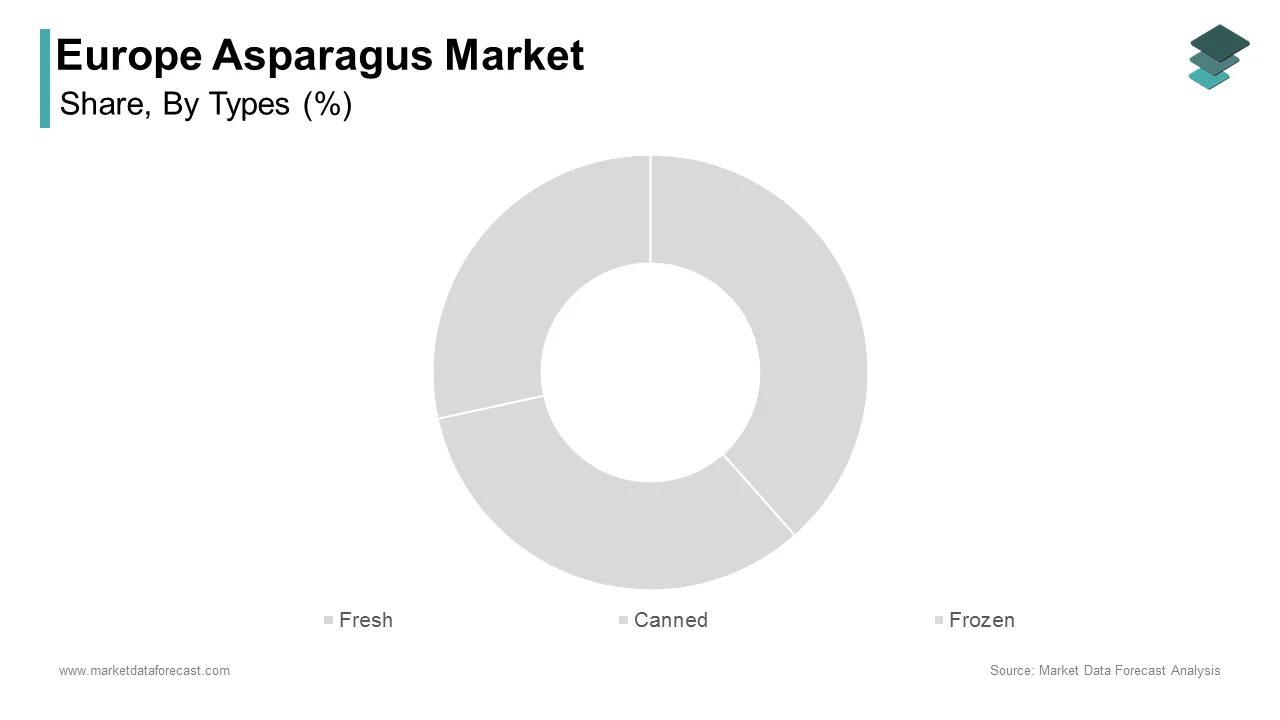
The frozen asparagus segment is predicted to witness the highest CAGR of 6.8% during the forecast period due to the increasing demand for convenience foods that retain nutritional value without the preparation time required for fresh produce. Advanced preservation techniques have significantly improved the nutritional profile of frozen vegetables, making them nearly identical to fresh produce in terms of vitamin and antioxidant content. Busy lifestyles and the rise of multi-income households are driving a steady increase in the consumption of frozen vegetables as a quick and healthy meal base. The ability to store frozen asparagus year-round allows consumers to enjoy the vegetable outside the traditional April to June harvest window, smoothing out seasonal demand fluctuations. Retailers are expanding their frozen aisles to include premium blanched and cut asparagus varieties that cater to busy urban professionals. There is an accelerating demand for innovative frozen vegetable blends in Northern European countries as consumers look for year-round variety and easy-to-prepare meal options. Additionally, the food service industry increasingly relies on frozen inventory to manage costs and ensure consistent portion control, further propelling segment growth as restaurants seek to minimize waste and labor costs associated with trimming fresh spears.
By Colour Insights
The white asparagus segment led the Europe asparagus market and captured a 60.1% share in 2025. The leading position of the segment is attributed to cultural traditions, especially in Germany, the Netherlands, and Belgium, where the harvest of white spears is celebrated as a national event known as Spargelzeit. In addition, this segment is supported by the unique cultivation method where spears are covered with soil to prevent photosynthesis, resulting in a tender texture and mild flavor that is highly prized in traditional recipes. Germany maintains a dominant position as a global leader in the seasonal consumption of asparagus, driven by a deep-seated cultural preference for the vegetable. The premium pricing of white asparagus, often double that of green varieties, reflects its labor-intensive harvesting process and limited availability window. Culinary heritage plays a crucial role, as classic dishes like white asparagus with hollandaise sauce and ham remain staples in spring menus across households and restaurants. Dutch agricultural exporters continue to serve as a vital supply link for premium white asparagus to surrounding European markets, supported by strong regional demand and seasonal travel. The scarcity of white asparagus outside Europe due to specific soil and climate requirements further cements its status as an exclusive regional specialty that drives significant market value despite lower global production volumes compared to green varieties.
The green asparagus segment is estimated to register the fastest CAGR of 7.2% from 2026 to 2034, owing to shifting dietary preferences and broader culinary adoption. Unlike white asparagus, green varieties are exposed to sunlight, developing a chlorophyll-rich profile and a grassier, more robust flavor that appeals to modern palates seeking diverse taste experiences. Also, this segment is boosted by the versatility of green asparagus in international cuisines, including Asian stir fries and Mediterranean grills, which have gained popularity across Europe. Agricultural producers worldwide are increasingly favoring green asparagus cultivars because they offer a more streamlined, less labor-intensive cultivation process compared to traditional soil-covered varieties. Health-conscious consumers favor green asparagus for its higher antioxidant content, specifically lutein and zeaxanthin, which are absent in white spears. Retail data from the United Kingdom and Scandinavia indicates a surge in green asparagus sales during summer months, extending the consumption season beyond the traditional spring window. The ease of preparation, requiring no peeling, also attracts younger demographics who prioritize convenience. Furthermore, the expansion of organic farming practices has benefited green asparagus disproportionately, as it adapts better to organic soil management techniques. European farmers are dedicating more acreage to organic vegetable production to meet the rising consumer appetite for ecologically certified produce.
By Distribution Channel Insights
The supermarkets and hypermarkets segment was the largest segment in the Europe asparagus market and held a 55.3% share in 2025. The supremacy of the segment is credited to the extensive reach of major retail chains such as Carrefour, Tesco, and Edeka, which offer centralized procurement and efficient cold chain logistics essential for perishable goods. Besides, the segment is helped by the consumer preference for one-stop shopping, where fresh produce can be purchased alongside other household necessities, ensuring high footfall and impulse buys during peak seasons. Retailers are increasingly adopting advanced in-store cooling technologies to mitigate the rapid wilting and high perishability of seasonal green vegetables. These retailers leverage their bargaining power to secure consistent supply contracts with large-scale growers, ensuring year-round availability through a mix of domestic and imported stock. The ability to offer competitive pricing through economies of scale makes supermarkets the preferred choice for price-sensitive households. Additionally, the integration of private label brands allows retailers to offer premium quality asparagus at lower price points, further driving volume sales. Large-scale grocers rely on seasonal marketing and loyalty data to capture shifting consumer demand during peak agricultural cycles. The trust consumers place in the quality assurance protocols of major chains also reinforces their dominance, as shoppers rely on these outlets for food safety standards that smaller vendors may struggle to guarantee consistently.
The other distribution channels segment is anticipated to witness the fastest CAGR of 9.5% over the forecast period. The swift expansion of the segment is fuelled by the digital transformation of food retail and the rising consumer desire for transparency and traceability in their food sources. The pandemic accelerated the adoption of e-commerce for fresh produce, with platforms like Ocado and Amazon Fresh expanding their perishable logistics capabilities to handle delicate items like asparagus. Digital grocery platforms in Europe continue to experience robust expansion as households increasingly rely on home delivery for their primary fresh food needs. Direct-to-consumer models allow farmers to capture higher margins by eliminating intermediaries, offering subscribers weekly boxes of freshly harvested spears delivered within hours of cutting. This model appeals to affluent consumers seeking heirloom varieties and organic certifications that are often unavailable in mainstream supermarkets. Furthermore, the rise of meal kit services has integrated asparagus into curated recipes, introducing the vegetable to new customer segments who value convenience and culinary exploration. Personalized food subscription models are gaining momentum as Western European consumers seek convenience and guaranteed product provenance. The ability of these channels to provide detailed origin stories and sustainability metrics resonates with environmentally conscious buyers, fostering brand loyalty and driving rapid expansion in this fragmented yet dynamic sector.
REGIONAL ANALYSIS
Germany Asparagus Market Analysis
Germany outperformed other countries in the Europe asparagus market and accounted for a 35.7% share in 2025. The dominance of the segment is driven by an unparalleled cultural devotion to white asparagus. The country functions as both the largest producer and the highest consumer within the region, creating a self-sustaining ecosystem where domestic supply struggles to meet insatiable local demand. The phenomenon of Spargelzeit transforms the vegetable into a national obsession, with roadside stalls and dedicated restaurants appearing in every town during the harvest season. Germany maintains a world-leading appetite for asparagus, with annual consumption levels per person significantly higher than those of its European neighbors. A major factor that aids this segment is the deep-rooted culinary tradition that views white asparagus as the king of vegetables, supported by extensive media coverage and festivals that celebrate its arrival. Growers in regions like Lower Saxony and North Rhine-Westphalia utilize advanced agricultural techniques to maximize yield, yet imports from Spain and Greece remain necessary to bridge the gap. The economic impact is substantial, with the asparagus sector generating hundreds of millions of euros in revenue annually. Domestic white asparagus continues to command a significant price advantage over imported varieties, justifying ongoing technical improvements in farming despite the rising cost of seasonal labor. This unique cultural integration ensures that Germany will maintain its top position, setting the tone for pricing and quality standards across the entire continent.
Spain Asparagus Market Analysis
Spain followed closely in the Europe asparagus market and occupied a share of 22.8% in 2025. The expansion of the segment is propelled by its role as the primary production hub and leading exporter. The favorable climatic conditions in regions such as Navarre and Catalonia allow for an earlier harvest start compared to Northern Europe, enabling Spanish growers to capture the lucrative early-season market. One more point that adds strength is the immense scale of commercial farming operations that leverage efficient irrigation systems and mechanized processes to achieve high yields at competitive costs. A substantial portion of the Spanish harvest is dedicated to international markets, with established trade routes primarily serving major consumer hubs in Northern and Western Europe. This export orientation drives the adoption of strict quality controls and certification standards to meet the rigorous demands of Northern European retailers. The focus on green asparagus for international markets complements the domestic preference for white varieties, creating a diversified product portfolio. Economic data indicate that the asparagus sector provides vital employment in rural areas, supporting thousands of seasonal jobs. Producers are looking toward preserved formats to stabilize supply throughout the year, though the sector is currently navigating broader shifts in regional demand. Spain’s strategic geographic location and logistical connectivity further enhance its ability to supply fresh produce rapidly across the continent.
France Asparagus Market Analysis
France is also a major player in the European market due to a strong culinary tradition that incorporates asparagus into haute cuisine, with renowned chefs elevating the vegetable to a staple of spring menus in Michelin-starred establishments. The market shows a sophisticated consumer base that values quality and gastronomic heritage. High-end vegetable varieties are a staple of French metropolitan gastronomy, though rising living costs are influencing how urban households allocate their seasonal food budgets. The driving force is the alignment of asparagus with the French concept of terroir, where locally sourced produce from regions like the Loire Valley is celebrated for its distinct flavor profile. Retailers respond by curating high-end selections and promoting origin-labeled products that appeal to discerning shoppers. The presence of numerous local festivals and culinary events further stimulates demand, creating a vibrant market atmosphere. France maintains its status as a key destination for European produce, supplementing its own significant harvests with consistent cross-border shipments to ensure full market availability. The growth of organic farming in France has also boosted the segment, with consumers willing to pay a premium for chemical-free spears. This blend of tradition and modern health consciousness ensures France remains a critical high-value market within the regional landscape.
Italy Asparagus Market Analysis
Italy is expected to be the most lucrative region in the Europe asparagus market owing to the integration of asparagus into the diverse Italian culinary repertoire, moving beyond traditional preparations to include innovative dishes in pizzerias and casual dining venues. Moreover, it demonstrates dynamic growth potential driven by expanding cultivation areas and evolving consumer habits. Historically a smaller player compared to Germany and Spain, Italy has rapidly increased its production capacity, particularly in the northern regions of Veneto and Emilia Romagna, leveraging fertile soil and advanced agricultural technologies. Italian consumers are increasingly favoring versatile green vegetable varieties that integrate easily into established regional culinary traditions. The export sector is also burgeoning, with Italian producers targeting niche markets in Northern Europe that seek high-quality green spears. Government support through rural development programs has facilitated the modernization of irrigation systems and the adoption of sustainable practices. The Italian asparagus sector is seeing a rise in total market valuation as improved farming techniques and better logistical networks enhance the profitability of the crop. The rise of agritourism has further boosted the sector, as farms open their doors for harvest experiences, educating consumers, and building brand loyalty. Italy’s strategic focus on quality differentiation and culinary innovation positions it as a key growth engine for the future of the European market.
Netherlands Asparagus Market Analysis
The Netherlands is predicted to expand in the Europe asparagus market during the forecast period by serving as a critical logistics and trade nexus rather than just a production center. While domestic consumption is moderate compared to Germany, the country acts as the primary entry point for asparagus entering Northern Europe, utilizing its world-class port infrastructure and distribution networks. This segment is also shaped by the role of Dutch trading houses and auction centers that facilitate the efficient movement of fresh produce from Southern Europe to retailers across the continent. The Netherlands serves as a central logistics hub for the European produce trade, moving a larger volume of goods through its borders than it cultivates domestically. The presence of advanced cold storage facilities and rapid transport links ensures that spears harvested in Spain or Greece can reach German shelves within twenty-four hours. This logistical efficiency attracts international suppliers who rely on Dutch intermediaries for market access. Furthermore, the Netherlands is a leader in horticultural research, developing new asparagus varieties and growing techniques that are adopted globally. Ongoing research into plant genetics is providing growers with more durable and productive plant varieties, helping to stabilize the food supply against environmental pressures. The concentration of specialized wholesalers in regions like Westland creates a competitive environment that drives innovation in packaging and shelf life extension. This unique position as a trade hub ensures the Netherlands remains indispensable to the functioning of the broader European asparagus supply chain.
COMPETITION OVERVIEW
The competition in the Europe asparagus market is characterized by a fragmented landscape where numerous small-scale farmers coexist with large multinational distributors and processors. Intense rivalry exists primarily during the short spring harvest window when domestic supply floods the market, causing price volatility and margin compression. Large players leverage economies of scale and sophisticated logistics networks to dominate retail shelf space while smaller producers rely on niche positioning and direct sales channels to survive. The threat of substitution from low-cost imports originating in South America remains a constant pressure that forces European companies to compete on quality and freshness rather than price alone. Innovation in packaging and preservation technologies has become a key battleground as firms strive to extend product availability and reduce waste. Regulatory compliance regarding pesticide residues and sustainability standards adds another layer of complexity that favors established entities with resources to manage certification processes. The rise of e-commerce and direct-to-consumer models is reshaping competitive dynamics by enabling smaller growers to reach customers without traditional intermediaries. Overall, the market demands continuous adaptation to changing consumer preferences and climatic challenges to maintain profitability.
KEY MARKET PLAYERS
A few major players of the Europe asparagus market include
- Mazzoni Vivai
- asparagus seed cutter
- DanPer Trujillo SAC
- Teboza BV
- Ilios-The Greek Asparagus Company
- Spargelhof Elsholz Gbr
- Sociedad Agrícola Virú
- Consorzio Assoliciazione Produttori
- Limgroup BV
- Bejo Produce Ltd
- Jersey Asparagus Farms, Inc
- Bejo Produce Ltd
- California Asparagus Seeds
- Transplants, Inc
Top Strategies Used by Key Market Participants
Key players in the Europe asparagus market primarily employ vertical integration strategies to control every stage of the supply chain from cultivation to final delivery. Companies invest heavily in owning or leasing farmland to ensure consistent quality and secure supply volumes during peak seasons. Another major strategy involves the adoption of advanced cold chain logistics technologies that maintain optimal temperature and humidity levels to extend shelf life. Market participants frequently engage in strategic partnerships with local growers to diversify their sourcing bases and mitigate risks associated with climate variability. Product differentiation through organic certification and sustainable farming practices serves as a crucial tactic to appeal to environmentally conscious consumers. Firms also focus on developing value-added processed products, such as frozen meals and ready-to-eat snacks, to capture demand outside the traditional spring window. Investment in automated sorting and grading machinery helps reduce labor costs and improve efficiency. Marketing campaigns emphasizing local origin and culinary heritage are widely used to justify premium pricing against lower-cost imports.
Leading Players in the Europe Asparagus Market
- Interfresh Group operates as a leading international supplier of fresh produce with a significant footprint in the European asparagus sector. The company specializes in sourcing high-quality white and green asparagus from trusted growers across Spain and Germany to supply major retail chains throughout the continent. Their contribution to the global market involves establishing robust cold chain logistics that ensure optimal freshness from farm to shelf. Recent actions to strengthen their market position include investing in advanced packaging technologies that extend shelf life and reduce food waste during transit. The firm has also expanded its network of contract farmers in Southern Europe to secure consistent supply volumes during peak seasons. Interfresh Group focuses on sustainability certifications and traceability systems. This approach allows them to meet the rigorous demands of European consumers who prioritize ethical sourcing. Their strategic partnerships with logistics providers enable rapid distribution capabilities that maintain product quality while reaching distant markets efficiently.
- Bonduelle SCA stands as a global vegetable processing giant with a strong presence in the European asparagus market through its extensive range of canned and frozen products. The company leverages its vast production facilities to process surplus fresh asparagus into value-added goods that remain available year-round for consumers. Their contribution to the global market is defined by innovation in preservation techniques that retain nutritional value and texture in processed vegetables. Recent actions to strengthen their market position include launching new organic asparagus product lines that cater to growing health consciousness among European shoppers. Bonduelle has also upgraded its manufacturing plants with energy-efficient technologies to reduce carbon emissions and align with European Green Deal objectives. The firm actively collaborates with agricultural research institutes to develop asparagus varieties better suited for processing and mechanical harvesting. These initiatives allow Bonduelle to offer competitive pricing while maintaining high-quality standards that appeal to both retail and food service customers across multiple regions.
- NatureSway Produce functions as a specialized distributor focused exclusively on premium fresh vegetables, including a diverse portfolio of asparagus varieties for the European market. The company distinguishes itself by offering heirloom and specialty asparagus types that are not commonly found in standard retail outlets. Their contribution to the global market involves bridging the gap between niche growers and high-end gastronomy sectors in major European cities. Recent actions to strengthen their market position include implementing blockchain-based traceability solutions that provide consumers with detailed information about the origin and journey of each spear. NatureSway has also formed exclusive partnerships with organic farms in France and Italy to secure limited-edition harvests for gourmet retailers. The firm recently launched a direct-to-consumer subscription service that delivers freshly harvested asparagus within hours of cutting to urban households. This approach enhances brand loyalty and allows NatureSway to capture higher margins by bypassing traditional intermediaries while ensuring superior product quality for discerning customers.
MARKET SEGMENTATION
This research report on the Europe asparagus market has been segmented and sub-segmented based on types, color, distribution channel & region.
By Types
- Fresh
- Canned
- Frozen
By Color
- White
- Green
BY Distribution Channel
- Supermarket/Hypermarket
- Grocery Stores
- Others
By Region
- UK
- France
- Spain
- Germany
- Italy
- Russia
- Sweden
- Denmark
- Switzerland
- Netherlands
- Turkey
- Czech Republic
- Rest of Europe