- Product Description Description
- Table of Contents TOC
- List of Table & Figure LOT
- Get Free Sample PDF Sample PDF
Market Size, 2025
$132.23 BnMarket Estimate, 2026
$143.85 BnMarket Forecast, 2034
$282.11 BnCAGR, 2026–2034
8.78%Europe Athletic Wear Market Report Summary
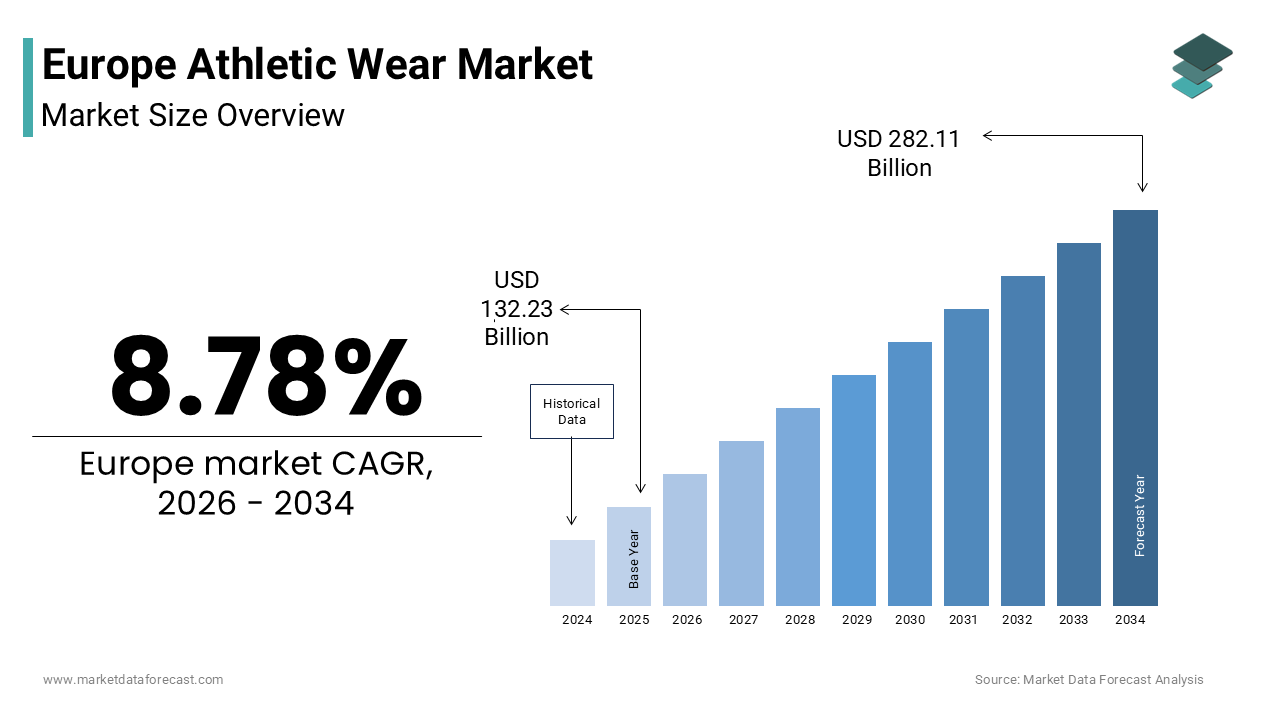
The Europe athletic wear market was valued at USD 132.23 billion in 2025, is estimated to reach USD 143.85 billion in 2026, and is projected to reach USD 282.11 billion by 2034, growing at a CAGR of 8.78% during the forecast period from 2026 to 2034. The growth of the Europe athletic wear market is driven by increasing physical activity participation, expanding digital fitness ecosystems, and rising demand for performance-driven and athleisure apparel across diverse consumer segments. Government-led public health initiatives promoting active lifestyles, coupled with technological advancements in moisture-wicking, compression, and sustainable textile materials, are further supporting market expansion. Additionally, evolving consumer preference for durability, circular product design, and transparency in textile sourcing is reshaping product development strategies, positioning athletic wear as a key component of Europe’s sustainable apparel transformation.
Key Market Trends
-
Rising fitness participation is supported by public health policies and community sports infrastructure investments.
-
The rapid growth of digital fitness platforms increasing demand for specialized performance apparel.
-
Expanding athleisure adoption blending functional sportswear with everyday fashion preferences.
-
Increasing regulatory focus on textile sustainability, digital product passports, and circular design frameworks.
-
Emergence of resale, rental, and take-back programs extending product lifecycle and reducing textile waste.
Segmental Insights
- Based on end-use, the women segment held 41.6% of the Europe athletic wear market share in 2025, driven by growing female fitness participation, body positivity movements, and rising demand for functional yet fashionable activewear.
- Based on distribution channel, the in-store retail segment dominated the Europe athletic wear market with a 54.5% share in 2025, supported by consumer preference for physical product evaluation, personalized fitting experiences, and experiential brand stores.
Regional Insights
The Europe athletic wear market demonstrates strong growth across major countries driven by sports culture, retail innovation, and sustainability initiatives.
-
Germany held the leading position with a 19.5% share in 2025, supported by strong sports club participation, domestic textile innovation, and the presence of global sportswear headquarters.
-
The United Kingdom maintained significant market share, driven by the fusion of sportswear and streetwear culture, high digital retail penetration, and influencer-led brand engagement.
-
France is witnessing steady expansion, supported by state-backed fitness programs, fashion-performance integration, and strong retail presence of vertically integrated sportswear brands.
-
Italy continues to contribute notably, benefiting from premium textile manufacturing capabilities, wellness tourism growth, and boutique fitness culture.
-
Spain is experiencing healthy growth, supported by a favorable climate for outdoor sports, youth fitness participation, and government initiatives improving sports accessibility.
Competitive Landscape
The Europe athletic wear market is highly competitive, featuring global multinational brands, regional specialists, and digitally native direct-to-consumer companies competing across performance, sustainability, and lifestyle positioning. Leading players are prioritizing circular textile innovation, digital commerce transformation, and localized product development to align with diverse European consumer preferences. Strategic partnerships with sports federations, athlete sponsorships, and community fitness initiatives further strengthen brand visibility and loyalty. Additionally, investments in AI-driven personalization, virtual fitting technologies, and automated manufacturing are enabling companies to enhance operational efficiency and customer experience. Prominent players operating in the Europe athletic wear market include Nike, Inc., Adidas AG, PUMA SE, Under Armour, Inc., ASICS Corporation, New Balance Athletics, Inc., Decathlon S.A., Lululemon Athletica Inc., Columbia Sportswear Company, and JD Sports Fashion Plc.
 Download Free Sample Report
Europe Athletic Wear Market Size
The Europe athletic wear market size was valued at USD 132.23 billion in 2025 and is anticipated to reach USD 143.85 billion in 2026 from USD 282.11 billion by 2034, growing at a CAGR of 8.78% during the forecast period from 2026 to 2034.
Athletic wear encompasses performance-oriented apparel engineered for physical activity including training sportswear and athleisure designed for both functional exercise and casual urban use. This category is distinguished by technical fabrics offering moisture wicking thermal regulation compression support and sustainability aligned material innovation. The European athletic wear market operates within a cultural and regulatory environment that prioritizes health consciousness environmental responsibility and circular design principles. According to Eurostat, the share of adults engaging in moderate or vigorous physical activity at least once a week reached a high level across the EU in 2024, which reflects a sustained post pandemic elevation in fitness participation. As per the European Commission’s Circular Economy Action Plan, millions of metric tons of textile waste are generated annually in the EU, with athletic garments contributing significantly due to their synthetic fiber composition. The EU Strategy for Sustainable and Circular Textiles, which mandates extended producer responsibility and digital product passports by 2030, is reshaping material sourcing and end of life management across the sector. Unlike fast fashion, athletic wear is increasingly evaluated on durability, performance certification, and carbon footprint transparency, making it a focal point of Europe’s broader green industrial transition.
MARKET DRIVERS
Rising Integration of Physical Activity into Public Health Policy Drives Demand
The institutional embedding of physical activity into national health frameworks across Europe has become a structural driver of athletic wear consumption. Governments are actively promoting exercise as a cost-effective intervention against non-communicable diseases. According to the European Centre for Disease Prevention and Control, these diseases account for the majority of deaths in the EU. In response, countries such as Finland and the Netherlands have implemented national movement strategies that subsidize gym memberships, prescribe exercise through primary care, and fund community sports infrastructure. As per the World Health Organization, adults who meet recommended physical activity levels demonstrate significantly lower risk of cardiovascular disease and reduced incidence of type 2 diabetes. For instance, Sweden’s Public Health Agency reported that a large proportion of its population engaged in weekly exercise in 2024 compared to 2019. Schools across Germany and France now mandate daily physical education, reinforcing early adoption of athletic clothing.
Proliferation of Digital Fitness Platforms Fuels Performance Apparel Adoption
The rapid expansion of connected fitness ecosystems has intensified consumer engagement with specialized athletic wear across Europe, which is further fuelling the expansion of the European athletic wear market. Platforms such as Peloton, Strava, and Freeletics blend virtual coaching, biometric tracking, and social motivation, creating immersive experiences that demand technically advanced apparel. According to the European Connected Health Alliance, millions of Europeans subscribed to digital fitness services in 2024, representing strong growth since 2021. As per the German Federal Ministry of Health, a majority of digital fitness participants purchase new athletic wear regularly to maintain performance and hygiene standards. In the United Kingdom, Sport England documented that many adults using fitness apps also invest in premium branded athletic wear.
MARKET RESTRAINTS
Stringent Environmental Regulations Increase Compliance Costs
The European Union’s aggressive regulatory agenda on textile sustainability imposes significant operational and financial burdens on athletic wear manufacturers, which is hampering the growth of the European athletic wear market. The EU Strategy for Sustainable and Circular Textiles requires all textile products placed on the market from 2030 to include digital product passports detailing material composition, carbon footprint, and recyclability. According to the European Environment Agency, implementing these traceability systems costs small and medium enterprises significantly per product line. Additionally, upcoming restrictions under REACH could ban synthetic fabrics like polyester unless equipped with filtration mechanisms. As per the European Chemicals Agency, outdoor and athletic garments contribute a large share of total microplastic emissions from textiles. The French Anti Waste Law already mandates that brands collect and recycle unsold inventory, further straining logistics.
Consumer Skepticism Toward Greenwashing Undermines Brand Trust
Despite widespread sustainability claims, European consumers are increasingly distrustful of athletic wear brands’ environmental assertions, which is further inhibiting the expansion of the European athletic wear market. According to the European Consumer Organisation, a majority of respondents in a 2024 survey believe that most eco labels in the apparel sector are misleading or unverified. This skepticism stems from inconsistent certification standards and lack of third-party verification. As per the European Commission, only a small proportion of green claims are audited by independent bodies. The Norwegian Consumer Authority recently fined major sportswear brands for falsely advertising recycled content, highlighting regulatory scrutiny. In Germany, the Wuppertal Institute found that many shoppers now cross check sustainability data via third party apps before buying athletic wear.
MARKET OPPORTUNITIES
Expansion of Rental and Resale Models Creates Circular Revenue Streams
The emergence of athletic wear rental and resale platforms presents a transformative opportunity for the European athletic wear market. Companies such as Hygglo in Sweden and Reflaunt in France enable consumers to lease or resell high performance garments, extending product lifecycles and reducing waste. According to the European Apparel and Textile Confederation, the second-hand athletic wear segment grew significantly in 2024, driven by Gen Z and millennial demand for affordable access to premium brands. Programs such as Patagonia’s Worn Wear in Germany demonstrate that refurbished items retain strong functionality while carrying a lower carbon footprint. The European Commission’s Circular Economy Action Plan provides tax incentives for businesses implementing take back schemes, further encouraging adoption. In the Netherlands, a pilot project co funded by the Ministry of Infrastructure showed that garment leasing reduced textile consumption per user annually.
Integration of Bio Based and Regenerative Materials Opens Innovation Frontiers
The development of next generation materials derived from algae, mycelium, and agricultural waste offers a strategic growth vector for athletic wear in Europe, which is another prominent opportunity in the European athletic wear market. Brands are increasingly partnering with biotech firms to replace petroleum-based synthetics with traceable renewable alternatives. As per the Bio Based Industries Joint Undertaking, the EU invested heavily in 2024 to scale fermentation derived textiles including spider silk analogues and kelp-based fibers. Adidas, in collaboration with AMSilk, launched a running shoe upper made from bio fabricated silk in Germany with significantly lower emissions than conventional nylon. Similarly, Pangaia’s seaweed infused T shirts sold across Italy and Spain use far less water in dyeing according to assessments verified by the Fraunhofer Institute. The European Innovation Council’s Pathfinder program identified regenerative agriculture sourced cotton as a priority, with pilot farms in Portugal restoring soil carbon while supplying premium jersey fabric.
MARKET CHALLENGES
Fragmented Sizing Standards Impede E Commerce Conversion
The absence of harmonized sizing systems across European countries creates significant friction in online athletic wear sales, which is challenging the growth of the European athletic wear market. A consumer in Spain may wear a size M while their counterpart in Sweden requires L for the same body dimensions due to divergent national measurement norms. According to the European Committee for Standardization, only a minority of athletic wear brands adhere to the EN 13402 voluntary sizing standard, leading to high return rates. As per the German E Commerce Association, a large proportion of online athletic apparel purchases are returned due to fit issues, costing retailers billions annually in logistics and restocking. Virtual fitting technologies remain under adopted, with only a small share of EU based sportswear sites offering AI powered size recommendation tools as per the European Retail Round Table.
Over Reliance on Asian Manufacturing Exposes Supply Chain Vulnerability
Despite Europe’s strong brand presence, the majority of athletic wear is still manufactured in Asia, creating strategic fragility in sourcing and lead times, which is further challenging the expansion of the European athletic wear market. According to the European Apparel and Textile Confederation, most performance garments sold in the EU are imported primarily from Vietnam, Bangladesh, and China. This dependency became evident during the 2021 Suez Canal blockage, which delayed shipments and triggered stockouts across major retailers. As per the European Central Bank, geopolitical tensions and export restrictions could increase supply chain costs in the coming years. Although nearshoring initiatives are emerging, such as Decathlon’s automated factory in France, current domestic production capacity meets only a small fraction of regional demand. The EU’s Carbon Border Adjustment Mechanism will further penalize high emission imports, yet local alternatives lack scale and technical expertise.
REPORT COVERAGE
| REPORT METRIC | DETAILS |
| Market Size Available | 2025 to 2034 |
| Base Year | 2025 |
| Forecast Period | 2026 to 2034 |
| CAGR | 8.78% |
| Segments Covered | By End-Use, Distribution Channel and Region |
| Various Analyses Covered | Regional & Country Level Analysis, Segment-Level Analysis, DROC, PESTLE Analysis, Porter’s Five Forces Analysis, Competitive Landscape, Analyst Overview on Investment Opportunities |
| Countries Covered | UK, France, Spain, Germany, Italy, Russia, Sweden, Denmark, Switzerland, the Netherlands, Turkey, the Czech Republic, and the Rest of Europe. |
| Market Leaders Profiled | Nike, Inc., Adidas AG, PUMA SE, Under Armour, Inc., ASICS Corporation, New Balance Athletics, Inc., Decathlon S.A., Lululemon Athletica Inc., Columbia Sportswear Company, and JD Sports Fashion Plc. |
SEGMENTAL ANALYSIS
By End-Use Insights
The women segment represented the largest end-use segment in the Europe athletic wear market by holding 41.6% of the European market share in 2025. The dominance of women segment in the European market is driven by the convergence of fitness culture, body positivity movements, and functional fashion demand among European women. According to Eurostat, a majority of women aged 18 to 45 in the EU engaged in regular physical activity in 2024, showing a notable increase compared to 2019. National initiatives such as France’s Sport Santé program subsidize gym access for women over 40, further normalizing daily exercise. Women centered digital fitness platforms like Les Mills On-Demand and Fiit have driven demand for high support sports bras, moisture wicking leggings, and versatile athleisure. As per the European Institute for Gender Equality, women now constitute a majority of digital fitness subscribers in Western Europe. Brands such as Lululemon and Sweaty Betty have tailored product lines to European body types, offering extended size ranges and region-specific palettes. The integration of modest activewear options in response to cultural diversity, particularly in the UK and Germany, has expanded inclusivity.
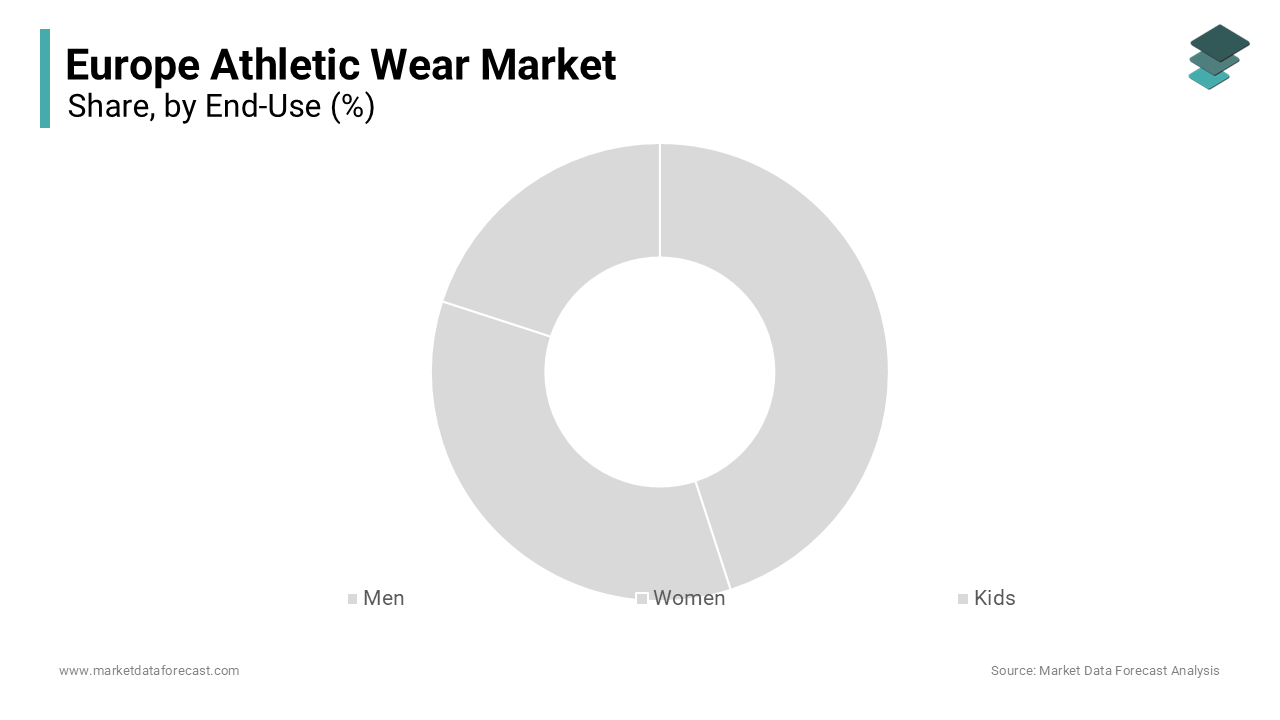
The kids segment is the fastest growing category in the Europe athletic wear market and is expected to register a CAGR of 9.5% over the forecast period. The rising parental emphasis on childhood physical literacy and national mandates for school based physical education are propelling the growth of the kids segment in the European market. According to the World Health Organization’s European Childhood Obesity Surveillance Initiative, a significant proportion of children aged 6 to 9 in the EU are overweight or obese, prompting governments to integrate daily movement into curricula. In Germany, the Standing Conference of Ministers of Education requires weekly physical activity in primary schools, directly increasing demand for durable sportswear. Sweden’s Public Health Agency reported that most parents now purchase dedicated athletic wear for children under 12, showing strong growth compared to 2020. Sustainability concerns also play a role, with eco conscious families favoring organic cotton and recycled polyester. Brands such as Decathlon with its Kipsta line and Adidas with Mini collections have introduced take back schemes, a model adopted by many EU retailers as per the European Parents’ Association.
By Distribution Channel Insights
The In-store retail segment remained the dominant distribution channel for athletic wear in Europe and held 54.5% of the European market share in 2025. The dominating position of in-store retail segment in the European market is driven by the consumers’ preference for tactile evaluation of fit, fabric, and compression as these are critical factors in performance apparel. According to the European Retail Research Institute, a majority of European shoppers still visit physical stores to try on athletic garments before purchasing, even if they later buy online. Flagship stores operated by Nike, Adidas, and Lululemon offer immersive experiences such as gait analysis and personalized styling. In Germany and Italy, most specialty sportswear sales occur through branded boutiques or multi brand retailers like Intersport, as per the European Sporting Goods Association. Urban planning policies in cities such as Copenhagen and Vienna have revitalized high street retail, creating high footfall environments.
The online channels segment represents the fastest growing distribution segment in the Europe athletic wear market and is expected to grow at a CAGR of 12.2% over the forecast period owing to the algorithm driven personalization, mobile commerce adoption, and seamless omnichannel integration. According to the European E Commerce Association, mobile devices accounted for a majority of online athletic wear purchases in 2024, showing strong growth compared to 2021. Platforms such as Zalando and ASOS deploy AI powered size recommendation engines that reduce return rates, as verified by the Fraunhofer Institute for Industrial Engineering. Social commerce via Instagram and TikTok drives impulse buys among Gen Z consumers. The European Commission’s Digital Services Act has enhanced consumer trust by mandating transparent return policies and authentic reviews. Subscription models such as Gymshark’s Try Before You Buy in the UK foster loyalty. As per the European Telecommunications Standards Institute, 5G penetration across Western Europe enables real time virtual fitting rooms, further eroding the tactile advantage of physical stores.
REGIONAL ANALYSIS
Germany Athletic Wear Market Analysis
Germany held the leading position in the European athletic wear market with a 19.5% of the European market share in 2025. The dominance of Germany in the European market is driven by its deeply embedded sports culture, robust manufacturing base, and strong public health infrastructure. The country boasts tens of thousands of registered sports clubs affiliated with the German Olympic Sports Confederation, serving millions of members as of 2024. This institutionalized participation fuels consistent demand for performance-oriented apparel across age groups. Germany’s Federal Ministry of Health allocates significant funding annually to community fitness programs such as Bewegt im Alter, targeting seniors and expanding market demographics. The presence of global headquarters for Adidas and Puma in Bavaria creates a synergistic ecosystem of innovation, retail, and supply chain efficiency. According to the German Textile Federation, domestic production of technical sportswear fabrics grew in 2024, supported by Industry 4.0 automation in knitting and dyeing. Germany’s stringent chemical regulations under the Blue Angel ecolabel push brands toward sustainable materials, accelerating adoption of recycled polyester and bio-based elastane.
United Kingdom Athletic Wear Market Analysis
The United Kingdom had the second largest share of the European athletic wear market in 2025. The growth of the UK in the European market is driven by its dynamic fusion of sportswear and streetwear culture and advanced digital retail landscape. London serves as a global trendsetter where athletic wear doubles as urban fashion, amplified by influencers and music icons. According to Sport England, a majority of adults participated in sport or physical activity weekly in 2024, with running and gym workouts being the most popular. The UK government’s Get Active campaign allocated substantial funding in 2023 to local councils for fitness infrastructure. Online penetration is exceptionally high, with most athletic wear sold digitally as per the UK Fashion and Textile Association. Brands such as Gymshark, headquartered in Birmingham, have leveraged social media to build direct to consumer empires exporting globally. Post Brexit regulatory flexibility has enabled faster adjustments such as streamlined ecolabel certification for sustainable textiles.
France Athletic Wear Market Analysis
France is expected to occupy a prominent share of the European athletic wear market during the forecast period owing to the state led health initiatives, fashion heritage, and rising female participation in sport. The French Ministry of Sports reported that a majority of the population engaged in regular physical activity in 2024, supported by the Plan Sport Santé. Paris’s status as a global fashion capital enables blending of haute couture aesthetics with performance functionality, a niche mastered by brands such as Lacoste and Le Coq Sportif. According to INSEE, women account for a majority of new gym memberships in urban centers. France’s Anti Waste Law mandates textile collection systems by 2025, accelerating circular business models. Decathlon, headquartered in Villeneuve d’Ascq, operates hundreds of stores nationwide offering affordable technical wear.
Italy Athletic Wear Market Analysis
Italy is anticipated to account for a notable share of the European athletic wear market during the forecast period due to its textile craftsmanship legacy and growing wellness tourism sector. The country is home to thousands of technical fabric mills concentrated in Lombardy and Tuscany, producing high end moisture wicking and antimicrobial knits as per the Italian Textile Machinery Association. These materials supply domestic brands such as Fila and international labels seeking premium European manufacturing. According to the Italian National Institute of Statistics, wellness tourism generated billions in 2024, with destinations such as Tuscany and Sardinia driving demand for stylish yet functional apparel. The Italian Ministry of Health’s Guadagnare Salute program promotes physical activity as preventive medicine. Urban centers such as Milan and Rome have seen a rise in boutique fitness studios, requiring specialized attire for Pilates, barre, and cycling.
Spain Athletic Wear Market Analysis
Spain is estimated to showcase a healthy CAGR in the European athletic wear market during the forecast period due to its Mediterranean lifestyle, outdoor sports culture, and youth demographic. The Spanish Ministry of Culture and Sport notes that the country enjoys extensive sunshine annually, enabling year-round engagement in outdoor sports. According to the National Statistics Institute, a majority of Spaniards aged 18 to 35 participate in weekly physical activity. Madrid and Barcelona have emerged as hubs for urban fitness with hundreds of outdoor calisthenics parks installed since 2020. The government’s Deporte para Todos initiative provides subsidies for low-income families to access sports gear. Spanish brands such as Joma and Kelme focus on lightweight breathable designs suited to warm climates and have expanded into Latin America. High smartphone penetration fu
COMPETITIVE LANDSCAPE
The Europe athletic wear market features intense competition among global giants regional specialists and agile digital natives. While multinational corporations dominate through scale brand equity and elite sports sponsorships niche players like Sweaty Betty and Craft Sportswear gain traction via hyper specialization in women’s training or endurance sports. Competition is increasingly defined by sustainability credentials transparency and circular innovation rather than price alone. The EU’s stringent regulatory environment including digital product passports and microplastic restrictions raises entry barriers favoring established players with robust compliance infrastructure. At the same time direct to consumer brands leverage social media and influencer ecosystems to bypass traditional retail creating fragmented yet dynamic rivalry. Differentiation hinges on technical performance material innovation localized design and seamless omnichannel experiences. This multi-tiered competitive landscape fosters continuous innovation but demands significant investment in both sustainability and digital capabilities to maintain relevance.
KEY MARKET PLAYERS
Some of the companies that are playing a dominating role in the Europe scaffolding market include
- Nike, Inc.
- Adidas AG
- PUMA SE
- Under Armour, Inc.
- ASICS Corporation
- New Balance Athletics, Inc.
- Decathlon S.A.
- Lululemon Athletica Inc.
- Columbia Sportswear Company
- JD Sports Fashion Plc
Top Players in the Europe Athletic Wear Market
Adidas AG
Adidas AG headquartered in Herzogenaurach Germany is a cornerstone of the European athletic wear market with deep integration across performance sportswear and lifestyle segments. The company supplies official kits to major football leagues including the Bundesliga and national teams such as Germany and Spain reinforcing its elite performance credentials. Globally Adidas operates in over 160 countries and maintains strategic partnerships with athletes and institutions like the International Olympic Committee. In recent years Adidas has accelerated its sustainability agenda by launching products made from 100 percent recycled polyester and scaling its Futurecraft.Loop program which designs fully recyclable running shoes. The company also expanded its Speedfactory concept in Germany using automated manufacturing to reduce lead times and carbon emissions aligning with EU circular economy mandates.
Nike Inc.
Nike Inc while US based maintains a formidable presence in Europe through regional hubs in Hilversum Netherlands and Paris France. The company dominates premium performance categories including running basketball and training apparel and collaborates with European football clubs such as FC Barcelona and Paris Saint Germain. Nike’s global influence extends through innovation in material science notably its Flyknit and Dri FIT technologies which originated from European athlete feedback. Recently Nike enhanced its European digital ecosystem by integrating augmented reality fitting tools into its mobile app and expanding same day delivery in major cities. It also launched the “Move to Zero” initiative in the region focusing on zero carbon and zero waste goals with verified progress reported annually to the European Commission’s Green Deal platform.
Decathlon SA
Decathlon SA a French multinational retailer stands out for its vertically integrated model designing manufacturing and distributing over 50000 athletic products under more than 80 proprietary brands. With over 2000 stores across Europe Decathlon caters to diverse sports from hiking to paddleboarding at accessible price points. The company contributes significantly to global inclusive sportswear by exporting its value engineered gear to 70 countries. In recent actions Decathlon invested 300 million euros in 2024 to transition all private label textiles to certified recycled or bio-based materials by 2026. It also piloted AI powered inventory systems in Germany and Spain to reduce overstock and launched community fitness programs in urban stores offering free classes thereby strengthening local engagement and brand loyalty across the continent.
Top Strategies Used by the Key Market Participants
Key players in the Europe athletic wear market prioritize vertical integration to control material sourcing and ensure compliance with EU sustainability regulations. They invest heavily in digital transformation deploying AI driven personalization and virtual fitting tools to enhance e commerce conversion. Brands are increasingly adopting circular business models including take back schemes rental pilots and fully recyclable product lines aligned with the EU Strategy for Sustainable Textiles. Strategic collaborations with elite sports teams and national federations reinforce performance credibility and drive grassroots adoption. Additionally, companies localize design and marketing to reflect regional body types climate conditions and cultural aesthetics ensuring relevance across diverse European markets.
MARKET SEGMENTATION
This research report on the Europe athletic wear market has been segmented and sub-segmented based on the following categories.
By End-use
- Men
- Women
- Kids
By Distribution Channel
- In-Store
- Online
By Country
- UK
- France
- Spain
- Germany
- Italy
- Russia
- Sweden
- Denmark
- Switzerland
- Netherlands
- Turkey
- Czech Republic
- Rest of Europe