- Product Description Description
- Table of Contents TOC
- List of Table & Figure LOT
- Get Free Sample PDF Sample PDF
Market Size, 2025
$5.23 BnMarket Estimate, 2026
$5.94 BnMarket Forecast, 2034
$16.46 BnCAGR, 2026–2034
13.6%Executive Summary: Europe Atopic Dermatitis Market
- Market Scope: Comprehensive European atopic dermatitis market analysis covering treatment modalities, routes of administration, distribution channels, country-level leadership, and clinical epidemiology metrics.
- Market Valuation: Valued at USD 5.23 billion (2025), estimated at USD 5.94 billion (2026), and projected to reach USD 16.46 billion by 2034, registering a robust CAGR of 13.60% (2026–2034).
- Primary Growth Drivers: High disease prevalence, rising adoption of targeted biologics and small-molecule inhibitors, and environmental exposure factors. Key epidemiological highlights include 15%–20% of children and 2%–5% of adults in Europe suffering from atopic dermatitis, alongside severe urban pollution metrics (94%–97% of the EU urban population exposed to PM2.5 levels above recommended thresholds).
Key Market Segment Metrics (2026–2034)
| Category | Leading Segment (2025 Position) | Fastest-Growing Segment |
|---|---|---|
| By Treatment Type & Modality | Drug Treatment (majority share, growing at an 11.2% CAGR, driven by biologics and JAK inhibitors) | Targeted Biologics & Advanced Small-Molecule Oral Inhibitors |
| By Route of Administration | Topical Therapies (maintained a substantial market share in 2025) | Oral Therapies (fastest-growing route of administration, registering a 14.3% CAGR) |
| By Distribution Channel | Retail Pharmacies (dominated distribution with a 58.1% share in 2025) | Online Pharmacies & Direct-to-Patient Specialty Delivery Channels (18.6% CAGR) |
| By Region / Country | Germany (led regional market with a 23.8% share in 2025), followed by the United Kingdom (17.2%) | Western European Specialized Dermatology Treatment Centers & Urban Hubs |
Major Market Players & Market Structure
Market Structure: Highly competitive European dermatology and immunology pharmaceutical landscape featuring major global life science companies competing intensely on targeted biologics, oral JAK inhibitors, pediatric formulations, digital therapeutics, reimbursement expansion, and precision treatment approaches.
Key Companies: Astellas Pharma, Valeant Pharmaceuticals International, Sanofi, Anacor Pharmaceuticals, Meda Pharmaceuticals, Regeneron Pharmaceuticals, Novartis, and Pfizer.
Europe Atopic Dermatitis Market Size
The Europe Atopic Dermatitis Market is projected to grow from USD 5.23 billion in 2025 to USD 5.94 billion in 2026 and reach USD 16.46 billion by 2034, registering a CAGR of 13.60% from 2026 to 2034.
Atopic dermatitis is a chronic inflammatory skin disorder characterized by pruritus, erythema, and impaired skin barrier function. Its management involves therapeutic interventions, diagnostic tools, and supportive care solutions. Atopic dermatitis, the most common form of eczema, predominantly affects children but increasingly manifests in adults, contributing to substantial physical discomfort and psychosocial burden across the region. The condition arises from a complex interplay of genetic predisposition, immune dysregulation, and environmental triggers such as urban air pollution, hard water exposure, and allergen sensitization. According to the European Academy of Dermatology and Venereology, approximately 15 to 20 percent of children and 2 to 5 percent of adults in Europe suffer from atopic dermatitis, with prevalence rising in urban centers. As per the European Environment Agency (EEA), over 94% to 97% of the EU urban population is exposed to fine particulate matter (PM2.5) concentrations above the recommended thresholds. National healthcare systems across Germany, France, and the UK have integrated dermatology into primary care pathways, yet access to specialist treatment remains uneven. The market operates within a tightly regulated pharmaceutical and medical device framework, with therapies ranging from topical corticosteroids and calcineurin inhibitors to advanced biologics and JAK inhibitors. This evolving clinical landscape reflects a shift toward precision medicine and long-term disease control rather than symptomatic relief alone.
MARKET DRIVERS
Rising Disease Prevalence Linked to Urbanization and Environmental Stressors
The increasing incidence of atopic dermatitis in the region is closely tied to rapid urbanization and associated environmental changes that disrupt skin barrier integrity and immune homeostasis, factors which in turn drive growth of the Europe atopic dermatitis market. According to Eurostat, a notable share of the EU population lived in urban areas, up from that in 2015, correlating with higher exposure to traffic-related air pollutants such as nitrogen dioxide and fine particulate matter. As per the European Environment Agency, 96 percent of urban residents were exposed to PM2.5 levels above WHO guidelines in 2022. Hard water, prevalent in regions like the UK and Spain, further aggravates skin dryness and irritation. Moreover, infants in hard water areas had a greater likelihood of eczema onset. Apart from these, reduced microbial diversity in urban settings, due to limited green space access and excessive hygiene, impairs immune tolerance development. These environmental shifts create a fertile ground for chronic inflammatory skin conditions, driving sustained demand for both preventive skincare and advanced therapeutics across primary and specialist care settings.
Expansion of Specialized Dermatology Services and Early Diagnosis Protocols
Improved early identification and management of atopic dermatitis in the region, due to enhanced access to dermatological care and standardized diagnostic criteria, is one of the key accelerators of the European atopic dermatitis market. This expansion fuels therapeutic demand. National health systems in countries like Germany and Sweden now incorporate dermatology screening into pediatric well-child visits, enabling intervention before disease progression. According to research, the number of certified pediatric dermatologists in the EU has ncreased, which improves care capacity. Tele dermatology has further expanded its each. Early diagnosis not only improves quality of life but also reduces long-term complications such as skin infections and sleep disruption, which justifies investment in advanced therapies and reinforcing patient adherence to prescribed regimens.
MARKET RESTRAINTS
Stringent Regulatory Hurdles for Novel Immunomodulatory Therapies
The approval and reimbursement of advanced atopic dermatitis therapies in Europe face significant delays, which hinder the growth of the European atopic dermatitis market. This is due to rigorous safety evaluations imposed by the European Medicines Agency, particularly for systemic immunomodulators. Drugs targeting the IIL-44/IL-13 pathway or JAK enzymes undergo extended scrutiny over long-term risks such as infection susceptibility and cardiovascular events. As per studies, the median approval timeline for new dermatology biologics was longer than non-immunomodulatory agents. This cautious stance stems from past safety signals. Consequently, even after clinical validation, therapies like upadacitinib face delayed national reimbursement decisions. These regulatory barriers limit patient access and discourage manufacturers from prioritizing Europe in global launch sequences, especially when faster pathways exist in the US or Japan.
Persistent Underdiagnosis and Misclassification in Primary Care Settings
A substantial proportion of atopic dermatitis cases in Europe remain undiagnosed or misclassified as generic eczema, which further impedes the expansion of the European atopic dermatitis market. This action delays appropriate treatment and inflates the unmet need. Primary care physicians frequently under-identify moderate to severe atopic dermatitis cases, as per research. There is a correlation between lower dermatologist density in a region and a higher rate of atopic dermatitis misdiagnoses. This gap is exacerbated by symptom overlap with psoriasis, contact dermatitis, and scabies, particularly in adult-onset cases. Moreover, a significant number of adults with atopic dermatitis need to consult multiple healthcare providers before receiving an accurate diagnosis. The resulting treatment delays increase disease chronicity and psychological comorbidities. Standardized diagnostic training and referral protocols are a prerequisite for optimal therapeutic adoption across primary care networks.
MARKET OPPORTUNITIES
Integration of Digital Therapeutics and Remote Monitoring Platforms
The convergence of digital health technologies with dermatological care is setting up new opportunities for the growth of the European atopic dermatitis market. It will help to enhance treatment adherence and disease monitoring in atopic dermatitis management. Mobile applications equipped with AI-powered image analysis, symptom diaries, and medication reminders enable real-time tracking of flare frequency and severity. Digital health tools focused on dermatology are experiencing substantial growth and adoption across Europe. These tools generate longitudinal data that inform clinical decisions and support value-based reimbursement models. In the Netherlands, these platforms show high user engagement, and integrating digital tracking into routine care can reduce clinic visits and improve patient outcomes. Furthermore, supportive EU strategies are encouraging the expansion of digital health solutions. A scalable solution for proving real-world effectiveness and justifying the premium costs of advanced interventions, digital therapeutics meet the rising demand from payers for outcomes-based evidence.
Growth of Pediatric Formulations and Family Centered Care Models
The development of age-appropriate formulations and holistic care frameworks tailored to children and their families provides a potential opportunity in the European atopic dermatitis market. According to research, the demand for pediatric-specific drug formulations is increasing due to the prevalence of certain conditions in children. Regulatory incentives in the European Union have successfully stimulated the development of new medicines for children, including new types of biologics. Beyond pharmacotherapy, integrated care models that combine medical treatment with psychological support and caregiver education are gaining traction. National health programs aimed at a specific condition can lead to a significant reduction in the need for specialized emergency care. These family-centered approaches not only improve clinical outcomes but also align with Europe’s emphasis on child health equity and preventive care.
MARKET CHALLENGES
High Treatment Costs and Fragmented Reimbursement Landscapes
The affordability and accessibility of advanced atopic dermatitis therapies remain constrained by inconsistent reimbursement policies, which hold back the growth of the European atopic dermatitis market. While biologics like dupilumab are approved EU-wide, national health technology assessment bodies apply divergent criteria for coverage. Even in systems with full coverage, administrative delays are common. As per sources, a notable portion of dermatologists reported treatment initiation delays of over eight weeks due to reimbursement paperwork. These financial and procedural barriers disproportionately affect pediatric and elderly populations, undermining the potential of precision therapies to reduce overall disease burden and healthcare utilization.
Limited Long-Term Safety Data for Emerging Targeted Therapies
The adoption of novel targeted agents for atopic dermatitis in the region is tempered by insufficient long-term safety data, particularly concerning immunological and developmental impacts, a factor whthatlows down the expansion of the European atopic dermatitis market. Biologics and JAK inhibitors modulate important immune pathways, raising concerns about infection risk, vaccine response interference, and growth effects in children. In pediatric populations, where atopic dermatitis often begins before age five, the absence of decade-long safety data creates hesitancy among clinicians and parents alike. The full therapeutic potential of these agents can only be realized once robust real-world evidence has been accumulated through registries like the European Atopic Dermatitis Registry.
REPORT COVERAGE
| REPORT METRIC | DETAILS |
| Market Size Available | 2025 to 2034 |
| Base Year | 2025 |
| Forecast Period | 2026 to 2034 |
| Segments Covered | By Treatment Type, Route of Administration, Distribution Channel, and Region. |
| Various Analyses Covered | Global, Regional, and Country-Level Analysis, Segment-Level Analysis, Drivers, Restraints, Opportunities, Challenges; PESTLE Analysis; Porter’s Five Forces Analysis, Competitive Landscape, Analyst Overview of Investment Opportunities |
| Countries Covered | UK, France, Spain, Germany, Italy, Russia, Sweden, Denmark, Switzerland, Netherlands, Turkey, Czech Republic, and the Rest of Europe. |
| Market Leaders Profiled | Astellas Pharma Inc., Valeant Pharmaceuticals International, Inc., Sanofi S.A. e Anacor Pharmaceuticals, Inc., Meda Pharmaceuticals, Regeneron Pharmaceuticals Inc., Novartis International AG, Pfizer Inc. |
SEGMENTAL ANALYSIS
By Treatment Type Insights
The drug treatment segment held the majority share of the European atopic dermatitis market in 2025. The established clinical paradigm that prioritizes pharmacological intervention over physical modalities for this chronic inflammatory condition has mainly contributed to the dominance of the drug treatment segment. Radiation treatment, historically limited to narrowband UVB phototherapy, is reserved for severe refractory cases and constitutes a marginal therapeutic niche. In contrast, drug treatment spans a continuum from emollients and topical corticosteroids to advanced biologics like dupilumab and oral JAK inhibitors. National health systems routinely reimburse topical calcineurin inhibitors for pediatric use and biologics for moderate to severe adult cases. The absence of curative alternatives and the progressive nature of the disease ensure sustained reliance on pharmaceutical solutions, which makes drug treatment the structural and clinical cornerstone of market activity.
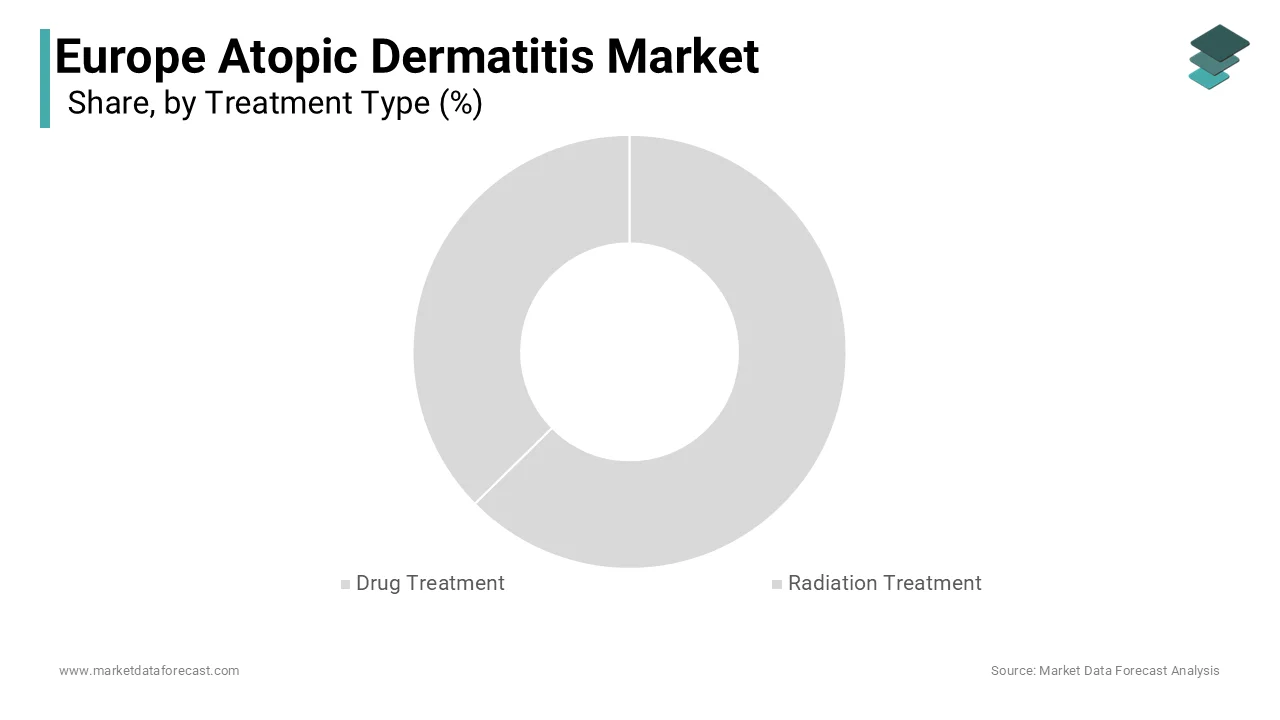
The drug treatment segment is also likely to experience the fastest CAGR of 11.2% during the forecast period, owing to the rapid adoption of targeted biologics and small molecule inhibitors that offer superior efficacy and quality of life improvements over conventional therapies. The pipeline is equally robust. Tralokinumab received EU marketing authorization in 2021 and lebrikizumab was approved in 2023, expandiIL-13 13 targeting options. Oral therapies are also gaining traction. Upadacitinib demonstrated EASI 75 response rates of approximately 60-70% (depending on dose and timepoint) in phase III trials published in The Lancet in 2021. National reimbursement expansions further fuel growth. Improved diagnostic precision and treatment protocols that favor prompt intervention mean that drug therapies will continue to fuel market growth through both innovation and wider availability.
By Route of Administration Insights
In 2024, the topical segment led the European atopic dermatitis market and captured a substantial share 2025. The supremacy of the topical segment is fuelled by its position as fa irst-line therapeutic approach for mild-to-moderate atopic dermatitis in a stepped-care plan. Topical corticosteroids and calcineurin inhibitors are widely prescribed due to their localized action, rapid symptom relief, and favorable safety profile when used intermittently. In pediatric populations, where a notable share of cases begin before age five, topicals are preferred to avoid systemic exposure. National formularies in countries list multiple topical agents as essential medicines, ensuring broad availability through primary care. The introduction of non-steroid options has further expanded the topical arsenal, addressing steroid phobia among caregivers. This entrenched clinical role, combined with low cost and ease of use, solidifies topical therapy as the foundational pillar of atopic dermatitis management.
The oral segment is on the rise and is expected to be the fastest-growing segment in the regional market by witnessing a CAGR of 14.3% from 2025 to 2033. The swift expansion of the oval segment is attributed to the approval and adoption of oral JAK inhibitors that offer rapid and profound symptom control for moderate to severe disease unresponsive to topicals or phototherapy. Upadacitinib and abrocitinib have demonstrated itch reduction and skin clearance in a portion of patients. These outcomes address a vital unmet need, as a portion of severe patients report inadequate relief from existing options. Reimbursement progress is accelerating uptake. Besides, oral dosing aligns with patient preference for convenience over injections, particularly among adolescents and working adults. The systemic treatment market is likely to see oral therapies carving out a significant niche as long-term safety is confirmed and indications broaden to cover younger populations.
By Distribution Channel Insights
The retail pharmacies segment was the prominent segment in the European atopic dermatitis market and occupied a 58.1% share in 2025. Their role as the primary access point for first-line topical therapies, emollients, and over-the-counter skincare products used in daily disease management boosts the expansion of the retail pharmacies segment. Retail networks offer unmatched geographic reach and patient proximity. In some countries, where primary care dermatology access is limited, pharmacists often provide initial guidance on emollient selection and mild corticosteroid use. National health systems reinforce this channel. Furthermore, retail pharmacies stock a wide range of medical-grade moisturizers from brands that are recommended in clinical guidelines as essential adjuncts. The combination of convenience, trusted professional advice, and integration into routine care pathways makes retail pharmacies the backbone of atopic dermatitis product distribution.
The online pharmacies segment is expected to exhibit a noteworthy CAGR of 18.6% during the forecast period due to factors such as rising consumer preference for convenience, privacy, and subscription-based delivery of chronic care products. Patients with atopic dermatitis often require consistent supplies of emollients and prescription topicals, making recurring online orders highly practical. Platforms offer auto-refill services and dermatologist-curated bundles, which enhance adherence. Regulatory evolution has also enabled expansion. Tele dermatology integration further accelerates adoption. Platforms issue prescriptions directly to partnered online pharmacies. The convergence of improved logistics and a more digitally literate population means online channels are now crucial in reshaping access to chronic skin care.
COUNTRY LEVEL ANALYSIS
Germany Atopic Dermatitis Market Analysis
Germany dominated the European atopic dermatitis market in 2025 and accounted for a 23.8% share. High disease burden, robust healthcare infrastructure, and early adoption of advanced therapies contribute to the growth of the atopic dermatitis market in Germany. Millions of Germans suffer from atopic dermatitis, with notable prevalence among children. Statutory health insurance covers biologics without restrictive prior authorization, which enables rapid uptake. Germany also hosts leading dermatology research centers such as Charité Berlin, which contributes to clinical trial leadership. The country’s dense network of specialized dermatology clinics ensures timely diagnosis and treatment escalation. Combined with high patient awareness and strong pharmaceutical innovation, Germany remains the most dynamic and mature market in the region.
United Kingdom Atopic Dermatitis Market Analysis
The United Kingdom was the second-largest country in the European atopic dermatitis market and captured a 17.2% share in 2025. The growth of the UK market is driven by high pediatric prevalence and well-established primary care dermatology referral system. The UK is also a hub for real-world evidence generation. Urban air pollution in cities like London and Birmingham exacerbates disease severity, which drives demand for advanced care. Apart from these, the UK’s strong patient advocacy ecosystem, including organizations like Allergy UK, raises awareness and reduces treatment delays. These factors position the UK as a high need, high response market with significant influence on European clinical practice.
France Atopic Dermatitis Market Analysis
France grew steadily in the European atopic dermatitis market because of a combination of high disease prevalence, centralized healthcare access, and strong consumer skincare culture. Millions of French citizens live with atopic dermatitis, and the condition accounts for a substantial number of dermatology consultations annually. France’s national protocol for chronic disease management includes atopic dermatitis by ensuring coordinated care across primary and specialist levels. The government’s decision to reimburse biologics for patients failing cyclosporine significantly expanded access. Besides, French consumers exhibit high trust in dermocosmetic brands, which are integrated into medical recommendations. This fusion of clinical rigor and consumer engagement creates a unique ecosystem where medical and over-the-counter solutions coexist to support long-term disease control.
Italy Atopic Dermatitis Market Analysis
Italy expanded moderately in the European atopic dermatitis market due to regional disparities in care access, but strong demand in northern urban centers. A significant number of Italians suffer from the condition, with notable pediatric prevalence in industrialized regions. Italy also leads in phototherapy use, with many hospital-based UVB units, though this is gradually shifting toward pharmacotherapy. The country’s dense network of family physicians often initiates topical treatment, creating a high-volume base. Rising awareness through campaigns by patient groups like AISM and improved dermatologist training are gradually reducing diagnostic delays, which positions Italy for accelerated growth in advanced therapies.
Spain Atopic Dermatitis Market Analysis
Spain is expected to be the most lucrative region in the European atopic dermatitis market from 2025 to 2033, owing to increasing urbanization and rising pediatric incidence, particularly in Madrid and Barcelona. Historically constrained by budget limitations, Spain’s public health system began reimbursing dupilumab, with regional variations in access. However, private insurance out-of-pocket spending enables faster adoption of novel therapies among middle and upper-income groups. Spain also benefits from strong participation in multinational clinical trials, enhancing clinician familiarity with new agents. Public awareness remains moderate, but digital health initiatives like the Dermatology Teleconsultation Network are improving rural access. These evolving dynamics position Spain as a high-potential growth market in Southern Europe.
COMPETITIVE LANDSCAPE
The European atopic dermatitis market features intense competition among global pharmaceutical innovators and specialized dermatology companies vying for leadership in a rapidly evolving therapeutic landscape. Sanofi’s dupilumab established the biologic standard of care but now faces competition from newer agents like Pfizer’s abrocitinib and Eli Lilly’s tralokinumab, which offer differentiated dosing and onset profiles. The entry of oral JAK inhibitors has intensified rivalry in the systemic segment, while topical JAK candidates aim to displace first-line therapy. Competition extends beyond molecules to encompass access strategies as companies navigate fragmented reimbursement systems and stringent safety requirements. Patient-centric approaches, including digital tools, education programs, and support services, are increasingly critical differentiators. Meanwhile, biosimilars loom on the horizonthreatening long-term pricing power. Success hinges on clinical differentiation, robust health economics data, and agile market access execution across Europe’s diverse regulatory and care delivery environments.
KEY MARKET PLAYERS
Companies playing a promising role in the europe atopic dermatitis market profiled in the report are
- Astellas Pharma Inc.
- Valeant Pharmaceuticals International, Inc.
- Sanofi S.A. e Anacor Pharmaceuticals, Inc.
- Meda Pharmaceuticals
- Regeneron Pharmaceuticals Inc.
- Novartis International AG
- Pfizer Inc
TOP LEADING PLAYERS IN THE MARKET
- Sanofi is a global pharmaceutical leader with a transformative presence in the European atopic dermatitis market through its pioneering biologic dupilumab developed in collaboration with Regeneron. Approved across all major European countries, dupilumab targets theIL-44 andIL-133 pathways central to type 2 inflammation, offering significant symptom relief for moderate to severe cases. The company actively engages with national health technology assessment bodies to ensure broad reimbursement and supports real-world evidence generation through registries like the European Atopic Dermatitis Registry. Furthermore, Sanofi partners with patient advocacy groups across Germany, France, and the UK to improve disease awareness and reduce diagnostic delays, strengthening its ecosystem influence beyond product supply.
- Pfizer plays an important role in the European atopic dermatitis market through its oral JAK inhibitor abrocitinib, which delivers rapid itch reduction and skin clearance for patients unresponsive to conventional therapies. The company leverages its extensive primary care and dermatology networks to educate physicians on appropriate patient selection and safety monitoring. Pfizer also invests in digital adherence tools, including a companion app that tracks symptom progression and medication intake. Its robust clinical trial data, including long-term extension studies published in peer-reviewed journals, bolsters clinician confidence. These efforts position Pfizer as a key innovator in the systemic treatment segment, particularly for adolescent and adult populations seeking non-injectable options.
- LEO Pharma is a Denmark-based global dermatology specialist with deep roots in the European atopic dermatitis market, offering both topical and emerging systemic solutions. The company’s portfolio includes high-potency topical corticosteroids and calcineurin inhibitors widely used in first-line care across Nordic and Western European countries. More recently, LEO Pharma advanced its pipeline with delgocitinib, a topical JAK inhibitor currently in phase III trials, aiming to bridge the efficacy gap between topicals and systemics without systemic exposure. LEO Pharma also collaborates with national dermatology societies to integrate quality of life metrics into routine clinical practice. Its focused therapeutic expertise and commitment to skin health innovation sustain its relevance in a rapidly evolving treatment landscape.
TOP STRATEGIES USED BY THE KEY MARKET PARTICIPANTS
Key players in the European atopic dermatitis market prioritize securing regulatory approvals for expanded indication,,s including younger age groups, to broaden patient eligibility. Companies invest heavily in health technology assessment submissions to achieve favorable national reimbursement decisions across diverse EU healthcare systems. Strategic collaborations with dermatology societies, patient advocacy organizations, and academic institutions enhance clinical adoption and real-world evidence generation. Digital health integration through symptom tracking apps and telemedicine partnerships improves treatment adherence and patient engagement. Apart from these, firms emphasize safety monitoring and risk management programs to address regulatory concerns around immunomodulatory therapies, particularly for long-term use in pediatric populations.
MARKET SEGMENTATION
This research report on the europe atopic dermatitis market has been segmented and sub-segmented into the following categories
By Treatment Type
- Drug Treatment
- Radiation Treatment
By Route of Administration
- Topical
- Oral
By Distribution Channel
- Hospital Pharmacies
- Retail Pharmacies
- Online Pharmacies
By Country
- UK
- France
- Spain
- Germany
- Italy
- Russia
- Sweden
- Denmark
- Switzerland
- Netherlands
- Turkey
- Czech Republic
- Rest of Europe