- Product Description Description
- Table of Contents TOC
- List of Table & Figure LOT
- Get Free Sample PDF Sample PDF
Market Size, 2025
$23.74 BnMarket Estimate, 2026
$25.04 BnMarket Forecast, 2034
$38.34 BnCAGR, 2026–2034
5.47%Europe Baby Gourmet Market Size, Growth, Trends & Forecast (2026–2034)
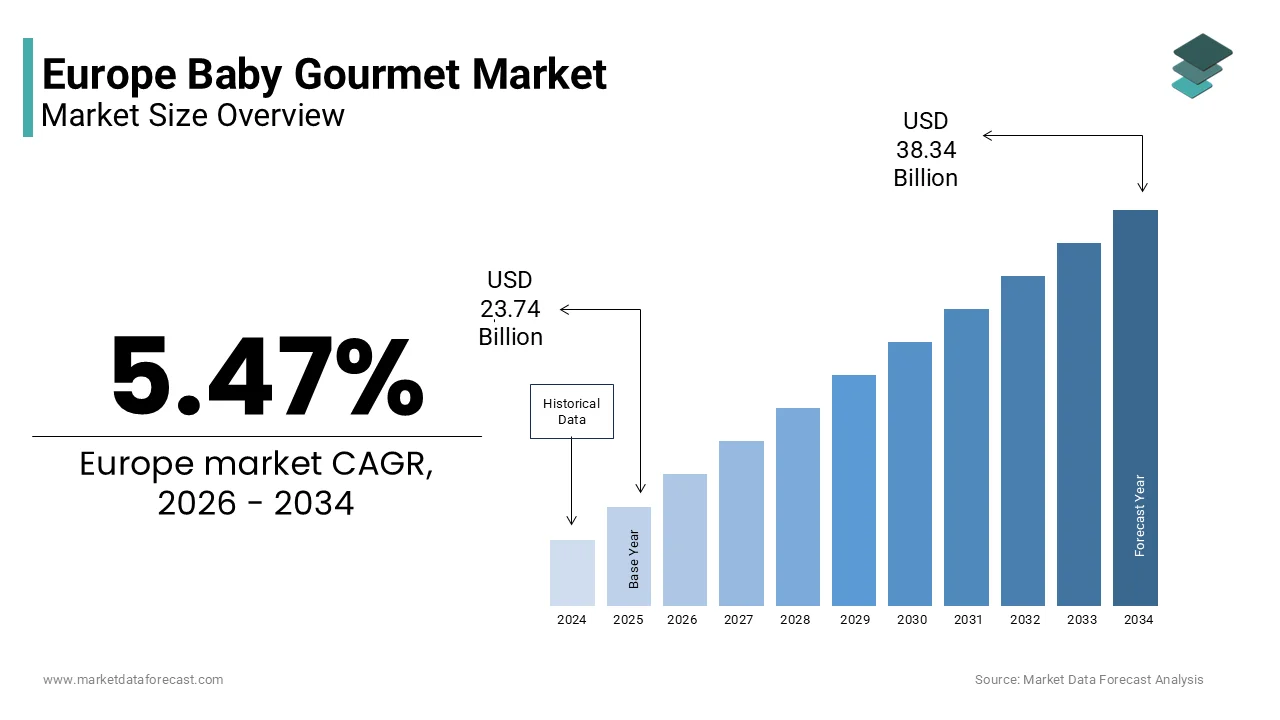
The Europe baby gourmet market size was valued at USD 23.74 billion in 2025, is estimated to reach USD 25.04 billion in 2026, and is projected to scale up to USD 38.34 billion by 2034, registering a compound annual growth rate (CAGR) of 5.47% during the forecast period from 2026 to 2034. Driven by rising health consciousness among millennial parents, the proliferation of dual-income households demanding convenient premium solutions, and structural child demographics, the baby gourmet market continues to expand steadily across the continent.
Key Executive Metrics (At-a-Glance)
- 2025 Base Valuation: USD 23.74 Billion
- 2026 Current Valuation: USD 25.04 Billion
- 2034 Forecast Valuation: USD 38.34 Billion
- Compound Annual Growth Rate (CAGR): 5.47% (2026–2034)
- Dominant Ingredient Segment: Fruits (holding major market share due to natural sweetness, weaning compatibility, and strong European agricultural yields)
- Dominant Product Type: Baby Meals (commanding leading share driven by single-serve nutrition solutions and traditional regional culinary preferences)
- Fastest-Growing Product/Ingredient Segment: Snacks & Grains and Cereals (propelled by organic toddler food adoption, portable formats, and iron-deficiency awareness)
- Dominant Region: Western Europe (holding the highest regional market share backed by high disposable incomes, mature organic markets, and advanced e-commerce infrastructure)
Core Market Drivers
- Millennial Health Consciousness: Heightened parental focus on clean-label, organic certification, and transparent sourcing free from artificial additives or added sugars.
- Dual-Income Time Constraints: Growth in dual-income households and professional commitments driving demand for high-quality, ready-to-serve gourmet convenience solutions.
- Digital & E-Commerce Expansion: Proliferation of direct-to-consumer online channels, subscription models, and social media parenting networks accelerating brand accessibility.
Primary Market Restraints & Challenges
- Stringent Regulatory Compliance: Strict European Union (EFSA) food laws and organic audit protocols that significantly increase operational setup costs and compliance barriers for market entry.
- Price Sensitivity & Private Label Pressure: Economic volatility and strong retail store-brand competition constraining premium pricing penetration in Eastern and Southern European regions.
Europe Baby Gourmet Market Segmentation Breakdown
| Segment Category | Leading Sub-Segment (2025 Base) | Fastest-Growing Sub-Segment (2026–2034) |
|---|---|---|
| By Ingredient | Fruits (dominant volume leader due to natural taste preferences and weaning alignment) | Grains & Cereals (fastest-growing category driven by iron-deficiency prevention and ancient grain blends at an 8.2% CAGR) |
| By Product Type | Baby Meals (dominant share leader offering complete regional-inspired nutritional solutions) | Snacks (fastest-growing category at a 9.5% CAGR fueled by organic finger foods and portable clean-label formats) |
| By Region | Western Europe (major consumption and premium retail hub) | Eastern/Southern Europe & E-Commerce Channels (expanding through direct-to-consumer digital infrastructure) |
Major Industry Players Profiled
Key enterprises shaping the competitive Europe baby gourmet market include HiPP, Nestlé, Danone, Initiative Foods, Vitagermine, Bellamy's Organic, Little Duck Organics, Tasty Brand, Olli, Happy Baby, and Yummy Spoonfuls.
 Download Free Sample Report
Europe Baby Gourmet Market Size
The Europe baby gourmet market size was valued at USD 23.74 billion in 2025 and is expected to reach USD 38.34 billion by 2034 from USD 25.04 billion in 2026, growing at a CAGR of 5.47%.
Baby Gourmet is a specialized segment within the infant nutrition industry that focuses on premium-quality organic and artisanal food products designed for infants and toddlers. These products emphasize superior ingredients, sophisticated preparation methods and enhanced nutritional profiles compared to standard baby food offerings. The market caters to health-conscious parents who prioritize natural ingredients, minimal processing and transparent sourcing practices for their children’s dietary needs. European consumers demonstrate increasing preference for clean-label products free from artificial additives, preservatives and genetically modified organisms. According to Eurostat, the European Union maintains a strong structural baseline for child demographics, with over 4 million live births recorded annually, providing a massive consumer foundation for specialized infant products. The region witnesses growing awareness regarding early childhood nutrition, with paediatricians recommending diverse flavour exposure during the weaning period to prevent picky eating habits later in life. As per the European Commission Food Rules for Specific Groups, strict EU-wide laws govern infant and follow-on formula compositions, relying on comprehensive scientific risk assessments from the European Food Safety Authority (EFSA) to verify total nutritional safety. The cultural emphasis on family meals and traditional cooking methods in countries like France, Italy and Spain influences product development toward authentic regional flavours. Parents increasingly seek convenience without compromising quality, leading to a demand for ready-to-eat gourmet options that maintain homemade taste profiles. The market benefits from high disposable incomes in Western European nations, enabling premium pricing strategies, while Eastern European markets show emerging potential as economic conditions improve.
MARKET DRIVERS
Rising Health Consciousness Among Millennial Parents Drives Premium Product Demand
Millennial parents across the region exhibit heightened awareness regarding infant nutrition and actively seek products that align with their values of health, sustainability, and transparency to ultimately boost the growth of the Europe baby gourmet market. According to Eurostat, millennial and younger age cohorts account for the overwhelming majority of current live births in the EU, significantly exceeding the suggested 35% window and consolidating premium retail opportunities. These parents extensively research ingredient lists, prefer organic certifications and avoid products containing added sugars, salts or artificial flavors. The trend toward clean eating extends to infant nutrition, with parents willing to pay premium prices for products perceived as healthier and safer. Organic baby food sales have grown consistently, with organic certification bodies reporting increased registrations for infant food manufacturers. Parents view early nutrition as foundational for long term health outcomes, influencing purchasing decisions toward nutrient dense options. Social media platforms amplify this consciousness as parenting influencers share recommendations and reviews, creating peer-driven demand for specific brands. As per the European Food Safety Authority (EFSA), early dietary variation and introduction of diverse nutrient groups during infancy are foundational to long-term metabolic health. The proliferation of mobile applications tracking infant feeding patterns further encourages parents to select high quality products. Manufacturers respond by highlighting sourcing stories, production methods and nutritional benefits on packaging appealing to informed consumers. This driver sustains market growth as each new generation of parents maintains elevated expectations for product quality and safety standards.
Expansion of Dual- Income Households Increases Demand for Convenient Premium Solutions
The prevalence of dual-income households in the region has reached significant levels, which further contributes to the expansion of the Europe baby gourmet market. According to the Organisation for Economic Co-operation and Development (OECD), dual-income parenting models are rising steadily, although massive structural variations exist between member nations based on localized childcare affordability and parental leave frameworks. This socioeconomic shift creates substantial time constraints for meal preparation, driving demand for convenient yet high quality infant food options. Parents seek products that offer the nutritional benefits of homemade meals without the associated time investment in shopping preparation and cooking. Baby Gourmet products positioned as premium convenience solutions address this need by providing restaurant quality flavors in ready-to-serve formats. Urban living patterns further amplify this trend as city-dwelling families face limited kitchen space and busy schedules. The work-from-home arrangements adopted by many European companies post-pandemic have not fully reversed this dynamic, as professional commitments remain demanding. Retailers respond by expanding shelf space for premium baby food sections in supermarkets and specialty stores. Online grocery platforms report strong growth in baby gourmet categories, with subscription services gaining traction among time pressed parents. The convenience factor combines with quality expectations as parents refuse to compromise on nutrition despite busy lifestyles. Manufacturers invest in packaging innovations that ensure freshness and ease of use, such as resealable pouches and portion-controlled containers. This driver ensures sustained demand as workforce participation rates among parents remain high across major European economies, including Germany, France and the United Kingdom.
MARKET RESTRAINTS
Stringent Regulatory Frameworks Increase Compliance Costs and Market Entry Barriers
The European Union maintains some of the world’s most rigorous regulations governing infant nutrition products, which restrict the growth of the Europe baby gourmet market. This creates significant compliance challenges for manufacturers. According to the European Commission Food Rules for Specific Groups, the European Commission legally enacts and enforces strict safety limits, utilizing scientific assessments from EFSA to govern maximum contaminant allowances. Compliance with these standards demands substantial investment in laboratory infrastructure supply chain monitoring and documentation systems. Small- and medium-sized enterprises face particular difficulties, as regulatory costs represent a larger proportion of their operational budgets compared to multinational corporations. The EU Regulation on Infant Formula and Follow-on Formula specifies detailed compositional requirements, including mandatory and optional ingredients, vitamin and mineral levels, and labelling provisions. Any deviation from these specifications results in product recalls and reputational damage. As per Eurostat, baby food producers frequently recalibrate raw material procurement strategies to maintain continuous alignment with shifting European chemical and organic safety updates. The regulatory landscape varies slightly across member states regarding national additions to EU baseline requirements, creating complexity for pan-European distribution. Certification processes for organic claims involve multiple agencies and annual audits, adding administrative burdens. New entrants must navigate these requirements before launch delaying market entry and increasing initial capital requirements. Established players benefit from existing compliance infrastructure but still face ongoing costs for maintaining certifications and adapting to regulatory changes. This restraint limits market fragmentation and consolidates power among larger manufacturers with resources to manage regulatory complexities effectively.
Price Sensitivity in Emerging European Markets Limits Premium Product Penetration
Consumers' focus on price in emerging European regions hinders the sales of premium goods in the Europe baby gourmet market. Western European markets show strong acceptance of premium baby gourmet products. In contrast, Eastern and Southern European regions exhibit greater price sensitivity, which constrains market expansion. Household expenditure on food varies significantly across the continent, with families in countries like Romania, Bulgaria, and Greece allocating higher percentages of income to basic necessities, according to Eurostat household budget surveys. The premium pricing strategy typical of gourmet baby food positions these products beyond reach for middle- and lower-income families in these regions. Economic volatility, including inflation rates reaching double digits in several European countries during recent years, has further pressured household budgets, forcing consumers to prioritize essential items over premium options. Currency fluctuations affect import costs for ingredients sourced internationally, impacting final retail prices. Discount retailers gain market share in these regions, offering private label baby food at substantially lower prices than branded gourmet alternatives. The perception of value differs across markets, with some consumers questioning whether premium features justify price differentials when standard products meet basic nutritional requirements. Marketing messages emphasising luxury and exclusivity resonate less in price-sensitive markets where practicality and affordability dominate purchasing criteria. Distribution networks in rural areas of Eastern Europe remain underdeveloped, limiting access to specialty products even when demand exists. Manufacturers struggle to balance premium positioning with volume goals in these markets, often resulting in limited product portfolios or delayed launches. This restraint creates uneven market development across Europe, with growth concentrated in wealthier nations while emerging markets progress slowly.
MARKET OPPORTUNITIES
Growing E-Commerce Infrastructure Enables Direct-to-Consumer Premium Brand Expansion
The rapid development of e-commerce infrastructure across the region creates significant opportunities for brands in the Europe baby gourmet market. This helps the brands to reach consumers directly, bypassing traditional retail limitations. Online baby product sales in Europe have grown substantially. According to the European Commission Consumer Policy Frameworks, the rapid advancement of electronic commerce infrastructure and online retail marketplaces provides a powerful direct-to-consumer channel for premium baby brands. Direct-to-consumer models allow manufacturers to educate parents about product benefits, share brand stories and build loyalty through personalized engagement. Subscription services offer convenience and predictable revenue streams while enabling brands to gather valuable consumer data for product development. Social media integration facilitates targeted advertising to millennial parents who actively seek recommendations and reviews online. The pandemic accelerated digital adoption with many first time online shoppers continuing e commerce habits post lockdown. Mobile optimized shopping experiences and one click purchasing reduce friction in the buying journey. Cross-border e-commerce within the EU single market enables smaller gourmet brands to access customers in multiple countries without establishing physical distribution networks in each location. Digital platforms support niche positioning allowing brands to specialize in specific dietary needs such as allergen free or culturally specific flavors. Customer feedback loops through online reviews and ratings help brands refine offerings rapidly. Logistics improvements including same day delivery options in major cities enhance convenience matching expectations set by broader e commerce trends. This opportunity democratizes market access enabling innovative startups to compete with established players through digital agility and direct customer relationships.
Increasing Focus on Sustainable and Ethical Sourcing Appeals to Environmentally Conscious Consumers
Consumers in the region show growing concern for environmental sustainability and ethical sourcing, which unlocks potential in the Europe baby gourmet market. This paves the way for brands that prioritize these values. As per the European Environment Agency (EEA), evolving public consciousness regarding household carbon impacts and personal trash footprints plays an influential role in modern ecological consumption transitions. Baby gourmet manufacturers can differentiate themselves by adopting sustainable packaging solutions such as recyclable materials reduced plastic usage and biodegradable options. Transparent supply chains showcasing fair trade partnerships with farmers and responsible agricultural practices resonate strongly with ethically minded parents. Carbon footprint reduction initiatives including local ingredient sourcing and renewable energy usage in production facilities appeal to environmentally aware consumers. Certifications from recognized sustainability organizations provide third party validation of claims enhancing credibility. The circular economy concept gains traction with brands implementing take back programs for packaging or partnering with recycling initiatives. Water conservation efforts in ingredient cultivation and manufacturing processes address resource scarcity concerns. Biodiversity protection through support for organic farming methods appeals to parents concerned about long term environmental health for their children. Storytelling around sustainability efforts creates emotional connections with consumers who view purchases as votes for preferred corporate behaviors. Retailers increasingly prioritize suppliers with strong sustainability credentials aligning with their own corporate responsibility goals. This opportunity allows brands to command premium pricing while building loyal customer bases committed to shared environmental values.
MARKET CHALLENGES
Supply Chain Vulnerabilities Disrupt Consistent Product Availability and Quality
Supply chain disruptions affect ingredient availability, production consistency, and product quality, which challenges the growth of the Europe baby gourmet market. Climate change impacts agricultural yields with extreme weather events reducing harvests of key ingredients such as organic fruits vegetables and grains. According to the European Drought Observatory, severe weather anomalies and soil moisture deficits affect European agricultural production, impacting crop availability and raw ingredient yields. Geopolitical tensions and trade restrictions complicate sourcing of specialized ingredients from outside the European Union creating uncertainty for manufacturers dependent on global supply networks. The concentration of organic farming in specific regions increases vulnerability to localized disruptions such as pest outbreaks or labor shortages. Transportation bottlenecks including port delays and fuel price volatility increase logistics costs and extend lead times. Small batch production typical of gourmet products offers less flexibility to absorb supply shocks compared to large scale conventional manufacturing. Quality consistency becomes difficult to maintain when ingredient sources change frequently due to availability issues. Manufacturers must balance inventory holding costs against stockout risks creating operational complexities. The requirement for fresh ingredients in many gourmet formulations limits shelf life extension options exacerbating supply chain pressures. Backup supplier qualification processes are time consuming and costly particularly for organic certified sources. These vulnerabilities result in occasional product discontinuations or formulation changes that disappoint loyal customers and damage brand trust. Building resilient supply chains requires significant investment in diversified sourcing relationships and strategic inventory management.
Intense Competition from Private Label and Conventional Brands Erodes Market Share
Private label offerings are creating tough competition in the European baby gourmet market. Meanwhile, conventional baby food brands are also moving into premium segments. Major retail chains including Carrefour Tesco and Aldi have developed sophisticated private label baby food lines featuring organic ingredients and attractive packaging at lower price points. According to retail industry analysis, private label products now account for approximately 30% of baby food sales in several Western European markets. Also, as per sources, private-label retail growth significantly outpaces conventional national brands, as consumers lean toward high-quality store-brand alternatives to circumvent premium price premiums. These retailer owned brands benefit from established distribution networks prominent shelf placement and consumer trust in the retailer name. Conventional baby food manufacturers respond by launching premium sub brands or reformulating existing products to include organic ingredients and cleaner labels blurring distinctions between gourmet and standard categories. Price promotions and bundle offers from larger competitors pressure gourmet brands to discount eroding margins. Retailers exercise significant bargaining power demanding slotting fees and promotional support that strain smaller gourmet manufacturers financially. Shelf space allocation remains competitive with retailers prioritizing high turnover items over niche gourmet products. Consumer confusion arises from similar packaging designs and marketing claims making differentiation difficult. Brand loyalty proves fragile as price sensitive shoppers switch between options based on promotions. Gourmet brands struggle to communicate unique value propositions when competitors mimic key features at lower prices. Innovation cycles accelerate as brands race to introduce new flavors and formats increasing research and development costs. This competitive pressure forces continuous investment in marketing and product development while limiting pricing power and profitability for pure play gourmet manufacturers.
REPORT COVERAGE
| REPORT METRIC | DETAILS |
| Market Size Available | 2025 to 2034 |
| Base Year | 2025 |
| Forecast Period | 2026 to 2034 |
| CAGR | 5.47% |
| Segments Covered | By Ingredient, Product Type, And Region. |
| Various Analyses Covered | Global, Regional and Country Level Analysis; Segment-Level Analysis; DROC; PESTLE Analysis; Porter’s Five Forces Analysis; Competitive Landscape; Analyst Overview of Investment Opportunities |
| Regions Covered | North America, Europe, APAC, Latin America, Middle East & Africa |
| Market Leaders Profiled | Initiative Foods, Vitagermine, Bellamy's Organic, Little Duck Organics, Tasty brand, Olli, Happy Baby, Yummy Spoonfuls Initiative Foods, HiPP, Vitagermine, Bellamy's Organic, Little Duck Organics, Tasty Brand, Nestlé, Olli, Danone, Happy Baby, and Yummy Spoonfuls |
SEGMENTAL ANALYSIS
By Ingredient Insights
The fruits segment dominated the Europe baby gourmet market and accounted for a substantial share in 2025. This dominance of the segment was driven by its natural sweetness, which aligns with infant taste preferences during the weaning phase. Paediatric nutrition guidelines recommend introducing fruits early to encourage acceptance of solid foods, as their mild flavours reduce resistance among infants transitioning from breast milk or formula. According to the European Society for Paediatric Gastroenterology, Hepatology and Nutrition (ESPGHAN), complementary foods should not be introduced before 4 months and should not be delayed past 6 months, while the selection of specific sweet or savory first ingredients depends entirely on regional household customs. The versatility of fruits allows manufacturers to create single ingredient options as well as complex blends with vegetables and grains, enhancing product appeal. Organic apple, banana and pear varieties remain top sellers due to their widespread availability and consumer familiarity across European markets. Parents perceive fruits as inherently safe and nutritious, reducing hesitation associated with trying new brands. The seasonal abundance of berries in Northern Europe and stone fruits in Southern regions enables localized sourcing strategies that support fresh taste profiles valued by gourmet consumers. According to research, the convenient packaging and high natural palatability of fruit-based products have made ready-to-feed pouches a dominant driving engine of contemporary grocery sales. Marketing campaigns emphasizing vitamin content and antioxidant benefits further reinforce purchase decisions. The absence of added sugars in premium fruit products addresses parental concerns about dental health and obesity while maintaining desirable taste characteristics.
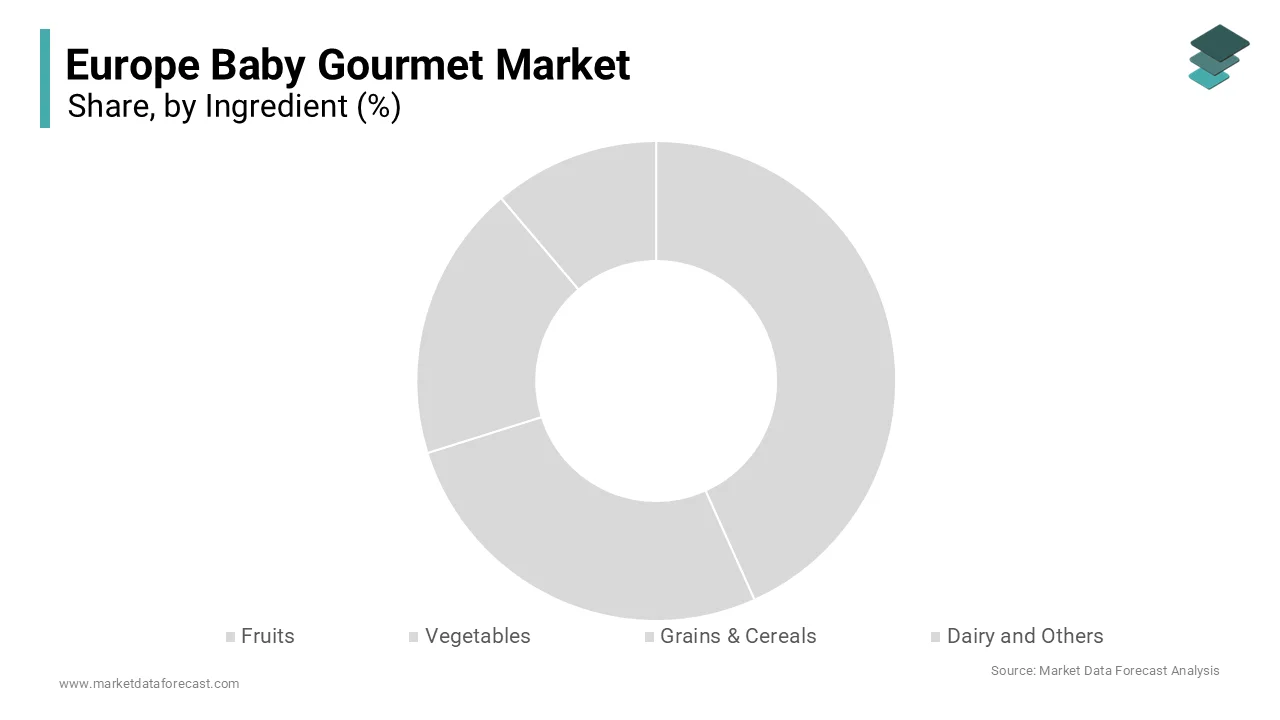
The fruit segment maintains its top position due to robust agricultural infrastructure and advanced preservation technologies that ensure consistent quality and availability throughout the year. Europe benefits from diverse climatic zones enabling the cultivation of various fruit types domestically, reducing dependence on imports and minimizing supply chain disruptions. According to Eurostat, the European Union's agricultural landscape delivers major annual yields, including over 62 million tonnes of fresh vegetables, securing a steady, self-reliant supply chain for specialized food manufacturers. Cold-chain logistics improvements allow processors to maintain nutritional integrity and flavor profiles from farm to factory, ensuring premium quality standards expected by gourmet consumers. Freeze drying and gentle pasteurization techniques preserve heat sensitive nutrients such as vitamin C, making processed fruit products comparable to fresh alternatives in nutritional value. Major producers like France, Italy and Spain have established cooperative structures that facilitate bulk procurement at competitive prices, enabling manufacturers to maintain profitability despite premium positioning. Consumer trust in European agricultural safety standards reduces perceived risks associated with pesticide residues, particularly for organic- certified fruits. The ability to source multiple fruit varieties supports innovation in flavour combinations, keeping product portfolios fresh and engaging for repeat purchases. Seasonal promotions and limited-edition offerings leveraging regional harvests create excitement and drive trial among discerning parents seeking unique gourmet experiences for their children.
The grains and cereals segment is predicted to witness the highest CAGR of 8.2% during the forecast period owing to increasing awareness regarding iron deficiency anaemia among infants. As per ESPGHAN, prioritizing iron-rich complementary foods like fortified baby cereals, pulses, or meats is essential at the six-month mark to safely support rapid infant brain development. According to the World Health Organization (WHO), childhood anaemia affects an estimated 269 million children under five globally, highlighting the systemic importance of integrating nutrient-dense dietary options during weaning. Gourmet manufacturers respond by developing multigrain blends incorporating ancient grains like spelt, millet and amaranth that offer superior nutritional profiles compared to refined alternatives. Parents increasingly scrutinize labels for whole grain content and minimal processing favoring products that provide sustained energy release and digestive benefits. The trend toward plant based diets extends to infant nutrition, with families seeking non-meat sources of essential minerals and proteins found in certain cereals. Educational initiatives by healthcare providers highlight the role of complex carbohydrates in brain development, reinforcing demand for premium grain-based options. Regulatory mandates requiring fortification of infant cereals with specific micronutrients ensure baseline quality while gourmet brands differentiate through organic sourcing and innovative textures. The introduction of gluten-free variants caters to rising coeliac disease diagnosis rates, expanding the addressable market within this segment.
Growth in the grains and cereals segment is accelerated by product innovations that address evolving parental expectations for texture diversity and culinary sophistication in infant meals. Traditional single-grain cereals are being replaced by multi grain porridges and savory blends incorporating herbs and vegetables, appealing to parents who wish to expose infants to varied tastes early in life. According to the NCBI Bookshelf Guidelines, adapting food textures and transitions smoothly during late infancy is heavily recommended by healthcare practitioners to safely foster child chewing capabilities and oral-motor progression. Manufacturers invest in research to optimise cooking methods that retain grain integrity while ensuring easy digestibility for immature digestive systems. The incorporation of probiotics and prebiotics into cereal products enhances gut health benefits, creating a functional food positioning that justifies premium pricing. Cultural influences play a significant role as Mediterranean-inspired grain dishes featuring olive oil and tomatoes gain popularity in Southern Europe, while Nordic rye and barley combinations resonate in Northern markets. Ready-to-eat formats such as dissolvable cereal puffs and instant oatmeal packets cater to busy lifestyles without compromising nutritional quality. Packaging innovations, including portion-controlled sachets and resealable containers, improve convenience and reduce waste. As per the UK British Dietetic Association (BDA) Framework, parenting circles rely increasingly on varied lifestyle content and community sharing to navigate recipe ideas, product selections, and diverse infant-led weaning strategies. This continuous innovation cycle sustains consumer interest and supports above-average growth rates for the segment.
By Product Type Insights
The baby meals segment led the Europe baby gourmet market and captured a significant share in 2025. This leading position of the segment was attributed to its offering of complete nutritional solutions in single-serve formats, which appeal to time-constrained parents. These products typically combine proteins, vegetables and grains, providing balanced macronutrient profiles that eliminate the need for multiple ingredient preparation. According to Eurostat, modern retail demand shifts dramatically toward prepared infant formulations as shifting lifestyle schedules prioritize convenient, shelf-stable, and nutritionally balanced alternatives. Gourmet baby meals distinguish themselves through restaurant-inspired recipes featuring authentic regional flavors such as French ratatouille, Italian minestrone or Spanish paella adaptations suitable for infants. This culinary approach satisfies parental desire to introduce cultural food heritage early while ensuring age appropriate textures and sodium levels. The variety of protein sources, including organic chicken, turkey, fish and legumes, addresses diverse dietary preferences and allergen considerations. Portion-controlled packaging reduces food waste and simplifies feeding routines, particularly for travelling families or daycare situations. Retailers prioritize baby meals due to higher price points and consistent repurchase patterns generating stable revenue streams. Quality perceptions are enhanced by transparent labelling detailing ingredient origins and preparation methods, building trust with discerning consumers. The segment benefits from extensive distribution networks spanning supermarkets pharmacies and specialty baby stores ensuring wide accessibility. Promotional bundles offering meal variety packs encourage trial and facilitate transition between different developmental stages, maintaining long-term customer engagement.
The pre-eminence of this segment is substantiated by strong brand loyalty cultivated by established manufacturers with long histories of safety and quality compliance. Parents exhibit cautious behaviour when selecting food for infants, preferring brands with proven track records and positive word-of-mouth recommendations. As per a study, infant products command deep safety verification and consumer trust, ensuring that parents maintain strict brand adherence once quality expectations are met. Gourmet meal producers invest heavily in clinical testing and paediatric endorsements validating nutritional claims and safety standards. Certifications from recognized bodies such as the Soil Association for organic products or Demeter for biodynamic farming provide third-party assurance influencing purchase decisions. Emotional marketing campaigns connecting brand values with parental aspirations for healthy child development create deep psychological bonds. Limited-edition seasonal meals generate excitement and prevent brand fatigue, while core staples ensure consistent availability. Customer service initiatives, including nutritionist hotlines and online resources, add value beyond the product itself, fostering community engagement. Private label competition remains limited in the gourmet meals category due to the complexity of formulation and higher quality expectations protecting margins for branded players. Strategic partnerships with parenting apps and healthcare platforms integrate brands into daily routines reinforcing habitual consumption. This combination of trust, convenience and emotional connection secures the leading status of baby meals within the product-type segmentation.
The snacks segment is estimated to register the fastest CAGR of 9.5% from 2026 to 2034, due to shifting parental attitudes toward between-meal nutrition. Traditional views of snacks as indulgent treats are being replaced by recognition of their role in meeting daily nutritional requirements and managing hunger cues effectively. According to the WHO European Childhood Obesity Surveillance Initiative (COSI), tracking lifestyle behaviors and monitoring food habits are essential public health interventions required to lower long-term pediatric obesity risks across EU member states. Gourmet baby snacks include organic teething biscuits, veggie sticks, fruit leather and yogurt melts formulated without added sugars, artificial colors or preservatives. Parents seek products that support oral motor development through appropriate textures while delivering vitamins, minerals and fiber. The rise of finger foods aligns with baby led weaning practices gaining popularity across Europe as families encourage self-feeding and autonomy. As per research, grocery store product assortments are continually shifting toward healthy, organic snack options to accommodate rising parental preferences for clean-label toddler products. Innovation in ingredient combinations, such as kale chips, sweet potato crisps and chia seed bars, introduces novel flavors appealing to adventurous palates. Portability makes these products ideal for outings, daycare and travel, addressing the practical needs of modern families. Marketing emphasizes clean labels and simple ingredient lists resonating with health conscious consumers willing to pay premiums for perceived safety and quality advantages over conventional snack options.
Rapid growth in the snacks segment is fuelled by continuous product innovation and diversification catering to specific dietary needs and developmental stages. Manufacturers introduce allergen-free options such as nut-free protein bars and gluten-free crackers, addressing the rising prevalence of food sensitivities among infants. According to the European Academy of Allergy and Clinical Immunology (EAACI), food allergies represent a widespread condition affecting approximately 8% of European children, making strict allergen control an important product innovation driver. Functional snacks incorporating probiotics for gut health, omega-3 fatty acids for brain development, or calcium for bone strength offer added value propositions justifying premium pricing. Texture progression lines guide parents through appropriate consistency levels from soft meltable to crunchy bites, supporting oral skill development. Cultural adaptation sees the introduction of regionally inspired snacks such as Mediterranean olive oil crackers or Nordic berry bars, enhancing local relevance. Collaborations with celebrity chefs and nutritionists lend credibility and generate media attention, driving trial among curious parents. Subscription boxes featuring curated snack selections provide discovery opportunities and convenience, encouraging regular purchases. Digital marketing campaigns showcasing creative snack pairings and meal integration ideas inspire usage occasions beyond traditional snacking times. Eco-friendly packaging using compostable materials appeals to environmentally conscious families, aligning with broader sustainability trends. This dynamic innovation landscape ensures sustained interest and rapid adoption, contributing to the segment’s superior growth performance compared to other product categories.
REGIONAL ANALYSIS
Germany Baby Gourmet Market Analysis
Germany was the top performer in the Europe baby gourmet market and occupied a 22.1% share in 2025. This supremacy of the German market was propelled by high disposable incomes and a strong preference for organic products. The country boasts a significant per capita consumption of organic baby food in Europe, with a notable portion of infant nutrition sales coming from certified organic sources, according to the Federal Ministry of Food and Agriculture. German parents exhibit rigorous standards for product safety and quality influenced by strict national regulations exceeding EU baseline requirements. The presence of major domestic manufacturers such as HiPP and Holle reinforces market maturity and consumer trust in local brands. Urban centers like Berlin, Munich and Hamburg show concentrated demand for premium gourmet options due to higher education levels and exposure to international culinary trends. Retail infrastructure supports extensive distribution through drugstores, supermarkets and specialized baby shops, ensuring wide accessibility. Government subsidies for organic farming encourage domestic production, reducing reliance on imports and supporting sustainable supply chains. Parental leave policies allowing extended time at home foster attentive feeding practices, increasing willingness to invest in high-quality nutrition. As per sources, digital purchasing pathways and e-commerce penetration are heavily driven by rising numbers of working mothers and parents prioritizing convenient baby care retail solutions. The cultural emphasis on environmental responsibility drives demand for eco-friendly packaging and ethically sourced ingredients. Continuous innovation in hypoallergenic and specialized dietary products addresses diverse consumer needs, maintaining robust market growth.
France Baby Gourmet Market Analysis
France was positioned second in the Europe baby gourmet market and held a share of 18.3% in 2025. Factors such as a strong cultural appreciation for culinary excellence extending to infant nutrition have contributed to this position of the French market. French parents prioritize taste diversity and gastronomic quality, seeking products that reflect traditional regional cuisines adapted for infants. According to a study, despite hitting recent long-term lows, France still maintains one of the highest relative crude birth rates in the region at over 10 births per 1,000 inhabitants. The concept of éducation du goût, or taste education, begins early with parents introducing varied flavors and textures to develop sophisticated palates. Premium brands leverage this cultural trait by offering gourmet meals featuring herbs, vegetables and proteins typical of French cooking, such as leeks, carrots and chicken. Organic certification rates continue to rise under broad European and national green management guidelines. As per research, industrial food production pipelines adjust to macroeconomic pressures and family planning transformations rather than direct agricultural space target mandates. Supermarket chains dedicate significant shelf space to premium baby food sections, reflecting retailer confidence in the category. Paris- and Lyon-based startups introduce innovative formats such as freeze-dried fruits and vegetable powders appealing to modern urban families. Regulatory oversight by the Directorate General for Competition Consumer Affairs and Fraud Control ensures strict compliance with safety standards, building consumer confidence. Cross-border exports to neighbouring countries benefit from France’s reputation for culinary quality, enhancing brand prestige. The integration of baby gourmet products into mainstream retail channels alongside luxury positioning creates broad market appeal.
United Kingdom Baby Gourmet Market Analysis
The United Kingdom is also a significant player in the European market because of high awareness of infant nutrition and a strong retail presence of premium brands. British parents demonstrate increasing preference for convenience without compromising quality, leading to robust sales of ready-to-eat gourmet pouches and jars. According to sources like the Britannica Demographic Policy Analysis, rising childcare expenses and shifting workforce dynamics globally drive the necessity for highly convenient, consumer-ready family solutions. The influence of baby led weaning practices promotes demand for finger foods and textured snacks, supporting oral development and self-feeding skills. Major retailers such as Tesco, Sainsbury’s and Waitrose expand their organic and premium baby food ranges, responding to consumer expectations for variety and quality. London and other major cities serve as hubs for innovative startups introducing novel ingredients and sustainable packaging solutions. Post-Brexit regulatory adjustments require manufacturers to navigate separate certification processes for UK and EU markets, adding complexity but also creating opportunities for localized production. Social media influencers and parenting blogs significantly impact purchasing decisions, with reviews and recommendations driving brand visibility. The National Health Service provides guidance on complementary feeding, reinforcing the importance of diverse nutrient intake and supporting demand for varied gourmet options. Price sensitivity varies across regions, with affluent areas showing stronger uptake of ultra- premium products, while value-orientated segments grow in other areas. E-commerce growth accelerates with online baby-speciality retailers gaining market share through personalized services and subscription models.
Italy Baby Gourmet Market Analysis
Italy is moving ahead steadfastly in the Europe baby gourmet market due to a strong agricultural heritage and an emphasis on fresh, natural ingredients in infant diets. In addition, Italian parents prioritize Mediterranean diet principles, introducing olive oil, vegetables and grains early in weaning processes, aligning with gourmet product offerings. According to research, Italy is experiencing an acute birth decline, dropping to its lowest historical level since 1861 and creating a severe natural population deficit. Domestic production of organic fruits vegetables and grains provides abundant raw materials for local manufacturers ensuring freshness and reducing transportation costs. Brands emphasize traditional recipes such as risotto pasta blends and vegetable minestrone, appealing to cultural preferences for familiar flavors. The Slow Food movement originating in Italy influences consumer attitudes toward sustainable sourcing and artisanal production methods, benefiting gourmet baby food producers. Regional diversity allows for varied product portfolios featuring ingredients specific to Northern Central and Southern areas. Supermarkets cooperate with local farmers to promote regional brands, enhancing community support and trust. As per the unified framework outlined in the Demographics of Italy, national food security and demographic health criteria align with overarching European regulatory frameworks to maintain strict consumer safety standards. Export potential remains strong as Italian baby food brands gain recognition globally for quality and authenticity. Urban centers like Milan, Rome and Turin show a higher concentration of premium product sales due to greater disposable incomes and exposure to international trends. According to the Visual Capitalist European Birth Maps, Southern European countries face structural constraints that cause manufacturers to adapt to broad regional consumer patterns rather than narrow domestic raw material incentives.
Spain Baby Gourmet Market Analysis
Spain is expected to grow notably in the Europe baby gourmet market during the forecast period, owing to improving economic conditions and growing health consciousness among younger parents. Spanish families traditionally emphasise home-cooked meals, but increasing workforce participation drives demand for convenient premium alternatives. According to a study, Spain’s birth rate continues its steady multi-year decline, with population growth instead driven primarily by immigration. The Mediterranean diet culture supports acceptance of vegetable- and fruit-based gourmet products featuring olive oil, tomatoes and legumes. Organic farming expansion in regions like Andalusia and Catalonia provides raw materials for domestic baby food production, reducing import dependency. Retailers such as Mercadona and Carrefour expand premium baby food sections, responding to evolving consumer preferences. Urban areas including Madrid, Barcelona and Valencia show the strongest adoption of gourmet brands due to higher income levels and international exposure. As per a survey, public wellness initiatives focus on addressing institutional childcare infrastructure and general youth health rather than shaping commercial infant food retail products. E-commerce penetration increases with online platforms offering wider product selections than physical stores. Price sensitivity remains moderate, with middle-class families gradually trading up to premium options as economic confidence improves. Local brands compete effectively against international players by emphasizing regional ingredients and traditional recipes. Sustainability concerns drive demand for eco-friendly packaging and ethical sourcing practices aligning with broader European trends.
COMPETITIVE LANDSCAPE
The Europe baby gourmet market features intense competition characterized by a mix of established multinational corporations and agile niche brands vying for consumer attention. Large players leverage economies of scale extensive distribution networks and significant research budgets to maintain dominance while smaller companies compete through specialization and authenticity. Brand loyalty remains high as parents prioritize safety and quality making it challenging for new entrants to gain traction without substantial investment in trust building measures. Private label offerings from major retail chains present formidable competition by providing comparable quality at lower prices pressuring branded manufacturers to justify premium pricing through superior innovation and service. Regulatory compliance acts as a barrier to entry ensuring only well capitalized firms can sustain operations amidst stringent safety standards. Geographic diversity influences competitive dynamics with local brands holding strong positions in specific countries due to cultural preferences and established relationships. Innovation cycles accelerate as companies race to introduce novel formats and functional benefits creating a dynamic landscape where continuous adaptation is essential for survival. Mergers and acquisitions occur periodically as larger entities seek to absorb innovative startups or expand their organic portfolios consolidating market power.
KEY MARKET PLAYERS
Key market players in the Europe baby gourmet market are
- Initiative Foods
- HiPP
- Vitagermine
- Bellamy's Organic
- Little Duck Organics
- Tasty brand
- Nestlé
- Olli
- Danone
- Happy Baby
- Yummy Spoonfuls
Top Players in the Market
- HiPP stands as a pioneering force in the European organic baby food sector with deep roots in Germany and extensive distribution across the continent. The company emphasizes biodynamic farming practices and strict quality controls that exceed standard regulatory requirements ensuring premium product integrity. Recent initiatives include expanding its portfolio of climate neutral products by investing in renewable energy sources for production facilities. HiPP actively engages in educational programs for parents regarding sustainable nutrition and early childhood development strengthening brand loyalty. The company continues to innovate with new flavor combinations inspired by regional European cuisines while maintaining its commitment to organic certification. Strategic partnerships with local farmers secure high quality raw materials supporting consistent supply chains. Digital engagement through mobile applications provides personalized feeding advice enhancing customer experience and retention.
- Nestlé leverages its global research capabilities and extensive distribution network to maintain a strong presence in the European baby gourmet segment. The company focuses on scientific innovation developing products tailored to specific nutritional needs such as gut health and immune support. Recent actions include launching premium organic lines under established brands like Gerber and NaturNes with enhanced packaging sustainability features. Nestlé invests heavily in digital platforms offering expert advice and community support for parents driving direct consumer engagement. The company collaborates with healthcare professionals to validate nutritional claims building trust among discerning consumers. Expansion into plant based protein options reflects growing demand for diverse dietary choices. Continuous improvement in supply chain transparency ensures accountability and reinforces consumer confidence in product safety and quality standards.
- Danone contributes significantly to the market through its specialized early life nutrition division focusing on medical and premium organic offerings. The company integrates scientific research with sustainable sourcing practices creating products that support optimal infant development. Recent strategies involve strengthening its organic portfolio with brands like Blédina in France and Cow & Gate in the United Kingdom. Danone prioritizes environmental responsibility by reducing plastic usage and implementing circular economy principles in packaging design. The company engages in extensive clinical studies to substantiate health benefits appealing to evidence driven parents. Partnerships with pediatricians and nutritionists enhance credibility and facilitate professional recommendations. Digital transformation efforts include personalized nutrition services and online communities fostering long term relationships with families. Innovation in texture and flavor profiles caters to evolving parental preferences for diverse and engaging meal options.
Top Strategies Used by Key Market Participants
Key players in the Europe baby gourmet market employ product innovation as a primary strategy to differentiate their offerings and capture consumer interest. Companies continuously develop new flavor combinations and textures that align with regional culinary traditions while meeting nutritional guidelines. Sustainability initiatives form another critical strategy with manufacturers adopting eco friendly packaging and ethical sourcing practices to appeal to environmentally conscious parents. Digital engagement serves as a vital tool for building brand loyalty through educational content personalized advice and online communities. Strategic partnerships with healthcare professionals and retailers enhance credibility and ensure wide product availability. Expansion into niche segments such as allergen free or plant based options allows companies to address specific dietary needs. Premium positioning through transparent labeling and organic certifications justifies higher price points and attracts discerning consumers. These combined approaches enable manufacturers to maintain competitive advantages and respond effectively to evolving market demands.
Europe Baby Gourmet Market News
- In May 2024, Nestlé launched plant-based gentle organic options in European countries, including Germany and France, to address consumer demand.
- In January 2025, Danone's parenting wing scaled a dedicated digital health platform to offer innovative baby health tracking features
This research report on the Europe baby gourmet market Segment has been segmented and sub-segmented based on ingredient, product type, and region.
By Ingredient
- Fruits
- Vegetables
- Grains & Cereals
- Dairy and Others
By Product Type
- Probiotic Cereal
- Baby Meals
- Snacks
- Starting Solids
- Others
By Country
- UK
- France
- Spain
- Germany
- Italy
- Russia
- Sweden
- Denmark
- Switzerland
- Netherlands
- Turkey
- Czech Republic
- Rest of Europe