- Product Description Description
- Table of Contents TOC
- List of Table & Figure LOT
- Get Free Sample PDF Sample PDF
Market Size, 2025
$1.42 BnMarket Estimate, 2026
$1.57 BnMarket Forecast, 2034
$3.45 BnCAGR, 2026–2034
10.35%Executive Summary: Europe Balloon Catheter Market
- Market Scope: Comprehensive Europe balloon catheter market analysis covering cardiovascular disease prevalence, minimally invasive surgery demand, drug-coated/scoring catheter innovations, and EU MDR regulatory adaptations.
- Market Valuation: Valued at USD 1.42 billion (2025), estimated at USD 1.57 billion (2026), and projected to reach USD 3.45 billion by 2034, registering a robust CAGR of 10.35% (2026–2034).
- Primary Growth Drivers: High cardiovascular disease prevalence, minimally invasive surgery adoption, technological advancements in drug-coated/scoring balloons, aging demographics, and rising diabetes rates. Key challenges include restrictive reimbursement policies, supply chain disruptions, and specialist shortages in Eastern Europe.
Key Market Segment Metrics (2026–2034)
| Category | Leading Segment (Position) | Fastest-Growing Segment |
|---|---|---|
| By Product, Indication, End-User & Country | Normal balloon catheters (42.5% share in 2025) & Coronary Artery Disease (64.2% indication share) & Public Hospitals (48.2% end-user share in 2025) & Germany (top country with 23.5% share in 2025) | Drug-Eluting Balloon Catheters (projected to grow at a CAGR of 12.8%) & Peripheral Vascular Disease (fastest CAGR of 11.3%) |
| By Regional Leadership | Germany (23.5% regional share) and France (18.7%) | Eastern European emerging healthcare markets and specialized ambulatory centers |
Major Market Players & Market Structure
Market Structure: Highly competitive European cardiovascular medical device landscape featuring leading global enterprises and specialized manufacturers driving digital integration, clinical trials, CE certifications, and strategic acquisitions.
Key Companies: B. Braun Melsungen AG, Abbott Vascular, Terumo Medical Corp., Medtronic, Boston Scientific, Cordis, Biosensors International Ltd., Goodman, MicroPort Scientific Corp., Simeks Medical, and AngioScore, Inc.
Europe Balloon Catheter Market Size
The Europe Balloon Catheter Market is projected to grow from USD 1.42 billion in 2025 to USD 1.57 billion in 2026 and reach USD 3.45 billion by 2034, registering a CAGR of 10.35% from 2026 to 2034.
A balloon Catheter is a minimally invasive medical device used primarily in cardiovascular, urological, and neurovascular procedures to dilate narrowed or obstructed lumens within the human body. These catheters, typically inserted via peripheral arteries or natural orifices, deploy inflatable balloons to restore blood flow, open blocked ducts, or assist in stent placement. Their clinical utility spans percutaneous transluminal angioplasty, urinary retention management, and endovascular aneurysm repair. According to sources, a large number of percutaneous coronary interventions were performed in the European Union, the majority involving balloon catheters as either primary or adjunctive tools. As per Eurostat, cardiovascular diseases remain the leading cause of death in Europe, accounting for a portion of all fatalities, which sustains consistent procedural demand. This clinical indispensability, strengthened by aging demographics and advances in interventional techniques, anchors the balloon catheter’s vital role in Europe’s therapeutic landscape.
MARKET DRIVERS
Rising Prevalence of Cardiovascular Diseases Fuels Procedural Demand
Cardiovascular disorders continue to impose a substantial health burden across Europe, which directly encourages the growth of the Europe balloon catheter market. As per the World Health Organization, cardiovascular diseases (CVDs) are the leading cause of death and disability in its European region. Also, according to a May 2024 WHO/Europe report, CVDs cause 10,000 deaths every day in the region, which is the equivalent of about 4 million deaths annually. In fact, CVDs are responsible for over 42.5% of all annual deaths in the European region, the highest proportion among all WHO regions. As per studies, coronary artery disease accounts for a notable number of hospital admissions annually in the EU, many requiring percutaneous coronary intervention. In Germany and other developed countries, percutaneous coronary interventions (PCI) almost always involve the use of stents, often with balloon catheters being used first to prepare the artery, according to research. Similarly, according to a study published in 2022 in the European Journal of Vascular and Endovascular Surgery, outpatient endovascular revascularization procedures in France tripled between 2015 and 2019, increasing from 1,104 to 3,130. These procedures rely on balloon catheters not only for vessel dilation but also for drug-coated balloon delivery in in-stent restenosis cases. The persistent epidemiological pressure, coupled with early diagnosis initiatives under national cardiovascular plans, ensures sustained and growing reliance on these devices across hospital catheterization labs.
Aging Population Increases Need for Minimally Invasive Urological Interventions
Region’s rapidly aging demographic is elevating demand for balloon catheters in urological care, particularly for managing urinary retention and incontinence in elderly patients, which boosts the expansion of the Europe balloon catheter market. As per studies, Europe’s population continues to age rapidly, with the share of individuals over 65 years increasing steadily and expected to form a much larger portion of the population by mid-century. This cohort faces a higher incidence of benign prostatic hyperplasia and neurogenic bladder dysfunction, conditions often requiring indwelling Foley catheters with balloon retention mechanisms. According to research, lower urinary tract conditions remain prevalent among elderly men across the region, leading to rising medical demand for catheterization and related urological care solutions. Moreover, in Italy, catheter use among hospitalized elderly patients is widespread, reflecting the growing burden of age-associated urinary health issues within clinical settings. Furthermore, home care settings increasingly adopt these devices for long-term management, supported by community nursing frameworks in countries like Sweden and the Netherlands. This demographic shift, combined with patient preference for less invasive solutions, sustains robust demand across both acute and post-acute care environments.
MARKET RESTRAINTS
Stringent Regulatory Pathways Delay Product Commercialization
The European Union’s transition to the Medical Device Regulation has introduced rigorous conformity assessment requirements that significantly prolong the time to market for new balloon catheter technologies, thereby impeding the growth of the Europe balloon catheter market. According to research, a majority of older balloon catheter models in Europe are undergoing re-certification under the updated Medical Device Regulation framework, which leads to longer approval timelines and delayed market availability. Notified bodies face a backlog of submissions, and manufacturers must now provide extensive clinical evidence even for incremental innovations, such as modified balloon coatings or pressure ratings. As per studies, several advanced drug-coated balloon catheter technologies for vascular treatments remain pending regulatory clearance in parts of Southern Europe, which slows product accessibility and innovation adoption in the region. Small and medium-sized enterprises are disproportionately affected, lacking the regulatory infrastructure of multinational firms. These delays not only restrict clinician access to advanced solutions but also stifle innovation cycles, as companies prioritize compliance over R and D investment. Consequently, patient care may rely on older-generation devices longer than clinically optimal.
Reimbursement Constraints Limit Adoption of Advanced Catheter Variants
The uptake of premium balloon catheter technologies, such as drug-eluting or cutting balloon systems, is often hindered by restrictive reimbursement policies across European healthcare systems, which hampers the expansion of the Europe balloon catheter market. As per sources, health technology assessment agencies in countries such as Spain and Poland often categorize advanced catheter devices as non-essential, limiting their eligibility for public reimbursement. According to research, in the United Kingdom, regulatory guidance restricts the use of drug-coated balloon devices to narrowly defined clinical indications such as treating specific restenosis conditions. Consequently, hospitals operate under fixed procedural budgets. As per studies, many hospitals in Germany are independently bearing additional costs when adopting advanced but non-reimbursed catheter technologies, reflecting institutional commitment to improved patient outcomes despite financial barriers. This financial disincentive slows the diffusion of innovations proven to reduce restenosis rates. The veterinary market risks stagnation due to persistent uncertainty, which erodes trust among professionals and evidence-oriented consumers. This outcome is likely without coordinated public-private investment in independent validation infrastructure, similar to the European Medicines Agency's veterinary framework.
MARKET OPPORTUNITIES
Integration with Digital Health Platforms Enables Precision Interventions
The convergence of balloon catheter procedures with digital health infrastructure allows the Europe balloon catheter market. According to research, more than half of European Union member states are advancing the integration of electronic health record systems capable of recording detailed device-level data within clinical procedures. In addition, hospitals in the Netherlands are increasingly connecting balloon catheter usage data to national cardiovascular registries, enhancing traceability and real-world performance monitoring. Similarly, France has expanded digital reporting requirements by mandating the electronic documentation of all interventional cardiology devices under its national identification and traceability framework. This data integration allows clinicians to correlate specific balloon characteristics, such as compliance profile or coating type, with long-term patient outcomes. Manufacturers are responding by embedding RFID tags and pressure sensors into next-generation catheters, which creates a feedback loop that supports evidence-based device selection and personalized intervention planning across Europe’s evolving digital care ecosystem.
Expansion of Outpatient and Ambulatory Care Settings Drives Demand for Single-Use Variants
The strategic shift toward outpatient and day procedure centers in the region is creating new demand for single-use and ready-to-use balloon catheters designed for efficiency and infection control, and as a result, is opening fresh opportunities for the expansion of the Europe balloon catheter market. As per studies, ambulatory care is taking a growing share of cardiovascular procedures across high-income European countries, reflecting a clear shift toward minimally invasive and outpatient treatment models. These settings prioritize procedural speed, sterility, and minimal post-operative monitoring—attributes inherent to pre-sterilized, single-use balloon catheters. Sweden has seen an expansion in the number of diagnostic angioplasties conducted in catheterization centers, which signals the decentralization of cardiovascular services. Furthermore, reimbursement reforms in Germany are encouraging same-day discharge practices, further supporting the transition toward cost-effective and patient-centric outpatient care. This care model transformation not only increases procedural volume but also favors disposable over reusable variants, aligning with EU infection prevention guidelines that discourage reprocessing of important devices. The trend thus opens a scalable channel for manufacturers specializing in cost-effective and high-reliability single-use platforms.
MARKET CHALLENGES
Supply Chain Fragility Exposes Device Availability Risks
Material shortages and logistics disruptions due to geopolitical instability and over-reliance challenge the growth of the Europe balloon catheter market. The war in Ukraine disrupted European access to mmedical-gradenitinol wire used in catheter shafts, causing a production slowdown for several manufacturers. Apart from these, Brexit introduced customs delays at UK-EU borders, with clearance times for sterile devices increasing by notable hours, as per sources. These vulnerabilities compromise procedural scheduling and force clinicians to substitute suboptimal alternatives. Market instability from outside shocks is a persistent threat to essential interventional care, as long as sourcing strategies are not diversified and regional raw material supplies are not secured.
Skill Gaps in Rural and Eastern European Regions Limit Optimal Utilization
Disparities in interventional training and specialist availability constrain the effective deployment of advanced balloon catheter technologies, particularly in rural and Eastern member states, and thus hamper the expansion of the Europe balloon catheter market. As per studies, the density of interventional cardiologists in Western Europe is in millions, compared to that in Romania and Bulgaria. This shortage leads to delayed procedures and reliance on less experienced operators who may lack proficiency with complex catheter systems, such as scoring or dual balloon platforms. Furthermore, continuing medical education access remains limited. Only a portion of peripheral interventionists in the Baltics participated in hands-on catheter workshops in 2024, according to research. These human capital gaps not only impede the adoption of innovation but also perpetuate regional inequities in procedural outcomes and patient safety across the continent.
REPORT COVERAGE
| REPORT METRIC | DETAILS |
| Market Size Available | 2025 to 2034 |
| Base Year | 2025 |
| Forecast Period | 2026 to 2034 |
| Segments Covered | By Product Type, Raw Material, Disease Indication, End User, and Region. |
| Various Analyses Covered | Global, Regional, and Country-Level Analysis, Segment-Level Analysis, Drivers, Restraints, Opportunities, Challenges; PESTLE Analysis; Porter’s Five Forces Analysis, Competitive Landscape, Analyst Overview of Investment Opportunities |
| Countries Covered | India, China, Japan, South Korea, Australia, New Zealand, Thailand, Malaysia, Vietnam, Philippines, Indonesia, Singapore, Rest of APAC |
| Market Leaders Profiled | B. Braun Melsungen AG, Abbott Vascular, Terumo Medical Corp., Medtronic, Biosensors International Ltd., Boston Scientific, Goodman, Cordis, MicroPort Scientific Corp., Simeks Medical, AngioScore, Inc. |
SEGMENTAL ANALYSIS
By Product Type Insights
The normal balloon catheter segment dominated the Europe balloon catheter market and accounted for a 42.5% share in 2025. Their foundational role in a wide array of vascular and non-vascular procedures, from coronary angioplasty to urinary retention management, drives the dominance of the normal balloon catheter segment. Their simplicity, cost-effectiveness, and regulatory familiarity make them the default choice across diverse clinical settings. As per sources, the number of percutaneous coronary interventions in 2024 began with a standard balloon predilation step before stent deployment. Public hospitals in Southern and Eastern Europe, operating under tight budgets, rely heavily on these devices due to full reimbursement under national formularies. Besides, their compatibility with legacy cath lab equipment ensures uninterrupted use even in facilities with limited capital for upgrades. This universal applicability across specialties and economic strata sustains their market dominance.
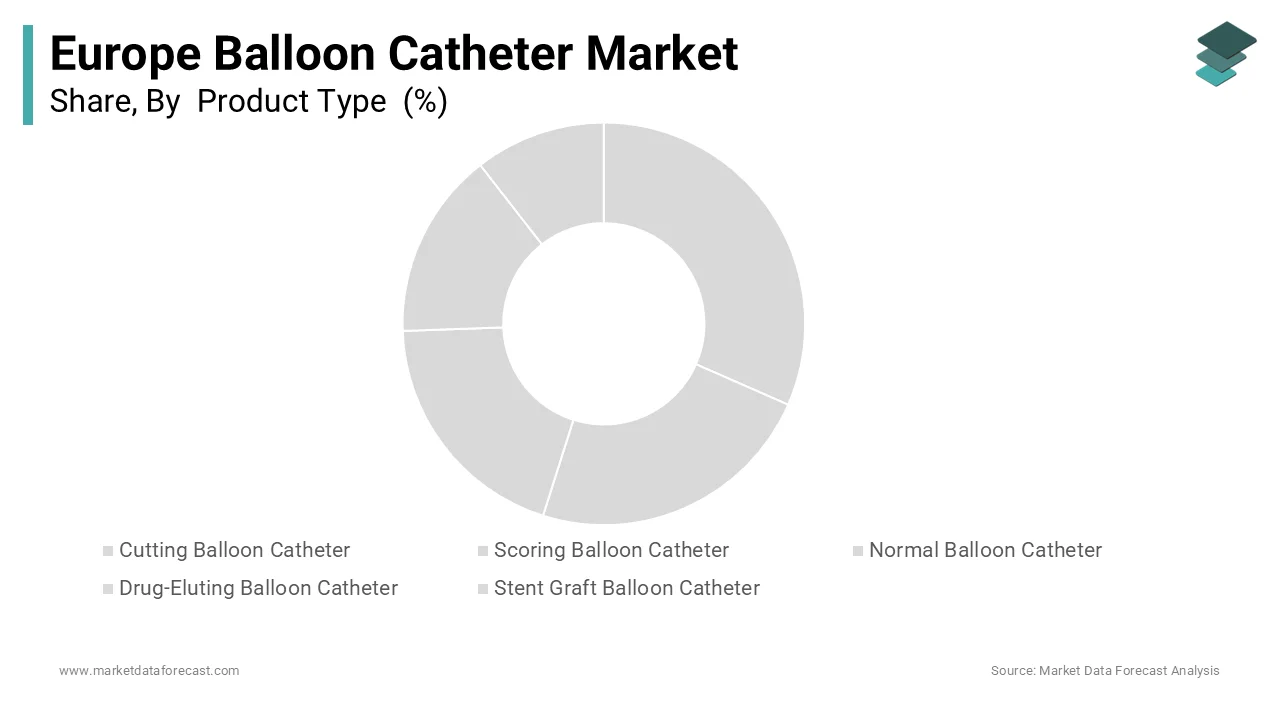
The drug-eluting balloon catheters segment is predicted to witness the highest CAGR of 12.8% from 2025 to 2033. The growth of the drug-eluting balloon catheters segment is driven by superior outcomes in complex lesion management. These devices deliver anti-proliferative agents like paclitaxel directly to vessel walls, reducing restenosis without leaving a permanent implant. According to sources, drug-eluting balloons lower target lesion revascularization rates compared to standard angioplasty in femoropopliteal disease. The European Commission’s Horizon Europe program has funded multicenter trials validating their use in small vessel coronary disease, broadening indications. Furthermore, national health technology assessment bodies in France and the Netherlands have updated reimbursement guidelines to cover these devices for peripheral applications, which removes a key adoption barrier and accelerates clinical integration.
By Raw Material Insights
In 2024, the nylon segment led the Europe balloon catheter market by capturing a substantial share. Its optimal balance of tensile strength, flexibility, and burst pressure resistance, important for navigating tortuous vasculature during angioplasty, has significantly contributed to the expansion of the nylon segment in the regional market. Its semi-crystalline structure allows for precise balloon folding and rapid inflation-deflation cycles, essential in time-sensitive cardiac procedures. Manufacturers favour nylon for its consistent extrusion properties and compatibility with drug coating processes used in drug-eluting platforms. Furthermore, established supply chains and recycling protocols under the EU Circular Economy Action Plan reduce production volatility. In high-volume manufacturing hubs, nylon-based catheter production lines operate at notable efficiency, supporting cost and quality advantages that sustain its material prominence across both standard and advanced catheter types.
The polyurethane segment is estimated to register the fastest CAGR of 9.6% during the forecast period due to demand for ultra-soft, kink-resistant catheters in neurovascular and peripheral applications. Its superior elasticity and biocompatibility make it ideal for low-profile devices used in delicate vessels, such as those in the carotid or renal arteries. According to research, polyurethane-based microcatheters reduced vessel trauma in endovascular stroke interventions compared to nylon alternatives. The material also supports seamless integration of radiopaque markers without compromising flexibility. Polyurethane is the ideal material for advanced, high-precision catheters because its performance characteristics are uniquely suited to the growing complexity of interventional radiology procedures.
By Disease Indication Insights
The coronary artery disease segment held the leading share of 64.2% of the Europe market.
Balloon catheter market in 2024. The growth of the coronary artery disease segment is propelled by the high prevalence of the disease and the central role of percutaneous coronary intervention, which frequently uses balloon catheters, in both acute and chronic management. As per sources, millions of Europeans live with diagnosed coronary artery disease, necessitating regular revascularization. National chest pain pathways in countries mandate door-to-balloon times under 90 minutes for ST-elevation myocardial infarction, which institutionalizes catheter use in emergency protocols. Furthermore, aging populations and rising diabetes rates, both strong risk factors, ensure sustained procedural volume. Even with stent dominance, balloon catheters remain indispensable for lesion preparation and final stent apposition, which embeds them irreversibly in the coronary care continuum.
The peripheral vascular disease segment is anticipated to witness the fastest CAGR of 11.3% from 2025 to 2033, owing to aging demographics and rising diabetes prevalence that accelerate limb ischemia. According to research, diabetes prevalence in Europe continues to rise steadily, contributing to higher demand for vascular interventions and chronic disease management solutions. As per studies, the number of endovascular procedures for peripheral arterial disease, such as femoropopliteal lesions, has grown across the region, driven by advances in minimally invasive vascular technology. Drug-eluting balloons have become first-line therapy for long lesions, with reimbursement approved in several EU countries. As per sources, Italy is expanding its limb preservation initiatives, leading to increased procedural volumes and broader adoption of endovascular treatment approaches within regional healthcare systems. This clinical and policy momentum positions peripheral applications as the dynamic growth frontier.
By End User Insights
The public hospitals segment was the prominent segment and captured 48.2% of the Europe balloon catheter market share in 2025. Their role as primary providers of emergency and complex cardiovascular care across Europe’s universal healthcare systems has largely fuelled the growth of the public hospitals segment. These institutions perform the majority of acute coronary interventions, including STEMI cases that require immediate balloon catheter deployment. National procurement frameworks favor standardized, cost-effective catheter portfolios, ensuring high volume usage of normal and drug-eluting balloons. Apart from these, public teaching hospitals serve as training hubs for interventional fellows, strengthening protocol-driven device selection. In Eastern Europe, where private infrastructure is limited, public facilities are often the sole access point for advanced endovascular care. This combination of volume, mandate, and systemic centrality ensures their continued dominance in device consumption.
The ambulatory surgical centers segment is likely to experience the fastest CAGR of 14.1% over the forecast period. The rapid expansion of the ambulatory surgical centers segment is driven by policy shifts toward outpatient care and patient preference for same-day discharge. These centers prioritize single-use, ready-to-use balloon catheters that minimize setup time and infection risk. Reimbursement reforms in Germany and Sweden now cover outpatient drug-eluting balloon procedures, removing financial barriers. This trend aligns with EU health system efficiency goals, positioning ambulatory centers as agile, high-growth channels for next-generation catheter adoption.
COUNTRY LEVEL ANALYSIS
Germany Balloon Catheter Market Analysis
Germany was the top performer in the Europe Balloon Catheter Market and accounted for a 23.5% share in 2025. The domination of Germany is because to its advanced interventional cardiology infrastructure and high procedural volumes. The country performs a substantial number of percutaneous coronary interventions annually, according to sources, with widespread use of both standard and drug-eluting balloons. Germany’s statutory health insurance fully reimburses evidence-based catheter technologies by accelerating the adoption of innovations like scoring balloons for calcified lesions. The presence of global device manufacturers and research hospitals in cities fosters clinical trials and real-world validation. Besides, the Federal Joint Committee’s rapid health technology assessments ensure timely coverage decisions. This ecosystem of volume, reimbursement, and innovation cements Germany’s prominence in both demand and clinical sophistication.
France Balloon Catheter Market Analysis
France was the second largest in the Europe balloon catheter market and captured 18.7% share in 2025. The growth of France is attributed to the regional market, anchored by its centralized healthcare system and strong focus on cardiovascular outcomes. The French National Health Insurance covers a large number of coronary and peripheral interventions yearly, as per sources. Public hospitals in Paris and Lyon serve as European reference centers for complex endovascular techniques, routinely using cutting and drug-eluting balloons. The government’s digital health strategy has integrated device usage data into national registries, enabling real-time monitoring of catheter performance. Furthermore, France leads in training, with the European School of Interventional Cardiology in Paris certifying specialists annually. These structural and educational advantages sustain France’s position as a high-quality, high-volume market.
United Kingdom Balloon Catheter Market Analysis
The United Kingdom witnessed consistent growth in the Europe balloon catheter market. The National Health Service’s standardized care pathways and post-Brexit regulatory adjustments have largely fuelled the growth of the United Kingdom market. NHS England mandates balloon catheter use in all primary percutaneous coronary interventions, with a notable number of procedures conducted, according to studies. The National Institute for Health and Care Excellence provides clear guidance on drug-eluting balloon use in in-stent restenosis, ensuring consistent adoption. Despite supply chain challenges following Brexit, the Medicines and Healthcare products Regulatory Agency has streamlined MDR conformity assessments for vital devices. Furthermore, the UK’s strong research base contributes to evidence generation that influences EU-wide practice. This blend of protocol-driven care and scientific dominance maintains the UK’s relevance.
Italy Balloon Catheter Market Analysis
Italy is moving ahead steadfastly in the Europe balloon catheter market due to regional disparities and a growing emphasis on limb preservation. Northern regions like Lombardy perform a large volume of interventions annually, utilizing advanced catheters for complex coronary and peripheral cases, according to the Italian Society of Cardiology. In contrast, Southern Italy is expanding basic angioplasty access through national health initiatives targeting rural hospitals. Italy also hosts key manufacturing sites for global device firms, ensuring local availability. This dual dynamic, advanced innovation in the north and infrastructure expansion in the south, creates a balanced and evolving market landscape.
Spain Balloon Catheter Market Analysis
Spain is likely to grow in the Europe balloon catheter market over the forecast period due to an aging population and robust public hospital networks. According to research, cardiovascular intervention volumes in Spain continue to grow steadily, which reflects expanded diagnostic capabilities and access to advanced vascular care. Spain has embraced drug-coated balloons for peripheral disease, with reimbursement approved since 2021 under the National Health System’s innovation fund. The country also leads in day hospital models. Apart from these, Spain’s participation in EU clinical registries like EAPCI ensures alignment with best practices. These factors position Spain as a progressive and volume-driven market in Southern Europe.
COMPETITIVE LANDSCAPE
The Europe Balloon Catheter Market features intense competition among global medtech leaders and specialized European innovators. Differentiation hinges on clinical outcomes, regulatory readiness, drug technology, and service support rather than price alone. The implementation of the EU Medical Device Regulation has elevated technical and documentation barriers, favoring established firms with robust quality management systems. At the same time, growing demand for drug-coated and specialty balloons in peripheral and complex coronary applications fuels innovation. Companies compete through head-to-head clinical trials, digital health integration, and localized training programs. Smaller players gain traction by addressing unmet needs, such as paclitaxel-free platforms or ultra-low profile designs for distal vessels. Despite consolidation trends, the market remains dynamic, with competition increasingly defined by therapeutic efficacy, safety transparency, and seamless clinician workflow integration across diverse European healthcare systems.
KEY MARKET PLAYERS
Prominent Companies leading the europe balloon catheter market profiled in the report are
- B. Braun Melsungen AG
- Abbott Vascular
- Terumo Medica, Corp.
- Medtronic
- Biosensors International, Ltd.
- Boston Scientific
- Goodman
- Cordis.MicroPort Scientific
- Corp.
- Simeks Medical
- AngioScore, Inc.
TOP LEADING PLAYERS IN THE MARKET
- Medtronic is a pivotal contributor to the Europe Balloon Catheter Market through its comprehensive portfolio of coronary and peripheral interventional devices. The company’s IN.PACT Admiral drug-coated balloon is widely used across European vascular centers for femoropopliteal disease, supported by robust clinical evidence from trials like IN.PACT Global. Medtronic actively aligns its products with EU Medical Device Regulation requirements, ensuring uninterrupted market access. Recently, the company expanded its digital integration capabilities by linking balloon catheter usage data to its Hugo robotic-assisted surgery platform, enabling enhanced procedural analytics. It has also strengthened its training initiatives through partnerships with European cardiology societies to promote best practices in balloon-based interventions, strengthening its role as a technology and education leader in the region.
- Boston Scientific plays a significant role in the Europe Balloon Catheter Market with innovative platforms such as the Ranger and RANGER SFA drug-coated balloons and the ScoreFlex scoring balloon system. The company tailors its devices to address complex European patient profiles, including those with diabetes and calcified lesions. Boston Scientific has accelerated regulatory submissions under the EU MDR framework and achieved CE certification for next-generation low-dose paclitaxel formulations. Besides, the company enhanced its direct sales and clinical support teams in Eastern Europe to improve access and procedural guidance, strengthening its commitment to localized, data-driven care.
- Biotronik contributes uniquely to the Europe Balloon Catheter Market as a European-headquartered innovator specializing in drug-free and biocompatible solutions. Its Passeo 18 Lux drug-coated balloon offers a sirolimus-based alternative to paclitaxel, addressing safety concerns raised in earlier meta-analyses. Biotronik leverages its strong presence in German and Austrian hospitals to pilot novel catheter technologies before broader EU rollout. The company recently integrated its balloon catheters with the BIOTRONIK Home Monitoring ecosystem, enabling post-procedural vascular health tracking. It also collaborates with academic centers on investigator-initiated trials focused on small vessel disease, supporting its niche in evidence-based, patient-centric interventional therapy across the continent.
TOP STRATEGIES USED BY THE KEY MARKET PARTICIPANTS
Key players in the Europe Balloon Catheter Market focus on regulatory compliance, clinical evidence generation, and digital integration to maintain competitive positioning. Companies prioritize timely certification under the EU Medical Device Regulation to ensure product continuity. Investment in post-market surveillance and real-world data collection strengthens reimbursement dossiers and clinician trust. Strategic collaborations with European cardiology and vascular societies enhance training and protocol adoption. Manufacturers also differentiate through drug formulation innovation, such as sirolimus versus paclitaxel, to address safety perceptions. Expansion of direct clinical support teams in underserved regions like Eastern Europe improves procedural success and brand loyalty. These strategies collectively drive sustainable market engagement in a highly scrutinized and evidence-driven environment.
MARKET SEGMENTATION
This research report on the Europe Balloon Catheter Market has been segmented and sub-segmented into the following categories.s
By Product Type
- Cutting Balloon Catheter
- Scoring Balloon Catheter
- Normal Balloon Catheter
- Drug-Eluting Balloon Catheter
- Stent Graft Balloon Catheter
By Raw Material
- Polyurethane
- Nylon
By Disease Indication
- Coronary Artery Disease
- Peripheral Vascular Disease
By End User
- Ambulatory Surgical Centers
- Cardiac Catheterization Laboratories
- Public Hospitals
- Private Hospitals
By Country
- UK
- France
- Spain
- Germany
- Italy
- Russia
- Sweden
- Denmark
- Switzerland
- Netherlands
- Turkey
- Czech Republic
- Rest of Europe