- Product Description Description
- Table of Contents TOC
- List of Table & Figure LOT
- Get Free Sample PDF Sample PDF
Market Size, 2025
$7.70 BnMarket Estimate, 2026
$8.02 BnMarket Forecast, 2034
$11.08 BnCAGR, 2026–2034
4.12%Europe Bath Soap Market Size
The Europe bath soap market was valued at USD 7.70 billion in 2025, is estimated to reach USD 8.02 billion in 2026, and is projected to reach USD 11.08 billion by 2034, growing at a CAGR of 4.12% from 2026 to 2034.
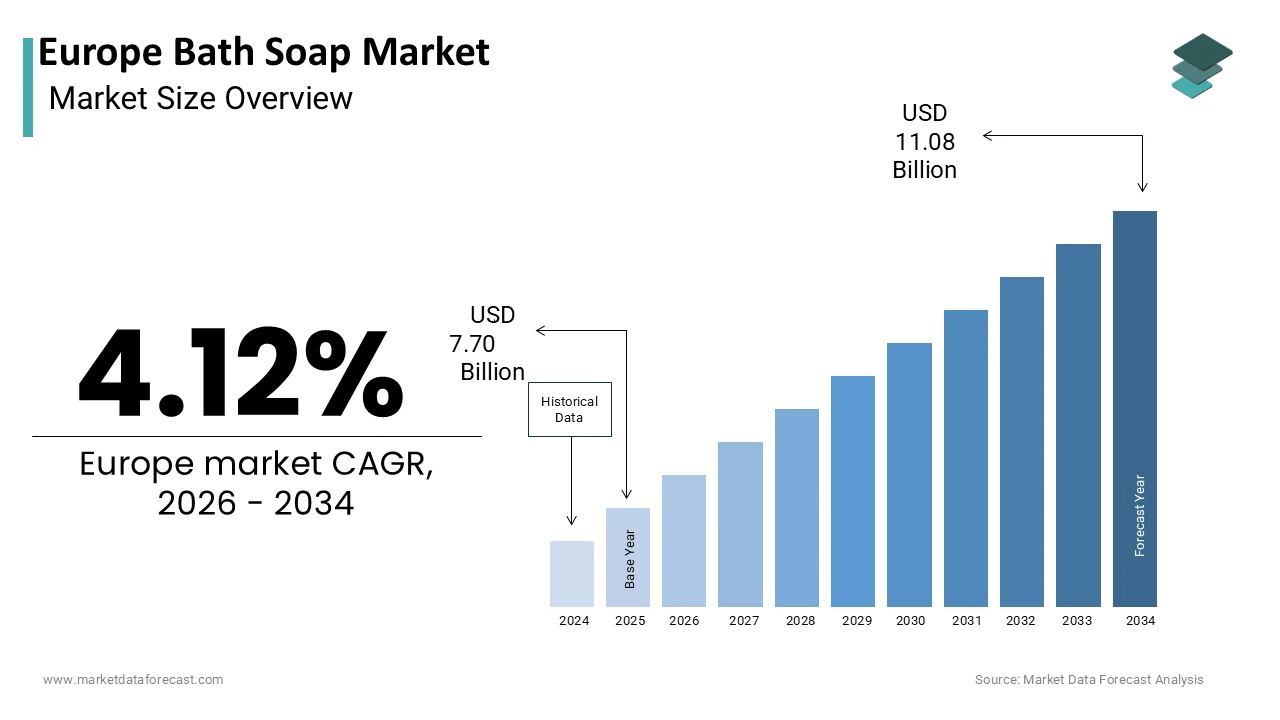
The Europe bath soap market refers to the segment of personal care products primarily used for body cleansing and hygiene maintenance. Traditionally formulated from natural oils, alkalis, and fragrances, bath soaps have evolved into a diverse category that includes medicated, moisturizing, organic, and luxury variants tailored to different skin types and consumer preferences. While liquid body washes have gained popularity in recent years, solid bar soaps continue to hold a significant share due to their affordability, sustainability appeal, and cultural acceptance.
Moreover, the growing influence of premium skincare brands entering the soap market has led to product differentiation through luxury packaging, plant-based ingredients, and aromatherapy benefits. Countries such as France, Germany, and the UK are at the forefront of this trend, where consumers increasingly seek products that offer both functional benefits and experiential value. With evolving consumer behavior and regulatory emphasis on clean beauty, the Europe bath soap market continues to adapt to new demands while maintaining its foundational role in daily hygiene routines.
MARKET DRIVERS
Rising Consumer Preference for Natural and Organic Ingredients
One of the primary drivers of the Europe bath soap market is the increasing consumer demand for natural and organic ingredients in personal care products. According to the European Cosmetics Association, more than 65% of European consumers now prefer products labeled as ‘natural’ or ‘organic’, in countries like Germany, Sweden, and the Netherlands, where environmental consciousness is high. This shift is largely influenced by heightened awareness about skin health and the potential side effects of synthetic additives such as parabens, sulfates, and artificial fragrances. The European Environment Agency reported that concerns over microplastic pollution and chemical exposure have prompted stricter labeling regulations by encouraging manufacturers to reformulate their offerings using plant-based oils, herbal extracts, and essential oils. Furthermore, the rise of clean beauty movements and digital platforms promoting sustainable lifestyles has amplified consumer education. A 2023 survey conducted by Eurogroup for Animals and Ethical Consumer Research Association found that over 70% of respondents were willing to pay a premium for certified organic soaps, reflecting a strong willingness to support ethical and eco-conscious brands.
Growing Demand for Premium and Luxury Bath Soaps
Another key driver fueling the Europe bath soap market is the rising demand for premium and luxury bath soaps, particularly among affluent consumers and those seeking personalized self-care experiences. According to the European Fragrance and Skincare Council, sales of premium artisanal soaps increased by nearly 20% between 2020 and 2023, especially in urban centers like Paris, London, and Milan.
Luxury soap brands have successfully positioned themselves as lifestyle products rather than mere hygiene essentials. These offerings often feature exotic ingredients such as shea butter, goat’s milk, activated charcoal, and rare botanicals, appealing to consumers looking for indulgent yet functional bathing experiences. The British Beauty Council noted that over 40% of UK consumers consider fragrance and aesthetic presentation as important factors when purchasing bath products, which is contributing to the success of niche and designer soap lines.
Moreover, the integration of bath soaps into wellness and spa culture has elevated their status beyond basic hygiene. High-end hotels, wellness retreats, and cosmetic retailers are increasingly curating signature soap collections to enhance brand identity and customer loyalty.
MARKET RESTRAINTS
Increasing Shift Toward Liquid Body Washes and Shower Gels
A major restraint affecting the Europe bath soap market is the growing consumer preference for liquid body washes and shower gels, which are perceived as more convenient, hygienic, and suitable for sensitive skin. According to the European Personal Hygiene Forum, liquid cleansers accounted for nearly 55% of total body cleansing product sales in 2023, which is surpassing traditional bar soaps in several key markets.
This shift is particularly pronounced among younger demographics who associate liquid formats with modernity, ease of use, and better lathering properties. The Danish Environmental Protection Agency highlighted that millennial and Gen Z consumers in Scandinavia and Germany favored pump dispensers over bar soap due to concerns about bacterial accumulation on shared bars.
Additionally, multinational personal care companies have heavily marketed liquid body washes as superior in terms of moisturization and fragrance longevity, influencing purchasing decisions. A 2023 study published by the French Institute of Dermatology indicated that consumers with dry or sensitive skin increasingly opted for sulfate-free body washes enriched with glycerin and ceramides, which is further shifting demand away from standard bar soaps.
Regulatory Restrictions on Certain Ingredients and Labeling Claims
Another critical constraint impacting the Europe bath soap market is the tightening regulatory environment concerning ingredient safety, preservatives, and marketing claims related to efficacy and sustainability. The European Chemicals Agency (ECHA) and the Cosmetic Ingredient Review (CIR) Panel have imposed restrictions on commonly used compounds such as triclosan, formaldehyde-releasing agents, and certain synthetic fragrances due to potential allergenic or toxic effects.
According to the European Commission’s Directorate-General for Health and Food Safety, over 30 new cosmetic ingredient bans or limitations were introduced between 2020 and 2023, directly affecting soap manufacturing processes and formulation strategies. The UK Food Standards Agency emphasized that misleading greenwashing claims on packaging had led to stricter verification requirements by slowing down product launches and increasing compliance costs for small and medium-sized enterprises.
Additionally, the EU Ecolabel program has raised standards for what qualifies as an environmentally friendly product, requiring detailed life-cycle assessments and proof of biodegradability. A 2023 report by the German Federal Institute for Risk Assessment revealed that nearly 25% of new soap products faced delayed market entry due to incomplete certification under REACH regulations.
MARKET OPPORTUNITIES
Expansion of Eco-Friendly and Zero-Waste Bath Soap Products
An emerging opportunity shaping the future of the Europe bath soap market is the growing consumer interest in eco-friendly and zero-waste formulations designed to reduce plastic consumption and environmental impact. As per the European Environment Agency, over 60% of surveyed consumers in Western Europe preferred personal care products with recyclable or biodegradable packaging, which is signaling a clear shift toward sustainable choices.
This trend is being reinforced by government policies and retail initiatives aimed at reducing single-use plastics. The European Union’s Circular Economy Action Plan mandates that all personal care products should be plastic-free by 2030, pushing manufacturers to innovate in packaging and product composition. According to the British Retail Consortium, sales of unpackaged and refillable soap bars increased by 30% in the UK alone during 2023, indicating strong market traction.
Companies are responding by launching palm oil-free, compostable wraps, and solid shampoo and soap bars that eliminate the need for plastic bottles. Independent soap makers in countries like Denmark and Austria have capitalized on this movement by offering locally sourced, cruelty-free, and carbon-neutral options.
Integration of Functional Benefits Beyond Basic Cleansing
Another promising opportunity within the Europe bath soap market lies in the development of multi-functional soaps that go beyond basic cleansing to offer additional skincare benefits such as exfoliation, hydration, acne treatment, and aromatherapy. According to the European Society of Cosmetic Chemists, over 50% of surveyed consumers in France and Germany expressed interest in soaps infused with active skincare ingredients like aloe vera, oat extract, and tea tree oil. This trend is closely linked to the expanding “clean beauty” movement, which emphasizes holistic well-being and transparency in product formulation. The Swedish National Institute for Working Life reported that soaps containing natural exfoliants such as pumice, jojoba beads, and ground walnut shells gained popularity among consumers seeking spa-like experiences at home. Moreover, dermatologists and skincare professionals are endorsing specialty soaps for individuals with eczema, psoriasis, and acne-prone skin. The European Academy of Dermatology and Venereology noted in 2023 that medicated soaps with salicylic acid, colloidal oatmeal, and urea showed clinical benefits in managing mild skin conditions by enhancing their credibility and adoption.
MARKET CHALLENGES
Declining Frequency of Bathing in Urban Areas Due to Lifestyle Changes
A major challenge facing the Europe bath soap market is the declining frequency of full-body bathing in urban areas, particularly among younger generations adopting quicker hygiene routines. According to the European Institute for Social Sciences, nearly 40% of urban millennials in Germany and France opt for quick showers instead of baths, significantly reducing the usage of traditional bar soaps.
This behavioral shift is attributed to fast-paced lifestyles, time constraints, and the perception that body washes are more convenient and easier to use in shower settings. The French Institute of Sociology reported that urban dwellers in major cities such as Amsterdam and Brussels spend less than five minutes on average for personal cleansing, favoring liquid formulas dispensed via pumps or foaming variants. In response, many manufacturers have adapted by introducing lightweight, fast-rinsing bar soaps that cater to short cleansing routines. However, the overall decline in traditional bathing habits poses a structural challenge to sustained volume growth in the bar soap segment.
Rising Competition from Syndet and Syndet-Based Alternatives
Another critical challenge influencing the Europe bath soap market is the increasing competition from syndets, synthetic detergent-based cleansers marketed as gentler, pH-balanced alternatives to traditional alkaline soaps. Syndets, including popular brands of facial cleansers and body washes, are increasingly preferred by consumers with sensitive skin conditions. According to the European Society of Contact Dermatitis, dermatological recommendations increasingly favor syndets over traditional soaps for individuals with atopic dermatitis, eczema, and rosacea, citing their lower irritation potential and better compatibility with the skin’s natural barrier function.
The Dermatology Department at Charité Hospital in Berlin conducted a 2023 comparative analysis showing that syndet users experienced 25% less dryness and tightness after washing compared to conventional soap users, which is reinforcing medical community support for these alternatives.
REPORT COVERAGE
| REPORT METRIC | DETAILS |
| Market Size Available | 2025 to 2034 |
| Base Year | 2025 |
| Forecast Period | 2026 to 2034 |
| Segments Covered | By Product Type, Form, Distribution Channel, and Region. |
| Various Analyses Covered | Global, Regional and Country-Level Analysis, Segment-Level Analysis, Drivers, Restraints, Opportunities, Challenges; PESTLE Analysis; Porter’s Five Forces Analysis, Competitive Landscape, Analyst Overview of Investment Opportunities |
| Countries Covered | UK, France, Spain, Germany, Italy, Russia, Sweden, Denmark, Switzerland, Netherlands, Turkey, Czech Republic, and the rest of Europe |
| Market Leaders Profiled | Unilever, Procter & Gamble (P&G), Colgate-Palmolive, Johnson & Johnson, Beiersdorf AG, Henkel AG & Co. KGaA, L’Oréal S.A., Reckitt Benckiser Group plc, Lush Retail Ltd., L’Amande, Fenjal, Ach. Brito, Lano, and others. |
SEGMENTAL ANALYSIS
By Product Type Insights
The mass bath soap products segment was the largest and held 58.6% of the Europe bath soap market share in 2025. One key driver behind this segment’s dominance is the continued reliance on conventional personal hygiene routines among a large portion of the population in Eastern Europe, where disposable incomes remain relatively lower than in Western Europe. According to Eurostat, over 65 million households in Central and Eastern Europe have limited expenditure capacity by making cost-effective bar soaps a preferred choice for daily use. Additionally, multinational brands such as Unilever (Lifebuoy, Lux), Procter & Gamble (Ivory, Safeguard), and local manufacturers maintain extensive distribution networks that ensure product accessibility even in rural and semi-urban areas. The European Retail Round Table reported that more than 90% of grocery stores across Poland and Romania carry at least three mass-market soap variants, which is reinforcing their ubiquity.
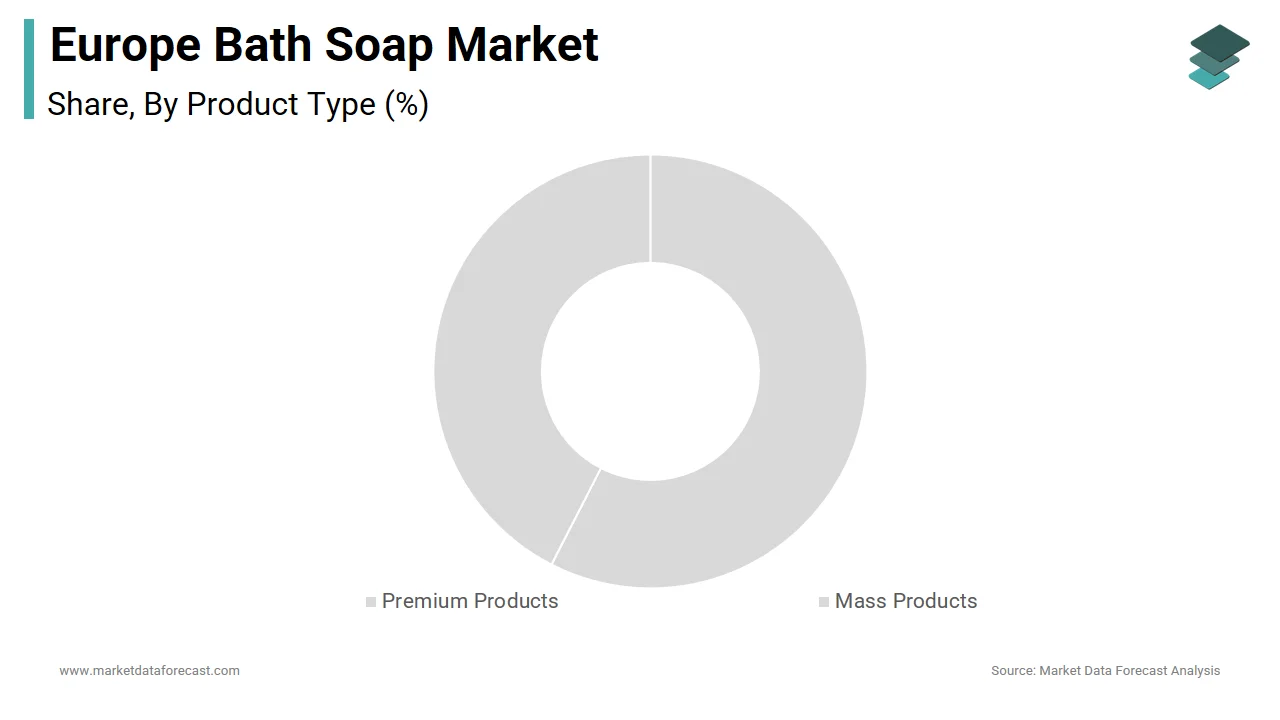
The premium bath soap segment is likely to grow with a CAGR of 6.4% in the coming years. According to the European Cosmetics Association, sales of premium artisanal and organic soaps increased by nearly 28% between 2021 and 2023, with Germany, France, and the UK leading adoption. Consumers are increasingly viewing premium soaps not just as hygiene essentials but as wellness-enhancing products infused with botanical extracts, essential oils, and dermatological additives. Moreover, the rise of eco-consciousness has boosted demand for ethically produced, cruelty-free, and sustainably packaged premium soaps. In response, established beauty and skincare brands have expanded into the bath soap category with premium positioning. Companies like L’Oréal and Molton Brown have introduced high-end collections that align with self-care trends and lifestyle branding.
By Form Insights
The solid bath soap segment holds the largest share of the Europe bath soap market, accounting for approximately 52% of total consumption in 202. Despite increasing competition from liquid body washes, solid soaps continue to dominate due to their long-standing cultural acceptance, affordability, and growing emphasis on sustainability.
A key factor contributing to this segment’s prominence is the perception of solid soaps as environmentally friendly alternatives to plastic-packaged liquid cleansers. According to the European Environment Agency, solid soap sales in the EU grew by 15% between 2020 and 2023, largely due to packaging innovations such as compostable wraps and refill stations. In countries like Sweden and Austria, over 40% of surveyed consumers cited reduced plastic waste as a primary reason for choosing bar soap, as per the Nordic Eco-Consumer Forum.
Another major driver is the expanding niche of handcrafted and small-batch soaps that cater to health-conscious buyers. The German Institute for Natural Cosmetics reported that sales of cold-pressed, plant-based bar soaps increased by 22% in 2023 in urban markets where ethical sourcing and ingredient transparency are highly valued.
The liquid bath soap segment is likely to grow with a CAGR of 5.8% from 2025 to 2033. One major factor driving this segment’s momentum is the perception of liquid soaps as more hygienic and gentle on the skin among younger generations. According to the French Institute of Dermatology, nearly 60% of surveyed consumers in France believed that liquid cleansers were less drying and more suitable for sensitive skin compared to traditional bar soaps by enhancing their appeal. Additionally, liquid soaps are frequently marketed with added skincare benefits such as hydration, exfoliation, and acne-fighting properties. Urbanization and time-constrained lifestyles have also played a role, as liquid formats are easier to dispense and integrate into quick shower routines. The Swedish National Institute for Working Life reported that over 70% of millennials in Scandinavia preferred pump dispensers over bar soap due to ease of use and modern aesthetics.
By Distribution Channel Insights
The supermarkets and hypermarkets segment was the largest and held 39.1% of the Europe bath soap market share in 2025. According to the European Retail Federation, over 75% of household purchases of personal care items in Western Europe occur through supermarkets and hypermarkets, where brands leverage shelf space and endcap displays to attract impulse buyers. Retail giants such as Carrefour, Rewe, and Tesco continue to feature both premium and mass-market soaps prominently in their hygiene and beauty aisles. Additionally, private-label brands offered by supermarket chains have significantly contributed to volume sales.
The online distribution channel is lucratively growing with a CAGR of 11.2% in the coming years. Moreover, the proliferation of niche beauty and wellness websites has enabled smaller soap producers to bypass traditional retail barriers and connect directly with eco-conscious and premium-seeking customers. The European Digital Commerce Association reported that independent soap brands saw a 30% increase in direct website traffic in 2023, which is driven by targeted social media campaigns and influencer collaborations.
In addition, subscription models and curated personal care boxes have gained traction, particularly in the UK and Benelux region. A 2023 study by YouGov Digital Insights revealed that over 50% of surveyed consumers aged 18–35 had purchased bath soap online in the past year, citing ease of access, ingredient transparency, and brand storytelling as key motivators.
COUNTRY LEVEL ANALYSIS
Germany was positioned in the Europe bath soap market by capturing 23.3% of the share in 2025. According to the German Federal Statistical Office, over 82 million residents contribute to a well-developed personal care ecosystem, with an increasing number prioritizing dermatologically tested and mild cleansing products. Additionally, Germany’s environmental policies and circular economy initiatives have encouraged the adoption of plastic-free and biodegradable soap products. The Umweltbundesamt (German Environment Agency) emphasized that over 60% of surveyed consumers preferred unpackaged hygiene products by reinforcing the relevance of bar soap in the sustainability movement.
France was positioned second in the Europe bath soap market with 16.2% of share in 2025. The country's prominence is driven by its historical association with perfumery and luxury toiletries, along with a strong presence of premium and niche soap brands catering to discerning consumers. Moreover, France has been at the forefront of integrating bath soaps into wellness and aromatherapy practices. The Paris School of Dermatology reported in 2023 that dermatologists in France increasingly recommend scented and medicated soaps as part of holistic skincare regimens, reinforcing their legitimacy beyond basic hygiene. The French Ministry of Ecology has also supported eco-friendly soap manufacturing, encouraging companies to adopt biodegradable packaging and sustainable sourcing. A 2023 survey by Ifop Research Institute found that over 65% of French consumers considered sustainability a decisive factor when purchasing personal care products, including bath soaps.
The United Kingdom was ranked second with 14.3% of the Europe bath soap market share in 2025. According to the British Retail Consortium, organic and cruelty-free bath soaps accounted for over 30% of total soap sales in the UK in 2023, with retailers like The Body Shop, Faith in Nature, and Bramley Products capitalizing on this trend. The Ethical Consumer Research Association noted that UK consumers spent nearly £250 million on certified organic soaps in 2023, which reflects a broader shift toward responsible consumption. Moreover, the UK has seen a surge in niche and indie soap brands leveraging e-commerce and social media to build loyal customer bases.
The Italian bath soap market is likely to grow with the highest CAGR in the coming years. The Italian market is characterized by a growing appreciation for artisanal, plant-based, and Mediterranean-inspired formulations that emphasize natural ingredients and heritage craftsmanship. According to the Italian Association of Cosmetic Chemists, sales of olive oil-based and goat milk-infused soaps grew by 24% in 2023 in regions like Tuscany and Sicily, where traditional soap-making techniques are preserved. The National Institute of Dermatology in Milan highlighted that these natural formulations showed improved moisturization and gentler cleansing action by supporting medical endorsement for sensitive skin types.
Additionally, Italy’s fashion and luxury sectors have influenced the positioning of bath soaps as lifestyle accessories. High-end department stores such as Rinascente and La Rinascente have dedicated premium sections to designer soaps, often linked with fragrance houses and spa brands. A 2023 survey by SWG Italia found that nearly 40% of Italian women aged 25–45 consider bath soap as an extension of their personal style and fragrance identity, reinforcing aspirational purchasing behavior.
Spain's bath soap market growth is driven by the rising popularity of herbal, medicinal, and dermatological soaps tailored to address common skin conditions such as psoriasis, eczema, and seborrheic dermatitis. According to the Spanish Society of Dermatology and Venereology, over 12 million Spaniards suffer from chronic dry skin or allergic reactions, prompting greater demand for therapeutic-grade soaps enriched with almond oil, calendula, and colloidal oatmeal. Additionally, Spain has experienced a resurgence in locally made Castile-style soaps, which are crafted using olive oil and free from synthetic additives.
COMPETITION OVERVIEW
The competition in the Europe bath soap market is marked by a blend of global consumer goods giants, niche natural brands, and local artisanal producers vying for consumer attention in a mature yet evolving sector. Established players such as Unilever and L'Oréal maintain strong distribution networks and brand recognition, allowing them to dominate supermarket shelves and pharmacy counters. However, the rise of indie soap makers and eco-conscious startups has intensified competition, particularly in the natural and organic segments where authenticity, ethical sourcing, and customization play pivotal roles.
Market participants are adapting to changing consumer preferences by emphasizing product transparency, ingredient traceability, and functional benefits beyond basic cleansing. The proliferation of online retail and subscription services has further diversified access, enabling smaller brands to reach national and international audiences without heavy reliance on physical retail infrastructure. Competitive differentiation is increasingly achieved through branding, packaging aesthetics, and alignment with wellness trends.
Regulatory scrutiny around ingredient safety and environmental impact has also reshaped competitive dynamics, with companies investing in reformulation and sustainable supply chain practices. Innovation in format, such as solid bars mimicking liquid cleansers in texture and performance, is another battleground. In this dynamic landscape, both legacy brands and emerging players must continuously evolve to maintain relevance and capture market share.
KEY MARKET PLAYERS
Companies playing a prominent role in the European bath soap market profiled in this report are
- Unilever,
- Procter & Gamble (P&G),
- Colgate-Palmolive,
- Johnson & Johnson,
- Beiersdorf AG,
- Henkel AG & Co. KGaA,
- L’Oréal S.A.,
- Reckitt Benckiser Group plc,
- Lush Retail Ltd.,
- L’Amande,
- Fenjal,
- Ach.
- Brito,
- Lano.
TOP LEADING PLAYERS IN THE MARKET
Unilever PLC (Dove, Lux, Lifebuoy)
Unilever is a dominant force in the European bath soap market, offering a broad portfolio of mass-market and premium bar soaps under globally recognized brands such as Dove, Lux, and Lifebuoy. The company emphasizes dermatological research, skin health, and consumer education to reinforce product efficacy and brand trust. Unilever's commitment to sustainability, including recyclable packaging and reduced water usage,e positions it as a responsible leader in the personal care industry. Its influence extends beyond Europe, which is shaping global trends in hygiene and skincare.
L’Oréal S.A. (La Roche-Posay, Vichy, SoftSheen-Carson)
L’Oréal plays a crucial role in the European bath soap market by focusing on therapeutic and dermatologically tested formulations tailored for sensitive and medical-grade skincare needs. Through its pharmaceutical skincare brands like La Roche-Posay and Vichy, the company offers mild, hypoallergenic cleansers designed for conditions such as eczema and acne. L’Oréal’s scientific expertise and partnerships with dermatologists have strengthened its foothold in the premium segment by reinforcing its reputation as a provider of high-quality, skin-friendly cleansing products across Europe.
Bramley Products Limited
Bramley is a leading UK-based natural bath soap manufacturer known for its commitment to organic ingredients, eco-friendly packaging, and cruelty-free formulation. The company has capitalized on the clean beauty movement, targeting environmentally conscious consumers who prioritize sustainability and ethical sourcing. Bramley’s success reflects the broader shift in consumer behavior toward green personal care, which is making it a key player in the natural and organic soap segment across Europe.
TOP STRATEGIES USED BY KEY MARKET PARTICIPANTS
One of the major strategies employed by key players in the Europe bath soap market is product diversification and segmentation, where companies introduce distinct lines tailored for specific skin types, age groups, and wellness-oriented lifestyles to capture a broader consumer base.
Another prominent strategy is leveraging sustainability and ethical sourcing as key selling points, with companies investing in eco-packaging, carbon-neutral production, and certifications such as Ecocert and Vegan Society approval to meet evolving consumer expectations.
RECENT MARKET DEVELOPMENTS
- In February 2025, Unilever launched a new line of biodegradable, palm oil-free soaps under its Dove brand, packaged in recyclable paper wrappers, which is reinforcing its commitment to sustainability and capturing environmentally conscious consumers across Western Europe.
- In May 2025, L’Oréal acquired a stake in a French-based natural soap startup, which is expanding its footprint in the premium organic segment and leveraging the agility of smaller brands to enhance innovation and consumer engagement in the European market.
- In August 2025, Bramley Products expanded its retail distribution to major German drugstore chains, strengthening its presence in Central Europe and capitalizing on the growing demand for vegan and cruelty-free personal care products.
- In October 2025, Procter & Gamble reintroduced its Safeguard brand in Eastern Europe with updated formulations containing prebiotics, which is positioning it as a hygiene-focused alternative amid renewed emphasis on germ protection and skin health.
- In December 2025, a consortium of Nordic eco-beauty brands formed a collaborative platform to jointly market plant-based soaps by pooling resources to increase visibility and scale production while maintaining their individual brand identities and sustainable ethos.
MARKET SEGMENTATION
This Europe bath soap market research report is segmented and sub-segmented into the following categories.
By Product Type
- Premium Products
- Mass Products
By Form
- Solid Bath Soaps
- Liquid Bath Soaps
By Distribution Channel
- Supermarkets and Hypermarkets
- Convenience Stores
- Pharmacies
- Specialty Stores
- Online
- Others
By Country
- UK
- France
- Spain
- Germany
- Italy
- Russia
- Sweden
- Denmark
- Switzerland
- Netherlands
- Turkey
- Czech Republic
- Rest of Europe