- Product Description Description
- Table of Contents TOC
- List of Table & Figure LOT
- Get Free Sample PDF Sample PDF
Market Size, 2025
$152.12 MnMarket Estimate, 2026
$163.48 MnMarket Forecast, 2034
$290.91 MnCAGR, 2026–2034
7.47%Executive Summary: Europe Beta-Glucan Market
- Market Scope: Comprehensive European beta-glucan industry analysis covering source segments (cereal, yeast-derived), product formats (soluble versus insoluble types), application domains (food & beverages, pharmaceuticals, medical nutrition), regional leadership frameworks, strategic corporate developments, and competitive landscapes.
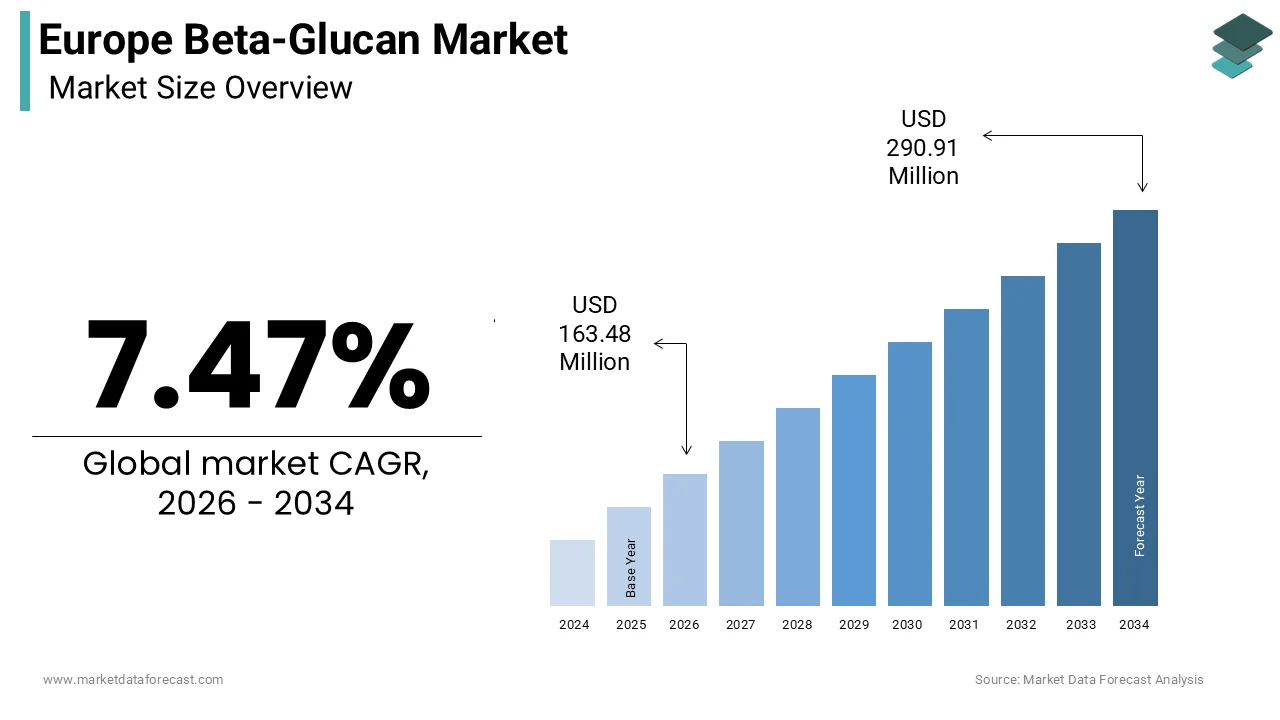
- Market Valuation: Valued at USD 152.12 million (2025), estimated at USD 163.48 million (2026), and projected to reach USD 290.91 million by 2034, registering a robust CAGR of 7.47% (2026–2034).
- Primary Growth Drivers: EU-authorized health claims under Regulation EC No 1924/2006 for cholesterol reduction, high cardiovascular disease prevalence (accounting for 35% of EU deaths), clean-label plant-based dairy integration, and medical nutrition therapy expansion. Restraints include energy-intensive extraction costs (up to 15 kWh per kilogram) and raw material supply fluctuations.
Key Market Segment Metrics (2026–2034)
| Category | Leading Segment / Region (Position) | Fastest-Growing Segment |
|---|---|---|
| By Source & Product Type | Cereal source segment (dominated with 62.3% share via exclusive EFSA cholesterol claims) & Soluble high-viscosity beta-glucans | Yeast-derived beta-glucans (gaining traction in perioperative protocols to reduce infection rates) |
| By Application & Use | Food and beverages (led with 58.2% share, driven by heart-healthy cereal and functional dairy product launches) | Pharmaceutical applications (projected to grow at a strong CAGR of 8.6% through clinical nutrition adoption) |
| By Region / Country | Germany (captured 23.3% share as top performer via statutory health insurance counseling) & United Kingdom (second) | France, Netherlands, and Sweden (growing steadily through institutional demand and health guideline integration) |
Major Market Players & Market Structure
Market Structure: Highly specialized European functional ingredient and life-sciences ecosystem characterized by vertical integration, enzymatic extraction yield innovations, precision engineering for low-sugar formulations, and rigorous regulatory compliance.
Key Companies: Lantmannen AS, Tereos Group, Kerry Group PLC, Biothera Pharmaceuticals Inc, Biotec Pharmacon ASA, AIT Ingredients, Super Beta Glucan Inc, Ceapro Inc, Tate & Lyle Plc, DSM NV, Millipore Sigma, Kemin Industries, Cargill Inc, Garuda International Inc, and Lesaffre.
Europe Beta-Glucan Market Size
The size of the Europe beta-glucan market was expected to be worth USD 152.12 million in 2025 and is anticipated to be worth USD 290.91 million by 2034, from USD 163.48 million in 2026, growing at a CAGR of 7.47% during the forecast period.
Beta-glucans are naturally occurring polysaccharides composed of D-glucose units linked by β-glycosidic bonds, primarily sourced from oats, barley, yeast, and mushrooms, and utilized for their immunomodulatory, cholesterol-lowering, and prebiotic properties. Unlike generic fiber ingredients, beta-glucans are subject to specific health claim authorizations under the European Commission’s Nutrition and Health Claims Regulation EC No 1924/2006. As per the European Food Safety Authority, only oat and barley-derived beta-glucans with a minimum molecular weight of 100 kDa and concentration of 3 grams per day are permitted to carry the claim “beta-glucans contribute to the maintenance of normal blood cholesterol levels.” This regulatory precision has shaped product development across functional foods, pharmaceuticals, and nutraceuticals. According to Eurostat, the EU produced over 28 million metric tons of oats and 56 million metric tons of barley in 2023, providing a substantial raw material base for high-purity extraction. The rising prevalence of cardiovascular disease, which accounts for 35% of all deaths in the EU as per the European Heart Network, further anchors demand for clinically validated soluble fibers like beta-glucan in preventive nutrition strategies.
MARKET DRIVERS
EU Authorized Health Claims Drive Consumer Trust and Product Formulation
The European Union’s strict yet science-based approval of specific health claims for beta-glucans has created a legally protected advantage that is fuelling the growth of the Europe beta-glucan market. The EU authorised health claims drive consumer trust, and product formulation is driving the growth of Europe beta glucan market. According to the European Commission, only two health claims related to beta glucans are authorized, one for cholesterol reduction and another for postprandial glycemic response, both requiring precise dosing and source specifications. This regulatory clarity enables manufacturers to prominently feature these claims on packaging without fear of non-compliance, a critical differentiator in an otherwise crowded functional ingredient space. As per the European Food Safety Authority, products containing at least 3 grams of oat or barley beta-glucan per daily serving may legally state they help lower blood cholesterol, a message that resonates strongly with health-conscious consumers. Consequently, major food companies like Nestlé and Kellogg’s have reformulated breakfast cereals and beverages to meet the 3-gram threshold, embedding beta-glucan into mainstream diets.
Rising Burden of Cardiovascular and Metabolic Disorders Increases Preventive Demand
The cardiovascular diseases remain the leading cause of mortality in Europe, driving public health initiatives and individual behavior toward dietary prevention. According to the European Heart Network, cardiovascular conditions account for over 1.8 million deaths annually in the EU, with elevated LDL cholesterol identified as a primary modifiable risk factor. Simultaneously, the International Diabetes Federation reports that many adults in Europe were living with diabetes in 2023, heightening interest in low glycemic functional ingredients. National health agencies have incorporated these findings into dietary guidelines. Germany’s Federal Ministry of Food and Agriculture recommends whole grain oats rich in beta-glucan as a cornerstone of heart-healthy eating. Furthermore, workplace wellness programs in countries like Sweden and the Netherlands now include functional foods with approved cholesterol claims in employee canteens. This convergence of epidemiological urgency, clinical evidence, and policy endorsement positions beta-glucan as a frontline dietary tool in Europe’s fight against chronic metabolic disease.
MARKET RESTRAINTS
Limited Source Diversity and Supply Chain Concentration Create Raw Material Vulnerability
The dependent on a narrow range of agricultural sources, primarily oats and barley, with limited diversification into yeast or mushroom-derived alternatives due to regulatory and functional constraints. This factor is solely limiting the growth of Europe beta-glucan market. According to Eurostat, over 85% of commercially used beta-glucan in the EU is extracted from oat bran, a byproduct of milling whose availability fluctuates with cereal harvest yields and competing uses in animal feed. In 2023, adverse weather in Northern Europe reduced oat production by 12% compared to the five-year average, triggering price volatility in high purity beta glucan isolates as reported by the European Grain Trade Federation. Moreover, the European Food Safety Authority does not recognize yeast-derived beta-glucans for cholesterol claims, restricting their use to immune support supplements, a smaller and less regulated segment. This source concentration exposes the supply chain to climate shocks, trade disruptions, and feed market competition, limiting resilience and scalability for food and pharmaceutical manufacturers seeking stable, long-term ingredient sourcing.
Inconsistent Molecular Weight and Purity Standards Affect Functional Efficacy
The biological activity of beta-glucans is highly dependent on molecular weight, branching pattern, and solubility, yet the European market lacks harmonized standards for these parameters outside of EFSA’s minimum thresholds for health claims. The inconsistent molecular weight and purity standards affect the functional efficacy, impeding the growth of Europe beta-glucan market. According to the European Pharmacopoeia, beta-glucan used in medicinal products must meet specific viscosity and endotoxin limits, but no such requirements exist for food-grade material. As a result, commercial products vary widely in efficacy, where a 2023 analysis by the German Institute of Food Research found that 40% of oat beta-glucan samples from EU suppliers had molecular weights below 100 kDa, rendering them ineligible for cholesterol claims despite label declarations. This inconsistency undermines consumer trust and complicates formulation for food manufacturers who must conduct in-house validation to ensure batch compliance. Additionally, extraction methods ranging from enzymatic to alkaline hydrolysis alter structural integrity, with some processes degrading the triple helix conformation essential for immune modulation.
MARKET OPPORTUNITIES
Expansion into Medical Nutrition and Clinical Diets Opens High-Value Applications
Beta-glucans are gaining traction in medical nutrition therapy for conditions such as dyslipidemia, type 2 diabetes, and post-surgical recovery, creating premium application pathways beyond conventional functional foods. The expansion into medical nutrition and clinical diets is likely to pose new opportunities for the growth of Europe beta glucan market. According to the European Society for Clinical Nutrition and Metabolism, specialized nutritional formulas containing 4 to 6 grams of oat beta-glucan per day are now recommended for patients with metabolic syndrome undergoing dietary intervention. Additionally, the European Commission’s Horizon Europe program funded a 2023 clinical trial demonstrating that barley beta-glucan supplementation improved insulin sensitivity in prediabetic adults by 18% over 12 weeks. These evidence-based applications allow beta-glucan to command higher pricing and secure reimbursement pathways through national health systems. As personalized nutrition gains ground, beta-glucan’s dual action on lipid and glucose metabolism positions it as a versatile tool in condition-specific dietary management, transforming it from a general wellness ingredient into a clinically relevant therapeutic component.
Integration with Clean Label and Plant-Based Food Trends Enhances Mainstream Relevance
The beta-glucans align seamlessly with Europe’s accelerating clean-label and plant-based food movements, offering natural functionality without synthetic additives. The integration with clean label and plant-based food trends is solely to escalate the growth of the Europe beta-glucan market. According to the European Plant-Based Foods Association, retail sales of plant-based dairy and meat alternatives grew by 14% in 2023, yet many products suffer from poor texture and serum separation. Oat beta-glucan acts as a natural thickener and stabilizer, improving mouthfeel and emulsion stability in oat milk yogurts and plant-based cheeses without requiring gums or starches. Major brands like Oatly and Alpro now highlight beta-glucan content not only for health claims but also as a marker of whole grain authenticity. Furthermore, the European Clean Label Forum identifies beta-glucan as a “positive nutrient” that offsets the perception of ultra-processing in fortified foods. A 2024 study by the University of Copenhagen confirmed that consumers rated products labeled “high in beta-glucan” as 32% more natural than those listing “soluble fiber” generically. This semantic and functional synergy allows manufacturers to meet both regulatory and consumer expectations simultaneously, embedding beta-glucan into the core identity of next-generation plant-based products rather than treating it as an add-on supplement.
MARKET CHALLENGES
High Production Costs and Energy-Intensive Extraction Limit Scalability
The isolation of high-purity beta-glucan from cereal bran remains a capital and energy-intensive process, constraining affordability and large-scale adoption. The high production costs and energy-intensive extraction limit the growth of the Europe beta-glucan market. According to the European Biorefinery Association, producing food-grade beta-glucan requires multiple steps, including defatting, enzymatic hydrolysis, centrifugation, and ultrafiltration, consuming up to 15 kilowatt hours of energy per kilogram of final product. This contrasts sharply with commodity fibers, like inulin, which require minimal processing. While pilot projects using membrane filtration and green solvents aim to reduce environmental impact, none have achieved commercial scale. Additionally, oat bran, the primary feedstock, is itself a limited co-product; only 15 to 20% of milled oats yield usable bran, as per the European Oat Cluster. These structural inefficiencies prevent beta-glucan from penetrating mass market segments like bread or pasta, where cost sensitivity is high, relegating it largely to premium beverages and supplements despite its broad health potential.
Consumer Confusion Between Beta Glucan Sources and Health Benefits Hinders Adoption
The widespread consumer misunderstanding persists regarding the differences between beta-glucans from oats, barley, yeast, and mushrooms, leading to misinformed purchasing and diluted brand messaging. This factor is attributed to being a challenge for the growth of Europe beta-glucan market. According to a 2023 pan-European survey by the European Food Information Council, only 29% of respondents could correctly identify that only oat and barley beta glucans are authorized for cholesterol claims, while 45% believed all types offered the same benefits. This confusion is exacerbated by supplement brands using terms like “immune boosting beta glucan” without specifying source or dose, creating unrealistic expectations. Retailers compound the issue by shelving yeast-derived immune supplements alongside oat-based cholesterol products under a single “beta-glucan” category. As a result, consumers often purchase ineffective doses or inappropriate sources for their health goals, leading to dissatisfaction and reduced repeat purchases.
REPORT COVERAGE
| REPORT METRIC | DETAILS |
| Market Size Available | 2025 to 2034 |
| Base Year | 2025 |
| Forecast Period | 2026 to 2034 |
| CAGR | 7.47% |
| Segments Covered | By Source, Application, Category, And Region |
| Various Analyses Covered | Global, Regional & Country Level Analysis; Segment-Level Analysis; DROC, PESTLE Analysis; Porter’s Five Forces Analysis; Competitive Landscape; Analyst Overview of Investment Opportunities |
| Regions Covered | UK, France, Spain, Germany, Italy, Russia, Sweden, Denmark, Switzerland, Netherlands, Turkey, and the Czech Republic |
| Market Leaders Profiled | Biothera Pharmaceuticals Inc, Biotec Pharmacon ASA, AIT Ingredients, Super Beta Glucan Inc, Ceapro Inc, Tate & Lyle Plc, DSM NV, Kerry Group PLC, Millipore Sigma, Kemin Industries, Cargill Inc, Garuda International Inc, and Lesaffre |
SEGMENTAL ANALYSIS
By Source Insights
The cereal segment accounted in holding 62.3% of the European beta-glucan market share in 2024; only oat and barley beta glucans are authorized to carry the health claim that they “contribute to the maintenance of normal blood cholesterol levels,” provided a daily intake of at least 3 grams is achieved. This legal distinction creates a protected commercial advantage unmatched by other sources. According to Eurostat, the EU harvested over 28 million metric tons of oats and 56 million metric tons of barley in 2023, ensuring a consistent and scalable raw material base. Major food manufacturers like Nestle, Quaker, and Kellogg’s have reformulated breakfast cereals beverages, and snack bars to meet the 3 gram threshold, embedding beta glucan into everyday diets. Furthermore, national dietary guidelines in Germany, Sweden, and Finland explicitly recommend whole grain oats for cardiovascular prevention, reinforcing public health alignment.
The yeast segment is anticipated to grow with an expected CAGR of 9.1% throughout the forecast period, from rising interest in immune modulation beyond cholesterol management in post pandemic health consciousness and aging populations. Although not eligible for EFSA cholesterol claims, yeast beta-glucans are increasingly used in premium dietary supplements and clinical nutrition formulas targeting immune resilience. As per the European Society for Clinical Nutrition and Metabolism, hospitals in Switzerland and the Netherlands began incorporating yeast beta-glucan into perioperative protocols in 2023 to reduce infection rates. Additionally, advances in downstream processing have reduced endotoxin levels below 100 EU per gram, enabling safe oral use, as confirmed by the European Directorate for the Quality of Medicines.
By Application Insights
The food and beverages application segment accounted in holding 58.2% of the European beta-glucan market share in 2024, with the rise of regulatory authorization, consumer demand, and industrial reformulation. The European Commission’s approval of the cholesterol-lowering claim for oat and barley beta glucans has enabled widespread integration into breakfast cereals, plant-based dairy alternatives, and functional beverages. According to the European Breakfast Cereal Association, over 70% of heart-healthy labeled cereals launched in Western Europe since 2021 contain added beta glucan to meet the 3-gram daily threshold. Oat milk brands like Oatly and Alpro promotes beta glucan content not only for health but also as a marker of whole-grain authenticity by aligning with clean-label trends. Moreover, the European Food Information Council reports that 61% of consumers actively seek foods that support heart health, creating sustained demand. National health agencies reinforce this through dietary recommendations; Finland’s Nutrition Council includes oat bran as a staple in its official guidelines. This ecosystem of regulation science, branding and public health policy ensures food and beverage remains the primary adoption channel for beta-glucan in Europe.
The pharmaceutical applications segment is expected to grow with an expected CAGR of 8.6% throughout the forecast period, 2030. This expansion is fueled by clinical validation of beta-glucan’s role in medical nutrition therapy and adjuvant care. According to the European Medicines Agency, several beta-glucan-containing medical foods have received national marketing authorizations as Foods for Special Medical Purposes for managing dyslipidemia and metabolic syndrome. In Germany, the Federal Institute for Drugs and Medical Devices approved a barley beta-glucan-based oral supplement in 2023 for use in cardiac rehabilitation programs following evidence of LDL reduction in phase III trials. Additionally, yeast-derived beta-glucans are being evaluated as immunomodulatory adjuvants in oncology, where a 2024 study by the Gustave Roussy Institute in France demonstrated enhanced neutrophil activity in breast cancer patients receiving chemotherapy alongside oral beta-glucan. The European Pharmacopoeia now includes monographs for high-purity beta-glucan, facilitating inclusion in compounding pharmacies.
By Category Insights
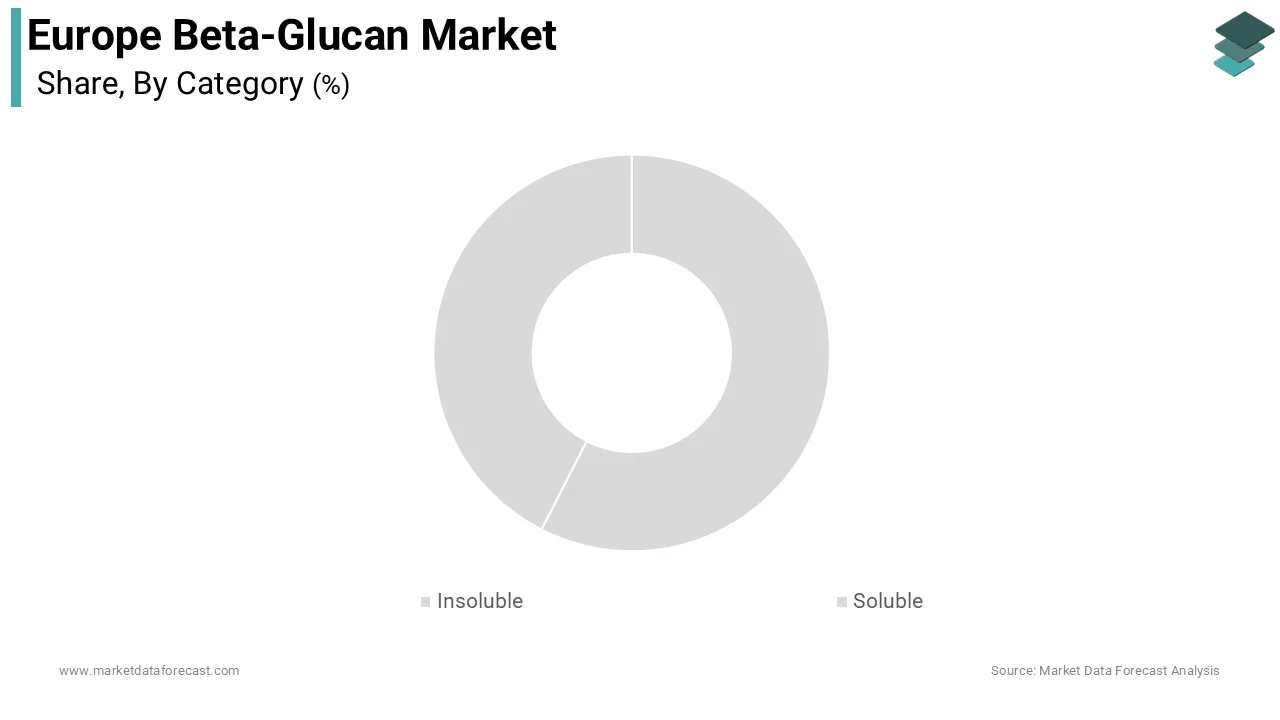
The soluble beta-glucans segment accounted for a significant share of the Europe beta glucan market in 2024, with their physiological functionality and regulatory eligibility. Only soluble beta-glucans, specifically those from oats and barley with high molecular weight and viscosity, can form the viscous gel in the gut necessary to bind bile acids and reduce cholesterol reabsorption. As per the European Food Safety Authority, insoluble forms do not meet the criteria for the authorized health claim, effectively excluding them from mainstream functional food applications. Soluble beta-glucans are also critical in beverage and dairy formulations where clarity, stability, and mouthfeel are essential; oat milk, for instance, relies on soluble beta-glucan to achieve a creamy texture without gums. According to the German Institute of Food Research, soluble beta-glucan solutions exhibit shear-thinning behavior ideal for pumpable and pourable products. Furthermore, clinical studies consistently link soluble intake to glycemic control, making it relevant for diabetes management. These combined functional, regulatory, and sensory advantages ensure soluble beta-glucan remains the cornerstone of both food and pharmaceutical applications across Europe.
The insoluble segment is expected to grow at the fastest CAGR of 7.3% throughout the forecast period, owing to an emerging research into their prebiotic and gut barrier-enhancing effects distinct from soluble forms. While insoluble beta-glucans cannot lower cholesterol, they resist digestion and reach the colon intact, where they selectively stimulate beneficial bacteria like Bifidobacterium and Lactobacillus. A 2023 trial published by the University of Copenhagen found that daily intake of 2 grams of insoluble oat beta-glucan increased fecal butyrate production by 28%, a key marker of gut health. This positions insoluble beta-glucan as a complementary fiber in synbiotic formulations, gaining traction in digestive wellness supplements. Additionally, the European Feed Manufacturers Federation reports rising use in poultry and swine feed to enhance intestinal integrity and reduce antibiotic reliance in response to the EU’s 2022 ban on antimicrobial growth promoters.
REGIONAL ANALYSIS
Germany Beta-Glucan Market Analysis
Germany was the top performer of the Europe beta glucan market by capturing 23.3% of the share in 2024, with its strong functional food industry, robust healthcare system, and scientific rigor in nutrition. The country is home to leading oat processors like Kruger and Myllyn Paras, whose high purity beta glucan isolates supply major cereal and beverage brands across Europe. According to the German Federal Ministry of Food and Agriculture, over 40% of Germans regularly consume heart-healthy labeled foods, many featuring beta-glucan. The nation’s statutory health insurance system also covers medical nutrition counseling for cardiovascular patients, indirectly promoting beta-glucan-rich diets. Furthermore, German research institutions like the Max Rubner Institute have published extensive data on beta-glucan’s dose-response relationship, informing both industry standards and public guidelines. This blend of industrial capacity, consumer awareness, and scientific credibility solidifies Germany’s position as the continent’s most advanced and volume-driven beta-glucan market.
United Kingdom Beta-Glucan Market Analysis
The United Kingdom beta glucan market was ranked second with its early adoption of cholesterol-lowering claims and strong breakfast cereal culture. Following the UK’s adoption of retained EU health claim regulations, brands like Weetabix and Ready Brek prominently feature beta-glucan content on packaging. According to the British Heart Foundation, cardiovascular disease affects 7.6 million people in the UK, driving public health campaigns that promote soluble fiber intake. The National Health Service’s “Change4Life” program includes oat-based meals as recommended choices for families, reinforcing habitual consumption. Additionally, the UK hosts leading supplement manufacturers such as Holland & Barrett that offer yeast-derived beta-glucan for immune support, reflecting post Brexit diversification into non-EFSA-regulated categories. Despite regulatory divergence, the UK maintains scientific alignment with European nutritional consensus, ensuring continued demand across food, pharmaceutical, and wellness segments.
France Beta-Glucan Market Analysis
France beta glucan market growth is likely to steadily grow with an interest in preventive nutrition and medical food applications. While traditionally focused on wine and dairy, French consumers are increasingly adopting heart-healthy breakfast habits, with oat milk sales growing by 22% in 2023, as per the research. The French Agency for Food, Environmental and Occupational Health and Safety has endorsed beta-glucan’s role in lipid management, influencing hospital formularies and workplace wellness programs. Moreover, French biotech firms like Tereos have invested in barley beta-glucan extraction to serve both domestic and export markets. The country’s strong pharmaceutical sector also explores beta-glucan as an adjuvant in immunonutrition, with clinical trials underway at Institut Curie.
Netherlands Beta-Glucan Market Analysis
The Netherlands beta glucan market growth is expected to grow with a logistics hub and center for agrifood innovation. Home to global oat milk producer Oatly’s European headquarters and major cereal exporters, the country integrates beta-glucan into plant-based product development at scale. According to Wageningen University, Dutch researchers pioneered methods to stabilize beta-glucan viscosity during UHT processing, enabling shelf-stable functional beverages. The Netherlands also leads in medical nutrition; companies like Nutricia incorporate beta glucan into clinical formulas for metabolic disorders. Furthermore, the Dutch government’s “Healthy Diet” initiative promotes whole grain consumption in schools and public institutions, creating institutional demand.
Sweden Beta-Glucan Market Analysis
Sweden beta glucan market growth is anticipated to grow eventually in the coming years, with the longstanding tradition of oat consumption and progressive public health policies. According to Statistics Sweden, many households consume oatmeal or muesli daily, providing a natural foundation for beta-glucan intake. The Swedish Food Agency was among the first in Europe to include oat bran in its official dietary guidelines for cardiovascular prevention, reinforcing habitual use. Additionally, Swedish companies like Lantmannen develop high beta-glucan oat varieties through targeted breeding, ensuring raw material quality. The country’s universal healthcare system supports preventive nutrition counseling, further embedding beta glucan into lifestyle medicine.
COMPETITION OVERVIEW
The Europe Beta-Glucan Market features a moderately concentrated landscape where competition revolves around scientific validation, regulatory compliance, and application expertise rather than price alone. Leading players combine agricultural sourcing with advanced bioprocessing to deliver ingredients that meet the European Food Safety Authority’s strict criteria for cholesterol and glycemic health claims. Differentiation occurs through purity, consistency, molecular structure control, and sensory performance in end products. While cereal-based beta-glucan dominates due to regulatory recognition, yeast-derived variants compete in immune health niches with premium positioning. Barriers to entry remain high due to capital-intensive extraction infrastructure and the need for clinical data to support marketing claims. Innovation focuses on improving functionality in challenging matrices like low-sugar beverages and baked goods while reducing environmental impact. Collaboration between ingredient suppliers, food manufacturers, and research institutions is common, fostering a science-driven ecosystem that prioritizes efficacy, transparency, and sustainability over generic fiber supplementation.
Top Strategies Used by the Key Market Participants
Key players in the Europe Beta-Glucan Market focus on vertical integration to secure non-GMO cereal feedstock and ensure traceability from farm to finished ingredient. They invest in advanced extraction and purification technologies to achieve the consistent molecular weight and viscosity required for EFSA health claims. Companies develop application-specific formulations such as low viscosity variants for beverages or stabilized powders for baking. Strategic partnerships with food brands and clinical nutrition providers enhance market access and co-innovation. Sustainability initiatives, including water recycling, renewable energy use, and reduced carbon footprint, are prioritized to align with the EU Green Deal objectives. Regulatory expertise in navigating health claim approvals and novel food dossiers remains a core competitive advantage driving long term credibility and customer retention.
Leading Players in the Europe Beta-Glucan Market
- Lantmannen AS is a Sweden-based agricultural cooperative and one of Europe’s leading producers of oat-derived beta-glucan ingredients. The company supplies high-purity beta-glucan concentrates to food, beverage, and pharmaceutical manufacturers across the continent under its Lantmännen Bioforc brand. Lantmännen leverages its vertically integrated supply chain from Nordic oat farms to extraction facilities to ensure traceability and consistent molecular weight profiles required for EFSA health claims. The company launched a new enzymatic extraction process at its Skane plant that increases beta-glucan yield by 18% while reducing water consumption, thereby aligning with EU Green Deal sustainability targets. This innovation strengthens its position as a preferred partner for clean-label functional food developers seeking both efficacy and environmental credentials.
- Tereos Group is a major French agroindustrial cooperative with significant capabilities in barley and oat processing for beta-glucan extraction. Operating across France, Germany, and Belgium, the company produces soluble fiber concentrates used in heart-healthy cereals, plant-based dairy, and clinical nutrition formulas. Tereos emphasizes non-GMO and pesticide-free sourcing through its farmer network, which spans over 12,000 cereal growers. Tereos upgraded its bioactive ingredient facility in Vic-sur-Aisne to include advanced ultrafiltration technology, enabling the production of beta glucan with viscosity profiles tailored for specific applications, such as low-sugar beverages and medical foods. This precision engineering approach allows the company to meet evolving formulation demands while maintaining compliance with European health claim regulations.
- Kerry Group is an Ireland-headquartered global leader in taste and nutrition solutions with a strategic focus on functional fibers, including beta-glucan, for the European market. The company integrates oat and yeast-derived beta-glucans into customized ingredient systems for dairy bakery and supplement clients seeking clean-label cholesterol management or immune support claims. Kerry’s research center in Naas conducts clinical trials to validate product efficacy and support regulatory dossiers. Kerry introduced a proprietary microencapsulation technology that masks the viscous mouthfeel of high-dose beta-glucan in ready-to-drink formats without compromising solubility. This breakthrough addresses a key sensory barrier in beverage applications and expands usage beyond traditional powder and bar formats into mainstream liquid categories.
MARKET SEGMENTATION
This research report on the Europe beta-glucan market has been segmented and sub-segmented based on category, source, application, and region.
By Category
- Insoluble
- Soluble
By Source
- Mushroom
- Cereal
- Seaweed
- Yeast
By Application
- Personal Care
- Food & Beverages
- Animal Feed
- Pharmaceuticals
By Region
- UK
- France
- Spain
- Germany
- Italy
- Russia
- Sweden
- Denmark
- Switzerland
- Netherlands
- Turkey
- Czech Republic
- Rest of Europe