- Product Description Description
- Table of Contents TOC
- List of Table & Figure LOT
- Get Free Sample PDF Sample PDF
Market Size, 2025
$6.51 BnMarket Estimate, 2026
$7.73 BnMarket Forecast, 2034
$30.57 BnCAGR, 2026–2034
18.75%Europe Bioplastic Packaging Market Size
The Europe Bioplastic Packaging Market size was calculated to be USD 6.51 billion in 2025 and is anticipated to be worth USD 30.57 billion by 2034, growing from USD 7.73 billion in 2026 at a CAGR of 18.75% during the forecast period.
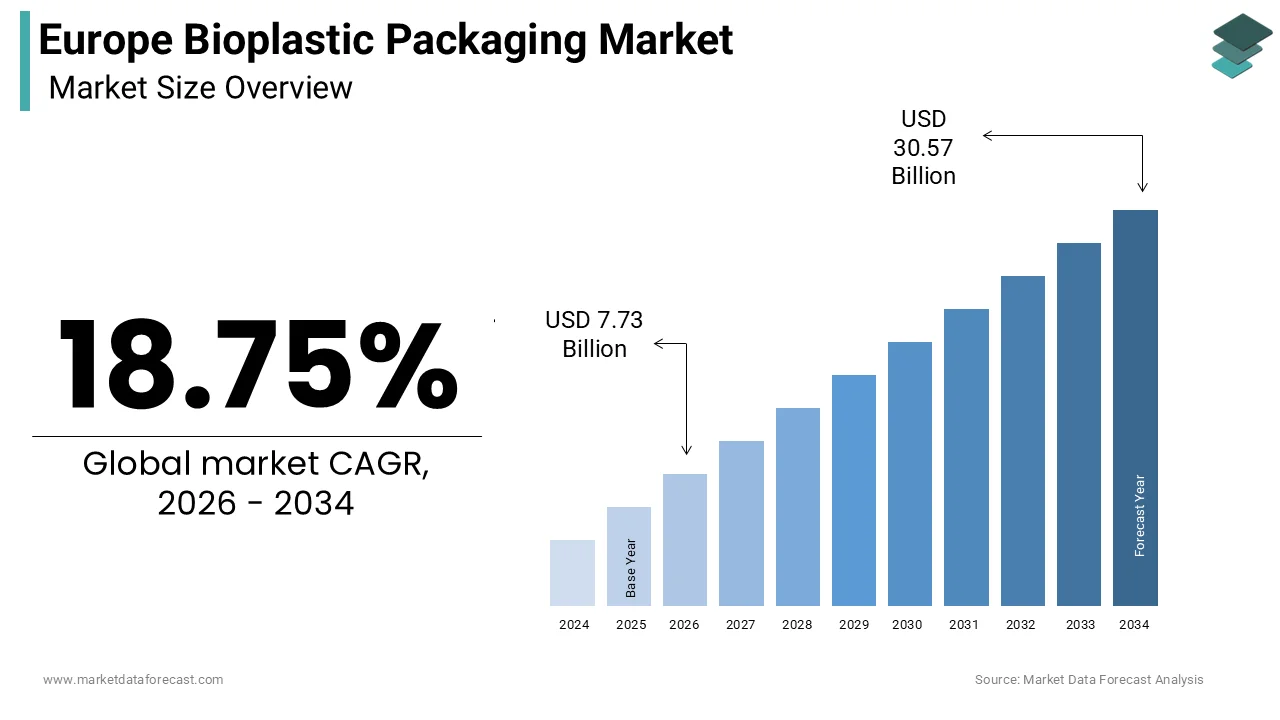
The bioplastic packaging is derived from renewable biomass sources, such as corn starch, sugarcane cellulose, and vegetable oils, rather than fossil fuels. This sector includes both bio-based plastics, which may or may not be biodegradable, and biodegradable plastics that can decompose under specific environmental conditions. The transition toward these materials is driven by the urgent need to mitigate plastic pollution and reduce carbon footprints across the continent. According to Eurostat, the European Union generated approximately 34 million tons of plastic waste in recent years, with only 32% being collected for recycling, where the gap that bioplastics aim to address through compostability and circular economy principles. The stringent regulatory frameworks, such as the Single Use Plastics Directive, which bans certain disposable plastic items and mandates higher recycled content in others. Data from the European Environment Agency indicates that marine litter composed largely of conventional plastics poses a significant threat to biodiversity, with over 80% of beach litter being plastic-related.
MARKET DRIVERS
Stringent Regulatory Frameworks and Single-Use Plastic Bans
The implementation of rigorous environmental regulations and bans on single-use plastics is fuelling the growth of the Europe bioplastic packaging market. The European Union has taken a proactive stance against plastic pollution through legislative measures that directly impact packaging choices for manufacturers and retailers. According to the European Commission, the Single Use Plastics Directive entered into force in 2019, targeting the ten most common plastic items found on European beaches, including cutlery plates, straws, and cotton bud sticks. This directive mandates that member states reduce the consumption of certain plastic products and promote the use of sustainable alternatives, such as bioplastics. Furthermore, the European Green Deal aims to make Europe the first climate-neutral continent by 2050, requiring significant reductions in greenhouse gas emissions from all sectors, including packaging. The Packaging and Packaging Waste Regulation proposes ambitious targets for recycling and reuse, compelling companies to shift away from virgin fossil-based plastics. As per national implementations, countries like France and Italy have introduced specific taxes on non-recyclable plastics and incentives for compostable packaging. These policy-driven mandates create a compulsory market for bioplastic solutions as companies seek compliance to avoid penalties and maintain access.
Increasing Consumer Awareness And Demand For Sustainability
The rising consumer awareness regarding environmental issues and a strong preference for sustainable products are significantly boosting the growth of the Europe bioplastic packaging market. Modern consumers are increasingly informed about the detrimental effects of plastic pollution on ecosystems and human health, leading them to favor brands that demonstrate environmental responsibility. This shift in consumer behavior pressures retailers and manufacturers to adopt transparent and green packaging solutions to maintain brand loyalty and competitive advantage. Furthermore, social media campaigns and educational initiatives by non-governmental organizations have amplified the visibility of plastic waste issues, prompting individuals to demand change. Major supermarket chains in countries like Germany and the Netherlands have committed to replacing conventional plastic bags and wrappers with biodegradable alternatives in response to customer feedback.
MARKET RESTRAINTS
Higher Production Costs Compared To Conventional Plastics
The significantly higher production costs associated with traditional fossil-based plastics are hindering the growth of the Europe bioplastics packaging market. The manufacturing process for bioplastics often involves complex fermentation, extraction, and polymerization steps that are more expensive than the established petrochemical processes used for conventional plastics. The price of polylactic acid PLA one of the most common bioplastics, can be two to three times higher than that of polypropylene or polyethylene, depending on feedstock availability and production scale. This cost disparity makes it challenging for small and medium-sized enterprises to switch to bioplastic packaging without compromising their profit margins. Furthermore, the volatility of agricultural commodity prices, such as corn and sugarcane, which serve as raw materials, adds financial uncertainty to the supply chain. The lack of economies of scale in bioplastic production facilities in Europe contributes to higher unit costs since the infrastructure is not yet as mature or optimized as that for conventional plastics. Retailers and manufacturers operating in highly competitive markets with thin margins are often reluctant to absorb these additional costs or pass them on to price-sensitive consumers.
Limited Industrial Composting Infrastructure And Waste Management Systems
The insufficient infrastructure for industrial composting and proper waste management is another factor restricting the growth of the Europe bioplastics packaging market. While many bioplastics are designed to be biodegradable, they often require specific conditions, such as high temperatures and controlled humidity found only in industrial composting facilities, to decompose efficiently. This mismatch between material design and waste handling capabilities leads to consumer confusion and contamination of recycling streams. Data from Zero Waste Europe indicates that mixing biodegradable plastics with conventional recyclables can compromise the quality of recycled materials, leading to rejection of entire batches by recycling facilities. Furthermore, there is a lack of standardized labeling and public education regarding the proper disposal of bioplastics, causing many consumers to dispose of them incorrectly. Several European cities lack the necessary sorting technology to distinguish between different types of bioplastics, resulting in inefficient processing.
MARKET OPPORTUNITIES
Advancements in Second-Generation Feedstock Technologies
The development and commercialization of second-generation feedstock technologies by addressing concerns related to food security and land use is setting up new opportunities for the growth of the Europe bioplastics packaging market. Unlike first-generation bioplastics that rely on food crops, such as corn and sugarcane, second-generation feedstocks utilize non-edible biomass, including agricultural residues, wood chips, and algae. The availability of agricultural waste in Europe is vast, with millions of tons of straw and husks produced annually that can be converted into valuable biochemicals. This shift reduces competition with food production and lowers the carbon footprint of bioplastic manufacturing by utilizing waste materials that would otherwise be burned or discarded. The investments in enzymatic hydrolysis and fermentation technologies are accelerating, enabling the efficient conversion of lignocellulosic biomass into platform chemicals for bioplastic production. Furthermore, the European Union’s Circular Economy Action Plan supports the use of waste-derived resources, promoting research and development in this area. The cost competitiveness of second-generation bioplastics is expected to improve as technologies mature and scale up.
Expansion Into High-Value Niche Applications And Premium Segments
The expansion of bioplastic packaging into high-value niche applications and premium products is also expected to enhance the growth of the Europe bioplastic packaging market. Consumers in the luxury goods, gourmet food, and organic cosmetics sectors are increasingly seeking packaging that aligns with their brand values of exclusivity and sustainability. Bioplastics offer unique aesthetic properties, such as clarity, texture, and printability, that can enhance brand perception and differentiate products on shelves. Furthermore, the ability to customize bioplastic films for specific barrier properties makes them suitable for protecting high-value perishable goods while maintaining freshness. Companies in the wine and spirits industry are also exploring bioplastic closures and labels to appeal to environmentally conscious consumers. The flexibility of bioplastic materials allows for innovative designs that conventional plastics may not support easily.
MARKET CHALLENGES
Technical Limitations In Barrier Properties And Durability
Technical limitations regarding barrier properties and durability with the widespread adoption of bioplastic packaging for food and beverage applications are a key challenge for the growth of Europe bioplastic packaging market. Many bioplastics, such as polylactic acid, exhibit lower resistance to moisture, oxygen, and heat compared to conventional plastics like polyethylene terephthalate or polypropylene. This limitation restricts their use in applications requiring long-term preservation or exposure to harsh conditions. Data from food packaging manufacturers indicates that the failure rate of bioplastic containers in high-humidity environments is higher, leading to product spoilage and consumer dissatisfaction. Furthermore, the mechanical strength of some bioplastics is inferior, making them prone to tearing or deformation during transport and handling. The lack of uniform performance benchmarks for bioplastics creates uncertainty for brands regarding product safety and integrity. Developing bioplastics with enhanced barrier properties without compromising biodegradability remains a complex scientific challenge.
Complexity Of Certification And Labeling Standards
The complexity and fragmentation of certification and labeling standards for bioplastics also restricts the growth of the Europe bioplastic packaging market. Unlike conventional plastics, which have well-established recycling codes, bioplastics encompass a wide range of materials with varying degrees of bio-based content and biodegradability, leading to confusion among consumers and waste managers. There are multiple overlapping certifications, such as OK Compost EN 13432 and Seedling marks, each with different criteria and testing requirements. This lack of harmonization makes it difficult for manufacturers to navigate regulatory compliance across different European countries. Furthermore, the absence of a unified labeling system means that consumers often do not know how to properly dispose of bioplastic packaging, resulting in contamination of recycling streams. This regulatory ambiguity increases compliance costs for companies and erodes consumer confidence in the authenticity of sustainable claims.
REPORT COVERAGE
| REPORT METRIC | DETAILS |
| Market Size Available | 2025 to 2034 |
| Base Year | 2025 |
| Forecast Period | 2026 to 2034 |
| CAGR | 18.75% |
| Segments Covered | By Material, Packaging Type, Product Type, End Use, And Region |
| Various Analyses Covered | Global, Regional & Country Level Analysis; Segment-Level Analysis; DROC, PESTLE Analysis; Porter’s Five Forces Analysis; Competitive Landscape; Analyst Overview of Investment Opportunities |
| Regions Covered | UK, France, Spain, Germany, Italy, Russia, Sweden, Denmark, Switzerland, Netherlands, Turkey, and the Czech Republic |
| Market Leaders Profiled | BASF SE, Dow Chemical Company, Koninklijke DSM N.V., Eastman Chemical Company, IFS chemicals, NatureWorks LLC, Metabolix Inc., Arkema Group, Novamont S.p.A., Albis Plastics, Innovia Films, Biome Bioplastics Limited., FKuR Kunststoff, Grace Biotech, and DaniMer Scientific LLC. |
SEGMENTAL ANALYSIS
By Material Insights
The bio-based and non-biodegradable plastics segment accounted in holding 38.2% of the Europe bioplastic packaging market share in 2025 due to their structural similarity to conventional plastics and established manufacturing infrastructure. Materials, such as bio polyethylene and bio polyethylene terephthalate, are chemically identical to their fossil fuel counterparts, allowing them to be processed using existing machinery and recycled through standard streams. The drop in replacement strategy, where brands can reduce their carbon footprint without altering consumer disposal habits or requiring new waste management systems. The bio-based polyethylene can be integrated into current recycling facilities without contamination risks, facilitating a smoother transition for manufacturers. Furthermore, major beverage companies in countries like Germany and France have adopted biobased bottles for water and soft drinks, leveraging the material's durability and clarity. The scalability of producing ethylene from sugarcane ethanol has improved cost competitiveness, making it a viable alternative for high-volume packaging needs.
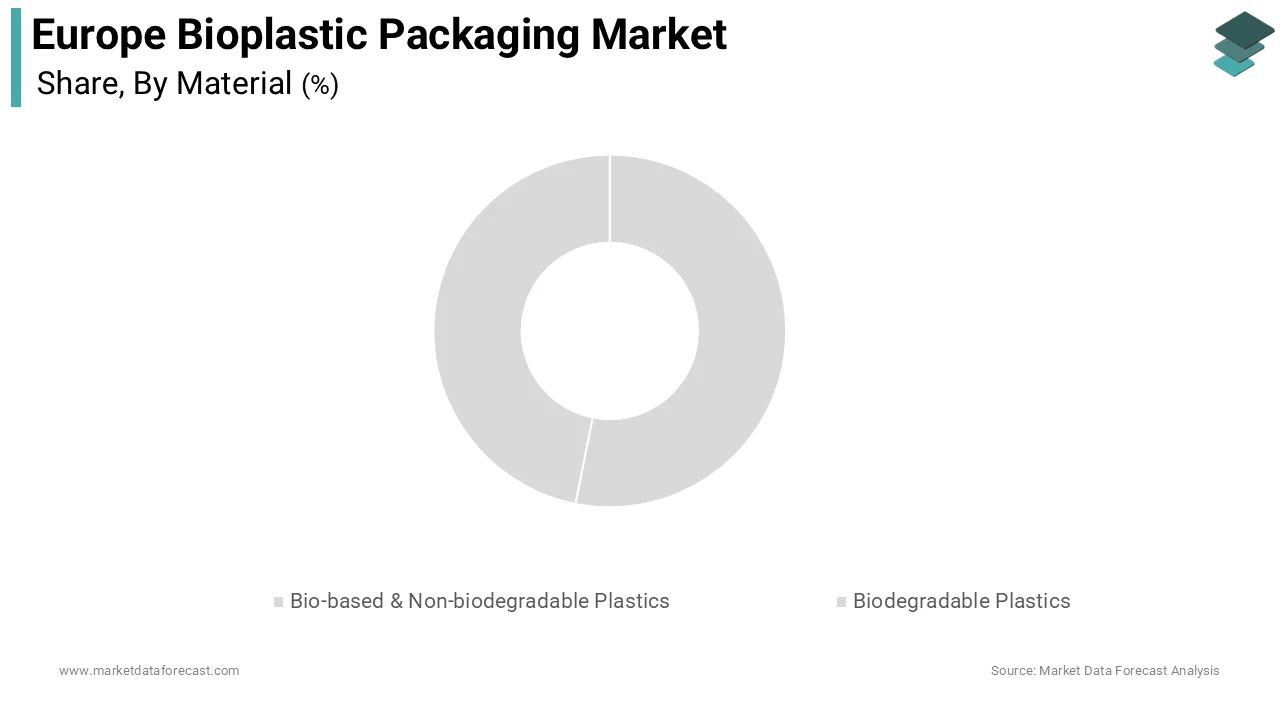
The biodegradable plastics segment is likely to witness the fastest CAGR of 12.5% during the forecast period, with the stringent regulations targeting single-use items and the increasing availability of industrial composting infrastructure in key European countries. Materials, such as polylactic acid and polybutylene adipate terephthalate, are gaining traction for applications where end-of-life management via composting is feasible. The European Union’s Single Use Plastics Directive specifically encourages the use of compostable alternatives for items like tea bags, fruit stickers, and lightweight carrier bags, which drives demand for these materials. Furthermore, advancements in polymer science have improved the barrier properties and heat resistance of biodegradable plastics, making them suitable for a wider range of food packaging applications.
By Packaging Type Insights
The rigid packaging segment accounted in holding 55.4% of the Europe bioplastic packaging market share in 2025, with its widespread use in beverages, personal care, and durable goods. This segment includes bottles, containers, and trays that require structural integrity and protection for their contents. The demand for rigid bioplastic bottles in the beverage sector has surged as major brands commit to using recycled or bio-based materials for their product lines. Furthermore, the durability of rigid bioplastics makes them suitable for reuse schemes, which are gaining popularity in countries like Germany and France under deposit return systems. The retailers prefer rigid bioplastic containers for premium products as they convey a sense of quality and robustness. The ability to recycle these materials alongside conventional plastics in many jurisdictions further enhances their appeal to manufacturers seeking straightforward compliance with extended producer responsibility schemes.
The flexible packaging segment is expected to grow at an anticipated CAGR of 11.8% from 2026 to 2034, with the need for lightweight and resource-efficient solutions in the food and retail sectors. This segment includes films, pouches, and wrappers that offer excellent barrier properties while minimizing material usage. The shift toward flexible formats is accelerated by e-commerce growth, which requires durable yet lightweight packaging to reduce shipping costs and emissions. Bioplastic films made from polylactic acid and cellulose are increasingly used for fresh produce, bakery goods, and snacks due to their breathability and compostability. Furthermore, innovations in multilayer bioplastic films have improved shelf life performance, making them competitive with conventional plastics for sensitive food items.
By Product Type Insights
The bags segment was the largest by capturing 48.2% of the Europe bioplastic packaging market share in 2025 due to legislative bans on conventional single-use plastic bags and high consumer visibility. Lightweight carrier bags made from biodegradable or bio-based materials have become ubiquitous in supermarkets and retail stores across the continent. The ease of substitution as bioplastic bags can be produced using existing extrusion lines with minimal modifications, which is also fuelling the growth of the segment. Data from national retailers in Italy and France shows that millions of compostable bags are distributed annually, complying with strict national standards for biodegradability. Furthermore, consumer awareness campaigns have successfully shifted public perception, making bioplastic bags a symbol of environmental responsibility. As per industry reports, the demand for heavier-duty reusable bioplastic bags is also rising as shoppers seek durable alternatives for regular grocery trips.
The pouches and sachets segment is likely to exhibit the fastest CAGR of 13.2% from 2026 to 2034, with the rise of convenient on-the-go consumption and portion control trends. Bioplastic pouches made from cellulose or polylactic acid blends offer the necessary barrier properties against moisture and oxygen while being compostable in industrial facilities. Data from major coffee chains in countries like the United Kingdom and Sweden indicates a shift toward compostable sachets for sugar and milk alternatives to align with corporate sustainability goals. Furthermore, the lightweight nature of pouches reduces transportation emissions, appealing to logistics providers and environmentally conscious brands. The advancements in sealing technologies have improved the reliability of bioplastic pouches, preventing leakage and extending shelf life.
By End Use Industry Insights
The food and beverages industry segment was the largest by holding a dominant share of the Europe bioplastic packaging market in 2025. The approval of bio-based materials for food contact has expanded, enabling broader adoption across the industry. The growth of the segment is also fueled by consumer demand for fresh and minimally processed foods, which require packaging that maintains quality while reducing environmental impact. The bioplastic packaging is increasingly used for organic products, where sustainability is a key selling point. Furthermore, major food retailers have committed to reducing plastic waste by replacing conventional packaging with compostable or recyclable bioplastic alternatives. The use of bioplastic trays for fruits and vegetables has grown significantly as they offer adequate ventilation and protection.
The cosmetic and personal care industry is expected to grow at the fastest CAGR of 14.0% during the forecast period with the premiumization of green beauty and ethical consumerism. Brands in this sector are increasingly adopting bioplastic tubes, jars, and bottles to align with their natural and organic product positioning. The demand for sustainable packaging in the beauty sector has risen sharply as consumers associate eco-friendly packaging with product purity and brand values. The growth is supported by the aesthetic versatility of bioplastics, which can be molded into elegant shapes and finished with high-quality prints appealing to luxury buyers. Furthermore, regulatory pressure to reduce microplastics and non-recyclable waste in personal care products is pushing larger corporations to explore bioplastic alternatives.
REGIONAL ANALYSIS
Germany Bioplastic Packaging Market Analysis
Germany was the top performer in the Europe bioplastic packaging market by holding 22.3% of the share in 2025 due to its strong manufacturing base and progressive environmental policies. The country has implemented strict packaging laws that incentivize the use of recyclable and biobased materials. The presence of major chemical companies such as BASF and Covestro drives innovation in bioplastic production and application development. Furthermore, the dual system for packaging waste collection supports the sorting and processing of biodegradable materials. The automotive and electronics sectors in Germany are also exploring bioplastic packaging for components, enhancing diversity.
France Bioplastic Packaging Market Analysis
France bioplastic packaging market was positioned second by holding a significant share in 2025, with the aggressive legislative measures against single-use plastics. The ban on single-use plastic plates and cutlery has created a robust market for bioplastic substitutes in the food service industry. The country has a strong agricultural sector providing feedstock for bioplastic production, such as starch from potatoes and corn. Data from French retailers indicates a high adoption rate of bioplastic bags and wraps for fresh produce. Furthermore, the presence of leading packaging companies like TotalEnergies Corbion fosters local production and innovation. French citizens are among the most willing in Europe to pay extra for sustainable packaging, driving brand adoption.
Italy Bioplastic Packaging Market Analysis
Italy's bioplastic packaging market growth is likely to grow with the early adoption of compostable packaging standards. According to the research, the country has one of the highest rates of organic waste collection in Europe, supporting the end-of-life management of bioplastic packaging. The presence of Novamont, a leading producer of biodegradable plastics, reinforces the domestic supply chain. Furthermore, the fashion and luxury goods sectors in Italy are increasingly using bioplastic packaging to enhance their sustainability credentials.
United Kingdom Bioplastic Packaging Market Analysis
The United Kingdom bioplastic packaging market growth is driven by corporate sustainability commitments. Major retailers have pledged to reduce plastic waste by replacing conventional packaging with compostable or recyclable alternatives. The country has a strong research sector with universities developing new bioplastic formulations from seaweed and other novel feedstocks. Furthermore, consumer campaigns against plastic pollution have heightened demand for green packaging solutions. The focus on circular economy principles drives investment in bioplastic recycling and composting infrastructure.
Spain Bioplastic Packaging Market Analysis
Spain's bioplastic packaging market growth is likely to grow with the tourism and agricultural exports. The need to reduce marine litter in coastal areas is prompting the adoption of biodegradable packaging in the hospitality sector. The agricultural sector uses bioplastic mulch films and packaging for fruits and vegetables, which are exported across Europe. Data from Spanish retailers shows increasing availability of compostable bags and containers in supermarkets. Furthermore, the presence of bioplastic producers and converters supports local supply chains. The hospitality industry’s demand for single-use items like cutlery and cups drives the growth of the market.
COMPETITION OVERVIEW
The competition in the Europe Bioplastic Packaging Market is characterized by a mix of established chemical giants specialized bioplastic producers, and emerging startups who strive to differentiate themselves through innovation and sustainability credentials. Large corporations leverage their extensive resources and global supply chains to offer scalable solutions, while niche players focus on unique formulations and specific applications, such as home compostability. The drive for regulatory compliance with the European Green Deal and Single Use Plastics Directive creates a level playing field where technical performance and cost efficiency become key differentiators. Companies compete on the basis of certification transparency and end-of-life management support, ensuring that their products deliver genuine environmental benefits. Strategic alliances with brands and retailers are crucial for securing long-term contracts and driving adoption.
KEY MARKET PLAYERS
A few major players in the Europe bioplastic packaging market include
- BASF SE
- Dow Chemical Company
- Koninklijke DSM N.V
- Eastman Chemical Company
- IFS chemicals
- NatureWorks LLC
- Metabolix Inc
- Arkema Group
- Novamont S.p.A
- Albis Plastics
- Innovia Films
- Biome Bioplastics Limited
- FKuR Kunststoff
- Grace Biotech
- DaniMer Scientific LLC
Major Strategies Used By Key Players
Key players in the Europe Bioplastic Packaging Market primarily focus on strategic partnerships and vertical integration to secure raw material supplies and expand distribution networks. Companies invest heavily in research and development to enhance the mechanical and barrier properties of bioplastics, making them competitive with conventional plastics. Collaborations with waste management firms ensure proper end-of-life processing, which is necessary for maintaining the environmental credentials of biodegradable products. Additionally, manufacturers pursue certifications and compliance with European regulations to build trust with brands and consumers. Expanding production capacities and launching innovative product lines tailored to specific applications, such as food service and retail, further strengthen their competitive position in the evolving sustainable packaging landscape.
Leading Players In The Europe Market
- BASF SE is a leading chemical company in Europe that significantly contributes to the bioplastic packaging market through its ecovio brand, which combines polylactic acid with polybutylene adipate terephthalate. This material is certified for industrial composting and is widely used for bags, films, and food service items. The company actively collaborates with waste management organizations to ensure proper end-of-life processing of its products. Recently, BASF has expanded its production capabilities and invested in research to improve the performance of biodegradable polymers. These efforts strengthen its position by providing reliable and high-quality solutions that meet stringent European regulatory standards, while supporting the transition toward a circular economy in the packaging sector.
- TotalEnergies Corbion is a joint venture that plays a pivotal role in the Europe bioplastic packaging market by producing polylactic acid under the Luminy brand name. The company operates a commercial-scale plant in France using renewable feedstocks, such as corn starch, to create sustainable packaging materials. It focuses on applications including rigid containers, films, and fibers for various industries. Recent actions include the development of new grades with enhanced heat resistance and barrier properties to broaden the application scope. By leveraging the resources of TotalEnergies and the expertise of Corbion, the company strengthens its market presence through innovation and sustainable production practices that align with European environmental goals.
- Novamont S.p.A. is an Italian company recognized as a pioneer in the bioplastic packaging market with its Mater Bi technology, which produces fully biodegradable and compostable materials. The company supplies resins for flexible and rigid packaging applications, including shopping bags, agricultural mulch films, and food containers. Novamont actively engages in educational campaigns to promote correct disposal and composting practices among consumers and municipalities. Recent initiatives involve expanding its product portfolio to include home compostable solutions and partnering with major retailers across Europe.
MARKET SEGMENTATION
This research report on the European Bioplastic Packaging Market has been segmented and sub-segmented into the following categories.
By Material
- Bio-based & Non-biodegradable Plastics
- Biodegradable Plastics
By Packaging Type
- Rigid Packaging
- Flexible Packaging
By Product Type
- Bags
- Pouches & Sachets
- Bottles
- Containers
- Trays
- Films & Wraps
- Cups
- Other Product Types
By End Use Industry
- Food & Beverages
- Cosmetics & Personal Care
- Healthcare & Pharmaceuticals
- Consumer Goods
- Retail & E-commerce
- Industrial
- Agriculture
- Other End-use Industries
By Region
- Germany
- United Kingdom
- France
- Italy
- Spain
- Netherlands
- Belgium
- Sweden
- Switzerland
- Rest of Europe