- Product Description Description
- Table of Contents TOC
- List of Table & Figure LOT
- Get Free Sample PDF Sample PDF
Market Size, 2025
$636.96 MnMarket Estimate, 2026
$682.18 MnMarket Forecast, 2034
$1,180.9 MnCAGR, 2026–2034
7.1%Europe Biopsy Devices Market Summary
Market Size & Growth
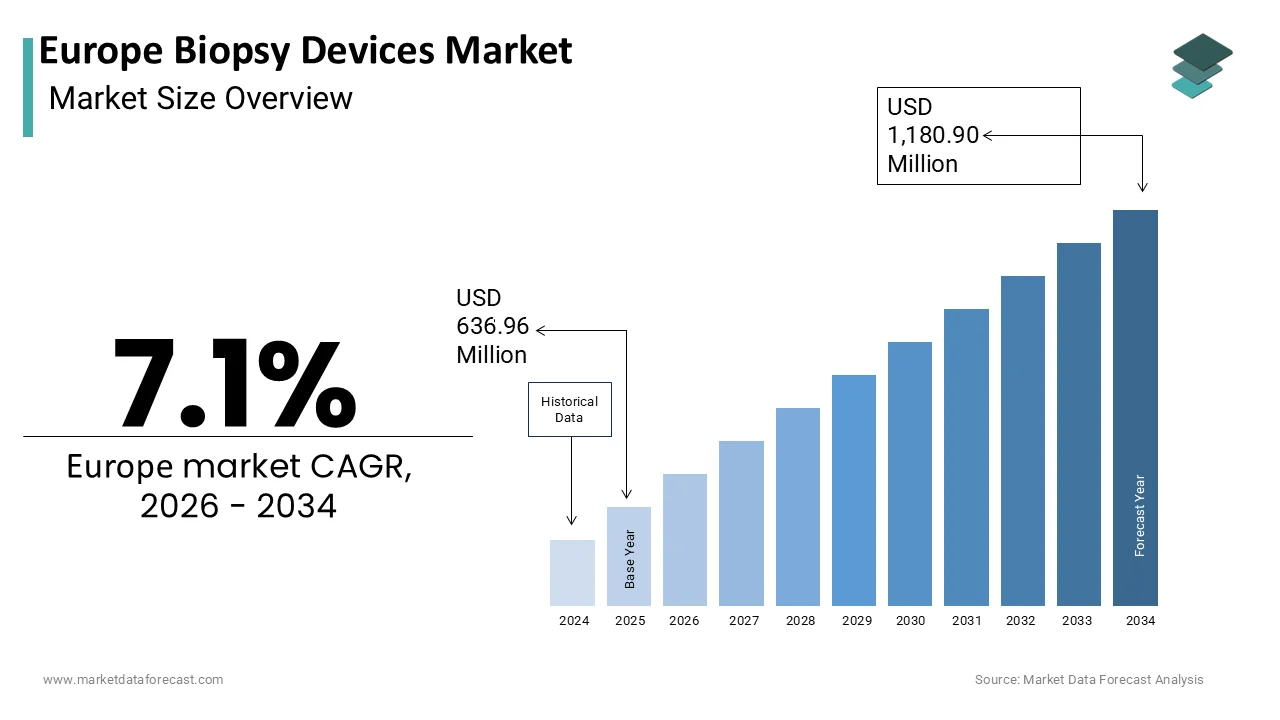
- The Europe Biopsy Devices Market was valued at USD 636.96 million in 2025.
- Expected to reach USD 1,180.90 million by 2034, growing at a CAGR of 7.1% from 2026 to 2034.
- Intermediate value: USD 682.18 million in 2026.
- Germany held the largest country share at 23.8% of the European market in 2025.
Key Market Segments
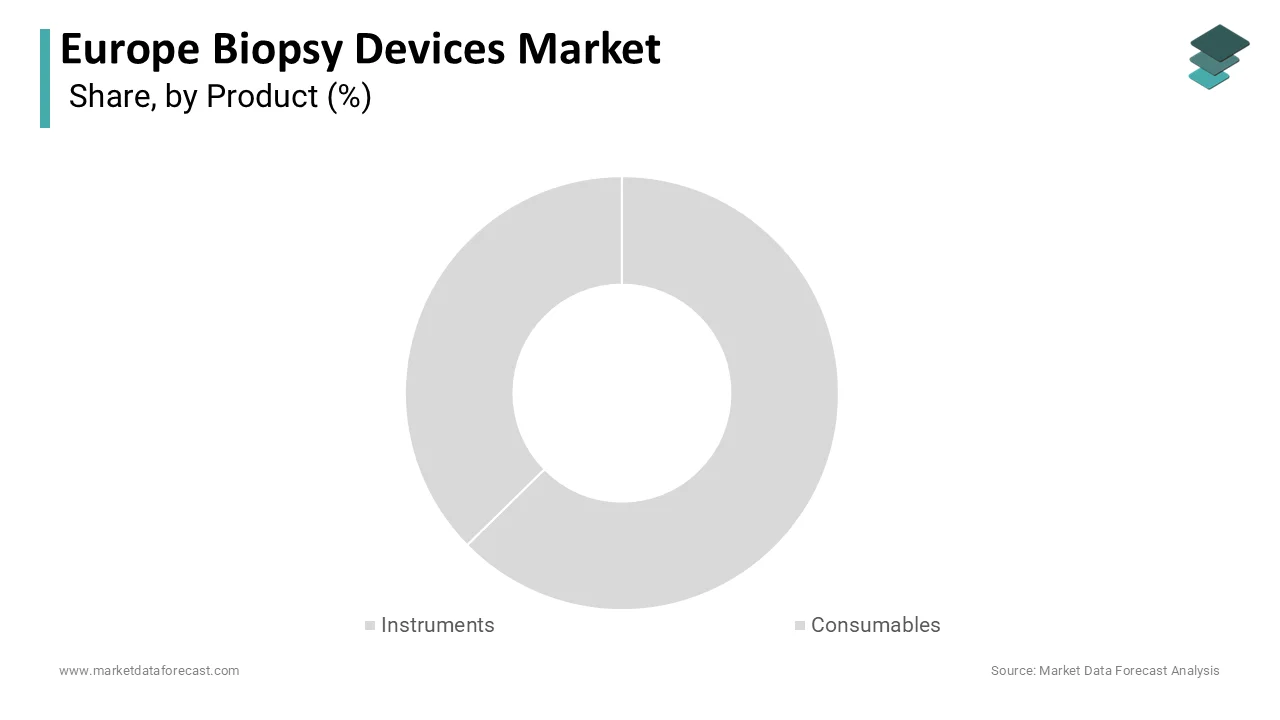
- By Product: Consumables (66.5% share in 2025); Automated Instruments fastest-growing at CAGR of 8.08% (2026–2034).
- By Type: Needle Biopsy leads with 71.5% share in 2025; Vacuum-Assisted Biopsy fastest-growing at CAGR of 8.2% (2026–2034).
- By End User: Academic Research Institutes lead; Contract Research Organizations fastest-growing at CAGR of 10.2% (2026–2034).
- By Country: Germany leads; UK is second-largest; France, Italy, and Spain follow.
Key Drivers
- Europe is projected to diagnose an estimated 3.5 million new cancer cases annually by 2025, according to the International Agency for Research on Cancer, driving biopsy procedure volumes.
- A majority of soft-tissue and organ biopsies in Western Europe are now performed under ultrasound, CT, or MRI guidance, per the European Society of Radiology, increasing device adoption.
- Over 150 NHS community diagnostic hubs were operational in the UK by 2025, expanding outpatient biopsy services per the UK Department of Health and Social Care.
Key Players
Medtronic, Hologic Inc., Becton Dickinson and Company, Boston Scientific Corporation, Cook Medical Inc., C.R. Bard Inc., Leica Biosystems, Mauna Kea Technologies, Ethicon EndoSurgery Inc., Fujifilm Medical Systems, Veran Medical Technologies, MDxHealth, Argon Medical Devices Inc., Intact Medical Corp.
 Download Free Sample Report
Europe Biopsy Devices Market Size
The Europe Biopsy Devices Market is projected to grow from USD 636.96 million in 2025 to USD 682.18 million in 2026 and reach USD 1,180.90 million by 2034, registering a CAGR of 7.1% during the forecast period from 2026 to 2034.
Biopsy devices are a range of medical instruments designed to extract tissue or fluid samples from the human body for diagnostic evaluation, primarily in oncology, gastroenterology, and urology. These devices include core needle biopsy systems, fine needle aspiration tools, vacuum-assisted biopsy instruments, and advanced image-guided platforms. According to the European Commission, new cancer cases in the EU reached approximately 2.74 million in 2022, which reflects a continued rise in oncological burden across the region. As per Eurostat, the median age of the EU population reached 44.7 years in 2025, with 21.6% aged 65 or older, which indicates a rapidly ageing demographic more vulnerable to cancer and other degenerative conditions requiring biopsy‑based diagnosis. As per the Organisation for Economic Co‑operation and Development, several high‑income European countries report MRI availability exceeding 18 units per million inhabitants, supporting the integration of advanced imaging with minimally invasive biopsy workflows. The clinical imperative for early and accurate diagnosis continues to shape procedural volume and technological adoption across hospitals, diagnostic centers, and specialized clinics throughout the region.
MARKET DRIVERS
Rising Incidence of Cancer and the Imperative for Early Diagnosis
The escalating burden of cancer across Europe is a principal catalyst for biopsy device utilization, which is majorly driving the biopsy devices market growth in Europe. According to the International Agency for Research on Cancer, an estimated 3.5 million new cancer cases are expected to be diagnosed annually in Europe by 2025, with breast, prostate, colorectal, and lung cancers accounting for nearly half of all diagnoses. As per the European Society for Medical Oncology, early detection significantly improves survival outcomes, with localized breast cancer showing survival rates above 90% compared to markedly lower outcomes at metastatic stages. This clinical reality compels healthcare systems to prioritize minimally invasive yet highly accurate diagnostic pathways. Core needle and vacuum‑assisted biopsy devices have become standard in confirming malignancies due to their ability to retrieve sufficient tissue for molecular profiling. According to national cancer registries in Europe, image‑guided breast biopsy volumes continue to rise annually, with guidance techniques now used in the overwhelming majority of procedures. The integration of biopsy protocols into national cancer screening programs in France, the United Kingdom, and the Netherlands further institutionalizes demand, ensuring consistent procedural volumes across public and private healthcare settings. This segment is expected to grow steadily as cancer incidence rises and early diagnosis becomes a central pillar of European oncology strategies.
Advancement in Minimally Invasive Image‑Guided Diagnostic Techniques
The evolution of real‑time imaging modalities has fundamentally transformed biopsy practice by enabling greater accuracy, reduced complications, and outpatient feasibility, which is further boosting the biopsy devices market expansion in Europe. As per the European Society of Radiology, a substantial majority of soft‑tissue and organ biopsies in Western Europe are now conducted under ultrasound, computed tomography, or magnetic resonance guidance. These technologies allow radiologists to target small lesions with high precision, minimizing damage to surrounding healthy tissue. According to the Swedish National Board of Health and Welfare, image‑guided techniques dominate diagnostic workflows in national breast cancer screening programs. Similarly, in Italy, the adoption of fusion imaging that overlays MRI and real‑time ultrasound has significantly increased the diagnostic yield of prostate biopsies, as reported by national medical physics associations. These procedural refinements not only enhance diagnostic confidence but also reduce the need for repeat interventions, aligning with European healthcare goals of efficiency and patient‑centric care. The convergence of imaging innovation and biopsy device engineering continues to drive clinical preference toward integrated, precision‑enabled systems.
MARKET RESTRAINTS
Stringent Regulatory Requirements and Prolonged Approval Timelines
The European regulatory landscape for medical devices, governed by the EU Medical Device Regulation 2017/745, imposes rigorous conformity assessments that significantly delay market entry for new biopsy technologies, which is a significant restraint on the European biopsy devices market. As per the European Commission, notified bodies have reported increased scrutiny of clinical evaluation reports for Class IIb and Class III devices, which include many advanced biopsy systems. According to regulatory analyses, the average time to achieve CE certification for novel platforms has lengthened considerably compared to timelines under the previous Medical Device Directive. This extended timeline discourages small and medium enterprises from pursuing innovation in the region, limiting the diversity of available technologies. Furthermore, the requirement for post‑market surveillance data under Article 86 necessitates long‑term investment in real‑world evidence generation, adding to development costs. As per the European Databank on Medical Devices, the number of newly CE‑marked biopsy‑related devices has declined in recent years, reflecting the impact of regulatory tightening. These regulatory complexities act as a structural barrier, slowing the availability of next‑generation tools despite clear clinical need. This segment is expected to face continued pressure as compliance demands intensify across the EU.
Persistent Shortage of Trained Interventional Specialists
Despite technological advancements, the effective deployment of modern biopsy devices remains constrained by a shortage of healthcare professionals skilled in image‑guided interventional procedures, which is further impeding the growth of the European biopsy devices market. According to the European Society of Radiology, the EU faces a significant deficit of interventional radiologists, with Southern and Eastern European countries most affected. As per the European Union of Medical Specialists, several countries fall below recommended staffing thresholds, limiting access to timely diagnostic interventions. This scarcity forces existing practitioners to manage excessive workloads; national health data from multiple EU states indicate that annual procedure volumes per radiologist often exceed recommended limits. Consequently, wait times for diagnostic biopsies in public hospitals can extend for several weeks in certain regions. The bottleneck is further exacerbated by the complexity of newer vacuum‑assisted and robotic‑guided systems, which require specialized training not uniformly available across medical education curricula. Without targeted workforce development, even the most advanced biopsy devices cannot achieve their full diagnostic potential. This segment is expected to experience ongoing constraints unless Europe expands training pipelines and harmonizes interventional radiology education.
MARKET OPPORTUNITIES
Integration of Artificial Intelligence in Biopsy Workflow Optimization
The incorporation of artificial intelligence into biopsy planning and execution is a transformative opportunity for the European market. AI algorithms can analyse medical images to identify suspicious regions, calculate optimal needle trajectories, and predict tissue adequacy in real time. As per the European Commission’s Horizon Europe program, tens of millions of euros have been allocated since 2022 to AI‑driven diagnostic innovation, including intelligent biopsy‑support tools. According to multiple European university hospital pilot studies, AI‑assisted biopsy platforms have shown measurable reductions in nondiagnostic samples and improved lesion‑targeting accuracy, particularly in lung and prostate procedures. In France, national innovation initiatives continue to support multicenter evaluations of AI‑enhanced prostate biopsy systems that integrate multiparametric MRI data to optimize sampling strategies. These initiatives not only enhance diagnostic precision but also alleviate pressure on radiology departments by streamlining workflow. As regulatory frameworks evolve to accommodate adaptive AI algorithms, the pathway for clinical integration becomes increasingly viable, positioning Europe at the forefront of intelligent interventional diagnostics.
Expansion of Ambulatory Diagnostic Centers and Outpatient Biopsy Services
The shift from inpatient to outpatient care models is creating new avenues for the European biopsy devices market. As per the Organisation for Economic Co‑operation and Development, a majority of diagnostic procedures in high‑income European countries are now performed in ambulatory settings, reflecting a long‑term structural shift toward outpatient care. According to the German Federal Joint Committee, the number of certified outpatient interventional centers has increased in recent years, supported by reimbursement reforms that favor same‑day diagnostics. Similarly, the United Kingdom’s NHS Long Term Plan emphasizes community‑based diagnostics, with over 150 community diagnostic hubs operational by 2025 as per the Department of Health and Social Care. These facilities routinely perform ultrasound‑guided breast and thyroid biopsies using portable devices, creating demand for user‑friendly platforms with integrated safety features. This decentralization of care not only improves patient access but also diversifies the commercial landscape for device manufacturers beyond traditional hospital procurement channels.
MARKET CHALLENGES
High Cost of Advanced Biopsy Platforms and Budget Constraints in Public Health Systems
The adoption of next‑generation biopsy technologies faces significant resistance due to fiscal limitations within Europe’s predominantly publicly funded healthcare systems, which is a primary challenge to the growth of the European market. Advanced vacuum‑assisted and robotic‑guided biopsy systems often carry acquisition costs exceeding 100,000 euros, with annual maintenance contracts adding substantial recurring expenses. As per the European Observatory on Health Systems and Policies, many public hospitals across Southern Europe operate under persistent budget constraints, limiting capital expenditure on high‑end diagnostic equipment. According to the European Hospital and Healthcare Employers Association, only a minority of district hospitals in the EU reported dedicated budget allocations for new interventional radiology devices in 2023. This financial pressure forces clinicians to rely on older, less efficient systems or perform multiple passes with basic needles to obtain adequate samples, increasing procedural time and patient discomfort. Reimbursement codes for biopsies also remain largely static across most EU countries, failing to reflect the added value of advanced platforms. Consequently, even when clinical benefits are proven, procurement committees often prioritize cost over innovation, which is slowing the diffusion of precision biopsy tools.
Risk of Complications and Growing Emphasis on Patient Safety Protocols
Although minimally invasive, biopsy procedures carry inherent risks such as bleeding, infection, and pneumothorax, which influence both clinical adoption and regulatory oversight, which is further challenging the expansion of the European biopsy devices market. As per the European Society of Gastrointestinal and Abdominal Radiology, complication rates for percutaneous liver biopsies remain low but clinically significant, with major adverse events occurring in a small percentage of cases. According to the European Respiratory Society, pneumothorax remains one of the most common complications of lung biopsies, with chest‑tube insertion required in a notable minority of patients. These statistics have prompted national health authorities to implement stricter procedural guidelines; for example, the UK’s National Institute for Health and Care Excellence mandates pre‑procedural coagulation screening and post‑procedural monitoring for all image‑guided biopsies. Such protocols increase procedural complexity and duration, reducing the number of biopsies a single practitioner can perform daily. Additionally, medico‑legal claims related to diagnostic errors have risen in several European countries, as reported by national medical associations, making clinicians more cautious and sometimes shifting preference toward less invasive alternatives like liquid biopsies. This safety‑driven conservatism tempers the uptake of even the safest advanced biopsy devices.
REPORT COVERAGE
| REPORT METRIC | DETAILS |
| Market Size Available | 2025 to 2034 |
| Base Year | 2025 |
| Forecast Period | 2026 to 2034 |
| Segments Covered | By Product, Type, Application, End User, and Region. |
| Various Analyses Covered | Global, Regional, and Country-Level Analysis, Segment-Level Analysis, Drivers, Restraints, Opportunities, Challenges; PESTLE Analysis; Porter’s Five Forces Analysis, Competitive Landscape, Analyst Overview of Investment Opportunities |
| Countries Covered | UK, France, Spain, Germany, Italy, Russia, Sweden, Denmark, Switzerland, Netherlands, Turkey, Czech Republic, Rest of Europe |
| Market Leaders Profiled | Medtronic, Leica Biosystems, Hologic Inc., Boston Scientific Corporation, Becton, Cook Medical Inc., C.R. Bard Inc., Mauna Kea Technologies, Ethicon EndoSurgery Inc., Veran Medical Technologies, Dickinson and Company, Fujifilm Medical Systems, MDxHealth, Argon Medical Devices Inc and Intact Medical Corp. |
SEGMENTAL ANALYSIS
By Product Insights
The consumables segment dominated the market by holding 66.5% of the European market share in 2025. The growth of the consumables segment in this regional market is primarily driven by its indispensable role across clinical and research biopsy workflows. This dominance stems from the recurring nature of reagent and kit usage across diagnostic and research workflows. Every biopsy procedure requires single‑use needles, collection vials, preservatives, and staining reagents, creating consistent demand independent of capital equipment procurement cycles. For instance, more than 9 million biopsy procedures were performed across major EU countries in 2022, which supports the high consumption of disposables. Furthermore, the shift toward molecular pathology has intensified the need for specialized kits that preserve RNA and DNA integrity during sample processing. In Germany and France, regulatory guidelines now mandate the use of standardized fixation kits for oncology biopsies to ensure compatibility with next‑generation sequencing platforms. This standardization, coupled with stringent sterilization norms that prohibit reuse, ensures sustained consumption. Additionally, academic and pharmaceutical research institutions across Europe routinely procure biopsy kits for preclinical studies, further bolstering this segment’s position. The consumables segment is expected to maintain steady growth over the forecast period as biopsy volumes rise and molecular diagnostics expand.
The automated biopsy instruments segment is emerging as the fastest‑growing product category in Europe and is estimated to record a CAGR of 8.08% over the forecast period, owing to the clinical demand for procedural consistency, reduced operator dependency, and enhanced sample quality, which is particularly in high‑volume oncology centers. Automated systems deliver precise needle control, consistent core length, and integrated safety mechanisms that minimize tissue fragmentation. According to the UK’s National Health Service, automated breast biopsy platforms have been associated with a reduction in nondiagnostic samples, reinforcing their clinical value. In Sweden, major hospitals have reported notable reductions in procedure time when transitioning from semi‑automated to fully automated prostate biopsy systems. These efficiency gains are critical in countries facing radiologist shortages. Moreover, the European Union’s Medical Device Regulation now emphasizes device traceability and performance reproducibility, which is a criterion inherently met by automated platforms with embedded data logging. Investment in robotic‑assisted biopsy navigation, particularly in the Netherlands and Switzerland, further validates this trajectory. Automated instruments are expected to witness strong adoption over the forecast period as hospitals prioritize precision, workflow efficiency, and digital integration.
By Type Insights
The needle biopsy segment remained the leading type segment in the European biopsy devices market and held 71.5% of the European market share in 2025. The dominance of the needle biopsy segment in this regional market is primarily due to its minimally invasive nature and widespread use in solid‑organ diagnostics. Core needle biopsy alone accounts for more than half of all tissue sampling procedures in oncology, offering sufficient histological architecture for immunohistochemical and genomic analysis. According to the European Society for Medical Oncology, needle biopsy is the primary diagnostic method for confirming most breast and prostate cancer cases in Europe, underscoring its clinical centrality. National screening programs reinforce this trend; for instance, the French National Cancer Institute mandates core needle biopsy as the standard confirmatory test following suspicious mammography findings. Additionally, advances in needle design, such as echogenic tips and side‑notch geometries, have improved targeting accuracy under ultrasound guidance, reducing repeat procedures. The avoidance of general anesthesia and shorter recovery times align with European healthcare policies aimed at reducing hospital stays and controlling costs. Needle biopsy is expected to retain its dominant position through the forecast period as cancer screening programs expand and minimally invasive diagnostics gain further traction.
The vacuum‑assisted biopsy (VAB) segment is the fastest‑growing type segment in Europe and is expected to register a CAGR of 8.2% over the forecast period. This rapid rise is fueled by its superior diagnostic yield in detecting microcalcifications and small lesions, particularly in dense breast tissue. Unlike standard core devices that retrieve one sample per insertion, VAB systems extract multiple contiguous tissue cores through a single puncture, improving lesion representation. According to clinical findings published by the University Hospital of Zurich, vacuum‑assisted biopsy significantly increases diagnostic accuracy for small breast lesions, supporting its growing adoption. In Denmark, national breast cancer guidelines updated in 2023 now recommend VAB as the first‑line method for BI‑RADS 4a lesions, contributing to rising procedural volumes. Similarly, the Netherlands’ population‑based screening program has integrated VAB platforms across certified diagnostic centers to minimize false negatives. The technique’s ability to completely excise benign papillomas and radial scars also reduces the need for surgical follow‑up. VAB is expected to experience robust growth over the forecast period as European screening programs modernize and demand for high‑precision breast diagnostics increases.
By End User Insights
The academic research institutes segment held the leading share of the European market in 2025 due to their extensive involvement in translational research, biomarker discovery, and preclinical disease modeling. Institutions such as the Max Planck Society and the Francis Crick Institute routinely process thousands of tissue samples annually for projects funded by Horizon Europe and national science councils. According to the European Research Council, more than 1,200 active grants in 2023 required human or animal tissue acquisition for biomedical studies, highlighting the scale of research‑driven biopsy demand. Furthermore, Europe’s emphasis on open science and biobanking drives standardized procurement of biopsy kits and consumables. These repositories enforce strict protocols for sample integrity, necessitating high‑quality single‑use instruments and RNA stabilization reagents. The integration of biopsy‑derived samples into multi‑omics pipelines further strengthens demand. Academic research institutes are expected to maintain strong utilization of biopsy devices as Europe expands its biomedical research infrastructure over the forecast period.
The contract research organizations (CROs) segment is the fastest‑growing end‑user segment in the European biopsy devices market and is projected to grow at a CAGR of 10.2% over the forecast period, owing to the pharmaceutical industry’s increasing outsourcing of clinical trial sample collection and biomarker validation to specialized CROs. According to the European Medicines Agency, a majority of oncology trials approved in recent years require serial tissue biopsies for pharmacodynamic and resistance‑mechanism analysis, reinforcing the critical role of CROs. Leading CROs have established centralized biopsy logistics networks across Europe to ensure cold‑chain integrity, rapid processing, and regulatory‑compliant documentation. In Switzerland and the Netherlands, CRO‑affiliated biospecimen hubs now handle large volumes of trial‑related biopsies annually. The rise of precision‑medicine trials targeting rare mutations demands high‑fidelity tissue acquisition, driving investment in automated and image‑guided biopsy kits. Additionally, the EU Clinical Trials Regulation 536/2014 mandates stringent sample traceability, a requirement CROs meet through integrated digital tracking systems. CROs are expected to witness strong growth over the forecast period as clinical trial complexity increases and pharmaceutical outsourcing intensifies.
COUNTRY LEVEL ANALYSIS
Germany Biopsy Devices Market Analysis
Germany continues to dominate the European biopsy devices market and held 23.8% of the European market share in 2025. The leading position of Germany in the European market is attributed to its advanced healthcare infrastructure and strong emphasis on early cancer detection. Market growth is supported by high diagnostic demand, extensive hospital capacity, and strong domestic manufacturing capabilities. According to the International Agency for Research on Cancer, Germany recorded 605,805 new cancer cases in 2022, underscoring the country’s substantial need for biopsy procedures across its nationwide hospital network. Germany’s statutory health insurance system reimburses image‑guided biopsies, ensuring equitable access to diagnostic services. The nation also benefits from the presence of leading medical technology manufacturers, which strengthens local innovation in biopsy needles, guidance systems, and consumables. Additionally, the German Research Foundation continues to fund large‑scale biomedical research programs, supporting academic use of tissue‑based diagnostics. With strong regulatory compliance under MDR and early adoption of automated biopsy platforms in major university hospitals, Germany is expected to maintain its leadership position in the coming years.
United Kingdom Biopsy Devices Market Analysis
The United Kingdom retains its position as the second‑largest market. The growth of the UK in the European market is driven by the NHS’s structured cancer care pathways, strong investment in diagnostic expansion, rising cancer incidence, expanding community diagnostic centers, and high adoption of vacuum‑assisted biopsy systems. According to NHS Digital, cancer registrations in England exceeded 320,000 cases in 2022, reflecting sustained demand for tissue sampling across oncology specialties. The NHS Long Term Plan continues to prioritize early detection through expanded diagnostic hubs, which perform large volumes of ultrasound‑guided and stereotactic biopsies. Public Health England also reports consistent participation in national breast screening programs, which rely heavily on biopsy confirmation. The UK’s strong clinical research ecosystem further increases demand for serial tissue sampling. With continued regulatory alignment through the UKCA framework, the UK is positioned to remain a high‑volume and innovation‑driven biopsy devices market.
France Biopsy Devices Market Analysis
France occupied a substantial share of the European biopsy devices market in 2025. The centralized cancer control strategy and strong investment in diagnostic infrastructure are fuelling the biopsy devices market growth in France. Market expansion is further driven by standardized clinical pathways, universal reimbursement, and the presence of specialized cancer centers. According to GlobalData, France performed over 2.17 million biopsy procedures in 2022, reflecting the country’s high diagnostic throughput across breast, lung, liver, and prostate cancers. France’s UNICANCER network of more than 100 comprehensive cancer centers serves as a national backbone for advanced biopsy techniques, including MRI‑guided procedures. The national health insurance system covers biopsy procedures at 100%, eliminating financial barriers to diagnosis. France’s 2030 investment plan also allocates significant funding to precision medicine platforms that rely on high‑quality tissue sampling. With strong academic participation and standardized national protocols, France is expected to remain a key market for advanced biopsy technologies.
Italy Biopsy Devices Market Analysis
Italy accounts for a prominent share of the European biopsy devices market. The strong oncology networks, increasing investment in diagnostic modernization, rising cancer incidence, expanding interventional radiology capacity, and adoption of advanced biopsy systems are propelling the Italian market growth. According to the International Agency for Research on Cancer, Italy recorded 436,242 new cancer cases in 2022, reinforcing the need for widespread biopsy utilization across public hospitals. Italy’s National Recovery and Resilience Plan continues to upgrade imaging and biopsy infrastructure, particularly in northern and central regions where oncology centers are concentrated. Academic institutions increasingly use vacuum‑assisted biopsy systems for breast cancer diagnosis, aligning with European clinical standards. Italy’s active pharmaceutical and clinical research corridor also contributes to demand for specialized biopsy kits. With ongoing modernization and strong clinical adoption, Italy is positioned for steady growth in the biopsy devices market.
Spain Biopsy Devices Market Analysis
Spain is predicted to grow at a healthy CAGR in the European biopsy devices market over the forecast period, owing to the growing adoption of advanced biopsy techniques and increasing investment in regional diagnostic networks. Market demand is driven by rising cancer incidence, expansion of integrated diagnostic centers, and growth in private oncology services. According to the International Agency for Research on Cancer, Spain reported 278,729 new cancer cases in 2022, with breast and colorectal cancers representing major contributors to biopsy volume. Autonomous communities such as Catalonia and Madrid continue to invest in automated biopsy platforms and early detection programs. Over 120 hospitals participate in national screening initiatives that rely on image‑guided biopsy confirmation. The rise of private oncology clinics and medical tourism further boosts the consumption of premium biopsy consumables. With strong public‑private collaboration and increasing research participation, Spain is expected to remain a steadily expanding market within Southern Europe.
COMPETITIVE LANDSCAPE
Competition in thEuropeanpe Biopsy Devices Market is characterized by a blend of global medtech leaders and specialized European innovators competing on clinical performance,ce regulatory compliance,ce and service excellence. The market is nprice-driven but instead hinges on device precision, on safety features, es and integration with diagnostic imaging ecosystems. Leading companies differentiate through proprietary needle geometriesenhancedes vacuum control mechanisms, sms and digital workflow enhancements that reduce nondiagnostic rates. National healthcare procurement policies and reimbursement frameworks further shape competitive dynamics, cs with countries like Germany and the UK favoring devices backed by robust health technology assessment data. Smaller firms often focus on niche applications such as prostate or liver biops,sy gaining traction through clinical partnerships. The enforcement of the EU Medical Device Regulation has raised barriers to entry,ry intensifying competition among established players while limiting disruptive low-cost alternatives. Overall, all the landscape rewards sustained investment inclinical educationn, reg ulatory didiligencee across-modalityity interoperability.
KEY MARKET PLAYERS
Companies playing an essential role in the biopsy devices market in europe region profiled in this report are
- Medtronic
- Leica Biosystems
- Hologic Inc.
- Boston Scientific Corporation
- Becton, Dickinson and Company
- Cook Medical Inc.
- C.R. Bard Inc.
- Mauna Kea Technologies
- Ethicon EndoSurgery Inc.
- Veran Medical Technologies
- Fujifilm Medical Systems
- MDxHealth
- Argon Medical Devices Inc.
- Intact Medical Corp.
TOP LEADING PLAYERS IN THE MARKET
- Becton Dickinson and Company is a global leader in medical technology with a significant footprint in the European Biopsy Devices Market through its advanced core and fine needle biopsy systems. The company supplies a comprehensive portfolio of manual and automated biopsy instruments used in oncology, gastroenterology, and interventional radiology across European hospitals and diagnostic centers. BD has strengthened its European position by enhancing compatibility between its biopsy needles and imaging platforms from major vendors like Siemens and GE Healthcare. In 2025, the company launched a next-generation safety-engineered core biopsy device with reduced recoil and integrated tissue retention features. This innovation aligns with EU safety directives and addresses clinician concerns regarding procedural control and sharps injury prevention across the region.
- Hologic Inc holds a prominent role in the European market through its proprietary vacuum-assisted breast biopsy technology under the Eviva and ATEC brands. The company’s systems are widely adopted in breast diagnostic centers across Western and Northern Europe due to their high diagnostic yield and minimal scarring. Hologic has deepened its European engagement by integrating artificial intelligence into its biopsy planning software to improve lesion targeting accuracy. In 20,23 the company expanded its service and training network in France Ita, ly and the Netherlands to support the growing number of certified breast imaging units. Additionally, Ly Hologic collaborates with European radiology societies to develop standardized protocols for minimally invasive breast diagnostics, cs reinforcing clinical trust anlong-termrm adoption across national screening programs.
- Cook Medical Incorporated contributes to thEuropeanpe Biopsy Devices Market through its specialized biopsy needles and introducer sets designed for vascular and abdominal interventions. The company’s products are valued for their durability and compatibility with real-time imaging modalities. Cook has reinforced its European presence by investing in localized regulatory expertise to ensure compliance with the EU Medical Device Regulation. In 20,24 the company introduced a new echogenic core needle with enhanced ultrasound visibility for liver and kidney biopsies, es responding to feedback from interventional radiologists in Germany and Scandinavia. Cook also partners with academic hospitals to conduct post-market clinical follow-up studies generatinreal-worldld evidence that supports both regulatory maintenance and clinician education across the continent.
TOP STRATEGIES USED BY THE KEY MARKET PARTICIPANTS
Key players in the European Biopsy Devices Market primarily focus on technological differentiation through the integration of safety mechanisms, ms imaging compatibility,t y and procedural efficiency features. Companies actively pursue regulatory compliance with the EU Medical Device Regulation by investing in clinical evidence generation and post-market surveillance systems. Strategic collaborations with imaging equipment manufacturers and radiology societies enhance product adoption and clinical validation. Geographic expansion is achieved through localized training programs, ms service hubs, and multilingual technical support tailored to national healthcare workflows. Additionally, Ally firms emphasize sustainability by developing single-use devices with reduced environmental impact and recyclable packaging to align with European Green Deal principles.
MARKET SEGMENTATION
This research report on the European biopsy devices market has been segmented & sub-segmented into the following categories
By Product
-
Instruments
- Manual
- Automated
- Semi-automated
- Consumables
- Reagents
- Kits
By Type
- Needle Biopsy
- core needle biopsy
- fine-needle biopsy
- vacuum-assisted biopsy
- Surgical Biopsy
- Incisional biopsy
- Excisional biopsy
By Application
- Scientific Research
- Medical Diagnosis
- Agricultural Applications
- Genetic Fingerprinting
- Sex Determination
By End User
- Pharmaceutical and Biology Industry
- Academic Research Institute
- Contract Research Organizations
- Forensic Labs
By Country
- UK
- France
- Spain
- Germany
- Italy
- Russia
- Sweden
- Denmark
- Switzerland
- Netherlands
- Turkey
- Czech Republic
- Rest of Europe