- Product Description Description
- Table of Contents TOC
- List of Table & Figure LOT
- Get Free Sample PDF Sample PDF
Market Size, 2025
$0.76 BnMarket Estimate, 2026
$0.84 BnMarket Forecast, 2034
$1.82 BnCAGR, 2026–2034
10.21%Europe Blood Group Typing Market Report Summary
The Europe blood group typing market was valued at USD 0.76 billion in 2025, is anticipated to reach USD 0.84 billion in 2026, and is projected to reach USD 1.82 billion by 2034, growing at a strong CAGR of 10.21% from 2026 to 2034. Market growth is driven by rising demand for safe blood transfusions, increasing surgical procedures, and growing adoption of advanced immunohematology technologies. Expanding awareness regarding transfusion safety, coupled with improvements in molecular diagnostic techniques, is further supporting market expansion. Additionally, integration of automation and genomic-based typing methods is enhancing accuracy and efficiency across European blood banking systems.
Key Market Trends
- Increasing adoption of molecular blood group typing technologies for improved precision.
- Rising demand for automated immunohematology analyzers in blood banks and hospitals.
- Growing emphasis on transfusion safety and compatibility testing.
- Expansion of genomic integration in routine blood typing procedures.
- Strengthening regulatory standards for quality assurance in blood screening practices.
Segmental Insights
- Based on product, the consumables segment dominated the market in 2025 by holding the highest share, driven by continuous demand for reagents, test kits, antisera, and other routine testing materials used in blood typing procedures.
- Based on test type, the ABO and Rh typing segment led the market in 2025, supported by its critical role in routine transfusion compatibility testing and widespread clinical adoption.
- Based on end user, the blood banks segment occupied the major share in 2025, driven by high testing volumes, centralized blood collection systems, and strict transfusion safety regulations across Europe.
Regional Insights
The Europe blood group typing market is witnessing steady growth across major economies, supported by advanced healthcare infrastructure, strong regulatory frameworks, and increasing blood donation programs.
- Germany dominated the regional market in 2025 with 24.4% share, driven by advanced laboratory infrastructure and strong public healthcare funding.
- France held a promising share in 2025, supported by robust national blood services and continuous modernization of diagnostic laboratories.
- The United Kingdom is anticipated to register a healthy CAGR over the forecast period, driven by the aggressive integration of genomic technologies into routine blood banking practices and the modernization of NHS transfusion services.
Competitive Landscape
The Europe blood group typing market is characterized by the presence of established diagnostic companies and specialized immunohematology solution providers. Market players are focusing on automation, molecular typing advancements, and expansion of reagent portfolios to strengthen market positioning. Strategic collaborations with healthcare institutions and investments in research and development are shaping competitive dynamics across the region.
Prominent companies operating in the Europe blood group typing market include Bio-Rad Laboratories, Inc., Grifols, S.A., Immucor Inc., Ortho Clinical Diagnostics, Inc., Quotient, Ltd., Novacyt Group, BAG Healthcare GmbH, Rapid Labs, Day Medical SA, DIAGAST, and AXO Science.
Europe Blood Group Typing Market Size
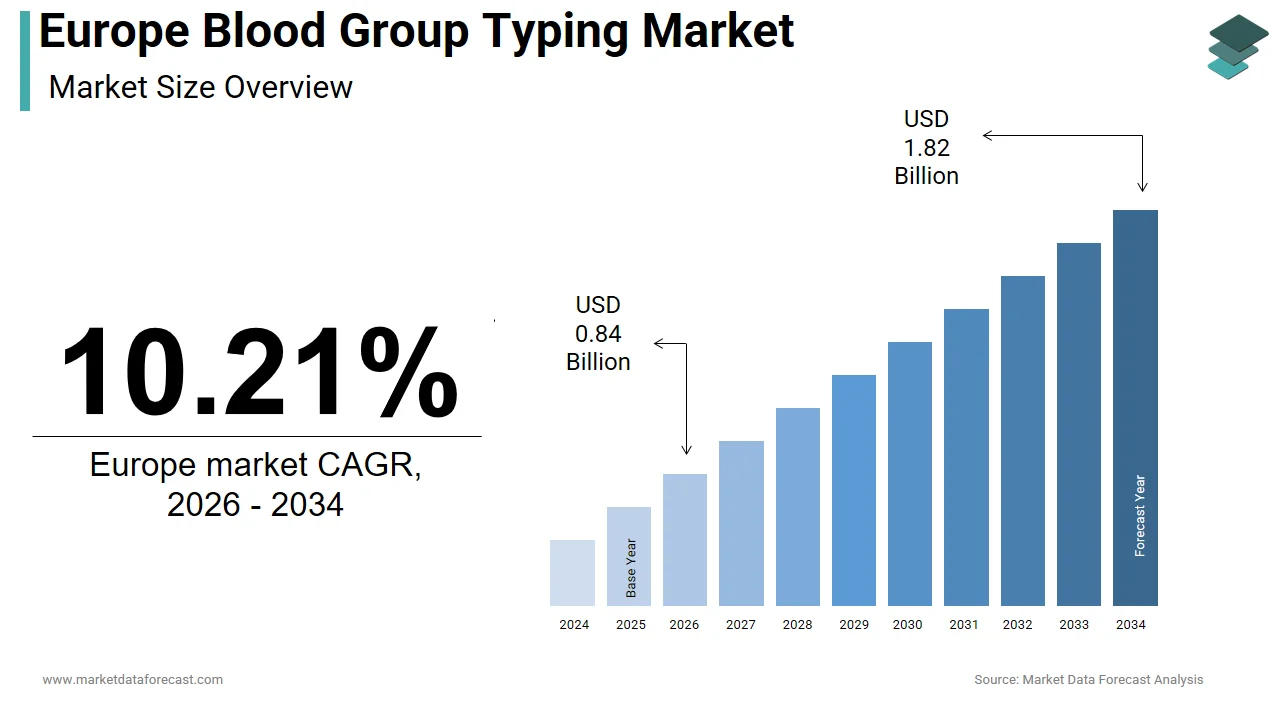
The size of the Europe blood group typing market was valued at USD 0.76 billion in 2025. This market is expected to grow at a CAGR of 10.21% from 2026 to 2034 and be worth USD 1.82 billion by 2034 from USD 0.84 billion in 2026.
Blood group typing encompasses a critical diagnostic sector dedicated to the precise identification of antigens on red blood cells to ensure safe transfusion practices and manage pregnancy-related risks. This field has evolved from traditional serological methods to sophisticated molecular genotyping, driven by the need for higher resolution in matching donors and recipients. The operational landscape is defined by stringent safety protocols mandated by European health authorities to prevent hemolytic transfusion reactions and alloimmunization. According to the European Centre for Disease Prevention and Control, millions of blood units are transfused annually across the European Union, making accurate typing a non-negotiable step in patient care. The Council of Europe emphasizes that the safety of blood substances relies heavily on the compatibility between donor and recipient, necessitating advanced testing capabilities beyond the basic ABO and RhD systems. National blood services in countries like Germany and France have increasingly adopted automated platforms to handle high sample volumes while minimizing human error. The rising prevalence of patients requiring chronic transfusions, such as those with sickle cell disease or thalassemia, further amplifies the demand for extended phenotyping. Regulatory frameworks ensure that all typing reagents and instruments meet rigorous performance standards before entering clinical use. This market serves as the backbone of transfusion medicine, enabling healthcare providers to deliver life-saving therapies with maximal safety and efficiency.
MARKET DRIVERS
Rising Prevalence of Chronic Diseases Requiring Regular Transfusions
The escalating incidence of chronic hematological disorders serves as a primary catalyst for the adoption of advanced blood group typing technologies across European healthcare facilities, which is majorly driving the growth of the European blood group typing market. Conditions such as sickle cell disease, thalassemia, and myelodysplastic syndromes require patients to undergo frequent blood transfusions throughout their lives, significantly increasing the risk of developing alloantibodies against minor blood group antigens. According to the European Haematology Association, sickle cell disease affects individuals across Europe, with prevalence rising due to migration patterns and improved life expectancy. These patients often develop complex antibody profiles that make finding compatible blood units extremely difficult without detailed antigen matching. Traditional serological methods often fail to provide the necessary resolution for these complex cases, driving the shift toward molecular genotyping, which can predict blood groups even in the presence of antibodies or recent transfusions. Hospitals are increasingly implementing extended phenotyping protocols to proactively match donors and recipients, thereby preventing alloimmunization and reducing the burden of delayed hemolytic reactions. The clinical necessity to manage these high-risk populations ensures a steady demand for high-throughput typing systems capable of analyzing multiple antigens simultaneously.
Implementation of Stringent Safety Regulations and Standards
The rigorous regulatory framework governing blood safety in Europe is further boosting the expansion of the European blood group typing market. The European Union has established comprehensive directives that mandate high standards for the quality and safety of blood and blood components, compelling member states to adopt the most reliable testing technologies available. According to the European Directorate for the Quality of Medicines and HealthCare, national authorities must ensure that blood establishments utilize validated methods to minimize the risk of transfusion-transmitted infections and immunological complications. This regulatory pressure has led to a widespread transition from manual tube testing to automated solid-phase and gel card systems, which offer superior sensitivity and reproducibility. The requirement for traceability and data integrity in blood banking operations further encourages the integration of digital typing solutions that seamlessly connect with laboratory information systems. Non-compliance with these standards can result in severe penalties and suspension of blood bank operations, motivating institutions to invest continuously in state-of-the-art typing equipment. Furthermore, the push for harmonization across European borders facilitates the exchange of blood products, necessitating standardized typing results that are universally understood and accepted.
MARKET RESTRAINTS
High Costs Associated with Advanced Molecular Typing Technologies
The substantial financial burden associated with acquiring and maintaining advanced molecular blood group typing systems presents a significant restraint on market growth, particularly for smaller blood banks and hospitals. While genotyping offers unparalleled accuracy and the ability to resolve complex cases, the initial capital investment for instruments and the recurring costs of proprietary reagents are considerably higher than those for traditional serological methods. According to the European Society of Blood Transfusion, many healthcare facilities in Eastern and Southern Europe operate under budgetary constraints that limit their ability to upgrade to next-generation sequencing or polymerase chain reaction-based platforms. The cost per test for molecular typing remains prohibitive for routine screening in low-volume settings, forcing many institutions to rely on older, less efficient techniques. Additionally, the need for specialized training for laboratory staff to operate these complex systems adds to overall operational expenses. Reimbursement policies in several European countries do not fully cover the extra costs associated with extended genotyping, creating a financial disincentive for widespread adoption.
Shortage of Skilled Laboratory Professionals and Technicians
A critical scarcity of trained personnel capable of operating sophisticated blood group typing equipment and interpreting complex results acts as a formidable barrier to efficient market expansion. The transition from manual to automated and molecular methods requires a workforce with advanced technical skills and a deep understanding of immunohematology, yet the supply of such professionals is failing to keep pace with technological advancements. According to the European Federation of Clinical Chemistry and Laboratory Medicine, the laboratory sector across Europe faces a growing workforce gap due to an aging demographic of current staff and insufficient recruitment of young scientists. This shortage leads to operational bottlenecks where expensive automated systems remain underutilized or where results are delayed due to a lack of qualified interpreters. The complexity of resolving discrepancies between serological and genotypic results demands expertise that is becoming increasingly rare, potentially leading to errors or reliance on external reference laboratories. Training programs often lag behind the rapid introduction of new technologies, leaving existing staff ill-equipped to maximize the potential of modern typing platforms. The inability to recruit and retain skilled technicians forces some facilities to limit their testing menus or outsource samples, which increases turnaround times and costs.
MARKET OPPORTUNITIES
Integration of Artificial Intelligence and Automation
The incorporation of artificial intelligence and advanced automation into blood group typing workflows presents a transformative opportunity for the European blood group typing market. AI-driven algorithms can analyze complex serological patterns and predict blood types with high precision, reducing the need for manual intervention and minimizing the risk of human error. According to the European Association of Blood Banks, the adoption of automated lines that integrate sample preparation, incubation, and reading processes can increase the number of tests performed while ensuring consistent results. These systems are capable of handling large volumes of samples during emergencies or peak donation periods, ensuring that blood supplies are typed and available rapidly. The ability of AI to learn from historical data allows for the early detection of rare antibodies and unusual antigen combinations that might be missed by conventional methods. Furthermore, automation facilitates seamless data integration with hospital electronic health records, enabling real-time inventory management and optimal matching of blood units to patients. The reduction in labor costs and the improvement in turnaround times make these technologies attractive to healthcare providers seeking to optimize their operations.
Expansion of Personalized Transfusion Medicine Initiatives
The growing emphasis on personalized transfusion medicine offers a lucrative opportunity for the blood group typing market to expand its scope beyond basic ABO and RhD matching to include extensive antigen profiling. This approach tailors blood transfusions to the specific genetic makeup of the patient, significantly reducing the risk of alloimmunization and improving clinical outcomes for chronically transfused individuals. According to the International Society of Blood Transfusion, there is a global movement toward providing phenotype-matched blood for patients, driven by evidence that such practices reduce complications and healthcare costs. European healthcare systems are increasingly recognizing the value of creating comprehensive donor databases with detailed genotypic information to facilitate rapid matching for patients with rare blood types or complex antibody histories. The development of high-throughput genotyping platforms allows for cost-effective screening of large donor populations, making personalized matching feasible on a broader scale. This shift benefits patients with hematological disorders and enhances safety for surgical and obstetric populations.
MARKET CHALLENGES
Complexity of Regulatory Approval for New Diagnostic Reagents
The intricate and time-consuming regulatory approval process for new blood group typing reagents and instruments poses a significant challenge to the European blood group typing market expansion. Manufacturers must navigate requirements under the In Vitro Diagnostic Regulation in Europe, which demands extensive clinical performance data and rigorous post-market surveillance plans. According to the European Commission, the transition to stricter regulations has extended the time to market for diagnostic products, delaying the introduction of novel typing technologies. The requirement for harmonized standards across member states adds complexity, as manufacturers must ensure compliance with varying national interpretations of EU directives. Small and medium-sized enterprises often struggle to meet these demanding criteria due to limited resources, leading to market consolidation around larger players.
Ethical and Privacy Concerns Regarding Genetic Data
The increasing reliance on molecular genotyping for blood group typing raises significant ethical and privacy concerns regarding the storage and usage of sensitive genetic data, which is further impeding the growth of the European blood group typing market. Unlike traditional serological testing, genotyping reveals detailed information about an individual's DNA, which could potentially be used for purposes beyond blood typing if not properly safeguarded. According to the European Data Protection Board, the handling of genetic data is subject to strict provisions under the General Data Protection Regulation, requiring robust consent mechanisms and secure data management practices. Patients and donors may hesitate to undergo genotyping due to fears of data breaches, discrimination, or unauthorized use of their genetic information. Healthcare institutions must invest heavily in cybersecurity infrastructure and legal compliance to protect this sensitive data. The lack of public awareness and trust in how genetic data is managed can lead to resistance against molecular typing methods, particularly in community-based donation programs. Balancing clinical benefits with privacy protection requires clear communication and transparent policies.
REPORT COVERAGE
| REPORT METRIC | DETAILS |
| Market Size Available | 2025 to 2034 |
| Base Year | 2025 |
| Forecast Period | 2026 to 2034 |
| Segments Covered | By Product, Test Type, Technique, End-use, and Country. |
| Various Analyses Covered | Global, Regional, and Country-Level Analysis, Segment-Level Analysis, Drivers, Restraints, Opportunities, Challenges; PESTLE Analysis; Porter’s Five Forces Analysis, Competitive Landscape, Analyst Overview of Investment Opportunities |
| Countries Covered | UK, France, Spain, Germany, Italy, Russia, Sweden, Denmark, Switzerland, Netherlands, Turkey, Czech Republic, and the Rest of Europe. |
| Market Leaders Profiled | Bio-Rad Laboratories, Inc., Grifols, S.A., Immucor Inc., Ortho Clinical Diagnostics, Inc., Quotient, Ltd., Novacyt Group, BAG Healthcare GmbH, Rapid Labs, Day Medical SA, DIAGAST, and AXO Science. |
SEGMENTAL ANALYSIS
By Product Insights
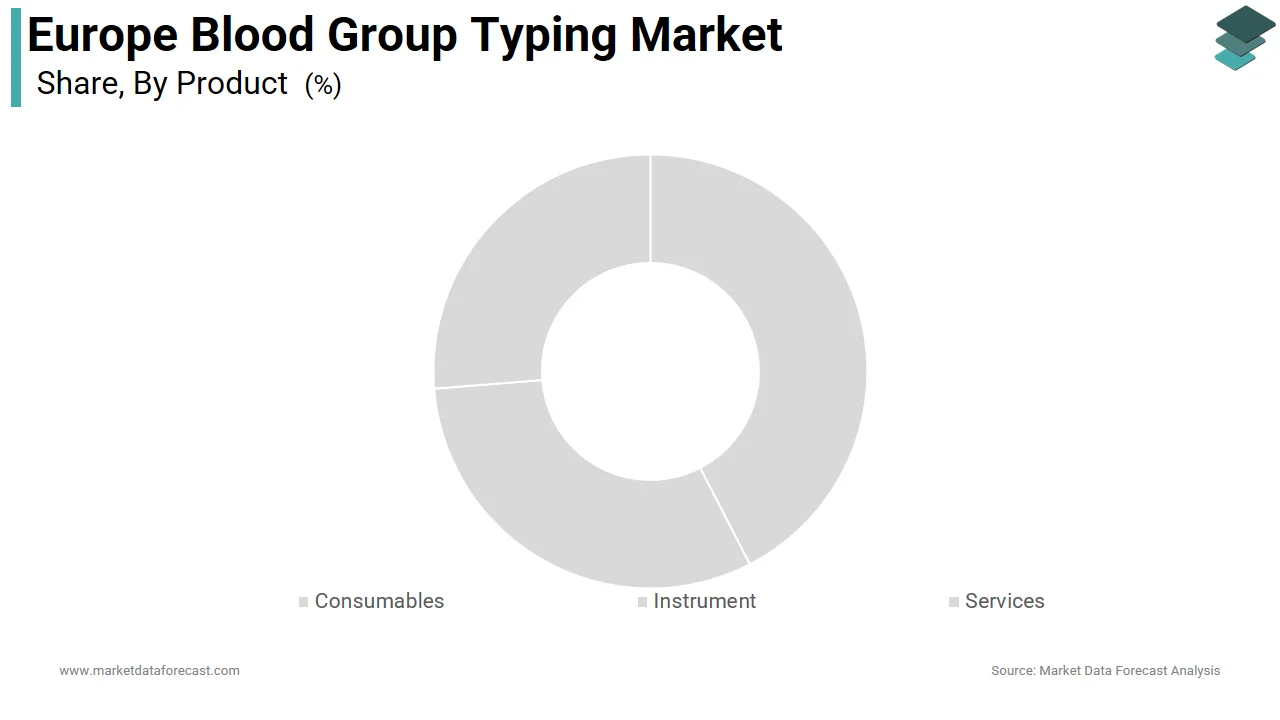
The consumables segment dominated the market by holding the highest share of the European blood group typing market in 2025. The dominance of the consumables segment in the European market is driven by the recurrent and high-volume nature of reagent usage in daily transfusion medicine operations. This dominance is primarily fueled by the sheer number of blood units processed annually across European hospitals and blood banks, each requiring multiple reagents for ABO grouping, Rh typing, and antibody screening. According to the Council of Europe, millions of blood components are collected and tested within the region each year, creating continuous demand for antisera, red blood cell panels, and anti-human globulin reagents. Unlike instruments, which represent a one-time capital expenditure, consumables must be replenished constantly, ensuring a steady revenue stream. The shift toward automated platforms has further entrenched this dominance as these systems often require proprietary reagents that lock users into specific supply chains. Furthermore, the increasing complexity of patient populations with multiple alloantibodies necessitates extended phenotyping panels, increasing reagent consumption per patient. Regulatory mandates for double testing and rigorous quality control procedures also amplify usage.
The instruments segment is projected to grow at a CAGR of 9.2% over the forecast period, owing to the modernization of blood banking facilities across Europe, where legacy manual methods are being replaced by fully automated high-throughput systems to enhance safety and efficiency. The key driver is the urgent need to minimize human error and standardize results, prompting national health services to invest heavily in robotic platforms capable of processing thousands of samples daily with minimal intervention. According to the European Directorate for the Quality of Medicines and HealthCare, the push for traceability and data integrity has made automated instruments essential, as they integrate with laboratory information systems to prevent sample misidentification. The rising prevalence of complex cases requiring molecular genotyping has also spurred demand for specialized instruments capable of performing polymerase chain reaction and next-generation sequencing assays.
By Test Type Insights
The ABO and Rh typing segment led the market by accounting for the leading share of the European blood group typing market in 2025. The leading position of ABO and Rh typing segment in this regional market is attributed to its status as the mandatory first step in every blood donation and pre-transfusion workflow. This dominance is underpinned by the biological necessity of matching ABO and RhD antigens to prevent immediate and potentially fatal hemolytic transfusion reactions. According to the European Centre for Disease Prevention and Control, every unit of blood collected in the European Union must undergo ABO and RhD determination before clinical use, creating universal demand for these tests. The sheer volume of routine screenings performed on donors and patients annually ensures this segment generates the highest test volumes compared to specialized assays. Regulatory guidelines strictly prohibit the release of blood products without confirmed ABO and Rh status, making this test type the cornerstone of transfusion safety protocols.
The antigen typing segment is emerging as the fastest growing test type in the Europe blood group typing market and is likely to register a CAGR of 10.5% over the forecast period. The paradigm shift toward extended phenotype matching for chronically transfused patients and the recognition that preventing alloimmunization requires matching not just ABO and RhD but also minor antigens such as Kell, Duffy, and Kidd are propelling the growth of the antigen typing segment in the European market. According to the European Haematology Association, the growing population of patients with sickle cell disease and thalassemia who require lifelong transfusion support has created clinical demand for comprehensive antigen profiling. Traditional serological methods are increasingly being supplanted by molecular genotyping, which allows precise identification of dozens of antigens simultaneously. National blood services in countries such as the United Kingdom and France are implementing proactive genotyping programs for donor pools to create inventories of matched blood for high-risk patients.
By End User Insights
The blood banks segment occupied the major share of the European blood group typing market in 2025. Blood banks are central hubs for the collection, testing, and distribution of blood products across the continent. This dominance stems from their statutory responsibility to ensure the safety and compatibility of the entire blood supply before it reaches hospital patients. According to the Council of Europe, national blood services operate centralized facilities that process donations, utilizing high-volume automated typing systems to screen units annually. These institutions are mandated by law to perform extensive testing, including infectious disease screening and full blood group characterization, making them the primary consumers of both reagents and instruments. The consolidation of blood banking services into large regional centers has further amplified their purchasing power and consumption levels, as these facilities handle the workload of numerous surrounding hospitals. Blood banks also lead the adoption of advanced molecular typing technologies to build diverse donor databases capable of supporting patients with rare blood types or complex antibody profiles. Their role in maintaining national stockpiles and managing emergency responses requires robust and redundant typing capabilities that drive continuous investment in state-of-the-art infrastructure.
The clinical laboratories segment is anticipated to register a CAGR of 8.08% over the forecast period in this regional market. The trend toward decentralization, the expansion of reference testing capabilities, and the increasing outsourcing of complex immunohematology investigations by smaller hospitals that lack the expertise or equipment to resolve difficult cases involving multiple alloantibodies are contributing to the expansion of the clinical laboratories segment in the European market. According to the European Federation of Clinical Chemistry and Laboratory Medicine, there is a growing network of specialized reference laboratories equipped with advanced molecular genotyping platforms that serve as regional hubs for intricate blood group analysis. These laboratories are increasingly handling pre-transfusion testing for surgical centers and oncology clinics that require rapid turnaround times and high-level precision. The rise of personalized medicine initiatives has also encouraged clinical labs to offer extended phenotype profiling as a routine service, expanding their test menus beyond the traditional scope. Furthermore, the integration of laboratory networks allows for the sharing of resources and data, enabling smaller entities to access sophisticated typing services without owning expensive instrumentation. As the complexity of patient care increases and the demand for precise matching grows, clinical laboratories are becoming indispensable partners in the transfusion chain.
COUNTRY-LEVEL ANALYSIS
Germany Blood Group Typing Market Analysis
Germany dominated the blood group typing market in Europe with 24.4% of the regional market share in 2025. The dominance of Germany in the European market is driven by its robust healthcare infrastructure and pioneering role in adopting advanced diagnostic technologies. The country's position is reinforced by a highly organized blood service system comprising the German Red Cross and university hospitals that prioritize safety and efficiency through automation. According to the Paul Ehrlich Institute, Germany maintains one of the highest rates of blood donation per capita in Europe, necessitating a vast network of typing facilities equipped with state-of-the-art instruments and reagents. The strong manufacturing base for medical diagnostics facilitates early access to cutting-edge typing solutions and fosters collaboration between industry and academia. Stringent regulatory oversight by federal authorities ensures that all blood products undergo rigorous testing, driving consistent demand for high-quality consumables. The country’s focus on molecular genotyping for donor characterization has set a benchmark for the rest of the continent. Furthermore, substantial government funding for research into transfusion medicine supports the development of novel typing methods and the training of specialized personnel.
France Blood Group Typing Market Analysis
France held a promising share of the European blood group typing market in 2025. The uniquely centralized national blood service model that enforces uniform safety standards across the nation is driving the French market growth. The French market status is characterized by the dominance of the Établissement Français du Sang, which manages all blood collection and testing activities, allowing for streamlined procurement and rapid deployment of new typing technologies. According to the French National Authority for Health, the country has implemented mandatory extended phenotyping for specific patient groups, boosting the consumption of advanced reagents and molecular testing kits. The French commitment to blood safety is reflected in their early adoption of automated platforms that minimize human error and ensure traceability. The high prevalence of genetic hemoglobin disorders in certain regions has further accelerated the uptake of genotyping services. Government investments in modernizing laboratory infrastructure have enabled the transition from manual to fully digital workflows.
United Kingdom Blood Group Typing Market Analysis
The United Kingdom is predicted to showcase a healthy CAGR in the European blood group typing market over the forecast period, owing to its aggressive integration of genomic technologies into routine blood banking practices. The market status in the UK is defined by the strategic initiatives of NHS Blood and Transplant to create a comprehensive donor genotyping database that facilitates precision matching for patients with complex needs. According to the UK Department of Health and Social Care, the nation has been at the forefront of implementing high-throughput DNA typing to address challenges posed by an increasingly diverse population and rising incidence of alloimmunization. The decentralized yet coordinated nature of the NHS allows for rapid scaling of successful pilot programs across England, Scotland, Wales, and Northern Ireland. British research institutions collaborate with industry partners to develop next-generation sequencing assays tailored for blood group antigens. The post-Brexit regulatory environment has prompted a review of diagnostic standards, potentially accelerating approval of novel typing reagents and instruments.
Italy Blood Group Typing Market Analysis
Italy is estimated to account for a notable share of the European blood group typing market over the forecast period due to efforts to harmonize testing standards across diverse regional health systems and the presence of the National Blood Center, which coordinates activities among autonomous regions to ensure consistent quality and safety. According to the Italian National Institute of Health, the country faces demographic challenges, including an aging population and varying prevalence of hemoglobinopathies, necessitating adaptable typing solutions. Italian blood services are increasingly investing in automated systems to handle high volumes while reducing operational costs. The strong tradition of volunteer blood donation through organizations like AVIS provides a steady supply of samples for testing. Recent initiatives to expand molecular typing capabilities for thalassemia patients have driven growth in the genotyping segment.
Spain Blood Group Typing Market Analysis
Spain is estimated to hold a noteworthy share of the European blood group typing market during the forecast period due to the modernization of its blood bank network, active participation in international research consortia, and a concerted effort by the Ministry of Health to update laboratory equipment and adopt standardized protocols for blood group typing across autonomous communities. According to the Spanish Society of Hematology and Hemotherapy, the country has seen increased adoption of gel card technology and automated analyzers to improve sensitivity and reproducibility. The rising awareness of extended matching for chronically transfused patients has spurred demand for advanced antigen profiling services. Spain’s strategic location and strong ties with Latin America foster collaborations that bring innovative typing methodologies to Europe. Investment in biotechnology parks has encouraged local startups to develop novel reagents and software solutions.
COMPETITIVE LANDSCAPE
The competition in the Europe blood group typing market is intense and characterized by a few dominant global corporations competing on technology reliability and service quality. Major players leverage their extensive portfolios of instruments and reagents to secure long term contracts with national blood services and large hospital networks. The landscape sees rivalry based on the ability to offer fully integrated automation solutions that minimize human intervention and maximize safety standards. Smaller niche manufacturers often focus on specific molecular assays or rare antigen detection to differentiate themselves from larger competitors. Price competition exists but is secondary to factors like regulatory compliance and technical support, which are critical for public health procurement. High barriers to entry due to strict certification requirements limit the threat of new entrants. Collaborative efforts between manufacturers and healthcare providers drive continuous improvement in testing protocols. This dynamic environment fosters a culture of innovation where companies strive to deliver superior value to protect patient lives across the continent.
KEY MARKET PLAYERS
The leading companies operating in the Europe blood group typing market include:
- Bio-Rad Laboratories, Inc.
- Grifols, S.A.
- Immucor Inc.
- Ortho Clinical Diagnostics, Inc.
- Quotient, Ltd.
- Novacyt Group
- BAG Healthcare GmbH
- Rapid Labs
- Day Medical SA
- DIAGAST
- AXO Science
TOP PLAYERS IN THE MARKET
- Ortho Clinical Diagnostics stands as a pivotal leader in the Europe blood group typing market by delivering advanced automated platforms and comprehensive reagent portfolios. The company contributes significantly to the global market through its innovative immunohematology solutions that enhance transfusion safety and efficiency. Recent actions include the expansion of its fully automated testing systems across European hospitals to streamline high-volume workflows and reduce manual errors. Ortho actively collaborates with national blood services to implement molecular genotyping technologies that address complex matching needs for chronically transfused patients. The firm invests heavily in research to develop novel reagents capable of detecting rare antigens with superior precision. By focusing on digital integration and data connectivity, Ortho strengthens its position as a trusted partner for modernizing blood banking infrastructure throughout the continent and beyond.
- Bio Rad Laboratories plays a crucial role in the Europe blood group typing market by offering robust gel card technology and automated instruments widely adopted for their reliability and ease of use. The company leverages its global expertise to provide standardized solutions that ensure consistent results across diverse laboratory settings. Recent initiatives involve the launch of next-generation analyzers designed to handle increased sample throughput while maintaining strict quality control standards. Bio Rad has expanded its manufacturing capabilities in Europe to ensure steady supply chains for critical typing reagents during periods of high demand. The firm prioritizes education and training programs for laboratory staff to maximize the utility of its advanced platforms. Strategic partnerships with reference laboratories drive the adoption of extended phenotyping protocols. Through continuous innovation and a commitment to safety, Bio Rad solidifies its reputation as a forward-thinking provider essential to the European transfusion medicine landscape.
- Grifols S.A. maintains a significant presence in the Europe blood group typing market by integrating diagnostic solutions with its extensive plasma-derived therapy operations. The company contributes to the global market by supplying high-quality antisera and automated systems that support safe blood collection and processing. Recent actions include the deployment of state of the art molecular typing platforms in major European blood centers to facilitate precise donor-recipient matching. Grifols actively engages in public-private partnerships to strengthen national blood security and preparedness for emerging health challenges. The firm focuses on developing sustainable manufacturing processes for its diagnostic reagents to meet environmental goals. Investment in artificial intelligence-driven software enhances the interpretation of complex typing results and optimizes inventory management. By combining diagnostic excellence with therapeutic expertise, Grifols reinforces its status as a key enabler of safe and efficient blood transfusion practices across Europe.
TOP STRATEGIES USED BY KEY MARKET PARTICIPANTS
Key players in the Europe blood group typing market primarily focus on product innovation to develop automated systems that enhance accuracy and throughput. Companies frequently pursue strategic acquisitions of specialized biotechnology firms to gain access to proprietary molecular typing technologies. Investment in digital health solutions allows firms to integrate typing data with electronic health records for better traceability. Expanding distribution networks ensures a reliable supply of critical reagents to remote and urban laboratories alike. Collaborations with academic institutions drive research into new antigen discoveries and improved testing methodologies. Firms also prioritize regulatory compliance to navigate complex European standards effectively. These strategies collectively enable market participants to maintain competitive advantages and address evolving clinical needs.
MARKET SEGMENTATION
This research report on the Europe Blood Group Typing Market has been segmented and sub-segmented into the following categories.
By Product
- Consumables
- Antisera Reagents
- Red Blood Cell Reagents
- Anti-Human Globulin Reagents
- Blood Bank Saline
- Instrument
- Services.
By Test Type
- ABO
- Antigen
- Antibody Screening
- Cross Matching
- HLA
By Technique
- Assay
- PCR
- Microarray
- Massively Parallel Sequencing
By End User
- Hospitals
- Clinical Laboratories
- Blood Banks
By Country
- UK
- France
- Spain
- Germany
- Italy
- Russia
- Sweden
- Denmark
- Switzerland
- Netherlands
- Turkey
- Czech Republic
- Rest of Europe