- Product Description Description
- Table of Contents TOC
- List of Table & Figure LOT
- Get Free Sample PDF Sample PDF
Market Size, 2025
$310.25 MnMarket Estimate, 2026
$326.29 MnMarket Forecast, 2034
$488 MnCAGR, 2026–2034
5.17%Europe Blood Pressure Transducers Market Report Summary
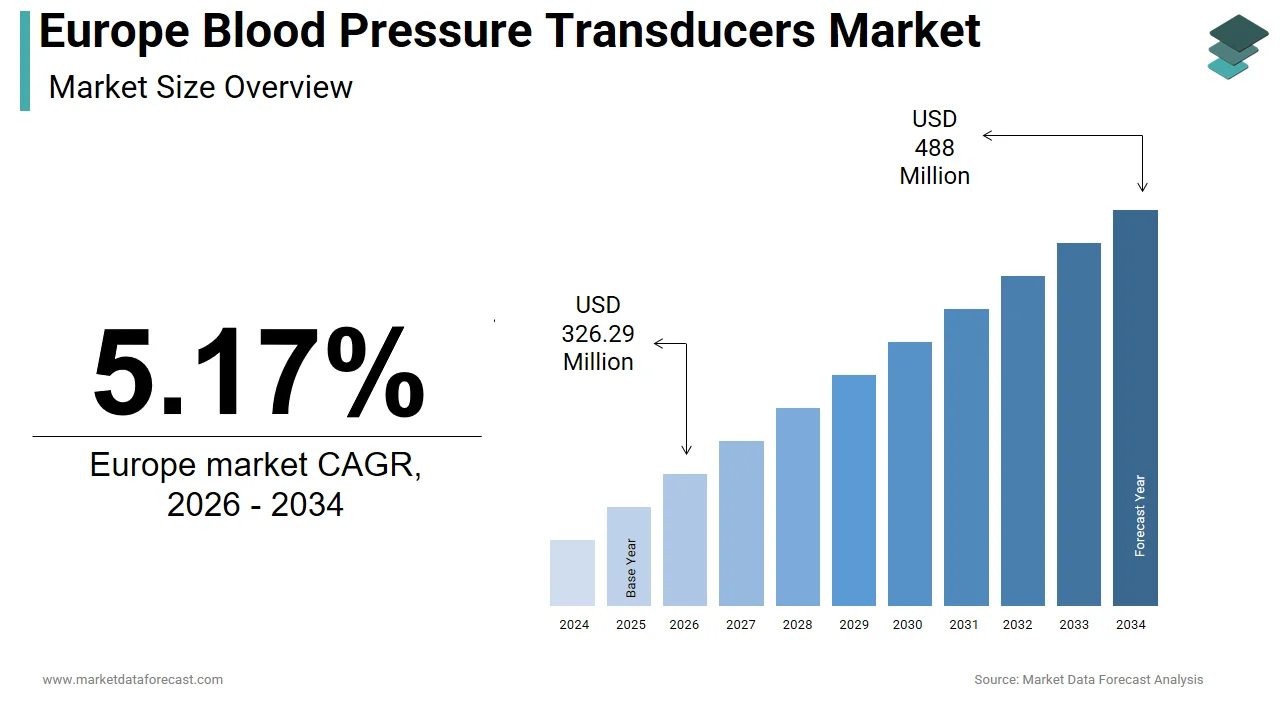
The Europe blood pressure transducers market was valued at USD 310.25 million in 2025, is estimated to reach USD 326.29 million in 2026, and is projected to reach USD 488 million by 2034, growing at a CAGR of 5.17% from 2026 to 2034. Market growth is driven by the rising prevalence of cardiovascular diseases, increasing demand for continuous hemodynamic monitoring in critical care, and expanding adoption of advanced patient monitoring systems in hospitals. Blood pressure transducers are essential components in invasive blood pressure monitoring, providing real-time measurement accuracy during surgeries and intensive care procedures. Growing investments in hospital infrastructure, increasing surgical volumes, and heightened focus on patient safety and infection control are further supporting market expansion across Europe.
Key Market Trends
- Rising demand for advanced hemodynamic monitoring systems in intensive care units.
- Increasing adoption of digital blood pressure transducer technologies for improved accuracy and connectivity.
- Growing preference for single-use disposable transducers to minimize infection risks.
- Expansion of real-time patient monitoring and integrated hospital monitoring platforms.
- Strengthening focus on infection control protocols and patient safety standards.
Segmental Insights
- Based on technology, the digital blood pressure transducers segment held the largest share of the Europe blood pressure transducers market in 2025, driven by improved measurement accuracy, seamless integration with monitoring systems, and enhanced data transmission capabilities.
- Based on type, the disposable blood pressure transducers segment accounted for a significant share in 2025, supported by increasing demand for infection-control solutions and single-use medical devices in hospital settings.
- Based on end use, the hospitals segment dominated the market by accounting for 88% share in 2025, driven by high surgical volumes, widespread adoption of invasive monitoring procedures, and the presence of advanced critical care facilities.
Regional Insights
The Europe blood pressure transducers market is witnessing steady growth across major economies, supported by well-established healthcare systems, increasing cardiovascular disease burden, and continuous investments in medical technology.
- Germany led the regional market in 2025 with 24% share, driven by advanced hospital infrastructure and strong adoption of modern patient monitoring systems.
- France accounted for 19% share in 2025, supported by centralized procurement through regional hospital groups and a strong emphasis on infection control practices.
- The United Kingdom ranked third with 16% share, supported by its advanced clinical research ecosystem and flexibility to pilot innovative monitoring technologies.
Competitive Landscape
The Europe blood pressure transducers market is characterized by the presence of established medical device manufacturers and healthcare technology companies focusing on advanced patient monitoring solutions. Market participants are emphasizing product innovation, improved sensor accuracy, and integration with digital health platforms. Strategic collaborations with hospitals and the expansion of disposable monitoring products are shaping competitive dynamics across the region.
Prominent companies operating in the Europe blood pressure transducers market include Edwards Lifesciences Corporation, Philips Healthcare, Medtronic plc, Smiths Medical, Inc., GE Healthcare, B. Braun SE, and ICU Medical, Inc.
Europe Blood Pressure Transducers Market Size
The Europe blood pressure transducers market was valued at USD 310.25 million in 2025, is estimated to reach USD 326.29 million in 2026, and is projected to reach USD 488 million by 2034, growing at a CAGR of 5.17% from 2026 to 2034.
The blood pressure transducers are calibrated medical sensors that convert arterial pressure into electrical signals for continuous monitoring in clinical and critical care settings. These devices are integral components of invasive hemodynamic monitoring systems used during surgery, intensive care, and emergency interventions where real-time arterial waveform analysis is essential. The market operates under the EU Medical Device Regulation 2017/745, which mandates stringent clinical evidence, risk management, and post-market surveillance for Class IIb and III devices. According to the European Society of Cardiology, over 8.2 million major surgical procedures requiring invasive blood pressure monitoring were performed in the EU in 2025. The European Commission’s Health Emergency Preparedness and Response Authority maintains strategic stockpiles of critical care equipment, including transducer kits, recognizing their role in pandemic and disaster response.
MARKET DRIVERS
Rising Prevalence of Cardiovascular Diseases Drives Clinical Monitoring Demand
The escalating burden of hypertension and cardiovascular disorders for invasive blood pressure monitoring in acute care settings is propelling the growth of Europe blood pressure transducers market. According to the European Heart Network, over 120 million adults in the EU suffer from hypertension, with 45% unaware of their condition until a critical event occurs. This silent epidemic translates into high volumes of emergency admissions, cardiac surgeries, and intensive care interventions where continuous arterial pressure monitoring is non-negotiable. The European Society of Cardiology reports that 2.1 million coronary artery bypass grafts and valve replacements were performed in 2025, each requiring at least one transducer set per patient. Furthermore, sepsis, which is a leading cause of ICU admission, affected 480000 patients in the EU in 2025, as per the European Centre for Disease Prevention and Control, necessitating invasive hemodynamic monitoring for early goal-directed therapy. These clinical imperatives ensure consistent procedural demand regardless of economic cycles, anchoring the transducer market to Europe’s public health realities.
Expansion of Minimally Invasive and Robotic Surgical Procedures Increases Monitoring Complexity
The rapid adoption of minimally invasive and robotic surgeries elevates the need for precise intraoperative hemodynamic monitoring due to reduced physiological tolerance and limited surgical access, which is accelerating the growth of Europe blood pressure transducers market. According to the European Association of Endoscopic Surgery, laparoscopic and robotic procedures grew by 14% annually between 2022 and 2025, reaching 5.8 million operations in 2025. These techniques often involve pneumoperitoneum and steep Trendelenburg positioning, which significantly alter venous return and arterial pressure, requiring real-time transducer feedback to avoid hypotensive episodes. In robotic prostatectomies, for instance, mean arterial pressure must be maintained above 65 mmHg to preserve renal perfusion during prolonged procedures. The European Board of Urology confirms that 92% of robotic centers now mandate invasive arterial lines for all cases exceeding 90 minutes. This procedural evolution transforms transducers from optional tools into standard safety requirements, expanding their use beyond traditional open surgeries into high-volume specialty domains.
MARKET RESTRAINTS
Stringent EU Medical Device Regulation Increases Compliance Costs and Time to Market
The implementation of the EU Medical Device Regulation 2017/745 has significantly elevated the regulatory burden for blood pressure transducer manufacturers, delaying product approvals and inflating development costs. This factor is significantly hampering the growth of Europe blood pressure transducers market. Under the new framework, transducers classified as Class IIb or III require comprehensive clinical evaluation reports, post-market surveillance plans, and oversight by notified bodies with limited capacity. According to the European Commission, the average certification timeline increased from 9 to 18 months between 2021 and 2025, with associated costs rising by 35 to 50%. Smaller innovators face particular challenges; the European Coordination Committee of the Radiological Electromedical and Healthcare IT Industry notes that 28% of SMEs abandoned CE marking attempts in 2024 due to resource constraints. Additionally, the requirement for Unique Device Identification and EUDAMED database registration adds operational complexity. These barriers stifle innovation and reduce competitive diversity, potentially limiting clinician choice and increasing procurement costs for hospitals.
Supply Chain Fragmentation and Single Source Dependencies Risk Clinical Continuity
The acute vulnerability due to concentrated manufacturing and reliance on single-source suppliers for critical components like piezoresistive sensors and sterile fluid pathways is also degrading the growth of the Europe blood pressure transducers market. Over 70% of transducers used in the EU are produced in just three countries, where Germany, Ireland, and the Netherlands are key microelectromechanical systems sourced from specialized Asian foundries. According to the European Medicines Agency, the 2024 semiconductor shortage caused lead times for sensor chips to extend from 8 to 26 weeks by forcing hospitals to ration transducer use in procedures. The European Hospital Association reports that 42% of member institutions experienced stockouts in 2024, compromising patient safety during emergencies.
MARKET OPPORTUNITIES
Integration with Digital Health Platforms Enables Predictive Hemodynamic Analytics
The emergence of blood pressure transducers with hospital digital ecosystems creates opportunities for advanced analytics and early warning systems, whichares majorly creating new opportunities for the growth of Europe blood pressure transducers market. Modern transducers now feed real-time waveform data into electronic health records and AI-driven platforms like Philips’ IntelliBridge or GE’s CARESCAPE, enabling predictive algorithms for hypotension or sepsis onset. According to the European Institute for Health Records, 68% of tertiary hospitals in the EU have implemented integrated monitoring networks as of 2025. The European Society of Intensive Care Medicine endorses these systems for reducing adverse events by 22% through early intervention. Companies like Edwards Lifesciences have developed closed-loop modules that auto-adjust vasopressor infusion based on transducer inputs, minimizing human error. As the EU’s Digital Health Action Plan promotes interoperability via FHIR standards, transducers evolve from passive sensors to active decision support nodes, unlocking value beyond basic measurement.
Development of Reusable and Sustainable Transducer Systems Aligns with Green Hospital Initiatives
The shift toward environmental sustainability in European healthcare to redesign transducers for reuse or recyclability without compromising sterility is also creating new opportunities for the growth of Europe blood pressure transducers market. According to Health Care Without Harm Europe, hospitals generate 1.5 million tons of single-use device waste annually, with transducer kits contributing significantly. In response, companies like B. Braun and Pulsion Medical Systems are developing sterilizable transducer housings paired with disposable diaphragms by reducing plastic waste by up to 70%. The German Federal Environment Agency now includes reusable medical devices in its public procurement criteria, incentivizing adoption. Similarly, Sweden’s National Board of Health and Welfare mandates life cycle assessments for all care equipment. These initiatives align with the EU Green Deal’s circular economy action plan by transforming sustainability from a cost center into a competitive differentiator. As hospitals face carbon reporting requirements under the Corporate Sustainability Reporting Directive, eco-friendly transducers gain strategic relevance beyond clinical performance.
MARKET CHALLENGES
Technological Obsolescence Due to Rapid Digital Integration Pressures Legacy Systems
The accelerated digitization of European hospitals renders older analog transducer systems incompatible with modern monitoring infrastructures, creating costly upgrade pressures. The rapid digital integration is set to pose a challenge for the growth of Europe blood pressure transducers market. Many legacy devices lack digital outputs, Bluetooth connectivity, or cybersecurity features required by new hospital networks. However, budget constraints delay these transitions, where the European Observatory on Health Systems reports that 38% of public hospitals in Southern Europe still use decade-old transducers due to funding gaps. This technological fragmentation forces clinicians to manage mixed fleets, increasing training burdens and error risks. Without coordinated public investment or leasing models, the gap between cutting-edge and outdated systems will widen, undermining the reliability of hemodynamic data across Europe’s diverse healthcare landscape.
Lack of Standardized Calibration Protocols Compromises Interoperability and Data Accuracy
The absence of harmonized calibration standards across healthcare systems introduces variability in blood pressure measurements, risking clinical misinterpretation. This factor is also significantly hampering the growth of Europe blood pressure transducers market. While ISO 80601-2-34 governs transducer performance, actual calibration practices differ by hospital, manufacturer, and even individual clinician. According to the European Society of Anaesthesiology, 28% of transducers in routine use deviate by more than 5 mmHg from reference standards due to improper zeroing or drift. This inconsistency is exacerbated by the proliferation of proprietary connectors and signal processing algorithms that prevent cross-brand compatibility. The European Committee for Standardization has initiated work on a unified calibration protocol, but implementation remains years away. Until then, data from different transducers cannot be reliably compared across departments or institutions, hindering multicenter research and telemedicine applications. This technical fragmentation undermines the very precision that invasive monitoring promises, posing a latent risk to patient safety in an increasingly integrated care environment.
REPORT COVERAGE
| REPORT METRIC | DETAILS |
| Market Size Available | 2025 to 2034 |
| Base Year | 2025 |
| Forecast Period | 2026 to 2034 |
| Segments Covered | By Technology, Type, End-use, and Country. |
| Various Analyses Covered | Global, Regional, and Country-Level Analysis, Segment-Level Analysis, Drivers, Restraints, Opportunities, Challenges; PESTLE Analysis; Porter’s Five Forces Analysis, Competitive Landscape, Analyst Overview of Investment Opportunities |
| Countries Covered | UK, France, Spain, Germany, Italy, Russia, Sweden, Denmark, Switzerland, Netherlands, Turkey, Czech Republic, and the Rest of Europe. |
| Market Leaders Profiled | Edwards Lifesciences Corporation, Philips Healthcare, Medtronic plc, Smiths Medical, Inc., GE Healthcare, B. Braun SE, and ICU Medical, Inc. |
SEGMENTAL ANALYSIS
By Technology Insights
The digital blood pressure transducers segment was the largest by holding a prominent share of the Europe blood pressure transducers market in 2025, with their superior accuracy, real-time data output, and seamless integration with hospital monitoring systems. Unlike analog predecessors, digital transducers convert arterial pressure directly into electrical signals using piezoresistive or capacitive microelectromechanical systems, enabling beat-to-beat waveform analysis essential for critical care. According to the European Society of Intensive Care Medicine, many tertiary hospitals in the EU now mandate digital transducers for all invasive hemodynamic monitoring due to their compatibility with electronic health records and early warning algorithms. The European Commission’s Digital Health Action Plan further accelerates adoption by promoting interoperability standards like FHIR that require digital signal inputs. Major manufacturers, including Edwards Lifesciences and Philips, have phased out analog models entirely, focusing R&D on digital platforms with cybersecurity features compliant with IEC 80001. This technological lock-in ensures digital transducers remain the clinical gold standard across operating rooms, ICUs, and emergency departments.
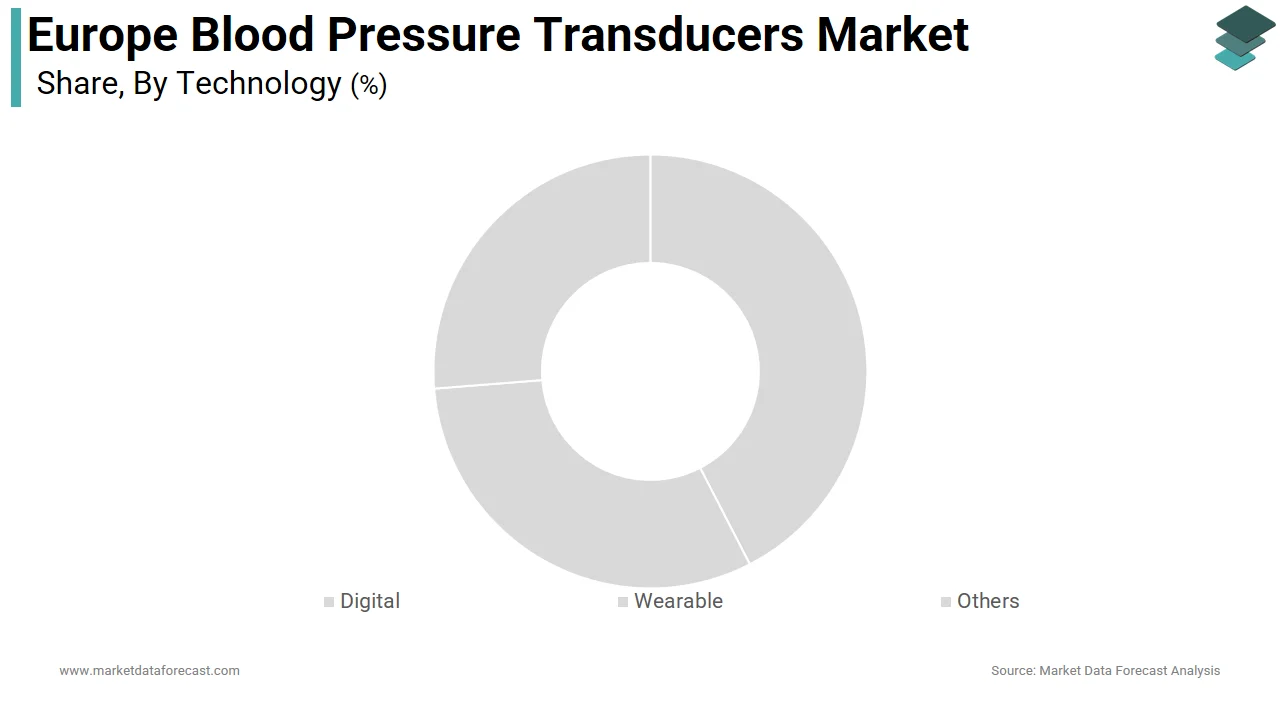
The wearable transducers segment is expected to witness the fastest CAGR of 16.3% throughout the forecast period. The European Commission’s Digital Health Action Plan explicitly promotes continuous physiological monitoring for chronic conditions by creating a policy tailwind for wearable transducer development. Companies like Biosense and Aktiia have developed cuffless optical and ECG-based wearables that estimate arterial pressure trends, though not yet for diagnostic use. The European Medicines Agency’s 2024 guidance on Software as a Medical Device provides a clearer pathway for Class IIa certification by reducing time to market. In Germany, statutory health insurers began covering wearable monitoring for high-risk cardiac patients in 2024, creating a stable reimbursement channel. While not yet replacing invasive transducers, these devices enable longitudinal data collection that informs clinical decisions between hospital visits, positioning wearables as a complementary tool in integrated care models. Europe’s aging population and rising prevalence of cardiovascular diseases create structural demand for continuous blood pressure tracking outside hospitals. Wearable transducers address this gap by providing 24/7 trend data without user intervention. A 2025 study by the Karolinska Institute demonstrated that wearable-derived pressure variability metrics predicted heart failure decompensation 72 hours before symptoms, enabling preemptive intervention.
By Type Insights
The disposable blood pressure transducers segment accounted for a significant share of the Europe blood pressure transducers market in 2024, driven by stringent infection prevention protocols and operational efficiency in high-volume clinical settings. The European Centre for Disease Prevention and Control mandates single-use for all invasive monitoring components contacting blood or bodily fluids to prevent cross-contamination. According to the European Hospital Association, 89% of EU hospitals adopted disposable transducers exclusively after 2020 to comply with updated hygiene standards and reduce sterilization labor costs. These units arrive pre-calibrated and sterile, eliminating the need for cleaning validation and recalibration between patients. In high turnover environments like emergency departments and operating rooms, disposables save an average of 12 minutes per patient as reported by the German Society of Anesthesiology. Major suppliers like B. Braun and ICU Medical offer cost-effective bulk packaging that aligns with just-in-time inventory systems. This combination of safety, speed, and simplicity ensures disposables remain the default choice despite environmental concerns.
By End-Use Insights
Hospitals account for 88% of the Europe blood pressure transducers market in 2025, serving as the primary site for invasive hemodynamic monitoring during surgery, intensive care, and emergency interventions. According to the European Society of Cardiology, over 8.2 million major surgical procedures requiring arterial lines were performed in EU hospitals in 2025. The European Centre for Disease Prevention and Control confirms that 480000 sepsis cases annually necessitate continuous pressure monitoring for early goal-directed therapy. Tertiary hospitals alone maintain inventories of 500 to 1000 transducer sets to support multiple operating rooms and ICU beds. The EU Medical Device Regulation mandates strict traceability and performance validation for all devices used in these settings, favoring established brands with proven clinical evidence. This institutional dominance ensures hospitals remain the anchor of demand regardless of outpatient trends, as life-threatening conditions still require inpatient management with gold standard monitoring.
COUNTRY-LEVEL ANALYSIS
Germany Blood Pressure Transducers Market Analysis
Germany holds the largest share of the Europe blood pressure transducers market at 24% in 2025, anchored by its world-class hospital infrastructure, engineering prowess, and high procedural volumes. The country performs over 1.2 million cardiac surgeries annually, according to the German Heart Foundation, each requiring multiple transducer sets. Leading manufacturers like B. Braun and Pulsion Medical Systems are headquartered in Germany, driving innovation in both disposable and reusable systems. The Federal Joint Committee mandates invasive monitoring for all high-risk surgeries, ensuring consistent clinical demand. Germany’s early adoption of the EU Medical Device Regulation has also made it a testing ground for next-generation digital transducers with cybersecurity features. This blend of clinical necessity, industrial capability, and regulatory leadership sustains Germany’s dominance in both volume and technological advancement.
France Blood Pressure Transducers Market Analysis
France commands 19% market share, characterized by centralized purchasing through regional hospital groups and a strong emphasis on infection control. The National Authority for Health mandates single-use transducers for all invasive procedures, creating uniform demand across 3000 public hospitals. According to the French Ministry of Health, over 950000 major surgeries requiring arterial lines were performed in 2025, with procurement managed through GIP eSanté frameworks that prioritize cost efficiency and traceability. French hospitals also lead in adopting digital integration, with 78% connected to the national DMP electronic health record system as per the Digital Health Agency. This standardized environment favors large suppliers with robust logistics and compliance capabilities, making France a high-volume yet price-sensitive market that shapes pan-European tender strategies.
United Kingdom Blood Pressure Transducers Market
The United Kingdom ranks third with 16% market share, benefiting from regulatory independence to pilot novel monitoring approaches outside EU constraints. The National Health Service performs over 850000 invasive monitoring procedures annually, with trusts like Guy’s and St Thomas’ leading in digital integration. The Medicines and Healthcare products Regulatory Agency permits faster approval of Software as a Medical Device applications, accelerating wearable transducer trials. NHS England’s Elective Recovery Plan prioritizes same-day discharge with remote monitoring, creating demand for hybrid home hospital solutions. Despite Brexit, UK standards remain aligned with international norms, ensuring continued access to global supply chains. This regulatory agility, combined with integrated care models, positions the UK as a laboratory for next-generation hemodynamic monitoring.
Italy Blood Pressure Transducers Market Analysis
Italy holds 12% market share, driven by high procedural volumes yet constrained by public budget limitations. According to ISTAT, Italy performs over 780000 major surgeries annually, with strong demand for cardiac and vascular interventions. However, regional health agencies enforce strict price controls, favoring cost-effective disposables from global suppliers over premium domestic brands. The National Institute of Health mandates infection prevention protocols that require single-use transducers, yet delayed payments strain hospital liquidity. Despite these challenges, Italy’s aging population ensures sustained clinical need, with northern regions like Lombardy investing in digital ICU upgrades. This duality of high demand and fiscal pressure creates a competitive yet stable market that rewards operational efficiency and scale.
Netherlands Blood Pressure Transducers Market Analysis
The Netherlands secures 10% market share, distinguished by its advanced digital health infrastructure and integrated care pathways. All Dutch hospitals are connected to the national LSP health information exchange, enabling seamless transducer data flow into electronic records. According to the Dutch Health and Youth Care Inspectorate, 92% of ICUs use predictive analytics platforms that rely on real-time transducer inputs for early warning scores. The government’s Zorginstituut Nederland promotes value-based procurement, rewarding devices that reduce complications and readmissions. Academic Medical Centers in Amsterdam and Rotterdam lead in research on closed-loop hemodynamic management, partnering with Philips and Edwards Lifesciences on next-generation systems. This synergy of data connectivity, outcome focus, and academic collaboration makes the Netherlands a benchmark for intelligent monitoring in Europe.
COMPETITIVE LANDSCAPE
Competition in the Europe blood pressure transducers market is defined by technological sophistication, regulatory compliance, and integration capabilities rather than price alone. Global leaders like Edwards Lifesciences and Philips compete on clinical accuracy, data interoperability, and advanced analytics that transform transducers from passive sensors into active decision support tools. European manufacturers such as B. Braun emphasize infection control, sustainability, and public procurement alignment, serving cost-conscious yet quality-driven hospital systems. The market is further segmented by type, disposable versus reusable, with environmental regulations increasingly influencing purchasing decisions. Regulatory fragmentation under the EU Medical Device Regulation creates high barriers to entry, favoring established players with robust quality management systems. Innovation centers on digital connectivity, cybersecurity, and circular design rather than core sensing technology, which is largely mature. Success hinges on navigating the intersection of clinical necessity, regulatory rigor, and hospital digital transformation in Europe’s advanced but fragmented healthcare landscape.
KEY MARKET PLAYERS
The leading companies operating in the Europe blood pressure transducers market include:
- Edwards Lifesciences Corporation
- Philips Healthcare
- Medtronic plc
- Smiths Medical, Inc.
- GE Healthcare
- Braun SE
- ICU Medical, Inc.
TOP PLAYERS IN THE MARKET
- Edwards Lifesciences Corporation is a global leader in hemodynamic monitoring with a strong presence in the Europe blood pressure transducers market through its advanced digital transducer systems integrated into the HemoSphere platform. The company specializes in high-fidelity invasive monitoring for cardiac and critical care applications, serving major hospitals across Germany, France, and the UK. Edwards emphasizes clinical validation and interoperability, ensuring its transducers feed real-time waveform data into electronic health records via HL7 and FHIR standards. In 2025, it enhanced its transducer line with embedded cybersecurity features compliant with IEC 80001 to meet EU Medical Device Regulation requirements. The firm also expanded its closed-loop hemodynamic management algorithms that auto-adjust vasopressor dosing based on transducer inputs, reinforcing its position as a pioneer in intelligent critical care monitoring.
- Philips Healthcare is a Netherlands-headquartered medical technology giant offering integrated blood pressure transducers as part of its IntelliVue and CARESCAPE patient monitoring ecosystems. The company leverages its deep hospital IT infrastructure to embed transducer data into predictive analytics platforms that flag early signs of hypotension or sepsis. Philips focuses on seamless workflow integration, enabling automatic calibration, zeroing, and alarm management within its unified monitoring environment. In 2024, it launched a next-generation digital transducer with Bluetooth Low Energy capability for intraoperative mobility while maintaining signal integrity. The firm also achieved full compliance with the EU’s Unique Device Identification mandate ahead of schedule, enhancing traceability across European healthcare systems. These innovations solidify Philips’ role as an enabler of connected critical care in Europe’s digitizing hospitals.
- Braun SE is a Germany-based medical device manufacturer with a significant footprint in the Europe blood pressure transducers market through its comprehensive portfolio of both disposable and reusable systems. The company emphasizes infection control and sustainability, offering a hybrid transducer design featuring a sterilizable housing and single-use diaphragm that reduces plastic waste by 70%. B. Braun supplies transducers to over 2000 public hospitals across the EU under centralized procurement frameworks, prioritizing cost efficiency and regulatory compliance. In 2025, it introduced RFID-enabled reusable transducers that track usage cycles and automatically disable after maximum sterilization counts, ensuring safety adherence. By balancing clinical reliability, environmental responsibility, and public sector accessibility, B. Braun maintains strong trust among European healthcare institutions.
TOP STRATEGIES USED BY THE KEY MARKET PARTICIPANTS
Key players in the Europe blood pressure transducers market invest in digital integration to ensure compatibility with hospital electronic health records and predictive analytics platforms using standardized protocols like FHIR and HL7. They enhance cybersecurity features to comply with IEC 80001 and EU Medical Device Regulation requirements for connected devices. Companies develop hybrid reusable systems with disposable components to reduce environmental impact while maintaining sterility. Strategic focus on automated calibration, zeroing, and alarm management improves clinical workflow efficiency. Additionally, firms pursue early engagement with notified bodies to accelerate CE marking and implement Unique Device Identification systems for full traceability across the supply chain.
EUROPE BLOOD PRESSURE TRANSDUCERS MARKET NEWS
- In March 2024, Edwards Lifesciences Corporation enhanced its HemoSphere advanced monitoring platform with embedded cybersecurity features compliant with IEC 80001, ensuring secure data transmission from blood pressure transducers to hospital networks across Europe.
- In June 2024, Philips Healthcare launched a next-generation digital blood pressure transducer with Bluetooth Low Energy capability, enabling wireless intraoperative mobility while maintaining signal integrity for critical care procedures in German and Dutch hospitals.
- In September 2024, B. Braun SE introduced RFID-enabled reusable blood pressure transducers that automatically track sterilization cycles and disable after maximum usage, ensuring compliance with infection control protocols in public hospitals across France and Italy.
- In November 2024, Edwards Lifesciences Corporation expanded its closed-loop hemodynamic management algorithms to auto-adjust vasopressor infusion based on real-time transducer inputs, reducing human error in intensive care units throughout the United Kingdom and Sweden.
- In January 2025, Philips Healthcare achieved full compliance with the EU’s Unique Device Identification mandate for its entire transducer portfolio ahead of schedule, enhancing traceability and post market surveillance capabilities across all 27 member states.
MARKET SEGMENTATION
This research report on the Europe blood pressure transducers market has been segmented and sub-segmented into the following categories.
By Technology
- Digital
- Wearable
- Others
By Type
- Disposable
- Reusable
By End-Use
- Hospitals
- Ambulatory Surgical Centers & Clinics
- Homecare
By Country
- UK
- France
- Spain
- Germany
- Italy
- Russia
- Sweden
- Denmark
- Switzerland
- Netherlands
- Turkey
- Czech Republic
- Rest of Europe