- Product Description Description
- Table of Contents TOC
- List of Table & Figure LOT
- Get Free Sample PDF Sample PDF
Market Size, 2025
$1.34 BnMarket Estimate, 2026
$1.45 BnMarket Forecast, 2034
$2.75 BnCAGR, 2026–2034
8.32%Europe Blue Agave Market Report Summary
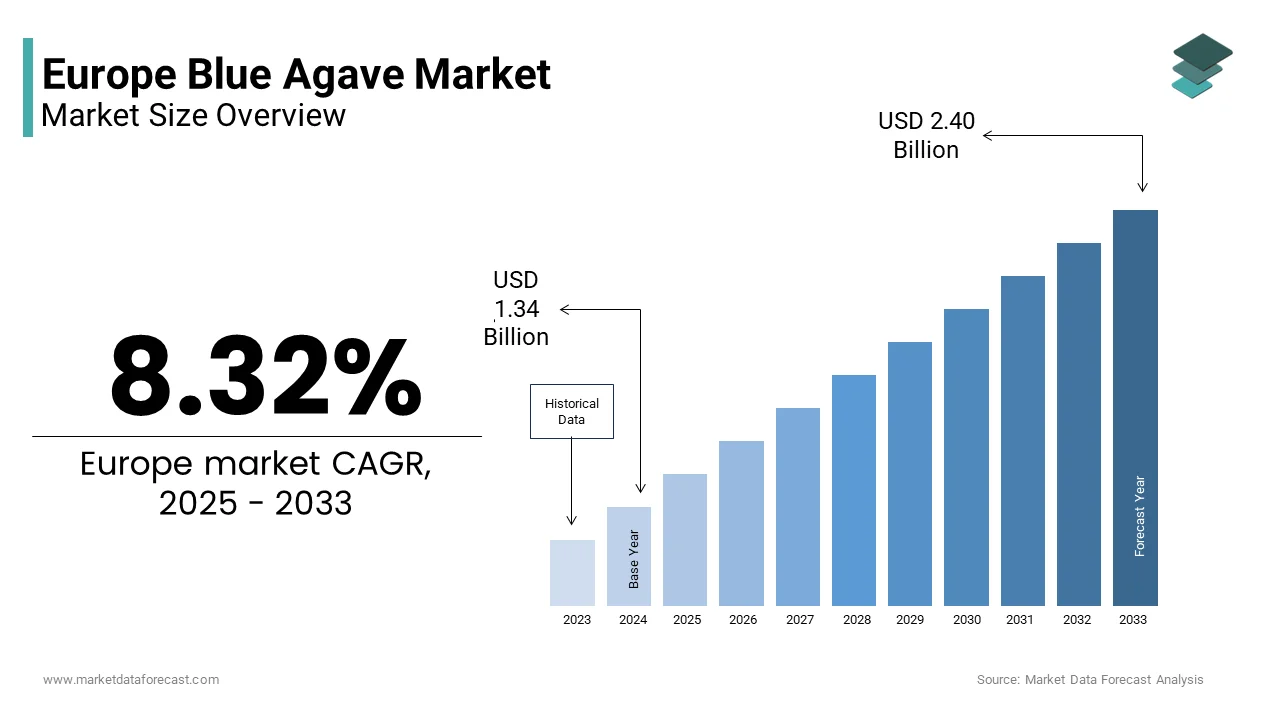
The Europe blue agave market was valued at USD 1.34 billion in 2025, is estimated to reach USD 1.45 billion in 2026, and is projected to reach USD 2.75 billion by 2034, growing at a CAGR of 8.32% during the forecast period from 2026 to 2034.
Market growth is primarily driven by rising consumer preference for natural, low-glycemic sweeteners, increasing adoption of plant-based and clean-label food products, and the expanding use of blue agave in premium alcoholic beverages and functional food formulations. Growing health consciousness, sugar-reduction initiatives, and demand for organic alternatives are further accelerating market expansion across Europe.
Key Market Trends
- Rapid adoption of agave syrup as a natural sugar substitute in beverages, bakery, and dairy alternatives.
- Growing demand for premium and organic blue agave products, driven by health-focused consumers.
- Expansion of private-label and clean-label sweeteners across European retail chains.
- Increasing use of blue agave in tequila-based spirits and craft alcoholic beverages.
- Strong growth of e-commerce and specialty health food retail channels.
Segmental Insights
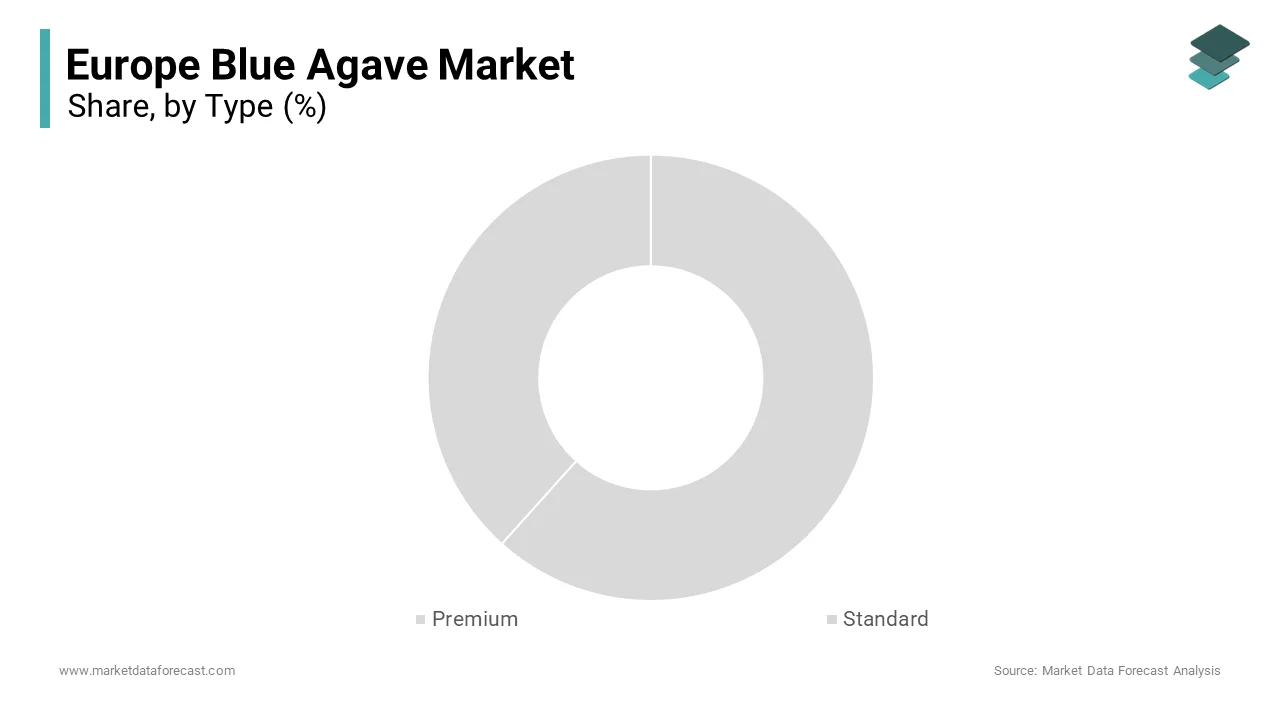
- By type, the premium blue agave segment dominated the Europe blue agave market in 2024, accounting for 68.3% of the total market share, supported by higher perceived health benefits, traceability, and superior taste profiles.
- By application, the sweeteners segment held 52.3% of the Europe blue agave market share in 2025, driven by the widespread use of agave syrup in beverages, bakery products, and plant-based food formulations.
- By distribution channel, supermarkets and hypermarkets led the market with a 57.3% share in 2025, owing to strong shelf visibility, private-label expansion, and rising demand for natural sweeteners among mass consumers.
Regional Insights
The Europe blue agave market shows strong momentum across key economies.
- Germany emerged as the largest market, holding 24.3% of the regional share in 2025, supported by high health awareness and robust demand for natural sweeteners.
- France ranked second with 19.2% market share, driven by organic food consumption and premium beverage demand.
- The United Kingdom market benefits from strong e-commerce penetration and dynamic private-label innovation. The Netherlands is gaining importance as a logistics and formulation hub.
- Spain is witnessing accelerated growth due to favorable climatic conditions and increasing consumer interest in natural sweeteners.
Competitive Landscape
The Europe blue agave market is moderately consolidated, with global beverage brands, sweetener specialists, and Mexican agave producers playing a significant role. Market participants are focusing on premium sourcing, sustainability certifications, clean-label positioning, and supply chain partnerships to strengthen their European footprint.
Prominent players in the Europe blue agave market include Diageo, Beam Suntory, Brown-Forman, Constellation Brands, Campari Group, Proximo Spirits, Wholesome Sweeteners Inc., DIPASA, Madhava Natural Sweeteners, Tequila Fortaleza, and Destilería Los Danzantes.
Europe Blue Agave Market Size
The Europe blue agave market size was valued at USD 1.34 billion in 2025 and is anticipated to reach a valuation of USD 1.45 billion in 2026 and USD 2.75 billion by 2034, growing at a CAGR of 8.32% during the forecast period from 2026 to 2034.
Introduction to the Europe Blue Agave Market
The blue agave products are derived from Agave tequilana Weber var. azul, predominantly in the form of syrup and inulin. Regulatory approval by the European Food Safety Authority in 2015 classified agave inulin as a novel food by enabling its use in functional foods and dietary supplements across the European Union. Consumer adoption has been driven by the search for low glycemic alternatives to sucrose in countries with high obesity prevalence. According to the European Commission’s Farm to Fork Strategy, 59% of EU adults were overweight as of 2022, creating sustained demand for sugar substitutes. This import dependency, coupled with evolving scientific and regulatory perspectives on fructose metabolism, defines the structural and strategic contours of the European blue agave market.
MARKET DRIVERS
Rising Consumer Preference for NaturalLow-Glycemicc Sweeteners
The consumers are increasingly replacing refined sugar with plant-based sweeteners perceived as healthier and more natural. The rising consumer preference for natural low glycemic sweeteners is eventually fuelling the growth of Europe blue agave market. Blue agave syrup, with a glycemic index of approximately 15, far below sucrose’s 65, has gained appeal among health-conscious demographics. The World Health Organization Europe notes that average sugar intake in the EU exceeds recommended limits by 20%, intensifying public and policy pressure to reduce added sugars. Blue agave’s high solubility and neutral flavor profile make it suitable for dairy, bakery, and beverage applications.
Expansion of Functional Food and Beverage Innovation
Blue agave inu, a soluble prebiotic fiber with over 90% fiber content by dry weight, has become a cornerstone ingredient in Europe’s expanding functional food sector. Unlike syrup, inulin contributes minimal sweetness while supporting digestive health by aligning with growing scientific emphasis on gut microbiome integrity. Major dairy processors, such as FrieslandCampina in the Netherlands, have reported a 25% increase in inulin-fortified yogur sales since 2022. Spain’s functional beverage sector, monitored by the Spanish Federation of Food and Beverage Industries, introduced 43 new agave inulin-based drinks in 2023 alone. Retailers, including Carrefour, Tesco, and Edeka, are increasingly driving private label innovation around digestive wellness by leveraging agave inulin’s regulatory clarity and consumer familiarity as a plant-derived fiber source.
MARKET RESTRAINTS
Stringent EU Regulatory Classification and Labeling Constraints
The European Union enforces rigorous food labeling and ingredient safety standards that significantly impact how blue agave products can be marketed and used. The stringent EU regulatory classification and labelling constraintareeis restricting the growth of Europe blue agave market. While agave inulin enjoys approved health claims, agave syrup faces mounting regulatory caution due to its high free fructose concentration. The European Commission’s 2022 amendment to Regulation (EU) No 1169/2011 mandates clear front-of-pack sugar declarations, indirectly discouraging high fructose ingredients. According to the European Consumer Organisation, 68% of EU consumers now avoid products labeled as high in fructose, driven by public health messaging in Sweden and Finland. This scrutiny restricts syrup’s use in children’s foods and mainstream confectionery, where clean-label claims are increasingly scrutinized. Health claims for syrup remain prohibited by creating a regulatory asymmetry that favors inulin but marginalizes syrup in reformulation strategies.
Geopolitical and Climatic Vulnerability in Primary Supply Chains
The significant supply chain instability caused by climate change and trade dynamics is also impeding the growth of Europe blue agave market. Blue agave requires 7 to 10 years to mature and is cultivated almost exclusively in Jalisco, where prolonged droughts have reduced yields. Additionally, the European Commission’s 2024 raw materials assessment classified agave derivatives as “supply sensitive” due to single-country sourcing. Freight costs from Manzanillo to Rotterdam rose in 2023 by elevating landed costs for EU importers. These vulnerabilities deter long term supply agreements and inflate inventory costs, particularly for small and mid-sized food companies lacking hedging mechanisms.
MARKET OPPORTUNITIES
Strategic Integration into Clean Label and Plant-Based Product Portfolios
The blue agave inulin offers a credible, non-synthetic fiber source compatible with vegan and allergen-free certification as European food manufacturers accelerate clean label and plant-based reformulation. The strategic integration into clean label and plant-based product portfolios is likely to create new opportunities for the growth of Europe blue agave market. The EuropePlant-Basedsed Foods Association reported a 29% annual growth in plant-based product launches in 2023, many of which require functional fibers for texture and nutritional enhancement. Agave inulin’s neutral taste and high solubility make it ideal foplant-baseded dairy alternatives, where fiber fortification remains underutilized. According to the German Federal Ministry of Food and Agriculture, new plant-based products launched in Germany in 2023 included prebiotic fibers, with agave inulin featured in 38% of those. Retailers like Albert Heijn and Sainsbury’s have introduced “prebiotic fortified” sub-categories in their plant-based sections by creating dedicated shelf space. Furthermore, the European Union’s 2024 front-of-pack nutrition labeling initiative rewards products with added fiber, indirectly incentivizing inulin use.
Expansion into Clinical Nutrition and Medical Food Applications
Blue agave inulin’s established prebiotic efficacy positions it for growth in Europe’s clinical nutrition sector, which serves patients with digestive disorders, metabolic syndrome, and age-related malnutrition. The European Society for Clinical Nutrition and Metabolism estimates that over 33 million EU citizens require medical nutrition support, a figure projected to rise with aging demographics. Agave inulin’s high fermentability and low caloric value (1.5 kcal per gram) make it suitable for enteral formulas and oral nutritional supplements. According to France’s National Institute of Health and Medical Research, clinical trials between 2021 and 2023 demonstrated that daily inulin intake of 8 grams improved bifidobacteria counts by 41% in elderly patients. Companies such as Nestlé Health Science and Fresenius Kabi have incorporated agave inulin into gastrointestinal health portfolios, with Fresenius reporting a 19% increase in inulin-based product sales in 2023. The EU’s Medical Device Regulation Annex I recognizes specific prebiotics as functional components in disease management foods, providing a clear regulatory pathway. With hospital and pharmacy channels increasingly prioritizing evidence-based ingredients, agave inulin’s scientific backing and EFSA health claims offer a competitive advantage over emerging fibers lacking clinical validation.
MARKET CHALLENGES
Growing Scientific Scrutiny Over Fructose Metabolism and Health Claims
Despite its natural origin, blue agave syrup faces intensifying scientific criticism due to its exceptionally high fructose content,nt ranging from 70 to 90%, exceeding even high fructose corn syrup. The growing scientific scrutiny over fructose metabolism and health claims is a challenging factor for the growth of Europe blue agave market. A 2023 meta-analysis in The Lancet Diabetes and Endocrinology linked chronic fructose intake above 50 grams per day to a 23% higher risk of non-alcoholic fatty liver disease among European adults. Germany’s Federal Institute for Risk Assessment issued a public advisory in 2024 warning against routine agave syrup consumption, particularly in children and individuals with metabolic conditions. Retailers, rs including Coop Sweden and Waitrose, UK, have removed agave syrup from wellness aisles, redirecting consumers to lower fructose alternatives. The European Food Safety Authority has suspended all pending health claim applications for agave syrup pending further evidence, effectively halting promotional use. This scientific awareness fractures by compelling suppliers to decouple syrup from inulin strategies and invest in consumer education or portfolio diversification.
Limited Domestic Cultivation Capacity and Agronomic Barriers
Europe’s temperate climate and non-volcanic soils are fundamentally incompatible with commercial blue agave cultivation. The plant requires frost-free conditions, low annual rainfall, well-drained volcanic substr, and at least ecological parameters absent across the continent. This is also degrading the growth of Europe blue agave market. Experimental trials in southern Spain and Sicily, reviewed by the European Agroforestry Federation in 2023, recorded agave plant mortality rates above 60% within three years due to winter frosts and excessive humidity. Even in the Canary Islands, yields remain below 30% of Mexican averages, renderlarge-scalecale production economically unfeasible. The European Commission’s Joint Research Centre confirmed in 2025 that less than 0.4% of EU arable land meets the bioclimatic suitability threshold for Agave tequilana. This agronomic limitation prevents the development of local supply chains, traceability narratives, or sustainability certifications that enhance consumer trust in other botanical markets. Without domestic cultivation, European manufacturers cannot mitigate import risks or participate in upstream innovation such as agro waste valorization. The absence of an EU agave research ecosystem further stifles processing advancements, leaving the market structurally dependent on external sources with minimal leverage over quality or pricing.
REPORT COVERAGE
| REPORT METRIC | DETAILS |
| Market Size Available | 2025 to 2034 |
| Base Year | 2025 |
| Forecast Period | 2026 to 2034 |
| CAGR | 8.32% |
| Segments Covered | By Type, Application, Distributional Channel, And By Country |
| Various Analyses Covered | Global, Regional & Country Level Analysis; Segment-Level Analysis, DROC, PESTLE Analysis, Porter’s Five Forces Analysis, Competitive Landscape, Analyst Overview of Investment Opportunities |
| Regions Covered | UK, France, Spain, Germany, Italy, Russia, Sweden, Denmark, Switzerland, Netherlands, Turkey, Czech Republic, & Rest of Europe |
| Market Leaders Profiled | Diageo (U.K.), Beam Suntory (U.S.), Brown-Forman (U.S.), Constellation Brands (U.S.), Campari Group (Italy), Proximo Spirits (U.S.), Wholesome Sweeteners Inc. (U.S.), DIPASA (Mexico), Madhava Natural Sweeteners (U.S.), San Marcos Growers (U.S.), Tequila Arette (Mexico), Tequila Fortaleza (Mexico), Destilería Los Danzantes (Mexico), Global Goods (U.S.) |
SEGMENTAL ANALYSIS
By Type Insights
The premium segment accounted in holding 68.3% of the Europe blue agave market share in 2025 with the rising consumer willingness to pay for certified purity, organic status, and traceable sourcing attributes consistently emphasized in premium agave products. European food manufacturers are increasingly reformulating products to meet clean label expectations, prioritizing ingredients with minimal processing and transparent origin. Premium blue agave aligns with this trend due to its certification under EU organic regulation (EC) No 834/2007 and its compatibility with vegan allergen-free claims. Retailers such as Edeka and Carrefour have implemented internal sourcing policies requiring third-party verification for all natural sweeteners, effectively marginalizing non-premium offerings. The Max Rubner Institute’s 2025 consumer survey revealed that 61% of German shoppers are willing to pay at least 20% more for organic certified sweeteners, with premium agave outperforming alternatives like maple syrup in repeat purchase rates. This behavioral shift is amplified by retailer private label strategies that position premium agave as a cornerstone of “free from” portfolios, particularly in digestive health and children’s nutrition segments.
Enhanced Regulatory Acceptance of High Purity Inulin in Premium Tier
Premium blue agave inulin benefits from greater regulatory confidence due to its consistent purity often exceeding 90% and compliance with European Pharmacopoeia standards. The European Food Safety Authority has validated health claims exclusively for high-purity inulin by reinforcing its use in clinical and fortified foods. According to the International Probiotics Association Europe, many of the agave inulins used in EU medical nutrition products in 202wereeas sourced from premium certified supply chains. The Netherlands Food and Consumer Product Safety Authority reported zero rejections of premium inulin imports in 2025 compared to a rejection rate for standard grades due to inconsistent fructan profiles. This regulatory reliability enables premium suppliers to secure long term contracts with pharmaceutical and dairy conglomerates, including FrieslandCampina and Nestlé Health Science, which prioritize batch consistency over cost.
The premium segment is growing at the fastest CAGR of 9.3% from 2026 to 2034. The proliferation of organic and specialty retail networks is accelerating the adoption of premium blue agave. In Sweden, the Coop Naturaplan program increased shelf space for premium agave sweeteners by 35% in 2025 alone. Unlike standard variants, premium agave qualifies for the EU organic logo by enabling cross-category placement in baking, beverages, and baby food aisles. A 2024 NielsenIQ analysis of European e-commerce platforms showed that premium agave products commanded 4.2 times higher average review ratings than standard alternatives, driving algorithmic visibility and conversion. This retail ecosyst,, em backed by public subsidies under the Common Agricultural Policy’s organic action plan, creates a self-reinforcing cycle of availability, trust, and demand that standard products cannot replicate.
By Application Insights
The sweeteners segment held 52.3% of Europe blue agave market share in 2025 due to the widespread use of agave syrup and inulin in both household kitchens and industrial food production as sugar substitutes. According to the European Sugar Association, over 12,000 food products in the EU containagave-derivedved sweeteners as of 2025, with bakery, dairy, and confectionery categories representing 67% of formulations. The shift is fueled by national sugar reduction targets, where the UK’s Public Health England documented a 24% decline in household sucrose purchases between 2020 and 2023, with agave emerging as a top three replacement. Industrial buyers favor agave for its high solubility and low crystallization tendency, critical for shelf-stable sauces and dressings. Additionally, the European Food Safety Authority’s authorization of inulin as a source of dietary fiber enables dual functional,,ity sweetening and fortification in a single ingredient, enhancing cost efficiency for manufacturers.
The pharmaceuticals segment is projected to expand at a CAGR of 11.6% from 2026 to 2034. Chronic digestive conditions are escalating across Europe by creating urgent demand forevidence-basedd prebiotic interventions. The European Society of Neurogastroenterology and Motility estimates that 34% of adults in the EU experience functional gastrointestinal disorders, with irritable bowel syndrome affecting over 41 million people. Agave inulin’s proven ability to selectively stimulate bifidobacteria growth makes it a preferred ingredient in clinical nutrition. This clinical validation is accelerating formulary inclusion, according to Germany’s Federal Institute for Drugs and Medical Devices. Agave inulin-based medical foods saw prescription reimbursement approvals rise in 2023. Pharmaceutical manufacturers are responding by integrating agave inulin into next-generation synbiotic products, where its stability and solubility outperform chicory alternatives.
By Distribution Channel Insights
The supermarket & hypermarket segments accounted in holding 57.3% of Europe blue agave market share in 2025. Supermarkets and hypermarkets dominate due to the mass market integration of agave sweeteners into everyday grocery categories. Retailers like Tesco, Carrefour, and Aldi have expanded their natural sweetener shelves since 2021, with agave syrup consistently among the top three SKUs by volume. Private label programs are pivotal, where Edeka’s “Gut und Günstig” line includes organic agave syrup priced below branded equivalents, driving trial and repeat purchases. The placement of agave alongside honey and maple syrup in mainstream aisles rather than niche organic sections normalizes its use for average consumers.
The online channel is expected to witness the fastest CAGR of 13.8% from 2025 to 2033. Online platforms have enabled the emergence of agile direct-to-consumer agave brands that bypass traditional retail gatekeepers. Companies like MyProbiotics EU and NourishBio leverage subscription models to deliver agave inulin blends tailored to gut health protocols. The UK’s Office for National Statistics notedyear-on-yearear increase in online sales of dietary fibers in 2023, wiagave-basedsed products growing twice as fast as psyllium or chicory alternatives. These brands invest heavily in content marketing,g blog posts, microbiome quizzes, and clinical video explainers that educate consumers on fructan benefits by creating high engagement and conversion. The EU’s Digital Single Market strategy has eliminated cross-border barriers by enabling agave sellers in the Netherlands or Spain to serve consumers across 27 member states seamlessly. Agave products benefit from harmonized novel food approvals, meaning a product certified in Germany can be legally sold in Italy without reapproval. This regulatory unity, coupled with EU-wide VAT simplification under the Import One Stop Shop, reduces operational complexity for online vendors. Platforms like Amazon EU and iHerb have dedicated “EU Approved Botanicals” filters that prominently feature agave inulin, driving discoverability.
COUNTRY ANALYSIS
Germany Blue Agave Market Analysis
Germany was the top performer of the Europe blue agave market by holding 24.3% the the of the share in 2025 with advanced functional food manufacturing, high consumer health literacy, and robust regulatory infrastructure. The Max Rubner Institute’s National Nutrition Survey 2025 revealed that 71% of German adults actively limit sugar intake, with 42% having used agave syrup or inulin in the past six months. Regulatory clarity from the Federal Institute for Risk Assessment has enabled widespread use of agave inulin in medical foods, with reimbursements under statutory health insurance covering over 120 such products. The country’s commitment to the National Reduction and Innovation Strategy for Sugar, Fat, and Salt further institutionalizes demand for credible alternatives, positioning Germany as both a consumption hub and formulation laboratory for the broader EU market.
France Blue Agave Market Analysis
France was positioned second by holding 19.2% of the European blue agave market share in 2025 with the sophisticated natural products ecosystem and proactive public health policies. The French Agency for F,,ood Environme,,ntal and Occupational Health Safety documented 1,842 food product launches featuring agave ingredients in 2023, an increase from 2021. The PNNS 4 (National Nutrition and Health Program) explicitly encourages fiber enrichment, benefiting agave inulin’s integration into bakery and infant nutrition. Clinical adoption is also notable, where the French Society of Gastroenterology recommends prebiotic supplementation for 28 chronic digestive conditions, with agave inulin cited in 17 official protocols. Urban centers like Paris and Lyon exhibit the highest per capita consumption, supported by a dense network of nutritionists and wellness clinics that endorse agave as part of personalized dietary plans. This blend of policy support, retail infrastructure, and professional endorsement sustains France’s strong market position.
United Kingdom Blue Agave Market Analysis
The United Kingdom blue agave market growth is driven by the high e-commerce penetration and dynamic private label innovation. Major retailers like Tesco and Sainsbury’s have introduced “Free From” sub-brands that use agave inulin as a fiber base, with these lines growing year on year. The National Health Service’s updated dietary guidelines for type 2-diabetes management, released in 2025, list low glycemic sweeteners, including agave, as acceptable in moderation, influencing both consumer behavior and clinical recommendations. London’s concentration of food tech startups also drives innovative product formats, from ready-to-mix sachets to functional gummies, ensuring continued market relevance.
Netherlands Blue Agave Market Analysis
The Netherlands blue agave market growth is likely to grow with its role as a logistics and formulation hub. Rotterdam port handles over 40% of all EU agave imports by enabling rapid distribution across the Benelux and Germany. The country’s advanced dairy and clinical nutrition industries are key demand drivers, where FrieslandCampina alone used over 420 metric tons of agave inulin in 2023 for its Benelux and export markets. Regulatory efficiency is another advantage, where the Netherlands’ centralized novel food evaluation process reduces approval timelines by up to 50% compared to other EU states. Furthermore, Dutch retailers like Albert Heijn integrate agave into circular economy initiatives, sourcing syrup from suppliers with certified water stewardship in Mexico. This combination of logistical advantage, industrial demand, and sustainability alignment solidifies the Netherlands as a strategic market beyond its population size.
Spain Blue Agave Market Analysis
Spain's blue agave market growth accelerated by domestic climate suitability for limited trials and rising consumer interest in natural sweeteners. Although commercial cultivation remains unviable, experimental farms in Andalusia have demonstrated pilot-scale feasibility, attracting research funding from the Spanish Ministry of Agriculture. Traditional reliance on sugar in confectionery is shifting, where the Spanish National Nutrition Survey 2023 showed a decline in household sucrose use among urban millennials, with agave syrup cited as a primary substitute. Retail chains like Mercadona have introduced affordable organic agave syrup under their Hacendado brand, driving mass market adoption. Additionally, Spain’s strong tourism sector exposes domestic producers to international wellness trends by fostering innovation in agave-infused functional waters and protein bars.
COMPETITIVE LANDSCAPE
The Europe blue agave market features moderate competition characterized by a handful of specialized ingredient suppliers competing on quality certification, scientific validation, and supply chain transparency rather than price. Most participants are non-European due to the absence of local cultivation, with Mexican firms dominating upstream production. Competition intensifies in the premium inulin segment, ent where regulatory compliance,iance clinical efficacy,cacy and batch consistency determine buyer preference. Differentiation arises through partnerships with EU-based food and pharmaceutical companies,co-formulationation capabili, and alignment with sustainability mandates such as the EU Green Deal. New entrants face high barriers, including lengthy novel food approval, ovals limited access to verified agave supply,pply and consumer awareness toward high fructose syrup.
KEY MARKET PLAYERS
A few of the market players in the Europe blue agave market are
- Diageo (U.K.)
- Beam Suntory (U.S.)
- Sweet Green Fields
- BI Nutraceuticals (now part of Nutexa)
- Grupo Agroindustrial La Margariteña
- Brown-Forman (U.S.)
- Constellation Brands (U.S.)
- Campari Group (Italy)
- Proximo Spirits (U.S.)
- Wholesome Sweeteners Inc. (U.S.)
- DIPASA (Mexico)
- Madhava Natural Sweeteners (U.S.)
- San Marcos Growers (U.S.)
- Tequila Arette (Mexico)
- Tequila Fortaleza (Mexico)
- Destilería Los Danzantes (Mexico)
- Global Goods (U.S.)
Top Players In The Market
- Grupo Agroindustrial La Margariteña is a leading Mexican producer of premium blue agave derivatives with extensive distribution across Europe. The company supplies both organic agave syrup and high-purity inulin to food manufacturers, supplement brands, and private label retailers throughout the European Union. It has strengthened its position by achieving EU organic certification and implementiblockchain-basedsed traceability to meet the region’s sustainability and transparency requirements. In recent years, the company has partnered with Dutch and German clinical nutrition firms to co-develop agave inulin formulations for gastrointestinal health products by aligning with Europe’s growing demand fevidence-basedsed functional ingredients.
- Sweet Green Fields is a vertically integrated agave ingredient supplier headquartered in Mexico with a dedicated European logistics and regulatory affairs office in the Netherlands. The company focuses on high-purity agave inulin alow-fructoseose syrup tailored for the EU’s functional food and pharmaceutical sectors. To reinforce its market presence, Sweet Green Fields has invested in independent clinical studies validating the prebiotic efficacy of its inulin, collaborating with institutions in France and Sweden. It also participates in the European Prebiotics Platform to influence regulatory standards and ensure scientific recognition of agave-derived fibers in health claims.
- BI Nutraceuticals, now operating under Nutexa following its 2023 acquisition, has been a key supplier of botanical extracts,,cts including blue agave and ulin, to the European health and wellness market. The company specializes in clinically backed, standardized agave ingredients for dietary supplements and medical foods. Since its CE integration into Nutexa, it has expanded its European footprint by aligning its quality systems with EU Good Manufacturing Practices and establishing a distribution hub in Rotterdam. Recent initiatives incluco-developinging synbiotic formulations with UK-based nutraceutical brands and supporting EFSA dossiers for agave inulin health claims across multiple EU member states.
Top Strategies Used by the Key Market Participants
Key players in the Europe blue agave market prioritize regulatory compliance through EU organic and novel food certifications to ensure market access. They invest in third-party validated clinical research to substantiate health claims for agave inulin, particularly in digestive and metabolic health. Strategic partnerships with European food manufacturers and pharmacy chains enablco-developmentnt of functional products aligned with national dietary guidelines. Companies implement full chain traceability using digital tools like blockchain to meet the EU’s due diligence and deforestation regulations. Additionally, they differentiate premium offerings through sustainability storytelling, emphasizing water stewardship and fair labor practices in Mexican agave farming communities.
MARKET SEGMENTATION
This research report on the Europe blue agave market is segmented and sub-segmented into the following categories.
By Type
- Premium
- Standard
By Application
- Beverages
- Sweeteners
- Pharmaceuticals
- Cosmetics
By Distribution Channel
- Supermarket & Hypermarket
- Specialty Store
- Online
By Country
- UK
- France
- Spain
- Germany
- Italy
- Russia
- Sweden
- Denmark
- Switzerland
- Netherlands
- Turkey
- Czech Republic
- Rest of Europe