- Product Description Description
- Table of Contents TOC
- List of Table & Figure LOT
- Get Free Sample PDF Sample PDF
Market Size, 2025
$1.24 BnMarket Estimate, 2026
$1.32 BnMarket Forecast, 2034
$2.17 BnCAGR, 2026–2034
6.35%Europe Bone Graft Substitutes Market Report Summary
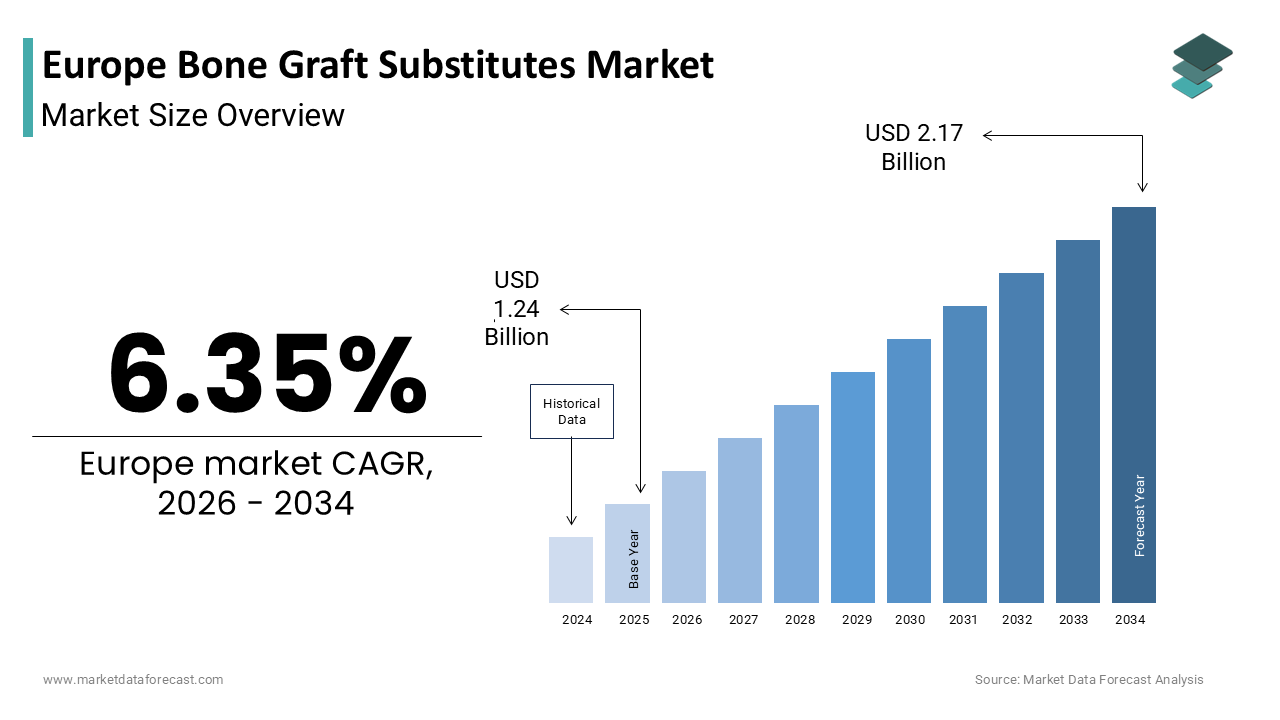
The Europe bone graft substitutes market was valued at USD 1.24 billion in 2025, is estimated to reach USD 1.32 billion in 2026, and is projected to reach USD 2.17 billion by 2034, growing at a CAGR of 6.35% during the forecast period from 2026 to 2034. The market growth is driven by the rising prevalence of osteoporosis, increasing incidence of fractures, and growing adoption of minimally invasive orthopedic procedures. Additionally, advancements in biomaterials, including synthetic grafts and bioactive materials, along with the shift toward regenerative medicine solutions, are further supporting market expansion across Europe.
Key Market Trends
- Rising demand for synthetic bone graft substitutes due to lower risk of disease transmission
- Increasing adoption of minimally invasive spinal fusion procedures
- Growing focus on bioactive glass and advanced biomaterials for enhanced bone regeneration
- Expansion of 3D printing and patient-specific graft solutions
- Strong emphasis on regulatory compliance and clinical validation under EU MDR
Segmental Insights
- Based on type, the allograft segment held the largest share of 42.3% in 2025. This dominance is attributed to the widespread availability of donor tissue, strong clinical acceptance, and its ability to provide structural support and osteoconductive properties in complex orthopedic procedures.
- Based on age group, the adult segment accounted for 58.6% of the market share in 2025, driven by rising cases of trauma injuries, sports-related fractures, and increasing spinal fusion procedures among the working population.
- Based on application, the spinal fusion segment dominated the market with 45.4% share in 2025, owing to the high volume of spinal surgeries and growing prevalence of degenerative disc diseases.
- Based on end-user, the hospitals segment held the largest share in 2025 due to the high volume of complex orthopedic and trauma procedures performed in hospital settings.
Regional Insights
The Europe bone graft substitutes market is witnessing steady growth across major countries due to strong healthcare infrastructure and rising orthopedic procedure volumes.
- Germany led the market with 26.3% share in 2025, driven by advanced healthcare facilities, high surgical volumes, and strong demand for orthopedic treatments.
- United Kingdom held the second-largest share, supported by centralized healthcare systems and increasing backlog of orthopedic surgeries.
- France is experiencing strong growth due to increasing trauma cases and adoption of advanced graft materials in both public and private healthcare settings.
- Italy is expanding steadily, driven by an aging population and growing adoption of graft substitutes to avoid donor site complications.
- Spain is emerging as a key market due to increasing orthopedic infrastructure, rising fracture incidence, and growth in minimally invasive procedures.
Competitive Landscape
The Europe bone graft substitutes market is highly competitive, characterized by the presence of global medical device companies and specialized biomaterial providers. Companies are focusing on product innovation, clinical validation, and strategic collaborations to strengthen their market position. The competitive landscape is shaped by advancements in synthetic biomaterials, increasing regulatory requirements, and growing demand for minimally invasive solutions. Key players in the Europe bone graft substitutes market include Zimmer Biomet Holdings, Inc., Stryker Corporation, Medtronic plc, DePuy Synthes (Johnson & Johnson), Baxter International Inc., Orthofix Medical Inc., NuVasive, Inc., Globus Medical, Inc., and Bioventus LLC.
 Download Free Sample Report
Europe Bone Graft Substitutes Market Size
The Europe Bone Graft Substitutes Market size was valued at USD 1.24 billion in 2025 and is anticipated to reach USD 1.32 billion in 2026 from USD 2.17 billion by 2034, growing at a CAGR of 6.35% during the forecast period from 2026 to 2034.
The bone graft substitutes are diverse array of biomaterials designed to facilitate bone regeneration and repair in cases of trauma, degenerative disease, and congenital defects, where autografts are insufficient or contraindicated. These substitutes include allografts, xenografts, synthetic ceramics, and advanced demineralized bone matrices that serve as scaffolds for osteoconduction and osteoinduction. The sector operates within a highly regulated environment governed by the European Union Medical Device Regulation which mandates rigorous clinical evidence for safety and efficacy. According to the Organisation for Economic Co-operation and Development, the incidence of hip fractures alone exceeds 500000 cases annually across Europe, creating a substantial clinical imperative for effective bone void fillers. The market definition now increasingly includes bioactive glasses and composite materials engineered to mimic the natural mechanical properties of human bone. This evolution reflects a shift towards personalized regenerative solutions that minimize donor site morbidity and accelerate healing times for patients undergoing complex orthopedic and dental reconstructive surgeries throughout the region.
MARKET DRIVERS
Rising Incidence of Osteoporosis and Fragility Fractures
The escalating prevalence of osteoporosis and the subsequent surge in fragility fractures are propelling the growth of Europe bone graft substitutes market. Osteoporosis weakens bone density to the point where minor falls result in severe breaks that often require surgical intervention with grafting materials to restore structural integrity. As per statistics from the International Osteoporosis Foundation, approximately 27 million people in the European Union suffer from osteoporosis, leading to more than 4 million fractures every year including those of the hip, spine, and wrist. This epidemic places immense pressure on orthopedic surgeons to utilize advanced grafting solutions that can bridge large bone defects caused by comminuted fractures in elderly patients. Traditional autografts are often unsuitable for this demographic due to poor bone quality at donor sites and the high risk of complications during harvesting. Consequently, clinicians increasingly rely on synthetic calcium phosphates and processed allografts that provide immediate structural support and promote rapid osseointegration. The growing geriatric population ensures a consistent and expanding pipeline of patients requiring these interventions by making fracture repair a cornerstone of market volume. Public health initiatives aimed at early diagnosis further increase the number of treated cases, sustaining robust demand for high performance bone void fillers in trauma centers nationwide.
Expansion of Minimally Invasive Spinal Fusion Procedures
The widespread adoption of minimally invasive spinal fusion techniques that are compatible with limited access surgical approaches is additionally driving the growth of Europe bone graft substitutes market. Unlike traditional open surgeries, minimally invasive procedures require graft materials that can be delivered through narrow tubular retractors, while maintaining high osteoinductive potential to ensure successful fusion in smaller operative fields. As per procedural data from the European Spine Journal, the volume of minimally invasive lumbar fusions has grown by over 20% annually as surgeons seek to reduce patient recovery times and hospital stays. This shift drives demand for moldable putties, injectable cements, and composite granules that can be easily manipulated through small incisions without compromising biomechanical stability. The precision required in these surgeries favors advanced synthetic options that offer predictable resorption rates and consistent quality compared to variable autografts. Furthermore, the reduction in surgical trauma associated with these techniques appeals to older patients who were previously deemed too frail for extensive spinal operations. Hospitals are incentivized to adopt these methods due to lower overall episode costs and faster bed turnover rates.
MARKET RESTRAINTS
Stringent Regulatory Hurdles and Prolonged Approval Timelines
The rigorous regulatory framework imposed by the European Union Medical Device Regulation that significantly delays product launches and increases development costs for manufacturers is impeding the growth of Europe bone graft substitutes market. The transition to stricter classification rules requires extensive clinical investigations and post market surveillance data that many small and medium sized enterprises struggle to generate within reasonable timeframes. As per guidance from the European Commission, the average time to obtain CE marking for Class III bone graft devices has extended by up to 18 months due to heightened scrutiny of clinical evidence and quality management systems. This prolonged approval process stifles innovation by preventing novel bioactive materials from reaching the market quickly, leaving clinicians with limited options for complex cases. The uncertainty surrounding regulatory compliance forces companies to allocate substantial resources to legal and administrative functions rather than research and development. Smaller innovators often face insurmountable financial barriers to entry, leading to market consolidation where only large multinational corporations can afford the compliance burden. The fragmented interpretation of regulations across different member states further complicates market access strategies, creating bottlenecks in supply chains. These regulatory headwinds slow the introduction of next generation products and limit the diversity of available solutions for patients needing advanced bone regeneration therapies.
High Costs of Advanced Biomaterials and Reimbursement Limitations
The substantial financial burden associated with premium bone graft substitutes and the inconsistent reimbursement policies is also degrading the growth of Europe bone graft substitutes market. Advanced synthetic composites and growth factor enhanced matrices often carry price tags significantly higher than traditional autografts or basic allografts, placing them out of reach for budget constrained healthcare providers. As per health economic analyses from the European Health Technology Assessment network, many national payers classify sophisticated bone grafts as luxury items rather than medical necessities, resulting in partial or zero reimbursement for patients in several countries. This financial disparity forces surgeons to opt for cheaper, less effective alternatives even when clinical outcomes would benefit from superior biomaterials. The lack of harmonized pricing mechanisms creates inequities in care quality where patients in wealthier regions access cutting edge treatments while others face suboptimal recovery prospects. Hospitals operating under fixed diagnosis related group payments are reluctant to absorb the extra costs of high end grafts, leading to restricted formulary listings. The economic pressure to reduce procedural costs overrides clinical preferences for advanced technologies, dampening overall market growth.
MARKET OPPORTUNITIES
Integration of 3D Printing and Patient Specific Implants
The emergence of additive manufacturing technologies with bone graft science to deliver patient specific implants that perfectly match individual anatomical defects is certainly creating new opportunities for the growth of Europe bone graft substitutes market. This innovation allows for the creation of porous scaffolds with customized geometries that mimic the patient's native bone structure, enhancing integration and mechanical stability. As per technical reports from the European Association of Cranio Maxillo Facial Surgery, the use of 3D printed titanium and ceramic cages in complex craniofacial reconstructions has improved surgical precision and reduced operative time by up to 30%. Manufacturers can now leverage computed tomography data to fabricate grafts with controlled pore sizes that optimize vascular ingrowth and cell migration. This level of personalization addresses the limitations of off the shelf products which often require extensive intraoperative shaping and may not fit irregular voids adequately. The ability to incorporate bioactive molecules directly into the printed matrix further enhances osteoinductive potential. Healthcare systems are increasingly recognizing the value of these tailored solutions in reducing complication rates and revision surgeries for severe trauma cases.
Development of Bioactive Glass and Smart Biomaterials
The advancement of bioactive glass and smart biomaterials capable of stimulating biological to revolutionize bone regeneration outcomes beyond simple structural support is escalating the growth of Europe bone graft substitutes market. Unlike inert synthetics, these materials actively interact with physiological fluids to release therapeutic ions such as silicon and calcium that trigger gene expression for bone formation. As per research findings from leading European biomedical institutes, bioactive glass formulations have demonstrated the ability to bond chemically with living bone and soft tissue, accelerating healing rates by up to 40% in critical size defects. The development of smart materials that respond to local pH changes or mechanical stress allows for dynamic release of growth factors precisely when needed during the healing cascade. This functionality reduces the reliance on exogenous proteins which can be expensive and unstable. The versatility of bioactive glasses in both particulate and putty forms makes them suitable for a wide range of applications from dental sockets to long bone fractures. Clinicians are increasingly adopting these advanced materials to treat infected non unions where traditional grafts might fail due to bacterial presence. The unique ability of these substances to combat infection while promoting regeneration positions them as ideal candidates for challenging clinical scenarios. This scientific breakthrough expands the therapeutic arsenal available to surgeons and drives demand for next generation regenerative solutions.
MARKET CHALLENGES
Risk of Disease Transmission and Immunogenic Reactions
The persistent fear of disease transmission and potential immunogenic reactions associated with allografts and xenografts is likely to decline the growth of Europe bone graft substitutes market. Despite rigorous sterilization protocols, the theoretical risk of transmitting viral or prion diseases from human or animal donors causes hesitation among both patients and surgeons. As per safety alerts from the European Centre for Disease Prevention and Control, historical cases of contamination have led to heightened vigilance and stricter sourcing requirements that limit the availability of high quality donor tissue. The variability in donor bone quality and the potential for immune rejection despite processing create unpredictability in clinical outcomes. Patients with compromised immune systems are particularly vulnerable to adverse reactions, limiting the use of biological grafts in certain demographics. The ethical concerns regarding the use of bovine or porcine derived materials also deter a segment of the population based on religious or personal beliefs. Manufacturers face the difficult task of balancing effective sterilization which can degrade bone properties with the need to ensure absolute safety. This delicate equilibrium often results in products that are either too aggressive in processing to be effective or insufficiently treated to guarantee safety.
Technical Complexity of Handling and Surgical Application
The technical complexity involved in handling and applying certain advanced bone graft substitutes that can compromise surgical efficiency and clinical success if not managed correctly is also to act as a major barrier for the growth of Europe bone graft substitutes market. Many high-performance materials such as injectable cements and moldable putties require precise mixing ratios, specific setting times, and specialized delivery instruments that demand a steep learning curve for surgical teams. As per training assessments from orthopedic associations, improper preparation or application of these biomaterials can lead to premature hardening, leakage into surrounding tissues, or inadequate filling of the defect site. The sensitivity of some bioactive components to moisture and temperature variations adds another layer of difficulty in the operating room environment. Surgeons accustomed to traditional autografts may find the handling characteristics of synthetic substitutes unintuitive, leading to reluctance in adopting new technologies. The lack of standardized training programs across European hospitals exacerbates this issue, resulting in inconsistent usage patterns and variable patient outcomes. Additionally, the need for specific storage conditions and limited shelf life once opened creates logistical burdens for hospital pharmacies.
REPORT COVERAGE
| REPORT METRIC | DETAILS |
| Market Size Available | 2025 to 2034 |
| Base Year | 2025 |
| Forecast Period | 2026 to 2034 |
| CAGR | 6.35% |
| Segments Covered | By Type, End User (Age Group), Application, End-user (Facility Type) and Region. |
| Various Analyses Covered | Global, Regional & Country Level Analysis, Segment-Level Analysis, DROC, PESTLE Analysis, Porter’s Five Forces Analysis, Competitive Landscape, Analyst Overview of Investment Opportunities |
| Country Covered | UK, France, Spain, Germany, Italy, Russia, Sweden, Denmark, Switzerland, the Netherlands, Turkey, the Czech Republic, and the Rest of Europe |
| Market Leaders Profiled | Zimmer Biomet Holdings, Inc., Stryker Corporation, Medtronic plc, DePuy Synthes (Johnson & Johnson), Baxter International Inc., Orthofix Medical Inc., NuVasive, Inc., Globus Medical, Inc., Bioventus LLC, and SeaSpine Holdings Corporation |
SEGMENTAL ANALYSIS
By Type Insights
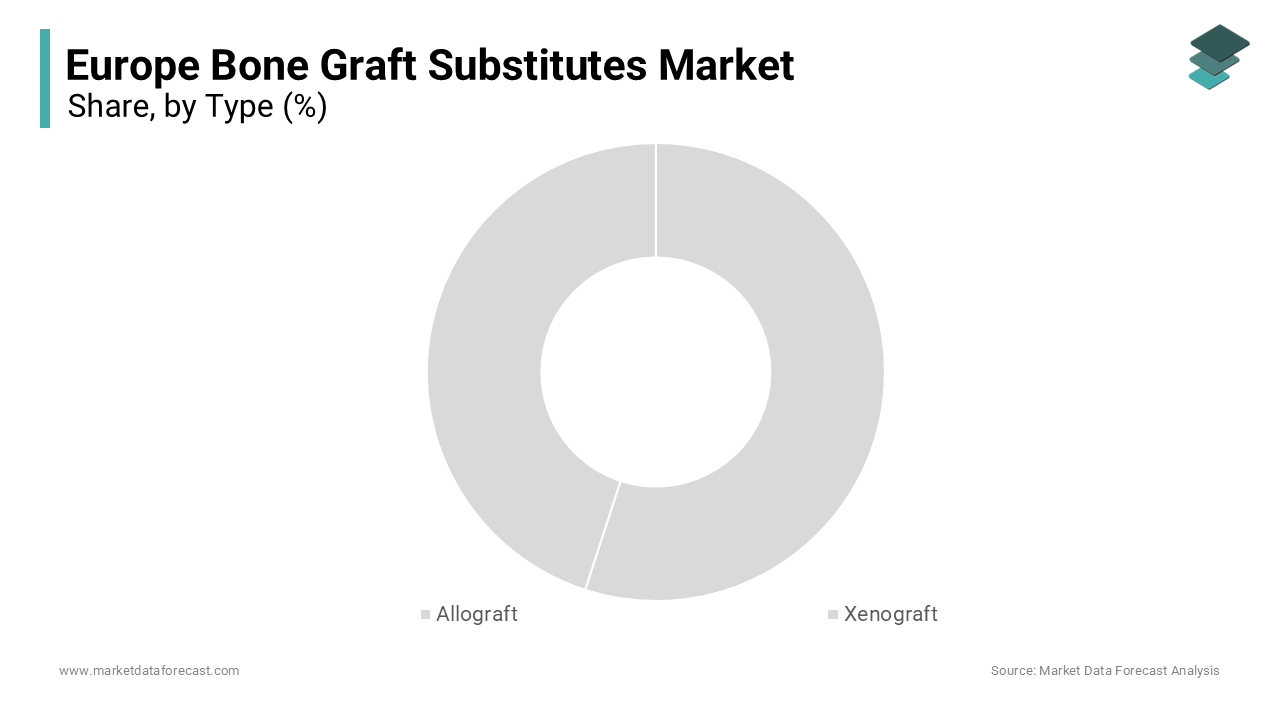
The allograft segment was the largest by holding 42.3% of the Europe bone graft substitutes market share in 2025. The growth of the segment is majorly driven by the extensive network of accredited tissue banks across Europe that ensure a steady supply of processed human bone for orthopedic and spinal procedures. As per data from the European Association of Tissue Banks, over 150000 musculoskeletal allografts are distributed annually within the European Union, serving as the gold standard for procedures requiring significant structural support where autografts are insufficient. The ability of allografts to provide both osteoconductive scaffolding and varying degrees of osteoinductivity without the morbidity associated with donor site harvesting makes them the preferred choice for trauma surgeons dealing with complex fractures. Furthermore, the cost effectiveness of allografts compared to high end synthetic composites appeals to hospital procurement departments operating under strict budget constraints. The established regulatory framework for tissue donation and processing in countries like France and Germany provides a level of safety assurance that encourages consistent usage.
The synthetic bone graft segment is projected to register a fastest CAGR of 8.5% during the forecast period with the rapid advancements in biomaterial science and the desire to eliminate disease transmission risks entirely. The growth of the segment is also driven by the development of next generation calcium phosphate ceramics and bioactive glasses that mimic the chemical composition and porous architecture of natural bone more closely than ever before. As per research published in the Journal of Materials Science Materials in Medicine, modern synthetic formulations now exhibit compressive strengths exceeding 100 megapascals by making them suitable for load bearing applications previously reserved for autografts or allografts. The primary factor propelling this growth is the increasing surgeon preference for off the shelf products that offer unlimited supply, consistent quality, and zero risk of viral or prion transmission. Manufacturers are also integrating growth factors and stem cell carriers into synthetic matrices to enhance osteoinductive potential, bridging the performance gap with biological grafts. The stringent regulatory environment regarding human tissue sourcing in Europe further incentivizes the shift toward fully synthetic solutions that streamline approval processes.
By End User (Age Group) Insights
The adults segment was accounted in holding 58.6% of the Europe bone graft substitutes market share in 2025. The rising prevalence is largely attributed to the active lifestyle of European adults, which leads to sports related fractures and occupational accidents requiring immediate surgical intervention with grafting materials. As per statistics from the European Safety and Health Observatory, work related musculoskeletal disorders and accidents result in over 300000 serious injuries annually across the EU, creating a substantial demand for bone void fillers in trauma centers. Additionally, the rising trend of spinal fusion surgeries among adults suffering from chronic back pain due to sedentary lifestyles and heavy lifting contributes significantly to market volume. Adults generally possess better bone healing potential compared to the geriatric population, making them ideal candidates for various types of grafts including DBM and synthetics. The economic imperative to return this demographic to the workforce quickly drives healthcare systems to prioritize effective reconstructive surgeries.
The geriatric population segment is esteemed to witness a fastest CAGR of 7.9% from 2026 to 2034 owing to the rapidly aging demographic structure of Europe and the ensuing epidemic of osteoporotic fractures. The growth of the segment is also being propelled with the increasing fragility of bones in elderly individuals, leading to a surge in hip fractures, vertebral compression fractures, and complex joint revisions that necessitate bone grafting for stabilization. The shift in clinical practice towards aggressive surgical management of frail elderly patients, who were previously treated conservatively, supported by improved anesthesia safety and minimally invasive techniques is also boosting the growth of segment. The high prevalence of comorbidities in this group often precludes autograft harvesting, making allografts and synthetics the only viable options for reconstruction. Healthcare policies increasingly focus on maintaining mobility and independence in the elderly to reduce long term care costs, further driving the adoption of bone graft procedures.
By Application Insights
The spinal fusion segment held 45.4% of the Europe bone graft substitute market share in 2025 due to the escalating prevalence of degenerative disc disease and the increasing volume of fusion procedures performed annually. As per clinical registries from the European Spine Society, over 200000 spinal fusion operations are conducted each year in Europe, with the majority utilizing some form of bone graft substitute to augment fusion rates. The complexity of spinal anatomy requires grafts that offer both structural support and biological activity to bridge vertebrae effectively by making this sector the largest consumer of high value DBM and composite products. The trend towards multi-level fusions in older patients further amplifies the quantity of graft material required per procedure. Surgeons increasingly rely on advanced grafts to minimize pseudoarthrosis rates, which are a major cause of revision surgery.
The joint reconstruction segment is projected to witness fastest CAGR of 8.2% in coming years with the rising incidence of osteoarthritis and the increasing complexity of revision arthroplasty procedures. This rapid expansion is driven by the growing number of patients requiring conversion of primary joint replacements to revision surgeries due to implant loosening, infection, or wear, which often results in significant bone loss requiring extensive grafting. As per data from the European Hip Society, revision knee and hip arthroplasties have increased by 15% over the last five years by creating a surging demand for bulk allografts and porous metal augments combined with bone grafts. The primary factor propelling this growth is the younger age at which primary joints are being implanted, leading to a higher lifetime probability of needing revision where bone stock restoration is critical. Advances in 3D printed custom implants that integrate with bone grafts are also opening new possibilities for reconstructing massive defects previously considered unrecoverable. The shift towards preserving native bone stock during initial surgeries to facilitate future revisions further boosts the utilization of graft substitutes.
By End-user (Facility Type) Insights
The hospitals segment was the largest by capturing a dominant share of the Europe bone graft substitutes market in 2025 due to their role as the primary centers for major orthopedic trauma, spinal fusion, and complex joint reconstruction surgeries. Also, the concentration of specialized surgical teams, advanced imaging facilities, and intensive care units required to manage high risk procedures involving significant bone loss is leveraging the growth of segment. As per healthcare infrastructure reports from the European Commission, acute care hospitals perform over 90% of all inpatient orthopedic surgeries in Europe by making them the central hub for bone graft consumption. The ability of hospitals to maintain large inventories of diverse graft types to handle emergency trauma cases around the clock further cements their leading position. Procurement contracts in the hospital sector often involve bulk purchasing agreements that favor established suppliers of allografts and synthetics. The integration of bone graft usage into standardized clinical pathways for hip fractures and spinal disorders ensures consistent and high volume utilization. Furthermore, the presence of teaching hospitals drives the adoption of latest generation graft technologies through clinical trials and educational programs.
The specialty clinics segment is lucratively growing at a fastest CAGR of 6.8% from 2025 to 2034 owing to the shifting paradigm of outpatient orthopedic care and the increasing performance of minimally invasive procedures in ambulatory settings. As per trends observed by the European Ambulatory Healthcare Stakeholder Group, the volume of outpatient spinal decompressions and minor foot and ankle reconstructions has risen by 20% annually, many of which utilize small volume bone graft substitutes. The advancement in surgical techniques and anesthesia that allow complex procedures to be safely performed outside traditional hospital environments. Specialty clinics often focus on specific niches such as sports medicine or spine care, leading to highly efficient workflows and rapid adoption of innovative graft products that enhance recovery speeds. The patient preference for convenient, personalized care in non-hospital settings further drives traffic to these facilities. As reimbursement models evolve to support ambulatory surgery, specialty clinics are poised to capture an increasing share of the bone graft market.
REGIONAL ANALYSIS
Germany
Germany was the top performer in the Europe bone graft substitutes market by capturing 26.3% of share in 2025 due to its robust healthcare infrastructure and high volume of orthopedic procedures. The country's aging population, which results in a high incidence of osteoporotic fractures and degenerative spinal conditions requiring surgical intervention. As per data from the German Federal Statistical Office, over 100000 hip fractures occur annually in Germany, creating a consistent and large demand for bone void fillers in trauma centers. The presence of leading domestic manufacturers and research institutions fosters a culture of innovation and early adoption of new biomaterials. The statutory health insurance system provides comprehensive coverage for necessary orthopedic surgeries, removing financial barriers for patients and ensuring high utilization rates of premium graft products.
United Kingdom
The United Kingdom bone graft substitutes market was ranked second by holding 18.3% of share in 2025 with a centralized procurement system through the National Health Service that heavily influences product selection and pricing. The increasing backlog of elective orthopedic surgeries following recent global health disruptions by leading to a surge in joint replacements and spinal fusions that utilize bone grafts is also escalating the growth of market. As per reports from NHS England, waiting lists for orthopedic procedures have reached record highs, prompting initiatives to increase surgical throughput which directly boosts graft consumption. The UK boasts world renowned specialist centers for trauma and oncology reconstruction where complex cases drive the use of high end allografts and custom synthetics.
France
France bone graft substitutes market growth is likely to grow at a fastest CAGR in coming years with well-developed network of public and private hospitals that perform a high volume of orthopedic and dental implant procedures. The high prevalence of sports related injuries and traffic accidents in France, which generate a steady stream of trauma cases requiring immediate bone grafting. The French healthcare system's emphasis on rapid rehabilitation and return to function encourages the use of advanced graft materials that promote faster healing. Private clinics in urban centers are increasingly adopting premium synthetic grafts to differentiate their services and attract patients seeking cutting edge treatments. The presence of several key European distributors and manufacturers in France facilitates easy access to a wide range of products.
Italy
Italy bone graft substitutes market growth is driven by a high incidence of osteoporosis and a strong culture of orthopedic intervention among the elderly. The growing awareness among Italian orthopedic surgeons of the benefits of using allografts and synthetics to avoid donor site morbidity in frail elderly patients is elevating the growth of the market. Economic challenges within the public health system sometimes limit the use of the most expensive innovations, yet the clinical necessity drives consistent volume. The strong presence of private healthcare providers offers an alternative channel for premium products.
Spain
Spain bone graft substitutes market is evolving as the country modernizes its orthopedic infrastructure and adopts international best practices in bone regeneration. As per epidemiological studies from the Spanish Foundation for Osteoporosis, the incidence of fragility fractures is projected to double by 2050, which is creating an urgent need for scalable bone graft solutions. The Spanish healthcare system is increasingly focusing on minimally invasive spinal techniques which require specialized graft materials compatible with narrow access ports. Additionally, the country's status as a medical tourism destination for orthopedic surgery attracts patients from neighboring regions, boosting procedure volumes in private clinics.
COMPETITIVE LANDSCAPE
The competition in the Europe bone graft substitutes market is intense and characterized by a mix of large multinational corporations and specialized regional players vying for dominance through technological differentiation and clinical evidence. Major competitors constantly strive to outperform rivals by developing novel biomaterials that accelerate healing times and reduce complication rates in complex orthopedic procedures. The landscape features fierce rivalry between providers of allografts who emphasize biological compatibility and manufacturers of synthetics who highlight safety and unlimited supply. Companies aggressively pursue regulatory approvals for new indications such as dental regeneration and sports medicine to capture emerging revenue streams. Strategic collaborations with key opinion leaders and hospital networks are common tactics employed to generate robust real world data that supports market access and reimbursement claims. Pricing pressure exists but is often mitigated by the high value placed on successful fusion outcomes and reduced revision surgery rates. The competitive dynamic is further shaped by varying national healthcare policies that require tailored market entry strategies for each country. Success increasingly depends on the ability to offer comprehensive ecosystems including surgical instruments, imaging guidance, and post operative support services alongside the graft materials themselves.
KEY MARKET PLAYERS
Some of the companies that are playing a dominating role in the Europe bone graft substitutes market include
- Zimmer Biomet Holdings, Inc.
- Stryker Corporation
- Medtronic plc
- DePuy Synthes (Johnson & Johnson)
- Baxter International Inc.
- Orthofix Medical Inc.
- NuVasive, Inc.
- Globus Medical, Inc.
- Bioventus LLC
Top Players in the Europe Bone Graft Substitutes Market
Medtronic plc
Medtronic plc stands as a global leader in the Europe bone graft substitutes market by offering an extensive portfolio of synthetic and cellular bone matrix solutions for spinal and orthopedic applications. The company contributes significantly to the global sector through its continuous innovation in bioactive materials that enhance fusion rates and reduce recovery times. Medtronic recently strengthened its European position by launching next generation demineralized bone matrix products designed specifically for minimally invasive surgical procedures. Their involvement includes strategic collaborations with leading European research institutions to validate the efficacy of new composite grafts. The firm actively invests in surgeon education programs to promote best practices in bone regeneration techniques across the continent. This commitment to technological advancement and clinical support solidifies their reputation as a trusted partner for complex reconstructive surgeries throughout the region.
Zimmer Biomet Holdings Inc
Zimmer Biomet Holdings Inc is a dominant force in the Europe bone graft substitutes market known for its comprehensive range of allografts and synthetic bone void fillers used in joint reconstruction and trauma care. The company plays a crucial role globally by setting high standards for tissue processing safety and product consistency in bone grafting solutions. Zimmer Biomet recently enhanced its market presence by introducing innovative putty formulations that offer superior handling characteristics and rapid resorption profiles for surgeons. Their strategic focus involves expanding manufacturing capabilities within Europe to ensure reliable supply chains and faster distribution to healthcare facilities. The firm actively engages in clinical studies to demonstrate the long term benefits of their graft substitutes in promoting natural bone growth.
Stryker Corporation
Stryker Corporation maintains a strong presence in the Europe bone graft substitutes market by specializing in high performance synthetic ceramics and composite materials for spinal fusion and craniomaxillofacial repairs. The company contributes to the global market by developing proprietary technologies that mimic the structural and biological properties of native human bone. Stryker recently bolstered its position by acquiring specialized biotech firms to expand its portfolio of regenerative medicine products tailored to European regulatory standards. Their involvement includes pioneering work in 3D printed scaffolds that allow for customized bone regeneration in complex defect scenarios. The firm prioritizes sustainability by optimizing production processes to reduce environmental impact while maintaining product quality. Stryker also supports extensive training initiatives for medical professionals to maximize the potential of their advanced grafting systems. Through relentless innovation and a customer centric approach, Stryker continues to shape the future of bone repair therapies across European healthcare systems.
Top Strategies Used by the Key Market Participants
Key players in the Europe bone graft substitutes market primarily employ strategies centered on product innovation and strategic acquisitions to expand their portfolios and address unmet clinical needs. Companies heavily invest in research and development to create advanced synthetic composites and bioactive glasses that offer superior osteoinductive properties compared to traditional options. Another major strategy involves forming partnerships with tissue banks and academic institutions to secure high quality raw materials and validate new technologies through rigorous clinical trials. Market participants also focus on expanding their geographic footprint by establishing local manufacturing facilities to comply with stringent European regulations and reduce supply chain disruptions. Enhancing surgeon education through workshops and digital platforms serves as a critical tactic to drive adoption of novel grafting techniques and products. Additionally, firms are increasingly integrating digital tools such as augmented reality for surgical planning to complement their physical graft offerings. These combined efforts enable companies to navigate complex reimbursement landscapes and establish strong brand loyalty among orthopedic surgeons.
MARKET SEGMENTATION
This research report on the Europe bone graft substitutes market has been segmented and sub-segmented based on the following categories.
By Type
- Allograft
- Demineralized Bone Matrix (DBM)
- Synthetic
- Polymer
- Ceramic
- Hydroxypaptite
- Beta TCP
- Others
- Xenograft
By Age Group
- Adults
- Geriatric Population
By Application
- Spinal Fusion
- Joint Reconstruction
- Foot & Ankle
- Others
By End-user
- Hospitals
- Specialty Clinics
- Others
By Country
- UK
- France
- Spain
- Germany
- Italy
- Russia
- Sweden
- Denmark
- Switzerland
- Netherlands
- Turkey
- Czech Republic
- Rest of Europe