Europe Bone Morphogenetic Proteins Market Size, Share, Trends & Growth Forecast Report By Type, By Application, and By Country (Germany, United Kingdom, France, Italy, Netherlands & Rest of Europe) – Industry Analysis and Forecast, 2026 to 2034
Market Size, 2025
$108.01 MnMarket Estimate, 2026
$112.01 MnMarket Forecast, 2034
$149.79 MnCAGR, 2026–2034
3.7%Europe Bone Morphogenetic Proteins Market Summary
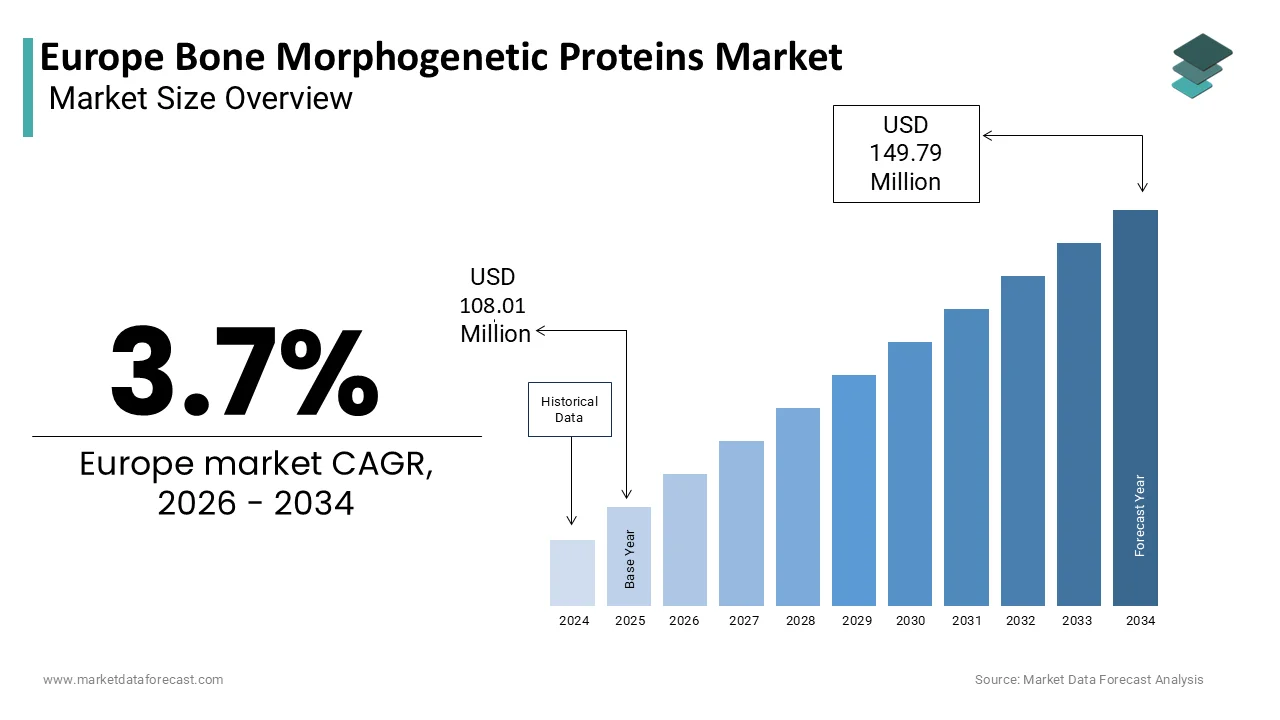
The Europe bone morphogenetic proteins (BMP) market was valued at USD 108.01 million in 2025, is estimated to reach USD 112.01 million in 2026, and is projected to reach USD 149.79 million by 2034, growing at a CAGR of 3.7% from 2026 to 2034.
Market Snapshot
- 2025 Market Size: USD 108.01 Million
- 2026 Estimate: USD 112.01 Million
- 2034 Forecast: USD 149.79 Million
- CAGR (2026–2034): 3.7%
- Largest Type: rhBMP-2
- Fastest Growing Type: rhBMP-7
- Largest Application: Spinal Fusion
- Fastest Growing Application: Trauma Surgery
- Leading Country: Germany (26.3%)
Quick Growth Drivers
- Aging EU population (24%+ aged 65)
- Rising degenerative disc disease cases
- Growth in minimally invasive spinal fusion
- High nonunion fracture burden
- Expanding trauma registry evidence
Principal Restraints
- Strict reimbursement authorization in 18+ EU countries
- Cost per procedure exceeding €5,000
- EMA-mandated long-term risk management plans
- Off-label safety concerns (ectopic bone, swelling, radiculitis)
High-Value Opportunities
- Expansion into tibial nonunions & trauma repair
- Integration with 3D-printed patient-specific scaffolds
- Controlled-release biomaterial carriers
- Horizon Europe regenerative medicine funding
- Low-dose BMP protocols to improve safety
Key Market Challenges
- Budget pressure on public health systems
- Lack of standardized BMP training across residency programs
- Administrative burden for reimbursement approval
- Limited competitive landscape (near-monopoly structure)
What Wins Commercially
- Strong registry-based safety evidence
- Structured surgeon training programs
- Low-dose controlled delivery innovation
- Integration with implant systems
- Targeted high-risk patient reimbursement alignment
Top Strategic Ask for Executives
- Expand trauma & nonunion indication trials
- Develop biomaterial-integrated low-dose BMP systems
- Strengthen HTA cost-effectiveness dossiers
- Build standardized EU surgeon training curricula
- Prepare for potential biosimilar pathways under evolving ATMP rules
Leading Players
Some of the companies that are playing a dominating role in the Europe bone morphogenetic proteins market include:
- Medtronic plc
- Stryker Corporation
- Zimmer Biomet
Europe Bone Morphogenetic Proteins Market Size
The Europe bone morphogenetic proteins market was valued at USD 108.01 million in 2025, is estimated to reach USD 112.01 million in 2026, and is projected to reach USD 149.79 million by 2034, growing at a CAGR of 3.7% from 2026 to 2034.
The bone morphogenetic proteins are human proteins, primarily BMP 2 and BMP 7, used as osteoinductive biologics to stimulate bone formation in spinal fusion,n orthopedic trauma,,uma and craniofacial reconstruction procedures. These growth factors are delivered via absorbable collagen sponges or synthetic carriers and function by activating mesenchymal stem cells to differentiate ibone-formingming osteoblasts. In the European context, BMPs are regulated as advanced therapy medicinal products under the European Medicines Agency, requiring rigorous clinical validation and pharmacovigilance. As per Eurostat, more than 24% of the EU population is aged 65 or older, a demographic highly susceptible to osteoporotic fractures and degenerative disc disease. The market is further shaped by stringent reimbursement policies, evolving clinical guidelines, and ongoing debate over risk-benefit profiles, particularly in off-label applications.
MAKET DRIVERS
Rising Burden of Age-Related Orthopedic Conditions and Spinal Disorders
The aging population with increased incidence of degenerative spinal conditions, osteoporotic fractures, and joint instability, ty all of which elevate demand for advanced bone regeneration solutions. The rising burden of age-related orthopedic conditions and spinal disorders is bolstering the growth of Europe bone morphogenetic proteinsmarket. According to Eurostat, 24.1% of the EU population was aged 65 or older in 2024, with projections indicating this will reach 30% by 2035. This demographic shift correlates directly with surgical volume; the European Federation of National Associations of Orthopaedics and Traumatology reports that over 500,000 spinal fusionprocedures were performed in the EU in,202,3 with lumbar degeneration being the leading indication. Additionally, the International Osteoporosis Foundation estimates that fragility fractures affect 2.7 million Europeans annually, resulting in significant disability and healthcare costs. In complex revision surgeries or patients with comorbidities like diabetes or smoking history, autografts often yield poor outcomes,s prompting surgeons to opt for BMPs as a reliable alternative. National health systems in Germany, Sweden, and the Netherlands increasingly recognize BMP use in high-risk cases through selective reimbursement, pathways reinforcing clinical adoption, despite cost considerations.
Growing Preference for Minimally Invasive Spinal Fusion Techniques
T,, he shift toward minimally invasive spine surgery as enablers of effective fusion without the morbidity of iliac crest bone harvesting is additionally fuelling the growth of Europe bone morphogenetic proteins market. According to the European Association of Neurosurgical Societies, many lumbar fusions in Western Europe were performed using minimally invasive approaches in 2024. These techniques limit surgical exposure, making traditional autograft placement difficult or impossible while creating ideal environments forBMP-soakedd scaffolds. Hospitals in France, the U, and Switzerland report that BMP utilization in MIS TLIF procedures rose by 28% between 2022 and 2,024 due to improved fusion rates and reduced postoperative pain. Furthermore, the European Board of Orthopaedics and Traumatology now includes BMPs in its advanced training curriculum for spine fellows, acknowledging their utility in constrained anatomical fields. As per a 2025 multicenter study, patients receiving BMP in MIS fusions showed 92% radiographic union at 12 months compared to 78% in autograft controls. This clinical evidence supports continued integration of BMPs into modern surgical workflows focused on faster recovery and reduced hospital stays.
MARKET RESTRAINTS
Stringent Reimbursement Policies and Cost Containment Measures
The public healthcare systems impose strict limitations on bone morphogenetic protein reimbursement due to high acquisition costs and ongoing debates about comparative effectiveness versus autografts. This is additionally hampering the growth of Europe bone morphogenetic proteins market. According to the European Observatory on Health Systems and Policies, 18 EU countries require prior authorization for BMP use,e with coverage typically restricted to specific indications, such as single-level anterior lumbar interbody fusion or complex tibial nonunions. In Spain, Italy, and Portugal, national health services exclude BMPs from standard formularies,s citing cost quality-adjusted life year thresholds that exceed willingness-to-pay benchmarks. As per Germany’s Federal Joint Committee, BMPs are reimbursed only when an autograft is medically contraindicated, a criterion that excludes many elective cases. The UK’s National Institute for Health and Care Excellence maintains a neutral stance,e recommending shared decision making but not endorsing routine use. These restrictive policies significantly reduce accessibility in cost-sensitive regions and discourage surgeons from adopting BMPs even in clinically appropriate scenarios due to administrative burden and patient out-of-pocket expenses.
Safety Concerns and Regulatory Scrutiny Over Adverse Event Profiles
Persistent safety concerns regarding complications, such as ectopic bone formation,n excessive swelling, and potential cancer risk, have led to heightened regulatory scrutiny and cautious clinical adoption of bone morphogenetic proteins in Europe. This factor is also degrading the growth of Europe bone morphogenetic proteins market. According to the European Medicines Agency, over 1,200 adverse drug reaction reports related to rhBMP 2 were filed between 2020 and 2025 with retrograde ejaculatio,,n dysphagi,, a and radiculitis being the most frequent. The agency issued a 2022 safety update mandating enhanced risk management plans, including patient registries andlong-term follow-upp for all BMP users. National bodies, such as France’s ANSM and Sweden’s Medical Products Agency, have issued advisories limiting BMP use in cervical spine applications due to airway compromise risks. These findings influence clinical guidelines and informed consent processess reducing surgeon enthusiasm, sm particularly in younger,r healthier patients where risks may outweigh benefits.
MARKET OPPORTUNITIES
Expansion into Trauma and Nonunion Repair Indications
The emerging clinical evidence supports broader application of bone morphogenetic proteins in complex trauma and fracture nonunion c. Areas with significant unmet needs are likely to showcase new opportunities for the growth of Europe's bone morphogenetic proteins market. According to the European Federation of National Associations of Orthopaedics and Traumatology, over 150,000 long bone nonunions occur annually in the EU, often requiring multiple revision surgeries and prolonged disability. Recent studies demonstrate that BMP-7 significantly improves healing in recalcitrant tibial nonunions with success rates exceeding 80% as per a 2025 trial coordinated by the AO Foundation. Countries like Germany and the Netherlands now include BMP-7 in national trauma guidelinBMP-7r cases failing conventional treatment. Additionally, the European Commission’s Horizon Europe program funded a 9-million euro consortium in 2025 to develop optimized BMP delivery systems for open fractures with soft tissue loss. This therapeutic expansion offers a viable pathway to increase clinical adoption beyond the saturated spinal segment while addressing critical gaps in orthopedic care.
Integration with Advanced Biomaterials and 3D Printed Scaffolds
The emergence of bone morphogenetic proteins with next-generation biomaterials to enhance efficacy, reduce dosing,ge and minimize complications is additionally driving the growth of Europeanrope bone morphogenetic proteins market. Researchers are developing smart carriers that provide controlled spatial extension of BMPs using biodegradable polymers, calcium phosphate ceramics, and 3D printed porous scaffolds tailored to patient anatomy. According to the European Institute of Innovation and Technology, over 40 collaborative projects in 2025 focused on BMP functionalized implants with partners including Charité Berlin and ETH Zurich. A pilot study at the University of Leuven demonstrated that 3D printed titanium scaffolds coated with low-dose BMP 2 achieved equivalent fusion to standard high-dose collagen sponges while eliminating swelling complications. The European Commission’s BioBased Industries Joint Undertaking allocated 12 million euros in 2025 to develop sustainable protein delivery platforms using marine-derived polymers. This synergy between biologics and bioengineering aligns with Europe’s leadership in personalized regenerative medicine and opens premium reimbursement avenues for combination products.
MARKET CHALLENGES
High Treatment Cosmarine-derivedPressure on Public Health Budgets
The substantial price of bone morphogenetic protein therapie,,s often exceeds 5,000 euros per procedure, placing significant strain on publicly funded healthcare systems already facing budget constraints. National health technology assessment bodies routinely question the incremental value of BM, Ps, given that autografts are free and allografts cost a fraction of recombinant proteins. In Poland and Greece, the ECEBMPs are effectively unavailable in public hospitals due to non-reimbursement, while even in wealthier nations like France,co-payments can exceed 1,500 euros, os deterring patient uptake. A 2025 analysis by the London School of Economics found that widespread BMP adoption in spinal fusion would increase national orthopedic budgets by 8 to 12% without proportional gainsquality-adjustedsted life years. This economic reality forces clinicians to reserve BMPs for extreme cases despite potential benefits in broader populations.
Lack of Standardized Clinical Protocols and Surgeon Training Gaps
The absence of harmonized guidelines on dosing, g delivery technique,ue, and patient selection contributes to inconsistent outcomes, es and the underutilization of bone morphogenetic proteins also limits the growth of Europe bone morphogenetic proteins market. According to the European Board of Orthopaedics and Traumatology, fewer than 40% of residency programs include formal training on BMP handling application and complication management as of 2024. This knowledge gap leads to suboptimal use, such as improper sponge saturation or off-label cervical placement,t increasing complication risks and reinforcing negative perceptions. National variation is stark, while German spine centers follow detailed BMP protocols based on DGNC recommendations, surgeons in Eastern Europe often resort to off-label structured education or peer support networks. A 2025 survey by the European Spine Study Group revealed that only respondents felt confident in selecting appropriate BMP candidates without speciali, st consultation. Without a standardized curricularegistry-basedd feedback anhands-onon simulation training, the full therapeutic potential of BMPs will remain unrealized, and adoption will lag behind technological availability.
REPORT COVERAGE
| REPORT METRIC | DETAILS |
| Market Size Available | 2025 to 2034 |
| Base Year | 2025 |
| Forecast Period | 2026 to 2034 |
| Segments Covered | By Type, Application, and Region. |
| Various Analyses Covered | Global, Regional, and Country-Level Analysis, Segment-Level Analysis, Drivers, Restraints, Opportunities, Challenges; PESTLE Analysis; Porter’s Five Forces Analysis, Competitive Landscape, Analyst Overview of Investment Opportunities |
| Countries Covered | UK, France, Spain, Germany, Italy, Russia, Sweden, Denmark, Switzerland, Netherlands, Turkey, Czech Republic, Rest of Europe |
| Market Leaders Profiled | Rational AG, Middleby Corporation, Hoshizaki Corporation, Alto-Shaam, Inc., Electrolux Professional AB, Franke Group, Welbilt, Inc., Fagor Industrial (Fagor Group), Samsung Electronics Co., Ltd., LG Electronics Inc., Beverage Air, LLC, Merrychef (by Middleby), Hatco Corporation, Blodgett Oven Company, Imperial Commercial Cooking Equipment, BKI Limited, Infrico S.A., UNOX S.p.A., Vollrath Company LLC |
SEGMENTAL ANALYSIS
By Type Insights
The rhBMP-2 segment was the largest by capturing a dominant share of the European bone morphogenetic proteins market in 2025 due to its broad regulatory approval,l strong clinical evidence base,se and established use in spinal fusion procedures. According to the European Medicines Agency, rhBMP-2 received centralized marketing authorization in 2002 for anterior lumbar interbody fusion with an LT-Cage device and has since become the most widely studied osteoinductive biologic in Europe. National guidelines from Germany’s DGNC and the UK’s NICE acknowledge its efficacy in specific spinal indications,s particularly when autograft is contraindicated. The protein’s compatibility with absorbable collagen sponges and predictable osteogenic response have made it a preferred choice in complex degenerative disc disease cases. As per the European Spine Registry, many spinal procedures utilizing rhBMP-2 were recorded across EU hospitals in 202,3 reflecting deep clinical integration. Its manufacture,r Medtroni,,c maintains extensive surgeon training programs anpost-marketet surveillance registries that reinforce trust and standardize application protocols. This combination of regulatory clarity, ty clinical validation, and educational support sustains rhBMP-2’s dominance despite ongoing safety debates.
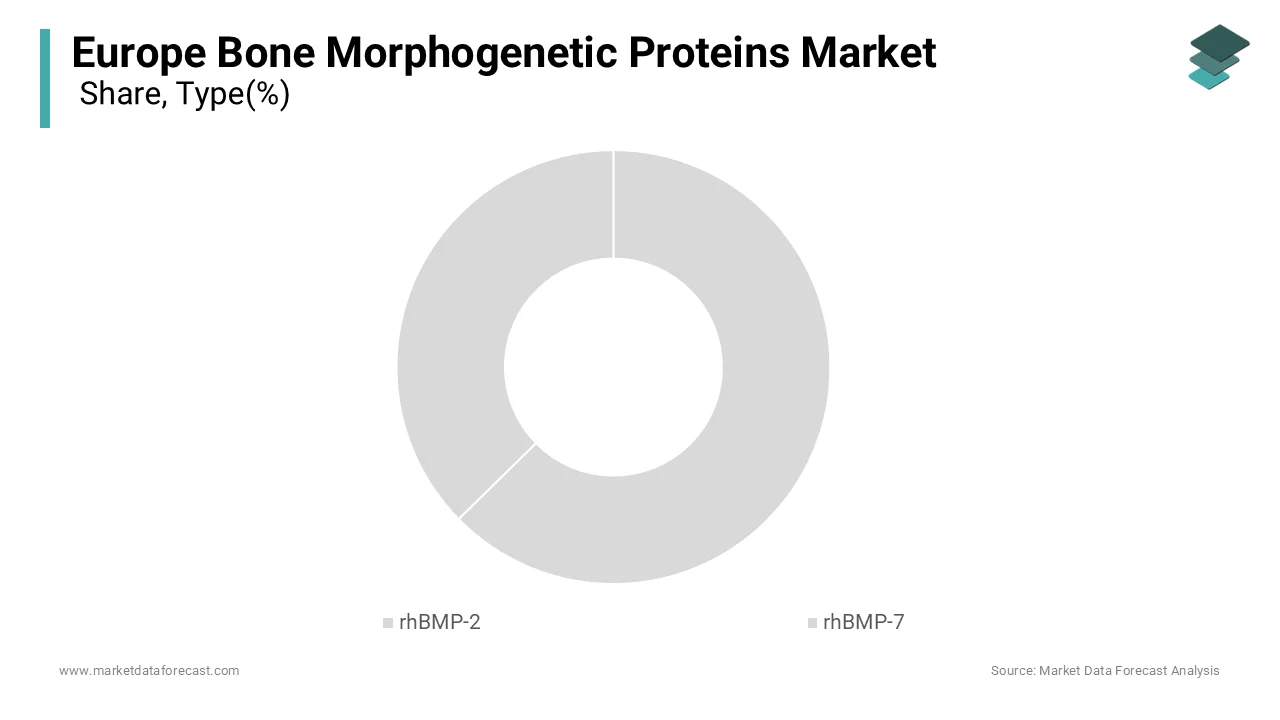
The rhBMP-7 segment is ascribed to grow atthea fastest CAGR of 9.8% throughout the forecast period with its expanding role in off-label but clinicallyvalidated a,pplications such as long bone nonunions and revision arthroplasty, where rhBMP-2 is less effective. According to the AO Foundation, over 12,000 trauma cases in Europe utilized rhBMP-7 in 202,4 primarily for recalcitrant tibial fractures failing conventional treatment. The European Federation of National Associations of Orthopaedics and Traumatology includes rhBMP-7 in its 2023 consensus guidelines for non-union management, ent citing an 82% healing rate in multicenter trials. Countries like Sweden and the Netherlands have established national reimbursement pathways for rhBMP-7 in trauma indications under exceptional use clauses. Furthermore, research from the University of Leuven demonstrates superior performance of rhBMP-7 in osteoporotic bone environments due to its affinity for sclerostin inhibition, in a key pathway iage-relateded bone loss.
By Application Insights
The spinal fusion segment was accounted in holding a prominent share of the European bone morphogenetic proteins market in 2024, with the high procedural volume, rising prevalence of degenerative disc disease,e and the technical limitations of autograft harvesting in minimally invasive approaches. The shift toward minimally invasive techniques, which limit access to the iliac crest bone, has increased reliance on osteoinductive biologics like rhBMP-2. National health systems in Germany, France,nce and Switzerland selectively reimburse BMPs fosingle-levelel anterior lumbar fusions where clinical evidence is strongest. As per the German Spine Society, 42% of MIS TLIF procedures in 2025 included rhBMP-2 to ensure solid arthrodesis without donor site morbidity. This confluence of demographic, clinical, cal, and technical factors ensures spinal fusion remains the cornerstone of BMP utilization in Europe.
The trauma surgery segment is anticipated to grow at a fastest CAGR of 11.2% throughout the forecast period owing to the rising incidence of complex fractures, non-unions,s and delayed unions, particularly among elderly patients with osteoporosis and comorbidities that impair natural healing. According to the International Osteoporosis Foundation, fragility fractures affect 2.7 million Europeans aannuallyally with 10 to 15% progressing to nonunion requiring biological augmentation. The AO Foundation’s 2025 European Trauma Registry shows that rhBMP-7 use in titibial non-unionsrew by 29% year on year, driven by favorable outcomes in smokers and diabetics, who respond poorly to conventional grafting. National trauma networks in Sweden and the Netherlands now include BMPs in algorithmic treatment pathways for cases failing six months of conservative care. Furthermore, the European Commission’s Horizon Europe program funded 7-million-euroro trial in 2025 evaluating BMP-enhanced fixation in open tibia fractures with soft tissue compromise.
COUNTRY LEVEL ANALYSIS
Germany Bone Morphogenetic Proteins Market Analysis
Germany was the largest contributor of thEthe Europeanne morphogenetic proteins market by occupying 26.3% of the share in 202,, with its advanced orthopedic iinfrastructurer e high surgical volume, lum,,e and selective but structured reimbursement policies. According to the German Federal Statistical Office, over 120,000 spinal and complex trauma procedures requiring bone grafting were performed in 2023. The German Spine Society and DGNC provide clear guidelines permitting rhBMP-2 use in anterior lumbar fusion and rhBMP-7 in nnon-unionsunions creating clinical certainty. Statutory health insurers reimburse BMPs when autograft is contraindicated—a criterion documented in over 18,000 cases annually as per the Federal Joint Committee. Leading institutions like Charité Berlin and Heidelberg University Hospital conduct registry-based outcome studies that inform national best practices. This blend of clinical leadership,adership regulatory, clari, ty and demographic pressure solidifies Germany’s position as the regional epicenter of BMP adoption and innovation.
United Kingdom Bone Morphogenetic Proteins Market Analysis
The United Kingdom was ranked second by holdingthe 18.3% of share in 202,4 wthe evidence-basedsedd adoption within the National Health Service and strong academic research output. The NHS does not routinely fund BMPs but allows individual funding requests for complex revisions or patients with comorbidities, a pathway utilized in over 3,20casesn, as per the National Institute for Health Research. Additionally, the British Orthopaedic Association promotes standardized training on biologic augmentation through its fellowship programs. With 20% of the population aged 65 or older and rising obesity rates increasing spinal pathology, the UK maintains steady demand despite fiscal constraints.
France Bone Morphogenetic Proteins Market Analysis
France'snce bone morphogenetic proteins market growth is likely to grow with the centralized healthcare oversight, ht strong trauma network,,s and cautious but growing acceptance of biologics in complex cases. According to the French National Authority for Health, over 38,000 spinal and 22,000 trauma procedures involving bone grafting occurred in 2023. The HauteAutoritée dSantéte permits rhBMP-2 use in anterior lumbar fusion under strict criteria and reimburses rhBMP-7 for tibial nonunions via temporary authorization schemes. France’s national trauma registry,,y coordinated by the French Society of Orthopaedic Surgery,ery tracks BMP out, comes enablreal-worldorld evidence generation. Leading centers like Hopital Cochin in Paris participate in EU multicenter trials on BMP dosing optimization. The government’s “Ma Santé 2022” plan includes investments in regenerative medicine infrastructure and further supports biologic adoption. This combination of regulatory strstructuree clinical research, and public health needsanchors France’s significant market presence.
Italy Bone Morphogenetic Proteins Market Analysis
Italy holds the fourth position with a market share of around 1,0%, distinguished by regional health care autonomy,omy high orthopedic surgical volume, and emerging interest in biologics despite budget constraints. According to IS, TAT over 32,000 spinal fusions and 18,000 complex fracture repairs were performedini 2023, with significant activity in Lombar Emilia-Romagna,dy Laz, o io ,andother regionsa. While national reimbursement for BMPs is limited, ed regions like Tuscany and Veneto approve funding for nonunion cases through local formularies. The Italian Society of Orthopaedics and Traumatology issued updated guidelines in 2025 recommending rhBMP-7 for smokers and diabetics with delayed unions based on domestic registry data. Academic hospitals in Bologna and Milan lead clinical research on BMP carriers and delivery systems. Although cost sensitivity restricts widespread use, targeted adoption in tertiary centers ensures continued market relevance.
Netherlands Bone Morphogenetic Proteins Market Analysis
The Netherlands bone morphogenetics proteins marketgrowthe is likely driven by integrated care model-based protocols, and leadership in trauma and spinal innovation. The Netherlands Orthopaedic Trauma Society includes rhBMP-7 in its national nonunion algorithm and permits rhBMP-2 in select spinal revisions under hospital ethics board approval. Reimbursement is granted on a case-by-case basis through the Exceptional Indications Scheme, ensuring responsible use. Leading institutions like Erasmus MC and Radboud University Medical Center contribute to European BMP registries and conduct pharmacoeconomic analyses that inform policy. Additionally, the Netherlands participates in the E-Horizon projects on next-generation BMP delivery systems.
COMPETITIVE LANDSCAPE
TheEuropeane bone morphogenetic proteins market is characterized by limited competition,n dominated by a single approved recombinant product, rhBMP-2,2 with rhBMP-7 available through national next-generation pathways. Medtronic maintains a near monopoly due to itsEM authorization ion extensivclinicaca data, and established hospital contracts, ts while other players operate in niche trauma segments or through partnerships. The competitive landscape is shaped more by regulatory access and clinical acceptance than by product differentiation, as no biosimilars or novel BMPs have gained approval in the region. National variation in reimbursement policies creates a fragmented market where adoption depends on local guidelines, hospital formularies,s and surgeon advocacy. Emerging competitors face barriers, rs including the need flarge-scaleale clinical trials under the EU Clinical Trials Regulation and stringent pharmacovigilance requirements under the advanced therapeutic medicinal products framework.
KEY MARKET PLAYERS
Some of the companies that are playing a dominating role in the global European restaurant equipment market include
- Rational AG
- Middleby Corporation
- Hoshizaki Corporation
- Alto-Shaam, Inc.
- Electrolux Professional AB
- Franke Group
- Welbilt, Inc.
- Fagor Industrial (Fagor Group)
- Samsung Electronics Co., Ltd.
- LG Electronics Inc.
- Beverage Air, LLC
- Merrychef (by Middleby)
- Hatco Corporation
- Blodgett Oven Company
- Imperial Commercial Cooking Equipment
- BKI Limited
- Infrico S.A.
- UNOX S.p.A.
- Vollrath Company LLC
TOP LEADING PLAYERS IN THE MARKET
- Medtronic plc is the pioneer and dominant force in theEuropeane bone morphogenetic proteins market through its INFUSE Bone Graft product containing recombinant human BMP 2. The company holds centralized marketing authorization from the European Medicines Agency for specific spinal fusion indications and maintains extensive clinical evidence supporting its use in anterior lumbar interbody fusion. Medtronic actively engages with European spine societies to provide surgeon training on proper handling, dosing,g and complication avoidance. In recent years, ars the company has strengthened its position by launchpost-marketrket surveillance registries across Germany, France, and the UK tocollect real-worldd outcome data. It also collaborates with academic hospitals on studies evaluating low-dose protocols to enhance safety profiles. These initiatives reinforce Medtronic’s role as a scientifically responsible leader committed to optimizing BMP therapy within evolving European regulatory and clinical standards.
- Following strategic asset acquisition, S Olymp,u s now integrated into Stryker’s orthobiologics portfolio plays a significant role in the European BMP market through rhB7-based solutions originally developed under the OP 1 brand. Although not centrally authorized by the E, MA rhBMP 7 is available in several EU countries via national exceptionaluse pathwaysw, ays particularly for trauma and nonunion indications. Stryker leverages this legacy by partnering with European trauma networks and national orthopaedic associations to support guideline inclusion and registry development. The company has recently expanded its educational programs in Swede the Netherlands, and Italy,taly focusing on appropriate patient selection and delivery techniques in complex fracture care.
- Zimmer Biomet maintains a strategic presence inEuropeanurope bone morphogenetic proteins market through its partnerships and distribution agreements for osteoinductivebiologics,,s complementing its core implant portfolio. While not a primary manufacturer of recombinant BMP,s the company integrates third-party BMP technologies into its comprehensive spinal and trauma solutions,n enabling bundled offerings for European hospitals. Zimmer Biomet has strengthened its position by investing in digital surgical planning tools that incorporate biologic augmentation recommendations based on patient anatomy and risk factors. It also supports European clinical research on combination products such as BMP-coated interbody devices and resorbable carriers.
TOP STRATEGIES USED BY THE KEY MARKET PARTICIPANTS
Key players in theEuropeane bone morphogenetic proteins market focus on generating real-world evidence through national registries and post market studies to address safety concerns and support reimbursement decisions. They invest in surgeon education and standardized training programs to ensure proper handling,g dosi, n,g, and complication management, thereby improving clinical outcomes. Companies pursue indication expansion by collaborating with trauma and orthopaedic societies to include BMPs in national treatment guidelines for nonunion and complex revision cases. Strategic integration with implant systems and digital surgical planning tools enhances workflow compatibility and value proposition. Additionally, firms engage with national health technology assessment bodies to demonstrate cost-effectiveness in high-risk patient populations where autografts fail or are contraindicated, reinforcing responsible and targeted market access.
MARKET SEGMENTATION
This research report on the europe bone morphogenetic proteins market is segmented and sub-segmented into the following categories.
By Type
- rhBMP-2
- rhBMP-7
By Application
- Spinal Fusion
- Trauma Surgery
- Oral & Maxillofacial Surgery
- Reconstructive Surgery
- Others
By Country
- Germany
- United Kingdom
- France
- Italy
- Netherlands
- Rest of Europe
Frequently Asked Questions
1. What are the main applications in the Europe Bone Morphogenetic Proteins Market?
In the Europe Bone Morphogenetic Proteins Market, primary applications include spinal fusion surgeries, long-bone fracture healing, dental and craniofacial reconstructions, and non-union fracture treatments. BMPs promote osteogenesis by stimulating mesenchymal stem cells to differentiate into bone-forming cells, making them essential for complex orthopedic cases. European adoption is strong in trauma centers and orthopedic clinics, particularly for minimally invasive procedures that reduce recovery time and improve outcomes in aging populations
2. Who are the key players in the Europe Bone Morphogenetic Proteins Market?
Key players in the Europe Bone Morphogenetic Proteins Market include Medtronic, Johnson & Johnson, Zimmer Biomet, and emerging biotech firms developing rhBMP variants. These companies invest in R&D for improved delivery systems like 3D-printed scaffolds and autologous blood coagulum carriers to minimize side effects. They compete through regulatory approvals from the European Medicines Agency and partnerships with orthopedic networks in leading markets like Germany and the UK.
3. What drives growth in the Europe Bone Morphogenetic Proteins Market?
Growth in the Europe Bone Morphogenetic Proteins Market is driven by rising orthopedic surgeries, an aging population increasing musculoskeletal disorders, and advancements in regenerative medicine. Supportive reimbursement policies in countries like Germany and France, along with high trauma incidence, boost demand. Innovations in BMP technology, such as reduced inflammation carriers and integration with bioengineered tissues, further enhance adoption in spinal and dental applications
4. What are the challenges in the Europe Bone Morphogenetic Proteins Market?
Challenges in the Europe Bone Morphogenetic Proteins Market include potential side effects like inflammation or ectopic bone formation, varying reimbursement across EU countries, and high treatment costs. Regulatory hurdles from the EMA require rigorous clinical validation, while competition from alternative bone grafts persists. However, ongoing research into safer recombinant formulations and localized delivery methods addresses these issues, sustaining market viability.
5. How do BMPs work in the Europe Bone Morphogenetic Proteins Market?
BMPs in the Europe Bone Morphogenetic Proteins Market function by binding to specific receptors on cell surfaces, activating signaling pathways that promote differentiation of progenitor cells into osteoblasts and chondroblasts for bone regeneration. Commonly used rhBMP-2 and rhBMP-6 are delivered via scaffolds or gels during surgery to fill bone defects. This mechanism is widely applied in European orthopedic practices for superior healing in spinal fusions and fractures.
6. What is the role of rhBMP-2 in the Europe Bone Morphogenetic Proteins Market?
rhBMP-2 plays a pivotal role in the Europe Bone Morphogenetic Proteins Market as the dominant recombinant protein for spinal fusion and trauma applications, offering potent osteoinductive properties. It is favored in Germany and the UK for its efficacy in promoting rapid bone formation with minimal donor site morbidity compared to autografts. Clinical studies support its use in complex cases, driving market share through established safety profiles.
7. Which countries lead the Europe Bone Morphogenetic Proteins Market?
Germany leads the Europe Bone Morphogenetic Proteins Market due to its advanced orthopedic infrastructure and clinical research, followed by the UK, France, Italy, and Spain. These nations benefit from high surgical volumes, supportive insurance, and EMA approvals. Regional variations in healthcare spending influence adoption, with Western Europe dominating over Eastern counterparts.
9. What are recombinant BMPs in the Europe Bone Morphogenetic Proteins Market?
Recombinant BMPs in the Europe Bone Morphogenetic Proteins Market are lab-produced human proteins like rhBMP-6 and rhBMP-7, engineered for consistent potency and purity in bone regeneration therapies. They overcome limitations of natural extracts by reducing immunogenicity and enabling precise dosing. Widely used in European spinal and dental surgeries, they integrate with carriers for optimal release and minimal adverse reactions.
10. What future trends shape the Europe Bone Morphogenetic Proteins Market?
Future trends in the Europe Bone Morphogenetic Proteins Market include mRNA-based BMP delivery, 3D bioprinting integration, and personalized medicine approaches for customized bone scaffolds. Enhanced carriers reduce side effects, while expanded use in craniofacial and sports trauma grows demand. Collaborative R&D between biotech firms and universities drives these advancements.
Access the study in MULTIPLE FORMATS
Purchase options starting from
$ 2000
Didn’t find what you’re looking for?
TALK TO OUR ANALYST TEAM
Need something within your budget?
NO WORRIES! WE GOT YOU COVERED!
Call us on: +1 888 702 9696 (U.S Toll Free)
Write to us: sales@marketdataforecast.com